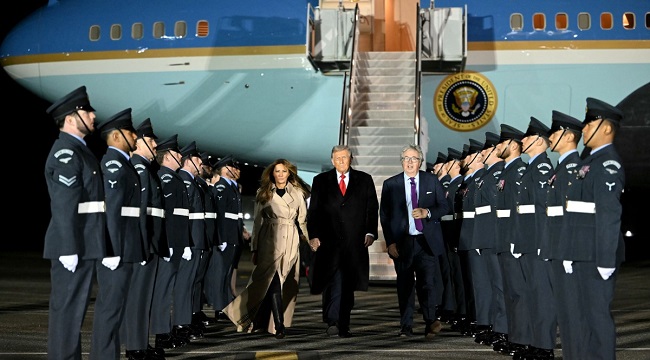
U.S. Representative James Comer, the chairman of the House Oversight Committee, said on Friday that he agreed with first lady Melania Trump’s call for congressional hearings with victims of Jeffrey Epstein, saying “we will have hearings.”
Melania Trump, the wife of U.S. President Donald Trump, said on Thursday that the public hearings were needed for Epstein victims to tell their stories under oath, raising the prospect of further public attention on an issue the president wants to go away.
“I agree with the first lady and appreciate what she said. We will have hearings,” Comer told Fox News’ America Reports program.
Comer said the House Oversight Committee’s attorneys have been in constant contact with Epstein’s victims. He said some victims are willing to come in, while others are not.
“We have always planned on having a hearing with Epstein victims once the depositions have been completed, so we’ve still got some more high-profile men that are coming in,” Comer said.
Epstein has been the center of political discussion in recent months after the U.S. Justice Department released millions of files related to the late financier, who was facing federal charges of sex-trafficking minors when he died in jail in what was ruled a suicide.
More than 1,200 victims of Epstein were identified in documents that have been steadily released by the U.S. Justice Department since late-2025.
In her rare Thursday remarks, which thrust the Epstein matter back into the spotlight after her husband had sought to put it behind him, the first lady denied that she had any connection with Epstein and said she was not one of his victims. (JapanToday)
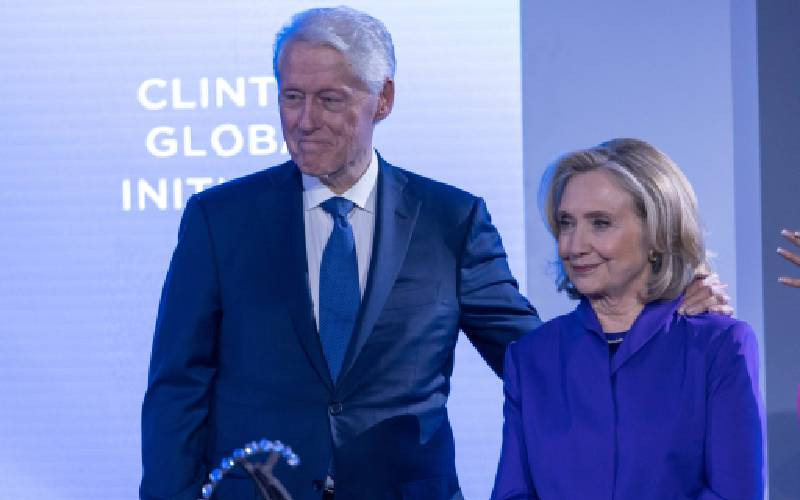
Former President Bill Clinton denied wrongdoing in his relationship with accused sex trafficker Jeffrey Epstein as House Republicans grilled him on Feb. 27 about the late financier’s fundraising, numerous visits to the White House and pictures in Justice Department files.
Clinton, the first former president forced to testify before Congress, told the House Oversight and Government Reform Committee in his opening statement that he “had no idea of the crimes Epstein was committing.” He dismissed the 20-year-old pictures from the department’s files and Epstein’s estate.
“I saw nothing, and I did nothing wrong,” Clinton said. “As someone who grew up in a home with domestic abuse, not only would I not have flown on his plane if I had any inkling of what he was doing – I would have turned him in myself and led the call for justice for his crimes, not sweetheart deals.”
Upon exiting the session, Oversight Committee Chairman Rep. James Comer, R-Kentucky, said questioning the former president was “very productive” while declining to elaborate.
“You’ll see the video. … Everybody knows President Clinton. He’s got Southern people skills; he’s a charming individual,” the congressman said. “We picked up new facts; we asked the Clintons where we should go from here.”
The former president’s deposition at the Chappaqua Performing Arts Center, near the Clintons’ home in suburban New York, comes just a day after his wife and former Secretary of State Hillary Clinton testified. The former first lady, who was also subpoenaed, told the committee on Feb. 26 she didn’t know Epstein and never flew on his plane. She called her deposition “repetitive” and a “fishing expedition.”
Video of the depositions will be released “within the next 24 hours,” Comer suggested.
GOP committee members said they have questions for the former first couple because Epstein visited the White House 17 times while Bill Clinton was president and then Clinton traveled 27 times on his private plane after leaving office. Clinton also appeared in a number of pictures released in the Epstein files with celebrities or in more casual surroundings with the faces of women redacted.
Comer said documents from the Justice Department and Epstein’s estate portray the late financier as raising money for the Clinton Global Initiative, a foundation seeking action on issues such as the climate and health care. Hillary Clinton told the committee Feb. 26 to ask her husband about it because she was a senator during the period in question.
“This is a historical day for the United States Congress,” Comer said. “Nobody is accusing anyone of any wrongdoing. But I think the American people have a lot of questions.”
The inquiry comes as lawmakers and women who accused Epstein of abuse have forced the Justice Department to released 3 million pages of documents about his criminal investigation. But millions more pages remain sealed, and President Donald Trump has said the country should move on.
Epstein died by suicide in 2019 while awaiting trial on federal charges of child sex trafficking. His associate Ghislaine Maxwell is serving a 20-year prison term for conspiring to transport minors for illicit sex. Critics of the investigation have questioned why more coconspirators haven’t been charged. (USAToday)
The U.S. Supreme Court refused on Tuesday to let Donald Trump send National Guard troops to the Chicago area as the Republican president expands the use of the military for domestic purposes in a growing number of Democratic-led jurisdictions, a policy critics call an effort to punish adversaries and stifle dissent.
The justices denied the Justice Department’s request to lift a judge’s order that has blocked the deployment of hundreds of National Guard personnel in a legal challenge brought by Illinois state officials and local leaders. The department had asked to allow the deployment while the litigation plays out.
The National Guard serves as state-based militia forces that answer to state governors except when called into federal service by the president.
Trump ordered troops to Chicago, the third-largest U.S. city, and to Portland, Oregon, following his earlier deployments to Los Angeles, Memphis and Washington, DC.
The case has been characterized by starkly different portrayals of the protests against Trump’s aggressive immigration enforcement in and around Chicago.
Trump and his allies have described Democratic-led cities as lawless, crime-ravaged and plagued with vast, violent protests. His administration has said troops are needed to protect federal property and personnel.
Democratic mayors and governors, along with other Trump critics, have said these claims are a false account of the situation and a pretext for sending troops, accusing Trump of abusing his power.
Federal judges have expressed skepticism over the administration’s dire view of protests that local law enforcement officials have called limited in size, largely peaceful and manageable by their own forces – far from the “war zone” conditions described by Trump.
Trump has relied on a law that lets a president deploy state National Guard troops to suppress a rebellion, repel an invasion or if he is “unable with the regular forces to execute the laws of the United States.”
Illinois and Chicago sued after the administration federalized 300 Illinois National Guard troops and also ordered Texas National Guard troops into the state, calling the actions unlawful. Officials have since announced the administration was sending home hundreds of National Guard troops who were dispatched to Portland from California, and to Chicago from Texas.
Chicago-based U.S. District Judge April Perry temporarily blocked the move on October 9, finding that the claims of violence during protests at an immigration facility in the Chicago suburb of Broadview, Illinois, where a small group of demonstrators had gathered daily for weeks, were unreliable.
Perry, an appointee of Democratic former President Joe Biden, found that there was no evidence of rebellion or that the law was not being enforced, faulting officials for “equating protests with riots and a lack of appreciation for the wide spectrum that exists between citizens who are observing, questioning and criticizing their government, and those who are obstructing, assaulting or doing violence.”
A National Guard deployment would “only add fuel to the fire,” Perry said.
A three-judge panel of the Chicago-based 7th U.S. Circuit Court of Appeals declined to lift Perry’s order blocking the deployment, concluding that “the facts do not justify the president’s actions in Illinois.” Two of the three judges were appointed by Republican presidents, including one by Trump.
The Justice Department told the Supreme Court that the assessment by local officials of the protests was “implausibly rosy,” and that federal agents “have been forced to operate under the constant threat of mob violence.”
Lawyers for Illinois and Chicago told the justices that the local protests have “never hindered the continued operation” of the Broadview facility, and that state and local authorities have responded to every request for assistance and contained any sporadic disruption.
Officials from Portland and Oregon are pursuing a separate legal challenge to Trump’s planned deployment to that city. U.S. District Judge Karin Immergut, a Trump appointee, permanently blocked that deployment in a November 7 ruling. The administration has appealed that ruling.
The Supreme Court in October asked the administration as well as Illinois and Chicago to provide written arguments over how to interpret the words “regular forces” in the law at issue in the case.
In an October 10 written ruling, Perry said that historical sources indicate that “regular forces” means only members regularly enlisted in the military, including the Army and Navy, as opposed to the National Guard.
Trump’s administration “made no attempt to rely on the regular forces before resorting to federalization of the National Guard,” Perry said, adding that there are other limits on the use of the military for domestic law enforcement purposes.
The administration repeatedly has sought the Supreme Court’s intervention to allow implementation of Trump policies impeded by lower courts. The Supreme Court, which has a 6-3 conservative majority, has sided with the administration in almost every case that it has been called upon to review since Trump returned to the presidency in January. (JapanToday)
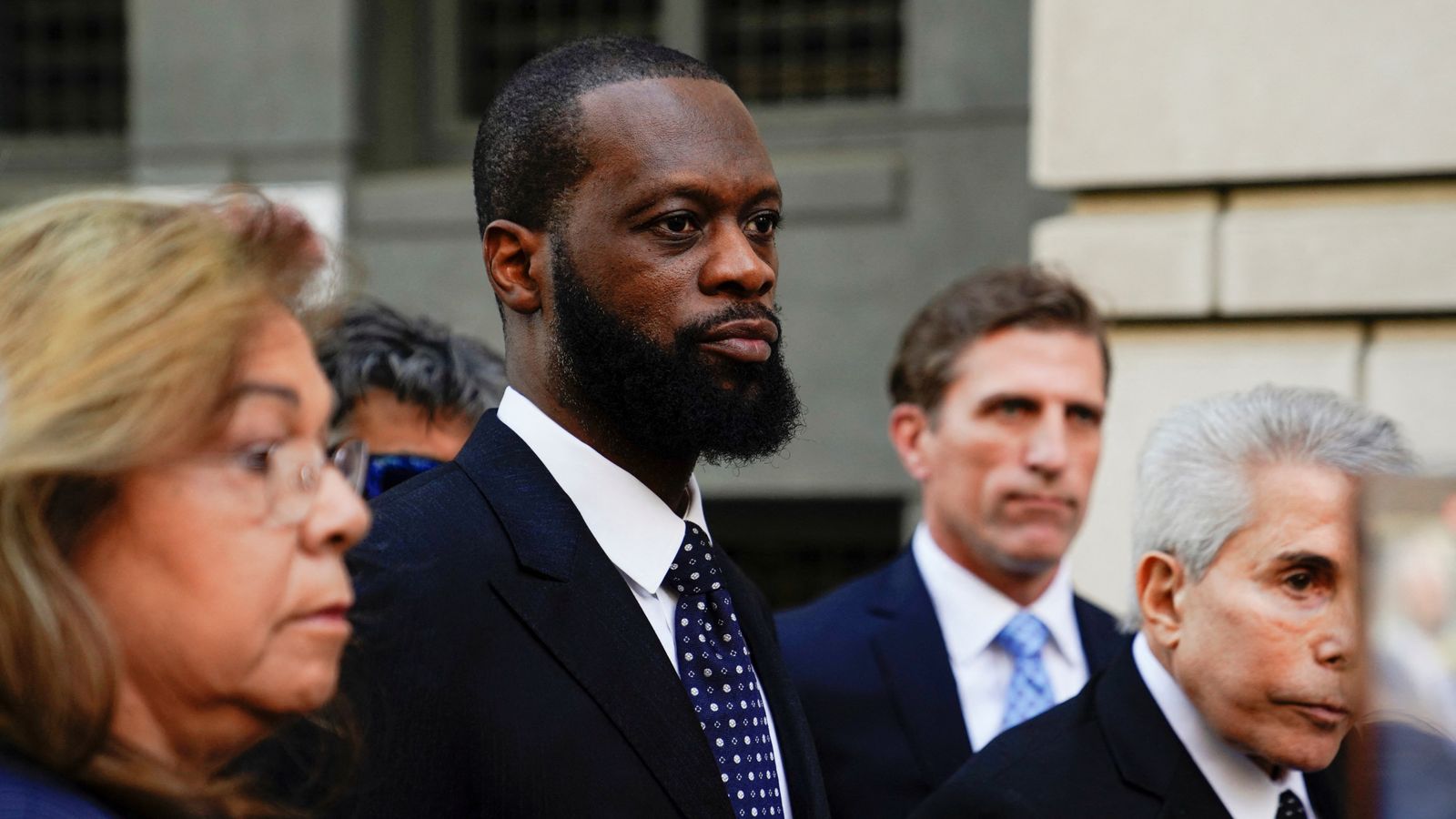
A Grammy-winning rapper who “betrayed his country for money” has been sentenced to 14 years in prison.
Prakazrel “Pras” Michel, who was part of 1990s hip-hop group The Fugees, was convicted of illegally funnelling millions of dollars in foreign contributions to Barack Obama’s re-election campaign in 2012.
The Justice Department had accused the 53-year-old of accepting $120m (£92m) from Malaysian financier Low Taek Jho, who wanted to gain political influence in the US.
Prosecutors said Michel “lied unapologetically and unrelentingly to carry out his actions” – and sought to deceive the White House, senior politicians and the FBI for almost a decade.
In 2018, it is claimed he urged the Trump administration and the justice department to drop embezzlement investigations against Low.
Michel was convicted of 10 counts by a federal jury in 2023 – and last month, he was ordered to forfeit about $65m (£50m) for his role in the scheme.
Hollywood star Leonardo DiCaprio testified at the trial, and Low was a primary financier in his 2013 film The Wolf Of Wall Street.
The Oscar-winning actor said the businessman’s funding and legitimacy had been carefully vetted before they entered a partnership.
Prosecutors had been seeking a life sentence to “reflect the breadth and depth of Michel’s crimes, his indifference to the risks to his country, and the magnitude of his greed”.
However, the rapper’s lawyer Peter Zeidenberg has argued that the 14-year term is “completely disproportionate to the offence” – and is vowing to appeal.
Last year, a judge rejected Michel’s request for a new trial after claiming that one of his lawyers had used AI during closing arguments.
Low Taek Jho has been accused of having a central role in the 1MDB scandal, amid claims billions of dollars were stolen from a Malaysian state fund.
The 44-year-old is a fugitive but has maintained his innocence, with his lawyers writing: “Low’s motivation for giving Michel money to donate was not so that he could achieve some policy objective.
“Instead, Low simply wanted to obtain a photograph with himself and then President Obama.”
Michel, who was born in Brooklyn, was a founding member of The Fugees with childhood friends Lauryn Hill and Wyclef Jean – selling tens of millions of records. (SkyNews)

 English