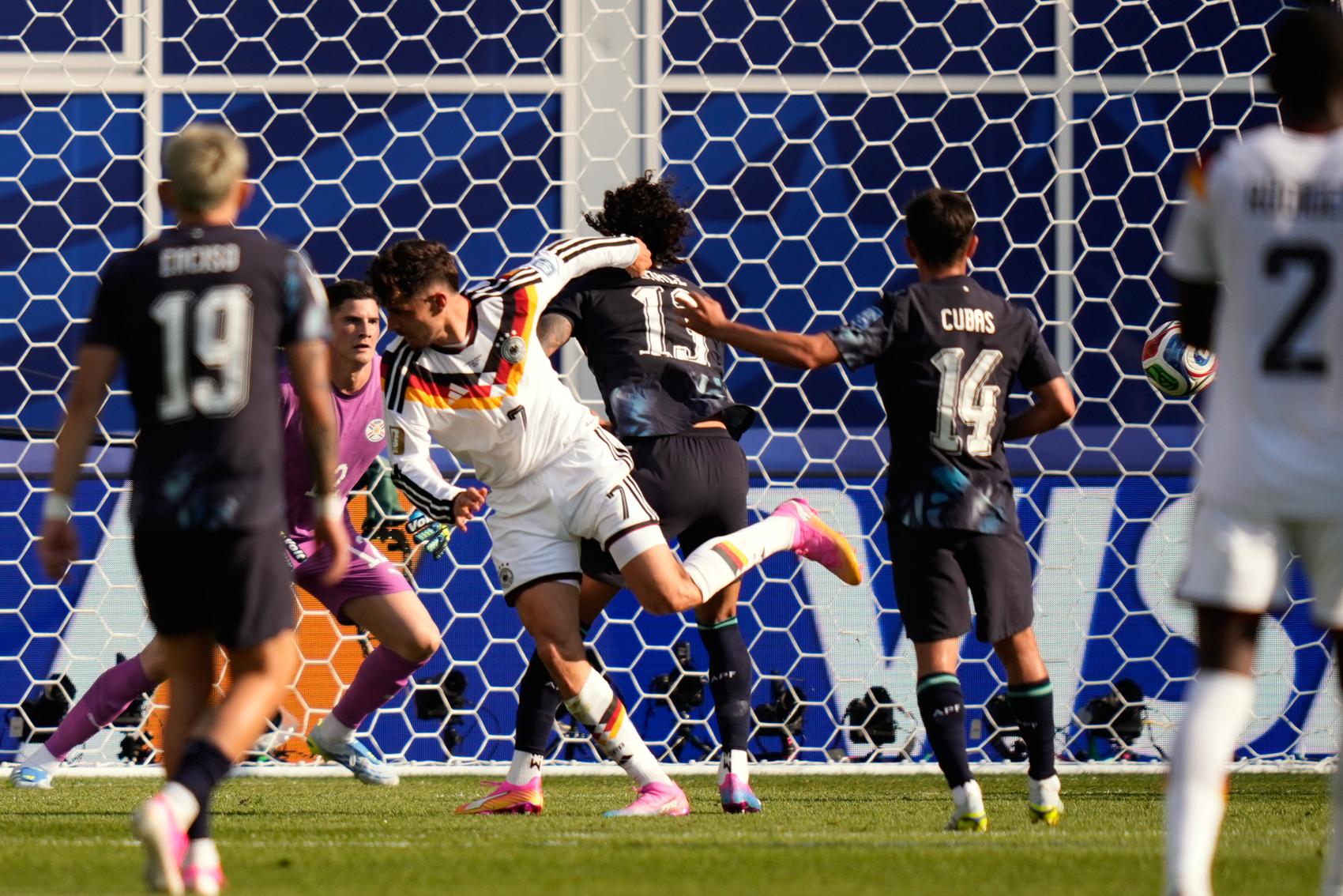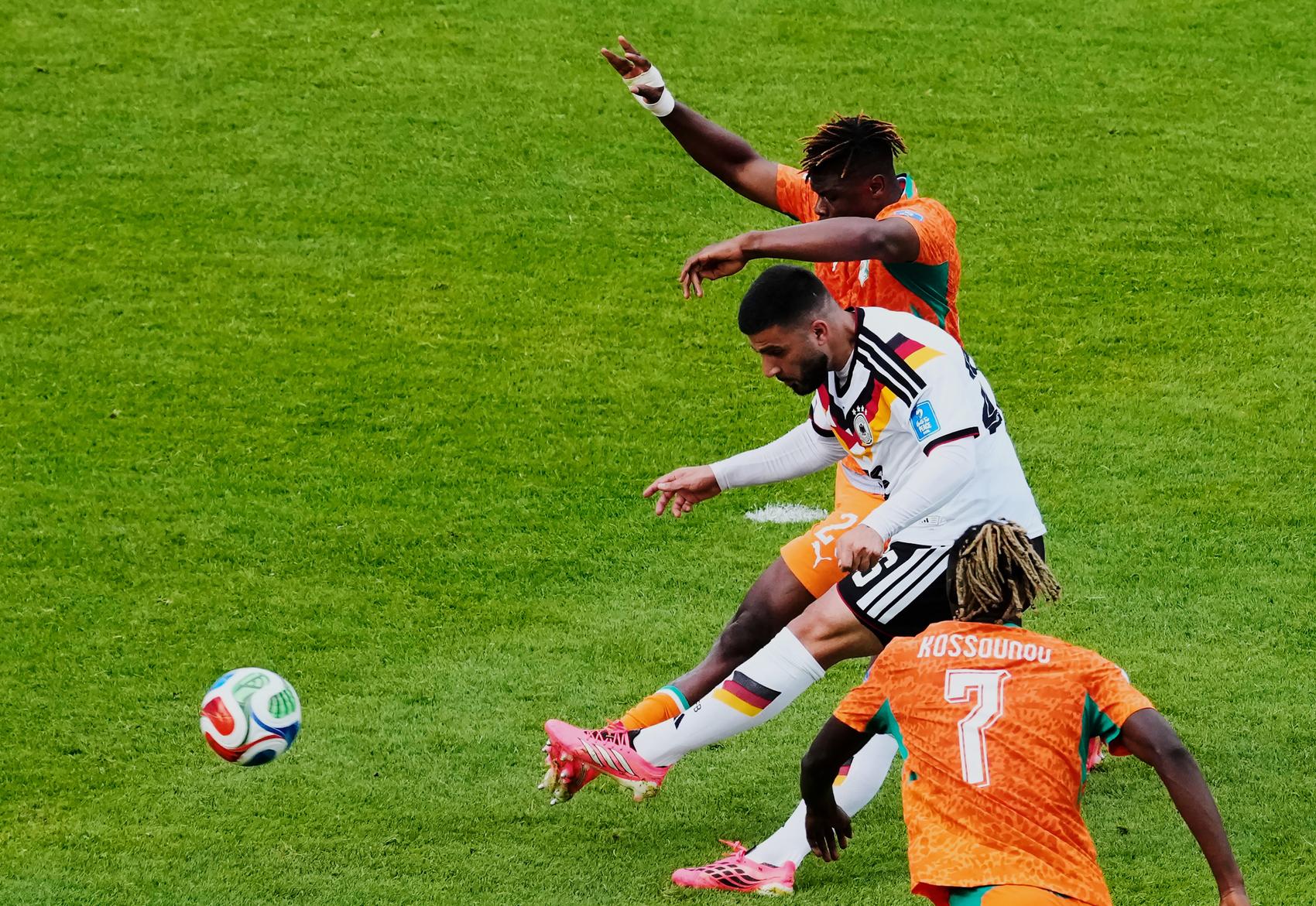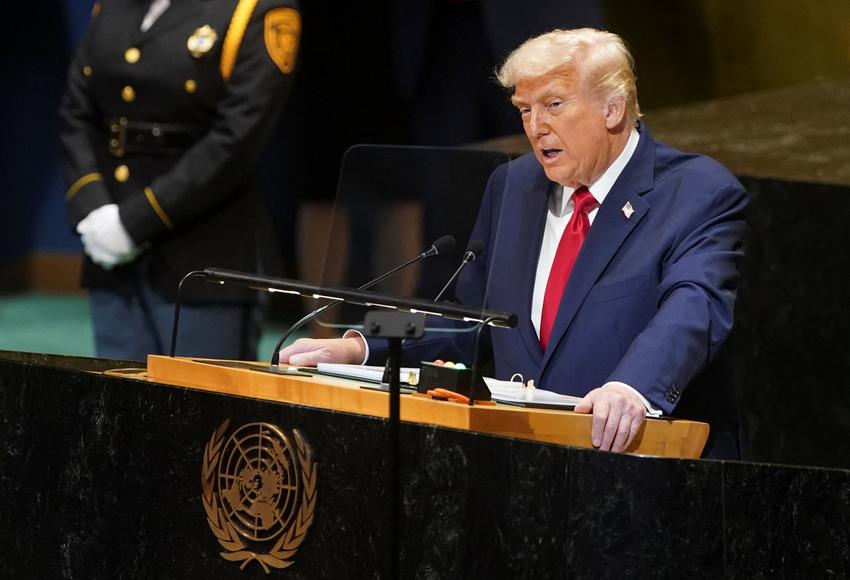
Soccer fans have accused FIFA of a “monumental betrayal” after latest prices for World Cup tickets began to circulate on Thursday.
The governing body allocates 8% of tickets to national associations for games involving their team to sell to the most loyal fans.
And a list published by the German soccer federation revealed prices ranged from $180-$700 for varying group stage games. The lowest price for the final was $4,185 and the highest was $8,680.
Those group-stage prices are very different from FIFA’s claims of $60 tickets being available, while the target from United States soccer officials when bidding for the tournament seven years ago was to offer hundreds of thousands of $21 seats across the opening phase of games.
Fan organization Football Supporters Europe (FSE) described the current prices as “extortionate.”
“This is a monumental betrayal of the tradition of the World Cup, ignoring the contribution of supporters to the spectacle it is,” it said in a statement.
The English Football Association shared pricing information with the England Supporters Travel Club (ESTC) on Thursday evening, which showed that if a fan bought a ticket for every game through to the final it would cost just over $7,000.
FIFA said in September that tickets released through its website would initially range from $60 for group-stage matches to $6,730 for the final. But those prices are subject to change as it adopts dynamic pricing for the first time at the World Cup.
FIFA tickets are available in four categories, with the best seats in Category 1.
In the price list published by the German federation, there were only three categories.
The lowest priced ticket was $180 for Germany’s opening group game against Curacao in Houston. The lowest price for the semifinal was $920 rising to $1,125.
The FSE called on FIFA to immediately halt ticket sales via national associations “until a solution that respects the tradition, universality, and cultural significance of the World Cup is found.”
The Associated Press approached FIFA for comment.
FIFA launched its third phase of widespread ticket sales Thursday, with fans now able to apply for specific matches for the first time through its “Random Selection Draw.”
Following last week’s draw for the 2026 tournament, which will be co-hosted by the United States, Canada and Mexico, an updated schedule has been published.
That means fans know when and where the likes of Lionel Messi and Argentina will play. Previous ticket ballots were blind as the qualification period had not even been completed and the draw was yet to take place.
Now participating nations have been placed in groups, with their paths through the tournament determined. For instance, Messi and Cristiano Ronaldo could go on to meet in the quarterfinals in Kansas City if both Argentina and Portugal top their respective groups.
Not that fans are guaranteed to get tickets to the games they apply for.
The draw opened Dec 11 at 11 a.m. ET (1600 GMT) and closes Jan 13, 2026.
FIFA says ticket applications can be made at any point during this window and the timing of entry will not impact the chances of success. Fans can apply via FIFA’s website for a maximum of four tickets per household per match and a maximum of 40 tickets throughout the tournament.
Fans will need a FIFA ID to apply for tickets and can pick which matches and which pricing category they want to apply for.
Successful applicants will be notified by email in February and charged automatically.
The last time the U.S. hosted the World Cup in 1994 prices ranged from $25 to $475. In Qatar in 2022 prices ranged from around $70 to $1,600 when ticket details were announced.
Tickets for the final at MetLife Stadium on July 19 are already going for in excess of $11,000 on secondary resale sites.
For this tournament FIFA has also set up its own resale platform where it charges a 15% fee based on the total resale price.
FIFA said that closer to the tournament any remaining tickets will go on general sale on a first-come, first-served basis.
It did not reveal a time frame for the release of those remaining tickets. (JapanToday)
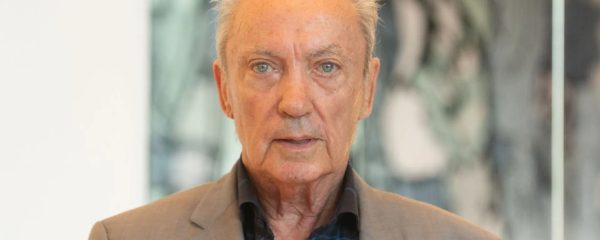
Udo Kier, a German actor and cult icon who collaborated with everyone from Andy Warhol to Lars von Trier to Madonna, died on Sunday morning in Palm Springs, according to his partner, artist Delbert McBride. He was 81.
Among the more than 200 films in his expansive body of work, Kier’s breakout collaborations with Warhol are among his most celebrated. Kier starred in the titular roles in both 1973’s “Flesh for Frankenstein” and 1974’s “Blood for Dracula.” Both directed by Paul Morrissey and produced by Warhol, the films are subversive, sultry reimaginings of the classic Hollywood monsters, with Kier bringing a haunting yet comically inept spin on the title characters.
That pair of films made Kier famous, and he spent the next two decades working through Europe and collaborating with legendary writer-director Rainer Werner Fassbinder on films like “The Stationmaster’s Wife,” “The Third Generation” and “Lili Marleen.” Then, at the Berlin Film Festival, Kier met future two-time Oscar-nominated director Gus Van Sant, who Kier credits with securing him an American work permit and a SAG card.
In 1991, Van Sant widely introduced Kier to American audiences with his coming-of-age drama “My Own Private Idaho,” loosely based on Shakespeare’s “Henry IV.” Kier appeared in a supporting role alongside stars River Phoenix and Keanu Reeves.
Around the same time, Kier began his lifelong collaboration with von Trier. Starting in the late ’80s with “Epidemic,” Kier appeared in the 1991 film “Europa” before appearing in several episodes of von Trier’s long-running horror-thriller series “The Kingdom” through the ’90s and aughts. Their other film collaborations include “Breaking the Waves,” “Dancer in the Dark,” “Dogville,” “Melancholia” and “Nymphomaniac: Vol. II.”
The 1990s also saw Kier in several supporting roles in major Hollywood productions, such as “Ace Ventura: Pet Detective,” “Armageddon” and “Blade.” He also appeared in Madonna’s book “Sex” in 1992, and made appearances in her music videos for “Erotica” and “Deeper and Deeper” from her album “Erotica.”
Most recently, Kier appeared in Kleber Mendonça Filho’s awards darling “The Secret Agent.” The film earned star Wagner Moura the honor for best actor at the 2025 Cannes Film Festival.
Born Udo Kierspe in Cologne, Germany, in a hospital that was being bombed by Allied Forces, he moved to London at 18 after meeting Fassbinder in a bar.
“I liked the attention, so I became an actor,” he told Variety‘s Peter Debruge in a 2024 interview.
After working between Europe and the U.S. for many decades, Kier settled in Los Angeles and Palm Springs, where he lived in a former mid-century library and cultivated interests in art, architecture and collecting. He was a fixture at the Palm Springs Film Festival, where he warmly received accolades from fans. (Variety)
Ukrainian sumo wrestler Danylo Yavhusishyn said Monday that he had surprised even himself by becoming the first from his country to win a tournament in the ancient Japanese sport.
The 21-year-old, who fled the war in Ukraine three years ago, is set to be promoted to sumo’s second-highest rank this week after winning the Kyushu Grand Sumo Tournament.
The victory earned Yavhusishyn, who is known by his ring name Aonishiki, his first title in only his 14th tournament.
He did it by beating Mongolian grand champion Hoshoryu on Sunday.
“To be quite honest I wanted to win the tournament but I didn’t really think that I could,” he told reporters in Fukuoka. “I’m really happy.”
Yavhusishyn was born in central Ukraine and took up sumo at the age of seven, becoming a national champion at 17.
His age meant he narrowly avoided Ukraine’s military draft for men aged 18 and older after Russia invaded and he sought refuge in Germany, before moving to Japan.
His parents stayed in Germany and he arrived in Japan knowing nothing of the language.
Yavhusishyn said he spoke to his parents after winning the tournament and that he had also received messages from friends in Ukraine.
“I’ve had lots but I haven’t been able to reply to them all yet,” he said. “It will take time to reply to them all but I’ll start doing them one by one after this.”
Yavhusishyn became the second Ukraine-born professional sumo wrestler when he made his debut in July 2023, following in the footsteps of Serhii Sokolovskyi, better known as Shishi.
Yavhusishyn’s promotion to sumo’s upper divisions was the fifth fastest since the current system of six tournaments a year was introduced in 1958.
He kept his title hopes alive at the Kyushu Grand Sumo Tournament by beating Hoshoryu on the penultimate day, then triumphed over the Mongolian again to clinch the title.
“It was the last tournament of the year, so I wanted to give a good account of myself so that I wouldn’t end the year with any regrets,” said Yavhusishyn. (JapanToday)
Edo State Governor, Monday Okpebholo, has revoked the land title granted to the Museum of West African Art by the administration of former Governor Godwin Obaseki, declaring that the property will revert to its original use as the historic Benin Central Hospital.
The decision, announced in a statement signed by the governor and dated October 21, 2025, and made public in Benin City on Monday, November 10, 2025, followed mounting controversy surrounding the MOWAA project.
The project has drawn objections from the Oba of Benin, His Royal Majesty, Oba Ewuare II, as well as renewed public outcry over the demolition of the old Central Hospital to make way for the museum.
Okpebholo’s action came barely 24 hours after a chaotic scene at the museum’s preview exhibition, where protesters claiming loyalty to the Benin Palace disrupted the event attended by European diplomats, including the ambassadors of the European Union and Germany, forcing guests to be evacuated under tight security.
While the governor expressed shock that his administration was not informed about the envoys’ visit, he accused the previous government of handling the project with “a gross lack of transparency.”
However, MOWAA management has denied allegations that it used the name “Benin Royal Museum” to secure funding, insisting it held no claim to the Benin Bronzes.
Okpebholo, ordering the revocation of the Right of Occupancy earlier granted to the MOWAA management by the Obaseki administration, said it was carried out “in the overriding public interest,” citing the authority vested in him by Sections 28 and 38 of the Land Use Decree No. 6 of 1978 (now the Land Use Act).
In the official statement titled “Land Use Decree 1978: Revocation of Statutory Rights of Occupancy Pursuant to Sections 28 and 38,” Okpebholo declared that the land previously allocated to the Edo Museum of West African Art Trust Ltd/GTE had been reclaimed by the state and would be restored to its original use as the Benin Central Hospital, a historic medical institution that has served the city for over a century.
“Notice is hereby given that in exercise of the power conferred upon me by Section (28) 1 and 38 of the Land Use Decree No. 6 of 1978 and by virtue of all other laws enabling me on that behalf, I, Senator Monday Okpebholo, Executive Governor of Edo State of Nigeria, hereby revoke the Statutory Rights of Occupancy granted to Edo Museum of West African Art Trust (EMOWAA) Ltd/GTE for overriding public interest,” the notice read.
Okpebholo said the land in question, known as Digital Plot No. 61977, Zone HI/A12/Ogboka, Benin City, in Oredo Local Government Area, measures approximately 6.210 hectares and was the site of the demolished Central Hospital.
He further noted that the boundaries of the property were contained in the survey attached to the Certificate of Occupancy dated November 28, 2022, registered as No. 169 at page 3 in Volume 45, and now kept in the EDOGIS Land Registry, Benin City.
The revocation marks a reversal of the Obaseki-era decision that sparked widespread public outrage, particularly from the Benin Royal Palace and heritage advocates.
The PUNCH reports that an exhibition at the museum turned chaotic on Sunday as angry protesters stormed the venue, forcing a high-profile event to shut down abruptly.
The preview opening, described as a private exhibition for investors, artists, and foreign envoys, quickly descended into panic when a mob claiming the museum belonged to the Oba of Benin breached parts of the premises.
Viral footage circulating later showed fear-stricken foreign dignitaries being evacuated under tight security.
On Monday, Okpebholo said his administration was not informed about the presence of foreign envoys in the state for activities related to the Museum of West African Art in Benin.
In a statement by his Chief Press Secretary, the governor made the clarification when he received a high-powered delegation of European diplomats, including the European Union Ambassador to Nigeria, Mr. Gautier Mignot, and the German Ambassador to Nigeria, Dr. Annett Günther, at the Government House, Benin City.
He expressed shock over the visit of foreign envoys and later led the delegation on a courtesy visit to the Palace of the Oba of Benin, His Royal Majesty, Omo N’Oba N’Edo Uku Akpolokpolo, Oba Ewuare II.
Speaking at the palace, Okpebholo described the development as another example of the “lack of transparency” that surrounded the MOWAA project since its inception.
“We are here with the European and German Ambassadors, and their colleagues from the Netherlands and Belgium, to see His Royal Majesty. They have spoken about areas of collaboration and also about what happened yesterday. Honestly, I wasn’t aware that such a gathering was going to take place; that’s the truth. However, we have spoken with the Oba and gotten his side of the story,” he said.
The governor disclosed that his administration had already constituted a committee to investigate the MOWAA project and make recommendations on the way forward.
Okpebholo noted that the state government was never briefed on the project’s financiers, ownership structure, or operational details, stressing that even the Oba of Benin had personally expressed concern over its handling.
“The previous administration never briefed me about MOWAA nor handed over any documentation concerning the project. I know nothing about its transactions or agreements,” he added.
He condemned the demolition of the historic Central Hospital in Benin City to make way for MOWAA, noting: “Why destroy a functioning hospital to build a museum? We are proud of our heritage, but development must be responsible and people-centred.”
Oba Ewuare II lamented the manner in which the project was executed, accusing Obaseki of attempting to “mortgage” the rights of the Benin people over their ancestral artefacts.
“It is like history wanting to repeat itself. My forefathers suffered during the British invasion of 1897, and it is not fair that this is happening again. The documents they brought for me to sign would have taken away our rights to these artefacts, and I refused,” the monarch said.
Speaking after the courtesy visit to the palace, Mignot said the mission of the delegation was to pay homage to the monarch and strengthen cooperation with Edo State.
“We have just paid a courtesy call to His Royal Majesty to present our greetings and explain the reason for our visit, which is to deepen our partnership with Edo State. We also discussed the MOWAA project and the unfortunate incidents that occurred. We exchanged views in a spirit of dialogue and partnership, which is how we intend to move forward,” he said.
Mignot clarified that while the European Union as an institution had no direct investment in MOWAA, some EU member states, including Germany, were partners in the initiative.
Dr Günther, in her remarks, commended Okpebholo and the Oba of Benin for their hospitality, reaffirming Germany’s longstanding partnership with Edo State in migration management, youth empowerment, and cultural preservation.
“I am honoured to have paid a courtesy visit to His Royal Majesty, the Oba of Benin, and His Excellency, the Governor of Edo State. During my visit, I will attend the graduation of 450 youths from IT training programmes and visit several project sites. Our cooperation extends beyond development; it includes support for cultural heritage, including the return of over 1,200 Benin Bronzes to Nigeria,” she said.
Dr Günther emphasised that the preservation of peace and transparency was critical to sustaining MOWAA’s cultural and educational mission.
The management of MOWAA, however, denied allegations that it presented itself as the Benin Royal Museum to secure funding.
It urged relevant authorities to confirm directly with all donors to get the true position of its dealings.
Director of MOWAA Institute, Ore Disu, in a statement issued in Benin City on Monday, said the body would continue to uphold deep respect for His Royal Majesty, Oba Ewuare II, the Oba of Benin.
Disu said MOWAA would make every effort to foster understanding and goodwill, as well as remain dedicated to engaging respectfully.
He said the organisation remained committed to contributing to the preservation and advancement of West Africa’s rich cultural legacy.
“MOWAA does not hold, nor have we ever claimed title to, any Benin Bronzes. Since our inception in 2020, the museum has consistently affirmed that it has no claims to these artefacts.
“Our focus for the last four years has been firmly on broader West African art, research, education, and conservation, with a strong focus on modern and contemporary, as well as historical works from Nigeria and beyond.
There are no Benin Bronzes on display at the museum, nor have there ever been,” the statement read.
Disu clarified that there was no planned formal inauguration or official opening of the museum, adding that Sunday’s event was a private preview for partners and stakeholders.
He also said none of the historical works on display were of Benin heritage. (Punch)
Vice President Kashim Shettima has departed New York, United States, after representing President Bola Tinubu at the 80th Session of the United Nations General Assembly.
According to a statement on Sunday by his media aide, Stanley Nkwocha, the Vice President is now headed to Germany where he is scheduled to hold strategic meetings with officials of Deutsche Bank to explore areas of intervention and partnership in Nigeria’s developmental initiatives.
Nkwocha said that during his participation at UNGA 80, VP Shettima secured UN Secretary-General António Guterres’ commendation for Nigeria’s bid for a permanent UN Security Council seat.
He also showcased Nigeria’s $200 billion energy transition opportunity to global investors and strengthened strategic partnerships with the UK on trade, defence, and migration issues.
The Vice President delivered President Tinubu’s national statement, calling for UN reforms and a permanent seat for Nigeria at the UN Security Council, even as he demanded Africa’s control over its $700 billion mineral wealth, and digital inclusion initiatives.
He also engaged with the Gates Foundation on healthcare and education expansion, positioning Nigeria as the natural hub for the African Continental Free Trade Area’s $3.4 trillion market.
The statement noted that Shettima was seen off at John F. Kennedy International Airport, New York, by cabinet Ministers who were part of the UNGA 80 delegation and Nigerian Mission officials.
He will return to Nigeria immediately after his engagements in Germany, it added. (Channels)
Germany fell to a shocking 2-0 defeat against Slovakia in their World Cup qualifying opener in Bratislava on Thursday, their first-ever away loss in a qualifier for the tournament.
Ranked 52 in the world, Slovakia frequently carved up their heavily fancied opponents and took the lead after 42 minutes through David Hancko.
Slovakia doubled their lead at 55 minutes when David Strelec dribbled in from the right to blast past a flat-footed Antonio Rudiger.
Germany defender Jonathan Tah said his side were the worst team “in all phases” of the match and “we deserved to lose today.”
“There was something missing today, something beyond fatigue. It wasn’t something they did which surprised us — we need to take a look at ourselves and do better in the next game.”
The Germans were toothless up front and disorganised at the back, losing to Slovakia in a competitive fixture for the first time in their history.
The loss, Germany’s third in a row, is their first away defeat in a World Cup qualifier and just their fourth in total after defeats to Portugal in 1985, England in 2001, and North Macedonia in 2021.
The result will turn up the heat on coach Julian Nagelsmann and Germany just under a year out from next year’s tournament.
The four-time winners have crashed out at the group stage of the past two World Cups.
Credited with improving Germany after a decade of poor performances at major tournaments, Nagelsmann was bullish pre-match, speaking of his “healthy desire to win the World Cup.”
Already thin up front without Kai Havertz, Jamal Musiala, and Tim Kleindienst, Germany were hit with another injury withdrawal just before kickoff, with starting striker Niclas Fuellkrug ruled out with a calf injury.
Nick Woltemade was named in Fuellkrug’s place up front, just days after his big-money move to Newcastle United.
The visitors were overrun in the first half, with Leo Sauer repeatedly running into acres of space behind the sluggish German center-backs.
Slovakia failed to convert their chances and looked set to enter halftime unrewarded until Hancko blasted the hosts in front.
The hosts picked Florian Wirtz’s pocket in midfield and went on the attack, Hancko finding Strelec down the left.
Strelec cut back for Hancko, who shed the lethargic Rudiger and cut a left-footed finish past a helpless Oliver Baumann.
Moments after halftime, Germany’s Leon Goretzka shot directly at Slovakia goalie Martin Dubravka when one-on-one with the Burnley shot-stopper.
Things returned to normal service afterwards , however and Slovakia got a second 10 minutes into the second period when Strelec danced his way down the right and smashed the ball home past Rudiger.
The Germans dominated possession but created few chances in attack and will need to improve quickly ahead of Sunday’s next qualifier at home in Cologne against Northern Ireland. (Punch)
Spain booked their place in the UEFA Nations League final with a dramatic 5-4 victory over France on Thursday in Stuttgart, setting up a clash with Portugal, who defeated Germany 2-1 a day earlier.
The Spaniards raced into an early lead with goals from Nico Williams and Mikel Merino in the 22nd and 25th minutes respectively, both assisted by Mikel Oyarzabal.
The momentum remained with Spain as 16-year-old sensation Lamine Yamal converted from the penalty spot in the 54th minute to make it 3-0.
Just a minute later, Pedri added a fourth goal after another fine move involving Williams, putting Spain in complete control of the semi-final.
Although Kylian Mbappé reduced the deficit with a penalty in the 59th minute, Yamal responded almost immediately with his second of the night in the 67th minute to restore Spain’s four-goal advantage at 5-1.
France, however, mounted a fierce late comeback. Rayan Cherki struck in the 79th minute, followed by an own goal from Dani Vivian in the 84th.
Substitute Randal Kolo Muani added a fourth in stoppage time, assisted by Cherki, but it proved too little too late for Didier Deschamps’ side.
Meanwhile, in Munich on Wednesday, Portugal came from behind to defeat Germany 2-1. Florian Wirtz opened the scoring for the hosts in the 48th minute, but Francisco Conceicao levelled for Portugal in the 63rd before Cristiano Ronaldo secured the win five minutes later with a decisive goal in the 68th.
Following their respective victories, Portugal and Spain will meet in the final on Sunday at the Allianz Arena in Munich by 1900 GMT, while Germany will face France in the third-place play-off at the MHPArena in Stuttgart by 1300 GMT. (Punch)
Harry Kane ended his long wait for the first team trophy of his career as Bayern Munich clinched the Bundesliga title – without playing – on Sunday.
Bayern’s celebrations were dramatically put on hold a day earlier when Yussef Poulsen scored a stoppage-time goal to earn RB Leipzig a 3-3 draw and make the leaders wait.
But Leverkusen, who had to win at Freiburg on Sunday to mathematically stay in the hunt, were held to a 2-2 draw that crowned the Bavarians this weekend after all.
Kane was forced to watch on against RB Leipzig after picking up a fifth yellow card of the season, moving to the touchline in expectation before Poulsen spoiled the party in the 94th minute.
But the 31-year-old England captain will be back for Saturday’s home game against Monchengladbach as Bayern can look forward to celebrating with their fans at the Allianz.
Kane has played a huge role in securing Bayern’s 34th league crown, topping the Bundesliga scoring charts with 24 goals, but in his 15th season as a pro – and two years after leaving boyhood club Tottenham – he has finally got his hands on silverware.
After 11 straight Bundesliga titles, Bayern fell short last season in Kane’s first year with the club, when invincible Bayer Leverkusen finished top. But Bayern have regained the championship this time with two rounds remaining.
Kane, who has lost Champions League and Carabao Cup finals at club level and twice lost European finals with England, has broken goal-scoring records in Germany but now has the team title he has craved.
Bayern boss Vincent Kompany, who won the Championship with Burnley in 2022/23, has claimed his first major honour as a manager, while Kane’s former England and Tottenham team-mate Eric Dier is also celebrating the first team trophy of his career. (SkySports)
A mother, 37, and her two-year-old daughter have died from injuries they sustained in Thursday’s car attack in the German city of Munich, police say.
At least 37 people were injured when a car was driven into a crowd of people at a trade union rally.
The driver was a 24-year-old Afghan asylum seeker, police said, identified in local media as Farhad N.
He was arrested at the scene and prosecutors say he has admitted to carrying out the attack. He appeared to have a religious motivation, officials said.
The mother and child were among those taken to hospital with serious injuries following the attack.
Authorities have said the suspect arrived in Germany in 2016 and, although his application for asylum was turned down, he was allowed to stay in Germany as he faced risks being deported back to Afghanistan. He had a valid residence and work permit.
He had no previous criminal record, and police said there was no evidence of a link to a jihadist group. He also appears to have acted alone, German authorities say.
On Friday, police said the suspect told officers during questioning that he had driven his Mini Cooper car intentionally into the crowd.
Munich public prosecutor Gabriele Tilmann told reporters that the suspect had said “Allahu Akbar” – God is greatest in Arabic – when he was detained. She suggested he “may have had an Islamist motivation”.
Campaigning around Germany’s election on 23 February has for weeks been embroiled in a fevered debate about migration. It was called due to the collapse of German Chancellor Olaf Scholz’s coalition government last year.
A number of violent incidents linked to migrants over the past year have led to increased support for the far-right Alternative for Germany (AfD) party.
In December, six people were killed and at least 299 injured after a man drove a car into a German Christmas market.
The suspect was a 50-year-old Saudi asylum seeker who had been an outspoken critic of Islam.
And in January an attack that shocked the country saw a two-year-old child and a passer-by who attempted to intervene killed after a group of children were stabbed in a park in the Bavarian town of Aschaffenburg.
The suspect in that attack is a 28-year-old Afghan asylum seeker. (BBC)
Germany’s former Chancellor Angela Merkel has criticised her own party leader for passing a motion in parliament with support from the far-right Alternative for Germany (AfD).
In a statement, Merkel accused CDU leader Friedrich Merz of turning his back on a previous pledge not to work with AfD in the Bundestag.
The parliament descended into heckles on Wednesday after votes from the far-right party meant a non-binding CDU motion on tougher immigration rules was passed.
This is a highly unusual intervention by the woman who led Germany for 16 years, stepping in to criticise the actions of her former political rival.
Merz, who is tipped to be Germany’s next chancellor due to CDU’s lead in the polls, said on Wednesday that a policy was not wrong just because the “wrong people back it” and that he had not sought nor wanted AfD’s support.
But Merkel accused him of breaking a pledge he made in November to work with the Social Democratic Party and the Greens to pass legislation, not AfD.
This was to ensure “neither in determining the agenda nor in voting on the matter here in the House will there be a random or actually brought about majority with those from the AfD,” read a quote from Merz in Merkel’s statement.
The former chancellor said she fully supported this earlier “expression of great state political responsibility”.
“I think it is wrong to no longer feel bound by this proposal and thereby knowingly allow the AfD to gain a majority in a vote in the German Bundestag on 29 January 2025 for the first time.”
She said “all democratic parties” needed to work together “to do everything they can to prevent such terrible attacks in the future as those that took place shortly before Christmas in Magdeburg and a few days ago in Aschaffenburg”.
This is a rare intervention from Merkel.
To openly criticise her own party’s candidate for chancellor – just weeks out from an election – is a big move and will add rocket fuel to a an already explosive story in German politics.
Merkel and Merz go back a long way – and not as the best of friends.
He was famously side-lined by Merkel in the early 2000s after she won out in a CDU power struggle.
Merz would go on to quit front-line politics for many years before making his return. (BBC)