
Posted on Leave a comment

TikTok owner signs deal to avoid US ban

TikTok’s Chinese owner ByteDance has signed binding agreements with US and global investors to operate its business in America, TikTok’s boss told employees on Thursday.

Half of the joint venture will be owned by a group of investors, including Oracle, Silver Lake and the Emirati investment firm MGX, according to a memo sent by chief executive Shou Zi Chew.

The deal, which is set to close on 22 January, would end years of efforts by Washington to force ByteDance to sell its US operations over national security concerns.

It is in ​line with a deal unveiled in September, when US President Donald Trump delayed the enforcement of a law that would ban the app unless it was sold.

In the memo, TikTok said the deal will enable “over 170 million Americans to continue discovering a world of endless possibilities as part of a vital global community”.

Under the agreement, ByteDance will retain 19.9% of the business, while Oracle, Silver Lake and Abu Dhabi-based MGX will hold 15% each.

Another 30.1% will be held by affiliates of existing ByteDance investors, according to the memo.

The White House previously said that Oracle, which was co-founded by Trump supporter Larry Ellison, will license TikTok’s recommendation algorithm as part of the deal.

The deal comes after a series of delays.

In April 2024, during President Joe Biden’s administration, the US Congress passed a law to ban the app over national security concerns, unless it was sold.

The law was set to go into effect on 20 January 2025 but was pushed back multiple times by Trump, while his administration worked out a deal to transfer ownership.

Trump said in September that he had spoken on the phone to China’s President Xi Jinping, who he said had given the deal the go ahead.

The platform’s future remained unclear after the leaders met face to face in October.

The app’s fate was clouded by ongoing tensions between the two nations on trade and other matters.

“TikTok has become a bargaining chip in the wider US-China relationship,” said Alvin Graylin, a lecturer at the Massachusetts Institute of Technology.

“With recent softening tensions, Beijing’s sign off on the structure and algorithm licensing now looks less like capitulation and more like calibrated de-escalation, letting both capitals claim a win at home.”

he White House referred the BBC to TikTok when contacted for comment.

Oracle and Silver Lake declined to comment. The BBC has contacted MGX for comment.

The deal drew critiques from Senate Democrat Ron Wyden of Oregon, who said it wouldn’t do “a thing to protect the privacy of American user”.

Under the terms, TikTok’s recommendation algorithm is set to be retrained on American user data to ensure feeds are free from outside manipulation.

“It’s unclear that it will even put TikTok’s algorithm in safer hands,” said Sen Wyden.

He opposed the 2024 law, and was among the US lawmakers who lobbied to extend the TikTok deadline in January in a bid to give Congress more time to mitigate threats from China. (BBC)

Posted on Leave a comment

Australian PM defends social media ban as teens brag about staying online

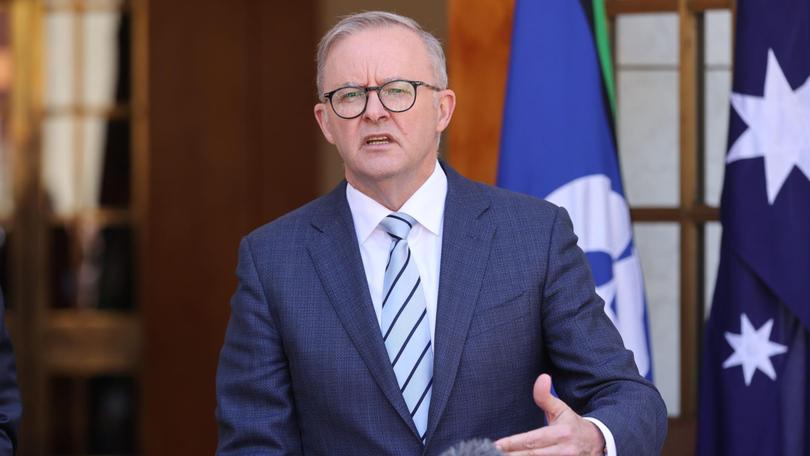
Australian Prime Minister Anthony Albanese on Thursday acknowledged some young people were still on social media a day after a world-first ban on under-16s went ‌live, saying the rollout was always going to be bumpy but would ultimately save lives.

A day after the law took effect, Australian social media feeds were flooded with comments from people claiming to be under 16, ⁠including one on the prime minister’s TikTok account saying “I’m still here, ‍wait until I can vote”.

Under the law, 10 of the biggest ‍platforms including TikTok, Meta’s ‍Instagram and Alphabet’s YouTube must bar underage users or face a fine of up ⁠to A$49.5 million ($33 million). The government has said previously that it would take some time for the platforms to set up processes to ​do this.

“Of course it isn’t smooth,” Albanese told Melbourne radio station FOX. “You can’t in one day switch off over a million accounts across the board. But it is happening.”

On Nova Radio in Sydney, Albanese added: “If it was easy, someone else would have done it.”

Governments around the world have said they would monitor the Australian rollout as ⁠they weigh whether to do something similar. U.S. Republican senator Josh Hawley endorsed the ban as it took effect, Nine newspapers reported.

The United Nations children’s agency UNICEF warned in a statement the ban might encourage children to visit less regulated parts of the internet and could not work alone.

“Laws introducing age restrictions are not an alternative to companies improving platform design and content moderation,” the statement said.

Albanese has pitched the ban as an intervention to protect young people from mental health risks associated with social media, including bullying, body image problems and addictive algorithms.

The measure would “save lives and it will change lives for this and future generations”, he told Nova.

Australian searches for virtual private networks (VPNs), which can mask an internet user’s location, surged to the highest in about 10 years ​in the week before the ban took effect, according to publicly available Google data.

Free VPN provider hide.me told Reuters it experienced a 65% spike in visits from Australia ⁠in the days before the ban kicked in, although that had not translated to a rising number of downloads.

All 10 platforms named by the ban opposed it before saying they would comply. As the ban took effect, ‍some platforms not covered by the ban rose to the top of app download ‌charts, prompting the Australian government to ‌say the platform list was “dynamic”.

One app, Lemon8, which ‍is owned by TikTok parent Bytedance, introduced an age minimum of 16. Photo-sharing app Yope told Reuters it ‌had experienced “very fast growth” to about 100,000 Australian users. About half ‍its users were over 16.

The company told Reuters it had told the Australian internet regulator overseeing the rollout that it considered itself a private messaging service, not social media. (JapanToday)