Posted on Leave a comment

Trump tells world leaders their countries are ‘going to hell’ in combative U.N. speech

U.S. President Donald Trump argued for lower levels of global migration and urged a turn away from climate change policies on Tuesday in a combative, wide-ranging speech to the U.N. General Assembly that leveled scathing criticism of world leaders.

The 56-minute speech was a rebuke to the world body and a return to form for Trump, who routinely bashed the U.N. during his first term as president. Leaders gave him polite applause when he exited the chamber.

He rejected moves by allies to endorse a Palestinian state amid Israel’s latest Gaza offensive and urged European nations to adopt the same set of economic measures he is proposing against Russia to force an end to the war in Ukraine.

Much of his speech was dominated by two of his biggest grievances: immigration and climate change.

Trump offered his U.S. immigration crackdown as a case study for what other world leaders should do to curb mass migration that he says is altering the fabric of nations. Human rights advocates argue the migrants are seeking better lives.

“I’m really good at this stuff,” Trump said. “Your countries are going to hell.”

Trump, who met last week with Britain’s environmentally conscious King Charles at Windsor Castle, called climate change a “con job” and urged a return to a greater reliance on fossil fuels. Scientists say climate change caused by humans is real.

“Immigration and their suicidal energy ideas will be the death of Western Europe,” Trump said.

Trump’s administration plans to call for sharply narrowing the right to asylum at the United Nations later this month, Reuters reported last week, as it seeks to undo the post-World War II framework around humanitarian protection.

Trump sprinkled into his speech a litany of false and misleading statements, such as that London Mayor Sadiq Khan wants to impose “sharia law” on London and that “inflation has been defeated” in the United States six days after the Federal Reserve said inflation has gone up.

European powers have spent months trying to stabilize their relationship with the U.S. leader with a focus on winning U.S. support to end the war in Ukraine. At a NATO summit in June, Trump and European leaders lavished each other with praise.

But in Tuesday’s speech, Trump mocked NATO allies for not shutting down purchases of Russian oil and said he would impose strong economic measures against Moscow.

“They’re funding the war against themselves. Who the hell ever heard of that one? In the event that Russia is not ready to make a deal to end the war, then the United States is fully prepared to impose a very strong round of powerful tariffs,” he said.

“But for those tariffs to be effective, European nations, all of you are gathered here right now, would have to join us in adopting the exact same measures.”

He did not detail the measures, but he has been considering a package that includes sanctions against countries that do business with Russia, like India and China. The main buyers of Russian oil in Europe are Hungary, Slovakia and Turkey.

Trump later held talks with Ukrainian President Volodymyr Zelenskiy, who pressed for more U.S. support to resist Russian advances. Trump, asked by reporters if NATO countries should shoot down Russian aircraft if they enter their airspace, said, “Yes, I do.”

On the Israel-Palestinian conflict, Trump rejected efforts by world leaders to embrace a Palestinian state, a move that faces fierce resistance from Israel.

“The rewards would be too great for Hamas terrorists, for their atrocities,” he said, repeating his call for the return of hostages taken by the Palestinian militant group.

Trump said the United States wants a ceasefire-for-hostages deal that would see the return of all remaining hostages, alive and dead.

“We have to stop the war in Gaza immediately. We have to immediately negotiate peace,” he said.

He was to discuss the future of Gaza during afternoon talks with several Gulf leaders.

Trump, who has cast himself as a peacemaker in a bid to win the Nobel Peace Prize, complained that the United Nations did not support his efforts to end conflicts around the world.

He added to his complaints with personal grievances about the U.N. infrastructure, saying he and first lady Melania Trump were briefly marooned on a malfunctioning U.N. escalator and that his teleprompter was not initially working.

“These are the two things I got from the United Nations – a bad escalator and a bad teleprompter,” Trump said, noting that Melania Trump nearly fell when the escalator stopped abruptly. (JapanToday)

Posted on Leave a comment

Macron phones Trump after US president’s motorcade blocks his car

Emmanuel Macron had to walk half an hour by foot through New York after his speech to the United Nations on recognising Palestine as a state.

Video footage shows him getting out of his car to talk to police officers after they stop his vehicle to make way for the expected arrival of the motorcade of Donald Trump, the US president.

The footage, which was captured by a reporter from the social media outlet Brut, appears to show the French president saying he needs to get to his country’s consulate.

“I’m sorry, president, I’m really sorry, everything has been frozen, there’s a motorcade coming right now,” an officer tells Macron.

The president then looks out over the empty street and replies: “If you don’t see it, let me cross. I’ll negotiate with you.”

Macron, who remains stuck behind a metal barrier, takes out his phone and appears to call Trump directly. Leaning on the barrier, he says, laughingly: “How are you? Guess what? I’m waiting in the street because everything is frozen for you.”

Macron later appears to be allowed through on foot but not in his car. Still on his phone, he proceeds to stride off down the street, past shoppers and pedestrians. The reporter from Brut said Macron walked for about 30 minutes with his security detail. He stopped and posed with passersby who asked for photographs, including one encounter with a man who kissed him on the forehead.

“The time has come to end the war in Gaza, the massacres and the death,” Macron had said during his opening speech to a special summit at the UN on Monday evening. “The time has come to do justice for the Palestinian people and thus to recognise the state of Palestine in Gaza, the West Bank and Jerusalem.”

Announcing France’s official recognition of Palestine, the president set out a plan for a UN-mandated international stabilisation force in postwar Gaza that is expected to find support in many countries but not in Israel or the US. (Guardian)

Posted on Leave a comment

France among six more countries to formally recognise Palestinian statehood

The leaders of six countries, including France, have moved to recognise Palestinian statehood at a high-level summit ahead of the annual United Nations General Assembly (UNGA) meeting in New York.

Alongside France, which co-convened the meeting with Saudi Arabia on Monday in New York, Andorra, Belgium, Luxembourg, Malta and Monaco said they were recognising a Palestinian state.

Leaders from Australia, Canada, Portugal and the United Kingdom, which formally made the move to recognise Palestine a day earlier, also spoke at the meeting.

“We have gathered here because the time has come,” Emmanuel Macron said at the summit convened to revive the long-delayed two-state solution to end the Israel-Palestine conflict.

“It falls on us, this responsibility, to do everything in our power to preserve the possibility of a two-state solution,” Macron said.

“Today, I declare that France recognises the state of Palestine,” he said.

The additional countries recognising Palestine now join some 147 of the 193 UN member states that had already formally recognised Palestinian statehood as of April this year.

With more than 80 percent of the international community now recognising the state of Palestine, diplomatic pressure has ramped up on Israel as it continues its genocidal war on Gaza, where more than 65,300 Palestinians have been killed and the has been enclave turned into rubble.

Spain, Norway and Ireland recognised Palestinian statehood last year, with Madrid also imposing sanctions on Israel for its war on Gaza.

Spanish Prime Minister Pedro Sanchez told the summit on Monday that a two-state solution was not possible “when the population of one of those two states is the victim of a genocide”.

“The Palestinian people are being annihilated, [so] in the name of reason, in the name of international law and in the name of human dignity, we have to stop this slaughter,” Sanchez said.

Macron, in his speech to the summit, also outlined a framework for the creation of a “renewed Palestinian Authority”. The post-war framework envisages an International Stabilisation Force (ISF) that would assist in preparing the Palestinian Authority (PA) to take over governance in Gaza.

PA President Mahmoud Abbas commended the countries that had recognised Palestine. He made his statement to the conference by video because he was denied a visa by the administration of US President Donald Trump to attend the UNGA this week.

“We call on those that have not yet done so to do so to follow suit”, Abbas said, adding that the PA also demanded “support for Palestine’s full membership in the United Nations”.

Israel and the US, which are becoming increasingly isolated internationally on the issue, boycotted the summit, with Israel’s UN ambassador, Danny Danon, describing the event as a “circus”.

Although the vast majority of UN member states now recognise Palestinian statehood, new UN member states must have the support of the UN Security Council, where the US has used its veto to block Palestine from becoming a full UN member state.

Speaking at the summit, UN Secretary-General Antonio Guterres reiterated his support for the two-state solution, framing it as the only viable path towards peace after years of failed negotiations and ongoing violence.

Guterres said that statehood for Palestinians “is a right, not a reward”, rejecting US and Israeli claims that it was a reward for Hamas.

Saudi Arabia’s foreign minister, Prince Faisal bin Farhan Al Saud, thanked Macron and the UN chief for their efforts towards a two-state solution, which he said is “the only way to achieve just and lasting peace”.

He said the conference comes at a time when “the Israeli occupation authorities continue their aggression and their brutal crimes” against Palestinians in Gaza.

Israel also continues its “violations in the West Bank, and its repeated attacks on Arab and Muslim countries, with the most recent attack on Qatar”, he said.

“These actions underline Israel’s insistence on continuing aggressive practices that threaten regional and international peace and stability and undermine efforts of peace in the region,” he added. (AlJazeera)

Posted on Leave a comment

Trump says he will designate anti-fascist ‘Antifa’ as a “terrorist organization”

US President Donald Trump early Thursday said he would designate “Antifa” – a shorthand term for “anti-fascist” used by Trump allies to describe diffuse left-wing groups – as “a major terrorist organization”.

Trump, who is on a state visit to the United Kingdom, made the announcement in a social media post, calling Antifa a “SICK, DANGEROUS, RADICAL LEFT DISASTER”. He also said he will be “strongly recommending” that funders of antifa be investigated. 

Trump and his supporters have, without evidence, ascribed blame to Antifa for various actions Trump dislikes, from violence against police to the US Capitol riot on January 6, 2021.

It’s unclear how the administration would label what is effectively a decentralized ideology as a terrorist organization, and the White House on Wednesday did not immediately offer details.

Trump’s previous FBI director, Christopher Wray, said in testimony in 2020 that Antifa is an ideology, not an organization, and lacks the hierarchical structure that would usually allow it to be designated as a terror group by the federal government.

While federal law enforcement includes combating domestic terrorism under its purview, the United States does not have a list of designated domestic terrorist organizations.

Senior White House official Stephen Miller has vowed the administration would dismantle an alleged “vast domestic terror movement” that he linked to the killing of right-wing activist Charlie Kirk. The political leanings of the suspect in Kirk’s death remain unclear. 

After Trump’s post, Senator Bill Cassidy, R-La., praised the announcement, saying: “Antifa seized upon a movement of legitimate grievances to promote violence and anarchy, working against justice for all. The President is right to recognize the destructive role of Antifa by designating them domestic terrorists.”

Cassidy and Senator Ted Cruz, R-Texas, introduced a July 2019 resolution in the Senate to condemn “Antifa” and designate it a domestic terror organization. (France24)

Posted on Leave a comment

UK, Australia, Canada recognise Palestinian state

Britain, Australia and Canada on Sunday recognised a Palestinian state in a seismic shift in decades of western foreign policy, triggering swift Israeli anger.

Portugal was also to recognise Palestinian statehood later Sunday, as Israel came under huge international pressure over the war in Gaza triggered almost two years ago by the October 7, 2023 Hamas attack.

“Today, to revive the hope of peace for the Palestinians and Israelis, and a two-state solution, the United Kingdom formally recognises the State of Palestine,” UK Prime Minister Keir Starmer said in a message on X.

Britain and Canada became the first G7 countries to take the step, with France and other nations expected to follow at the annual UN General Assembly which opens Monday in New York.

“Canada recognises the State of Palestine and offers our partnership in building the promise of a peaceful future for both the State of Palestine and the State of Israel,” Canadian Prime Minister Mark Carney wrote on X.

It is a watershed moment for Palestinians and their decades-long ambitions for statehood, with the most powerful Western nations having long argued it should only come as part of a negotiated peace deal with Israel.

But the move puts those countries at odds with the United States and Israel, with Israeli Prime Minister Benjamin Netanyahu reacting angrily and vowing to oppose it at the UN talks.

Calls for a Palestinian state “would endanger our existence and serve as an absurd reward for terrorism,” Netanyahu said Sunday.

A growing number of longtime allies have shifted positions, as Israel has intensified its Gaza offensive, vowing to eliminate the Hamas Palestinian militants.

The Gaza Strip has suffered vast destruction, a spiralling death toll and a lack of food that has sparked a major humanitarian crisis since the start of the conflict which has drawn an international outcry

The UK government has come under increasing public pressure to act, with thousands rallying every month on the streets. A poll released by YouGov on Friday showed two-thirds of young Britons aged 18-25 supported Palestinian statehood.

Deputy Prime Minister David Lammy acknowledged at the UN in July that “Britain bears a special burden of responsibility to support the two-state solution”.

Over a century ago, the UK was pivotal in laying the groundwork for the creation of the state of Israel through the 1917 Balfour Declaration.

Three-quarters of UN members already recognise Palestinian statehood, with over 140 of the 193 having taken the step.

Starmer said in July that his Labour government intended to recognise a Palestinian State unless Israel took “substantive” steps including reaching a ceasefire in Gaza, getting more aid into the territory and confirming it would not annex the West Bank.

Starmer has also repeatedly called on Hamas to release the remaining hostages they captured in the 2023 attack, and is expected to set out new sanctions on the Palestinian militants.

Lammy told the BBC on Sunday that the Palestinian Authority, the civilian body that governs in areas of the West Bank, had been calling for the move for some time “and I think a lot of that is wrapped up in hope”.

“Will this feed children? No it won’t, that’s down to humanitarian aid. Will this free hostages? That must be down to a ceasefire.”

But he said it was an attempt to “hold out for” a two-state solution.

Palestinian foreign minister Varsen Aghabekian Shahin told AFP last week: “Recognition is not symbolic.”

“It sends a very clear message to the Israelis on their illusions about continuing their occupation forever,” she added.

Hamas’s 2023 attack on southern Israel resulted in the deaths of 1,219 people, most of them civilians, according to an AFP tally of official figures.

Israel’s retaliatory campaign has killed at least 65,208 people, also mostly civilians, according to figures from the Gaza health ministry that the United Nations considers reliable.

Portugal said that it would also formally declare its recognition in New York on Sunday.

“By acting now, as the Portuguese government has decided, we’re keeping alive the possibility of having two states,” Portuguese President Marcelo Rebelo de Sousa said. (Punch)

Posted on Leave a comment

Australia unveils new emissions cuts

Australia pledged Thursday to slash planet-warming greenhouse gas emissions by up to 70 percent from 2005 levels over the next decade, a target activists warned was not ambitious enough.

Under the landmark Paris climate accord, each country must provide a headline figure to the United Nations for cutting heat-trapping emissions by 2035, and a detailed blueprint for getting there.

A leading coal exporter, Australia’s pledge has been closely watched given its bid to host next year’s U.N. climate summit alongside Pacific island neighbors threatened by rising seas.

The announcement also comes days after a national climate risk assessment warned rising oceans and flooding caused by climate change would threaten the homes and livelihoods of over a million Australians by 2050.

One prominent climate scientist described the new target as “baffling,” given those findings and Australia’s bid to host climate talks.

“Australia needs to cut its emissions at a pace associated with a 1.5C compatible emission reduction pathway and that properly aligns with bringing emissions to net zero by 2050 in Australia,” said Bill Hare, head of the Climate Analytics research group. “This requires strong government policy action now.”

Climate activists and experts say Australia needs to slash emissions by at least 76 percent from 2005 levels to keep global temperatures from rising over 1.5C higher than pre-industrial levels.

But Prime Minister Anthony Albanese described the goal as a “responsible target backed by the science”.

His government said it would fund a new Aus$5 million ($3.3 billion) “Net Zero Plan” to help firms transition to green energy.

It will also help Australians buy more zero emissions vehicles and access clean energy.

The target is “not likely to please anyone,” said Jacqueline Peel, a climate specialist at the University of Melbourne Law School.

And given the risks outlined in this week’s assessment, “this ‘achievable’ target feels very anticlimactic,” she added.

Anote Tong, former president of Pacific nation Kiribati, told AFP Australia’s goals were undermined by its reliance on fossil fuel.

“The problem has been Australia’s high volume of fossil fuel exports and ongoing substantial subsidies to the fossil fuel industry,” said Tong, often called the founding father of the Pacific climate movement.

“These recent decisions by the government become more stark in contrast to the recently released Climate Risk Assessment Report which predicts apocalyptic scenarios, even for Australian citizens, if unheeded,” he said.

Global emissions have been rising but need to almost halve by the end of the decade to limit global warming to safer levels agreed under the Paris deal.

Australia’s previous 2030 commitment was to cut emissions by 43 percent of 2005 levels.

Countries were meant to submit updated targets earlier this year but only 10 of nearly 200 countries required did so on time, according to a U.N. database tracking the submissions.

Australia has poured billions into solar power, wind turbines and green manufacturing and pledged to make the nation a renewable energy superpower.

But its green ambitions are at odds with its deep entanglement with lucrative fossil fuel industries, and it remains one of the world’s biggest coal exporters. (JapanToday)

Posted on Leave a comment

Suspect in Charlie Kirk killing charged with murder

Prosecutors in Utah announced on Tuesday that they have formally charged the suspect in the murder of prominent US conservative activist Charlie Kirk.

Kirk, a close ally of President Donald Trump, was shot dead last week during a speaking event on a Utah university campus.

Authorities said 22-year-old Tyler Robinson used a rifle to shoot Kirk with a single bullet to the neck from a rooftop. He was arrested after a 33-hour manhunt.

“After reviewing the evidence that law enforcement has collected thus far, I am…charging Tyler James Robinson, age 22, with the following crimes,” Utah County attorney Jeff Gray told a press conference.

“Count one, aggravated murder, a capital offence, for intentionally or knowingly causing the death of Charlie Kirk under circumstances that created a great risk of death to others.”

Six other charges include obstruction of justice and witness tampering, allegedly for ordering his roommate to stay silent.

“I am filing a notice of intent to seek the death penalty,” Gray added.

“I do not take this decision lightly, and it is a decision I have made independently as county attorney based solely on the available evidence and circumstances and nature of the crime.”

Kirk was the founder of the influential conservative youth political group Turning Point USA.

The father of two used his audiences on TikTok, Instagram and YouTube to build support for conservative talking points, including strong criticism of the transgender rights movement.

A polarising figure, he often posted carefully edited clips of his interactions during debates at his many college events.

On Monday, the White House announced plans to target a left-wing ‘domestic terror movement,’ raising concerns over silencing dissent.

FBI Director Kash Patel faced heavy criticism for announcing a suspect’s arrest after the shooting, only to retract it later.

Patel faced a grilling from a Senate panel on Tuesday that included some very bad-tempered exchanges with Democratic Senator Corey Booker.

Patel has faced criticism from both sides since Trump appointed him to lead the FBI, the nation’s top law agency. (Channels)

Posted on Leave a comment

Trump gets royal welcome at Windsor Castle at start of his two-day UK visit

President Donald Trump relished the glow of a British royal spectacle as he opened a two-day state visit Wednesday, calling the hours of pageantry with King Charles III “truly one of the highest honours of my life” while also making time for a quiet tribute at Queen Elizabeth II’s tomb.

The grandeur-loving president soaked up all the revelry, from the largest guard of honor in living memory, with 120 horses and 1,300 troops, to carriage rides, an air show and a Windsor Castle dinner.

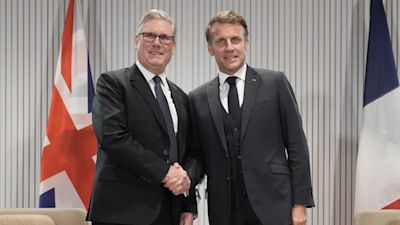
After the pomp comes the real work Thursday, when Trump and British Prime Minister Keir Starmer meet to talk trade, technology and geopolitical issues.

No US president, or any other world leader, has had the honour of a second UK state visit; Trump’s first was in 2019, during his previous term. The display of regal splendor was meant to bolster ties with Trump at a time when his America First policies are putting pressure on trade and security arrangements around the globe.

Prince William and his wife, Kate, met the presidential helicopter in the private Walled Garden on the vast Windsor estate, then walked Trump and first lady Melania Trump over to be greeted by Charles and Queen Camilla. A gigantic royal standard – the flag used for official celebration days – flew from the Royal Tower.

The guests travelled to the castle in a procession of horse-drawn carriages, past ranks of soldiers, sailors and aviators. The king and the Republican president chatted in the Irish State Coach during the short journey to the castle quadrangle, where both inspected an honour guard of soldiers in red tunics and bearskin hats.

They continued to chat and joke as the day progressed, with the king occasionally putting his hand on Trump’s back. The president stepped in front of Charles during a review of troops after the king gestured for him to do so. The king’s invitation avoided a violation of protocol, which was not the case in 2019, when Trump stepped in front of Queen Elizabeth.

Part of the day was spent at St. George’s Chapel on the castle grounds, where Trump placed a wreath in honour of Elizabeth, who died in 2022.

The president and Charles toured the Royal Collection Display in an ornate room where officials laid out five tables of artifacts on US-British relations.

Among the items were 18th-century watercolours and documents on the United States seeking independence from King George III. There were materials from the first trans-Atlantic cable, including messages between Queen Victoria and President James Buchanan, as well as a 1930s hot dog picnic that a young Elizabeth wrote about, and a large glass vessel that President Dwight D. Eisenhower gave the queen during a 1957 state visit.

The president walked a red carpet on the castle’s East Lawn to watch the Beating Retreat, a military parade ceremony that featured 200-plus musicians, dates to the 1600s and was once used to call patrolling soldiers back to their castle at day’s end.

A scheduled flyover by F-35 jets from the UK and US militaries was scrapped because of poor weather conditions. But the Red Arrows, the Royal Air Force’s aerobatics display team, thundered overhead, leaving streaks of red, white and blue smoke in their wake and drawing a visible reaction from both Trumps.

Charles and Camilla also presented the president and first lady with a handbound leather volume celebrating the 250th anniversary of the Declaration of Independence, as well as the Union flag that flew above Buckingham Palace on the day of Trump’s inauguration in January. The royals also gave first lady Melania Trump a silver and enamel bowl and a personalised handbag by British designer Anya Hindmarch.

Trump gave Charles a replica of an Eisenhower sword, and Camilla received a vintage Tiffany & Co. gold, diamond and ruby brooch.

The history, tradition and celebrity of the royal family give it a cachet that means presidents and prime ministers covet joining them. In his talks with Trump, Starmer will promote a new UK-US technology agreement. The British government hopes the deal, and billions in investment from U.S. tech companies, will help show that the trans-Atlantic bond remains strong despite differences over Ukraine, the Middle East and the future of NATO.

Trump and Charles walked together, leading a procession for the evening banquet. Trump wore white tie while his wife was in a yellow gown. Charles was in white tie with a blue sash, and Camilla in a blue gown with a tiara.

Beefeaters in traditional red uniforms and ruff collars lined the entrance to the castle’s St. George’s Hall for the dinner, which featured 100 staff members attending to 160 guests. The grand Waterloo table was set with 1,462 pieces of silver sparkling in the light from 139 candles and elaborate floral arrangements handpicked from the castle grounds.

The guest list included Apple’s Tim Cook, Nvidia CEO Jensen Huang, Open AI’s Sam Altman and US Masters-winning golfer Nick Faldo. Also appearing was publishing mogul Rupert Murdoch, whom Trump recently sued for $10 billion over The Wall Street Journal’s report on a sexually suggestive letter purportedly written by Trump for disgraced financier Jeffrey Epstein.

The menu featured Hampshire watercress panna cotta with Parmesan shortbread and quail egg salad, along with Norfolk chicken ballotine. Dessert was vanilla ice cream bombe with a raspberry sherbet interior and lightly poached Victorian plums.

Trump avoids alcohol, but the bar offerings included a cocktail known as a Transatlantic whiskey sour infused with marmalade, Warre’s 1945 Vintage Port – Trump is the 45th and 47th American president – and Hennessy 1912 Cognac Grande Champagne. That was the year Trump’s mother, Mary Anne MacLeod, was born in Scotland.

The musical playlist included the theme from the James Bond movies and pop and rock staples, as well as top showtunes, often featured at Trump’s campaign rallies.

In his toast, Charles saluted Trump’s British roots and his recent visits to the UK In a nod to the president’s favourite sport, he said, “I understand that British soil makes for rather splendid golf courses.”

Trump read from prepared remarks and was on his best behaviour, declaring, “This is truly one of the highest honours of my life” and sneaking in only one dig about his predecessor, Democratic President Joe Biden, by saying the US was “sick” a year ago.

Trump also touched on Britain’s contributions to literature, history and the arts and said “special” does not begin to do justice to his country’s relationship with the UK.

“Together we’ve done more good for humanity than any two countries in all of history,” he said.

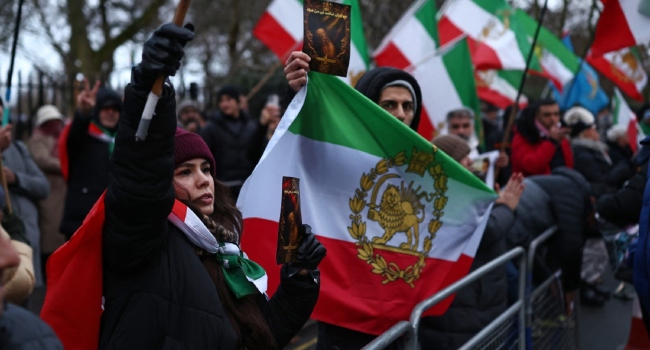
Thousands of demonstrators marched through central London on Wednesday to protest Trump’s visit. Some held banners that said “No to the racism, no to Trump.” Though the activities were smaller than during Trump’s visit in June 2019, they included mini versions of the giant Trump baby blimp, an orange-tinted caricature of the president in a diaper that made a big impression during those demonstrations six years ago.

In Windsor, protesters projected an image of Trump and Epstein on a tower at the castle, a reminder of the president’s relationship with the late American financier. Police said they arrested four people. (France24)

Posted on Leave a comment

Trump gets royal welcome in UK as he makes historic second state visit

US President Donald Trump arrived in Britain on Tuesday for an unprecedented second state visit, with the UK government rolling out a royal red carpet welcome to win over the mercurial leader.

“A lot of things here warm my heart,” the 79-year-old Republican told reporters after he arrived with First Lady Melania Trump. “It’s a very special place.”

King Charles III will host Trump at Windsor Castle for a lavish banquet and carriage ride on Wednesday, before Trump meets Prime Minister Keir Starmer at his country residence on Thursday.

In a sign of the pomp and pageantry to come, a guard of honour greeted the Trumps as they stepped off Air Force One at Stansted Airport near London.

Trump then expressed his admiration for the British monarch.

“He’s been a friend of mine for a long time, and everyone respects him, and they love him,” Trump said as he arrived by helicopter at Winfield House, the US ambassador’s residence in London, where he will spend the night.

“Tomorrow’s going to be a very big day.”

Trump is the first US president to be invited for two state visits, after previously being hosted by Queen Elizabeth II during his last term in office in 2019 — as Britain tries to keep the so-called special relationship alive.

The British government has been unapologetic about its efforts to get on the right side of Trump, whose mother was Scottish and who owns a number of golf courses in the UK.

But the British public will be kept far away from Trump, with the visit taking place entirely behind closed doors and heavy security.

A large anti-Trump demonstration has been called in London on Wednesday, while protesters projected images of Trump and convicted sex offender Jeffrey Epstein onto the towers of Windsor Castle late Tuesday.

The shadow of the Epstein scandal has hung over Trump for weeks after his administration declined to release files on the issue. 

It has also embroiled British Prime Minister Keir Starmer, who sacked his ambassador to Washington Peter Mandelson on the eve of the visit over the envoy’s emails to Epstein.

Starmer’s government is however counting on the sheer scale of the state visit to keep Trump onside, despite his unpredictability over everything from tariffs to Ukraine and Gaza.

In Windsor on Wednesday, Trump will get a ceremonial carriage ride and a flypast by both UK and US jets in what officials call the largest military show for a state visit in living memory.

In the evening King Charles will host Trump for a lavish state dinner where both men will give speeches.

Trump may also relish the royal part of the visit as a chance to escape a turbulent period at home, where the killing of right-wing activist Charlie Kirk has caused turmoil.

Politics will take over again on Thursday when Starmer hosts Trump at his country residence Chequers for talks focusing on trade and the wars in Ukraine and Gaza.

The visit has been timed to line up with announcements of several investments in Britain — the latest being a pledge by Microsoft to spend $30 billion over four years.

Starmer needs the visit to go well after a miserable few days in which some in his Labour party have openly questioned whether he can remain as leader over the Mandelson resignation.

Downing Street has said Trump’s visit would see the “unbreakable friendship” between the countries “reach new heights”.

The visit is “a huge moment for both” men, said Evie Aspinall, director of the British Foreign Policy Group think-tank.

“For Trump, the state visit is an opportunity to revel in the pomp and ceremony he loves,” she told AFP.

“For Starmer, the visit is a chance to distract from domestic discontent and shift the limelight onto international issues where he has had greater success.” (France24)

Posted on Leave a comment

Macron names ally Sébastien Lecornu as new French PM

President Emmanuel Macron has named close ally Sébastien Lecornu as the new French prime minister, 24 hours after a vote of confidence ousted François Bayrou as head of government.

Lecornu, 39, was among the favourites to take over, and he has spent the past three years as armed forces minister focusing on France’s response to Russia’s war in Ukraine.

In a statement the Elysée Palace said Lecornu – the seventh PM in the Macron presidency – had been given the task of consulting political parties with the aim of adopting France’s next budget.

Pushing through a budget as head of a minority government was what brought down Bayrou, with left and far-right opponents condemning Lecornu’s appointment.

Bayrou had visited the president hours earlier to hand in his resignation, paving the way for Sébastien Lecornu to become the fifth prime minister of Macron’s second term as president.

Lecornu wrote on social media that he had been entrusted by the president with “building a government with clear direction: defending our independence and our strength, serving the French people, and [ensuring] political and institutional stability for the unity of our country”.

His immediate task is tackling France’s spiralling public debt, which hit €3.3tn (£2.8tn) earlier this year and represents 114% of the country’s economic output or GDP.

Bayrou had proposed €44bn in budget cuts, and his decision to put his plans to a vote of confidence was always going to fail. In the end France’s National Assembly decided to oust his government by 364 votes to 194.

Lecornu’s appointment was welcomed by centrist allies such as Marc Fesneau from Bayrou’s MoDem party. He called on every political force to reach a compromise – “for the stability of the country and its recovery, especially its budget”.

Jean-Luc Mélenchon of the radical left France Unbowed was unimpressed, complaining that nothing had changed and it was time for Macron’s departure from the presidency.

There had been suggestions that Macron might try to approach the centre left to broaden his minority government, and Olivier Faure of the Socialists had offered his services the night before.

It soon became clear that Faure would not be getting the call: “I slept pretty soundly so I didn’t hear the phone ring.”

On the far right, Marine Le Pen said the president was ”giving Macronism its last shot from his bunker, along with his little circle of loyalists”.

France has had a hung parliament since Macron surprised his country by calling snap national elections last year, after a poor performance in the June 2024 European vote. There are broadly three main political blocs: the left, far right and the centre.

Édouard Philippe, who was Macron’s first prime minister from 2017-20, thought Lecornu was a good choice as he had learned a lot as defence minister.

“I’ve known him for a long time because he was elected like me in Normandy,” the Horizons party leader told TF1 TV. “He knows how to debate and he’ll need this talent for debate and listening to find a deal in circumstances he knows are pretty complicated.”

Philippe believed Lecornu would have to find some way of bringing the Socialists on board. It was certainly possible to find a majority and also necessary, he thought, because without a compromise on a budget deal, a fresh political crisis would erupt and new elections would be inevitable.

More immediately, a grassroots movement called Bloquons Tout – “Let’s Block Everything” – is planning widespread anti-government protests on Wednesday and authorities are planning to deploy 80,000 police.

Then on Friday the credit agency Fitch will reassess France’s debts and could make its borrowing costs higher if it lowers its rating from AA-. (BBC)