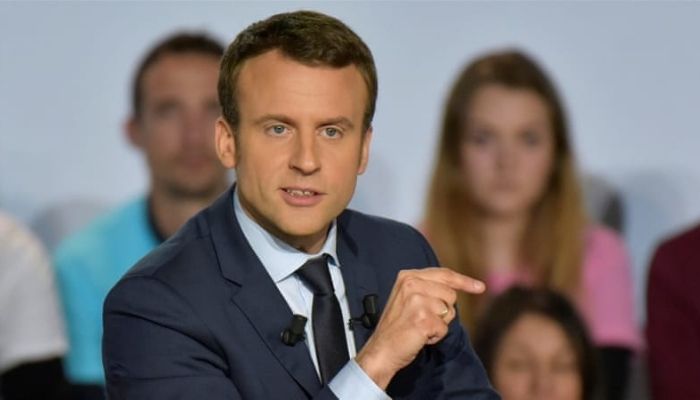
French President Emmanuel Macron urged investment in Africa on Monday as he co-hosted an economic summit in Kenya, after defending European involvement on the continent.
The European leader, speaking at the University of Nairobi, said Africa “needs investment to become more sovereign”, replacing aid with economic opportunities.
Speaking in French, Macron said that previously European chiefs would lecture African leaders on what they needed, but, “this is no longer what Africa needs or wants to hear”.
“That’s just as well, because we, too, no longer have the means, if we’re being honest,” he said.
Ahead of the summit, in an interview with the magazines Jeune Afrique and The Africa Report, the French leader said he first strongly condemned colonialism when he came to power in 2017.
In contrast, the United States and China were locked in a trade standoff, with no respect for the rules, he added.
On critical minerals and rare earths, China, he said, “operates according to a predatory logic: it does the processing at home” and creates “dependencies with the rest of the world”.
Macron, leading the two-day summit aimed at renewing France’s engagement with Africa after years of strained ties with its former colonies, said Europe was instead promoting “a strategy of autonomy” for both continents.
Central to transforming Africa’s fortunes should be an overhaul of international finance, to set up a system of financial guarantees to bring in private investment, he added. (Channels)
Pope Leo XIV has criticised foreigners who exploit the wealth of Africa for profit during his visit to a conflict-hit region of Cameroon.
It is one of several forthright remarks he has made over the last day, including blasting those who spend billions on wars and telling Cameroon’s government to root out corruption for peace to prevail.
He has spent the day in Bamenda, a city at the centre of Cameroon’s brutal and long-running separatist rebellion.
Internal problems were exacerbated by outsiders who “in the name of profit, continue to lay their hands on the African continent to exploit and plunder it”, he told an estimated 20,000 worshippers at a Mass at Bamenda Airport.
Earlier, joyful crowds sang, drummed and waved flags to welcome the leader of the Catholic Church, who arrived under military escort in a bullet-proof white vehicle.
Ahead of his visit, Anglophone separatists had announced a period of “safe travel passage”.
The Pope’s first stop was at a peace meeting in Bamenda held at Saint Joseph’s Cathedral about the nearly 10-year insurgency in Cameroon’s two English-speaking regions that has left at least 6,000 people dead and many more forced from their homes.
“Those who rob your land of its resources generally invest much of the profit in weapons, thus perpetuating an endless cycle of destabilisation and death,” said the 70-year-old Pope.
Since 2017, those seeking to create a breakaway state in Cameroon’s Anglophone region have been fighting government forces.
They are angered by what they see as the marginalisation of Cameroon’s English-speaking minority by the Francophone-dominated government.
Religious leaders and victims of the Anglophone conflict took turns to share the impact of the fighting with the Pope.
A Muslim leader decried the killing of members of the Mbororo indigenous community, looting of cattle and other items.
A nun revealed details of her kidnap by separatist fighters, highlighting the severity of the conflict.
Another man shared how he was forced to flee his home.
The Pope commended their work and said it was a model for the whole world: “Let us thank God that this crisis has not degenerated into a religious war.”
Commentators say the Pope has been unusually blunt in his speeches in Cameroon.
On Wednesday at the presidential palace in the capital, Yaoundé, he gave pointed advice to the government during at address also attended by President Paul Biya.
“In order for peace and justice to prevail, the chains of corruption – which disfigure authority and strip it of its credibility – must be broken,” he said. (BBC)
The challenge of leadership dominated deliberations on Thursday as regional leaders and diplomats examined issues confronting the African continent at the Murtala Muhammed International Lecture and Leadership Conference.
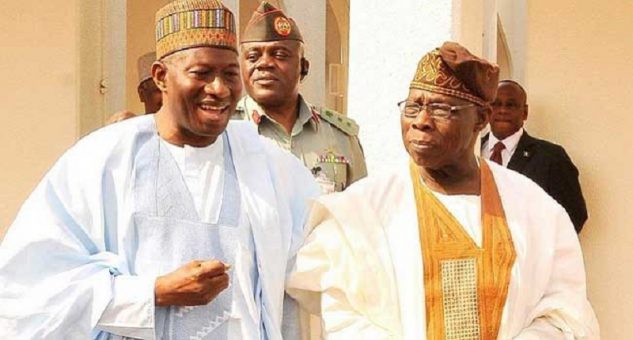
The lecture, themed “Has Africa Come of Age?”, drew an array of distinguished personalities, including former Presidents Olusegun Obasanjo and Goodluck Jonathan; former Vice President Yemi Osinbajo; former Ghanaian President John Kufuor; former Malawian President Joyce Banda; and former Sierra Leonean President Ernest Bai Koroma.
Obasanjo observed that one of the enduring legacies of the late General Murtala Muhammed was the emergence of capable successors who sustained his vision and development agenda. He acknowledged that successive administrations, including his own, had not effectively replicated that standard.
According to him, the late leader ensured continuity by leaving behind individuals equipped to advance his ideas and reforms.
“We cannot make progress if we take two steps forward, one step sideways, and three steps back, which is what we have been doing,” Obasanjo said. “The failure of all leaders after Murtala, including myself, is that we have not been able to create successors who could go on after us.”
“I handed over to civilians, and their ideas were completely different from the ideas we handed over to them. I will give you just one example. By the time we left in July 1979, we wanted to be self-sufficient in rice production. We asked that a report be prepared on what was in the fields. The report showed that we would be self-sufficient in rice production that year.
“Based on that, we banned the importation of rice before we left the government. In October 1979, when the civilian administration came in, one of the first things they did was to lift the ban on rice importation so they could allocate import licences to their supporters and political associates.
“One of the barons, who obtained a rice import licence from America, ordered rice and then asked the suppliers to add $5 million to the cost. They did. He then went back to New York and demanded $2.5 million out of the $5 million. They refused and gave him only $1 million. He wanted $2.5 million but had taken no risk. So, they gave him $1 million.
“Since the lifting of the rice import ban in 1979, we have not recovered from it. That is why we are still importing rice today. These are the kinds of things that go wrong.”
The former president said what is needed right now is reform and building the capacity to produce for both local consumption and export.
“When I became elected president, cocoa production in Nigeria was 150,000 metric tons. We introduced a new system to boost production, and within four to five years, we were producing 450,000 metric tons; we tripled output.
“Today, I understand we are producing no more than 300,000 metric tons. That is not how Africa will come of age. We must grow at nine to 10 per cent Gross Domestic Product (GDP) annually to come of age”, he said.
On his part, Former President Goodluck Jonathan said, “While Murtala symbolised decisive leadership, our democratic future depends on strong institutions. These include credible electoral management bodies, independence of the judiciary, well-trained security officers, and accountable governance systems. Democracy requires vision rather than decree, persuasion instead of command, and it depends on institutions, not individuals.”
Jonathan, however, pointed out that Africa’s current challenge is the absence of a lasting democratic culture built on credible and transparent elections.
He said, “Such a culture must respect term limits, protect the independence of the judiciary, press freedom, and credible elections.”
Jonathan also added, “More importantly, it is essential to emphasize the transformative power of vision in leadership. General Murtala assumed office as Head of State at the very young age of 38. Despite a tenure of only 200 days, his achievements were profound because he was driven by a clear, unyielding vision for a greater and more prosperous Nigeria.
“The President we are celebrating today was Head of State at the age of 38. If we are looking for people who can run nations in Africa, we should look at the age within 30 and 40 years. That is the way you can be very vibrant, physically strong, and mentally sound. If they need to stay awake for 24 hours, they can, but if you subject an older person to that kind of stress, the person will spend 50 per cent of the time in the hospital.”
Jonathan urged African countries to lower age barriers and strengthen institutions that allow youth participation in governance.
Describing Africa as a predominantly young continent.
Jonathan said growing frustration among youths should not be mistaken for a rejection of democracy.
He said it reflects a demand that democracy must deliver opportunities, dignity, and justice, adding that where justice is absent, “there are fractures within democracy.
He anchored his argument on the legacy of the late Head of State, General Murtala Muhammed, who assumed office at the age of 38 and governed with what he described as clarity of purpose and selfless national vision.
According to Jonathan, Murtala’s brief but impactful leadership showed that age is not a barrier to effective governance when leaders are driven by patriotism and discipline.
“General Murtala Muhammed assumed office as Head of State at a very young age. Despite a tenure of only 200 days, his achievements were profound because he was driven by a clear, unyielding vision for a greater Nigeria,” he said.
He lamented the future of democracy in Africa, saying the continent cannot sustain democracy while excluding its most vibrant population.
He therefore called for a deliberate inclusion of the young people in decision-making and leadership positions, reinforcing support for the Not Too Young to Run movement.
He argued that leadership in the modern era requires physical strength, mental alertness, and stamina often found among younger leaders.
“If we are looking for people who can run nations in Africa, we should look at the age within our day and age. That is how you can be vibrant, physically strong, and mentally sound,” Jonathan said.
If Africa has come of age, Jonathan wondered why leaders spend 50 per cent of their time outside the country, stressing that in countries such as America, some governors do not leave the country throughout their tenure in office.
But the Secretary to the Government of the Federation (SGF), Senator George Akume, said leadership was not about physical age but about ideas.
Akume, who represented President Bola Tinubu at the occasion, commended the ideals of late Gen. Murtala Muhammed, saying, “He was not just a Nigerian but he loved the country and did so much to restore its glory. Nigerians will continue to remember him for his fight against corruption. He believed in Africa and fought for its liberation. He devoted lots of resources and there were results”
He also commended the late Murtala for putting in place a programme to return the country to democracy before his assassination.
He also pleaded with Nigerians not to despair, noting that the government is working towards implementing its set goals.
In her welcome address, the Chief Executive Officer, MMF and daughter of Mohammed, Dr. Aisha Mohammed-Oyebode, said, “It was about who controls your resources, who shapes your policies, and whose interests define your future. Today, as we look across our continent, that question still challenges us.
“We are politically independent, yet we are still negotiating economic dependence. We are rich in talent and resources, yet still confronting inequality and fragility. We are young, dynamic, and globally connected, yet we are often uncertain about the leadership structures that are meant to serve our people”, she said.
The Keynote Speaker and former Vice President, Professor Yemi Osinbajo, eulogized Muhammad for capturing the imagination of the nation through the sheer clarity of his reforms, adding that he purged the civil service to confront corruption and inertia, probed military governors, and seized illicitly acquired properties.
“Yet it was his declaration that Africa had come of age that immortalized him, the speech that he made 34 days before he was assassinated”, he said.
“He was speaking of the awakening of responsibility, identity, and self-determination, and his context was the generational obligation of African leadership of his era to fight the viciousness of neocolonialism as those before them had fought colonialism. He was summoning the high values of integrity, dignity, and individual autonomy, by virtue of which African people, like others, had a right and an obligation to determine their own destinies and who they chose to undertake that journey with”, Osinbajo said.
Also speaking on whether Africa has come of age, former President of Ghana, John Kufuor, said the real question should be whether Africa today stands in the world with a settled sense of identity, responsibility, and purpose, not only as a political space but as a moral presence within humanity. (Nation)
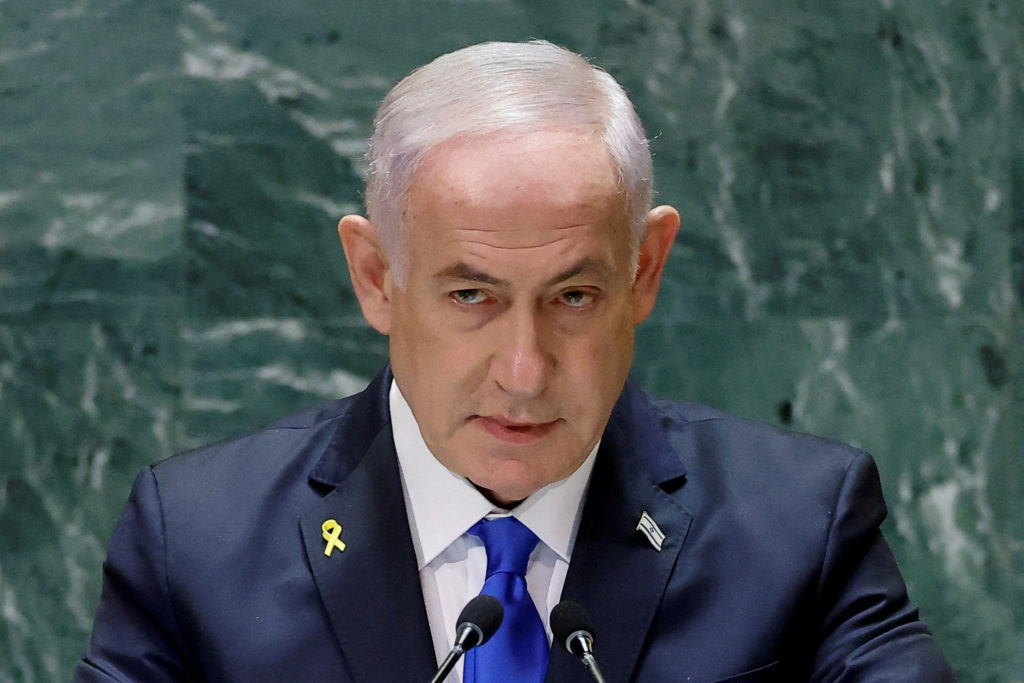
Israel has become the first country to formally recognise Somalia’s breakaway region of Somaliland as an independent nation.
Prime Minister Benjamin Netanyahu, said Israel intended to immediately expand cooperation in agriculture, health, and technology. Somaliland’s president, Abdirahman Mohamed Abdullahi, called the development “a historic moment”.
Recognition by Israel could encourage other nations to follow suit, increasing the region’s diplomatic credentials and access to international markets.
Somalia’s prime minister, Hamza Abdi Barre, said his country categorically and unequivocally rejected what he called a deliberate attack by Israel on its sovereignty.
Abdullahi said in a statement that Somaliland would join the Abraham Accords, in what he called a step toward regional and global peace.
Somaliland was committed to building partnerships, boosting mutual prosperity and promoting stability across the Middle East and Africa, he added.
The decision has been condemned by the foreign ministers of Somalia, Egypt, Turkey and Djibouti, who in a statement affirmed their “total rejection” of Israel’s announcement.
The two countries had agreed to establish “full diplomatic ties, which will include the appointment of ambassadors and the opening of embassies”, Israeli Foreign Minister Gideon Saar said in a statement on X.
“I have instructed my ministry to act immediately to institutionalise ties between the two countries across a wide range of fields,” he said.
Meanwhile, Egypt’s foreign minister held separate phone calls with his counterparts in Somalia, Turkey and Djibouti to discuss issues including Israel’s declaration.
In a statement, Egypt’s foreign ministry said the four countries reaffirmed their support for Somalia’s unity, sovereignty and territorial integrity, and warned against unilateral steps that could undermine stability or create what they called “parallel entities” to Somalia’s state institutions.
They also argued that recognising the independence of parts of sovereign states would set a dangerous precedent under international law and the United Nations Charter.
The statement added that the ministers reiterated their rejection of any plans to displace Palestinians outside their homeland.
Israel has for years been trying to bolster relations with countries in the Middle East and Africa, but recent wars including in Gaza and against Iran have been seen as a hindrance to democracy.
Historic deals struck late in Trump’s first term in 2020, known as the Abraham Accords, saw several countries including Muslim-majority United Arab Emirates and Morocco normalise relations with Israel, with other countries joining later.
Somaliland has a strategic position on the Gulf of Aden, and has its own money, passports and police force. Born in 1991 after a war of independence against former dictator General Siad Barre, it has grappled with decades of isolation ever since.
With a population of almost six million, the self-proclaimed republic has recently been at the centre of several regional disputes involving Somalia, Ethiopia and Egypt.
Last year, an agreement between landlocked Ethiopia and Somaliland to lease a stretch of coastline for a port and military base angered Somalia. (BBC)
South African singer Tyla has become the African artist with the highest number of monthly listeners on Spotify, overtaking Nigerian stars Burna Boy and Tems.
The achievement makes the 22-year-old singer the most-followed African artiste on the streaming platform, showing how quickly she has risen and gained international attention.
Born Tyla Laura Seethal, the Johannesburg-born singer broke into the global spotlight in 2023 with her hit single Water. The song became a viral success across social media platforms, especially TikTok, and helped introduce Tyla to a worldwide audience.
Water went on to chart in several countries and earned Tyla worldwide recognition.
The success of the track marked a turning point in her career, positioning her as one of Africa’s most visible music exports.
Since then, Tyla has released other songs such as Kick to Start, Truth or Dare, and Channel which have helped sustain her momentum and attract new listeners across different markets.
In 2024, Tyla won the Grammy Award for Best African Music Performance with Water, making her one of the youngest African artistes to receive the honour.
Beyond the Grammys, Tyla has also won several international awards. She has won the MTV Video Music Awards, the BET Awards and the MTV Europe Music Awards, recognising both her music and her impact as a rising pop figure.
Her growing list of accolades has helped position her as one of the most influential young artistes from Africa.
By surpassing Burna Boy and Tems in monthly listeners, Tyla joins a small group of African artistes whose music consistently attracts a massive global audience.
Burna Boy is known for his dominance and Grammy-winning career, while Tems has also enjoyed international success and also won several music awards, including the Grammys through collaborations and solo releases.
As Tyla’s fan base continues to grow, fans are glued to see more releases, tours and collaborations from her as we approach 2026. (Guardian)
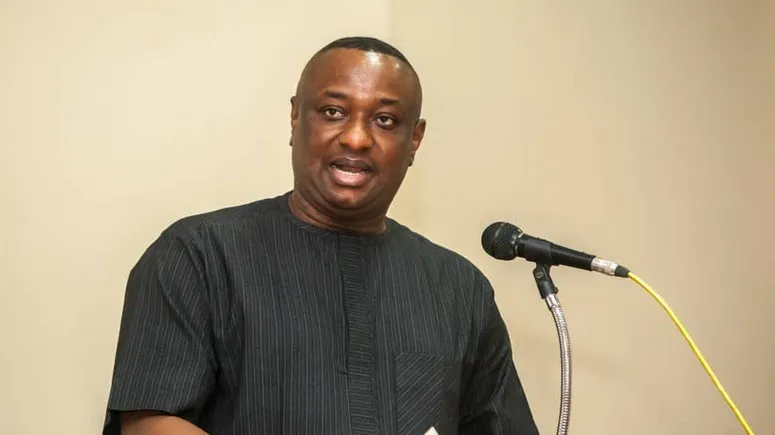
The Minister of Aviation and Aerospace Development, Festus Keyamo, on Tuesday declared that aviation is the “connecting tissue” linking commerce, tourism, manufacturing, and regional integration across Africa.
Speaking at a high-level virtual dialogue hosted by law firm Aluko & Oyebode, Keyamo said aviation must be treated as core economic infrastructure.
The webinar, themed “Navigating the African Skies: Legal, Economic and Trade Pathways for the Future of Aviation in Africa,” brought together top aviation, legal and economic experts from Nigeria and across the continent.
Keyamo renewed calls for full implementation of the Yamoussoukro Decision and the Single African Air Transport Market (SAATM), warning that Africa risks economic isolation if reforms continue to stall.
He said the economic benefits of open skies remain “real, measurable, and urgent.”
Citing Nigeria’s recent legal reforms, including Federal High Court practice directions aligned with the Cape Town Convention, Keyamo said the country is taking concrete steps to boost investor confidence and lower aircraft financing costs.
He urged African states to harmonise legal frameworks to support leasing, dispute resolution and asset protection.
The Minister also highlighted the need for modern fleets and deeper partnerships with global manufacturers and lessors, referencing Nigeria’s recent Memorandum of Understanding with Boeing as a model for capability building and supply-chain integration.
He pushed for stronger safety oversight, fair competition, and investment in local industry through MRO facilities, training centres and technical talent.
“Open skies must work for African jobs and African businesses,” he said.
Keyamo outlined a five-point action plan for accelerating the continent’s aviation growth: phased SAATM implementation, harmonised legal systems, innovative financing models, sustainability-driven fleet upgrades, and deliberate investment in people and institutions.
He warned that failure to act would leave Africa economically disadvantaged, stressing that “the alternative to open skies is unacceptable.”
Keyamo reaffirmed Nigeria’s commitment to modernising its aviation infrastructure, deepening international partnerships, and delivering lower logistics costs and better connectivity for Nigerians.
He urged African governments, the private sector and young professionals to view aviation as a catalyst for continental prosperity.
“Open skies is not just a policy choice, it is an economic imperative for Africa’s future,” he said. (Vanguard)
The World Health Organisation has called for stronger integration of eye care into health systems, increased investment, and targeted strategies to improve access to quality vision services across African countries.
WHO Regional Director for Africa, Dr Mohamed Janabi, made the call in a message on Wednesday, commemorating World Sight Day, which will be observed globally on October 9, 2025.
Janabi said the day aimed to raise public awareness about the importance of eye health and promote action to reduce preventable vision loss and blindness, especially in low-resource settings.
He revealed that as of 2021, only 32 per cent of WHO Member States had developed a national policy specifically addressing vision loss and blindness, showing a gap in eye health prioritisation.
“This limited policy coverage reflects broader challenges in resource allocation and health planning for eye care.
“The existing levels of service coverage highlight the magnitude of unmet vision health needs,” he stated.
Janabi disclosed that effective cataract surgery coverage in the African Region stood at only 26 per cent, meaning just one in four affected individuals achieved a good visual outcome post-surgery.
“Similarly, effective coverage for refractive error correction, such as with eyeglasses, is estimated at 30 per cent, indicating one in three people with visual impairment have received appropriate vision correction.
“These figures underscore the urgent need for stronger health system integration, targeted investment, and people-centred strategies to ensure everyone can access quality eye care services,” he said.
Janabi emphasised that good vision significantly impacted well-being, education, productivity, and employment, while vision impairment remained a major public health concern expected to increase without urgent intervention.
He acknowledged that Africa had made progress in reducing vision loss from diseases like trachoma, vitamin A deficiency, and onchocerciasis, but new challenges were rapidly emerging across the continent.
“These include ageing populations, poor eye health awareness, unhealthy diets, sedentary lifestyles, and the growing burden of noncommunicable diseases that increase risk of cataracts and refractive errors.
“To tackle this growing challenge, several strategic global initiatives have been introduced, including Vision 2020: The Right to Sight, which aimed to eliminate avoidable blindness,” he explained.
Janabi said the Vision 2020 initiative focused on scaling up affordable, sustainable cataract services and strengthening national capacities to eliminate preventable blindness by establishing eye health infrastructure and skilled workforce. (Punch)
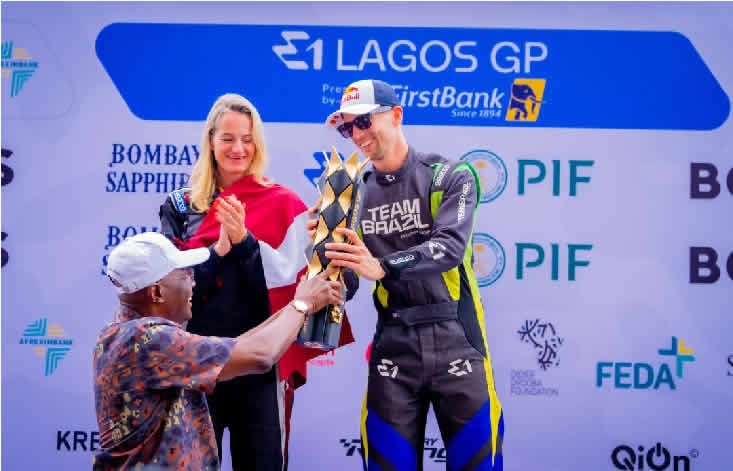
Team Brazil capped off an impeccable weekend in Nigeria with a thrilling win at the E1 Lagos GP, seizing the maiden race in Africa to claim their first win in the all-electric powerboat series on Sunday, PUNCH Sports Extra reports.
Powered by their pole position from Saturday’s qualifying, Team Brazil duly capitalised from the group races to the final, with Timmy Hansen delivering a flawless performance on the water.
They had the fastest time in the practice session and topped the qualifying race on Saturday before winning the final on Sunday.
They beat Team Blue Rising, owned by Indian cricket icon Virat Kohli, to second place while Team Drogba Global Africa, which is co-owned by Ivory Coast football legend and former Chelsea striker Didier Drogba and Gabrielle Lemaire, finished third.
Team Brazil got 38 points for their win, taking their tally up to 89 points. However, they are still far off from the title in seventh position, ahead of the final race of the season next month in Miami.
“We came to Lagos and we had a fantastic time. It is important with the race format to have the best starting lane, so you want to start on the inside, and we had it. Thanks to the team, I had a brilliant start, and it was smooth sailing,” Hansen told our correspondent.
There was no place on the podium for suspects Team Rafa and Team Brady, who have been in a tussle at the top of the championship standings ahead of the E1 Lagos GP.
However, Team Brady remains top of the championship standings despite finishing fourth. Their 19 points from an electrifying weekend in Lagos take them up to 154 points.
They are still separated from Team Rafa, owned by tennis legend Rafael Nadal by three points. Piloted by Cris Lazarraga and Tom Chiappe, Team Rafa finished fifth in Lagos with 17 points, taking their season’s tally to 151points.
Kohli’s Blue Rising remains third in the standings with 145 points.
The E1 is an all-electric powerboat race which began last year in Jeddah, Saudi Arabia, and Lagos became the first city in Africa to host the championship.
The E1 Lagos GP was also the penultimate race of the season, setting the tone for the championship battle ahead of the season finale in Miami next month.
Speaking to journalists during the championship on Sunday, the Governor of Lagos State, Babajide Sanwo-Olu, described the first-of-its-kind event in Africa as a demonstration of the state’s commitment to innovation and clean energy.
“Hosting the E1 series is not just about sports, it is about innovation, environmental responsibility, and putting Lagos on the global map for future-focused development,” Sanwo-Olu said. (Punch)
Scientist and global activist Jane Goodall, who turned her childhood love of primates into a lifelong quest for protecting the environment, has died at the age of 91, the institute she founded said on Wednesday.
Goodall died of natural causes while in California on a speaking tour, the Jane Goodall Institute said in a social media post.
“Dr. Goodall’s discoveries as an ethologist revolutionized science, and she was a tireless advocate for the protection and restoration of our natural world,” it said on Instagram.
The primatologist-turned-conservationist spun her love of wildlife into a life-long campaign that took her from a seaside English village to Africa and then across the globe in a quest to better understand chimpanzees, as well as the role that humans play in safeguarding their habitat and the planet’s health overall.
Goodall was a pioneer in her field, both as a female scientist in the 1960s and for her work studying the behavior of primates. She created a path for a string of other women to follow suit, including the late Dian Fossey.
She also drew the public into the wild, partnering with the National Geographic Society to bring her beloved chimps into their lives through film, TV and magazines.
She upended scientific norms of the time, giving chimpanzees names instead of numbers, observing their distinct personalities, and incorporating their family relationships and emotions into her work. She also found that, like humans, they use tools.
“We have found that after all there isn’t a sharp line dividing humans from the rest of the animal kingdom,” she said in a 2002 TED Talk.
As her career evolved, she shifted her focus from primatology to climate advocacy after witnessing widespread habitat devastation, urging the world to take quick and urgent action on climate change.
“We’re forgetting that we’re part of the natural world,” she told CNN in 2020. “There’s still a window of time.”
In 2003, she was appointed a Dame of the British Empire and, in 2025, she received the U.S. Presidential Medal of Freedom.
Born in London in 1934 and then growing up in Bournemouth on England’s south coast, Goodall had long dreamed of living among wild animals. She said her passion for animals, stoked by the gift of a stuffed toy gorilla from her father, grew as she immersed herself in books such as “Tarzan” and “Dr. Dolittle.”
She set her dreams aside after leaving school, unable to afford university. She worked as a secretary and then for a film company until a friend’s invitation to visit Kenya put the jungle – and its inhabitants – within reach.
After saving up money for the journey by boat, Goodall arrived in the East African nation in 1957. There, an encounter with famed anthropologist and paleontologist Dr. Louis Leakey and his wife, archaeologist Mary Leakey, set her on course to work with primates.
Under Leakey, Goodall set up the Gombe Stream Chimpanzee Reserve, later renamed the Gombe Stream Research Centre, near Lake Tanganyika in present-day Tanzania. There she discovered chimpanzees ate meat, fought fierce wars, and perhaps most importantly, fashioned tools in order to eat termites.
“Now we must redefine tools, redefine man, or accept chimpanzees as humans,” Leakey said of the discovery.
Although she eventually paused her research to earn a PhD at Cambridge University, Goodall remained in the jungle for years. Her first husband and frequent collaborator was wildlife cameraman Hugo van Lawick.
Through the National Geographic’s coverage, the chimpanzees at Gombe Stream soon became household names – most famously, one Goodall called David Greybeard for his silver streak of hair.
Nearly thirty years after first arriving in Africa, however, Goodall said she realized she could not support or protect the chimpanzees without addressing the dire disappearance of their habitat. She said she realized she would have to look beyond Gombe, leave the jungle, and take up a larger global role as a conservationist.
In 1977, she set up the Jane Goodall Institute, a nonprofit organization aimed at supporting the research in Gombe as well as conservation and development efforts across Africa. Its work has since expanded worldwide and includes efforts to tackle environmental education, health and advocacy.
She made a new name for herself, traveling an average of 300 days a year to meet with local officials in countries around the world and speaking with community and school groups. She continued touring to the end of her life, speaking at Climate Week in New York City just last week.
She later expanded the institute to include Roots & Shoots, a conservation program aimed at children.
It was a stark shift from her isolated research, spending long days watching chimpanzees.
“It never ceases to amaze me that there’s this person who travels around and does all these things,” she told the New York Times during a 2014 trip to Burundi and back to Gombe. “And it’s me. It doesn’t seem like me at all.”
A prolific author, she published more than 30 books with her observations, including her 1999 bestseller “Reason For Hope: A Spiritual Journey,” as well as a dozen aimed at children.
Goodall said she never doubted the planet’s resilience or human ability to overcome environmental challenges.
“Yes, there is hope … It’s in our hands, it’s in your hands and my hands and those of our children. It’s really up to us,” she said in 2002, urging people to “leave the lightest possible ecological footprints.”
She had one son, known as ‘Grub,’ with van Lawick, whom she divorced in 1974. Van Lawick died in 2002. In 1975, she married Derek Bryceson. He died in 1980. (JapanToday)
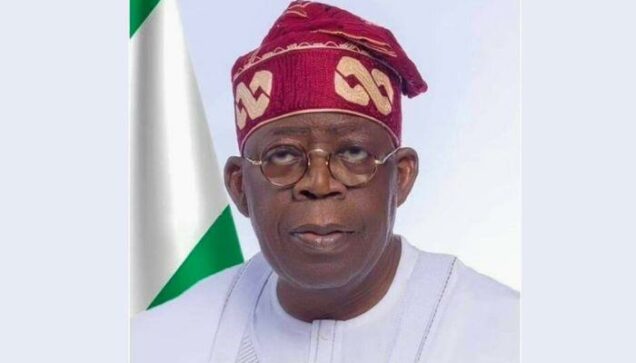
President Bola Tinubu departed Yokohama, Japan, on Thursday night for Brazil, where he is scheduled to commence a state visit on August 24, according to a statement issued by the Special Adviser to the President on Information and Strategy, Bayo Onanuga.
Onanuga, in a release dated August 22, 2025, said the President will make a stopover in Los Angeles before continuing to Brasilia, the Brazilian capital.
“President Tinubu will continue his diplomatic engagements in Brazil after successfully attending the ninth Tokyo International Conference for African Development (TICAD9),” the statement read.
The President embarked on his two-nation tour on August 15, leaving Abuja with a brief stopover in Dubai, UAE, before arriving in Yokohama on August 18.
During his stay in Japan, Tinubu participated in the opening ceremony and plenary of TICAD9 on August 20 and held bilateral meetings with key partners.
The visit culminated in an interactive session with Nigerians in the diaspora on Thursday night.
“The engagements have been productive, and the President is now set to build on these discussions with strategic cooperation in Brazil,” Onanuga added.
Tinubu arrived in Tokyo, Japan, in the early hours of August 20 for a series of official engagements at the Ninth Tokyo International Conference on African Development (TICAD9) in Yokohama, held from August 20 to 22.
The conference, co-hosted by Japan, the United Nations, UNDP, the African Union Commission, and the World Bank, focused on Africa’s economic transformation, private investment, innovation, and creating a resilient and sustainable society.
Tinubu held bilateral meetings and engaged with Japanese companies investing in Nigeria before departing for Brazil. (Punch)




 English