Posted on Leave a comment

Wildlife advocate and primate expert Jane Goodall dies at 91

Scientist and global activist Jane Goodall, who turned her childhood love of primates into a lifelong quest for protecting the environment, has died at the age of 91, the institute she founded said on Wednesday.

Goodall died of natural causes while in California on a speaking tour, the Jane Goodall Institute said in a social media post.

“Dr. Goodall’s discoveries as an ethologist revolutionized science, and she was a tireless advocate for the protection and restoration of our natural world,” it said on Instagram.

The primatologist-turned-conservationist spun her love of wildlife into a life-long campaign that took her from a seaside English village to Africa and then across the globe in a quest to better understand chimpanzees, as well as the role that humans play in safeguarding their habitat and the planet’s health overall.

Goodall was a pioneer in her field, both as a female scientist in the 1960s and for her work studying the behavior of primates. She created a path for a string of other women to follow suit, including the late Dian Fossey.

She also drew the public into the wild, partnering with the National Geographic Society to bring her beloved chimps into their lives through film, TV and magazines.

She upended scientific norms of the time, giving chimpanzees names instead of numbers, observing their distinct personalities, and incorporating their family relationships and emotions into her work. She also found that, like humans, they use tools.

“We have found that after all there isn’t a sharp line dividing humans from the rest of the animal kingdom,” she said in a 2002 TED Talk.

As her career evolved, she shifted her focus from primatology to climate advocacy after witnessing widespread habitat devastation, urging the world to take quick and urgent action on climate change.

“We’re forgetting that we’re part of the natural world,” she told CNN in 2020. “There’s still a window of time.”

In 2003, she was appointed a Dame of the British Empire and, in 2025, she received the U.S. Presidential Medal of Freedom.

Born in London in 1934 and then growing up in Bournemouth on England’s south coast, Goodall had long dreamed of living among wild animals. She said her passion for animals, stoked by the gift of a stuffed toy gorilla from her father, grew as she immersed herself in books such as “Tarzan” and “Dr. Dolittle.”

She set her dreams aside after leaving school, unable to afford university. She worked as a secretary and then for a film company until a friend’s invitation to visit Kenya put the jungle – and its inhabitants – within reach.

After saving up money for the journey by boat, Goodall arrived in the East African nation in 1957. There, an encounter with famed anthropologist and paleontologist Dr. Louis Leakey and his wife, archaeologist Mary Leakey, set her on course to work with primates.

Under Leakey, Goodall set up the Gombe Stream Chimpanzee Reserve, later renamed the Gombe Stream Research Centre, near Lake Tanganyika in present-day Tanzania. There she discovered chimpanzees ate meat, fought fierce wars, and perhaps most importantly, fashioned tools in order to eat termites.

“Now we must redefine tools, redefine man, or accept chimpanzees as humans,” Leakey said of the discovery.

Although she eventually paused her research to earn a PhD at Cambridge University, Goodall remained in the jungle for years. Her first husband and frequent collaborator was wildlife cameraman Hugo van Lawick.

Through the National Geographic’s coverage, the chimpanzees at Gombe Stream soon became household names – most famously, one Goodall called David Greybeard for his silver streak of hair.

Nearly thirty years after first arriving in Africa, however, Goodall said she realized she could not support or protect the chimpanzees without addressing the dire disappearance of their habitat. She said she realized she would have to look beyond Gombe, leave the jungle, and take up a larger global role as a conservationist.

In 1977, she set up the Jane Goodall Institute, a nonprofit organization aimed at supporting the research in Gombe as well as conservation and development efforts across Africa. Its work has since expanded worldwide and includes efforts to tackle environmental education, health and advocacy.

She made a new name for herself, traveling an average of 300 days a year to meet with local officials in countries around the world and speaking with community and school groups. She continued touring to the end of her life, speaking at Climate Week in New York City just last week.

She later expanded the institute to include Roots & Shoots, a conservation program aimed at children.

It was a stark shift from her isolated research, spending long days watching chimpanzees.

“It never ceases to amaze me that there’s this person who travels around and does all these things,” she told the New York Times during a 2014 trip to Burundi and back to Gombe. “And it’s me. It doesn’t seem like me at all.”

A prolific author, she published more than 30 books with her observations, including her 1999 bestseller “Reason For Hope: A Spiritual Journey,” as well as a dozen aimed at children.

Goodall said she never doubted the planet’s resilience or human ability to overcome environmental challenges.

“Yes, there is hope … It’s in our hands, it’s in your hands and my hands and those of our children. It’s really up to us,” she said in 2002, urging people to “leave the lightest possible ecological footprints.”

She had one son, known as ‘Grub,’ with van Lawick, whom she divorced in 1974. Van Lawick died in 2002. In 1975, she married Derek Bryceson. He died in 1980. (JapanToday)
Posted on Leave a comment

White House freezes funds for Democratic states in shutdown slap

President Donald Trump’s administration on Wednesday froze $26 billion for Democratic-leaning states, following through on a threat to use the government shutdown to target Democratic priorities.

The targeted programs included $18 billion for transit projects in New York, home to Congress’s top two Democrats, and $8 billion for green-energy projects in 16 Democratic-run states, including California and Illinois. Vice President JD Vance, meanwhile, warned that the administration might extend its purge of federal workers if the shutdown lasts more than a few days.

The moves made clear that Trump would carry out his threat to take advantage of the shutdown to punish his political opponents and extend his control over the $7 trillion federal budget, established by the U.S. Constitution as the domain of Congress.

The pressure tactics came as the 15th government shutdown since 1981 suspended scientific research, financial oversight, environmental cleanup efforts and a wide range of other activities.

Some 750,000 federal workers were ordered not to work, while others, such as troops and Border Patrol agents, began to work without pay. The Department of Veterans Affairs said it would provide burials at national cemeteries, but would not erect headstones or mow the grass.

Vance said at a White House briefing that the administration would be forced to resort to layoffs if the shutdown lasts more than a few days, adding to the 300,000 who will be pushed out by December. Previous shutdowns have not resulted in permanent layoffs.

The U.S. Patent and Trademark Office said it would lay off 1% of its 14,000 employees, according to an internal letter seen by Reuters.

Hakeem Jeffries, the top Democrat in the House of Representatives, said the funding freeze for subway and harbor projects in his home of New York would throw thousands out of work.

Top Senate Democrat Chuck Schumer, also from New York, said Trump was targeting regular Americans for partisan aims.

“He is using the American people as pawns, threatening pain on the country as blackmail,” Schumer said.

Republican Senator Thom Tillis said he was concerned that the freezing of infrastructure funds for New York could make it harder for Congress to exit the shutdown.

“They need to be really careful with that, because they can create a toxic environment here,” Tillis said. “So hopefully they’re working with the leader, and the leader with them, on not creating more work to get us out of this posture.”

Republican Senate Leader John Thune dismissed concerns that the spending freeze amounted to hostage-taking.

“Well, vote to open up the government and that issue goes away, right? I mean, it’s pretty straightforward,” he said at a press conference.

Meanwhile, the Senate again rejected efforts to keep the government functioning as both a Republican proposal that would fund the government through November 21 and a Democratic vote that would pair funding with additional health benefits failed in floor votes.

Trump’s Republicans hold a 53-47 Senate majority, but they need the support of at least seven of Schumer’s Democrats to meet the chamber’s 60-vote threshold for spending bills.

At issue on the government funding front is $1.7 trillion for agency operations, which amounts to roughly one-quarter of annual spending. Much of the remainder goes to health and retirement programs and interest payments on the growing $37.5 trillion debt.

A bipartisan group of senators huddled on the floor during the vote, trying to find  a path forward.

“I want to see that a deal is a deal, and I would like to see the Republicans make a commitment to work with us on health care,” said Senator Tim Kaine, a Virginia Democrat who represents many federal workers near the nation’s capital. “But I’ve never said that has to be all I’s dotted and T’s crossed because that could be complicated.”

Democrats are also seeking guarantees that Trump will not be able to ignore spending bills he signs into law, as he has repeatedly done since returning to office.

Both sides sought to pin the blame on the other, looking for advantage ahead of the 2026 midterm elections that will determine control of Congress.

Democrats said Republicans were responsible for the disruption, as they control the levers of power in Washington.

Republicans said Democrats were surrendering to partisan pressures to oppose Trump, even though they have routinely backed spending bills in the past. They also repeated a false claim that the Democratic proposal would extend health coverage to people who are in the country illegally. According to the nonpartisan Congressional Budget Office, the Democratic plan would only restore coverage to certain categories of immigrants who are in the country legally, such as asylum seekers and people on work visas.

Several government agencies posted notices on their websites blaming the “radical left” for the shutdown – a possible violation of a law known as the Hatch Act meant to insulate nuts-and-bolts government services from partisan politics.

The longest U.S. government shutdown, which stretched over 35 days in 2018-2019 during Trump’s first term, ended in part after flight delays caused by air traffic controllers calling in sick. (JapanToday)

Posted on Leave a comment

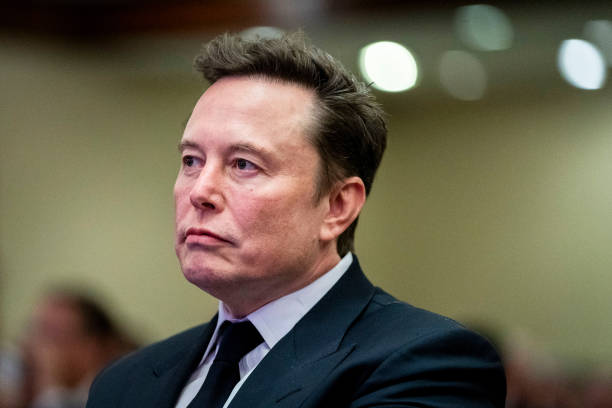
Musk’s X to appeal Indian court ruling on Secretive Content removal system

Social media platform X said on Monday it plans to appeal an Indian court order that would allow over two million police officers nationwide to issue arbitrary takedown requests via a secretive online portal called the Sahyog.

“We will appeal this order to defend free expression,” X said in a post on the platform, in its first statement since the High Court of Karnataka ruled last week that there was no legal merit to the company’s legal challenge to quash India’s content removal mechanisms, according to Reuters.

“The Sahyog enables officers to order content removal based solely on allegations of “illegality,” without judicial review or due process for the speakers, and threatens platforms with criminal liability for non-compliance,” X said on Monday.

X has locked horns with New Delhi in the past, equating the government’s mechanisms with censorship. The government of Prime Minister Narendra Modi has said the new system tackles a proliferation of unlawful content and ensures accountability online.

X owner Elon Musk has clashed with authorities in several countries over compliance and content takedown demands.

However, the company’s Indian lawsuit targeted the entire basis for tightened internet regulation in the world’s most populous nation.

Modi’s government has ramped up efforts to police the internet since 2023 by allowing many more officials to file takedown orders and submit them directly to tech firms through a website launched in October. (Channels)

Posted on Leave a comment

4 dead, 8 wounded in shooting and fire at Michigan church

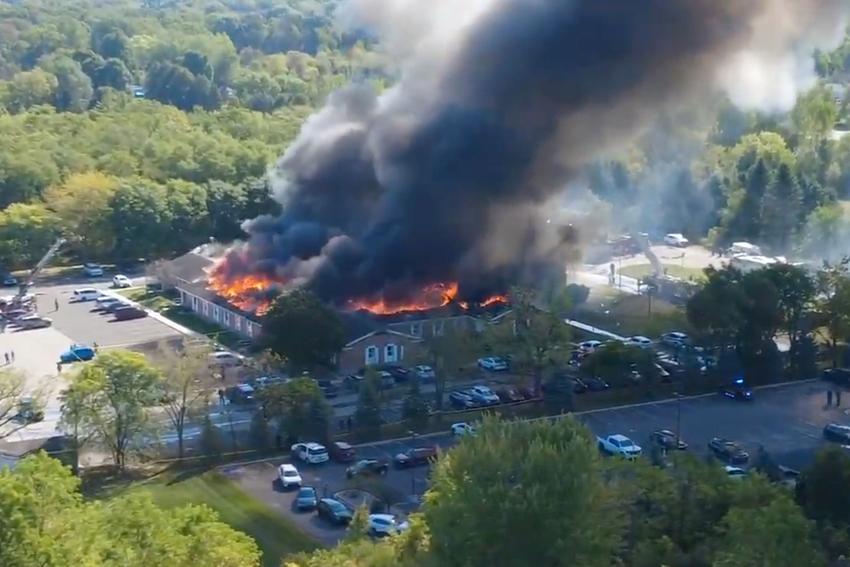
A gunman opened fire inside a Church of Jesus Christ of Latter-day Saints chapel in Michigan during a Sunday service and set the building ablaze, killing at least four people and injuring eight others. Police shot and killed the suspect, authorities said.

Hundreds of people were inside the church in Grand Blanc Township when a man rammed a four-door pickup with two American flags in the truck bed through the front door, then got out of the vehicle and started shooting, Police Chief William Renye told reporters. Investigators believe he deliberately set the building on fire, Renye said.

Officers responded to a 911 call and were at the church within 30 seconds and killed the shooter about eight minutes later, Renye said. After the suspect left the church, two officers pursued him and “engaged in gunfire,” the chief said.

Flames and smoke could be seen pouring from the church for hours before the blaze was put out.

Renye identified the suspect as Thomas Jacob Sanford, 40, from neighboring Burton. Reyne did not specify a motive at a news conference on Sunday evening. Police cordoned off the street leading to the suspect’s home.

Renye said one of the wounded people was in critical condition Sunday evening and seven others were stable.

The bodies of two of the victims were found as authorities searched the debris in the church, Renye said, emphasizing the search was continuing and that more victims could be found.

Investigators were searching the suspect’s residence in nearby Burton. Authorities did not provide any additional details about the suspect, including whether he was a member of The Church of Jesus Christ of Latter-day Saints, widely known as the Mormon church.

It was the latest of many shooting attacks on houses of worship in the U.S. over the past 20 years, including one in August that killed two children during Mass at the Church of the Annunciation in Minneapolis.

President Donald Trump said in a social media post that he was briefed on the shooting and applauded the FBI for its response. Local authorities said the FBI was sending 100 agents to Grand Blanc Township, a community of roughly 40,000 people outside Flint.

“PRAY for the victims, and their families. THIS EPIDEMIC OF VIOLENCE IN OUR COUNTRY MUST END, IMMEDIATELY!” Trump wrote.

The church building, circled by a parking lot and a large lawn, is near residential areas and a Jehovah’s Witness church.

Brad Schneemann, whose home is about 365 meters from the church, told The Associated Press that he and his daughter heard “two rounds of four to five shots” around 10:30 a.m. “Then, we really didn’t hear anything for a while” before they left their home to see what was going on.

Timothy Jones, 48, said his family is part of another Church of Jesus Christ of Latter-day Saints congregation, or ward, about 15 minutes away, but that his children were at the Grand Blanc Township ward Saturday night for a youth fall festival. He and his family moved to Flint two years ago in large part because of how strong the faith’s community is in the area, he said.

As people in his congregation got word of the shooting from texts and phone calls during their Sunday service, his ward went into lockdown and police came as a precaution, he said. His children were “frantically, just trying to get word that people were OK.”

Sundays are “supposed to be a time of peace and a time of reflection and worship,” Jones said. Yet in the wake of violence at other houses of worship, a shooting “feels inevitable, and all the more tragic because of that,” he added.

The shooting occurred the morning after Russell M Nelson, the oldest-ever president of the Utah-based faith, died at 101. The next president is expected to be Dallin H Oaks, per church protocol.

“The church is in communication with local law enforcement as the investigation continues and as we receive updates on the condition of those affected,” spokesperson Doug Anderson said. “Places of worship are meant to be sanctuaries of peacemaking, prayer and connection. We pray for peace and healing for all involved.”

When striking nurses at nearby Henry Ford Genesys Hospital heard about the shooting, some left the picket line and ran the short distance to the church to help first responders, Teamsters Local 332 President Dan Glass said.

“Human lives matter more than our labor dispute,” Glass said.

Michigan Gov. Gretchen Whitmer said in a statement that her heart was breaking for the community. “Violence anywhere, especially in a place of worship, is unacceptable,” she said.

The impact spread quickly to neighboring communities, including the small city that shares a name with the township.

“Although we are two separate governmental units, we are a very cohesive community,” said city of Grand Blanc Mayor John Creasey. “This sort of thing is painful for our entire community.” (JapanToday)

Posted on Leave a comment

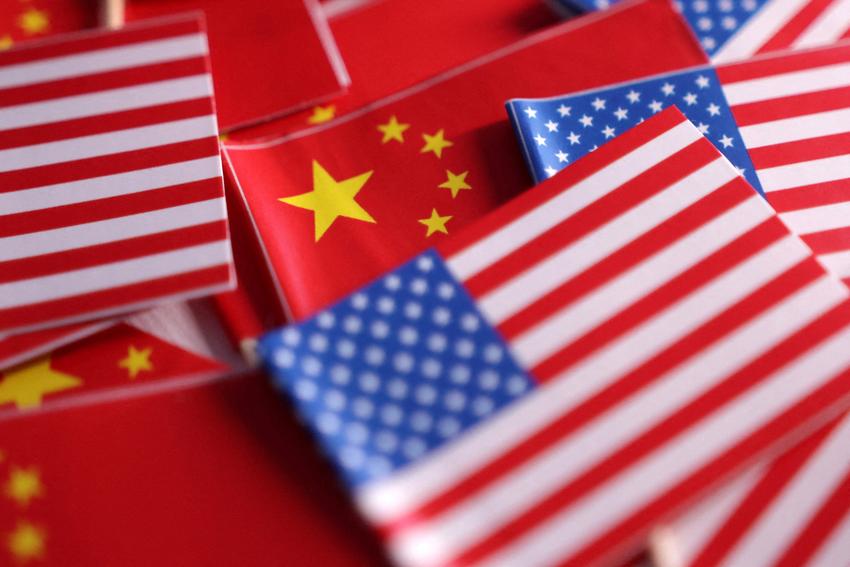
China’s new K visa beckons foreign tech talent as U.S. hikes H-1B fee


China’s new visa program aimed at attracting foreign tech talent kicks off this week, a move seen boosting Beijing’s fortunes in its geopolitical rivalry with Washington as a new U.S. visa policy prompts would-be applicants to scramble for alternatives.

While China has no shortage of skilled local engineers, the programme is part of an effort by Beijing to portray itself as a country welcoming foreign investment and talent, as rising trade tensions due to U.S. tariffs cloud the country’s economic outlook.

China has taken a series of measures to boost foreign investment and travel, opening more sectors to overseas investors and offering visa waivers for citizens from most European countries, Japan and South Korea among others.

“The symbolism is powerful: while the U.S. raises barriers, China is lowering them,” said Iowa-based immigration attorney Matt Mauntel-Medici, referring to China’s new visa category, called the K visa, which launches on Wednesday.

The K visa, announced in August, targets young foreign science, technology, engineering and mathematics (STEM) graduates and promises to allow entry, residence and employment without a job offer, which could appeal to foreign workers looking for alternatives to U.S. job opportunities.

Earlier this month, the Trump administration said it would ask companies to pay $100,000 per year for H-1B worker visas, widely used by tech companies to hire skilled foreign workers.

“The U.S. has definitely shot itself in the foot on H-1Bs, and the timing is exquisite for China’s K visa,” said Michael Feller, chief strategist at Geopolitical Strategy.

Other countries including South Korea, Germany and New Zealand are also loosening visa rules to attract skilled migrants.

Immigration experts say the main attraction of the K visa is no requirement of a sponsoring employer, which has been regarded as one of the biggest hurdles for those seeking H-1B visas.

The H-1B visa requires employer sponsorship and is subject to a lottery system, with only 85,000 slots available annually. The new $100,000 fee could further deter first-time applicants.

“It’s an appealing alternative for Indian STEM professionals seeking flexible, streamlined visa options,” said Bikash Kali Das, an Indian student at Sichuan University.

India was by far the largest beneficiary of H-1B visas last year, accounting for 71% of approved beneficiaries.

Despite its promise, the K visa faces hurdles. Chinese government guidelines mention vague “age, educational background and work experience” requirements.

There are also no details on financial incentives, employment facilitation, permanent residency, or family sponsorship. Unlike the U.S., China does not offer citizenship to foreigners except in rare cases.

China’s State Council did not respond to a request for comment asking for more details on the logistics and underlying strategy of the K visa.

Language is another barrier: most Chinese tech firms operate in Mandarin, limiting opportunities for non-Chinese speakers.

Political tensions between Delhi and Beijing could also become a factor that could limit the number of Indian K visa applicants China is willing to accept, experts said.

“China will need to ensure Indian citizens feel welcome and can do meaningful work without Mandarin,” said Feller.

China’s talent recruitment has traditionally focused on China-born scientists abroad and overseas Chinese.

Recent efforts include home-purchase subsidies and signing bonuses of up to 5 million yuan ($702,200). These have drawn back U.S.-based Chinese STEM talent, especially amid Washington’s growing scrutiny on ties to China.

“The recruitment effort targeting Indian tech talent in China is growing but remains moderate compared to the more intensive, well-established, and well-funded initiatives aimed at repatriating Chinese STEM talent,” said Sichuan University’s Das.

A Chinese STEM graduate who recently got a job offer from a Silicon Valley-based tech company was also sceptical about the K visa’s prospects.

“Asian countries like China don’t rely on immigration and local Chinese governments have many ways to attract domestic talent,” he said, declining to be named for privacy reasons.

The U.S. has over 51 million immigrants — 15% of its population — compared to just 1 million foreigners in China, less than 1% of its population.

While China is unlikely to significantly alter its immigration policy to allow in millions of foreign workers, analysts say the K visa could still boost Beijing’s fortunes in its geopolitical rivalry with Washington.

“If China can attract even a sliver of global tech talent, it will be more competitive in cutting-edge technology,” Feller said. (JapanToday)

Posted on Leave a comment

Trump invites global fans to World Cup and Olympics as U.S. tightens visa policies

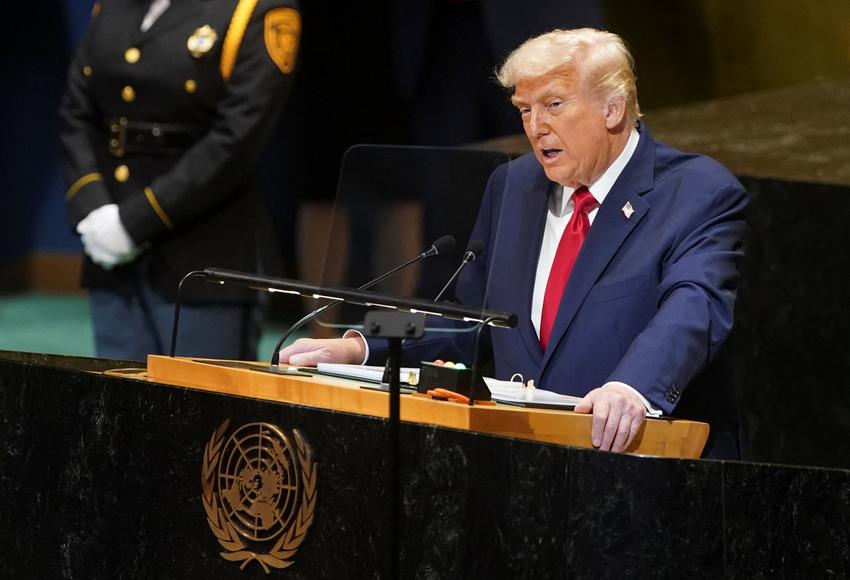
U.S. President Donald Trump told the UN General Assembly on Tuesday that he hopes “countless people from all over the globe” will attend the 2026 World Cup and 2028 Olympics hosted by the U.S., making no mention of his migration crackdown that has deterred some visitors.

Overseas travel to the U.S. fell 2.9% year-on-year in August to about 3.5 million visitors, according to preliminary U.S. government data. It was the sixth month this year that travel declined from a year ago, bucking the global tourism trend and defying expectations that in 2025 annual inbound visitors would finally surpass the pre-pandemic level of 79.4 million.

In a wide-ranging speech, Trump said next year the United States will celebrate the 250th anniversary of its independence. “We will also be proudly hosting the 2026 FIFA World Cup, and shortly thereafter, the 2028 Olympics,” he said.

“It’s going to be very exciting. I hope you all come. I hope that countless people from all over the globe will take part.”

More than 1.5 million ticket applications from fans in 210 countries were received by FIFA for the World Cup within 24 hours of the presale draw, the governing body of world soccer said earlier this month. The 48-team tournament will be hosted by Mexico, Canada and the U.S. and will feature 104 matches across 16 host cities.

But a U.S. trip may be expensive and complicated for many. Visitors from non-visa waiver countries face a $250 “visa integrity fee,” on top of the existing fee, with travelers already navigating long average visa wait times. Such visitors face an average 169 days for a B-1/B-2 tourism or business visa interview, according to data from the U.S. State Department.

That will hit fans from countries that traditionally send a large contingent to the World Cup, including Mexico, Argentina and Brazil.

Global ticket demand for the tournament came primarily from the three host countries, followed by Argentina, Colombia, and Brazil, according to FIFA.

Tourists from visa-waiver countries – mostly in Europe – will not need to pay the new fee, but industry experts say some are being put off U.S. vacations by fears of being stopped at the border after a number of widely publicized cases.

The White House is also looking to tighten the duration of visas for students, cultural exchange visitors and members of the media, according to a proposed government regulation issued in August.

The 2028 Summer Olympics is set to be held in Los Angeles, California, in July 2028. (JapanToday)

Posted on Leave a comment

Two migrants die trying to cross channel from France

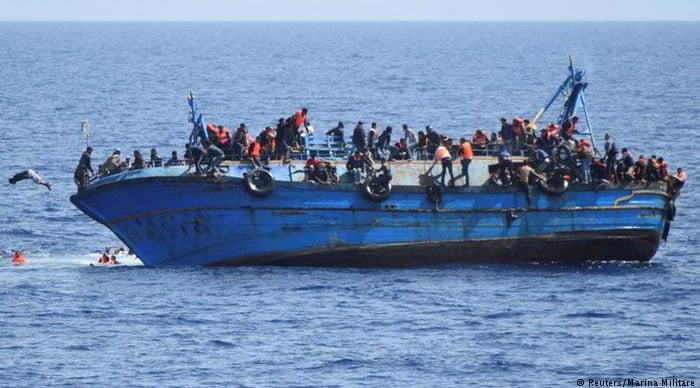
Two migrants died overnight while trying to cross the Channel to Britain, French authorities said Saturday, adding that some 60 others had been rescued.

The incident occurred south of the beaches of Neuchâtel-Hardelot, when about 100 people were trying to get to the UK on a makeshift boat.

About 60 people “are currently being taken care of”, Isabelle Fradin-Thirode, an official in nearby Montreuil-sur-Mer, said.

The incident brings the number of Channel crossing deaths to at least 25 this year, according to an AFP tally based on official data.

Since January, a record 31,000 migrants have arrived in Britain by crossing the Channel in small boats.

Under a recent Franco-British scheme, the UK can return them after arrival if they are deemed ineligible for asylum, including those who have passed through a “safe country” to reach UK shores.

In return, London will accept an equal number of migrants from France who are likely to have their asylum claims granted. (Punch)

Posted on Leave a comment

Denmark reports new drone sightings overnight at military sites

Unidentified drones have flown over Denmark’s military sites, including its biggest base, the latest in a slew of incursions near airports and critical infrastructure this week, which officials have called a “hybrid attack” and hinted at possible Russian involvement.

“The Danish Defence can confirm that drones were observed at several of the Danish Defence’s locations last night. Several capabilities were deployed,” an army spokesperson said on Saturday, without specifying where the drones were observed.

Police said “one to two drones” were observed at about 8:15pm (18:15 GMT) on Friday near and over the Karup military base in western Denmark, the country’s biggest base, which houses all of the armed forces’ helicopters, airspace surveillance, flight school and support functions.

Police spokesman Simon Skelkjaer said they could not comment on where the drones came from, adding: “We didn’t take them down.”

The Karup base shares its runways with the Midtjylland civilian airport, which was briefly closed, though no flights were affected as none were scheduled at that hour, Skelkjaer said.

Mysterious drone observations across the Scandinavian country over the past week have prompted the closure of several airports, including Copenhagen airport, the Nordic region’s busiest, which closed for several hours late on Monday.

Five smaller airports, both civilian and military, were also shut temporarily in the following days.

Drone reports also closed Oslo airport for several hours earlier in the week, following drone incursions in Polish and Romanian territory and the violation of Estonian airspace by Russian fighter jets, which raised tensions in light of Russia’s ongoing invasion of Ukraine.

Danish Prime Minister Mette Frederiksen on Thursday said “over recent days, Denmark has been the victim of hybrid attacks,” referring to unconventional warfare.

Investigators have so far failed to identify those responsible, but Danish Defence Minister Troels Lund Poulsen said on Thursday the flights appeared to be “the work of a professional actor”.

Frederiksen has pointed the finger at Russia, saying it is the “main country that poses a threat to Europe’s security”.

Moscow said on Thursday it “firmly rejects” any suggestion that it was involved in the Danish incidents. In a social media post, its embassy in Copenhagen called them “a staged provocation”.

The drone flights began just days after Denmark announced it would acquire long-range precision weapons for the first time, as Russia would pose a threat “for years to come”.

Defence ministers from about 10 European Union countries agreed on Friday to make a so-called “drone wall” a priority for the bloc.

EU Defence Commissioner Andrius Kubilius said Europe needs to learn from Ukraine and swiftly build anti-drone defences.

“We need to move fast,” Kubilius told AFP news agency in an interview. “And we need to move, taking all the lessons from Ukraine and making this drone wall together with Ukraine.”

Copenhagen will host an EU summit gathering heads of government on Wednesday and Thursday. It said on Friday it had accepted Sweden’s offer of its anti-drone technology to ensure the meeting could go ahead without disruption. (AlJazeera)

Posted on Leave a comment

Former French president Sarkozy given five-year sentence after Libya case

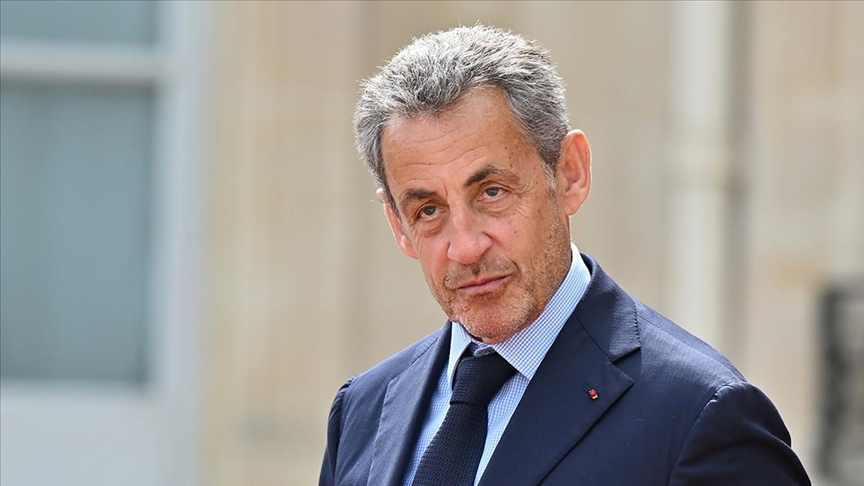
Former French president Nicolas Sarkozy has been sentenced to five years in jail after being found guilty of criminal conspiracy in a case related to millions of euros of illicit funds from the late Libyan leader Col Muammar Gaddafi.

The Paris criminal court acquitted him of all other charges, including passive corruption and illegal campaign financing.

The ruling means he will spend time in jail even if he launches an appeal, which Sarkozy says he intends to do.

Speaking after Thursday’s hearing, the 70-year-old, who was president from 2007-12, said the verdict was “extremely serious for rule of law”.

Sarkozy, who claims the case is politically motivated, was accused of using the funds from Gaddafi to finance his 2007 election campaign.

In exchange, the prosecution alleged Sarkozy promised to help Gaddafi combat his reputation as a pariah with Western countries.

Judge Nathalie Gavarino said Sarkozy had allowed close aides to contact Libyan officials with a view to obtaining financial support for his campaign.

But the court ruled that there was not enough evidence to find Sarkozy was the beneficiary of the illegal campaign financing.

He was also ordered to pay a fine of €100,000 ($117,000, £87,000).

There was a shocked intake of breath in court when the judge read out her sentence.

Sarkozy could be sent to prison in Paris in the coming days – a first for a former French president and a humiliating blow for a man who has always protested his innocence in this trial and the other legal cases against him.

“What happened today… is of extreme gravity in regard to the rule of law, and for the trust one can have in the justice system,” Sarkozy said outside the court building.

“If they absolutely want me to sleep in jail, I will sleep in jail, but with my head held high,” he said.

The investigation was opened in 2013, two years after Saif al-Islam, son of the then-Libyan leader, first accused Sarkozy of taking millions of his father’s money for campaign funding.

The following year, Lebanese businessman Ziad Takieddine – who for a long time acted as a middleman between France and the Middle East – said he had written proof that Sarkozy’s campaign bid was “abundantly” financed by Tripoli, and that the €50m (£43m) worth of payments continued after he became president.

Among the others accused in the trial were former interior ministers, Claude Gueant and Brice Hortefeux. The court found Gueant guilty of corruption, among other charges, and Hortefeux was found guilty of criminal conspiracy.

Sarkozy’s wife, Italian-born former supermodel and singer Carla Bruni-Sarkozy, was charged last year with hiding evidence linked to the Gaddafi case and associating with wrongdoers to commit fraud, both of which she denies.

Since losing his re-election bid in 2012, Sarkozy has been targeted by several criminal investigations.

He also appealed against a February 2024 ruling which found him guilty of overspending on his 2012 re-election campaign, then hiring a PR firm to cover it up. He was handed a one-year sentence, of which six months were suspended.

In 2021, he was found guilty of trying to bribe a judge in 2014 and became the first former French president to get a custodial sentence. In December, the Paris appeals court ruled that he could serve his time at home wearing a tag instead of going to jail. (BBC)

Posted on Leave a comment

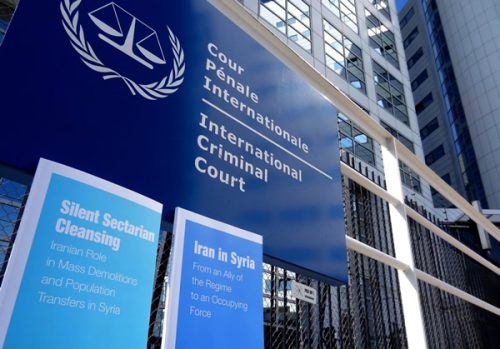
Military-run Niger, Mali and Burkina Faso announce joint ICC withdrawal

Mali, Burkina Faso and Niger, three nations in West Africa run by military governments after coups in recent years, have announced their exit from the International Criminal Court (ICC), referring to it as “neocolonial repression” and accusing the judicial body of selective justice.

In a joint statement on Monday night, the three countries said the ICC had become incapable of prosecuting war crimes, crimes against humanity, crimes of aggression and genocide without elaborating.

“[The ICC is an] instrument of neocolonial repression in the hands of imperialism,” the joint statement read, adding that the countries were seeking more “sovereignty”.

The three states added that they wanted to create “indigenous mechanisms for the consolidation of peace and justice”.

The three countries, which are ruled by military officers, have already left the Economic Community of West African States and instead formed their own bloc known as the Alliance of Sahel States.

Niger, Burkina Faso and Mali have also rolled back defence cooperation with Western powers, most notably their former colonial ruler, France, and opted for closer ties with Russia.

The countries’ withdrawal from the ICC was not unexpected after the coups that brought the military to power in the three states from 2020 to 2023.

Within the three countries, the military governments are fighting armed groups linked to al-Qaeda that control territory and have staged attacks on army posts.

Human Rights Watch and other advocacy groups have accused the fighters, the military and partner forces of Burkina Faso and Mali of possible atrocities.

United Nations experts said in April that the alleged summary executions of several dozen civilians by Malian forces might amount to war crimes.

Moreover, the ICC has had an investigation open in Mali since 2013 over alleged war crimes committed in the northern regions of Gao, Timbuktu and Kidal, which had fallen under the control of armed groups.

Withdrawal from the ICC takes effect one year after the decision is submitted to the UN General Secretariat. (AlJazeera)