Real Madrid forward Brahim Diaz maintained his goal-a-game record at the Africa Cup of Nations by scoring to take Morocco into the quarter-finals with a 1-0 victory over Tanzania in Rabat on Sunday.
Diaz scored once in each of three group matches and his 64th-minute strike against the Tanzanians created history as he became the first Moroccan to find the net in four consecutive AFCON matches.
The goal came after Morocco squandered numerous scoring chances while stretching an unbeaten run in competitive and friendly matches to 23. Their last loss was to South Africa at the 2024 AFCON.
Morocco will face South Africa or Cameroon, who meet later on Sunday at a different Rabat venue, in the quarter-finals on Friday.
Paris Saint-Germain defender Achraf Hakimi, set up the last-16 winner for Diaz, while making his first start in the tournament after coming off the bench in a victory over Zambia last Monday.
The 2025 African player of the year suffered a serious ankle injury playing for PSG against Bayern Munich in the Champions League two months ago.
But Morocco lacked Azzedine Ounahi, who arrived at the stadium using crutches and wearing a medical boot on his left foot. Bilal El Khannouss took his place in midfield.
Morocco were favourites for several reasons, including home advantage, the backing of close to 70,000 supporters, and lying 101 places above Tanzania in the world rankings.
However, it was Tanzania who had the first chance in the third minute, but Saimon Msuva misconnected with a Selemani Mwalimu cross.
Morocco had the ball in the net after 15 minutes as Ismael Saibari nodded a Abdessamad Ezzalzouli free-kick past goalkeeper Hussein Masaranga.
The assistant referee immediately raised his flag for offside and a VAR review confirmed that the PSV striker had strayed too far forward.
Ayoub El Kaabi was the next Moroccan to come close, heading over before being injured in a collision with Masaranga. Both players resumed after treatment.
A Diaz shot was too high from the edge of the box and El Kaabi headed wide as the host nation continued their pursuit of the opening goal, but the first half ended goalless.
In a lively start to the second period, Ezzalzouli and El Kaabi headed wide then, in a rare Tanzanian raid, Feisal ‘Fei Toto’ Salum fired over with only goalkeeper Yassine Bounou to beat.
As Moroccan pressure mounted, Hakimi rifled a free-kick against the crossbar from just outside the box on the hour mark.
A goal seemed inevitable given the relentless pressure from the host nation, and it came thanks to Hakimi and Diaz.
The full-back passed to the forward, who beat Masaranga at his near post with an angled shot from close range. (Guardian)
Raphael Onyedika has scored twice, and Paul Onuachu has netted his first international goal in four years as already-qualified Nigeria overcame 10-man Uganda 3-1 to maintain a 100 percent record after the group stage and send the East African side home.
Nigeria finished top of Group C on Tuesday with nine points, followed by Tunisia in second with four and Tanzania, who reached the round of 16 as one of the four best third-placed sides after their 1-1 draw with Tunisia, also on Tuesday.
It was a dominant performance from Nigeria despite resting several regulars, having already been assured of the top spot in the group.
After Onuachu missed a simple chance midway through the first half, he found the back of the net after 28 minutes.
Fisayo Dele-Bashiru showed quick feet on the left, and his pass in to Onuachu was perfect for the big forward to finish. The goal was the striker’s first for Nigeria since 2021.
Uganda were reduced to 10 men in the 56th minute when substitute goalkeeper Salim Jamal Magoola used his hands about 9 metres (10 yards) outside his area to stop a Victor Osimhen shot.
Magoola had been a halftime replacement for injured starter Denis Onyango, so Uganda had to use their third goalkeeper in the game as Nafian Alionzi was brought on for midfielder Baba Alhassan.
Nigeria scored their second goal in the 62nd minute when Onyedika took Samuel Chukwueze’s pass and drilled his shot low through the legs of Alionzi.
Onyedika netted his second five minutes later with a side-footed finish, Chukwueze again the provider with a pass from the right.
Uganda got a consolation goal with 15 minutes left as the Nigerian defence momentarily went to sleep and Rogers Mato had time and space from Allan Okello’s pass to lift the ball over the keeper and into the net.
Nevertheless, Nigeria have impressed in the group stage, having been losing finalists two years ago and following the shock of missing out on 2026 World Cup qualification.
Meanwhile, Tanzania reached the knockout stage of the Africa Cup of Nations for the first time, 45 years after their maiden appearance, by coming from behind to draw 1-1 with fellow qualifiers Tunisia in Rabat.
Feisal Salum’s powerful shot three minutes into the second half was enough to secure the draw after Tunisia had been ahead with a 43rd-minute penalty converted by Ismael Gharbi.
It was only Tanzania’s second point of the tournament but proved enough for them to advance as one of the four best third-placed finishers.
Tanzania have been trying since 1980 to advance beyond the group stage and have still to win a match in four appearances. (AlJazeera)
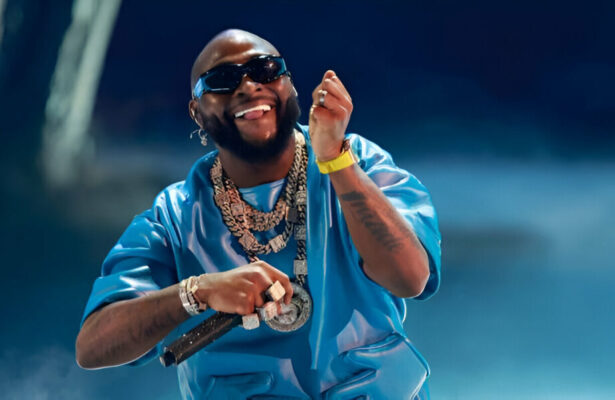
Afrobeats superstar David Adeleke, better known as Davido, has reportedly gained profit after correctly predicting the outcome of Nigeria’s opening match at the 2025 Africa Cup of Nations.
The DMW Records boss staked a wager on the Super Eagles’ Group C encounter against Tanzania in Fes, Morocco, predicting that both teams would score in the fixture.
His forecast proved spot-on as Nigeria secured a 2-1 victory over the Taifa Stars in an entertaining contest on Tuesday.
A late strike from Ademola Lookman ensured all three points for the Super Eagles and handed Davido a hefty return on his investment.
Reports indicate that he earned a payout of $96,564 (approximately N150 million) from the successful wager.
Nigeria dominated possession for large periods of the match and sealed the win with Lookman’s decisive goal after Tanzania equalised through Mombwa seven minutes into the second half.
The win puts Nigeria in a strong position in Group C as they chase a fourth AFCON title.
Nigeria will face their next Group C opponents as they look to build on their opening day victory and advance to the knockout stages of the competition. (Punch)
Nigeria’s Super Eagles secured a 2-1 victory over Tanzania’s Taifa Stars in their Africa Cup of Nations 2025 Group C opener at the Complexe Sportif de Fes on Tuesday.
The match started at a lively pace, with Nigeria taking early control, though Tanzania threatened on several occasions.
The deadlock was broken in the 36th minute when defender Semi Ajayi rose highest to head Alex Iwobi’s lofted cross into the back of the net, giving Nigeria a 1-0 lead at halftime.
Tanzania responded quickly in the second half.
Just two minutes after the restart, midfielder Charles M’Mombwa capitalized on a loose ball to level the score at 1-1, putting Nigeria under pressure.
However, Nigeria regained the lead in the 55th minute when Ademola Lookman struck a clinical left-footed shot from outside the box to make it 2-1.
The latter stages of the match saw Tanzania press aggressively, but Nigeria defended resolutely.
Goalkeeper Daniel Nwabali and defenders Bassey and Ajayi made crucial interventions to deny the Taifa Stars further chances.
Despite Tanzania’s late pressure, Nigeria held on to claim all three points.
The Super Eagles are currently leading Group C, with Tunisia and Uganda set to clash later on Tuesday (today) at 9 p.m.
The three points are expected to boost Nigeria’s confidence ahead of their next Group C fixtures: against Tunisia on Saturday, December 27, and Uganda on Tuesday, December 30. (Punch)
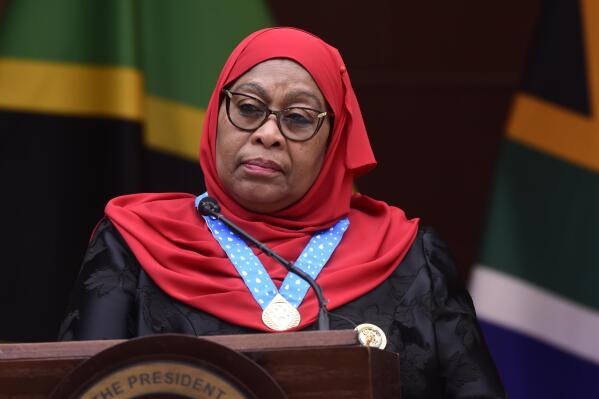
Tanzanian President Samia Suluhu Hassan was to be inaugurated on Monday, with the internet still blocked after election protests in which the opposition says hundreds were killed by security forces.
The electoral commission says Hassan won 98 per cent of the vote.
But the main opposition party, Chadema, which was barred from competing, has rejected the results and called for fresh elections, calling last Wednesday’s vote a “sham”.
State television said the public would not attend the inauguration, which would be held in the State House in the capital, Dodoma, rather than at a stadium as usual.
A total internet blackout has been in place since protests broke out on election day, so only a trickle of verifiable information has been getting out of the East African country.
A diplomatic source said there were credible reports of hundreds — perhaps even thousands — of deaths registered at hospitals and health clinics around Tanzania.
Chadema told AFP it had recorded “no less than 800” deaths by Saturday, but none of the figures could be independently verified.
The government has not commented on any deaths, except to reject accusations that “excessive force” was used.
Schools and colleges remained closed on Monday, with public transport halted.
The diplomatic source said there were “concerning reports” that police were using the internet blackout to buy time as they “hunt down opposition members and protesters who might have videos” of atrocities committed last week.
Dar es Salaam and other cities were much calmer over the weekend as a near-total lockdown was in place.
An AFP reporter said police were stopping almost everyone who moved around the city, checking IDs and bags, and allowing shops to open only in the afternoon.
AFP journalists on the island of Zanzibar — which has greater political freedom and saw few protests — saw masked armed men patrolling without visible insignia or identification in the days after the election.
A rights group in neighbouring Kenya presented gruesome footage on Sunday that it said was gathered from inside Tanzania, including images of dead bodies piled up in the street.
The images could not be independently verified.
Pope Leo XIV on Sunday called for prayers for Tanzania, where he said post-election violence had erupted “with numerous victims”.
“I urge everyone to avoid all forms of violence and to pursue the path of dialogue,” the pope said.
Hassan was elevated from vice-president on the sudden death of her predecessor, John Magufuli, in 2021.
She wanted an emphatic election victory to cement her place and silence critics within the ruling party, analysts say.
Rights groups say she oversaw a “wave of terror” ahead of the vote, including a string of high-profile abductions that escalated in the final days.
Despite a heavy security presence, election day descended into chaos as crowds took to the streets across the country, tearing down her posters and attacking police and polling stations, leading to an internet shutdown and curfew.
Polling stations had been largely empty before the violence broke out, AFP journalists and observers saw, though the electoral commission later said turnout was 87 per cent.
UN chief Antonio Guterres was “deeply concerned” about the situation in Tanzania, “including reports of deaths and injuries during the demonstrations”, his spokesman said last week. (Punch)
Scientist and global activist Jane Goodall, who turned her childhood love of primates into a lifelong quest for protecting the environment, has died at the age of 91, the institute she founded said on Wednesday.
Goodall died of natural causes while in California on a speaking tour, the Jane Goodall Institute said in a social media post.
“Dr. Goodall’s discoveries as an ethologist revolutionized science, and she was a tireless advocate for the protection and restoration of our natural world,” it said on Instagram.
The primatologist-turned-conservationist spun her love of wildlife into a life-long campaign that took her from a seaside English village to Africa and then across the globe in a quest to better understand chimpanzees, as well as the role that humans play in safeguarding their habitat and the planet’s health overall.
Goodall was a pioneer in her field, both as a female scientist in the 1960s and for her work studying the behavior of primates. She created a path for a string of other women to follow suit, including the late Dian Fossey.
She also drew the public into the wild, partnering with the National Geographic Society to bring her beloved chimps into their lives through film, TV and magazines.
She upended scientific norms of the time, giving chimpanzees names instead of numbers, observing their distinct personalities, and incorporating their family relationships and emotions into her work. She also found that, like humans, they use tools.
“We have found that after all there isn’t a sharp line dividing humans from the rest of the animal kingdom,” she said in a 2002 TED Talk.
As her career evolved, she shifted her focus from primatology to climate advocacy after witnessing widespread habitat devastation, urging the world to take quick and urgent action on climate change.
“We’re forgetting that we’re part of the natural world,” she told CNN in 2020. “There’s still a window of time.”
In 2003, she was appointed a Dame of the British Empire and, in 2025, she received the U.S. Presidential Medal of Freedom.
Born in London in 1934 and then growing up in Bournemouth on England’s south coast, Goodall had long dreamed of living among wild animals. She said her passion for animals, stoked by the gift of a stuffed toy gorilla from her father, grew as she immersed herself in books such as “Tarzan” and “Dr. Dolittle.”
She set her dreams aside after leaving school, unable to afford university. She worked as a secretary and then for a film company until a friend’s invitation to visit Kenya put the jungle – and its inhabitants – within reach.
After saving up money for the journey by boat, Goodall arrived in the East African nation in 1957. There, an encounter with famed anthropologist and paleontologist Dr. Louis Leakey and his wife, archaeologist Mary Leakey, set her on course to work with primates.
Under Leakey, Goodall set up the Gombe Stream Chimpanzee Reserve, later renamed the Gombe Stream Research Centre, near Lake Tanganyika in present-day Tanzania. There she discovered chimpanzees ate meat, fought fierce wars, and perhaps most importantly, fashioned tools in order to eat termites.
“Now we must redefine tools, redefine man, or accept chimpanzees as humans,” Leakey said of the discovery.
Although she eventually paused her research to earn a PhD at Cambridge University, Goodall remained in the jungle for years. Her first husband and frequent collaborator was wildlife cameraman Hugo van Lawick.
Through the National Geographic’s coverage, the chimpanzees at Gombe Stream soon became household names – most famously, one Goodall called David Greybeard for his silver streak of hair.
Nearly thirty years after first arriving in Africa, however, Goodall said she realized she could not support or protect the chimpanzees without addressing the dire disappearance of their habitat. She said she realized she would have to look beyond Gombe, leave the jungle, and take up a larger global role as a conservationist.
In 1977, she set up the Jane Goodall Institute, a nonprofit organization aimed at supporting the research in Gombe as well as conservation and development efforts across Africa. Its work has since expanded worldwide and includes efforts to tackle environmental education, health and advocacy.
She made a new name for herself, traveling an average of 300 days a year to meet with local officials in countries around the world and speaking with community and school groups. She continued touring to the end of her life, speaking at Climate Week in New York City just last week.
She later expanded the institute to include Roots & Shoots, a conservation program aimed at children.
It was a stark shift from her isolated research, spending long days watching chimpanzees.
“It never ceases to amaze me that there’s this person who travels around and does all these things,” she told the New York Times during a 2014 trip to Burundi and back to Gombe. “And it’s me. It doesn’t seem like me at all.”
A prolific author, she published more than 30 books with her observations, including her 1999 bestseller “Reason For Hope: A Spiritual Journey,” as well as a dozen aimed at children.
Goodall said she never doubted the planet’s resilience or human ability to overcome environmental challenges.
“Yes, there is hope … It’s in our hands, it’s in your hands and my hands and those of our children. It’s really up to us,” she said in 2002, urging people to “leave the lightest possible ecological footprints.”
She had one son, known as ‘Grub,’ with van Lawick, whom she divorced in 1974. Van Lawick died in 2002. In 1975, she married Derek Bryceson. He died in 1980. (JapanToday)



 English