
Posted on Leave a comment

Supreme Court spurns Trump on birthright citizenship, allows transgender sports bans

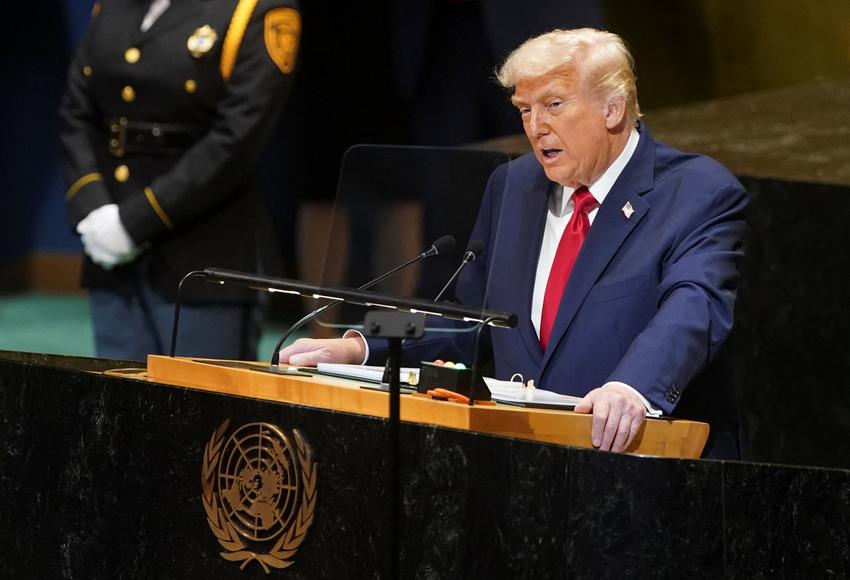
The U.S. Supreme Court handed President Donald Trump a painful defeat on Tuesday by rejecting his move to restrict birthright citizenship on the final day of its momentous term, while also letting states ban transgender student athletes from women’s sports teams and striking down more campaign finance limits.

The top U.S. judicial body’s ‌annual term — nine months long — was packed with major rulings, including some big victories for Trump in areas such as presidential powers and immigration as well as losses for him on tariffs, firing a Federal Reserve official and, on Tuesday, birthright citizenship.

The Supreme Court has a 6-3 conservative majority that includes three Trump appointees.

Limiting birthright citizenship was one of the top priorities in the Republican president’s crackdown on immigration — so much so that he signed an executive order on the ‌matter on his first day back in office last year.

Conservative Chief Justice John Roberts, who authored Tuesday’s 6-3 decision, said Trump’s directive violated language in ⁠the U.S. Constitution’s 14th Amendment that guarantees citizenship to virtually anyone born in the United States, with a few narrow exceptions.

The 14th Amendment, ratified in ⁠1868 in the aftermath of the Civil War ⁠that ended slavery in the United States, confers citizenship to those born in the United States who are “subject to the jurisdiction thereof.” There were narrow exceptions such as the children of foreign diplomats or ‌members of an enemy occupying force.

“Citizenship, then and now, was the right to have rights — to freely participate in our political community,” Roberts wrote, adding that the authors of the 14th Amendment extended that ⁠promise to every free-born person in the land.

“We keep that promise today,” Roberts wrote.

Trump’s directive instructed federal agencies not to ⁠recognize the citizenship of children born in the United States if neither parent is an American citizen or legal permanent resident, also called a “green card” holder. Critics have accused Trump of racial and religious discrimination in his approach to immigration.

Ahead of the ruling, some experts had estimated that Trump’s directive could affect the legal status of as many as 250,000 babies born each year and could require the families of millions more to prove the citizenship status of their newborns.

“The court’s decision reaffirms a fundamental American promise — if you are ⁠born here, you are a citizen,” said ACLU National Legal Director Cecillia Wang, who argued the case on behalf of the challengers at the Supreme Court.

“A president cannot change the Constitution by executive fiat,” Wang ⁠added.

Following Tuesday’s ruling, Trump wrote on his Truth Social platform that the ruling ‌was “too bad for our Country” and urged Congress “to work on ending expensive and unfair to our Country, Birthright Citizenship.”

The controversy over transgender athletes has become enmeshed in the American culture wars.

Laws in West Virginia and Idaho designate sports teams at public schools including universities according to “biological sex” and bar “students of the male sex” from female teams. The states said the laws preserve fair and safe competition for women and girls. Twenty-five other states have similar laws.

Critics saw the measures as part of a broader assault on the rights of transgender Americans by Trump and various states.

The Supreme Court on Tuesday overturned decisions by lower ‌courts siding with transgender students who challenged the bans in the two states as violating the Constitution and a federal anti-discrimination law.

The court decided 9-0 that the state laws do not violate the Title IX civil rights statute that bars discrimination in education “on the basis of sex.” The justices divided along ideological lines — with the six conservative justices in the majority — in deciding that the measures also do not violate the 14th Amendment guarantee of equal protection under the law.

“Consistent with Title IX and the Equal Protection Clause, we hold that the states may maintain women’s and girls’ sports for biological females. They may determine eligibility for women’s and girls’ sports based on biological sex. The Constitution and Title IX do not require an overhaul of women’s and girls’ sports throughout America,” conservative Justice Brett Kavanaugh wrote in the ruling.

Writing on Truth Social, Trump said after the ruling: “BIG WIN: The United States Supreme Court just RULED AGAINST MEN PLAYING IN WOMEN’S SPORTS. Wow! That takes that ridiculous situation off the table!!!”

It was the court’s second major ruling against transgender plaintiffs in a span of a year. In a case from Tennessee in June 2025, it let states ban gender-affirming medical treatments for transgender minors.
Posted on Leave a comment

China’s new K visa beckons foreign tech talent as U.S. hikes H-1B fee


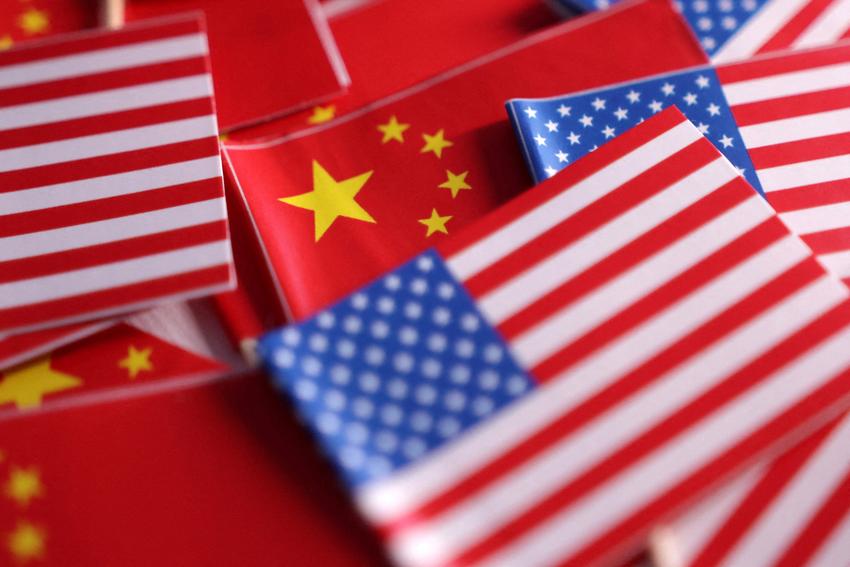
China’s new visa program aimed at attracting foreign tech talent kicks off this week, a move seen boosting Beijing’s fortunes in its geopolitical rivalry with Washington as a new U.S. visa policy prompts would-be applicants to scramble for alternatives.

While China has no shortage of skilled local engineers, the programme is part of an effort by Beijing to portray itself as a country welcoming foreign investment and talent, as rising trade tensions due to U.S. tariffs cloud the country’s economic outlook.

China has taken a series of measures to boost foreign investment and travel, opening more sectors to overseas investors and offering visa waivers for citizens from most European countries, Japan and South Korea among others.

“The symbolism is powerful: while the U.S. raises barriers, China is lowering them,” said Iowa-based immigration attorney Matt Mauntel-Medici, referring to China’s new visa category, called the K visa, which launches on Wednesday.

The K visa, announced in August, targets young foreign science, technology, engineering and mathematics (STEM) graduates and promises to allow entry, residence and employment without a job offer, which could appeal to foreign workers looking for alternatives to U.S. job opportunities.

Earlier this month, the Trump administration said it would ask companies to pay $100,000 per year for H-1B worker visas, widely used by tech companies to hire skilled foreign workers.

“The U.S. has definitely shot itself in the foot on H-1Bs, and the timing is exquisite for China’s K visa,” said Michael Feller, chief strategist at Geopolitical Strategy.

Other countries including South Korea, Germany and New Zealand are also loosening visa rules to attract skilled migrants.

Immigration experts say the main attraction of the K visa is no requirement of a sponsoring employer, which has been regarded as one of the biggest hurdles for those seeking H-1B visas.

The H-1B visa requires employer sponsorship and is subject to a lottery system, with only 85,000 slots available annually. The new $100,000 fee could further deter first-time applicants.

“It’s an appealing alternative for Indian STEM professionals seeking flexible, streamlined visa options,” said Bikash Kali Das, an Indian student at Sichuan University.

India was by far the largest beneficiary of H-1B visas last year, accounting for 71% of approved beneficiaries.

Despite its promise, the K visa faces hurdles. Chinese government guidelines mention vague “age, educational background and work experience” requirements.

There are also no details on financial incentives, employment facilitation, permanent residency, or family sponsorship. Unlike the U.S., China does not offer citizenship to foreigners except in rare cases.

China’s State Council did not respond to a request for comment asking for more details on the logistics and underlying strategy of the K visa.

Language is another barrier: most Chinese tech firms operate in Mandarin, limiting opportunities for non-Chinese speakers.

Political tensions between Delhi and Beijing could also become a factor that could limit the number of Indian K visa applicants China is willing to accept, experts said.

“China will need to ensure Indian citizens feel welcome and can do meaningful work without Mandarin,” said Feller.

China’s talent recruitment has traditionally focused on China-born scientists abroad and overseas Chinese.

Recent efforts include home-purchase subsidies and signing bonuses of up to 5 million yuan ($702,200). These have drawn back U.S.-based Chinese STEM talent, especially amid Washington’s growing scrutiny on ties to China.

“The recruitment effort targeting Indian tech talent in China is growing but remains moderate compared to the more intensive, well-established, and well-funded initiatives aimed at repatriating Chinese STEM talent,” said Sichuan University’s Das.

A Chinese STEM graduate who recently got a job offer from a Silicon Valley-based tech company was also sceptical about the K visa’s prospects.

“Asian countries like China don’t rely on immigration and local Chinese governments have many ways to attract domestic talent,” he said, declining to be named for privacy reasons.

The U.S. has over 51 million immigrants — 15% of its population — compared to just 1 million foreigners in China, less than 1% of its population.

While China is unlikely to significantly alter its immigration policy to allow in millions of foreign workers, analysts say the K visa could still boost Beijing’s fortunes in its geopolitical rivalry with Washington.

“If China can attract even a sliver of global tech talent, it will be more competitive in cutting-edge technology,” Feller said. (JapanToday)