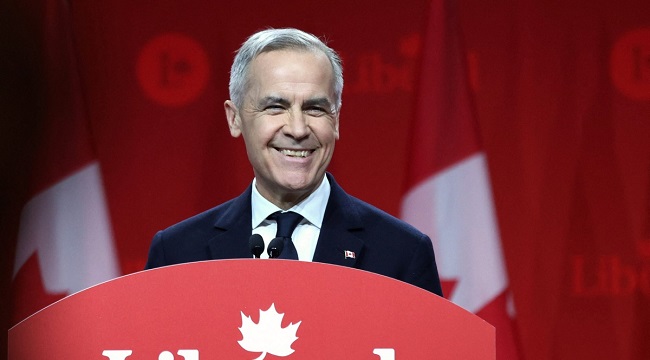
Canadian Prime Minister Mark Carney says his government is developing a government-owned investment fund.
Carney said on Monday that the fund, a first for the country, will invest in major Canadian industrial projects in areas such as energy, infrastructure, mining, agriculture and technology. It will begin at 25 billion Canadian dollars (US$18bn).
The prime minister said the federal government will put up funds alongside private investors. The money will help finance major projects that Carney’s government is focused on building as Canada seeks to diversify away from the United States.
US President Donald Trump has threatened Canada’s economy and sovereignty with tariffs and claims that Canada could be “the 51st state” in the US.
Carney is a former central banker in England and Canada as well as chairman of the board of directors for Bloomberg.
“We take a lesson from other jurisdictions that had the foresight many decades ago to start sovereign wealth funds,” Carney said. “In some cases, they began with a domestic focus then outgrew the scale of the domestic focus.”
Sovereign wealth funds invest in assets, such as stocks, bonds and real estate. They are typically funded by a country’s budgetary surpluses, which Canada currently does not have. The announcement came a day before Carney’s government announces its spring economic update.
There are more than 90 sovereign wealth funds around the world. They manage more than $8 trillion in assets, according to the International Forum of Sovereign Wealth Funds, a London-based organisation made up of roughly 50 of these entities.
Trump ordered the creation of a US sovereign wealth fund last year. In the US, more than 20 sovereign wealth funds exist at the state level, according to an analysis from the Center for Global Development, a Washington, DC-based nonpartisan think tank. (AlJazeera)
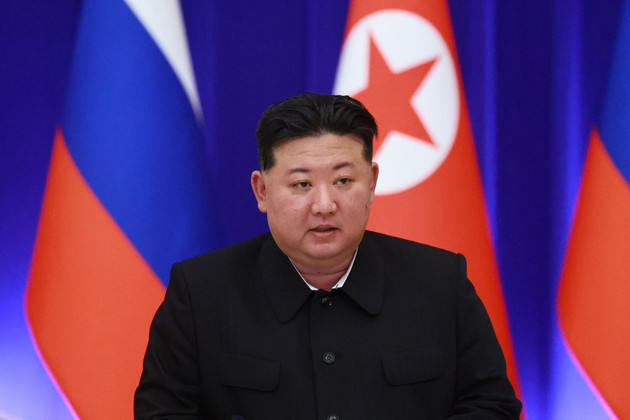
North Korea fired ballistic missiles into the sea on Sunday, accelerating its missile launches amid Iran war tensions and talk of possible meetings with the U.S. and South Korea.
Pyongyang’s intense missile activity – this was the fourth such launch this month and the seventh of the year – is meant to display its self-defence capabilities while gaining international leverage, some experts said.
“The missile launches may be a way of showing that – unlike Iran – we have self-defense capabilities,” said South Korean former presidential security adviser Kim Ki-jung.
“The North also appears to be exerting pressure preemptively and make a show of force before engaging in dialogue with the United States and South Korea,” he said.
The seven-week-old U.S.-Israeli war against Iran, which has as one aim the curbing of Tehran’s nuclear program, could reinforce Pyongyang’s nuclear ambitions, experts and former South Korean officials say.
U.S. President Donald Trump, preparing for a summit in China next month, and South Korean President Lee Jae Myung have repeatedly expressed interest in holding talks with North Korean leader Kim Jong Un. There are no publicly known plans for any meetings.
Lee recently conveyed regret to the North for drone incursions from the South, receiving rare praise from Pyongyang.
Sunday’s missiles were fired from near the city of Sinpo on North Korea’s east coast toward the sea around 6:10 a.m. and flew about 140 km, South Korea’s military said in a statement.
Japan’s government posted on social media that the missiles were believed to have fallen near the east coast of the Korean Peninsula, and no incursion into Japan’s exclusive economic zone had been confirmed.
South Korea’s presidential Blue House convened an emergency security meeting, calling the launches a provocation that violated U.N. Security Council resolutions, according to media reports. It urged Pyongyang to “stop the provocative acts”.
It was not clear what kind of ballistic missiles were fired, but Sinpo has submarines and equipment for test-firing submarine-launched ballistic missiles. The North last fired a ballistic missile from a submarine in May 2022, and it flew as far as 600 km.
North Korea has made “very serious” advances in its ability to turn out nuclear weapons, with the probable addition of a new uranium enrichment facility, International Atomic Energy Agency chief Rafael Grossi said on Wednesday.
In late March, North Korean leader Kim said Pyongyang’s status as a nuclear-armed state was irreversible and expanding a “self-defensive nuclear deterrent” was essential to national security. (JapanToday)
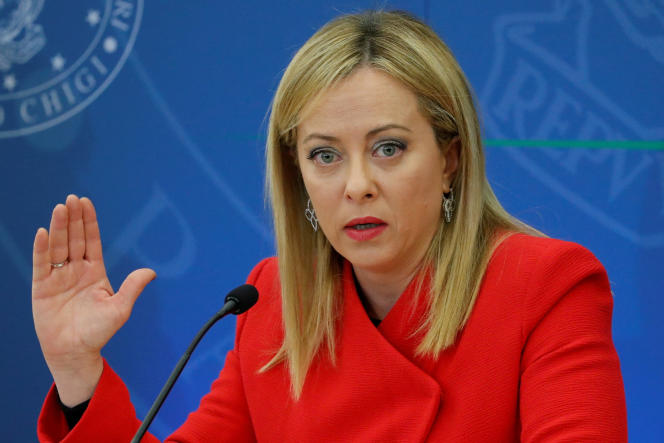
Italian Prime Minister Giorgia Meloni lacks courage and has let Washington down, U.S. President Donald Trump told an Italian newspaper on Tuesday, delivering a blunt public rebuke to one of his closest European allies.
Meloni had been a vociferous supporter of Trump, but she distanced herself from him after he went to war with Iran in February, and on Monday she openly criticized him for lashing out at Pope Leo, saying his verbal assault was “unacceptable”.
Trump responded in an interview with Corriere della Sera, saying Meloni was “very different from what I thought” and denouncing her for refusing to help re-open the Strait of Hormuz, which has been blocked by Iran.
“I’m shocked by her. I thought she had courage. I was wrong,” he was quoted as saying in the Italian-language article.
The White House declined to comment on the reported quotes. Meloni’s office also declined to comment, but politicians of all stripes rallied to her defence, including Foreign Minister Antonio Tajani, head of the coalition Forza Italia party.
“We are, and will remain, sincere supporters of Western unity and steadfast allies of the United States, but that unity is built on loyalty, respect and mutual frankness,” he said, applauding Meloni for denouncing Trump’s attack on the pope.
“On Pope Leo XIV, she said exactly what all of us Italian citizens think,” he added in a statement on X.
Trump’s criticism marked a dramatic change in tone toward Meloni, the only European leader to attend his inauguration in 2025 and whom he had hailed as “a great leader” just one month ago.
On Tuesday he accused her of failing to back U.S. efforts to tackle Iran’s nuclear program and guarantee energy flows through the Gulf, saying she wanted America “to do the job for her.”
Asked about her condemnation of his comments on Pope Leo, he said: “She is the one who is unacceptable, because she does not care whether Iran has a nuclear weapon and would blow Italy up in two minutes if it had the chance.”
The reprimand capped a tumultuous month for Meloni, who lost a crunch referendum on judicial reform in March and then saw her political ally Viktor Orban ousted from power in Hungary.
The U.S.-Israeli war in the Gulf threatens to upend the economy with surging energy costs and is hugely unpopular with Italians, putting Meloni on a collision course with Trump.
Seeking to distance herself from the conflict, she refused to let U.S. fighters use an air base in Sicily for combat operations in Iran last month and on Tuesday, she suspended a military cooperation pact with Israel.
Trump said the surge in energy prices should have encouraged Italy, which is heavily dependent on oil and gas imports, to help re-open the Strait of Hormuz.
“They pay the highest energy costs in the world and are not even ready to fight for the Strait of Hormuz… They depend on Donald Trump to keep it open,” Trump said. (JapanToday)
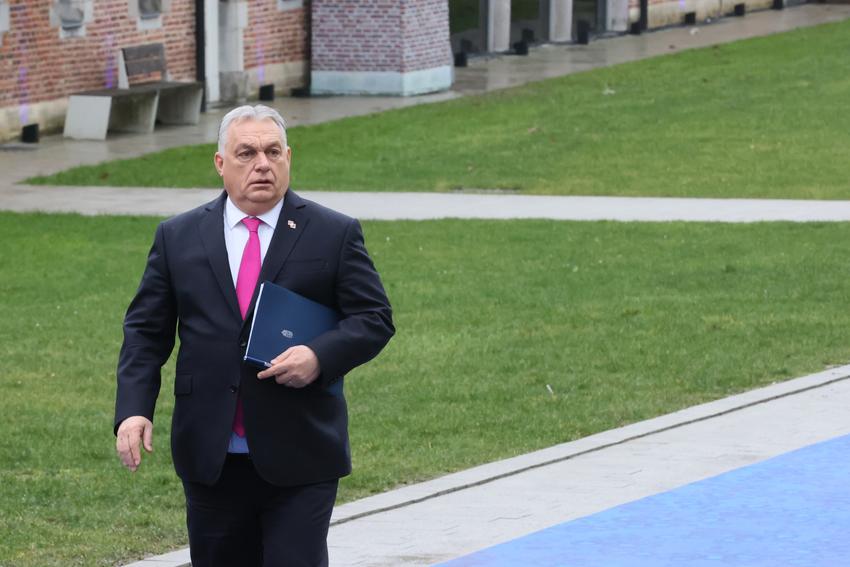
Hungarian voters on Sunday ousted long-serving Prime Minister Viktor Orban after 16 years in power, rejecting the authoritarian policies and global far-right movement that he embodied in favor of a pro-European challenger in a bombshell election result with global repercussions.
Election victor Péter Magyar, a former Orbán loyalist who campaigned against corruption and on everyday issues like health care and public transport, has pledged to rebuild Hungary’s relationships with the European Union and NATO — ties that frayed under Orban. European leaders quickly congratulated Magyar.
It’s not yet clear whether Magyar’s Tisza party will have the two-thirds majority in parliament to govern without a coalition. With 77% of the vote counted, it had more than 53% support to 38% for Orban’s governing Fidesz party.
It’s a stunning blow for Orban, a close ally of both U.S. President Donald Trump and Russian President Vladimir Putin. Orban conceded defeat after what he called a ″painful″ election result.
“I congratulated the victorious party,″ Orban told followers. “We are going to serve the Hungarian nation and our homeland from opposition,″ he said.
‘’Thank you, Hungary!” Magyar posted on X, as thousands of his supporters thronged the banks of the Danube in Budapest, chanting “We got it! We did it!”
Orban, the EU’s longest-serving leader and one of its biggest antagonists, who has traveled a long road from his early days as a liberal, anti-Soviet firebrand to the Russia-friendly nationalist admired today by the global far-right.
Turnout by 6:30 p.m. was over 77%, according to the National Election Office, a record number in any election in Hungary’s post-Communist history.
The parties of both Orban and Magyar said they had received reports of electoral violations, suggesting some results could be disputed by both sides.
“I’m asking our supporters and all Hungarians: Let’s stay peaceful, cheerful, and if the results confirm our expectations, let’s throw a big, Hungarian carnival,” Magyar said.
Mark Radnai, Tisza’s vice president, also called for reconciliation after a tense campaign. “We can’t be each other’s enemies. Reach out, hug your neighbors, your relatives. It’s the day of reunification.”
The EU will be waiting to see what Magyar does about Ukraine. Orban repeatedly frustrated EU efforts to support Ukraine in its war against Russia’s full-scale invasion, while cultivating close ties to Putin and refusing to end Hungary’s dependence on Russian energy imports.
Recent revelations have shown a top member of Orban’s government frequently shared the contents of EU discussions with Moscow, raising accusations that Hungary was acting on Russia’s behalf within the bloc.
Orban occupied an outsized role in far-right populist politics worldwide.
Members of Trump’s “Make America Great Again” movement are among those who see Orban’s government and his Fidesz political party as shining examples of conservative, anti-globalist politics in action, while he is reviled by advocates of liberal democracy and the rule of law.
Casting his ballot in Budapest, Marcell Mehringer, 21, said he was voting “primarily so that Hungary will finally be a so-called European country, and so that young people, and really everyone, will do their fundamental civic duty to unite this nation a bit and to break down these boundaries borne of hatred.”
During his 16 years as prime minister, Orban launched harsh crackdowns on minority rights and media freedoms, subverted many of Hungary’s institutions and been accused of siphoning large sums of money into the coffers of his allied business elite, an allegation he denies.
He also heavily strained Hungary’s relationship with the EU. Although Hungary is one of the smaller EU countries, with a population of 9.5 million, Orban has repeatedly used his veto to block decisions that require unanimity.
Most recently, he blocked a 90-billion euro ($104 billion) EU loan to Ukraine, prompting his partners to accuse him of hijacking the critical aid.
Magyar, 45, rapidly rose to become Orban’s most serious challenger.
Donald Trump’s remarks about Pope Leo XIV were “unacceptable”, Italian Prime Minister Giorgia Meloni has said.
The US president accused the pontiff of being “WEAK on Crime and terrible for Foreign Policy” in a long Truth Social post, later telling reporters he was “not a big fan”.
“The Pope is the head of the Catholic Church, and it is right and normal for him to call for peace and to condemn every form of war,” Meloni said in a statement.
Meloni, who is a Catholic and heads a right-wing coalition government, is a close ally of Trump and had so far been reluctant to condemn the US president’s harsh criticism of Pope Leo.
Italian opposition parties have criticised Meloni for failing to speak out promptly.
Her coalition partner Matteo Salvini, the leader of the populist League party, said that “attacking the Pope… doesn’t seem like a useful or intelligent thing to do.”
After Trump’s remarks, the Pope told reporters en route to Algeria that he did not want to get into a debate with Trump but would continue to promote peace.
Pope Leo has said he has “no fear” of the Trump administration and will continue to speak out against war after the US president launched an unusual and scathing attack over his stance on the Iran conflict.
He has been a staunch critic of the Iran war, calling Trump’s threat to destroy Iranian civilisation “unacceptable” and calling for him to find an “off-ramp” to end the conflict.
On Monday, Trump doubled down on his criticism, saying he would not apologise to the “very weak” Pope.
In general, it is rare for a Pope to directly address statements by world leaders.
There are more than 70 million Catholics in the US, about 20% of the population. They include Trump’s Vice-President JD Vance.
Trump’s comments came as the pontiff embarked on an 11-day trip to Africa, his second major foreign trip since being elected last year.
The US president wrote in Sunday’s post that the Pope “should get his act together” and said he was “weak on nuclear weapons”, apparently referring to Tehran’s attempts to become a nuclear power, cited as one of the reasons for the US and Israel going to war with Iran.
He also suggested that the pontiff was elected “because he was American, and they thought that would be the best way to deal with President Donald J Trump”.
“If I wasn’t in the White House, Leo wouldn’t be in the Vatican.”
Asked by reporters to explain the post, he later said: “I don’t think he’s doing a very good job, he likes crime, I guess.”
Trump added: “He’s a very liberal person, and he’s a man who doesn’t believe in stopping crime, he’s a man who doesn’t believe we should be toying with a country that wants a nuclear weapon so they can blow up the world.”
In response, the Pope told reporters on board his plane to Algiers that he did not see his role as that of a politician but as one of spreading the message of peace.
“I have no fear of the Trump administration, or speaking out loudly of the message of the gospel, which is what I believe I am here to do, what the Church is here to do,” he told reporters.
“I don’t want to get into a debate with [Trump],” he added. (BBC)
U.S. President Donald Trump on Tuesday agreed to a two-week ceasefire with Iran, less than two hours before his deadline for Tehran to reopen the Strait of Hormuz or face devastating attacks on its civilian infrastructure.
Trump’s announcement on social media represented an abrupt turnaround from earlier in the day, when he issued an extraordinary warning that “a whole civilization will die tonight” if his demands were not met.
Pakistan Prime Minister Shehbaz Sharif, who helped mediate the ceasefire, said in a post on X that he had invited Iranian and U.S. delegations to meet in Islamabad on Friday.
Trump said the last-minute deal was subject to Iran’s agreement to pause its blockade of oil and gas supplies through the strait, which typically handles about one-fifth of global oil shipments. Iran’s foreign minister, Abbas Araqchi, said in a statement that Tehran would stop counter-attacks and provide safe passage through the waterway.
“This will be a double sided CEASEFIRE!” Trump wrote on his Truth Social platform. “The reason for doing so is that we have already met and exceeded all Military objectives, and are very far along with a definitive Agreement concerning Longterm PEACE with Iran, and PEACE in the Middle East.”
Iran’s Supreme National Security Council portrayed the deal as a victory over the U.S., claiming Trump had accepted Iran’s conditions for ending hostilities.
In response, White House press secretary Karoline Leavitt said, “The truth is that President Trump and our powerful military got Iran to agree to reopening the Strait of Hormuz, and negotiations will continue.”
The war, now in its sixth week, has claimed more than 5,000 lives in nearly a dozen countries, including more than 1,600 civilians in Iran, according to tallies from government sources and human rights groups.
Two White House officials confirmed that Israel has also agreed to the two-week ceasefire and to suspend its bombing campaign on Iran. The agreement includes a cessation of Israel’s campaign in Lebanon, Sharif said.
It was not immediately clear how soon the ceasefire would take full effect. Israeli media reported it would begin once Iran reopened the strait and that Israel expected Iranian attacks to continue in the interim.
More than an hour after Trump’s announcement, the Israeli military said it had identified missiles launched from Iran, and explosions from intercepted missiles could be heard in Tel Aviv. Gulf countries including Kuwait, Bahrain, Saudi Arabia and the United Arab Emirates also issued near-simultaneous alerts and activated air defenses.
Trump, who has issued a series of threats in recent weeks only to back away, said progress between the two sides had prompted him to agree to the ceasefire. He said Iran had presented a 10-point proposal that was a “workable basis” for negotiations and that he expected an agreement to be “finalized and consummated” during the two-week window.
Markets breathed a sigh of relief, with U.S. stock futures rising in the minutes following Trump’s message. Oil prices fell sharply, with U.S. crude futures touching their lowest price since March 26. (JapanToday)
Sir Keir Starmer has arrived in Saudi Arabia as he visits Gulf allies after the US and Iran agreed a two-week ceasefire.
The prime minister is expected to “discuss diplomatic efforts to support and uphold the ceasefire”, according to No 10. He will return to the UK on Friday.
The ceasefire comes after Donald Trump threatened “a whole civilisation will die” if Iran did not agree to end the war and unblock the Strait of Hormuz – comments that led Downing Street to call again for “de-escalation”.
Sir Keir said: “I welcome the ceasefire agreement reached overnight, which will bring a moment of relief to the region and the world.”
He added: “Together with our partners we must do all we can to support and sustain this ceasefire, turn it into a lasting agreement and reopen the Strait of Hormuz.”
Sir Keir is also expected to meet UK military personnel in the region as part of his Gulf trip, which was planned before the ceasefire announcement.
For the Conservatives, shadow housing secretary Sir James Cleverly told BBC Breakfast the ceasefire is an “opportunity for Iran to make some serious choices” about how it behaves at home and abroad.
Former foreign secretary Sir James said the war was initiated to ensure Iran “never acquires a nuclear weapon” and that remains an “absolute priority”, adding: “So we’ll welcome this two-week ceasefire, but it’s time that mustn’t be wasted.”
Liberal Democrat leader Sir Ed Davey welcomed the ceasefire but questioned whether the UK could trust Trump, labelling him a “totally unreliable ally”.
Sir Ed said the Strait of Hormuz needed to be opened otherwise people would “pay a heavy price in inflation and lower growth”, adding: “So whatever it takes, but I do think we’ve got to stand up to America.
“America has caused this problem so we’ve got to work with allies who we can trust.”
Last week the UK hosted a virtual summit in which representatives from more than 40 countries began work to assemble a coalition capable of ensuring security in the Strait after the fighting has stopped.
This was followed by a military planning conference on Tuesday.
Iran and the US agreed to the conditional ceasefire on Tuesday, just over an hour before the expiry of the deadline Trump had set for Iran to make a deal.
In a post on Truth Social, Trump said the ceasefire was “subject to the Islamic Republic of Iran agreeing to the COMPLETE, IMMEDIATE, and SAFE OPENING of the Strait of Hormuz”.
Meanwhile, the Iranian Foreign Minister Abbas Araghchi announced Iran would agree to a ceasefire “if attacks against Iran are halted”.
“For a period of two weeks, safe passage through the Strait of Hormuz will be possible,” he added.
The war began in February, when the US and Israel launched co-ordinated attacks on Iran over concerns Tehran was accelerating efforts towards building a nuclear weapon.
In response, Iran has launched strikes on its neighbours across the Gulf and the wider Middle East.
It also placed a stranglehold on the Strait of Hormuz, a waterway that serves as a critical shipping route through which a fifth of the world’s energy shipments usually transits.
The conflict caused the price of crude oil to spike, with sharp increases in petrol and diesel costs, leading to concerns about the cost of living in countries across the world. (BBC)
Iranian football had a good week on its troubled path to playing World Cup games in the United States in June.
A first face-to-face meeting with FIFA President Gianni Infantino since the US and Israel started a war against Iran on February 28 made genuine progress in football diplomacy at the end of a fraught month.
The Iranian football federation’s upbeat readout of the meeting in Turkiye made no mention of moving World Cup games to Mexico — a subject Infantino has repeatedly shut down for the past two weeks.
Infantino also offered tangible help for the squad to prepare for the World Cup in the next two months. Most Iran players are with clubs in the national league, which has shut down during the war.
Iran’s World Cup hosts in Arizona in the US said this week that they were pressing on with training-camp upgrades plus local and federal security plans – echoing the “stick to the schedule” mantra that FIFA has used.
Infantino stayed on in the Turkish coastal resort of Antalya to watch Iran rout Costa Rica 5-0 in a warm-up.
Clearly, the next two months are full of uncertainty for Iran’s team and for the nation itself amid mixed messages about US intentions for the war.
Still, talk of Iran boycotting football’s biggest event or seeking to move its games from Los Angeles and Seattle to Mexico has faded.
The Iranian delegation is due at its Tucson, Arizona training camp no later than June 10 for the June 11-July 19 tournament.
The war immediately cast doubt on Iran’s ability and willingness to fulfil a World Cup entry that it secured in March 2025 as one of the best teams in Asia.
In the first half of March, government officials variously suggested that the team could not play at the World Cup, that it could not travel to the US, and that FIFA should move Iran’s games to cohost Mexico.
A spokesman for the Iran Football Association did not respond on Thursday to a request for comment. Iran has not withdrawn its entry with FIFA.
Mexico’s President Claudia Sheinbaum appeared to suggest hosting Iran games was possible, without advocating for an unprecedented late change to the World Cup schedule.
US President Donald Trump added to the confusion with mixed messaging. He said, “I really don’t care” if Iran comes to the World Cup, then said that players were not safe, seeming to mean they were at risk from regime reprisals at home. He then went on to promise that the players would be treated like stars.
FIFA has been the most consistent commentator, and Infantino the only top soccer official openly talking about the delicate diplomacy: That Iran will come to the US, that the schedule will not change, and that no formal negotiations about Mexico had or would take place.
Iran, therefore, is on track to come to Arizona and start preparing for a first game on June 15 against New Zealand at the Los Angeles Rams’ SoFi Stadium in Inglewood. (AlJazeera)
Tiger Woods was arrested Friday on suspicion of driving under the influence after his Land Rover traveling at “high speed” on a residential road clipped a truck and rolled onto its side.
Martin County Sheriff John Budensiek said Woods was able to crawl out of passenger side and was not injured.
“He did exemplify signs of an impairment,” Budensiek said, adding that investigators believe he had taken “some type of medication or drug.” He said Woods agreed to a breathalyzer test that showed no signs of alcohol, but refused a urine test and was arrested.
Under Florida law, he would have to spend eight hours in jail before he could post bail.
Budensiek said the sheriff’s office will follow the law regardless of who has been accused of a crime. He said Woods was being held in jail but separate from others.
“He’s not going to be with other inmates that could hurt him or try to capitalize on what he did,” he said. “He’ll pay the price, but he’s not going to pay the price by getting punished in jail.”
It was the second time Woods has been arrested for a DUI not as a result of the influence of alcohol. He said he took a bad mix of painkillers when authorities found him in 2017 asleep behind the wheel of his car, the engine still running and its driver’s side damaged. Woods pleaded guilty then to reckless driving.
President Donald Trump, whose former daughter-in-law is dating Tiger Woods, was asked about the golfer when he landed in Miami on Friday afternoon for an investment summit.
“I feel so badly. He’s got some difficulty,” Trump said. “Very close friend of mine. He’s an amazing person. Amazing man. But, some difficulty.”
The crash occurred just before 2 p.m. not far from where Woods lives on Jupiter Island.
Budensiek said Woods attempted to pass a pressure cleaner truck while driving on a two-lane road with a 30 mph (48 kph) speed limit. He said authorities could not determine how fast Woods was going.
The Land Rover swerved to avoid a collision as he was passing the truck but clipped the back end of the truck’s trailer, Budensiek said. Woods’ car then rolled onto its driver’s side.
The sheriff said Woods was “cooperative, but he’s not trying to incriminate himself.” He said Woods has the right to refuse the urine test and that authorities “will never get definitive results with what he was impaired on.”
Woods’ manager at Excel Sports did not immediately respond to a text message seeking comment.
This was the fourth time Woods has been involved in a car crash, most recently in February 2021 when his SUV ran off a coastal road in Los Angeles at a high rate of speed, leading to multiple leg and ankle injuries. Woods said later doctors considered amputation. He also previously sustained multiple injuries to his left knee and his back during his golf career.
Woods returned from multiple back surgeries to win the 2019 Masters for his 15th major. His 82 titles on the PGA Tour is tied for the career record with Sam Snead. Since that LA crash, he has played 11 tournaments without being closer than 16 shots to the winner the four times he was able to finish 72 holes.
Friday’s arrest comes as Woods was trying to decide if he was fit enough to play the Masters, which starts April 9. He also was to be in Augusta, Georgia, on April 5 to unveil a golf course project with Masters chairman Fred Ridley.
Woods also was days away from what was described as a “soft deadline” to decide whether to be the U.S. Ryder Cup captain for the 2027 matches in Ireland.
Woods, 50, had been working his way back to golf from a seventh back surgery in September.
His last official tournament was the British Open in 2024. Woods ruptured his Achilles tendon in March 2025 and that kept him off the course all season even before the back surgery. He managed to play in his indoor TGL golf league on Tuesday night.
He has remained deeply involved in PGA Tour affairs as chair of the Future Competition Committee that is restructuring the model of the tour. (JapanToday)
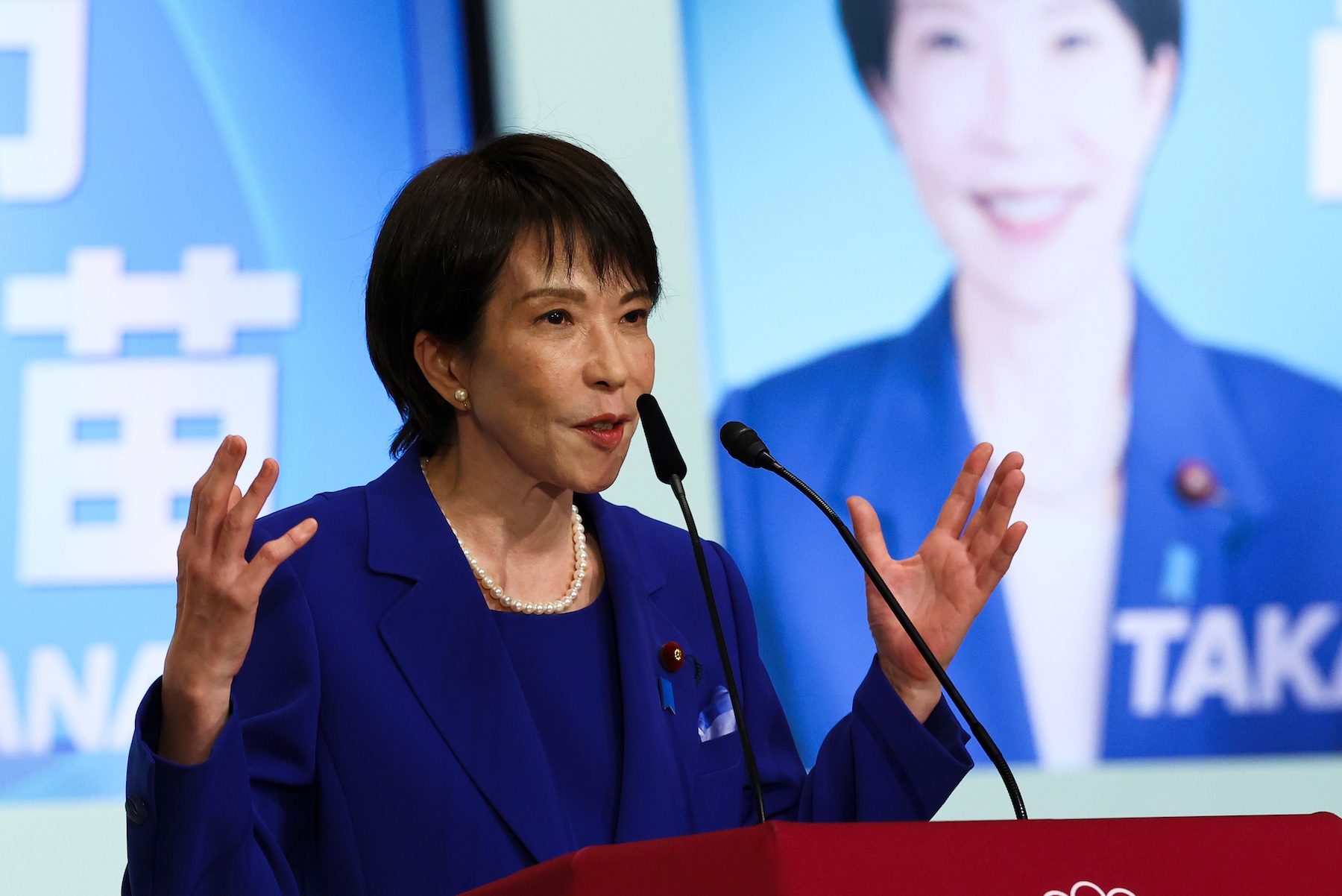
Japanese Prime Minister Sanae Takaichi sought to reaffirm her alliance with President Donald Trump on Thursday after the president this week seemed to complain that Japan was among the nations that did not join his call to help protect the Strait of Hormuz.
Takaichi, who met with Trump at the White House, told the president that Japan has opposed Iran’s development of its nuclear program and appealed to his desire to be seen as a peacemaker, despite his launching a war of choice with Iran. She told the U.S. president that in the Middle East and around the world now, there was “a very severe security environment,” but said, “Even against that backdrop, I firmly believe that it is only you, Donald, who can achieve peace across the world.”
The two leaders had warm words for each other, including Trump calling the prime minister a “popular powerful woman,” but there appeared to be some tension as they faced repeated questions from reporters about Japan’s support for the Iran war.
Trump told reporters that he and Takaichi would be discussing in their meeting Japan’s level of support for the U.S. in the Iran war, saying, “They are really stepping up to the plate.” He did not offer details.
He later said that much of the oil Japan relies on passes through the Strait of Hormuz and said, “so that’s a big reason to step up. He also mentioned U.S. spending in Japan and the number of troops it has stationed there.
“I expect Japan to step up you know, because we have that kind of relationship,” Trump said.
Taikaichi’s meeting at the White House, followed by a dinner Thursday night, was supposed to give her a prime opportunity to have Trump’s ear before he embarked on a trip to China.
The pair were all smiles in the evening, as Trump hosted a dinner in the prime minister’s office. “This is a spectacular woman, and it’s an honor to have you at the White House,” Trump said. Taikaichi referred to the leaders through an interpreter as “best buddies” before declaring, in English, “Japan is back.”
But now, the war in Iran and Trump’s unsuccessful call for Japan and other nations to help protect the vital Strait of Hormuz means the China trip has been delayed. Trump had repeatedly complained on camera and online that U.S. allies, including Japan, rejected his request to help safeguard the critical waterway for oil and gas transport.
The prime minister acknowledged before she left Japan that she expected her meeting with Trump will be “very difficult.”
Beyond facing questions about Iran, Takaichi and Trump are expected to announce a $40 billion nuclear reactor deal, according to a White House official, who was not authorized to speak publicly and spoke on the condition of anonymity to share details before the announcement.
Under the deal, U.S.-based GE Vernova Inc. and Japan-based Hitachi Ltd. will build advanced small modular reactors in Tennessee and Alabama, the official said. The deal aims to help stabilize electricity prices and expand power generation in the U.S.
Takaichi and her ministers have denied that Washington officially requested Japanese warships for the U.S.-Israeli operation.
Japan, a key U.S. ally in Asia, is one of the countries that Trump namechecked on Tuesday as he railed against the lack of help with the Strait of Hormuz before declaring the help wasn’t needed.
Kurt Campbell, the former U.S. deputy secretary of state in the Biden administration who is now chair of The Asia Group, said that in order to press for Japan’s interests, Takaichi will want to find a way to suggest that Japan is a part of the U.S. plan in the Middle East.
“She’s going to want to come out of that as a partner in this case and realize that if she can do that, that she can translate that potentially into the president listening more to Japanese concerns about Taiwan or other issues,” Campbell said.
The constraints on Japan’s involvement in Iran include a provision in its post-World War II constitution that bans the use of force except to defend its territory. The country’s military is called the Self-Defense Force.
Christopher Johnstone, a partner and chair of the defense and national security practice at The Asia Group, said Japan could help with mine-sweeping and has had “a small naval presence” in the region as part of an anti-piracy mission for at least a decade. But to join the U.S. mission would require Takaichi to clear “an exceptionally high bar politically to invoke collective self-defense” that has never been done before.
Takaichi, who had her first meeting with Trump in October in Tokyo, is Japan’s first female prime minister and a protégé of former leader Shinzo Abe, who developed a close relationship with Trump.
She is also a hardline conservative and longtime supporter of Taiwan whose comments about Japan’s willingness to provide military support to the island have heightened tensions with China.
Ahead of her meeting with Trump, Takaichi had sought to focus on trade, strengthening the U.S.-Japan relationship and security concerns. Japanese officials said the two sides would work to deepen cooperation in regional security, critical minerals, energy and dealing with China.
China views self-governed Taiwan, which the U.S. relies on for its production of computer chips, as its sovereign territory and has said it would take it by force if needed.
But beyond questions about helping with the Strait of Hormuz, the global implications of the Iran war have also put the Japanese leader in a tougher spot with Trump as she seeks to ensure U.S. commitment to the Indo-Pacific region.
Japan considers China a growing security threat and has pushed a military buildup on southwestern islands near the East China Sea. But the U.S. has shifted some troops stationed in Japan to the Middle East, removing a check against China’s power.
Takaichi is expected to raise concerns about troop shifts with Trump because they are coming at the same time China is launching a large number of exercises around Taiwan.
“This raises the prospect that — once again — the United States will be distracted and bogged down in the Middle East at a time when the deterrence problem in East Asia has never been greater,” Johnstone said. (JapanToday)

 English