
Posted on Leave a comment

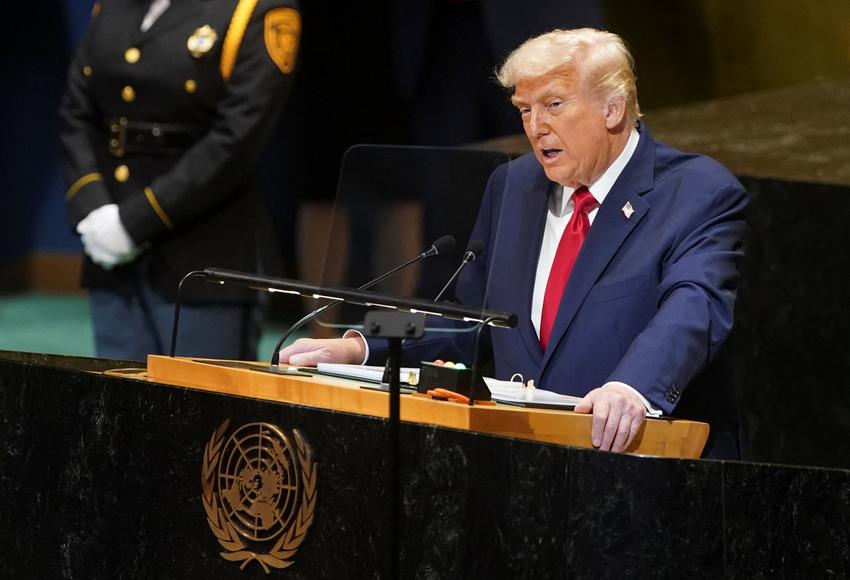
Trump says he agrees to suspend bombing of Iran for 2 weeks if Strait of Hormuz reopened

U.S. President Donald Trump on Tuesday agreed to a two-week ceasefire with Iran, less than two hours before his deadline for Tehran to reopen the Strait of Hormuz or ‌face devastating attacks on its civilian infrastructure.

Trump’s announcement on social media represented an abrupt turnaround from earlier in the day, when he issued an extraordinary warning that “a whole civilization will die tonight” if his demands were not met.

Pakistan Prime Minister Shehbaz Sharif, who helped mediate the ceasefire, said in a post on X that ‌he had invited Iranian and U.S. delegations to meet in Islamabad on Friday.

Trump said the last-minute ⁠deal was subject to Iran’s agreement to pause its blockade of oil and gas supplies through the ⁠strait, which typically handles about one-fifth ⁠of global oil shipments. Iran’s foreign minister, Abbas Araqchi, said in a statement that Tehran would stop counter-attacks and provide safe ‌passage through the waterway.

“This will be a double sided CEASEFIRE!” Trump wrote on his Truth Social platform. “The reason for doing so is that we ⁠have already met and exceeded all Military objectives, and are very far ⁠along with a definitive Agreement concerning Longterm PEACE with Iran, and PEACE in the Middle East.”

Iran’s Supreme National Security Council portrayed the deal as a victory over the U.S., claiming Trump had accepted Iran’s conditions for ending hostilities.

In response, White House press secretary Karoline Leavitt said, “The truth is that President Trump and our powerful military got Iran to agree to reopening ⁠the Strait of Hormuz, and negotiations will continue.”

The war, now in its sixth week, has claimed more than 5,000 lives in nearly ⁠a dozen countries, including more than 1,600 civilians in Iran, ‌according to tallies from government sources and human rights groups.

Two White House officials confirmed that Israel has also agreed to the two-week ceasefire and to suspend its bombing campaign on Iran. The agreement includes a cessation of Israel’s campaign in Lebanon, Sharif said.

It was not immediately clear how soon the ceasefire would take full effect. Israeli media reported it would begin once Iran reopened the strait ‌and that Israel expected Iranian attacks to continue in the interim.

More than an hour after Trump’s announcement, the Israeli military said it had identified missiles launched from Iran, and explosions from intercepted missiles could be heard in Tel Aviv. Gulf countries including Kuwait, Bahrain, Saudi Arabia and the United Arab Emirates also issued near-simultaneous alerts and activated air defenses.

Trump, who has issued a series of threats in recent weeks only to back away, said progress between the two sides had prompted him to agree to the ceasefire. He said Iran had presented a 10-point proposal that was a “workable basis” for negotiations and that he expected an agreement to be “finalized and consummated” during the two-week window.

Markets breathed ​a sigh of relief, with U.S. stock futures rising in the minutes following Trump’s message. Oil prices fell sharply, with U.S. crude futures touching their lowest price since March 26. (JapanToday)

Posted on Leave a comment

Suicide bombing in Islamabad kills 12, says Pakistan’s interior minister

A suicide attack outside a court in Pakistan’s capital Islamabad has killed 12 people and injured at least 27 others, the country’s interior minister said.

Mohsin Naqvi said a bomber was planning to attack the district courthouse but was unable to get inside.

Naqvi said authorities would prioritise identifying the bomber, and that those involved would be brought to justice.

Pakistani Prime Minister Shehbaz Sharif has alleged that extremist groups “actively backed by India” were involved.

A spokesperson for the Indian government denied what they described as “baseless and unfounded allegations”.

In a statement, Sharif said that “terrorist attacks on unarmed citizens of Pakistan by India’s terrorist proxies are condemnable”.

Jumaat Ul Ahrar, a splinter group of the Pakistani Taliban (TTP), has claimed responsibility, according to local media. But two local journalists have told the BBC that the TTP’s central leadership has sent messages to them saying it has no link to the explosion.

Suicide blasts in Islamabad have been rare in recent years. Footage from the scene on Tuesday showed the remains of a burnt-out car and a police cordon in place.

The 27 people injured are receiving medical treatment, Naqvi said.

He added that the attacker detonated the bomb close to a police car after waiting for up to 15 minutes.

Footage of the aftermath showed plumes of smoke rising from a charred vehicle behind a security barrier. The incident occurred at 12:39 local time (07:39 GMT).

Pakistani President Asif Ali Zardari said he “strongly condemned the suicide blast”.

A lawyer who said he was parking his car outside the court at the time described hearing a “loud bang”.

Rustam Malik told AFP news agency “it was complete chaos”.

“Lawyers and people were running inside the complex,” he added. “I saw two dead bodies lying on the gate and several cars were on fire.”

In a separate incident on Monday, a car exploded in India’s capital Delhi, killing eight people and injuring a number of others.

The Indian government has not called the incident a terror attack, although the case has been referred to the country’s anti-terror body.

Indian Prime Minister Narendra Modi said following the attack: “The conspirators behind this heinous act will not be spared. All those responsible will be brought to justice, no matter how deep the conspiracy runs.”

There is, however, no official word yet on what led to the blast.

The last time Pakistan’s capital was targeted by a suicide bombing was three years ago when a police officer was killed and several others injured.

There have been suicide attacks in other parts of the country in the years since but not in Islamabad. (BBC)

Posted on Leave a comment

India PM vows to pursue Kashmir attackers to ”ends of the Earth”

India and Pakistan exchanged an escalating series of tit-for-tat diplomatic measures on Thursday after New Delhi blamed its arch-rival for backing a deadly shooting attack in contested Kashmir.

Prime Minister Narendra Modi vowed to pursue and punish the gunmen responsible for killing 26 civilians in the tourist hotspot of Pahalgam on Tuesday, accusing Pakistan of supporting “cross-border terrorism”.

“I say to the whole world: India will identify, track and punish every terrorist and their backer,” Modi said in his first speech since the attack in the Himalayan region. “We will pursue them to the ends of the Earth”.

Indian police in the region have identified two of the three fugitive gunmen as Pakistani.

The attack at Pahalgam in contested Muslim-majority Kashmir was the deadliest for a quarter of a century and marked a dramatic shift with the targeting of civilians, rather than Indian security forces.

New Delhi suspended a water-sharing treaty, announced the closure of the main land border crossing with Pakistan, downgraded diplomatic ties and withdrew visas for Pakistanis on Wednesday night.

On Thursday, Pakistan Prime Minister Shehbaz Sharif convened a rare meeting of the National Security Committee (NSC) with top military officials, including powerful Chief of Army Staff Asim Munir, in the capital Islamabad in response to India’s accusations and measures.

“Any threat to Pakistan’s sovereignty and to the security of its people will be met with firm reciprocal measures in all domains,” a statement released by Sharif’s office said after the NSC meeting.

“In the absence of any credible investigation and verifiable evidence, attempts to link the Pahalgam attack with Pakistan are frivolous, devoid of rationality and defeat logic,” it said.

The slew of tit-for-tat measures announced by the Pakistan government include expelling Indian diplomats and cancelling visas for Indian nationals with the exception of Sikh pilgrims.

Islamabad said Indian military advisers were “persona non grata” and were “directed to leave Pakistan immediately”.

The main Wagah border crossing in Punjab will close on both sides.

Pakistan also warned that it would consider any attempt by India to stop the supply of water from the Indus River an “act of war”.

Indian police say the three gunmen are members of the Pakistan-based Lashkar-e-Taiba (LeT) group, designated by the United Nations as a terrorist organisation.

Police have offered a two million rupee ($23,500) bounty for information leading to each man’s arrest. (RFI)