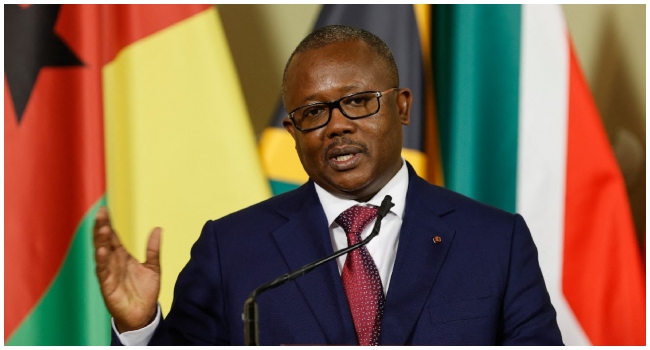
Guinea-Bissau’s President Umaro Embalo says he was arrested while he was inside the presidential palace today.
Also arrested are the chief of staff, General Biague Na Ntan, deputy chief of staff General Mamadou Traore, and the interior minister, Botche Cande.
According to the president, no force was used against him during what he says was a ‘coup d’etat,’ which he says was led by the army chief of staff.
Reporters on the ground say they heard gunfire at the National Electoral Commission headquarters and in the surrounding areas.
The country has been awaiting results from Sunday’s presidential election which President Embalo had said he won 65 per cent of the votes cast.
Embalo’s camp and that of opposition candidate Fernando Dias de Costa have claimed first-round victory in the November 23 presidential election.
Military officers in Guinea-Bissau announced Wednesday they were taking “total control” of the country, the AFP reported.
The officers also suspended the country’s electoral process and closed its borders, three days after the poverty-stricken West African nation’s legislative and presidential elections.
In the early afternoon, General Denis N’Canha, head of the presidential military office, told members of the press that a command “composed of all branches of the armed forces, was taking over the leadership of the country until further notice”.
He read the announcement seated at a table and surrounded by armed soldiers.
The tumultuous West African country has experienced four coups since independence, as well as multiple attempted coups.
N’Canha, in his declaration, claimed to have uncovered a plan to destabilise the country “involving national drug lords” that had included “the introduction of weapons into the country to alter the constitutional order”.
In addition to halting “the entire electoral process”, he said military forces had suspended “all media programming” and imposed a mandatory curfew.
Guinea-Bissau is among the world’s poorest countries and is also a hub for drug trafficking between Latin America and Europe, a trade facilitated by the country’s long history of political instability. (Channels)
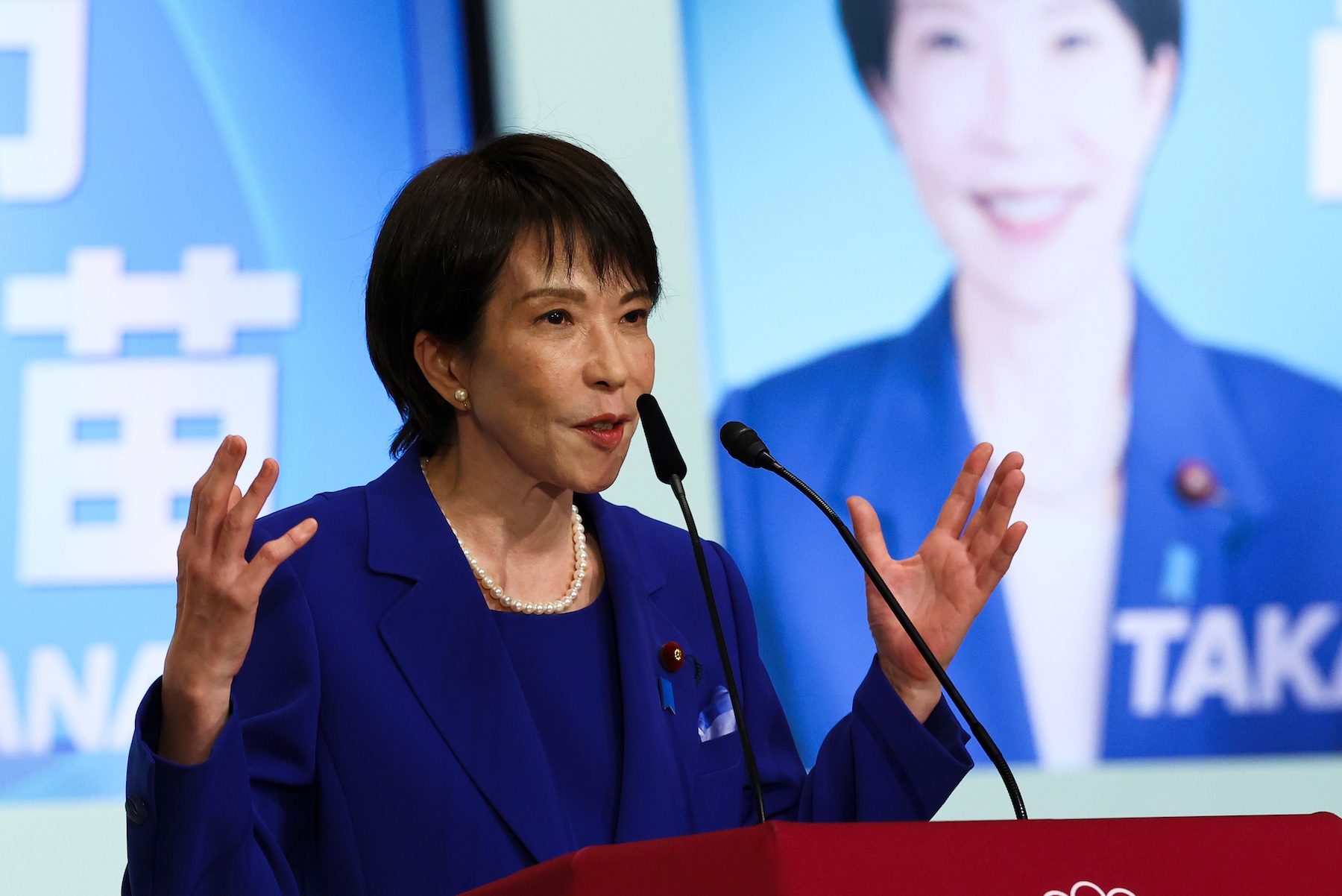
Japan has warned its citizens in China to be careful of their surroundings and to avoid big crowds amid a diplomatic row over Prime Minister Sanae Takaichi’s comments on Taiwan.
The escalating spat has already seen Beijing advise Chinese citizens to avoid traveling to Japan and hit Tokyo stocks.
“Pay attention to your surroundings and avoid as much as possible squares where large crowds gather or places that are likely to be identified as being used by many Japanese people,” the Japanese embassy in China said in a statement on its website dated Monday.
Minoru Kihara, Japan’s top government spokesman, said Tuesday that such advice was issued “based on a comprehensive assessment of the political situation, including the security situation in the relevant country or region, as well as the social conditions.”
The diplomatic feud between China and Japan was ignited by Takaichi’s suggestion that Tokyo could intervene militarily in any attack on Taiwan.
China, which claims Taiwan as part of its territory and has not ruled out using force to take the democratic island, reacted furiously to Takaichi’s comments.
It called for her to retract the remarks and summoned the Japanese ambassador on Friday.
In a post on X on November 8, the Chinese consul general in Osaka, Xue Jian, threatened to “cut off that dirty head”, apparently referring to Takaichi, who took office in October.
Tokyo said it had summoned the Chinese ambassador over the now-deleted social media post.
Masaaki Kanai, the top official in the foreign ministry for Asia-Pacific affairs arrived in China Monday seeking to defuse the row, and was at the Chinese foreign ministry Tuesday, Jiji press agency reported.
He had been expected to hold talks with his Chinese counterpart Liu Jinsong, earlier reports said.
The Japanese embassy warning also advised citizens to “respect local customs and be careful about your words and attitudes when interacting with local people”.
“If you see a person or group that you feel suspicious of, stay away from it and leave the place immediately,” it said.
Tokyo shares fell three percent Tuesday as the diplomatic spat weighed on sentiment.
Japanese tourism and retail shares dived on Monday after China warned its citizens to avoid Japan, a tourist hotspot.
Asia’s two top economies are closely entwined, with China the biggest source of tourists — almost 7.5 million visitors in the first nine months of 2025 — coming to Japan.
Before taking power last month, Takaichi was a vocal critic of China and its military build-up in the Asia-Pacific.
If a Taiwan emergency entails “battleships and the use of force, then that could constitute a situation threatening the survival (of Japan)”, Takaichi, 64, told parliament on November 7.
Under Japan’s self-imposed rules, an existential threat is one of the few cases where it can act militarily. (JapanToday)
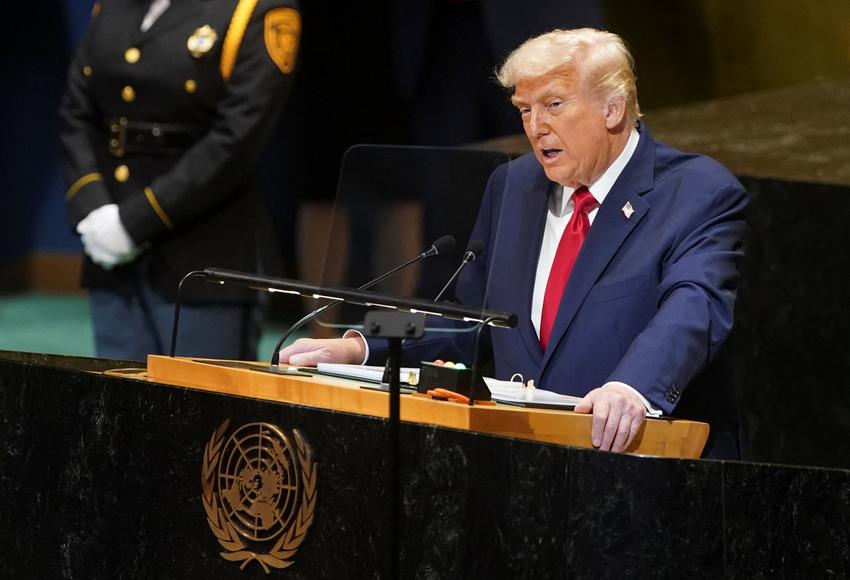
The BBC has apologised to US President Donald Trump for a Panorama episode that spliced parts of his 6 January 2021 speech together, but rejected his demands for compensation.
The corporation said the edit had given “the mistaken impression that President Trump had made a direct call for violent action” and said it would not show the 2024 programme again.
Lawyers for Trump have threatened to sue the BBC for $1bn (£759m) in damages unless the corporation issues a retraction, apologises and compensates him.
Culture Secretary Lisa Nandy told BBC Breakfast she was confident the corporation was “gripping this with the seriousness that it demands”, adding her role was to ensure “the highest standards are upheld”.
But she also told BBC Radio 4’s Today programme that the BBC’s editorial standards and guidelines were “in some cases not robust enough and in other cases not consistently applied”, adding that there would need to be people “at a very senior level with a journalistic background”.
Political appointments to the corporation’s board would be examined in the BBC’s charter review, she said in response to a question asking if member Sir Robbie Gibb, a former political adviser to Theresa May, had overstepped his remit and weighed into politics.
While this was a matter for the board and its chairman, she said, those appointments “damaged confidence and trust in the BBC’s impartiality”.
Liberal Democrats leader Sir Ed Davey had urged the prime minister on Thursday to “get on the phone to Trump” to put a stop to his lawsuit threat and “defend the impartiality and independence of the BBC”.
The fallout from the scandal led to the resignations of BBC director general Tim Davie and head of news Deborah Turness on Sunday.
BBC News has approached the White House for comment.
The apology comes hours after a second similarly edited clip, broadcast on Newsnight in 2022, was revealed by the Daily Telegraph.
In its Corrections and Clarifications section, published on Thursday evening, the BBC said the Panorama programme had been reviewed after criticism of how Trump’s speech had been edited.
The BBC had been given a deadline of 22:00 GMT (17:00 EST) on Friday to respond.
“We accept that our edit unintentionally created the impression that we were showing a single continuous section of the speech, rather than excerpts from different points in the speech, and that this gave the mistaken impression that President Trump had made a direct call for violent action,” the statement said.
Lawyers for the BBC have written to President Trump’s legal team in response to a letter received on Sunday, a BBC spokesperson said.
“BBC chair Samir Shah has separately sent a personal letter to the White House making clear to President Trump that he and the corporation are sorry for the edit of the president’s speech on 6 January 2021, which featured in the programme,” they said.
They added: “While the BBC sincerely regrets the manner in which the video clip was edited, we strongly disagree there is a basis for a defamation claim.”
In Trump’s speech he said: “We’re going to walk down to the Capitol, and we’re going to cheer on our brave senators and congressmen and women.”
More than 50 minutes later in the speech, he said: “And we fight. We fight like hell.”
In the Panorama programme the clip shows him as saying: “We’re going to walk down to the Capitol… and I’ll be there with you. And we fight. We fight like hell.”
Speaking to Fox News, Trump said his speech had been “butchered” and the way it was presented had “defrauded” viewers.
The BBC received the letter from Trump’s lawyers on Sunday. It demands a “full and fair retraction” of the documentary, an apology, and that the BBC “appropriately compensate President Trump for the harm caused”.
In its letter to Trump’s legal team, the BBC sets out five main arguments for why it does not think it has a case to answer.
First it says the BBC did not have the rights to, and did not, distribute the Panorama episode on its US channels.
When the documentary was available on BBC iPlayer, it was restricted to viewers in the UK.
Secondly, it says the documentary did not cause Trump harm, as he was re-elected shortly after.
Thirdly, it says the clip was not designed to mislead, but just to shorten a long speech, and that the edit was not done with malice.
Fourthly, it says the clip was never meant to be considered in isolation. Rather, it was 12 seconds within an hour-long programme, which also containedlots of voices in support of Trump.
Finally, an opinion on a matter of public concern and political speech is heavily protected under defamation laws in the US.
A BBC insider said that internally, there is a strong belief in the case the corporation has put forward, and in its defence. (BBC)
Joe Lewis, the British billionaire and former owner of Tottenham Hotspur FC, has been pardoned by Donald Trump over a 2024 conviction for his part in a “brazen” insider trading scheme.
Lewis, 88, was fined $5m (£3.8m) and given three years probation by a New York judge last year but was spared jail time after pleading guilty to involvement in a plan that prosecutors said was designed to enrich his friends, lovers and employees.
Lawyers for the east London-born investor initially accused prosecutors of making an “egregious” mistake by charging him with multiple counts of securities fraud and conspiracy.
But Lewis, who also owns the largest stake in one of the UK’s biggest operators of pubs, bars and restaurants, Mitchells & Butlers, later changed his plea to guilty after prosecutors agreed to a non-custodial sentence.
Lewis retained his right to change his plea again if a custodial sentence were imposed.
In a statement to the court at his sentencing last year, he said: “I made a terrible mistake. I broke the law. I am ashamed, sorry, and I hold myself accountable.”
The judge, Jessica Clarke, said Lewis’s circumstances did not warrant incarceration and imposed a $44m fine on his company, Broad Bay, on top of his $5m personal fine and probation.
But on Thursday, the Daily Telegraph was first to report that Trump planned to pardon Lewis entirely. The Guardian understands that the fine will not be repaid to Lewis or his company.
The White House later confirmed the pardon and said Lewis requested it so that he could receive medical treatment and visit his grandchildren and great-grandchildren in the US, the Associated Press reported.
Lewis said: “I am pleased all of this is now behind me, and I can enjoy retirement and watch as my family and extended family continue to build our businesses based on the quality and pursuit of excellence that has become our trademark.”
A source close to the family said: “Joe and the Lewis family are extremely grateful for this pardon and would like to thank President Trump for taking this action.
“Over his long business career, Joe has been a visionary, creating businesses across the world, which multiple generations of his family are now taking forward. There is so much more to the Joe Lewis story than this one event.”
Lewis already transferred his majority ownership interest in Tottenham to his family via a trust in 2022, the year before he was charged.
The north London football club is now overseen by Lewis’s daughter Vivienne, his son Charles, and Vivienne’s son-in-law Nick Beucher.
Details of the insider trading scheme were documented in a 29-page dossier published by the US attorney for the southern district of New York in 2023.
Prosecutors accused Lewis of passing on share tips based on inside information to his employees, including his private jet pilot and his then 33-year-old girlfriend, Carolyn Carter, to allow them to make a profit from stock trading. (Guardian)
A suicide attack outside a court in Pakistan’s capital Islamabad has killed 12 people and injured at least 27 others, the country’s interior minister said.
Mohsin Naqvi said a bomber was planning to attack the district courthouse but was unable to get inside.
Naqvi said authorities would prioritise identifying the bomber, and that those involved would be brought to justice.
Pakistani Prime Minister Shehbaz Sharif has alleged that extremist groups “actively backed by India” were involved.
A spokesperson for the Indian government denied what they described as “baseless and unfounded allegations”.
In a statement, Sharif said that “terrorist attacks on unarmed citizens of Pakistan by India’s terrorist proxies are condemnable”.
Jumaat Ul Ahrar, a splinter group of the Pakistani Taliban (TTP), has claimed responsibility, according to local media. But two local journalists have told the BBC that the TTP’s central leadership has sent messages to them saying it has no link to the explosion.
Suicide blasts in Islamabad have been rare in recent years. Footage from the scene on Tuesday showed the remains of a burnt-out car and a police cordon in place.
The 27 people injured are receiving medical treatment, Naqvi said.
He added that the attacker detonated the bomb close to a police car after waiting for up to 15 minutes.
Footage of the aftermath showed plumes of smoke rising from a charred vehicle behind a security barrier. The incident occurred at 12:39 local time (07:39 GMT).
Pakistani President Asif Ali Zardari said he “strongly condemned the suicide blast”.
A lawyer who said he was parking his car outside the court at the time described hearing a “loud bang”.
Rustam Malik told AFP news agency “it was complete chaos”.
“Lawyers and people were running inside the complex,” he added. “I saw two dead bodies lying on the gate and several cars were on fire.”
In a separate incident on Monday, a car exploded in India’s capital Delhi, killing eight people and injuring a number of others.
The Indian government has not called the incident a terror attack, although the case has been referred to the country’s anti-terror body.
Indian Prime Minister Narendra Modi said following the attack: “The conspirators behind this heinous act will not be spared. All those responsible will be brought to justice, no matter how deep the conspiracy runs.”
There is, however, no official word yet on what led to the blast.
The last time Pakistan’s capital was targeted by a suicide bombing was three years ago when a police officer was killed and several others injured.
There have been suicide attacks in other parts of the country in the years since but not in Islamabad. (BBC)
A spat between China and Japan over Japanese Premier Sanae Takaichi’s Taiwan comments showed no signs of abating on Wednesday with a series of vitriolic commentaries in Chinese state media and calls in Tokyo to expel a Chinese diplomat.
Takaichi sparked the furore with remarks in parliament last week that a Chinese attack on Taiwan could amount to a “survival-threatening situation” and trigger a potential military response from Tokyo.
That drew a formal protest from China and a threatening post from China’s Consul General in Osaka, Xue Jian, which Tokyo said was “extremely inappropriate” and complained to Beijing about.
While Takaichi has since said she would refrain from making such comments again and Tokyo called for mutual efforts to reduce friction on Tuesday, a brace of Chinese state media commentaries suggest the furore could rumble on.
State broadcaster CCTV said in an editorial late on Tuesday that Takaichi’s remarks were of “extremely malicious nature and impact” and have “crossed the line” with China.
A post on a social media account affiliated with CCTV called Takaichi a “troublemaker”, using the word as a play on the pronunciation of her family name in Chinese.
“Has her head been kicked by a donkey?” said the post on the Yuyuan Tantian account. “If she continues to spew shit without any boundaries like this, Takaichi might have to pay the price!”
The CCTV editorial also likened Takaichi’s reference to “survival-threatening situations” with Japan’s 1931 invasion of northeast China’s Manchuria.
Japan’s foreign ministry did not immediately respond to a request for comment. (JapanToday)
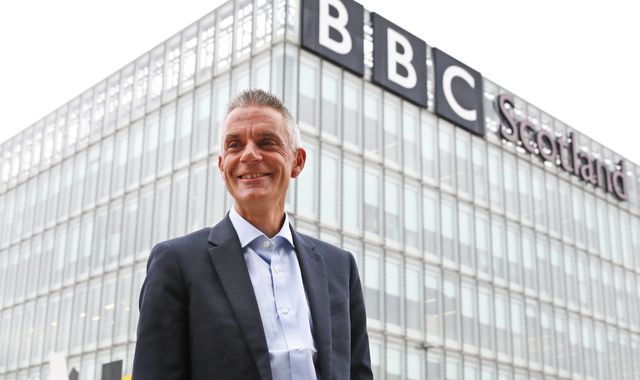
BBC director general Tim Davie has told staff that “we’ve got to fight for our journalism” after Donald Trump threatened to sue the corporation for $1bn (£760m) over a Panorama programme.
It comes after a leaked internal BBC memo, published by the Telegraph last Monday, said the film had misled viewers by splicing together parts of the US president’s speech on 6 January 2021 and made it appear as if he had explicitly encouraged the Capitol Hill riot.
“We have made some mistakes that have cost us, but we need to fight,” Davie, who resigned on Sunday alongside BBC News CEO Deborah Turness after mounting pressure over the memo, said on Tuesday.
“This narrative will not just be given by our enemies, it’s our narrative,” he added.
He said the BBC went through “difficult times… but it just does good work, and that speaks louder than any newspaper, any weaponisation”.
Trump threatened to take legal action if the BBC did not make a “full and fair retraction” of the programme by Friday. The corporation has said it will reply in due course.
BBC chair Samir Shah said in a letter to the Culture, Media and Sport Committee (CMS) on Monday that the corporation would like to apologise for the edit, which he called an “error of judgement” which gave the impression of a “direct call for violent action”.
During Tuesday’s staff call, where Shah also spoke, neither Davie nor the BBC chair mentioned Trump’s legal threat.
Davie said the fact that “there was an editorial breach, and I think some responsibility had to be taken” was one of the reasons he was quitting.
He also cited the upcoming charter renewal – saying he wanted to give his successor a “runway into that” – and the personal pressures of the “relentless” role.
Shah also defended the fact that the corporation did not respond to the memo’s publication for seven days.
“We had a deadline, that was Monday… and we met that,” he said, referring to the deadline given by the CMS, and stressed that he “needed to be careful and get it right”.
No timeline was given for selecting Davie’s replacement, but the chair said the corporation was in “succession mode”.
The BBC’s culture editor Katie Razzall said there was “some disquiet” from BBC staff over the Q&A session, which was moderated by a member of the BBC’s communications team, not by a journalist.
Speaking in the Commons on Tuesday, Culture Secretary Lisa Nandy defended the BBC from “sustained attacks” by politicians who she said were going beyond criticising its editorial failures.
She said the “concerns are serious” but there was a “fundamental difference from raising serious concerns about editorial failings and members of this house launching a sustained attack on the institution itself.”
She added that the BBC was “essential to this country” and wasn”not just a broadcaster, it’s a national institution” – “It is a light on the hill here and around the world.”
Nandy confirmed that the once-a-decade process of reviewing the corporation’s charter would begin shortly and that it would ensure a BBC which is “fiercely independent” and “genuinely accountable” to the public.
At its meeting on Tuesday, the CMS committee agreed to hold an evidence session with members of the BBC’s editorial guidelines and standards committee in coming weeks, including Shah and BBC board members Robbie Gibb and Caroline Thomson.
Shadow culture secretary Nigel Huddleston said the BBC “needs saving from itself” and that whilst “we all want the BBC to succeed” there needed to be “institutional change…not just a few people at the top”.
Downing Street has refused to comment on Trump’s legal threat, explaining that this was a “matter for the BBC”.
“It is clearly not for the government to comment on any ongoing legal matters,” the prime minister’s official spokesperson said.
“Our position is clear, the BBC is independent and it’s for the cooperation to respond to questions about their editorial decisions.”
Asked whether there were concerns the issue would impact Keir Starmer’s relationship with Trump, the spokesperson said the two had a “very strong” relationship.
The spokesperson would not be drawn on whether the BBC should apologise directly to the president.
Trump’s legal team wrote to the BBC on Sunday threatening to take action over the “false, defamatory, disparaging, misleading, and inflammatory statements” in the Panorama programme.
The BBC said the programme, which was first broadcast on 24 October 2024, was not available to watch on iPlayer because it was “over a year old”. (BBC)
The Director General of the BBC, Tim Davie, announced his resignation on Sunday following a row over the editing of a documentary about US President Donald Trump.
Davie and the broadcaster’s head of news, Deborah Turness, resigned after accusations that a documentary by its flagship Panorama programme had edited a speech by Trump in a misleading way.
“Like all public organisations, the BBC is not perfect, and we must always be open, transparent and accountable.
“While not being the only reason, the current debate around BBC News has understandably contributed to my decision… I have to take ultimate responsibility,” Davie said in a statement posted on the BBC website.
The latest controversy follows a Daily Telegraph report this week that said concerns were first raised in the summer in a memo on impartiality by Michael Prescott, a former external adviser to the BBC’s editorial standards committee.
Earlier Sunday, the UK Culture, Media and Sport Minister Lisa Nandy called the allegations “incredibly serious”.
The BBC has promised “a full response” to Parliament’s culture, media, and sport committee on Monday.
The criticism emerged over clips spliced together from sections of a Trump speech on January 6, 2021, when he was accused of fomenting the mob attack on the US Capitol, seeking to keep him in power despite losing his re-election bid.
The edit made it appear he had told supporters he was going to walk to the US Capitol with them and “fight like hell”.
In the undistorted clip, however, the president urged the audience to walk with him, “and we’re going to cheer on our brave senators and congressmen and women.”
At the time, Trump was still disputing President Joe Biden’s election victory, in a vote that saw him ousted after his first term in office.
The edit was included in a documentary entitled “Trump: A Second Chance?” that was broadcast by the BBC the week before last year’s US election.
Nandy said the Trump edit was one of several concerns about editorial standards at the BBC.
“It isn’t just about the Panorama programme, although that is incredibly serious,” she told BBC television in an interview.
“There are a series of very serious allegations made, the most serious of which is that there is systemic bias in the way that difficult issues are reported at the BBC,” she said.
Nandy said she was concerned about a tendency for editorial standards and the language used in reports to be “entirely inconsistent”, whether it be on “Israel, Gaza… trans people or on this issue about President Trump”.
The licence fee-funded broadcaster earlier this year issued several apologies for “serious flaws” in the making of another documentary entitled “Gaza: How To Survive A Warzone”, broadcast in February.
In October, it accepted a sanction from the UK media watchdog for what was deemed a “materially misleading” programme, whose child narrator was later revealed to be the son of Hamas’s former deputy agriculture minister. (Punch)
Democrats swept a trio of races on Tuesday in the first major elections since Donald Trump regained the presidency, elevating a new generation of leaders and giving the beleaguered party a shot of momentum ahead of next year’s congressional elections.
In New York City, Zohran Mamdani, a 34-year-old democratic socialist, won the mayoral race, capping a meteoric and unlikely rise from an anonymous state lawmaker to one of the country’s most visible Democratic figures. And in Virginia and New Jersey, moderate Democrats Abigail Spanberger, 46, and Mikie Sherrill, 53, won the elections for governor with commanding leads, respectively.
Tuesday’s contests offered a barometer of how Americans are responding to Trump’s tumultuous nine months in office. The races also served as a test of differing Democratic campaign playbooks ahead of 2026, with the party locked out of power in Washington and still trying to forge a path out of the political wilderness.
That said, the midterm election is a year away, an eternity in the Trump era, and opinion polls show the Democratic brand remains broadly unpopular, even as Trump’s own approval rating has declined. The contests on Tuesday also all unfolded in Democratic-leaning regions that did not support Trump in last year’s presidential election.
Perhaps the biggest practical boost to Democrats on Tuesday came out of California, where voters gave Democratic lawmakers the power to redraw the state’s congressional map, expanding a national battle over redistricting that will shape the race for the U.S. House of Representatives.
The winning candidates on Tuesday could reenergize and inspire more engagement from Democratic voters, many of whom have clamored for fresh faces at the vanguard of the party. Turnout in the New York City mayoral race was the highest since at least 1969.
All three Democratic candidates emphasized economic issues, particularly affordability, an issue that remains top of mind for most voters. But Spanberger and Sherrill hail from the party’s moderate wing, while Mamdani used a viral video-fueled insurgent campaign to present himself as an unabashed progressive in the mold of Senator Bernie Sanders and U.S. Representative Alexandria Ocasio-Cortez.
“The Democratic Party is back,” Hakeem Jeffries, the Democratic leader in the U.S. House of Representatives, assrted on X.
Mamdani, who will become the first Muslim mayor of the biggest U.S. city, outlasted former Democratic Governor Andrew Cuomo, 67, who ran as an independent after losing the nomination to Mamdani earlier this year. Cuomo, who resigned as governor four years ago after sexual harassment allegations that he has denied, portrayed Mamdani as a radical leftist whose proposals were unworkable and dangerous.
Mamdani has called for raising taxes on corporations and the wealthy to pay for ambitious left-wing policies such as frozen rents, free childcare and free city buses. Wall Street executives have expressed concern about putting a democratic socialist at the helm of the financial capital of the world.
Republicans have already signaled they intend to present Mamdani as the face of the Democratic Party. Trump has incorrectly labeled Mamdani a “communist” and vowed to cut funding for the city in response to Mamdani’s ascension.
In a social media post on Tuesday night, Trump blamed the losses on the fact his name was not on the ballot and on an ongoing federal government shutdown.
Spanberger, who beat Republican Lieutenant Governor Winsome Earle-Sears, will take over from Republican Governor Glenn Youngkin in Virginia. New Jersey’s Sherrill defeated Republican Jack Ciattarelli and will succeed Democratic Governor Phil Murphy.
Both Sherrill and Spanberger had sought to tie their opponents to Trump in an effort to harness frustration among Democratic and independent voters over his chaotic tenure.
“We sent a message to the world that in 2025 Virginia chose pragmatism over partisanship,” Spanberger said in her victory speech. “We chose our Commonwealth over chaos.”
Trump gave both candidates some late-stage grist during the ongoing government shutdown.
His administration threatened to fire federal workers — a move with an outsized impact on Virginia, a state adjacent to Washington, D.C., and home to many government employees. He froze billions in funding for a new Hudson River train tunnel, a critical project for New Jersey’s large commuter population.
In interviews at Virginia polling stations on Tuesday, some voters said Trump’s most contentious policies were on their minds, including his efforts to deport immigrants who entered the U.S. illegally and to impose costly tariffs on imports of foreign goods, the legality of which is being weighed by the U.S. Supreme Court this week.
Juan Benitez, a self-described independent, was voting for the first time. The 25-year-old restaurant manager backed all of Virginia’s Democratic candidates because of his opposition to Trump’s immigration policies and the federal government shutdown, for which he blamed Trump.
For Republicans, Tuesday’s elections served as a test of whether the voters who powered Trump’s victory in 2024 will still show up when he is not on the ballot.
But Ciattarelli and Earle-Sears, both running in Democratic-leaning states, faced a conundrum: criticizing Trump risked losing his supporters, but embracing him too closely could have alienated moderate and independent voters who disapprove of his policies. (JapanToday)
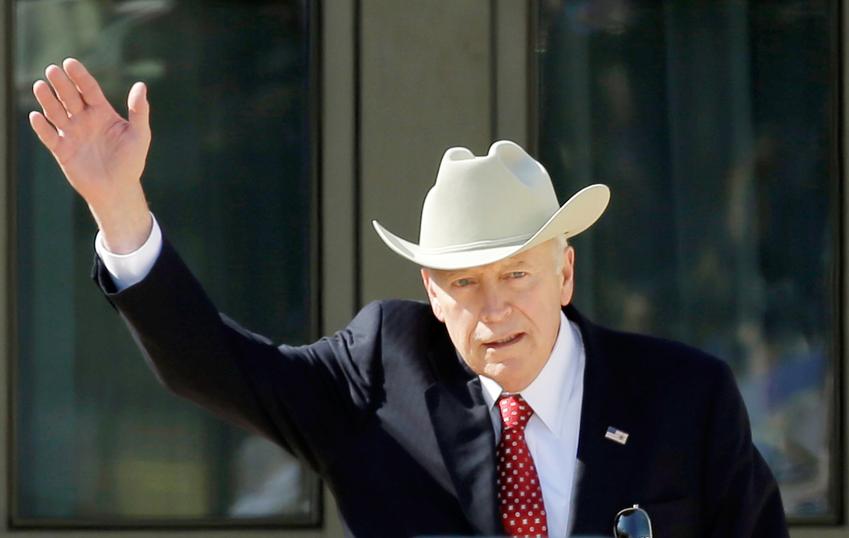
Dick Cheney, the hard-charging conservative who became one of the most powerful and polarizing vice presidents in U.S. history and a leading advocate for the invasion of Iraq, has died at 84.
Cheney died Monday due to complications of pneumonia and cardiac and vascular disease, his family said Tuesday.
The quietly forceful Cheney led the armed forces as defense secretary during the Persian Gulf War under President George H.W. Bush before returning to public life as vice president under Bush’s son George W Bush.
Cheney was, in effect, the chief operating officer of the younger Bush’s presidency. He often had a commanding hand in implementing decisions most important to the president and some of surpassing interest to himself — all while living with decades of heart disease and, post-administration, a heart transplant. Cheney consistently defended the extraordinary tools of surveillance, detention and inquisition employed in response to the Sept. 11, 2001, attacks.
“History will remember him as among the finest public servants of his generation — a patriot who brought integrity, high intelligence, and seriousness of purpose to every position he held,” Bush said.
Years after leaving office, Cheney became a target of President Donald Trump, especially after his daughter Liz Cheney became the leading Republican critic and examiner of Trump’s attempts to stay in power after his 2020 election defeat and his actions in the Jan 6, 2021, Capitol riot.
Cheney said last year he was voting for Democrat Kamala Harris for president against Trump.
For all his conservatism, Cheney was privately and publicly supportive of his daughter Mary Cheney after she came out as gay, years before same-sex marriage was broadly supported. “Freedom means freedom for everyone,” he said.
In his time in office, no longer was the vice presidency merely a ceremonial afterthought. Instead, Cheney made it a network of back channels from which to influence policy on Iraq, terrorism, presidential powers and energy.
A hard-liner on Iraq, Cheney was proved wrong about the rationale for the Iraq War, a point he didn’t acknowledge.
He alleged links between the 9/11 attacks and prewar Iraq that didn’t exist. He said U.S. troops would be welcomed as liberators; they weren’t.
He declared the Iraqi insurgency in its last throes in May 2005, when 1,661 U.S. service members had been killed, not even half the toll by the war’s end.
Cheney and Bush struck an odd bargain, unspoken but well understood. Shelving ambitions he might have had to succeed Bush, Cheney was accorded extraordinary power.
His penchant for secrecy had a price. He came to be seen as a Machiavelli orchestrating a bungled response to criticism of the Iraq War. And when he shot a hunting companion with an errant shotgun blast in 2006, he and his coterie were slow to disclose that episode. The victim, his friend Harry Whittington, recovered and forgave him.
Bush asked Cheney to lead a search for his vice president, eventually deciding the job should go to Cheney himself. Their election in 2000 was ultimately sealed by the Supreme Court after a protracted legal fight.
On Capitol Hill, Cheney lobbied for the president’s programs where he had once served as a deeply conservative member of Congress and the No. 2 Republican House leader.
On Sept. 11, 2001, with Bush out of town, the president gave Cheney approval to authorize the military to shoot down hijacked planes. By then, two airliners had hit the World Trade Center and a third was bearing down on the capital. A Secret Service agent burst into the West Wing room, grabbed Cheney by the belt and shoulder and led him to a bunker underneath the White House.
Cheney’s career in Washington started with a congressional fellowship in 1968. He became a protégé of Rep. Donald Rumsfeld, R-Ill., serving under him in Gerald Ford’s White House before he was elevated to chief of staff, the youngest ever, at age 34.
He later returned to Casper, Wyoming, and won the state’s lone congressional seat, the first of six terms.
In 1989, Cheney became defense secretary and led the Pentagon during the 1990-91 Persian Gulf War. Between the two Bush administrations, Cheney led Dallas-based Halliburton Corp., an oil industry services company.
Cheney was born in Lincoln, Nebraska, son of a longtime Agriculture Department worker. Senior class president and football co-captain in Casper, he went to Yale on a full scholarship for a year but failed out.
He moved back to Wyoming and renewed a relationship with high school sweetheart Lynne Anne Vincent, marrying her in 1964. He is survived by his wife and daughters. (JapanToday)


 English