
Posted on Leave a comment

Mosquitoes found in Iceland for first time after record heat

Mosquitoes have been found in Iceland for the first time after the country experienced record-breaking heat this spring.

Insect enthusiast Bjorn Hjaltason encountered the mosquitoes over several nights last week while using wine-soaked ropes to observe moths, local media reported.

Mr Hjaltason found two female mosquitoes and one male which were later confirmed to be Culiseta annulata, one of few species that can successfully survive winter.

Iceland was one of only two mosquito-free havens in the world prior to the discovery, partly due to its cold climate. The only other recorded mosquito-free zone is Antarctica.

The mosquitoes were found in Kjós, a glacial valley to the South West of the Icelandic capital of Reykjavik.

Mr Hjaltason shared the news of his discovery on a Facebook page for local wildlife alongside pictures of the insects, describing “a strange fly on a red wine ribbon”, according to Icelandic media.

“I could tell right away that this was something I had never seen before” he said in the post, which was screenshotted and shared by Iceland’s Morgunblaðið news site, adding “the last fortress seems to have fallen.”

Mr Hjaltason sent the insects to the Icelandic Institute of Natural History to be identified, where entomologist Matthías Alfreðsson confirmed his suspicions.

The species are common across parts of Europe and North Africa but it it isn’t clear how they reached Iceland, Alfreðsson told CNN.

Iceland’s cold climate and lack of stagnant water in which the insects can breed are key contributors to the country’s former lack of mosquitoes, the World Population Review said.

But this year, the country broke multiple records for its high temperatures.

Typically, Iceland rarely experiences highs of more than 20C (68F) in May, and when it does those heatwaves will last for no more than two to three days, its Met Office notes. That threshold was exceeded for 10 consecutive days this year in different parts of the country, though.

Iceland also saw its hottest ever day in May, with temperatures reaching 26.6C (79.8F) at Eglisstaðir Airport.

A June study published by the Global Heat Health Information Network noted that such shifts could have “significant” impacts on delicate ecosystems, which have adapted to the cold climate and are sensitive to temperature shifts.

Last year was the world’s hottest on record, and the UN’s climate body has established that human influence has “unequivocally” warmed the atmosphere, oceans and land.

Further monitoring will be required in spring to see if the mosquito species has “truly become established in Iceland”, Alfreðsson added.

Hjaltason, meanwhile, has speculated on the origin of the specimens he observed.

“One always suspects Grundartangi – it’s only about six kilometers from me, and things often arrive with ships and containers, so it’s possible something came in that way,” he told Morgunblaðið.

“But if three of them came straight into my garden, there were probably more.” (BBC)
Posted on Leave a comment

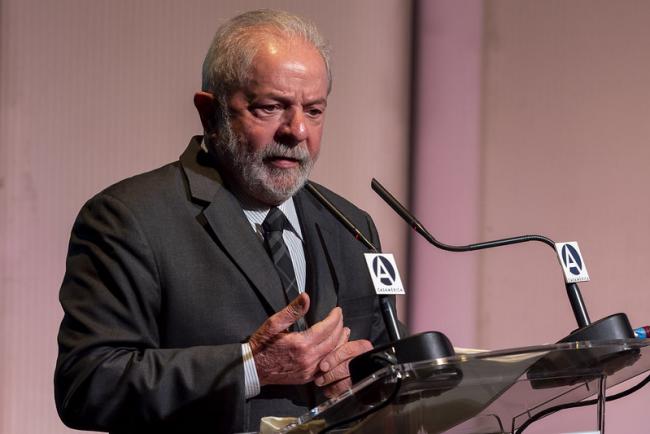
Lula pushes mega-oil project as Brazil prepares to host COP30

Brazil’s president this week amped up pressure for a major oil project to go ahead at the mouth of the Amazon River, despite criticism from environmentalists as the country prepares to host UN climate talks in November.

President Luiz Inacio Lula da Silva, 79, aspires to make Brazil a leader in the fight against global warming, but has fiercely defended oil exploration as key to the growth of Latin America’s biggest economy.

“We want oil because it will be around for a long time,” Lula said Wednesday, arguing that the windfall from the black gold should be used “to finance the energy transition, which will be very expensive.

He was speaking as Brazil’s environmental protection agency IBAMA, an autonomous public body, is mulling whether to grant state-owned oil giant Petrobras an exploration license in an offshore area known as the Equatorial Margin.

That maritime area extends over 350,000 square kilometers (135,000 square miles) across northern Brazil and lies some 500 kilometers (310 miles) from the mouth of the Amazon River.

Petrobras estimates the potential reserves in the basin at 10 billion barrels.

Brazil’s proven reserves amounted to 15.9 billion barrels in 2023, according to the government.

However, the project has been highly criticized, given that fossil fuels such as oil are the main cause of greenhouse gas emissions responsible for global warming.

The first two years of Lula’s third presidential mandate saw multiple environmental successes, with a sharp reduction in deforestation and the upward revision of greenhouse gas emission reduction targets.

But experts say the looming oil project tarnishes Lula’s environmental ambitions, just a few months before COP30 — the 30th session of the UN climate change conference — is held for the first time in the Amazon, in the city of Belem.

“You can’t be a climate leader and at the same time aim to increase the production of fossil fuels,” said Suely Araujo, from Brazilian NGO Climate Observatory.

Araujo, a former IBAMA president, said the argument that the energy transition can be financed with oil revenues “is tantamount to saying that we want to wage war to obtain peace.”

“Opening the Amazon to fuel exploration goes against the (government’s) discourse on preserving the Amazon to help regulate the climate,” said Ilan Zugman, Latin America director of the 350.org climate NGO.

Almost half of the energy consumed in Brazil comes from renewable sources, more than three times the global average, according to official data.

But the country is also Latin America’s largest oil producer and the eighth largest in the world, producing an average of 3.4 million barrels of oil per day in 2024.

Lula has pointed out that countries like Guyana and Suriname were already “exploring oil very close to our Equatorial Margin.”

“We need to find a solution in which we guarantee the country, the world and the people that we will not blow up any trees, nothing in the Amazon River, nothing in the Atlantic Ocean,” Lula said this week.

Toya Manchineri, from the Coordination of Indigenous Organizations of the Brazilian Amazon, warned that the project also threatened Indigenous peoples and could cause “irreversible environmental damage, destroying forests and polluting rivers.” (Vanguard)