Posted on — Leave a comment

Mosquitoes found in Iceland for first time after record heat

Mosquitoes have been found in Iceland for the first time after the country experienced record-breaking heat this spring.

Insect enthusiast Bjorn Hjaltason encountered the mosquitoes over several nights last week while using wine-soaked ropes to observe moths, local media reported.

Mr Hjaltason found two female mosquitoes and one male which were later confirmed to be Culiseta annulata, one of few species that can successfully survive winter.

Iceland was one of only two mosquito-free havens in the world prior to the discovery, partly due to its cold climate. The only other recorded mosquito-free zone is Antarctica.

The mosquitoes were found in Kjós, a glacial valley to the South West of the Icelandic capital of Reykjavik.

Mr Hjaltason shared the news of his discovery on a Facebook page for local wildlife alongside pictures of the insects, describing “a strange fly on a red wine ribbon”, according to Icelandic media.

“I could tell right away that this was something I had never seen before” he said in the post, which was screenshotted and shared by Iceland’s Morgunblaðið news site, adding “the last fortress seems to have fallen.”

Mr Hjaltason sent the insects to the Icelandic Institute of Natural History to be identified, where entomologist Matthías Alfreðsson confirmed his suspicions.

The species are common across parts of Europe and North Africa but it it isn’t clear how they reached Iceland, Alfreðsson told CNN.

Iceland’s cold climate and lack of stagnant water in which the insects can breed are key contributors to the country’s former lack of mosquitoes, the World Population Review said.

But this year, the country broke multiple records for its high temperatures.

Typically, Iceland rarely experiences highs of more than 20C (68F) in May, and when it does those heatwaves will last for no more than two to three days, its Met Office notes. That threshold was exceeded for 10 consecutive days this year in different parts of the country, though.

Iceland also saw its hottest ever day in May, with temperatures reaching 26.6C (79.8F) at Eglisstaðir Airport.

A June study published by the Global Heat Health Information Network noted that such shifts could have “significant” impacts on delicate ecosystems, which have adapted to the cold climate and are sensitive to temperature shifts.

Last year was the world’s hottest on record, and the UN’s climate body has established that human influence has “unequivocally” warmed the atmosphere, oceans and land.

Further monitoring will be required in spring to see if the mosquito species has “truly become established in Iceland”, Alfreðsson added.

Hjaltason, meanwhile, has speculated on the origin of the specimens he observed.

“One always suspects Grundartangi – it’s only about six kilometers from me, and things often arrive with ships and containers, so it’s possible something came in that way,” he told Morgunblaðið.

“But if three of them came straight into my garden, there were probably more.” (BBC)
Posted on — Leave a comment

Trump says he’s ending all trade talks with Canada over TV ads


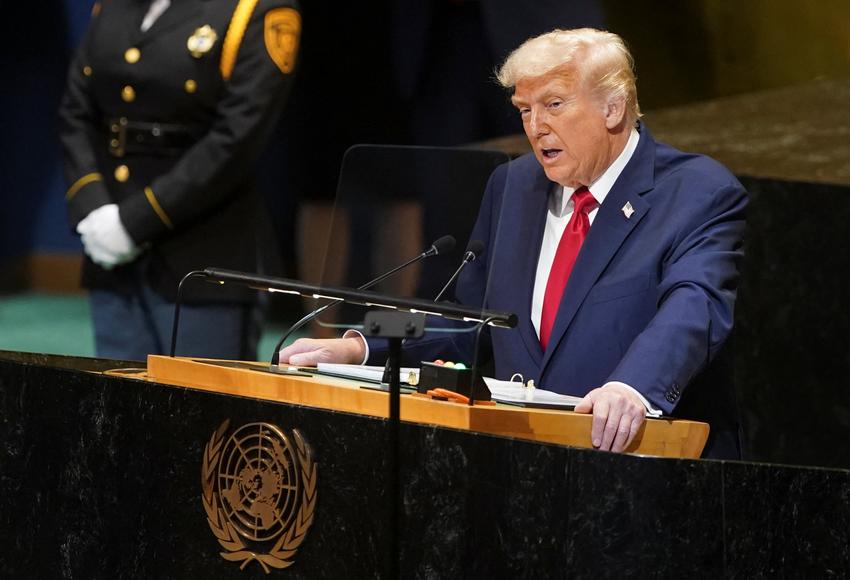
President Donald Trump said late Thursday that he was ending “all trade negotiations” with Canada because of a television ad opposing U.S. tariffs that he said misstated the facts and called “egregious behavior” aimed at influencing U.S. court decisions.

The post on Trump’s social media site came after Canadian Prime Minister Mark Carney said he aims to double his country’s exports to countries outside the U.S. because of the threat posed by Trump’s tariffs. Trump’s call for an abrupt end to negotiations could further inflame trade tensions that already have been building between the two neighboring countries for months.

Trump posted, “The Ronald Reagan Foundation has just announced that Canada has fraudulently used an advertisement, which is FAKE, featuring Ronald Reagan speaking negatively about Tariffs.”

“The ad was for $75,000. They only did this to interfere with the decision of the U.S. Supreme Court, and other courts,” Trump wrote on his social media site. “TARIFFS ARE VERY IMPORTANT TO THE NATIONAL SECURITY, AND ECONOMY, OF THE U.S.A. Based on their egregious behavior, ALL TRADE NEGOTIATIONS WITH CANADA ARE HEREBY TERMINATED.”

Carney’s office didn’t immediately respond to a request for comment. The prime minister was set to leave Friday morning for a summit in Asia, while Trump is set to do the same Friday evening.

Earlier Thursday night, the Ronald Reagan Presidential Foundation and Institute posted on X that an ad created by the government of Ontario “misrepresents the ‘Presidential Radio Address to the Nation on Free and Fair Trade’ dated April 25, 1987.” It added that Ontario did not receive foundation permission “to use and edit the remarks.”

The foundation said it is “reviewing legal options in this matter” and invited the public to watch the unedited video of Reagan’s address.

Carney met with Trump earlier this month to try to ease trade tensions, as the two countries and Mexico prepare for a review of the U.S.-Mexico-Canada Agreement — a trade deal Trump negotiated in his first term, but has since soured on.

More than three-quarters of Canadian exports go to the U.S., and nearly $3.6 billion Canadian (US$2.7 billion) worth of goods and services cross the border daily.

In his own post on X last week, Doug Ford, the premier of Ontario, posted a link to the ad and the message: “It’s official: Ontario’s new advertising campaign in the U.S. has launched.”

He continued, “Using every tool we have, we’ll never stop making the case against American tariffs on Canada. The way to prosperity is by working together.”

Trump said earlier this week that he had seen the ad on television and said that it showed that his tariffs were having an impact.

“I saw an ad last night from Canada. If I was Canada, I’d take that same ad also,” he said then.

The president has moved to impose steep U.S. tariffs on many goods from Canada. In April, Canada’s government imposed retaliatory levies on certain U.S. goods — but it carved out exemptions for some automakers to bring specific numbers of vehicles into the country, known as remission quotas.

Trump’s tariffs have especially hurt Canada’s auto sector, much of which is based in Ontario. This month, Stellantis said it would move a production line from Ontario to Illinois. (JapanToday)

Posted on — Leave a comment

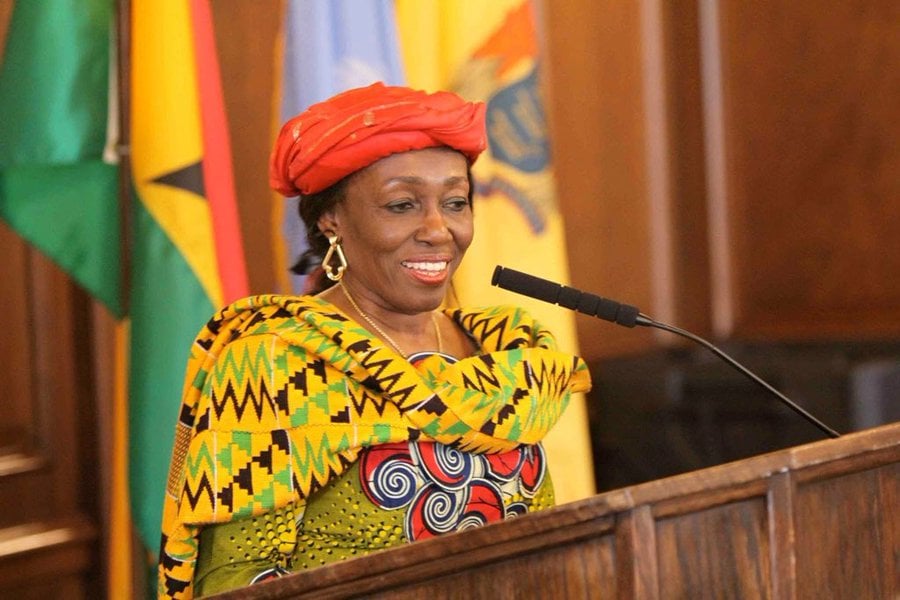
Ghana’s former first lady, Nana Agyeman-Rawlings, dies at 76

Ghana’s former First Lady and prominent women’s rights advocate, Nana Konadu Agyeman-Rawlings, has died at the age of 76.

She was the widow of the country’s longest-serving leader, Jerry John Rawlings, who died five years ago.

Rawlings led two military coups before twice being elected president under Ghana’s multiparty system.

The former first lady passed away on Thursday morning after a short illness, according to presidential spokesperson Felix Kwakye Ofosu.

As reported by the BBC, her family formally notified President John Mahama of her passing on Thursday afternoon.

Mahama, who leads the National Democratic Congress party, founded by Jerry Rawlings, paused to honour the memory of the late Agyeman-Rawlings during the swearing-in of new High Court Justices on Thursday.

Born in November 1948 in Cape Coast, Agyeman-Rawlings came from a middle-class background and attended the prestigious Achimota School in Accra, where she met her future husband.

She later studied art and textiles at university, while Rawlings joined the Air Force, rising to the rank of flight lieutenant in 1978—the year after their marriage.

By the time Rawlings seized power in 1979 at age 32, Nana Konadu had become one of his most trusted advisers.

Together, they formed one of Ghana’s most dynamic and controversial political partnerships.

The couple had four children, including their eldest, Dr. Zanetor Agyeman-Rawlings, who now serves as an NDC member of parliament.

Through her advocacy, Agyeman-Rawlings helped shape national policy on women’s rights.

She was instrumental in the 1989 law that guaranteed inheritance rights for women and children and contributed to the gender equality provisions in Ghana’s 1992 constitution, which ushered in the era of multiparty democracy.

Ghana’s parliament adjourned in her honour, while social media has since been flooded with tributes celebrating her life as a pioneering politician and tireless advocate for women’s rights.

The spokesperson of the country’s Ministry of Energy and Green Transition, Richmond Rockson, in a statement via X, extolled Nana as “an exceptional First Lady whose visionary leadership and strong organisational skills left an indelible mark on Ghana’s history.

“She stood firmly by Chairman Jerry John Rawlings during the revolution, displaying courage, loyalty and resilience at a defining moment in our nation’s journey.

“Her unwavering commitment to women’s empowerment led to the establishment of the 31st December Women’s Movement, which she led as president,” the statement read.

Agyeman-Rawlings was herself a political figure who sought the NDC’s presidential ticket in 2012 but lost the bid.

Her organisation, Women’s Movement, aimed at empowering women and promoting community development through entrepreneurship and education.

The organisation was named after the date of her husband’s second coup in 1981. (Punch)

Posted on — Leave a comment

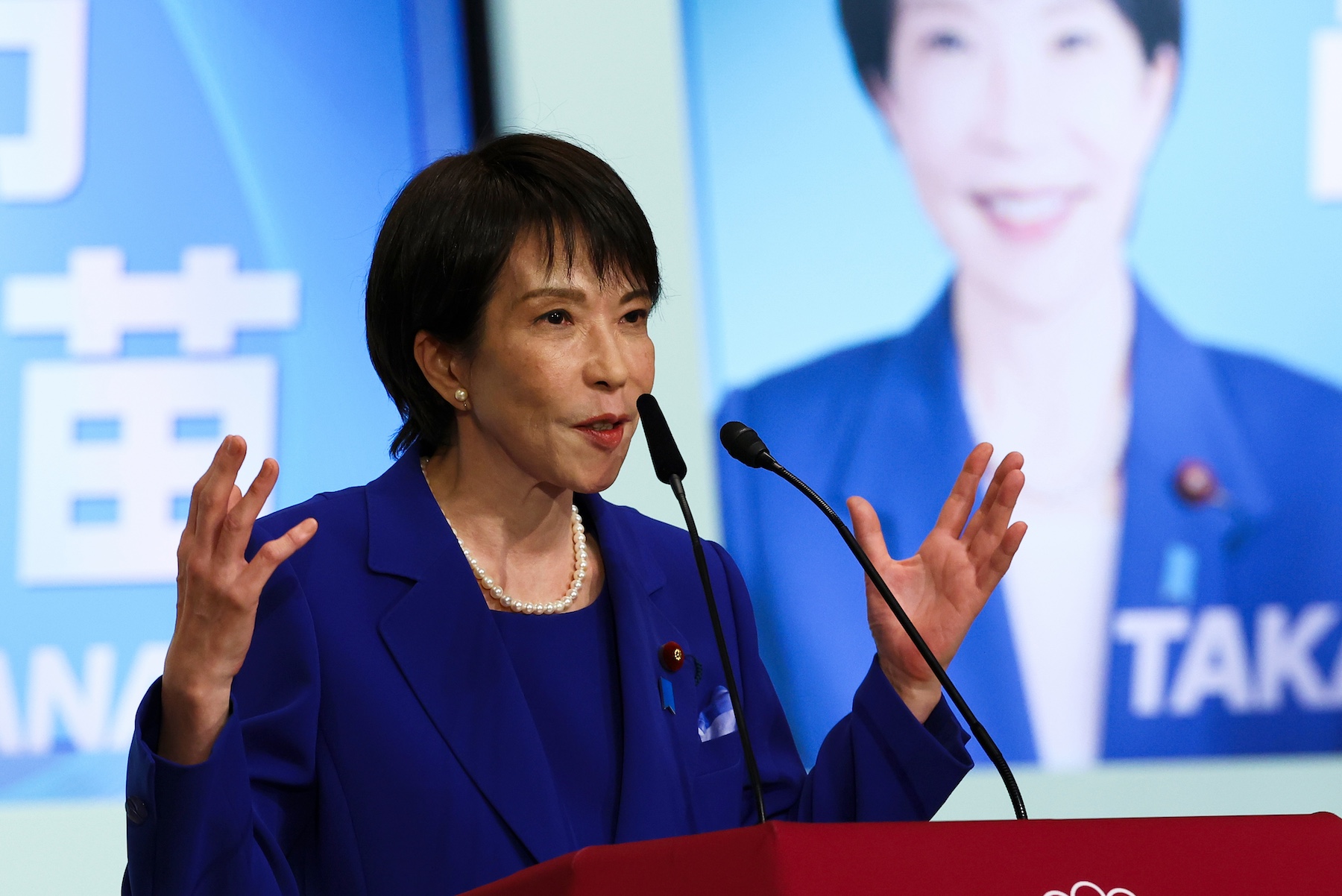
Diet elects Sanae Takaichi as Japan’s first female prime minister

Japan’s Diet elected ultraconservative Sanae Takaichi as the country’s first female prime minister Tuesday, a day after her struggling party struck a coalition deal with a new partner expected to pull her governing bloc further to the right.

Takaichi replaces Shigeru Ishiba, ending a three-month political vacuum and wrangling since the Liberal Democratic Party’s disastrous election loss in July.

Ishiba, who lasted only one year as prime minister, resigned with his cabinet earlier in the day, paving the way for his successor.

Takaichi won 237 votes — four more than a majority — compared to 149 won by Yoshikoko Noda, head of the largest opposition party, the Constitutional Democratic Party of Japan, in the lower house, which elects the prime minister. As the results were announced, Takaichi stood up and bowed deeply.

The LDP’s alliance with the Osaka-based rightwing Japan Innovation Party, or Ishin no Kai, ensured her premiership because the opposition is not united. Takaichi’s untested alliance is still short of a majority in both houses of parliament and will need to court other opposition groups to pass any legislation — a risk that could make her government unstable and short-lived.

The two parties signed a coalition agreement on policies underscoring Takaichi’s hawkish and nationalistic views.

Their last-minute deal came after the Liberal Democrats lost its longtime partner, the Buddhist-backed Komeito, which has a more dovish and centrist stance. The breakup threatened a change of power for the LDP, which has governed Japan almost uninterrupted for decades.

Tackling rising prices and other economic measures is the top priority for the Takaichi government, LDP Secretary General Shunichi Suzuki told NHK public television as he apologized over the delay because of the party’s internal power struggle since the July election. He said the new coalition will cooperate with other opposition parties to quickly tackle rising prices to “live up to the expectations of the people.”

Later in the day, Takaichi, 64, will present a cabinet with a number of allies of LDP’s most powerful kingmaker, Taro Aso, and others who backed her in the party leadership vote.

JIP will not hold ministerial posts in Takaichi’s cabinet until his party is confident about its partnership with the LDP, Yoshimura said.

Takaichi is running on a deadline, as she prepares for a major policy speech later this week, talks with U.S. President Donald Trump and regional summits. She needs to quickly tackle rising prices and compile economy-boosting measures by late December to address public frustration.

While she is the first woman serving as Japan’s prime minister, she is in no rush to promote gender equality or diversity.

Takaichi is among Japanese politicians who have stonewalled measures for women’s advancement. Takaichi supports the imperial family’s male-only succession and opposes same-sex marriage and allowing separate surnames for married couples.

A protege of assassinated former Prime Minister Shinzo Abe, Takaichi is expected to emulate his policies including a stronger military and economy, as well as revising Japan’s pacifist constitution. With her potentially weak grip on power, it’s unknown how much Takaichi will be able to achieve.

Also an admirer of former British Prime Minister Margaret Thatcher, Takaichi was first elected to parliament in 1993 and has served in a number of senior party and government posts, including as ministers of economic security and internal affairs, but her diplomatic background is thin.

When Komeito left the governing coalition, it cited the LDP’s lax response to slush fund scandals that led to their consecutive election defeats.

The centrist party also raised concern about Takaichi’s revisionist view of Japan’s wartime past and her regular prayers at Yasukuni Shrine despite protests from Beijing and Seoul that see the visits as lack of remorse about Japanese aggression, as well as her recent xenophobic remarks.

Takaichi has toned down her hawkish rhetoric. On Friday, she sent a religious ornament instead of going to Yasukuni. (JapanToday)

Posted on — Leave a comment

Transgender woman jailed for deceiving man about gender in UK

A British court has sentenced a transgender woman, Ciara Watkin, to 21 months in prison for deceiving a man into sexual activity by falsely claiming to be a biological female.

According to a BBC report on Friday, the victim told Durham Crown Court he would not have consented to the sexual encounter had he known Watkin was biologically male.

The court heard that Watkin, 21, from Thornaby in Stockton-on-Tees, was found guilty of sexual assault after jurors rejected her claim that the man “would have realised” her gender identity.

Recorder Peter Makepeace KC said he was “certain” the victim “fully believed from start to finish” that Watkin was a woman due to her “lies and deception.”

Watkin, who was born male and had used the name Ciara since childhood, had not undergone any medical transition or surgery, the BBC reported.

Both Watkin and the victim were 18 when they met on Snapchat, where she used a female cartoon character as her profile picture. They later met in person, leading to sexual contact. Prosecutor Paul Reid told the court that Watkin even claimed to be menstruating to stop the man from touching her below the waist.

When Watkin later confessed to being biologically male, the man said he was “physically sick” and immediately reported the matter to the police.

“He said he was shocked and upset about being deceived, adding that he felt ashamed, embarrassed, and had been ridiculed online due to Watkin’s actions and deception,” the report stated.

The victim, who described himself as heterosexual, told the court he felt “part of his masculinity was taken away.”

Defence counsel Victoria Lamballe argued that Watkin’s actions were not “predatory or sadistic” but stemmed from “shame and a deep sense of discomfort” with her own body.

She said Watkin, who has been diagnosed with gender dysphoria, identified as female from primary school and had endured years of bullying.

“It is hardly surprising that Watkin built up a façade and presented almost as a caricature of herself to mask the inner turmoil she feels at having been born into the wrong body,” Lamballe said, adding that Watkin “simply wanted to be loved.”

However, Recorder Makepeace ruled that the victim was “totally deceived,” saying Watkin had lied to “get away” with her deception and was aware the man would not have consented if he knew her biological sex.

The judge also criticised Watkin’s attitude during the trial, describing her as “flippant, disinterested, and bored,” showing “not a shred of remorse.” (Punch)

Posted on — Leave a comment

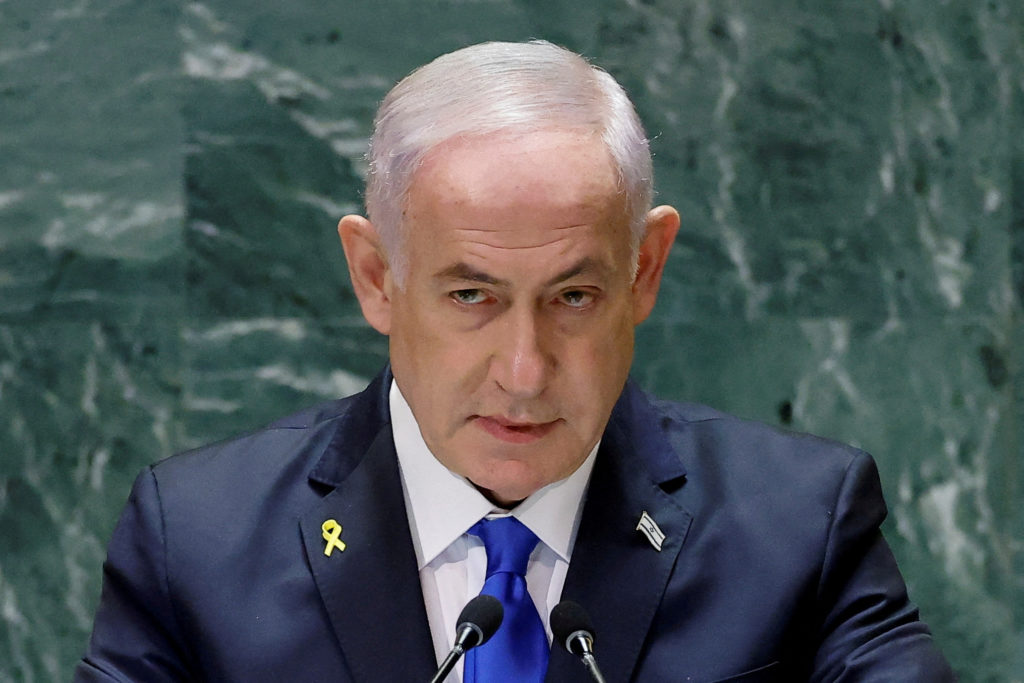
Gaza war not over until Hamas disarms, says Netanyahu

Israeli Prime Minister Benjamin Netanyahu warned on Saturday that the war in Gaza wouldn’t be over until Hamas was disarmed and the Palestinian territory demilitarised.

His declaration came as Hamas’s armed wing, the Ezzedine Al-Qassam Brigades, said it would hand over the remains of two further hostages on Saturday night.

The Israeli military said a Red Cross team was en route to receive “several” bodies just before 11:00pm (2000 GMT).

The issue of the dead hostages still in Gaza has become a sticking point in the implementation of the first phase of the ceasefire, with Israel linking the reopening of the key Rafah crossing between the territory and Egypt to the issue.

Netanyahu cautioned, however, that completing the ceasefire’s second phase was essential to ending the war, saying late on Saturday that “Phase B also involves the disarming of Hamas — or more precisely, the demilitarisation of the Gaza Strip, following the stripping of Hamas of its weapons”.

“When that is successfully completed — hopefully in an easy way, but if not, in a hard way — then the war will end,” he added in an appearance on right-wing Israeli Channel 14.

The group has so far resisted the idea and since the pause in fighting has moved to reassert its control over the Gaza Strip.

Under the ceasefire deal brokered by US President Donald Trump, Hamas has so far released all 20 living hostages, along with the remains of nine Israelis and one Nepalese.

The most recent handover was on Friday night, that of the body identified by Israel as Eliyahu Margalit, who died aged 75 in Hamas’s October 7, 2023 attack.

In exchange, Israel has released nearly 2,000 Palestinian prisoners and 135 other bodies of Palestinians since the truce came into effect on October 10.

Hamas has said it needs time and technical assistance to recover the remaining bodies, which it says are buried under Gaza’s rubble.

The two bodies to be returned on Saturday “were recovered earlier today” the al-Qassam Brigades said on Telegram.

Netanyahu on Saturday linked the reopening of the vital Rafah crossing to Egypt with Hamas returning all the bodies of hostages still in Gaza.

The Palestinian mission in Cairo announced that the crossing could open as early as Monday, though only for Gazans living in Egypt who wished to return to the territory.

Shortly after, however, Netanyahu’s office said he had “directed that the Rafah crossing remain closed until further notice”.

“Its reopening will be considered based on how Hamas fulfils its part in returning the hostages and the bodies of the deceased, and in implementing the agreed-upon framework,” it said, referring to the week-old ceasefire deal.

Further delays to the reopening could complicate the task facing Tom Fletcher, the UN head of humanitarian relief, who was in northern Gaza on Saturday.

“I drove through here seven to eight months ago when most of these buildings were still standing and, to see the devastation — this is a vast part of the city, just a wasteland — and it’s absolutely devastating to see,” he told AFP.

Fletcher said the task ahead for the UN and aid agencies was a “massive, massive job”.

He said he had met residents returning to destroyed homes who were trying to dig latrines in the ruins.

“They’re telling me most of all they want dignity,” he said.

“We have a massive 60-day plan now to surge in food, get a million meals out there a day, start to rebuild the health sector, bring in tents for the winter, get hundreds of thousands of kids back into school.”

While the Rafah crossing has yet to reopen, just over a week since the brokering of the truce, hundreds of trucks are rolling in each day via Israeli checkpoints and aid is being distributed.

According to figures supplied to mediators by the Israeli military’s civil affairs agency and released by the UN humanitarian office, on Thursday some 950 trucks carrying aid and commercial supplies crossed into Gaza from Israel.

Some violence has persisted despite the ceasefire.

Gaza’s civil defence agency, which operates under Hamas authority, said on Saturday that it had recovered the bodies of nine Palestinians — two men, three women and four children — from the Shaaban family after Israeli troops fired two tank shells at a bus. (Punch)

Posted on — Leave a comment

Tourists upset as Louvre stays shut after jewel heist

Visitors pressed against the Louvre’s iron gates on Monday, peering through bars locked after thieves pulled off a daylight jewel heist inside the world-famous museum the day before.

Would-be museum-goers queued outside the famed tourist attraction for the scheduled 0900 (0700 GMT) opening, a day after robbers stole precious jewelry and fled on scooters.

But the mood soured when the museum announced it would stay closed for a second day.

“It’s my birthday; it was my gift, and I’ve wanted to come for several years, so I’m a bit upset,” Elisa Valentino, a 31-year-old visiting from Italy, told AFP.

“I studied art… It’s even the only thing I had planned for my stay in Paris, and I’m leaving tomorrow,” she said, wiping away tears.

Lingering outside the closed gates, US tourist Jesslyn Ehlers, 38, and her husband were busy rebooking their tickets.

“We heard about the heist the day before, so we checked online before coming, and we didn’t hear anything,” she told AFP. “We were excited to show up.”

But on arrival, they found a sign saying the museum would stay shut for a second day.

“We’re just kind of disappointed. We’ve been planning this for a very long time,” she said.

Those who had booked same-day visits would be reimbursed, the Louvre said in a statement.

“We’ll be refunded, but that’s not the point,” said Adam Cooke, 65, who had travelled from London with his wife, Rachel.

With their return set for Tuesday, the couple will miss their chance to visit the museum, whose extensive collections include the Mona Lisa.

The Louvre, along with the Eiffel Tower, ranks among the French capital’s must-see attractions, drawing nearly nine million visitors last year—around 80 percent of them from abroad.

Tourists said they were shocked after masked thieves took off with eight priceless items, including an emerald-and-diamond necklace that Napoleon I gave his wife, Empress Marie-Louise.

The burglars dropped and damaged a ninth item — the crown of Empress Eugenie, the wife of Napoleon III — as they made their escape.

“It was amazing that the heist happened in broad daylight. I mean, that is obviously very unfortunate… very embarrassing,” said Cooke, the 65-year-old British tourist.

He discovered from news websites how the burglars parked an extendable ladder like those used by movers below the museum’s Apollo Gallery, where they used cutting equipment to get in through a window and open the display cases.

All in just seven minutes.

For Sissi Liu, a 39-year-old visiting from China with her husband and young sons, the theft was “unimaginable”.

“It’s a big shock that someone can get in there and steal something,” she told AFP.

Andreea Dumitras, 17, from Moldova, came to Paris with friends and family and said she was not surprised the museum stayed closed after the brazen theft.

“What’s most frustrating is that the security at the Louvre is so weak,” she said.

With her departure set for Thursday, the 17-year-old said she hopes to make it inside on Wednesday — if the museum reopens in time.

But she was not optimistic.

“Someone from security told me it’s not even certain it will reopen” by then, she said. (Channels)

Posted on — Leave a comment

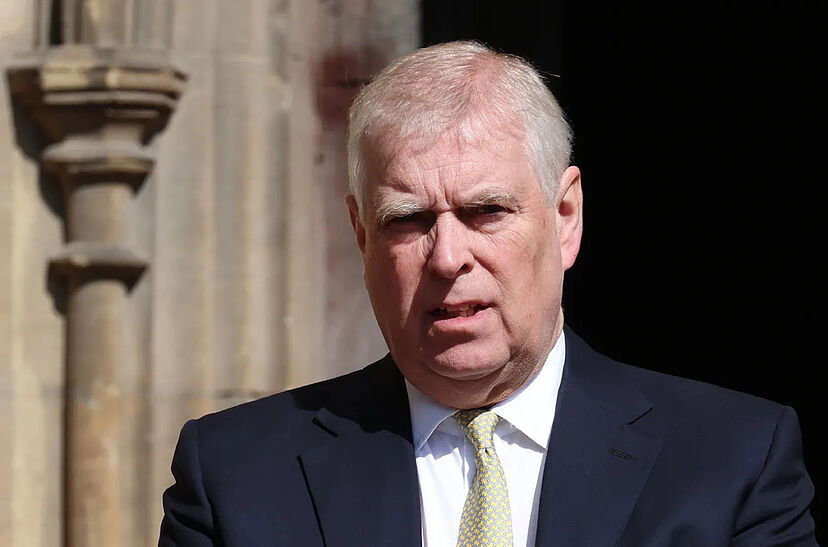
UK’s Prince Andrew gives up royal title

The UK’s Prince Andrew Friday renounced his title of Duke of York under pressure from his brother King Charles, amid further revelations about his ties to US sex offender Jeffrey Epstein.

“I will… no longer use my title or the honours which have been conferred upon me,” Andrew, 65, said in a bombshell announcement.

He said his decision came after discussions with the head of state, King Charles III.

“I have decided, as I always have, to put my duty to my family and country first,” Andrew said in a statement, sent out by Buckingham Palace.

He again denied all allegations of wrongdoing, but said: “We have concluded the continued accusations about me distract from the work of His Majesty and the Royal Family.”

Andrew, who stepped back from public life in 2019 amid the Epstein scandal, will remain a prince, as he is the second son of the late queen Elizabeth II.

But he will no longer hold the title of Duke of York that she had conferred on him.

UK media reported that he would also give up membership of the prestigious Order of the Garter, the most senior knighthood in the British honours system which dates back to 1348.

Andrew’s ex-wife Sarah Ferguson will also no longer use the title of Duchess of York, although his daughters Beatrice and Eugenie remain princesses and it is thought that Friday’s move will not affect their status.

The disgraced royal has become a source of deep embarrassment for his brother Charles, following a devastating 2019 TV interview in which Andrew defended his friendship with the late billionaire paedophile Epstein.

In the interview, he vowed he had cut ties in 2010 with Epstein, who was disgraced after an American woman, Virginia Giuffre, accused him of using her as a sex slave.

But in a reported exchange which emerged in UK media this week, Andrew told the convicted sex offender in 2011 that they were “in this together” when a photo of the prince with his arm around Giuffre was published.

But he added that the two would “play together soon”.

Andrew was stripped of his military titles in 2022 and shuffled off into retirement after Giuffre accused him of sexually assaulting her when she was 17.

New allegations emerged this week in Giuffre’s posthumous memoir in which she wrote that Andrew had behaved as if having sex with her was his “birthright”. (Vanguard)

Posted on — Leave a comment

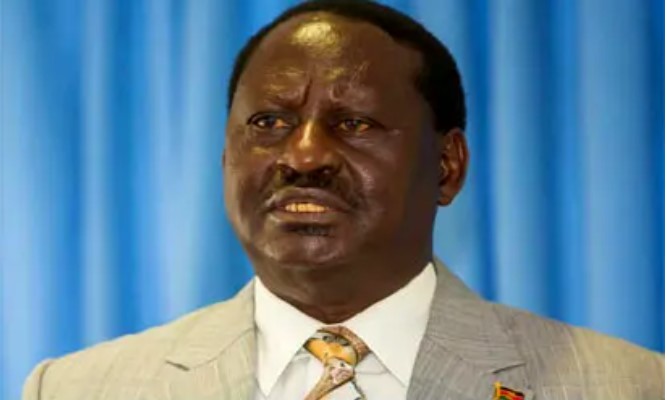
Ex-Kenyan leader Raila Odinga buried after days of memorial events

Former Kenyan prime minister and revered long-time opposition leader Raila Odinga was buried in the west of the country after a service attended by thousands on Sunday.

“Now finally Baba is home,” his son, Raila Odinga junior, said beside his father’s casket, draped in the Kenyan flag.

The burial concluded days of memorials that at times led to chaos, with at least five mourners dying at other events and dozens injured at a public viewing on Saturday.

Odinga died on Wednesday aged 80 in an Indian hospital.

He became prime minister after the bloody and disputed 2007 election, and was the main opposition leader for many years, losing five presidential campaigns, most recently three years ago.

He retains a devotional following in the west of the country. Former US President Barack Obama, whose Kenyan family hails from the same region, called Odinga a “true champion of democracy”.

Politicians, relatives and throngs of his supporters waved Kenyan flags and held his picture aloft as they gathered at Sunday’s memorial service, which was held at a university in Bondo.

“Even in the grave, he still remains our hero,” one mourner told the AFP news agency.

Military personnel carried Odinga’s coffin to the front, where a choir sang and speakers, including Kenyan President William Ruto, remembered him.

“His courage, his vision, and his unyielding faith in our collective destiny will forever illuminate the path of our nation,” Ruto said in a post on Facebook about the event.

“His return to Bondo was not merely a homecoming; it was the embrace of a grateful Republic bidding farewell to one of its greatest sons, a patriot who devoted his life to the cause of justice, democracy, and the enduring unity of our beloved Kenya.”

Odinga was buried nearby at his late father’s homestead, where there is a family mausoleum.

Multiple memorial events had already taken place, including a state funeral in Nairobi on Friday and a public viewing in a stadium in his home city of Kisumu on Saturday.

At the viewing, tens of thousands filed past his open coffin, many crying out the phrase “we are orphans”.

At least three people were killed when police opened fire to disperse mourners, with dozens more injured in the chaotic scenes that followed. (BBC)

Posted on — Leave a comment

Trump tariffs on kitchen cabinets and lumber come into force

New US tariffs on imported kitchen cabinets, vanities, lumber, timber and certain upholstered furniture have come into effect.

Under a proclamation signed by President Donald Trump last month, a 10% tariff on softwood lumber and timber imports will apply as of Tuesday.

A 25% tariff will also apply to imported kitchen cabinets and vanities – rising to 50% on 1 January – and a 25% tariff on upholstered wooden furniture will increase to 30%, unless new trade agreements are reached.

Trump has cited the need to protect US manufacturers and national security concerns for the move, but some in the industry worry the tariffs could raise housing costs and make customers postpone home renovations.

Tariffs are taxes on imported goods typically charged as a percentage of a good’s value and are paid to the US government by companies bringing in the products.

These firms may pass some or all of the extra cost on to their customers, which in this case means ordinary Americans and other US businesses.

The president’s tariff policies have been a key feature of his second term in the White House.

Trump has previously imposed sector-specific tariffs on steel, copper, aluminium, cars and vehicle components.

The additional global 10% tariffs on softwood lumber means the product from Canada – the second largest producer globally and a major US supplier – is now tariffed at more than 45%.

There is already a combined 35.16% US countervailing and anti-dumping duties placed on most Canadian producers as part of a decades-long dispute over the product between the two countries.

As part of existing trade deals with the US, duties on wood products from the UK will not exceed 10%, while those from the European Union and Japan will not exceed 15%.

The White House says Trump’s tariffs have been implemented “to protect against threats” to the US’s national security and to “strengthen manufacturing”.

But the National Association of Homebuilders said in a statement in late September that the new levies could raise housing costs.

“These new tariffs will create additional headwinds for an already challenged housing market by further raising construction and renovation costs,” said chairman Buddy Hughes.

According to Telsey Advisory Group managing director and senior retail analyst Cristina Fernández, retailers will have no choice but to raise prices on imported goods.

Speaking to the BBC’s US partner CBS News last month, she said retailers would try not to raise prices too much ahead of the holiday season, but “they can’t absorb 30% tariffs on top of other tariffs that are already in place”.

“They’ll have to pass through pricing, probably in the form of a double-digit price increase,” she added.

Last month Swedish furniture giant Ikea said the tariffs on furniture imports make doing business “more difficult”.

“The tariffs are impacting our business similarly to other companies, and we are closely monitoring the evolving situation,” the company said. (BBC)