Posted on Leave a comment

FCC orders review of ABC licenses after Jimmy Kimmel’s Melania Trump joke

The US’s top media watchdog announced on Tuesday that it is accelerating the review of eight local broadcasting licenses used by ABC, in a move critics see as a clear example of political and regulatory retribution against a disfavored broadcaster.

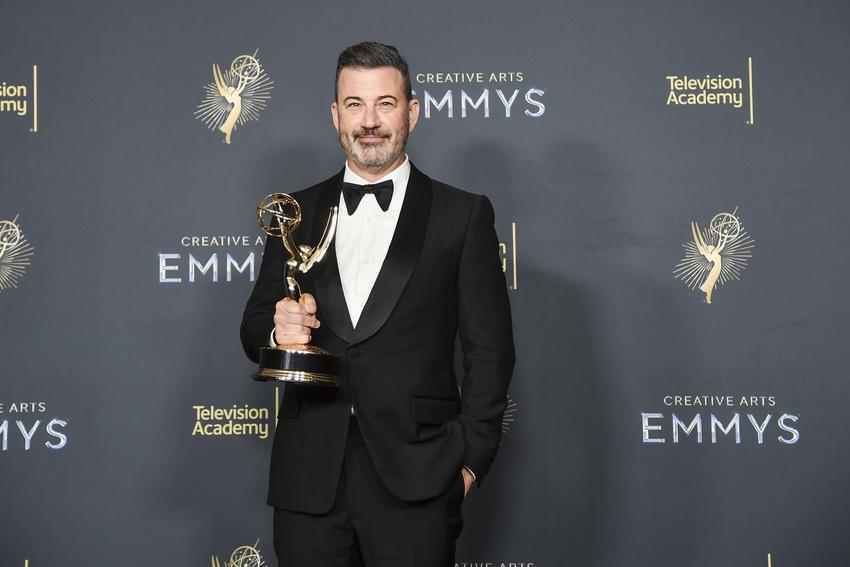
The Federal Communications Commission’s (FCC) announcement comes after the White House launched a full-on attack against the ABC’s late-night host, Jimmy Kimmel, over a joke he made last week about Melania Trump.

On Monday, Donald Trump called for Kimmel to be fired over the segment, in which Kimmel said that the first lady has “a glow like an expectant widow”. The joke was made two days before an attempted shooting – allegedly targeting Trump’s administration – interrupted the annual White House correspondents’ dinner.

The FCC – led by Trump-appointed chair Brendan Carr – does not grant licenses to national television networks; rather, it licenses each individual station that broadcasts using the public airwaves.

ABC owns and operates eight stations, though it has content agreements with many more. Those eight stations – WABC-TV New York, KABC-TV Los Angeles, WLS-TV Chicago, WPVI-TV Philadelphia, KTRK-TV Houston, KGO-TV San Francisco, WTVD-TV Raleigh-Durham and KFSN-TV Fresno – are the ones being targeted by Carr’s FCC.

Those stations were not scheduled to have to apply for renewal until 2028 at the earliest and 2031 at the latest. But now they are required to file for renewal by 28 May, years ahead of when they were originally required to do so. The FCC announcement appears connected to an investigation launched by the agency early last year into ABC parent company Disney’s diversity, equity and inclusion (DEI) practices.

“Specifically, FCC rules provide that whenever the FCC regards an application for a renewal of a license as essential to the proper conduct of an investigation, the FCC has the authority to call the broadcaster’s licenses in for early renewal. Doing so both allows the FCC to conduct its ongoing investigation and enables the FCC to ensure that the broadcaster has been meeting its public interest obligations more broadly,” David J Brown, chief of the video division at the FCC’s media bureau, wrote in a memo. “The FCC determines that calling in Disney’s ABC licenses for early renewal, at this time, under the Communications Act’s public interest standard is essential within the meaning of agency regulations.”

In a statement, a Disney spokesperson acknowledged that the company has received notice of the expedited renewal process. “ABC and its stations have a long record of operating in full compliance with FCC rules and serving their local communities with trusted news, emergency information and public‑interest programming,” the spokesperson said. “We are confident that record demonstrates our continued qualifications as licensees under the Communications Act and the first amendment and are prepared to show that through the appropriate legal channels. Our focus remains, as always, on serving viewers in the local communities where our stations operate.”

On a conservative podcast published on Tuesday, Carr weighed in on the DEI-related investigation and said: “There’s evidence that Disney has been pretty bad. There’s evidence suggests that Disney literally was dividing and categorizing employees based on race and gender, and potentially – we’ll see what the evidence establishes, ultimately – giving different opportunities to people based on their race or gender or other protected class. And we’re going to get some more discovery from Disney on that. But that could raise character questions about the company long-term.”

Carr, on the podcast, said that license renewals can be “accelerated” if there are “significant concerns” about how a network is operating, and questions about whether it is doing so in the public interest. If the FCC determines that a broadcaster is in violation, the next step would be a hearing designation, which Carr said was a “multi-month process”.

Anna M Gomez, the lone Democrat on the FCC, has decried any attempt to speed up the license renewal process for ABC – or any other television network that has been targeted by the Trump administration. “This is unprecedented, unlawful, and going nowhere,” she wrote in a post on X on Tuesday. “This political stunt won’t stick. Companies should challenge it head-on. The First Amendment is on their side.”

In an interview with the Guardian last month, Gomez said the license renewal apparatus is intentionally onerous and time-consuming to prevent any appearance of partisan decision-making.

“If they are trying to take adverse action through the license renewal process, that is an arduous, long, process with multi-layers of decisions that have to be made by different parties that are meant to protect broadcasters from capricious and arbitrary action from the commission,” Gomez said.

Tom Wheeler, who served as chair of the FCC during Barack Obama’s presidency, told the Guardian on Tuesday that Carr “has turned [the FCC] into a political organization using policy to achieve political goals” rather than “a policy agency operating in a political environment”.

While Wheeler said that Carr has the ability to schedule consideration of ABC’s license renewals, any adverse decision would ultimately be appealable – and he noted that license denials are exceedingly rare.

Wheeler said that a denial of ABC’s licenses “would have a hard time at the courts”, though he doesn’t see that as the goal. “There are two message: there’s a message that goes to the Maga base that says, ‘Boy, I’m going at them.’ There’s a message that goes to the president that says, ‘Boy, am I carrying forth what you want me to do.’ And then there’s a message to every licensee of the FCC that says, ‘I can do this to you too.’”

In February, Carr confirmed that the FCC is also investigating the ABC daytime talkshow The View for a potential violation of rules around providing equal time for opposing political candidates.

Despite calls by Trump and his wife Melania for ABC to take action against Kimmel, his show aired as scheduled on Monday night. “It was a very light roast joke about the fact that he’s almost 80 and she’s younger than I am,” Kimmel explained to viewers. “It was not – by any stretch of the definition – a call to assassination. And they know that. I’ve been very vocal for many years, speaking out against gun violence, in particular.”

In September, Carr reportedly pressured television station groups to pre-empt Kimmel’s show as punishment for a comment that he made in the wake of the assassination of conservative influencer Charlie Kirk. Two right-leaning broadcast groups, Sinclair and Nexstar, did so, and ABC opted to “indefinitely” pull Kimmel’s show. Kimmel ultimately returned to the air a week later. Carr later claimed that his comments about Kimmel’s show did not amount to a threat.

Seth Stern, chief of advocacy for Freedom of the Press Foundation, issued a statement on Tuesday calling out Carr’s FCC. “The FCC is neither the journalism police nor the humor police,” he said. “This is nothing but illegal jawboning intended to intimidate ABC into kissing the ring.”

“The FCC has no authority to cancel broadcasters’ licenses because of their perceived political views. But this isn’t just about the rights of Disney and ABC. President Trump is trying to consolidate control over what Americans see and hear on the radio, television, and social media,” Jameel Jaffer, executive director at the Knight First Amendment Institute at Columbia University, said in a statement.

“If he gets his way, we’ll have only government-aligned media organizations that broadcast only government-approved news and commentary. It would be difficult to imagine an outcome more corrosive to democracy or more offensive to the first amendment.” (Guardian)
Posted on Leave a comment

Canada’s Carney announces a sovereign wealth fund

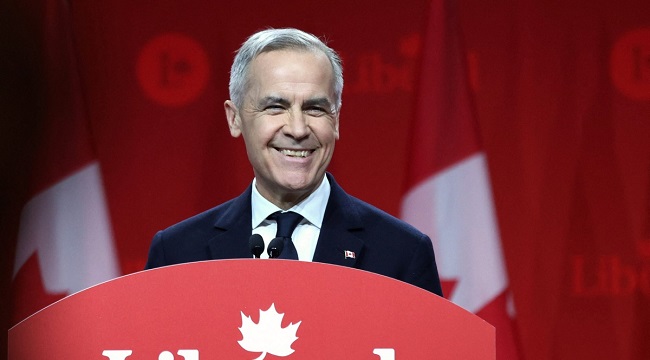
Canadian Prime Minister Mark Carney says his government is developing a government-owned investment fund.

Carney said on Monday that the fund, a first for the country, will invest in major Canadian industrial projects in areas such as energy, infrastructure, mining, agriculture and technology. It will begin at 25 billion Canadian dollars (US$18bn).

The prime minister said the federal government will put up funds alongside private investors. The money will help finance major projects that Carney’s government is focused on building as Canada seeks to diversify away from the United States.

US President Donald Trump has threatened Canada’s economy and sovereignty with tariffs and claims that Canada could be “the 51st state” in the US.

Carney is a former central banker in England and Canada as well as chairman of the board of directors for Bloomberg.

“We take a lesson from other jurisdictions that had the foresight many decades ago to start sovereign wealth funds,” Carney said. “In some cases, they began with a domestic focus then outgrew the scale of the domestic focus.”

Sovereign wealth funds invest in assets, such as stocks, bonds and real estate. They are typically funded by a country’s budgetary surpluses, which Canada currently does not have. The announcement came a day before Carney’s government announces its spring economic update.

There are more than 90 sovereign wealth funds around the world. They manage more than $8 trillion in assets, according to the International Forum of Sovereign Wealth Funds, a London-based organisation made up of roughly 50 of these entities.

Trump ordered the creation of a US sovereign wealth fund last year. In the US, more than 20 sovereign wealth funds exist at the state level, according to an analysis from the Center for Global Development, a Washington, DC-based nonpartisan think tank. (AlJazeera)

Posted on Leave a comment

UK and French governments sign a 3-year deal to curb migrant crossings in English Channel

The UK and French governments signed a new multimillion-euro deal on Thursday aimed at reducing the number of migrants crossing the English Channel in small boats, with increased police patrols and enhanced surveillance in northern France.

UK Home Secretary Shabana Mahmood and French Interior Minister Laurent Nuñez formally endorsed the three-year agreement during a joint visit to the Dunkirk region.

Mahmood praised the new deal as providing “the right mix of skills and capabilities that we know will work on the beaches in order to reduce the crossings.”

Nuñez said that it will help in “combating illegal immigration networks, human trafficking networks, which are obviously extremely harmful.”

Under the agreement, the UK will provide 500 million pounds ($675 million) to strengthen measures in northern France, with an additional 160 million pounds ($216 million) depending on the success of new tactics to curb Channel crossings. If those efforts fail, the additional funding will be halted after one year, the UK Home Office said.

The plan aims at increasing the number of officers deployed on the ground from 907 now to 1,392 for the 2026—2029 period, along with the creation of an additional police unit dedicated to combating irregular migration, funded by France, the French Interior Ministry said.

It will also include the deployment of new technologies aimed at reducing departures of “taxi boats,” the term authorities use for small motorized vessels that are typically inflatable and used by smugglers to pick up migrants along long stretches of the northern French coast.

Unlike boats that migrants carry into the water themselves, “taxi boats” typically set off largely empty from secluded coastal areas and pick up migrants at prearranged meeting points on beaches.

The deal also expands surveillance capabilities through drones, helicopters and electronic monitoring, to better prevent crossing attempts.

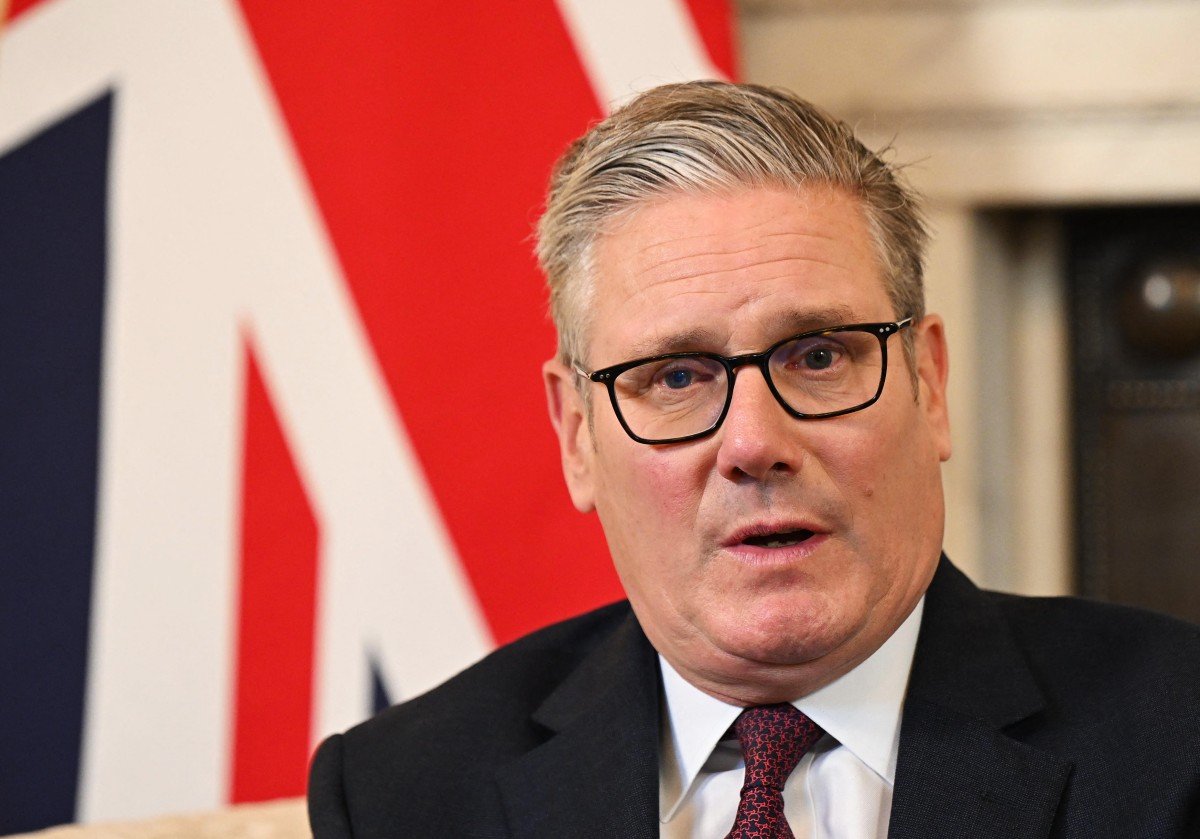
“Our work with the French has already stopped tens of thousands of crossings and this government has deported or returned nearly 60,000 people with no right to be here,” UK Prime Minister Keir Starmer said.

Since taking office nearly two years ago, Starmer’s center-left Labour government has pushed through a series of policies that it hopes will sharply reduce immigration.

Small boat crossings have become a potent political issue in the UK over recent years. Anger at the seeming inability of successive governments to get a handle on the issue has been behind a series of demonstrations and riots over the past few years and fueled the rise of the hard-right Reform UK party, which has been leading in opinion polls for more than a year and is predicted to make sweeping gains in a raft of elections on May 7. (JapanToday)

Posted on Leave a comment

N Korea fires multiple ballistic missiles toward sea

North Korea fired ballistic missiles into the sea on Sunday, accelerating its missile launches amid Iran war tensions and ‌talk of possible meetings with the U.S. and South Korea.

Pyongyang’s intense missile activity – this was the fourth such launch this month and the seventh of the year – is meant to display its ‌self-defence capabilities while gaining international leverage, some experts said.

“The missile ⁠launches may be a way of showing that – unlike Iran – ⁠we have self-defense capabilities,” ⁠said South Korean former presidential security adviser Kim Ki-jung.

“The North also appears ‌to be exerting pressure preemptively and make a show of force before engaging in dialogue ⁠with the United States and South ⁠Korea,” he said.

The seven-week-old U.S.-Israeli war against Iran, which has as one aim the curbing of Tehran’s nuclear program, could reinforce Pyongyang’s nuclear ambitions, experts and former South Korean officials say.

U.S. ⁠President Donald Trump, preparing for a summit in China next month, and ⁠South Korean President Lee Jae Myung have ‌repeatedly expressed interest in holding talks with North Korean leader Kim Jong Un. There are no publicly known plans for any meetings.

Lee recently conveyed regret to the North for drone incursions from the South, receiving rare praise from Pyongyang.

Sunday’s missiles ‌were fired from near the city of Sinpo on North Korea’s east coast toward the sea around 6:10 a.m. and flew about 140 km, South Korea’s military said in a statement.

Japan’s government posted on social media that the missiles were believed to have fallen near the east coast of the Korean Peninsula, and no incursion into Japan’s exclusive economic zone had been confirmed.

South Korea’s presidential ​Blue House convened an emergency security meeting, calling the launches a provocation that violated U.N. Security Council resolutions, according to media reports. It urged ‌Pyongyang to “stop the provocative acts”.

It was not clear what kind of ballistic missiles were fired, but Sinpo has submarines and equipment for test-firing submarine-launched ballistic missiles. The North last fired a ballistic missile ‌from a submarine in May 2022, and it flew as far as 600 ⁠km.

North Korea has made “very ⁠serious” advances in its ability to turn ​out nuclear weapons, with the probable addition of a new uranium enrichment ⁠facility, International Atomic Energy ‌Agency chief Rafael Grossi said on Wednesday.

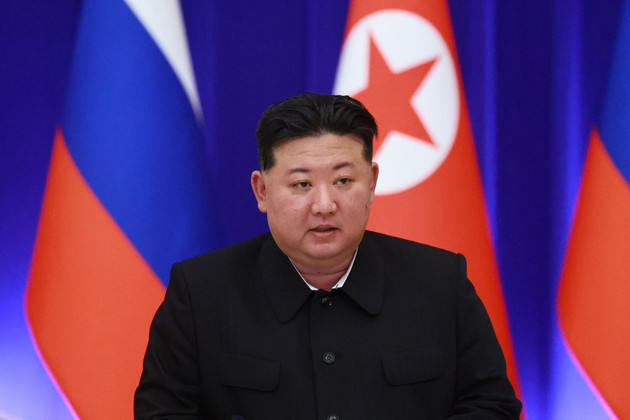
In late March, North ​Korean leader Kim said Pyongyang’s status as a nuclear-armed state was irreversible and expanding a “self-defensive nuclear deterrent” was essential to national security. (JapanToday)

Posted on Leave a comment

Pope lashes out at foreigners who exploit Africa

Pope Leo XIV has criticised foreigners who exploit the wealth of Africa for profit during his visit to a conflict-hit region of Cameroon.

It is one of several forthright remarks he has made over the last day, including blasting those who spend billions on wars and telling Cameroon’s government to root out corruption for peace to prevail.

He has spent the day in Bamenda, a city at the centre of Cameroon’s brutal and long-running separatist rebellion.

Internal problems were exacerbated by outsiders who “in the name of profit, continue to lay their hands on the African continent to exploit and plunder it”, he told an estimated 20,000 worshippers at a Mass at Bamenda Airport.

Earlier, joyful crowds sang, drummed and waved flags to welcome the leader of the Catholic Church, who arrived under military escort in a bullet-proof white vehicle.

Ahead of his visit, Anglophone separatists had announced a period of “safe travel passage”.

The Pope’s first stop was at a peace meeting in Bamenda held at Saint Joseph’s Cathedral about the nearly 10-year insurgency in Cameroon’s two English-speaking regions that has left at least 6,000 people dead and many more forced from their homes.

“Those who rob your land of its resources generally invest much of the profit in weapons, thus perpetuating an endless cycle of destabilisation and death,” said the 70-year-old Pope.

Since 2017, those seeking to create a breakaway state in Cameroon’s Anglophone region have been fighting government forces.

They are angered by what they see as the marginalisation of Cameroon’s English-speaking minority by the Francophone-dominated government.

Religious leaders and victims of the Anglophone conflict took turns to share the impact of the fighting with the Pope.

A Muslim leader decried the killing of members of the Mbororo indigenous community, looting of cattle and other items.

A nun revealed details of her kidnap by separatist fighters, highlighting the severity of the conflict.

Another man shared how he was forced to flee his home.

The Pope commended their work and said it was a model for the whole world: “Let us thank God that this crisis has not degenerated into a religious war.”

Commentators say the Pope has been unusually blunt in his speeches in Cameroon.

On Wednesday at the presidential palace in the capital, Yaoundé, he gave pointed advice to the government during at address also attended by President Paul Biya.

“In order for peace and justice to prevail, the chains of corruption – which disfigure authority and strip it of its credibility – must be broken,” he said. (BBC)

Posted on Leave a comment

Malema sentenced to five years in firearm case

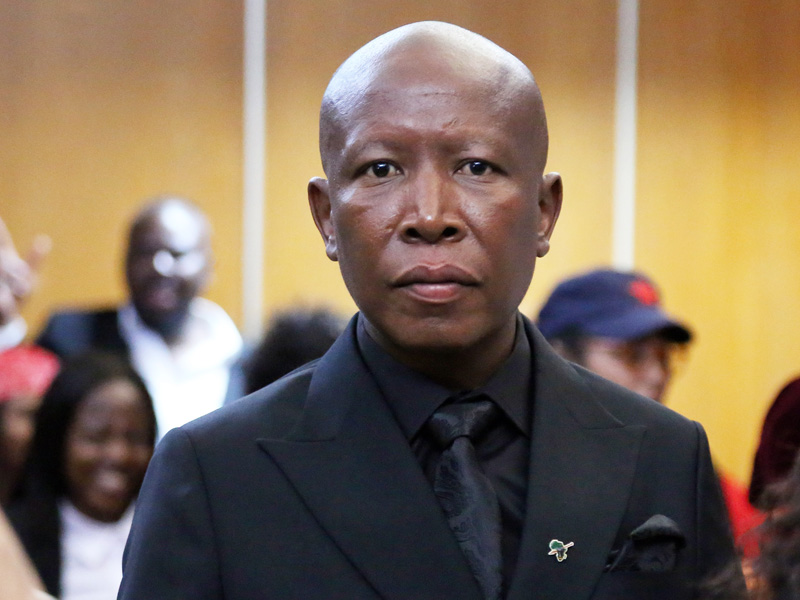
South African opposition leader Julius Malema has been sentenced to five years in prison after being found guilty of firing a rifle into the air at a political rally.

A magistrate’s court delivered the ruling on Thursday, sentencing the 45 years old politician over a 2018 incident at a stadium in Eastern Cape province, where he discharged a weapon in a public place.

Malema, a prominent figure in South African politics, was convicted last year on multiple charges, including unlawful possession of a firearm and reckless discharge of a weapon. He had pleaded not guilty to all charges.

His legal team swiftly applied for leave to appeal the sentence shortly after it was delivered in a court in KuGompo City, formerly known as East London.

If upheld after the appeals process, the sentence could disqualify Malema from holding public office, dealing a significant blow to his Economic Freedom Fighters (EFF) party.

The EFF, currently the fourth-largest party in parliament, has built a strong following among young South Africans, particularly those frustrated by persistent inequality since the end of apartheid in 1994.

Authorities say the case marks a significant moment in enforcing firearm laws, as the country continues to grapple with public safety concerns. (AriseNews)

Posted on Leave a comment

Trump turns on Meloni; says he is ‘shocked’ by Italian leader


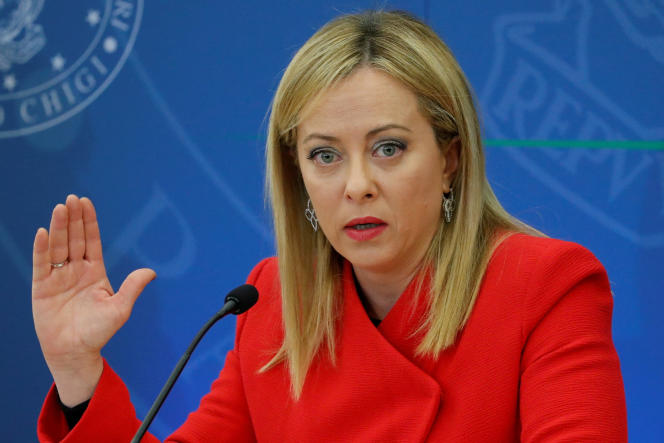
Italian Prime Minister Giorgia Meloni lacks courage and has let Washington down, U.S. President Donald Trump told an Italian newspaper on Tuesday, delivering a ‌blunt public rebuke to one of his closest European allies.

Meloni had been a vociferous supporter of Trump, but she distanced herself from him after he went to war with Iran in February, and on Monday she openly criticized ‌him for lashing out at Pope Leo, saying his verbal assault ⁠was “unacceptable”.

Trump responded in an interview with Corriere della Sera, saying Meloni was “very ⁠different from what I ⁠thought” and denouncing her for refusing to help re-open the Strait of Hormuz, which has ‌been blocked by Iran.

“I’m shocked by her. I thought she had courage. I was wrong,” he was ⁠quoted as saying in the Italian-language article.

The White ⁠House declined to comment on the reported quotes. Meloni’s office also declined to comment, but politicians of all stripes rallied to her defence, including Foreign Minister Antonio Tajani, head of the coalition Forza Italia party.

“We are, and will remain, sincere supporters of Western ⁠unity and steadfast allies of the United States, but that unity is built on loyalty, ⁠respect and mutual frankness,” he said, applauding Meloni ‌for denouncing Trump’s attack on the pope.

“On Pope Leo XIV, she said exactly what all of us Italian citizens think,” he added in a statement on X.

Trump’s criticism marked a dramatic change in tone toward Meloni, the only European leader to attend ‌his inauguration in 2025 and whom he had hailed as “a great leader” just one month ago.

On Tuesday he accused her of failing to back U.S. efforts to tackle Iran’s nuclear program and guarantee energy flows through the Gulf, saying she wanted America “to do the job for her.”

Asked about her condemnation of his comments on Pope Leo, he said: “She is the one who is unacceptable, because she does not care whether Iran has a nuclear weapon and would blow Italy up ​in two minutes if it had the chance.”

The reprimand capped a tumultuous month for Meloni, who lost a crunch referendum on judicial reform in March and then saw her ‌political ally Viktor Orban ousted from power in Hungary.

The U.S.-Israeli war in the Gulf threatens to upend the economy with surging energy costs and is hugely unpopular with Italians, putting Meloni on a collision course with Trump.

Seeking to distance ‌herself from the conflict, she refused to let U.S. fighters use an air base in Sicily ⁠for combat operations in Iran last ⁠month and on Tuesday, she suspended a military ​cooperation pact with Israel.

Trump said the surge in energy prices should have encouraged Italy, ⁠which is heavily dependent on ‌oil and gas imports, to help re-open the Strait of Hormuz.

“They pay ​the highest energy costs in the world and are not even ready to fight for the Strait of Hormuz… They depend on Donald Trump to keep it open,” Trump said. (JapanToday)

Posted on Leave a comment

Hungarian Prime Minister Orban concedes defeat after 16 years in power

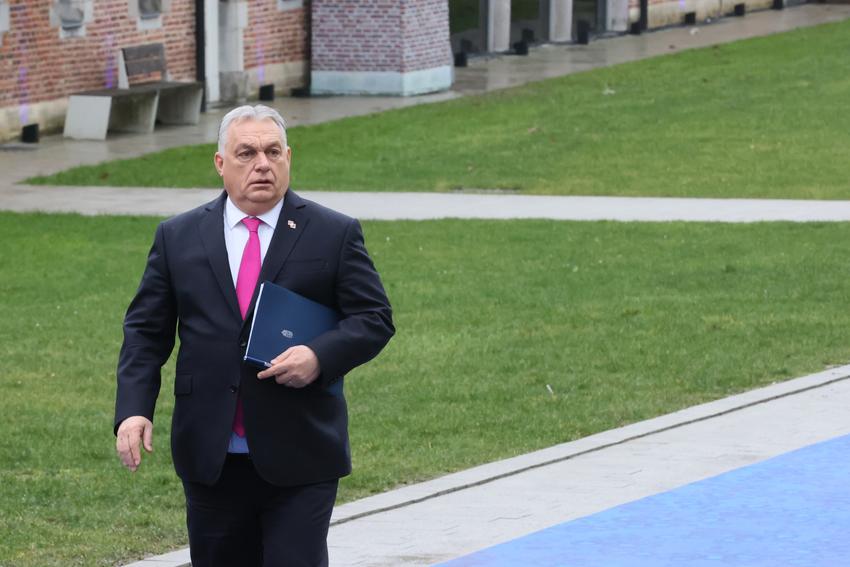
Hungarian voters on Sunday ousted long-serving Prime Minister Viktor Orban after 16 years in power, rejecting the authoritarian policies and global far-right movement that he embodied in favor of a pro-European challenger in a bombshell election result with global repercussions.

Election victor Péter Magyar, a former Orbán loyalist who campaigned against corruption and on everyday issues like health care and public transport, has pledged to rebuild Hungary’s relationships with the European Union and NATO — ties that frayed under Orban. European leaders quickly congratulated Magyar.

It’s not yet clear whether Magyar’s Tisza party will have the two-thirds majority in parliament to govern without a coalition. With 77% of the vote counted, it had more than 53% support to 38% for Orban’s governing Fidesz party.

It’s a stunning blow for Orban, a close ally of both U.S. President Donald Trump and Russian President Vladimir Putin. Orban conceded defeat after what he called a ″painful″ election result.

“I congratulated the victorious party,″ Orban told followers. “We are going to serve the Hungarian nation and our homeland from opposition,″ he said.

‘’Thank you, Hungary!” Magyar posted on X, as thousands of his supporters thronged the banks of the Danube in Budapest, chanting “We got it! We did it!”

Orban, the EU’s longest-serving leader and one of its biggest antagonists, who has traveled a long road from his early days as a liberal, anti-Soviet firebrand to the Russia-friendly nationalist admired today by the global far-right.

Turnout by 6:30 p.m. was over 77%, according to the National Election Office, a record number in any election in Hungary’s post-Communist history.

The parties of both Orban and Magyar said they had received reports of electoral violations, suggesting some results could be disputed by both sides.

“I’m asking our supporters and all Hungarians: Let’s stay peaceful, cheerful, and if the results confirm our expectations, let’s throw a big, Hungarian carnival,” Magyar said.

Mark Radnai, Tisza’s vice president, also called for reconciliation after a tense campaign. “We can’t be each other’s enemies. Reach out, hug your neighbors, your relatives. It’s the day of reunification.”

The EU will be waiting to see what Magyar does about Ukraine. Orban repeatedly frustrated EU efforts to support Ukraine in its war against Russia’s full-scale invasion, while cultivating close ties to Putin and refusing to end Hungary’s dependence on Russian energy imports.

Recent revelations have shown a top member of Orban’s government frequently shared the contents of EU discussions with Moscow, raising accusations that Hungary was acting on Russia’s behalf within the bloc.

Orban occupied an outsized role in far-right populist politics worldwide.

Members of Trump’s “Make America Great Again” movement are among those who see Orban’s government and his Fidesz political party as shining examples of conservative, anti-globalist politics in action, while he is reviled by advocates of liberal democracy and the rule of law.

Casting his ballot in Budapest, Marcell Mehringer, 21, said he was voting “primarily so that Hungary will finally be a so-called European country, and so that young people, and really everyone, will do their fundamental civic duty to unite this nation a bit and to break down these boundaries borne of hatred.”

During his 16 years as prime minister, Orban launched harsh crackdowns on minority rights and media freedoms, subverted many of Hungary’s institutions and been accused of siphoning large sums of money into the coffers of his allied business elite, an allegation he denies.

He also heavily strained Hungary’s relationship with the EU. Although Hungary is one of the smaller EU countries, with a population of 9.5 million, Orban has repeatedly used his veto to block decisions that require unanimity.

Most recently, he blocked a 90-billion euro ($104 billion) EU loan to Ukraine, prompting his partners to accuse him of hijacking the critical aid.

Magyar, 45, rapidly rose to become Orban’s most serious challenger.

Posted on Leave a comment

Italian PM condemns ally Trump over ‘unacceptable’ Pope criticism

Donald Trump’s remarks about Pope Leo XIV were “unacceptable”, Italian Prime Minister Giorgia Meloni has said.

The US president accused the pontiff of being “WEAK on Crime and terrible for Foreign Policy” in a long Truth Social post, later telling reporters he was “not a big fan”.

“The Pope is the head of the Catholic Church, and it is right and normal for him to call for peace and to condemn every form of war,” Meloni said in a statement.

Meloni, who is a Catholic and heads a right-wing coalition government, is a close ally of Trump and had so far been reluctant to condemn the US president’s harsh criticism of Pope Leo.

Italian opposition parties have criticised Meloni for failing to speak out promptly.

Her coalition partner Matteo Salvini, the leader of the populist League party, said that “attacking the Pope… doesn’t seem like a useful or intelligent thing to do.”

After Trump’s remarks, the Pope told reporters en route to Algeria that he did not want to get into a debate with Trump but would continue to promote peace.

Pope Leo has said he has “no fear” of the Trump administration and will continue to speak out against war after the US president launched an unusual and scathing attack over his stance on the Iran conflict.

He has been a staunch critic of the Iran war, calling Trump’s threat to destroy Iranian civilisation “unacceptable” and calling for him to find an “off-ramp” to end the conflict.

On Monday, Trump doubled down on his criticism, saying he would not apologise to the “very weak” Pope.

In general, it is rare for a Pope to directly address statements by world leaders.

There are more than 70 million Catholics in the US, about 20% of the population. They include Trump’s Vice-President JD Vance.

Trump’s comments came as the pontiff embarked on an 11-day trip to Africa, his second major foreign trip since being elected last year.

The US president wrote in Sunday’s post that the Pope “should get his act together” and said he was “weak on nuclear weapons”, apparently referring to Tehran’s attempts to become a nuclear power, cited as one of the reasons for the US and Israel going to war with Iran.

He also suggested that the pontiff was elected “because he was American, and they thought that would be the best way to deal with President Donald J Trump”.

“If I wasn’t in the White House, Leo wouldn’t be in the Vatican.”

Asked by reporters to explain the post, he later said: “I don’t think he’s doing a very good job, he likes crime, I guess.”

Trump added: “He’s a very liberal person, and he’s a man who doesn’t believe in stopping crime, he’s a man who doesn’t believe we should be toying with a country that wants a nuclear weapon so they can blow up the world.”

In response, the Pope told reporters on board his plane to Algiers that he did not see his role as that of a politician but as one of spreading the message of peace.

“I have no fear of the Trump administration, or speaking out loudly of the message of the gospel, which is what I believe I am here to do, what the Church is here to do,” he told reporters.

“I don’t want to get into a debate with [Trump],” he added. (BBC)

Posted on Leave a comment

Splashdown of Artemis II concludes 10-day moon mission

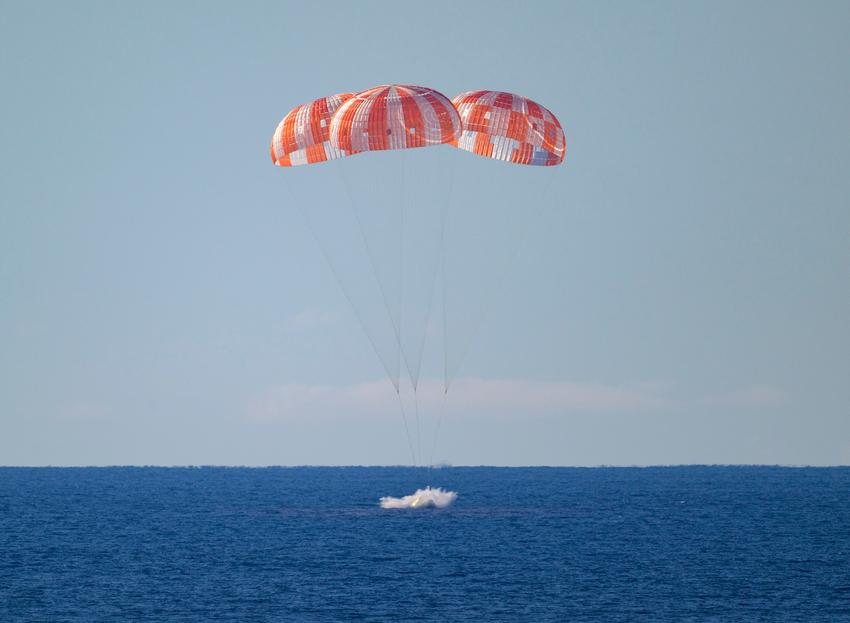
The Artemis II capsule and its four-member crew streaked through Earth’s atmosphere and safely splashed down in the Pacific Ocean on Friday after nearly 10 days in space, capping the first voyage by humans to the moon in over half a century.

NASA’s gumdrop-shaped Orion capsule, dubbed Integrity, ‌parachuted gently into calm seas off the southern California coast shortly after 5 p.m. PT, concluding a mission that took the astronauts deeper into space than anyone had flown before.

The Artemis II flight, traveling a total of 694,392 miles (1,117,515 km) across two Earth orbits and a climactic lunar flyby some 252,000 miles away, was the debut crewed test flight in a series of Artemis missions that aim to return astronauts to the ‌lunar surface starting in 2028.

The splashdown, about two hours before sunset, was carried by live video feed in a NASA webcast. “A ⁠perfect bull’s eye splashdown for Integrity and its four astronauts,” NASA commentator Rob Navias said moments after the landing.

Recovery teams were standing by ⁠to secure the floating capsule and retrieve ⁠the crew – U.S. astronauts Reid Wiseman, 50, Victor Glover, 49, and Christina Koch, 47, along with Canadian astronaut Jeremy Hansen, 50.

“We got a great view of the moon out window ‌2 – looks a little smaller than yesterday,” Wiseman, mission commander, radioed to mission control in Houston minutes before the crew dove into Earth’s atmosphere.

“Guess we’ll have to go back,” mission control ⁠replied.

The crew’s homecoming cleared a critical final hurdle for the Lockheed Martin-built Orion spacecraft, proving it would ⁠withstand the extreme forces of re-entry from a lunar-return trajectory.

It followed a white-knuckle, 13-minute fiery plunge through Earth’s atmosphere, generating frictional heat that sent temperatures on the capsule’s exterior soaring to some 5,000 degrees Fahrenheit (2,760 degrees Celsius).

At the peak of re-entry stress, as expected, intense heat and air compression formed a red-hot sheath of ionized gas, or plasma, that engulfed the capsule, cutting off radio communications with the crew for several minutes.

The tension broke as contact was re-established and two sets ⁠of parachutes were seen billowing from the nose of the free-falling capsule, slowing its descent to about 15 mph (25 kph) before Orion gently hit the water.

It was expected to take ⁠NASA and U.S. Navy teams about an hour to secure the floating ‌capsule, assist the four astronauts out of the vehicle, hoist them into helicopters hovering overhead and fly them to a nearby Navy ship, the USS John P. Murtha, to undergo an initial medical checkup.

The crew was expected to spend the night aboard the vessel and be flown on Saturday to Houston, where they would be reunited with family.