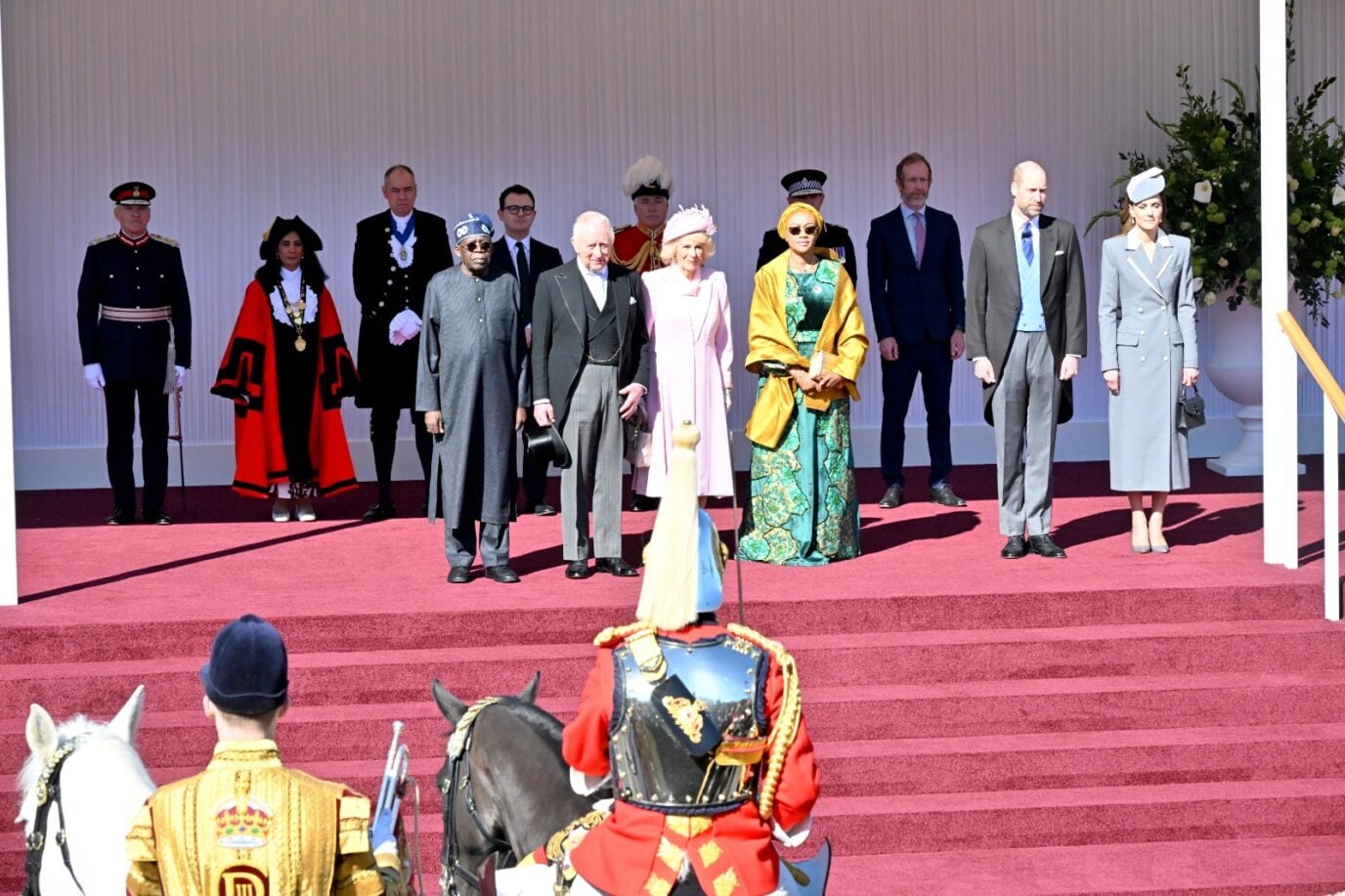
The UK’s King Charles III has welcomed Nigerian President Bola Tinubu at Windsor Castle in the first state visit by the leader of Africa’s most populous nation in nearly four decades.
More than 1,000 soldiers were out in force on Wednesday for the diplomatic show of soft power by the royal family.
With trade between the two countries at a record high, Charles is using the two-day visit to highlight the pair’s deep cultural and commercial links.
Tinubu has made less formal visits to the United Kingdom several times during his tenure, and the two countries remain major partners in trade, aid and defence. London is also home to a large Nigerian diaspora of about 300,000 people.
Nigeria’s presidency said the visit signalled a “renewed chapter” and reflected a shared commitment to “advancing trade and strengthening diplomatic ties”.
King Charles and Queen Camilla greeted the president and his wife in Windsor, west of London, as artillery fired salutes.
Both Nigerian flags and Union Jacks fluttered amid the procession.
The Nigerian president and his wife earlier chatted with heir-to-the-throne Prince William and his wife Catherine, at a hotel in the town.
Calling the visit “historic”, London announced Nigerian companies, including banks, are expanding operations and creating hundreds of jobs in the UK, strengthening it as a global hub for African business.
The party then rode in carriages to the historic Windsor Castle.
Later, the king and queen showed the president and first lady items from the UK’s colonial rule of Nigeria, which existed until 1960. (AlJazeera)
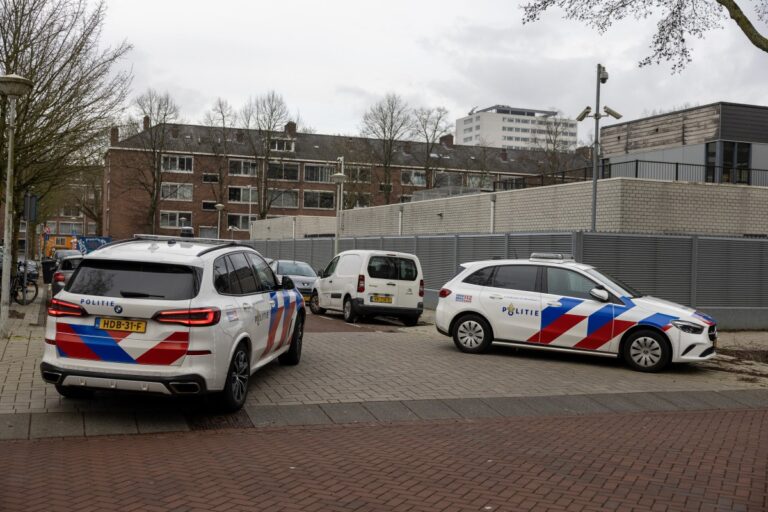
An overnight blast against an exterior wall of a Jewish school in Amsterdam did not cause any injuries, Mayor Femke Halsema said Saturday, denouncing “a cowardly act of aggression”.
An investigation has been opened and the incident comes after nighttime attacks this week in front of synagogues in the Belgian city of Liege and the Dutch port city of Rotterdam.
Haslema condemned the attack in a statement, noting that Amsterdam’s Jewish community has been “increasingly often confronted with antisemitism and this is unacceptable.”
“A school must be a place where children can attend classes in complete safety. Amsterdam must be a place where Jews can live in safety,” she said.
The police and fire departments quickly arrived at the scene of the blast in Buitenveldert district in the south of Amsterdam, the statement said.
“The material damage is limited,” the mayor said.
The police have CCTV footage of a person placing the explosive device, Halsema said.
Dutch Prime Minister Rob Jetten called the incident “terrible” on X and said “Antisemitism has no place in the Netherlands.”
“I understand the anger and fear this provokes, and I will quickly meet with the Jewish community. It must always feel safe in our country,” he added.
Israel’s foreign ministry also weighed in on X, saying: “In the Netherlands, an antisemitism epidemic is raging.”
“Where will the next attack be? The Dutch government needs to do much more to fight antisemitism,” the ministry wrote.
Following a similar attack Friday on a synagogue in Rotterdam, Jetten had condemned any act of violence or intimidation against the Jewish community or any other religious minority.
Four men suspected of being involved in the Rotterdam attack have been arrested, Dutch authorities announced Friday.
The series of attacks on synagogues comes after the launch of the US-Israeli war on Iran, a conflict that has since broadened across the Middle East.
On Monday, an explosion shook a synagogue in the Belgian city of Liege before dawn, causing some damage but no injuries.
It was strongly condemned by Belgian politicians and European Union officials.
On Thursday, a man rammed his car into a synagogue on the outskirts of Detroit, Michigan, sparking a blaze.
The suspect, identified as 41-year-old Ayman Mohamad Ghazali, died Friday from a “self-inflicted gunshot wound to the head,” an FBI official told reporters.
Media reports have indicated his relatives were killed in Israeli strikes on Lebanon in recent days.
Amid increasing violence and threats against the Jewish community in the United States, there has been a boost in demand for security services specifically protecting Jews, with officers stationed at schools, campuses and other buildings. (Channels)
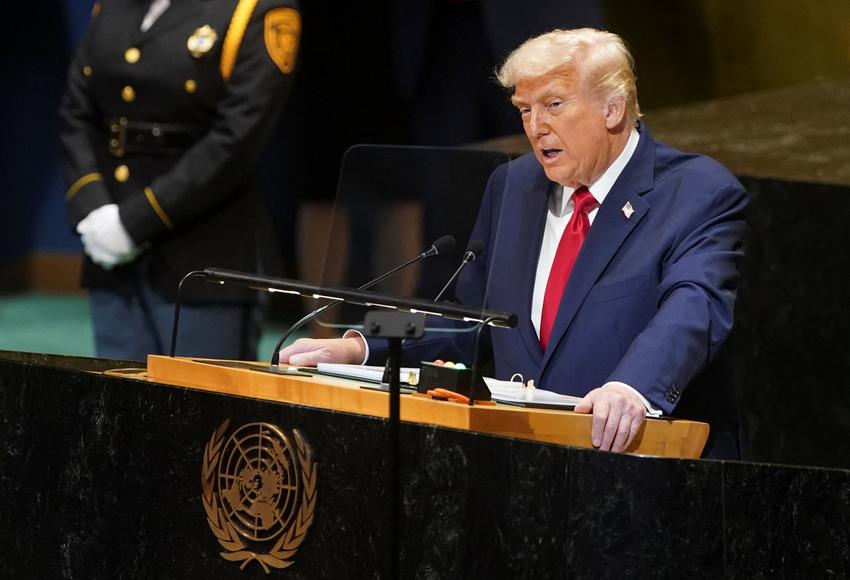
US President Donald Trump on Saturday urged other nations to send ships to help secure the Strait of Hormuz, the critical chokepoint for global oil supplies disrupted by the Mideast war.
Trump, who has said the United States will soon start escorting tankers through the strait, posted on Truth Social that “Many countries, especially those who are affected by Iran’s attempted closure of the Hormuz Strait, will be sending War Ships, in conjunction with the United States of America, to keep the Strait open and safe.”
The US president added: “Hopefully China, France, Japan, South Korea, the UK, and others, that are affected by this artificial constraint, will send Ships to the area.”
Iranian strikes have all but halted maritime traffic in the strait, through which a fifth of global crude oil and liquefied natural gas normally pass. It is just 54 kilometers (34 miles) wide at its narrowest point.
With oil prices spiking, Trump was asked Friday when the US Navy would begin escorting tankers through the Strait of Hormuz. “It’ll happen soon, very soon,” he said.
In his post on Saturday, Trump asserted that Iran’s military capability had been eliminated but he conceded that it was still able to attack the strait.
“We have already destroyed 100% of Iran’s Military capability, but it’s easy for them to send a drone or two, drop a mine, or deliver a close range missile somewhere along, or in, this Waterway, no matter how badly defeated they are,” he wrote.
As he urged nations to send ships to the strait, he added that “the United States will be bombing the hell out of the shoreline, and continually shooting Iranian Boats and Ships out of the water. One way or the other, we will soon get the Hormuz Strait OPEN, SAFE, and FREE!” (Channels)
President Donald Trump said he did not think it would be “appropriate” for the Iranian soccer team to attend this year’s World Cup, co-hosted by the United States, and cited safety concerns as a reason on Thursday while the countries remained embroiled in a war.
“The Iran National Soccer Team is welcome to The World Cup,” Trump wrote on his social media site, “but I really don’t believe it is appropriate that they be there, for their own life and safety.”
Iranian leaders said earlier this week that it’s “not possible” for the country to participate in the World Cup.
Trump’s message appears to depart somewhat from what the Republican president relayed Tuesday at the White House to FIFA President Gianni Infantino, who later publicly said that Trump assured him the Iranian players and coaches would be welcome.
A White House official, who insisted on anonymity to discuss private conversations, had confirmed Trump’s message to Infantino about Iran’s participation.
On Thursday, the White House did not immediately clarify what Trump meant by “their own life and safety,” such as whether he anticipated threats against them while in the United States after U.S. and Israeli strikes on Iran that began Feb 28.
Iran, one of 48 teams in the tournament, is scheduled to play in Inglewood, California, against New Zealand on June 15 and Belgium on June 21 before finishing group play in Seattle against Egypt on June 26. The U.S. is hosting the tournament with Canada and Mexico from June 11 to July 19.
Iran’s soccer federation has planned to take the team in June to a tournament base camp in Arizona, at the Kino Sports Complex in Tucson.
Since June, Iran has been subject to a travel ban into the U.S. as part of the Trump administration’s immigration crackdown. But athletes and coaches from the target nations are exempt, which means the Iranian team would be allowed to enter the U.S.
But there are also likely fears from Iranian soccer players about playing in a tournament abroad where they could be feted by an anti-regime diaspora while their families face threats back home.
The Iranian women’s soccer team, which arrived in Australia to play at its Asian Cup tournament before the U.S. and Israeli bombing attacks on Iran started, did not sing the Iranian national anthem before its first game. That was widely interpreted as a gesture of protest or an act of mourning. Several members of the team stayed in Australia on humanitarian visas afterward.
At the 2022 men’s World Cup, played in Qatar, the Iranian team did not sing the anthem before a game against England and did not celebrate the two goals scored in a 6-2 loss. At that time, Iran was in turmoil several weeks after the death in police custody of 22-year-old Mahsa Amini, who had been detained for allegedly violating a strict Islamic dress code.
FIFA’s own evaluation was “low risk” for World Cup safety and security plans proposed by the U.S., Canada and Mexico soccer federations, which are guaranteed by their governments. Trump has often taken credit for “winning” the World Cup hosting rights in 2018, when the three neighbors easily beat Morocco in a vote by FIFA member federations.
“All parties have experience of hosting major sports events on a regular basis and established arrangements are in place for managing security and safety at stadiums and for high-profile individuals,” FIFA’s in-house inspection team wrote eight years ago.
Iranian athletes who previously defied the Islamic regime have left the country to continue their careers.
Iran’s first female athlete to win an Olympic medal, Kimia Alizadeh, a bronze medalist at the 2016 Rio de Janeiro Games in taekwondo, criticized wearing the mandatory hijab headscarf. She competed for the Olympic refugee team at Tokyo in 2021 and for Bulgaria at the 2024 Paris Olympics.
Judoka Saeid Mollaei went into hiding in Germany after a dispute with Iranian team officials at the 2019 world championships. Mollaei, the defending champion, said he was ordered to lose a bout to avoid a potential gold medal match against an Israeli opponent. He got Mongolian citizenship and took silver at the 2020 Tokyo Olympics. (JapanToday)
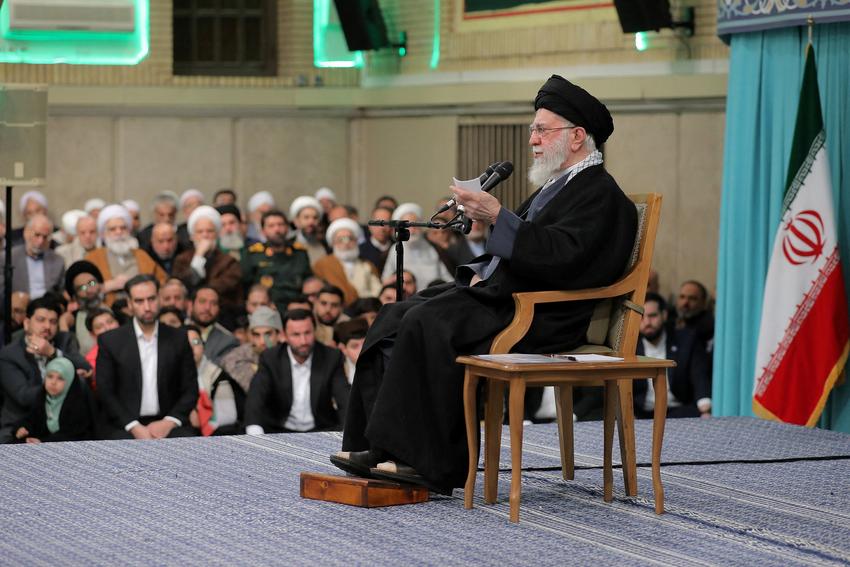
Iran on Monday named Mojtaba Khamenei to succeed his father Ali Khamenei as Supreme Leader, signaling that hardliners remain firmly in charge in Tehran a week into its conflict with the United States and Israel.
Mojtaba, a mid-ranking cleric with influence inside Iran’s security forces and vast business networks under his father, had been seen as a frontrunner in the lead up to the vote by the assembly, a body of 88 clerics charged with choosing the new leader after Ali Khamenei.
“By a decisive vote, the Assembly of Experts, appointed Ayatollah Seyyed Mojtaba Hosseini Khamenei as the third Leader of the sacred system of the Islamic Republic of Iran,” the assembly said in a statement issued just after midnight Tehran time.
The position gives Mojtaba the final say in all matters of state in the Islamic Republic.
Mojtaba’s appointment will likely draw the ire of U.S. President Donald Trump, who said on Sunday that Washington should have a say in the selection. “If he doesn’t get approval from us, he’s not going to last long,” he told ABC News. Israel, ahead of the announcement, threatened to target whoever was chosen.
Mojtaba’s father, Supreme Leader Ali Khamenei, was killed in one of the first strikes launched against Iran more than a week ago.
The U.S. military on Sunday reported a seventh American has died from wounds sustained during Iran’s initial counter-attack a week ago, a day after Trump presided over the return to the United States of the remains of the six others who died.
The U.S.-Israeli attacks have killed at least 1,332 Iranian civilians and wounded thousands, according to Iran’s U.N. ambassador.
As Trump pressed for an “unconditional surrender,” Mohammad Bagher Qalibaf, Iran’s parliament speaker, said Tehran was not seeking a ceasefire to the war and would punish aggressors.
Israel continued to target senior Iranian figures, including Abolqasem Babaian, the recently appointed head of the military office of the supreme leader, saying he was killed in a Saturday strike. (JapanToday)
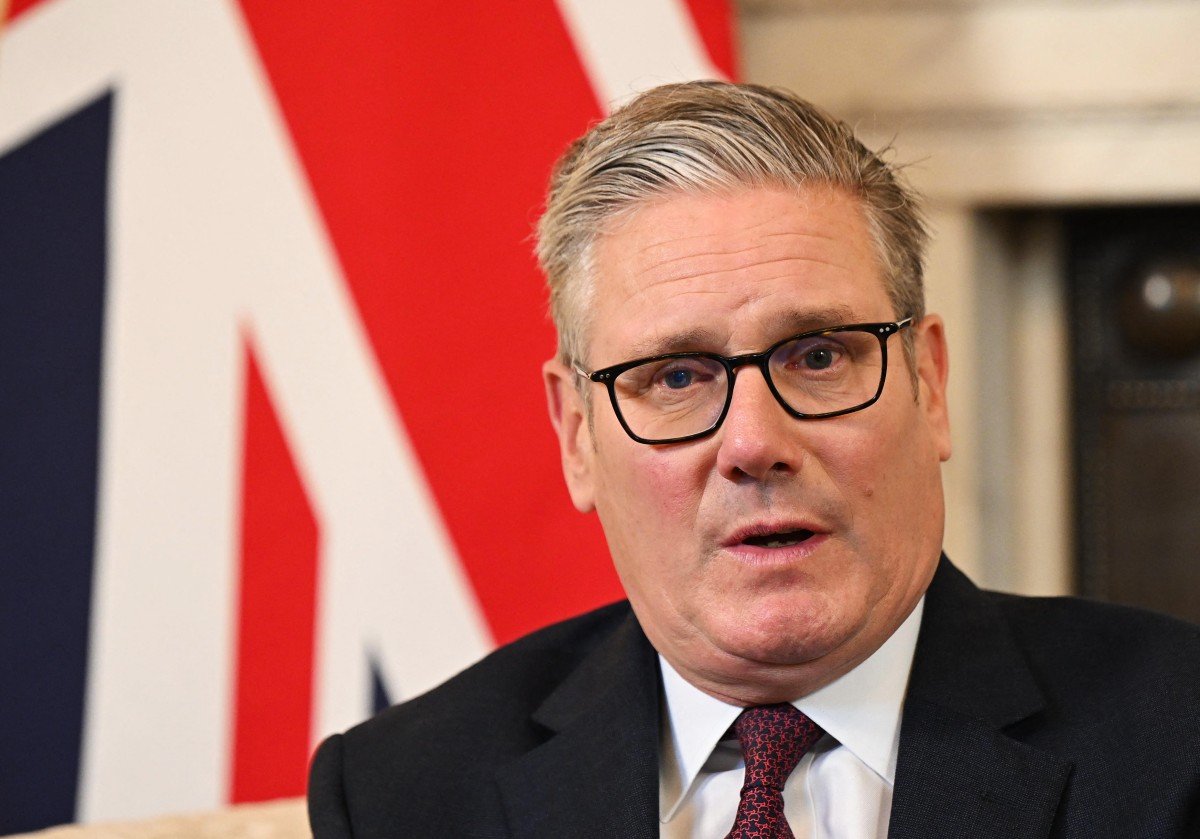
Sir Keir Starmer has defended the government’s approach to the conflict in Iran, saying protecting British nationals is his “number one priority”.
It comes after President Trump criticised the prime minister for refusing to allow the use of UK bases in the initial US-Israel strikes on Saturday, saying he is “no Winston Churchill”.
During Prime Minister’s Questions Conservative leader Kemi Badenoch accused Sir Keir of “asking our allies to do what we should be doing ourselves” by not taking “offensive action” after British bases in Bahrain and Cyprus were attacked.
But the PM said he was not prepared for the UK to join a war without “a lawful basis and a viable, thought-through plan”.
On Sunday the UK agreed to a US request to use British military bases but only for defensive strikes on Iranian missile sites.
However, Trump has responded angrily to Sir Keir’s refusal to be involved in the initial strikes, describing the decision as “shocking” and saying the UK-US relationship was “not what it was”.
Dismissing suggestions the relationship between the two countries had been weakened, Sir Keir said US planes operating out of British bases was “the special relationship in action” not “hanging on to President Trump’s latest words”.
Sir Keir said: “We’re taking action to reduce the threat with planes in the sky in the region intercepting incoming strikes, deploying more capability to Cyprus, and allowing US planes to use UK bases to take out Iran’s capability to strike.
“What I was not prepared to do on Saturday was for the UK to join a war unless I was satisfied there was a lawful basis and a viable, thought-through plan. That remains my position.”
The PM said the government had also been pre-deploying capabilities in the region for a number of weeks, including radar systems, ground-based air defence, counter-drone systems and F35 jets.
He added that wildcat helicopters with anti-drone capabilities would be in Cyprus this week, with a Royal Navy warship, HMS Dragon, also deployed to the region.
However, Badenoch accused the PM of “catching arrows rather than stopping the archer” in his approach.
“I would say to Labour MPs, we are in this war whether they like it or not. What is the prime minister waiting for?” she added.
She pointed out HMS Dragon was still in Portsmouth and the government “should be doing more”.
The Conservative leader also criticised the government for not investing more in defence.
In response, Sir Keir accused the Conservatives of cutting the defence budget, missing Army recruitment targets and leaving forces “hollowed out” when they were in government.
Following PMQs, western officials said HMS Dragon was expected to sail from Portsmouth next week, with the warship currently being loaded with ammunition.
Two Royal Navy Wildcat helicopters, armed with Martlet missiles capable of shooting down drones, are expected to arrive in Cyprus separately and sooner.
A western official said that so far US bombers have not used the British bases of Diego Garcia or RAF Fairford – but said the UK was ready to accept them. The official said he expected them to arrive within the next few days.
Earlier, former Conservative Foreign Secretary Jeremy Hunt said he thought the prime minister had “made a big misjudgement” by not allowing the US to use British military bases for offensive strikes on Iran.
He told BBC Radio 4’s Today programme that international law was “not settled on this issue” and depended on whether there was an imminent risk of attack from Iran.
Hunt said the Americans had a significant role in defending Europe and in this situation, “to weaken our alliance with the United States was a big mistake”.
“President Trump is not interested in that rules-based order,” Hunt said.
“He’s said so absolutely explicitly. And we have to recognise the brute strength of the American military is something we depend on now in Europe and will depend on for at least a decade.”
Gen Sir Richard Shirreff, a retired British Army officer, said the UK “has got to focus on its interests” because “America has made it clear it’s not going to underwrite European security”.
Sir Richard, Nato’s former deputy supreme allied commander Europe, said it was in Britain’s interest to protect its military bases abroad.
“There is absolutely a case for getting involved,” Sir Richard said. “But I would not get involved in any way, shape or form in an operation where the end-stage is not clear.
“There is clearly no strategy and yet again we have an American president who has launched a war of choice with no clear understanding where this thing is going to end.”
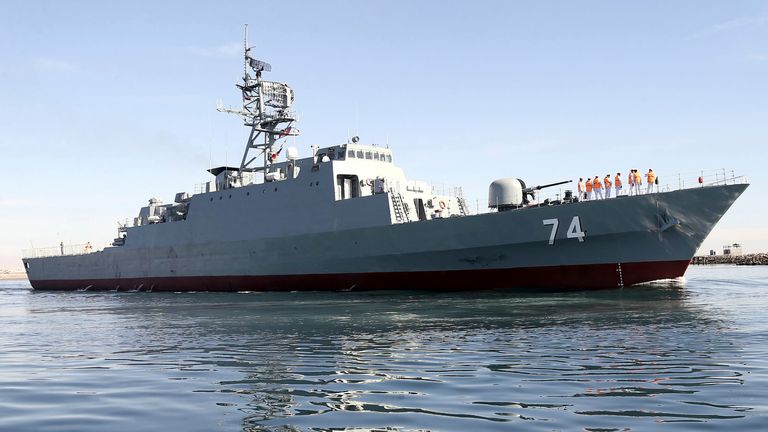
An American submarine sank an Iranian warship in the Indian Ocean, the US defence secretary has said.
Pete Hegseth said the ship was sunk by a torpedo on Tuesday and died a “quiet death”. He did not name the vessel.
His announcement came after Sri Lanka said its navy had responded to a distress call on Wednesday morning from an Iranian ship, the Iris Dena, which had gone down about 40km (25 miles) from its southern coastline.
Eighty bodies from the frigate were found by rescuers, a Sri Lankan defence official told BBC Sinhala. Another 32 were rescued, the country’s navy said.
Iran’s Foreign Minister Abbas Araghchi said the US had “perpetrated an atrocity at sea, 2,000 miles away from Iran’s shores”.
“Frigate Dena, a guest of India’s Navy carrying almost 130 sailors, was struck in international waters without warning,” he wrote in a post on X early on Thursday.
“Mark my words: The US will come to bitterly regret precedent it has set.”
A Sri Lankan navy spokesman said some 180 people were believed to have been aboard the Iris Dena, based on the ship’s documentation.
The survivors were “seriously injured” and had been taken to a hospital in the southern port of Galle, Sri Lankan Foreign Minister Vijitha Herath said.
Hegseth told a news conference on Wednesday thata US submarine had sunk an Iranian warship “that thought it was safe in international waters”.
He also claimed it was “the first sinking of an enemy ship by a torpedo since World War Two”.
While it is the first time since 1945 that an American submarine has sunk an enemy ship this way, the UK and Pakistan have both sunk vessels using torpedoes since then.
Video released by the US Department of Defense showed a ship being struck, causing the stern to rise up before exploding.
Earlier, Sri Lankan navy spokesman Budhika Sampath had rejected reports that the Iris Dena had been attacked by a submarine.
He added that, at the time rescue operations were launched, rescuers had not seen the vessel – nor any other ships in the region – but saw oil patches and life rafts floating on the water.
Though the ship’s location “was beyond our waters”, Sampath said, “it was within our search and rescue region. So we were obliged to respond as per international obligations”.
First launched in 2015, the Iris Dena is a destroyer attached to Iran’s Southern Fleet, which is tasked with deployments in the Strait of Hormuz and Gulf of Oman.
It had recently participated in International Fleet Review 2026, a military exercise hosted by India.
The sinking of the Iris Dena comes as the US and Israel have continued to launch air strikes on Iran for a fifth day, with the Israeli military saying it had hit “security headquarters” across the capital, Tehran, on Wednesday.
Israel has also conducted air strikes on Lebanon and has sent ground forces into the south of the country after armed group Hezbollah launched rockets and drones at Israel.
Iran appears to have continued to carry out retaliatory attacks. New strikes were reported in Saudi Arabia and Kuwait on Wednesday, while Turkey said “Nato defences” shot down an Iranian missile heading towards Turkish territory.
Sri Lanka has remained neutral in the conflict. It has refrained from taking any side, calling for “restraint and immediate de-escalation” from “all concerned parties”. (BBC)
Herath, its foreign affairs minister, paid tribute to Iranian Supreme Leader Ayatollah Khameini after he was assassinated on Saturday.
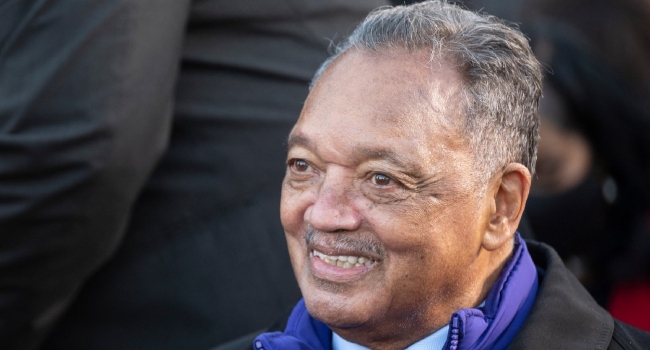
Former US presidents, celebrities and thousands of members of the public have gathered to honour civil rights leader, the Reverend Jesse Jackson, who died last month.
Former presidents Joe Biden, Barack Obama and Bill Clinton were among those who spoke at a memorial service in Chicago for the activist.
Mourners included former Vice President Kamala Harris, filmmaker Tyler Perry and former basketball star Isiah Thomas. The service also featured performances, including from singer and actress Jennifer Hudson.
Jackson, who worked alongside Martin Luther King Jr, twice ran to be the Democratic nominee for president and founded the Rainbow PUSH coalition, a social justice and civil rights non-profit.
While praising Jackson in his remarks at the service, Obama made a thinly veiled mention of US President Donald Trump. He said, “Each day we wake up to some new assault on our democratic institutions”.
He said the late reverend inspired people to take a harder path and called “on each of us to be heralds of change”.
Former Vice President Harris received a standing ovation when she spoke at the service. She appeared to take a jab at Trump, saying, “Let me just start out by saying: I predicted a lot of what is happening right now. I hate to say I told you so, but we did see it coming”.
But, she added, that she didn’t realise they would be tackling this moment without Jackson’s guidance.
Calling Jackson “impatient,” she noted, “He did not waste time waiting, even when the doors in front of him were barred and bolted, even if those on the other side hesitated or even ignored him. He always devised a way through”.
Civil rights leader, the Reverend Al Sharpton, who worked closely with Jackson during the civil rights movement, was also among the speakers. (BBC)
Pedro Sánchez has delivered a strong rebuttal to US President Donald Trump’s threat to end trade with Spain by restating his opposition to war and what he called the “breakdown of international law”.
In a 10-minute televised address, the Spanish prime minister reflected on the wars in Ukraine and Gaza, as well as the Iraq War more than 20 years ago, and said the Spanish government’s position could be summed up as “no to war”.
Trump threatened to impose a full trade embargo on Spain in response to its refusal to allow the US to use the jointly run bases at Morón and Rotafor to strike Iran.
“Spain has been terrible,” Trump said during a meeting with German Chancellor Friedrich Merz on Tuesday.
“We’re going to cut off all trade with Spain. We don’t want anything to do with Spain,” he added.
Merz said later he had told Trump very clearly that he could not conclude a separate trade agreement with Germany or all of Europe but not with Spain.
In response to the US economic threat, the Élysée Palace said French President Emmanuel Macron had conveyed his “solidarity” with Spain during a phone conversation with Sánchez on Wednesday. European Council President António Costa also said he had spoken to the Spanish leader “to express the EU’s full solidarity”.
Trump accused Spain on Tuesday of being a “terrible partner” in Nato for failing to increase its defence budget in line with a target of 5% of economic output (GDP).
Earlier this year, Sánchez drew Trump’s ire by speaking out against the US military incursion into Venezuela.
Sánchez said in his televised address from the prime minister’s official residence in Madrid on Wednesday that the government was studying economic measures to counter the impact of the conflict on Spaniards, though he avoided directly referring to Trump’s trade threat.
“The question is not if we are on the side of the ayatollahs [Iran’s clerical rulers] – nobody is. The question is whether we are in favour of peace and international legality,” he said.
“You cannot answer one illegality with another, because that is how the great catastrophes of humanity begin.”
Spain’s Socialist prime minister explained that the government’s position was comparable to its stance on Ukraine and Gaza. Sánchez has been a vociferous critic of Israel’s military response to the Hamas attacks in 2023.
Spain has been among Europe’s most outspoken governments on Gaza, describing Israel’s actions there as “genocide” and acknowledging a Palestinian state before many other EU members did.
That position was in step with his coalition partners to his left and, broadly speaking, with Spanish attitudes toward the Middle East.
Looking back to the invasion of Iraq in 2003, which he said had failed to achieve its goals and had made life worse for ordinary people, he warned that the attacks on Iran could have a similar economic impact for millions.
His reference to the Iraq invasion will connect with many Spanish voters. Spain’s support at the time from the conservative People’s Party (PP) government was deeply unpopular, and triggered mass anti-war protests.
Many believe it also lay the groundwork for the Socialist Party’s surprise election victory in March 2004, days after Madrid had been hit by deadly jihadist bombings.
Sánchez reminded Spaniards of the “Azores trio” – the then-US President George W Bush, the UK’s Tony Blair and Spanish conservative leader José María Aznar – who had met on a Portuguese base in the region days before the Iraq invasion.
He said they had handed Europeans the “gift” of “a more insecure world and worse life”.
The Spanish leader’s stance contrasts strongly with that of Merz, who told German TV on Tuesday that regime change in Iran would leave the world “a little better off”, though he also said this was “not without risk and we would also have to bear the consequences”.
Unlike Spain’s fellow Nato allies – the UK, France and Greece – it has not yet committed to any military involvement in response to the war.
White House press secretary Karoline Leavitt said on Wednesday that Spain had “agreed to co-operate” with the US military after hearing Trump’s message “loud and clear” – a claim Spanish foreign minister José Manuel Albares categorically denied, telling local media that his government’s position “has not changed one iota”. (BBC)
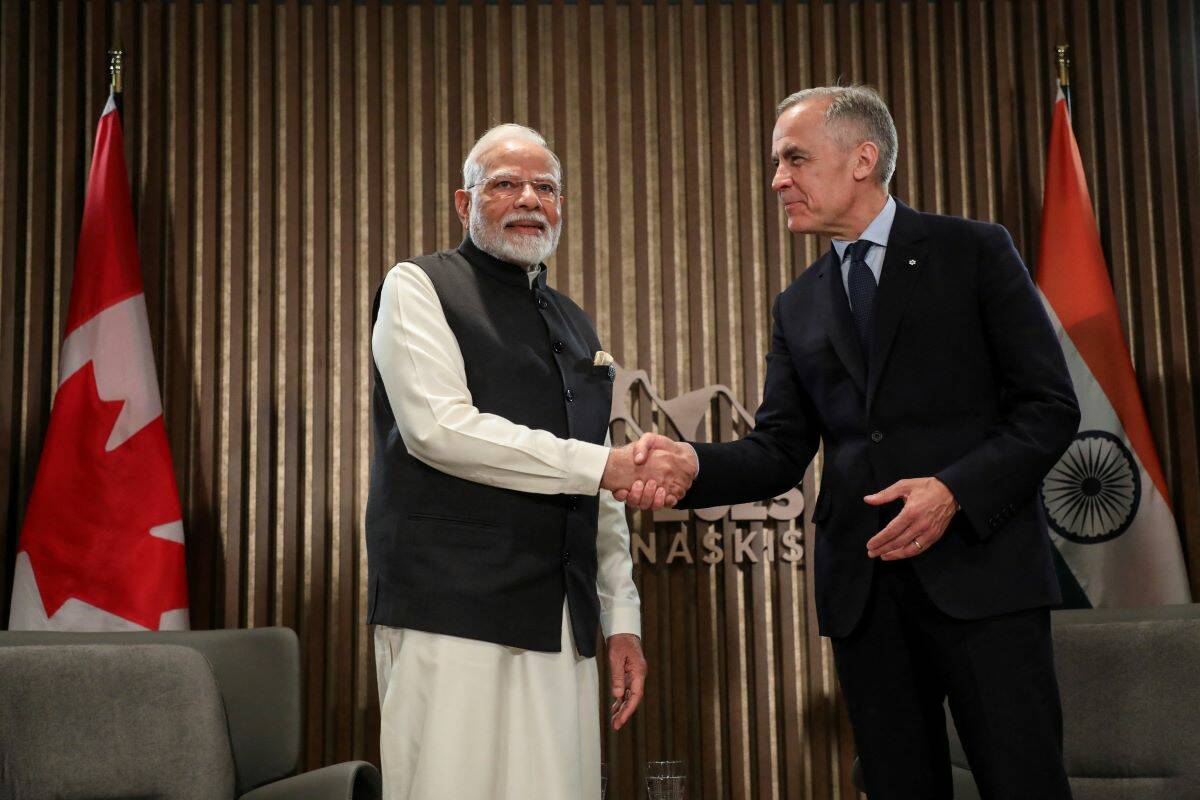
India and Canada have announced a host of agreements, including a 10-year nuclear energy deal, after their prime ministers met in Delhi to reset ties that plummeted due to diplomatic tensions.
Narendra Modi and Mark Carney also struck agreement in areas such as technology, critical minerals, space, defence and education.
Carney said they agreed to conclude a free trade deal, years in the making, by the end of 2026. Both countries want to reduce exposure to punitive US trade tariffs.
Under Carney, the two governments are trying to repair ties that were strained when his predecessor accused Delhi of a link to the 2023 assassination of Sikh separatist Hardeep Singh Nijjar on Canadian soil.
India vociferously rejected the allegation by Justin Trudeau.
Trade and diplomatic relations almost came to a standstill as both sides expelled each other’s diplomats and cancelled visa services. Canada hosts a huge expatriate Indian community.
But since Carney took office last year, the relationship has been cautiously rebuilt —helped by the fact that his government has said it believes India is not currently linked to violent crimes or threats on Canadian soil.
Some in Canada have countered that claim, however, including a Liberal MP from Carney’s own party and members of the Sikh diaspora in Canada, who say they believe they continue to be targeted by India.
Canada’s spy agency listed India late last year as one of the countries carrying out espionage and foreign interference in the country, along with Russia, China and Iran.
In a statement on Monday, the Canadian Security Intelligence Service said its “threat assessment of the main perpetrators of foreign interference and espionage against Canada has not changed”.
Canada’s foreign minister Anita Anand has distanced herself from comments made by a senior Canadian official saying that India had ceased all foreign interference in Canada.
“The words of the senior official are not words that I personally would use,” she told reporters in Delhi after Carney’s meeting with Modi on Monday.
But Anand defended Canada’s decision to re-engage with India, saying “we need to have these diplomatic conversations in order to make progress”.
Carney has not yet spoken to Canadian reporters since his trip began. His office cancelled a planned news conference following the meeting with Modi, citing his tight schedule.
The case of four men charged over Nijjar’s killing is still before the courts.
At talks in Delhi, both Carney and Modi underscored India and Canada’s long-standing relationship, mutual goals and close people-to-people ties.
“In civil nuclear energy, we have reached a landmark deal for long-term uranium supply. We will also work together on small modular reactors and advanced reactors,” Modi told reporters after their meeting at Hyderabad House in Delhi.
He described the two countries as “natural partners in technology and innovation” and said they would enhance co-operation in AI, supercomputing and semiconductors, as well as jointly host a renewable energy summit.
Carney said Canada was well positioned to contribute to energy-hungry India’s nuclear fuel needs and added that the two countries were launching a strategic energy partnership.
He hailed the progress made in rebuilding relations.
“There has been more engagement between the Canadian and Indian governments in the last year than there has been in more than two decades combined,” he said.
On trade, Modi said: “Our target is to reach $50bn in bilateral trade. This is why we have decided to finalise a comprehensive economic partnership soon.”
Carney said he wanted to reach a deal on the “ambitious agreement” by the end of the year. It’s been discussed on-and-off for the past 15 years so concluding it would be a significant achievement.
Analysts say that Carney’s decision to put diplomatic tensions behind him and extend an olive branch to India is a pragmatic one, based on present day geopolitical shifts.
The same holds true for India, which is looking to forge new trade partnerships to diversify its imports and also reduce its reliance on Russia for its energy needs.
Surveys suggest a majority of the Canadian public support re-engaging with India. One recent poll conducted by Angus Reid found that half believe it is the “right time” to restore ties.
The poll also suggests that more Canadians have a favourable view of India (30%) than of the US (26%), as Canada continues to be squeezed by tariffs imposed by the Trump administration.
Earlier on Monday, Carney met India’s Foreign Minister S Jaishankar where the two discussed charting a “forward-looking partnership”.
Carney’s four-day trip began with a visit to the financial capital, Mumbai, where he met business leaders and ministers on 28 February with a view to boost trade and investment in India.
After concluding his trip in Delhi, Carney is set to travel to Australia and then Japan as part of his strategy to diversify Canada’s trade and invite new investments. (BBC)

 English