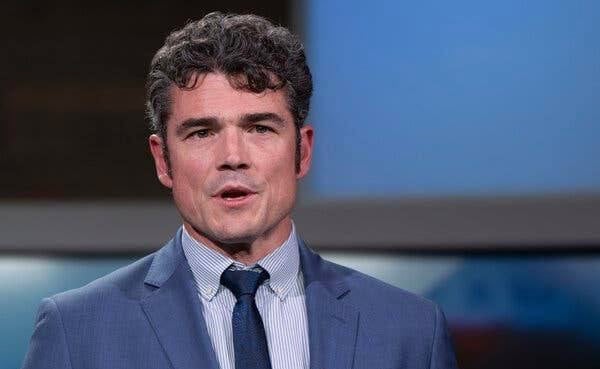
Joseph Kent, former director of director of the US National Counterterrorism Center (NCTC), is reportedly under probe by the Federal Bureau of Investigation (FBI) over allegations of classified information leaks.
The NCTC serves as the primary US government organisation for integrating and analysing terrorism-related intelligence from across federal agencies.
Kent resigned from his position on Tuesday over America’s involvement in the ongoing Iran conflict, saying he could not support the war against Tehran in good conscience.
“Iran posed no imminent threat to our nation, and it is clear that we started this war due to pressure from Israel and its powerful American lobby,” he said in a statement.
A report by Semafor said sources within FBI revealed that Kent is facing probe over allegations that he improperly shared classified information.
One of the sources said the probe predates Kent’s departure having been in progress for months.
According to the New York Times, the probe came after a coordinated Trump administration effort to discredit Kent as untrustworthy and disloyal.
On February 28, Israel launched what they called pre-emptive missile strikes on Iran. Hours after the announcement, President Donald Trump said the strikes were in collaboration with the United States.
Iran has continue to exchange strikes and counterstrikes with the US-Israel fighters. (TheCable)
Another three members of the Iran’s women’s soccer team who accepted refugee visas to stay in Australia have decided to return to their homeland, an Australian government minister said on Sunday.
The departure leaves three of an initial seven squad members in Australia.
“Overnight, three members of the Iranian Women’s Football Team made the decision to join the rest of the team on their journey back to Iran,” Home Affairs Minister Tony Burke said in a statement.
“After telling Australian officials they had made this decision, the players were given repeated chances to talk about their options,” Burke added.
Iran’s team arrived in Australia for the Women’s Asian Cup last month, before the war in the Middle East began on Feb. 28.
Initially, six players and a support staff member from a squad list of 26 players accepted humanitarian visas to stay in Australia before the rest of the Iranian contingent flew from Sydney to Malaysia on March 9.
Another later changed her mind and left Australia. Three left Sydney for Kuala Lumpur, Malaysia, on Saturday night, a government official said. The rest of the team has remained in Kuala Lumpur since they left Australia.
Concerns about the team’s safety in Iran heightened when the players didn’t sing the Iranian national anthem before their first match.
The Australian government was urged to help the woman by Iranian groups in Australia and by U.S. President Donald Trump. (JapanToday)
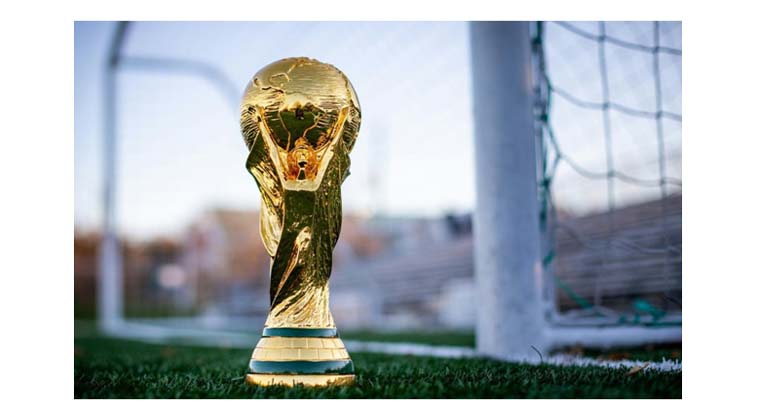
Mexican President Claudia Sheinbaum said on Tuesday that her country is prepared to host Iran’s first-round matches at the 2026 World Cup if needed due to the conflict in the Middle East.
Iran’s participation at this summer’s finals in the United States, Canada and Mexico has been in doubt since the war began last month, with President Donald Trump warning that Iranian players’ safety would be at risk if they travelled to the U.S.
Iran’s football federation has opened talks with FIFA about potentially relocating its matches from the United States, though the global governing body has so far maintained that the tournament’s schedule remains unchanged.
Asked directly if Mexico was open to hosting the matches, and if the decision will purely come down to FIFA logistics, Sheinbaum told a press conference: “Yes.”
“Mexico maintains diplomatic relations with every country in the world, therefore we will wait to see what FIFA decides,” she added.
Iran’s place at the tournament was thrown into question after the U.S. and Israel launched a massive offensive against the Islamic Republic, which responded with waves of missiles and drones targeting Israeli territory and American targets across the Middle East.
FIFA President Gianni Infantino initially said that Trump had given assurances that the Iranian team — scheduled to face New Zealand and Belgium in Los Angeles, followed by Egypt in Seattle — would still be welcome.
But the Republican president then triggered uproar last week after stating that Iran’s football team should not travel to the tournament “for their own life and safety”.
Iran hit back at Trump’s comments saying that “no one can exclude Iran’s national team from the World Cup”.
Iran were the second Asian team after Japan to qualify for the World Cup, securing their place almost a year ago as they topped their qualifying group.
On Monday, Iranian soccer chief Mehdi Taj wrote on social media: “When Trump has explicitly stated that he cannot ensure the security of the Iranian national team, we will certainly not travel to America.
“We are currently negotiating with FIFA to hold Iran’s matches in the World Cup in Mexico.”
Iranian soccer authorities “are currently discussing with FIFA whether it is feasible — since they were originally scheduled to go to the United States — to see if they can” move Iran’s games to Mexico, confirmed Sheinbaum. “The matter is under review and we will provide an update in due course.”
When contacted by AFP on the matter, FIFA said it was “looking forward to all participating teams competing as per the match schedule announced on 6 December 2025”.
“FIFA is in regular contact with all participating member associations, including IR Iran, to discuss planning for the FIFA World Cup 2026,” a spokesperson said.
The Iran team’s base camp for the tournament is currently slated to be located in Tucson, Arizona.
Abolfazl Pasandideh, Iran’s ambassador to Mexico, on Monday denounced “the U.S. government’s lack of cooperation regarding visa issuance and the provision of logistical support” for the Iranian delegation ahead of the World Cup, in a statement published on the embassy’s website.
Should Iran not take part in the World Cup, it is not yet clear which country might replace them. (JapanToday)
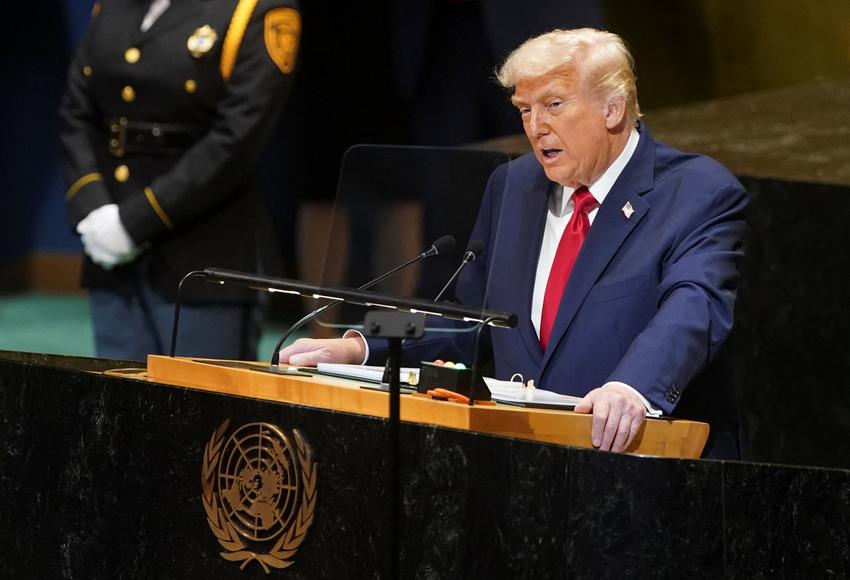
US President Donald Trump on Saturday urged other nations to send ships to help secure the Strait of Hormuz, the critical chokepoint for global oil supplies disrupted by the Mideast war.
Trump, who has said the United States will soon start escorting tankers through the strait, posted on Truth Social that “Many countries, especially those who are affected by Iran’s attempted closure of the Hormuz Strait, will be sending War Ships, in conjunction with the United States of America, to keep the Strait open and safe.”
The US president added: “Hopefully China, France, Japan, South Korea, the UK, and others, that are affected by this artificial constraint, will send Ships to the area.”
Iranian strikes have all but halted maritime traffic in the strait, through which a fifth of global crude oil and liquefied natural gas normally pass. It is just 54 kilometers (34 miles) wide at its narrowest point.
With oil prices spiking, Trump was asked Friday when the US Navy would begin escorting tankers through the Strait of Hormuz. “It’ll happen soon, very soon,” he said.
In his post on Saturday, Trump asserted that Iran’s military capability had been eliminated but he conceded that it was still able to attack the strait.
“We have already destroyed 100% of Iran’s Military capability, but it’s easy for them to send a drone or two, drop a mine, or deliver a close range missile somewhere along, or in, this Waterway, no matter how badly defeated they are,” he wrote.
As he urged nations to send ships to the strait, he added that “the United States will be bombing the hell out of the shoreline, and continually shooting Iranian Boats and Ships out of the water. One way or the other, we will soon get the Hormuz Strait OPEN, SAFE, and FREE!” (Channels)
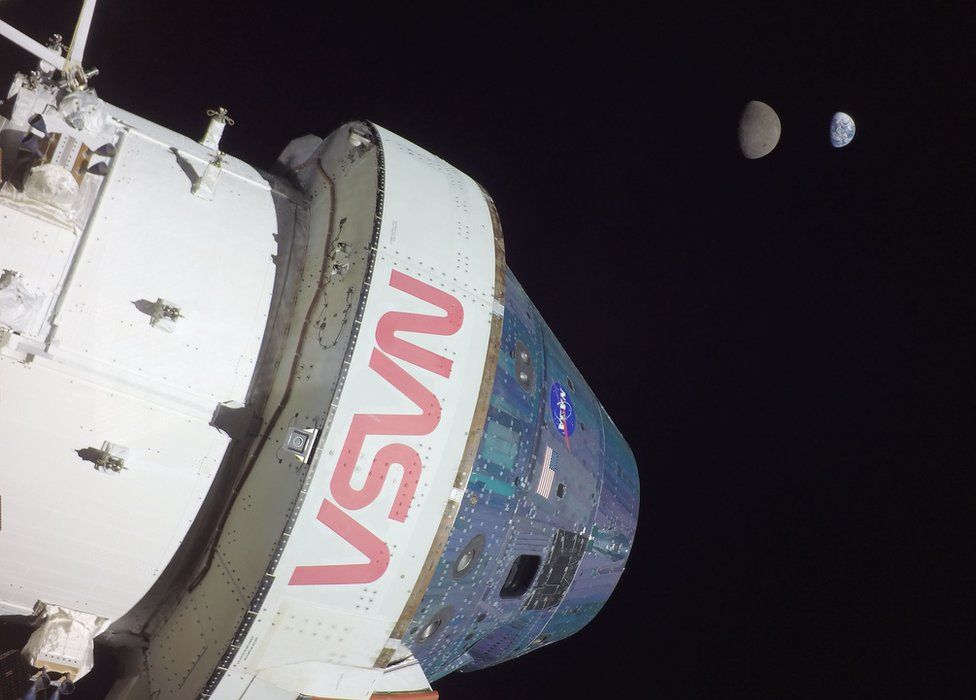
NASA said Thursday that the long-delayed launch of Artemis 2, the first crewed flyby mission to the Moon in more than 50 years, could come as soon as April 1.
“We are on track for a launch as early as April 1, and we are working toward that date,” Lori Glaze, a senior NASA official, told a press conference, after technical difficulties delayed a launch originally expected in February.
“It’s a test flight, and it is not without risk, but our team and our hardware are ready,” she said. “Just keep in mind we still have work” to do.
The US space agency announced in February a sudden revamp of the Artemis program, including the addition of a test mission before an eventual lunar landing.
The first launch window would be Wednesday, April 1, at 6:24 pm (2224 GMT), with several others available in the following days.
“We would anticipate on the order of about four opportunities within that six-day period,” Glaze said.
The Artemis 2 mission is meant to be the first flyby of the Moon in more than half a century.
The rocket will be crewed by three American astronauts — mission commander Reid Wiseman, Victor Glover and Christina Koch — and Canadian astronaut Jeremy Hansen.
After launch, NASA diagrams indicate Artemis 2 will circumnavigate Earth before leaving orbit to travel to the Moon, without landing, for a lunar flyby before returning to Earth and splashing down in the ocean.
“Exactly how close the Artemis II crew will fly to the Moon will depend on when they launch,” ranging from 4,000 to 6,000 miles (6,437 to 9,656 km) above the lunar surface, because the Moon will “be in a different spot for each of the possible launch dates.”
The first Artemis flew much closer to the Moon — 80 miles above the surface — but NASA said Artemis 2 will still go “tens of thousands of miles closer than any human has been in more than 50 years.”
“At this distance the Moon will appear to the crew to be about the size of a basketball held at arm’s length.”
The mission is to be followed by Artemis 3 with the goal of “rendezvous in low-Earth orbit” of at least one lunar lander.
The next phase, Artemis 4, aims for a lunar landing in early 2028, after President Donald Trump announced during his first term that he wanted Americans to once again set foot on the Moon. (Punch)
President Donald Trump said he did not think it would be “appropriate” for the Iranian soccer team to attend this year’s World Cup, co-hosted by the United States, and cited safety concerns as a reason on Thursday while the countries remained embroiled in a war.
“The Iran National Soccer Team is welcome to The World Cup,” Trump wrote on his social media site, “but I really don’t believe it is appropriate that they be there, for their own life and safety.”
Iranian leaders said earlier this week that it’s “not possible” for the country to participate in the World Cup.
Trump’s message appears to depart somewhat from what the Republican president relayed Tuesday at the White House to FIFA President Gianni Infantino, who later publicly said that Trump assured him the Iranian players and coaches would be welcome.
A White House official, who insisted on anonymity to discuss private conversations, had confirmed Trump’s message to Infantino about Iran’s participation.
On Thursday, the White House did not immediately clarify what Trump meant by “their own life and safety,” such as whether he anticipated threats against them while in the United States after U.S. and Israeli strikes on Iran that began Feb 28.
Iran, one of 48 teams in the tournament, is scheduled to play in Inglewood, California, against New Zealand on June 15 and Belgium on June 21 before finishing group play in Seattle against Egypt on June 26. The U.S. is hosting the tournament with Canada and Mexico from June 11 to July 19.
Iran’s soccer federation has planned to take the team in June to a tournament base camp in Arizona, at the Kino Sports Complex in Tucson.
Since June, Iran has been subject to a travel ban into the U.S. as part of the Trump administration’s immigration crackdown. But athletes and coaches from the target nations are exempt, which means the Iranian team would be allowed to enter the U.S.
But there are also likely fears from Iranian soccer players about playing in a tournament abroad where they could be feted by an anti-regime diaspora while their families face threats back home.
The Iranian women’s soccer team, which arrived in Australia to play at its Asian Cup tournament before the U.S. and Israeli bombing attacks on Iran started, did not sing the Iranian national anthem before its first game. That was widely interpreted as a gesture of protest or an act of mourning. Several members of the team stayed in Australia on humanitarian visas afterward.
At the 2022 men’s World Cup, played in Qatar, the Iranian team did not sing the anthem before a game against England and did not celebrate the two goals scored in a 6-2 loss. At that time, Iran was in turmoil several weeks after the death in police custody of 22-year-old Mahsa Amini, who had been detained for allegedly violating a strict Islamic dress code.
FIFA’s own evaluation was “low risk” for World Cup safety and security plans proposed by the U.S., Canada and Mexico soccer federations, which are guaranteed by their governments. Trump has often taken credit for “winning” the World Cup hosting rights in 2018, when the three neighbors easily beat Morocco in a vote by FIFA member federations.
“All parties have experience of hosting major sports events on a regular basis and established arrangements are in place for managing security and safety at stadiums and for high-profile individuals,” FIFA’s in-house inspection team wrote eight years ago.
Iranian athletes who previously defied the Islamic regime have left the country to continue their careers.
Iran’s first female athlete to win an Olympic medal, Kimia Alizadeh, a bronze medalist at the 2016 Rio de Janeiro Games in taekwondo, criticized wearing the mandatory hijab headscarf. She competed for the Olympic refugee team at Tokyo in 2021 and for Bulgaria at the 2024 Paris Olympics.
Judoka Saeid Mollaei went into hiding in Germany after a dispute with Iranian team officials at the 2019 world championships. Mollaei, the defending champion, said he was ordered to lose a bout to avoid a potential gold medal match against an Israeli opponent. He got Mongolian citizenship and took silver at the 2020 Tokyo Olympics. (JapanToday)
Iran’s sports and youth minister said it’s “not possible” for the country to take part in the World Cup after the United States killed its supreme leader, Ayatollah Ali Khamenei, in its ongoing war.
Iran was expected to take part in the World Cup that will be held across North America in June, but Iranian Sports and Youth Minister Ahmad Donyamali told state television that his country’s soccer team players are not safe in the U.S., according to a video of the interview posted Tuesday.
“Due to the wicked acts they have done against Iran — they have imposed two wars on us over just eight or nine months and have killed and martyred thousands of our people — definitely it’s not possible for us to take part in the World Cup,” he said.
Iran is scheduled to play in Inglewood, California, against New Zealand on June 15 and Belgium on June 21 before finishing group play against Egypt in Seattle on June 26. The U.S. is hosting the tournament with Canada and Mexico from June 11 to July 19.
FIFA said Tuesday night that it anticipates that Iran’s national team will be allowed to come to the United States.
Last week, U.S. President Donald Trump said “I really don’t care” if Iran takes part in the 48-nation tournament.
FIFA President Gianni Infantino said he met with Trump on Tuesday night “to discuss the status of preparations” for the tournament. During the meeting, Trump “reiterated that the Iranian team is, of course, welcome to compete in the tournament in the United States,” Infantino wrote in an Instagram post.
A White House official, granted anonymity to discuss private conversations, confirmed Trump’s message to Infantino about Iran’s participation.
Since June, Iran has been subject to a travel ban into the U.S. as part of the Trump administration’s immigration crackdown. But athletes and coaches from the target nations are exempt, which means the Iranian team would be allowed to enter. (JapanToday)
Australia has granted asylum to five members of the Iranian women’s soccer team who were visiting the country for a tournament, Australia’s Home Affairs Minister Tony Burke said Tuesday.
The women were transported from their hotel in Gold Coast, Australia “to a safe location” by Australian federal police officers in the early hours of Tuesday morning local time. There, they met with Burke and the processing of their humanitarian visas finalized, the minister told reporters in Brisbane hours later.
“I say to the other members of the team the same opportunity is there,” Burke said. “Australia has taken the Iranian women’s soccer team into our hearts.”
Burke’s announcement came after U.S. President Donald Trump on Monday called on Australia to grant asylum to any team member who wanted it.
The Iranian team arrived in Australia for the Women’s Asian Cup last month, before the Iran war began. The team was knocked out of the tournament over the weekend and was facing the prospect of returning to a country under bombardment. Iran’s head coach Marziyeh Jafari on Sunday said the players “want to come back to Iran as soon as we can,” according to Australia’s national news agency, AAP.
Earlier Monday, Trump had blasted Australia on social media, saying Australia was “making a terrible humanitarian mistake by allowing the … team to be forced back to Iran, where they will most likely be killed.” Trump called on Australia to grant the team asylum, adding: “The U.S. will take them if you won’t.” Less than two hours later, in another social media post, Trump praised Australian Prime Minister Anthony Albanese, saying, “He’s on it! Five have already been taken care of, and the rest are on their way.”
Trump also said that some players “feel they must go back because they are worried about the safety of their families, including threats to those family members if they don’t return.”
Trump’s offer of asylum represented something of a change for the president, whose administration has sought to limit the number of immigrants who can receive asylum for political purposes.
During the tournament, the players have mostly declined to comment on the situation at home, although Iran forward Sara Didar choked back tears in a news conference on Wednesday as she shared their concerns for their families, friends and all Iranians during the conflict.
The team’s silence during the anthem before an opening loss to South Korea last week was viewed by some as an act of resistance and others as a show of mourning. The team hasn’t clarified. They later sang and saluted during the anthem before their remaining two matches. (JapanToday)
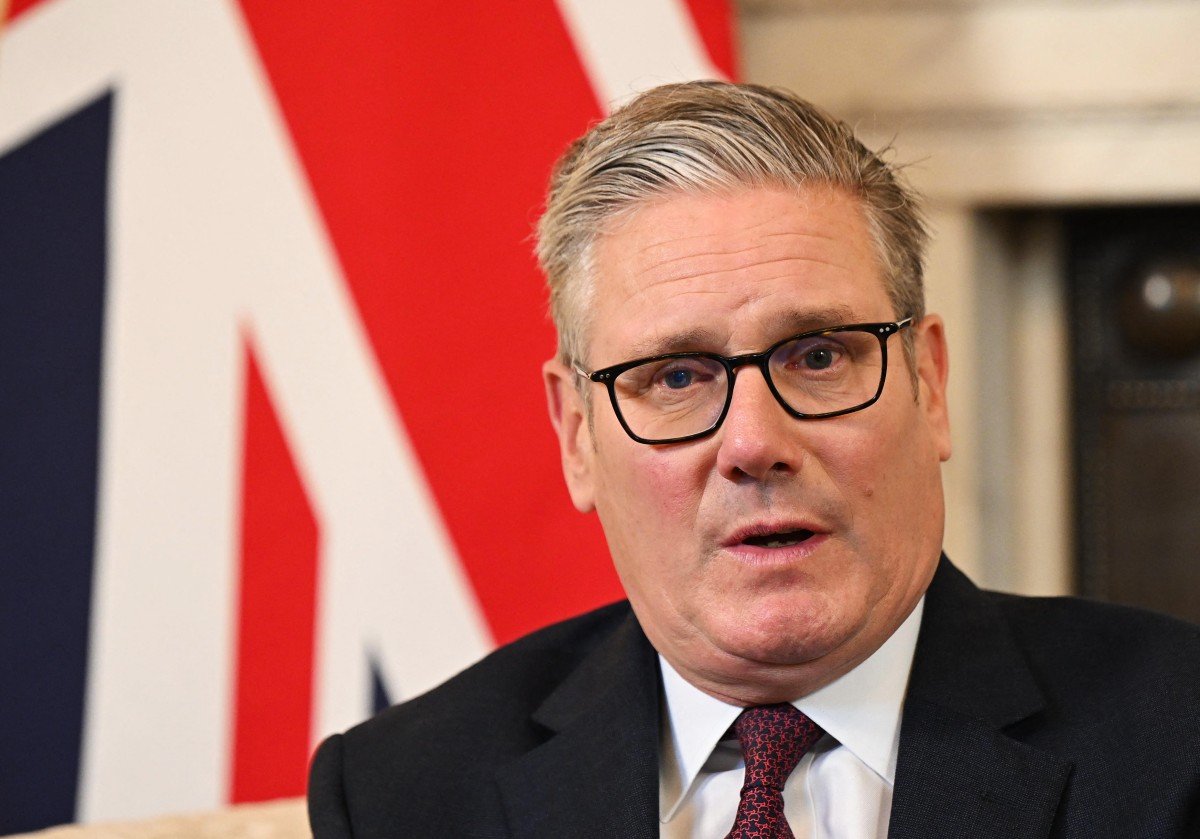
Sir Keir Starmer has defended the government’s approach to the conflict in Iran, saying protecting British nationals is his “number one priority”.
It comes after President Trump criticised the prime minister for refusing to allow the use of UK bases in the initial US-Israel strikes on Saturday, saying he is “no Winston Churchill”.
During Prime Minister’s Questions Conservative leader Kemi Badenoch accused Sir Keir of “asking our allies to do what we should be doing ourselves” by not taking “offensive action” after British bases in Bahrain and Cyprus were attacked.
But the PM said he was not prepared for the UK to join a war without “a lawful basis and a viable, thought-through plan”.
On Sunday the UK agreed to a US request to use British military bases but only for defensive strikes on Iranian missile sites.
However, Trump has responded angrily to Sir Keir’s refusal to be involved in the initial strikes, describing the decision as “shocking” and saying the UK-US relationship was “not what it was”.
Dismissing suggestions the relationship between the two countries had been weakened, Sir Keir said US planes operating out of British bases was “the special relationship in action” not “hanging on to President Trump’s latest words”.
Sir Keir said: “We’re taking action to reduce the threat with planes in the sky in the region intercepting incoming strikes, deploying more capability to Cyprus, and allowing US planes to use UK bases to take out Iran’s capability to strike.
“What I was not prepared to do on Saturday was for the UK to join a war unless I was satisfied there was a lawful basis and a viable, thought-through plan. That remains my position.”
The PM said the government had also been pre-deploying capabilities in the region for a number of weeks, including radar systems, ground-based air defence, counter-drone systems and F35 jets.
He added that wildcat helicopters with anti-drone capabilities would be in Cyprus this week, with a Royal Navy warship, HMS Dragon, also deployed to the region.
However, Badenoch accused the PM of “catching arrows rather than stopping the archer” in his approach.
“I would say to Labour MPs, we are in this war whether they like it or not. What is the prime minister waiting for?” she added.
She pointed out HMS Dragon was still in Portsmouth and the government “should be doing more”.
The Conservative leader also criticised the government for not investing more in defence.
In response, Sir Keir accused the Conservatives of cutting the defence budget, missing Army recruitment targets and leaving forces “hollowed out” when they were in government.
Following PMQs, western officials said HMS Dragon was expected to sail from Portsmouth next week, with the warship currently being loaded with ammunition.
Two Royal Navy Wildcat helicopters, armed with Martlet missiles capable of shooting down drones, are expected to arrive in Cyprus separately and sooner.
A western official said that so far US bombers have not used the British bases of Diego Garcia or RAF Fairford – but said the UK was ready to accept them. The official said he expected them to arrive within the next few days.
Earlier, former Conservative Foreign Secretary Jeremy Hunt said he thought the prime minister had “made a big misjudgement” by not allowing the US to use British military bases for offensive strikes on Iran.
He told BBC Radio 4’s Today programme that international law was “not settled on this issue” and depended on whether there was an imminent risk of attack from Iran.
Hunt said the Americans had a significant role in defending Europe and in this situation, “to weaken our alliance with the United States was a big mistake”.
“President Trump is not interested in that rules-based order,” Hunt said.
“He’s said so absolutely explicitly. And we have to recognise the brute strength of the American military is something we depend on now in Europe and will depend on for at least a decade.”
Gen Sir Richard Shirreff, a retired British Army officer, said the UK “has got to focus on its interests” because “America has made it clear it’s not going to underwrite European security”.
Sir Richard, Nato’s former deputy supreme allied commander Europe, said it was in Britain’s interest to protect its military bases abroad.
“There is absolutely a case for getting involved,” Sir Richard said. “But I would not get involved in any way, shape or form in an operation where the end-stage is not clear.
“There is clearly no strategy and yet again we have an American president who has launched a war of choice with no clear understanding where this thing is going to end.”
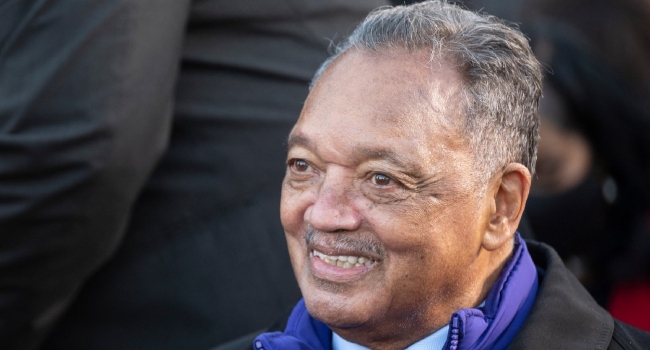
Former US presidents, celebrities and thousands of members of the public have gathered to honour civil rights leader, the Reverend Jesse Jackson, who died last month.
Former presidents Joe Biden, Barack Obama and Bill Clinton were among those who spoke at a memorial service in Chicago for the activist.
Mourners included former Vice President Kamala Harris, filmmaker Tyler Perry and former basketball star Isiah Thomas. The service also featured performances, including from singer and actress Jennifer Hudson.
Jackson, who worked alongside Martin Luther King Jr, twice ran to be the Democratic nominee for president and founded the Rainbow PUSH coalition, a social justice and civil rights non-profit.
While praising Jackson in his remarks at the service, Obama made a thinly veiled mention of US President Donald Trump. He said, “Each day we wake up to some new assault on our democratic institutions”.
He said the late reverend inspired people to take a harder path and called “on each of us to be heralds of change”.
Former Vice President Harris received a standing ovation when she spoke at the service. She appeared to take a jab at Trump, saying, “Let me just start out by saying: I predicted a lot of what is happening right now. I hate to say I told you so, but we did see it coming”.
But, she added, that she didn’t realise they would be tackling this moment without Jackson’s guidance.
Calling Jackson “impatient,” she noted, “He did not waste time waiting, even when the doors in front of him were barred and bolted, even if those on the other side hesitated or even ignored him. He always devised a way through”.
Civil rights leader, the Reverend Al Sharpton, who worked closely with Jackson during the civil rights movement, was also among the speakers. (BBC)


 English