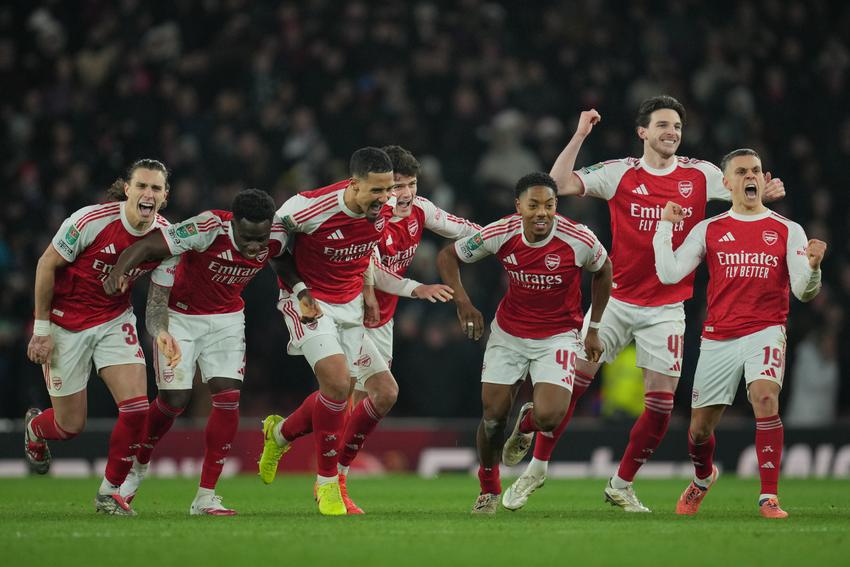
Arsenal are confirmed Premier League champions for the first time since 2004 as Manchester City fail to win at Bournemouth.
City needed to win their final two games, as well as hope Arsenal failed to win their final match, but were held to a 1-1 draw on Tuesday.
The result put an end to Pep Guardiola’s title challenge with one round of the season to go as the draw left Arsenal with an unassailable four-point lead at the top, ending their 22-year wait for the title.
Arsenal fans celebrated wildly outside its Emirates Stadium as news of the score line came through.
City threatened another twist when Erling Haaland scored in stoppage time to equalise Junior Kroupi’s first-half strike, but it was too late to find a winner.
Mikel Arteta’s players can now stand alongside club icons Thierry Henry, Dennis Bergkamp and Ian Wright, who previously led the club to the summit of English football. And Arsenal’s current class could yet break new ground by winning the Champions League for the first time in its history later this month.
Thoughts of this month’s final against defending champion Paris Saint-Germain can be put on the back burner, for now.
Now is a time for celebration and relief for Arteta after finishing runner-up in the league three years running.
In back-to-back seasons in 2023 and ’24, he watched as Guardiola’s City chased down Arsenal’s lead to be crowned champion. And another chance was missed last year when coming second to Liverpool.
Once again, Arsenal has led the way for most of this campaign, and despite seeing its points advantage ebb away during a gripping run-in, it has finally managed to get over the line after a decades-long wait.
Arsenal’s last champion was the so-called “Invincibles” team of 2004, which went an entire campaign without losing in the league. (AlJazeera)
FIFA is putting more World Cup tickets on sale after angering some fans by adding new, more expensive categories.
Soccer’s governing body announced Tuesday it will make more tickets available at 11 a.m. EDT Wednesday for all 104 games in Categories 1, 2 and 3 plus the new “front category” pricing it added this month.
The new category sparked online complaints from fans who said they thought the better seats in the categories they had bought tickets for were withheld and they were assigned less favorable locations.
FIFA in December put tickets on sale at prices ranging from $140 for Category 3 in the first round to $8,680 for the final, then raised prices to as much as $10,990 when sales reopened on April 1.
FIFA did not respond to an April 9 request for comment about the new ticket categories it added.
Also Tuesday, The Athletic reported that tickets sales are lagging for the U.S. opener against Paraguay on June 12 at Inglewood, California. It said a document distributed to local organizers dated April 10 said 40,934 tickets had been purchased for the U.S.-Paraguay game and 50,661 for the Iran-New Zealand contest on April 15. FIFA projects SoFi’s World Cup capacity at about 69,650, noting it may change.
FIFA’s December sale priced U.S.-Paraguay tickets at $1,120, $1,940 and $2,735, and Iran-New Zealand seats at $140, $380 and $450. (JapanToday)
Outside a morgue in south-eastern Turkey about a dozen men rushed to carry a coffin, but it was light – just the weight of a 10-year boy.
His father followed behind, propped up by relatives on both sides but weighed down by grief. “Oh, my martyred child,” he wailed, “oh my darling.”
His son was one of eight children shot dead on Wednesday in the city of Kahramanmaras by a fellow student,14, who also killed a teacher. This city, traditionally famous for its ice cream, now has a new and terrible distinction – it is the location of Turkey’s first deadly mass school shooting.
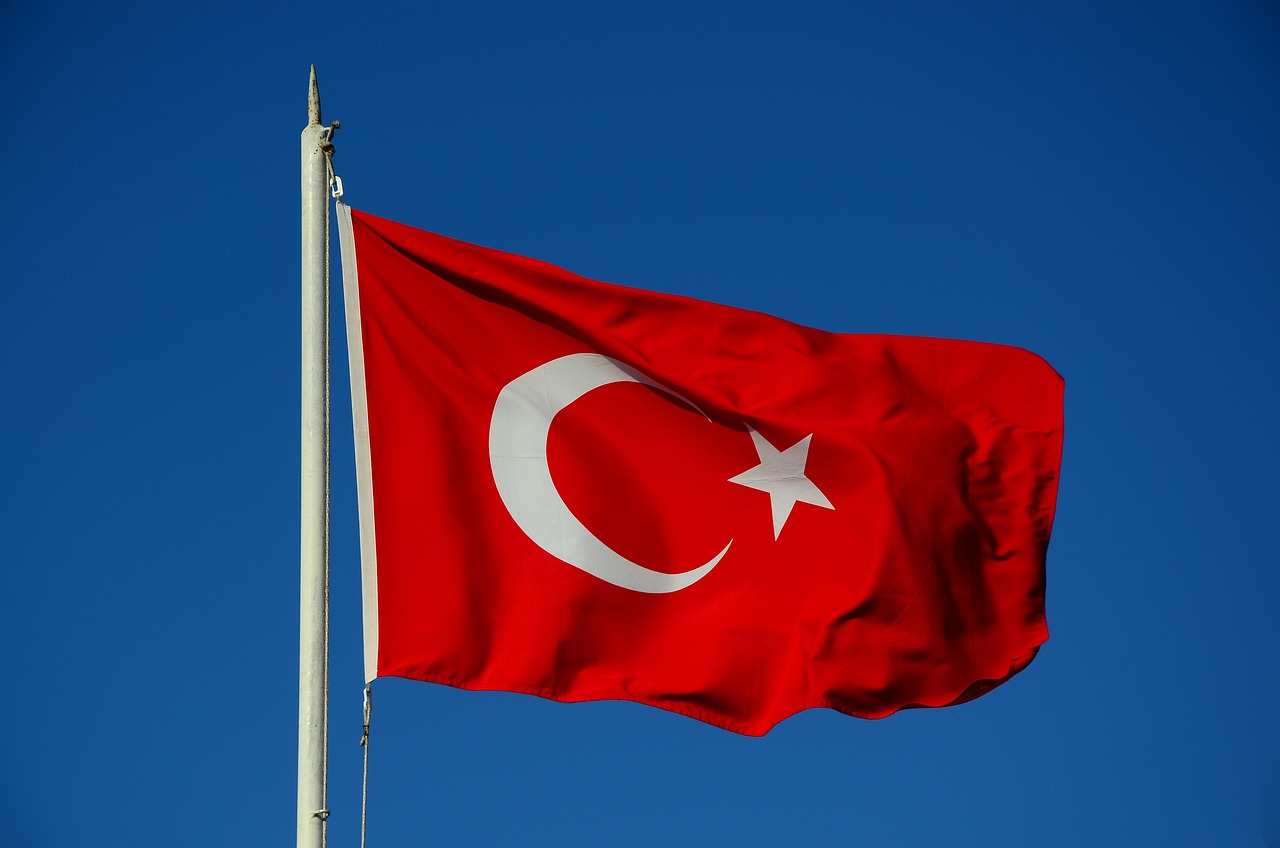
Relatives, neighbours and emergency services gathered around as coffins emerged one by one each draped in the Turkish flag. There was an angry yell from one woman towards a line of waiting police. “Too late, too late,” she chided. “You didn’t save the children.” Another woman shouted that the attacker should be hung in the main square, but he is already dead. He was killed at the scene.
Outside the main mosque, a mother wept, leaning forward to stroke the coffin of her daughter, Zeynep. From the family home, beside the Ayser Calik Secondary School, she heard the shots that killed her 10-year-old – shots that have reverberated around Turkey.
Relatives told us Zeynep was clever and respectful.
“She became an angel, and she flew away,” said Mahmut, her uncle, his voice breaking. “My only wish is to have more security at the schools, so this does not happen again. This pain landed on us. I do not want it to fall on anyone else.”
The attack came just one day after a former student roamed the corridors of another school in the same region, shooting at will. He wounded 16 but killed only himself.
“There have been two attacks, in a very short period, both in cities with lower incomes,” says Prof Asli Carkoglu, an expert in teen psychology. “These things do have a way of spreading.”
She is worried the deadly shooting here could become “an example for young minds that are frustrated enough”.
The attack was a tragedy but “not a surprise” to people like her who work with young adults and adolescents, she said.
“There have been stabbings, beatings and attempted suicides in the school system,” she told the BBC. “The guns weren’t there before, but the violence was.”
As the victims of the attack were being lowered into their graves, more details were emerging about the killer. The authorities here say he referred on social media to an American gunman, Elliot Rodgers, who killed six students in California in 2014. They also say an entry on his computer, dated 11 April, indicated there would be a major attack “in the near future”.
He did not have to go far to get weapons – just to the bedroom of his father, a former police officer who is himself now under arrest. He has made a statement to the authorities, according to reports in the local media, painting a picture of a bright but troubled teenager who spent a lot of time playing war games on his computer and was attending a psychologist.
While mass school shootings are a familiar horror for the US, this is a new trauma for Turkey. The authorities want to calm the public and control the narrative.
Around 150 people have been detained for social media posts about the killings, accused of spreading misinformation, or “glorifying crime and criminals”. More than 1,000 social media accounts and Telegram groups have been blocked.
There is no evidence of any link between the two attacks this week. And police say “initial findings indicate” that the killer in Kahramanmaras acted alone and was not linked to any terrorist organisation.
At the school gates, now locked, and guarded by police, teachers laid flowers in memory of the children who were killed where they should have been safe. (BBC)
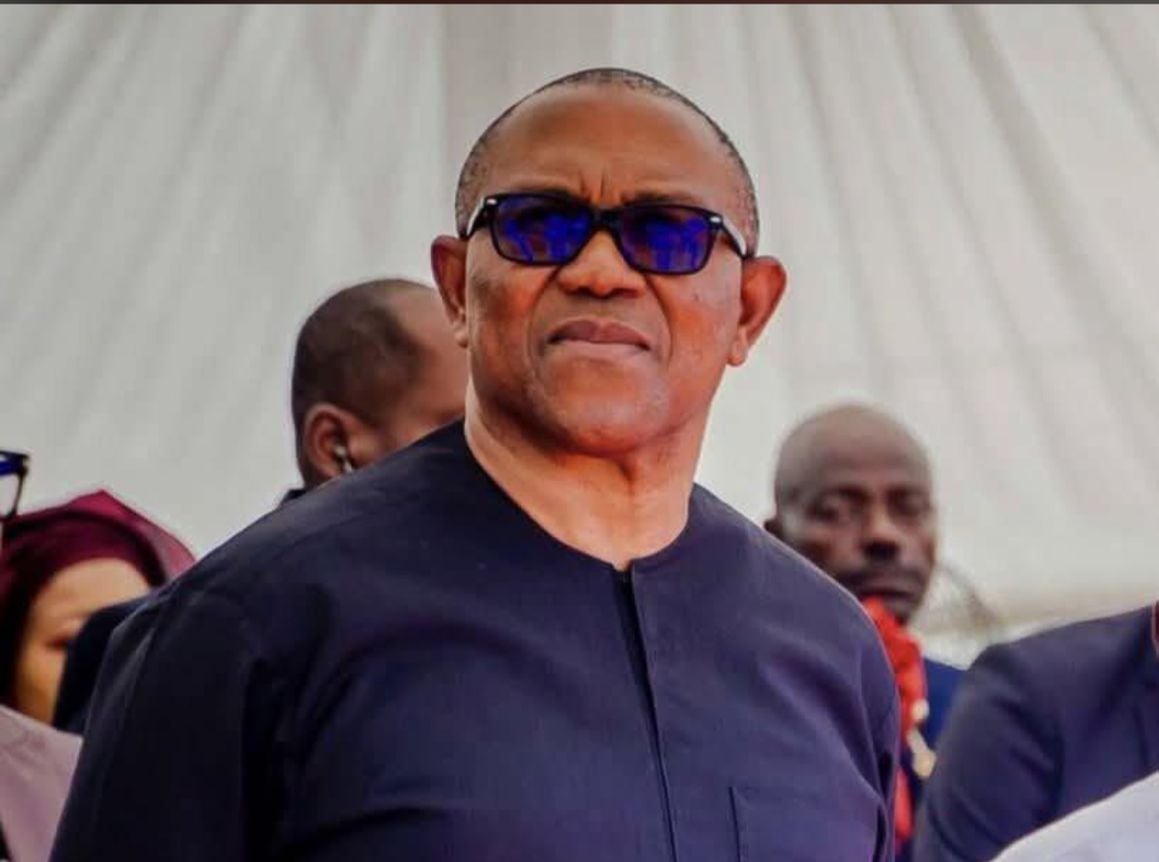
Justice Ayo Salami says former Anambra State governor Peter Obi shouldn’t have been allowed to contest the 2023 presidential elections under the Labour Party (LP) platform.
The former appeal court president stated this on Tuesday while briefing journalists at his residence in Ilorin, the Kwara State capital.
Justice Salami argued that by the time Obi left the Peoples Democratic Party (PDP) primary, the LP had submitted its list of members to the Independent National Electoral Commission (INEC).
“Peter Obi of the Labour Party ought not to have been allowed to contest in the presidential election in the sense that by the time he left the PDP primary, the Labour Party had submitted its list of members to INEC. The constitution says there can’t be independent candidates. How did he become a candidate if he doesn’t belong to the Labour Party?” Salami said.
“The same thing happened to the governor of Kano State, who has now defected to the APC. His name is not in the NNPP register, but they issued him a membership card, and the register is supposed to be the mother of the card. That is the source of the register for his membership. Even though the Tribunal and Court of Appeal frowned at it, and that’s the problem of competence.”
The retired jurist also faulted the actions of some judges for delivering wrong verdicts, attributing it to incompetence.
“Some of them have problems with learning; they are not sufficiently trained. They don’t have a good background to be such. And imagine appointing a higher registrar, a judge.
“All this may be responsible, not because they are dishonest or they take bribes or they are influenced. But maybe personally, they are inadequate. And that may be responsible for their wrong judgment.
“At times when you see or read judgment of some of them, even the Supreme Court judgment, you would be astounded and wonder what is happening,” he added. (Channels)
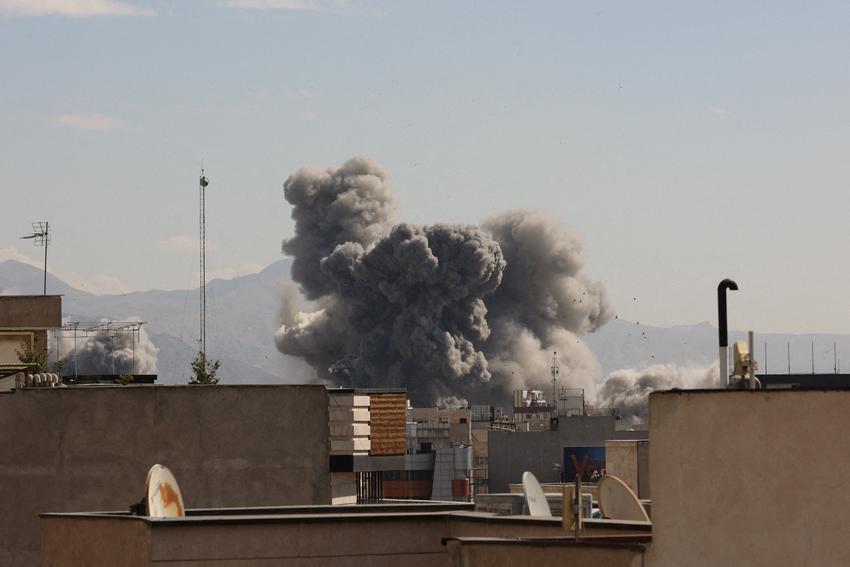
Israel launched a new wave of strikes on Tehran on Sunday and Iran responded with more missile barrages, a day after the killing of Supreme Leader Ali Khamenei pitched the Middle East and the global economy into deepening uncertainty.
Iran fired renewed missile barrages across the region. Israel’s ambulance service said nine people were killed in the town of Beit Shemesh, while the United Arab Emirates said Iranian attacks killed three people and Kuwait reported one dead.
Three U.S. service personnel were also killed and five seriously wounded, the first American casualties of the operation, the U.S. military said, without giving further information.
U.S. and Israeli strikes – and Iranian retaliation – sent shockwaves through sectors from shipping to air travel to oil, amid warnings of rising energy costs and disruption to business in the Gulf, a strategic waterway and global trade hub.
U.S. President Donald Trump has said the attack was intended to ensure Iran could not have a nuclear weapon, to contain its missile program and to eliminate threats to the United States and its allies.
In an interview with the Atlantic magazine on Sunday, Trump, who has encouraged the Iranian people to topple their government, said Iran’s leadership wanted to talk to him and he had agreed.
But he has yet to lay out his longer-term aims in Iran, which faces a power vacuum that could leave it in chaos, with unforeseeable consequences for the region.
Smoke rises following an explosion, after Israel and the U.S. launched strikes on Iran, in Tehran, Iran, March 1, 2026. Majid Asgaripour/WANA (West Asia News Agency) via REUTERS
As the first U.S. casualties were reported, and with the vital Strait of Hormuz closed and the glittering Gulf cities of Dubai, Abu Dhabi and Doha under bombardment, the scale of the risk taken by Trump in launching the attack was becoming clearer.
Only around one in four Americans approve of the operation, according to a Reuters/Ipsos poll on Sunday, and if Hormuz, which is the passage for about 20% of world oil supplies, remains closed for more than a few days, squeezed U.S. consumers will start to feel the pressure on prices at the pumps, months before vital midterm elections.
Iran’s Revolutionary Guards said on Sunday they had hit three U.S. and UK oil tankers in the Gulf and the Strait of Hormuz, and attacked military bases in Kuwait and Bahrain with drones and missiles. Shipping data showed hundreds of vessels including oil and gas tankers dropping anchor in nearby waters with traders expecting sharp jumps in crude oil prices on Monday.
Global air travel was also heavily disrupted as continued air strikes kept major Middle Eastern airports, including Dubai – the world’s busiest international hub – closed in one of the biggest aviation interruptions in recent years.
In Iran, facing its biggest existential challenge since the 1980-88 war with Iraq, President Masoud Pezeshkian said a leadership council composed of himself, the judiciary head and a member of the powerful Guardians Council had temporarily assumed the duties of Supreme Leader.
Oman’s foreign ministry said Iranian Foreign Minister Abbas Araqchi had indicated that Tehran was open to any serious efforts at de-escalation.
But it remained unclear what the longer-term prospects were for Iran to rebuild its leadership and replace the 86-year-old Khamenei, who had held power since the death of the founder of the Islamic Republic, Ayatollah Ruhollah Khomeini in 1989.
Russian President Vladimir Putin denounced Khamenei’s death as a cynical murder and China’s Foreign Minister Wang Yi described it as “blatant killing”.
Israel, which has pressed successive U.S. administrations to take action against Iran, claimed responsibility for killing Khamenei, in what it said was a “precise, large-scale operation” guided by intelligence, while he was in his central leadership compound in the heart of Tehran.
It said it aimed to dominate the skies over Tehran, giving no sign of planning an end to the biggest aerial operation in its history, involving hundreds of fighter jets.
“We have the capabilities and the targets to keep going on for as long as necessary,” Israeli military spokesperson Lieutenant Colonel Nadav Shoshani said.
Trump warned that the U.S. would hit Iran “with a force that has never been seen before” if it struck back.
Trump said on social media the U.S. military had destroyed nine Iranian warships so far and was “going after the rest.”
Inside Iran, some grieved for Khamenei while others celebrated his death, exposing a deep fault line in a country stunned by the sudden demise of the man who ruled for decades.
Thousands of Iranians were killed in a crackdown authorized by Khamenei against anti-government protests in January, the deadliest wave of unrest since the Islamic Revolution of 1979.
Footage from Tehran showed mourners packed into a square, dressed in black and many of them weeping.
But videos posted on social media also showed joy and defiance elsewhere, with people cheering as a statue was toppled in the city of Dehloran in Ilam province, dancing in the streets of Karaj city, near Tehran in Alborz province, and celebrating in the streets of Izeh in Khuzestan province. Reuters has verified the locations of these videos.
Khamenei, who built Iran into a powerful anti-U.S. force and spread its sway across the Middle East during his 36-year iron-fisted rule, was working in his office at the time of Saturday’s attack, state media said. The raid also killed his daughter, grandchild, daughter-in-law and son-in-law. (JapanToday)
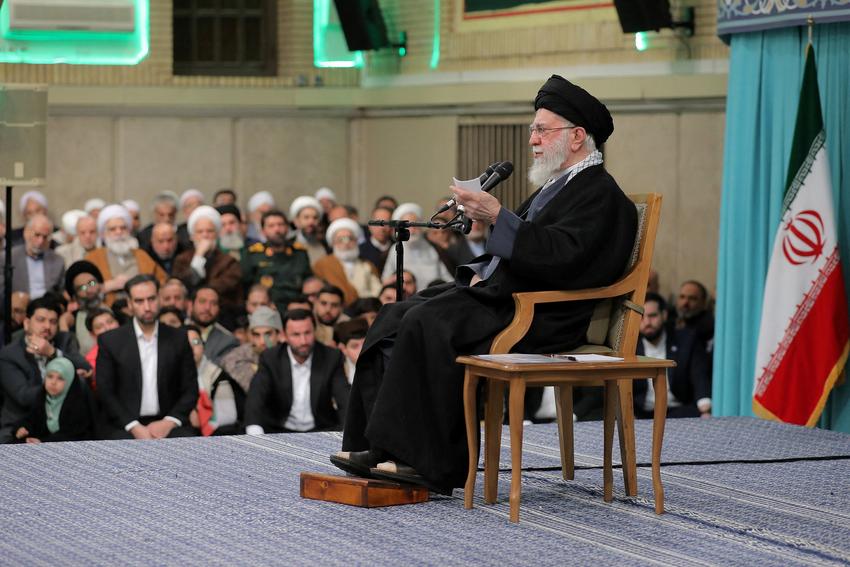
Iranian state media have confirmed that Supreme Leader Ayatollah Ali Khamenei was killed at his office in the Israeli-US attacks on Iran, following earlier reports of his killing by US and Israeli officials.
A 40-day mourning period for the longtime Iranian leader has been announced.
The Sunday confirmation comes after Iran’s Tasnim and Mehr news agencies initially reported that Khamenei remained “steadfast and firm in commanding the field”.
US President Donald Trump wrote in a post on his Truth Social platform earlier in the day that 86-year-old Khamenei was killed in the joint US-Israeli strikes, which began early on Saturday.
“He was unable to avoid our Intelligence and Highly Sophisticated Tracking Systems and, working closely with Israel, there was not a thing he, or the other leaders that have been killed along with him, could do,” Trump wrote.
“This is the single greatest chance for the Iranian people to take back their Country,” he said. “Hopefully, the IRGC [Islamic Revolutionary Guard Corps] and Police will peacefully merge with the Iranian Patriots.”
While Iranian authorities have long planned for the possible killing of Khamenei in the event of a war with the US and Israel, his assassination injects new uncertainty into an unfolding conflict that has already spurred concerns that fighting could escalate and expand further.
Israeli Prime Minister Benjamin Netanyahu had earlier also claimed that there were “growing signs” that Khamenei had been killed.
Additionally, the Reuters news agency, citing an unnamed senior Israeli official, had reported that Khamenei’s body had been located.
Khamenei has been Iran’s supreme leader since 1989, succeeding the founder of the post-shah Iran, Ayatollah Ruhollah Khomeini, who steered Iran’s 1979 revolution.
The supreme leader holds ultimate authority over all branches of government, the military and the judiciary, while also acting as the country’s spiritual leader.
Barbara Slavin, a distinguished fellow at the Stimson Center in Washington, DC, told Al Jazeera that Iran “has a plan” in place in the event that Khamenei’s death is confirmed.
“There will probably be a council that will be set up to run the country. It may already have been running the country, as far as we know,” she said.
Saturday’s strikes on Iran targeted 24 provinces, killing at least 201 people, according to Iranian media reports, citing the Red Crescent.
Among the attacks, Israel struck two schools in Iran, killing at least 108 people at the Shajareh Tayyebeh girls’ elementary school in the southern city of Minab, and two others at a school east of the capital, Tehran.
Netanyahu said in his address that many “senior figures” had been “eliminated” in the wave of attacks targeting senior leaders, as Trump called for the government to be toppled.
Israel, Netanyahu said, had killed “commanders in the Revolutionary Guard and senior officials in the nuclear programme. And we will continue.”
Trump indicated on his Truth Social post that “heavy and pinpoint bombing” of Iran would go on “uninterrupted throughout the week or, as long as necessary”.
Iran’s counterattacks on Saturday triggered air-defence interceptions in several countries where airbases with US assets are hosted, including Kuwait, Qatar, the United Arab Emirates and Bahrain.
On Saturday evening, the Iranian Revolutionary Guard Corps (IRGC) said that the third and fourth waves of “retaliatory” strikes on US and Israeli positions were ongoing, according to a statement carried by the IRNA news agency.
United Nations Secretary-General Antonio Guterres told an emergency meeting of the Security Council that he deeply regretted that an opportunity for diplomacy had been “squandered”.
“Military action carries the risk of igniting a chain of events that no one can control in the most volatile region of the world,” he told the 15-member body. “I call for de-escalation and an immediate cessation of hostilities”.
Addressing the Security Council, Iran’s UN ambassador, Amir Saeid Iravani, said the US and Israel had “initiated an unprovoked and premeditated aggression”, attacking “civilian populated areas in multiple large cities of Iran, where millions of people reside”.
“This is not only an act of aggression, it is a war crime, and a crime against humanity,” he said.
The US ambassador to the UN, Mike Waltz, insisted that the military action was lawful. “Iran cannot have a nuclear weapon,” he said. “That principle is not a matter of politics. It’s a matter of global security.”
China’s UN ambassador, Fu Cong, said Beijing was very concerned by “the sudden escalation of regional tensions”.
Russia’s ambassador, Vassily Nebenzia, condemned the US-Israeli air strikes, demanding that the US and Israel “immediately cease their aggressive actions”. (AlJazeera)
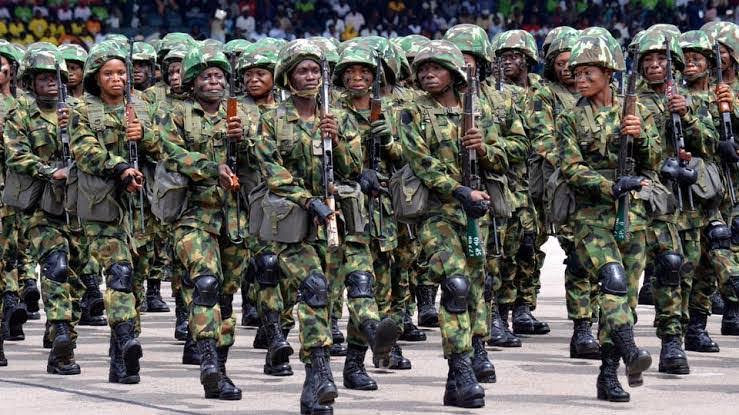
Troops of the Nigerian Army 12 Brigade, Lokoja, have foiled bandits’ movement in Kogi, neutralising three suspects and arresting one logistics supplier.
The action is disclosed in a statement by the Brigade’s spokesperson, Lt. Hassan Abdullahi, on Sunday in Lokoja.
Abdullahi said the coordinated operation occurred on Saturday, January 3, as part of ongoing efforts to curb banditry and kidnapping.
He said fighting patrols and ambushes were conducted in Kabba Bunu and Yagba West Local Government Areas of the state.
“Troops ambushed bandits moving toward Agbadu Bunu, neutralising two and recovering arms, including an AK-47 rifle and ammunition,” he said.
According to him, the troops acted on credible intelligence regarding the movement of bandits from the Adankolo general area.
“They ran into our ambush and were engaged, forcing them to withdraw with indications of casualties, as blood stains were observed,” Abdullahi said.
He said two bandits were neutralised, while an AK-47 rifle, a magazine, ammunition, a locally fabricated gun and cartridges were recovered.
Abdullahi added that troops, working with local vigilantes in Yagba West, engaged bandits around Saminaka village.
“One bandit was neutralised during the encounter, and an AK-47 rifle with ammunition was recovered,” he said.
He also disclosed the arrest of a suspected bandit logistics supplier, identified as Sunday Adedotun.
“Items recovered from his settlement included energy drinks, soft drinks, bottled water, and harvested farm produce,” Abdullahi said.
He said the suspect is currently in custody and undergoing investigation.
Abdullahi stressed that the operations demonstrate sustained pressure on criminals and their support networks.
He said the Brigade Commander, Brig.-Gen. Kasim Sidi, commended the troops’ professionalism, courage, and swift response to intelligence.
The commander assured continued aggressive patrols and operations to deny criminals freedom of action in the state. (Guardian)
Music mogul Sean “Diddy” Combs was sentenced to more than four years in prison on Friday for his conviction on prostitution-related charges.
Prosecutors had sought 11 years behind bars for Combs but Judge Arun Subramanian handed down a 50-month sentence after an emotional daylong court hearing.
Combs’s lawyers had urged the judge to sentence the 55-year-old hip-hop star to 14 months, which would effectively have been time served since he has been incarcerated in Brooklyn for more than a year.
Addressing the court before the judge handed down the sentence, Combs said he was “truly sorry” for his actions and asked the judge for “another chance.”
“I ask your honor for mercy,” he said. “I beg your honor for mercy.”
Diddy Combs was acquitted by a jury in July of the most serious charges against him — sex trafficking and racketeering — but convicted of two counts of transporting people across state lines for prostitution.
Combs’s former girlfriend Casandra Ventura submitted a letter to the judge asking him to consider “the many lives that Sean Combs has upended with his abuse and control.”
Ventura, the 39-year-old singer known as Cassie, described in wrenching detail the physical, emotional and sexual abuse she suffered while in a more than decade-long relationship with Combs.
Ventura and another woman, identified as Jane, said they were coerced into performing so-called “freak offs”: sexual marathons with hired men that Combs directed and sometimes filmed.
“The entire courtroom watched actual footage of Combs kicking and beating me as I tried to run away from a freak off in 2016,” Ventura wrote. (Vanguard)
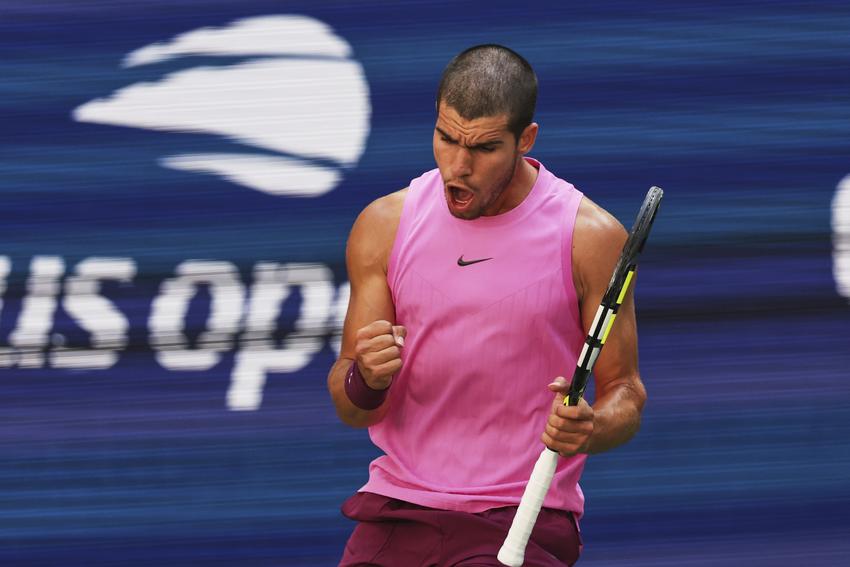
Carlos Alcaraz hit a behind-the-back shot at the U.S. Open to win a point in a 7-6 (3), 6-3, 6-4 victory over Arthur Rinderknech on Sunday that made the Spaniard the youngest man in the Open era to reach 13 Grand Slam quarterfinals.
“Sometimes, I practice it. I’m not going to lie,” the No. 2-seeded Alcaraz said about the bit of wizardry he delivered in the first set. “But I mean, I don’t practice it, like, too many times. Just in practice, if the opportunity is there, I will try. In the match, it’s kind of the same. If I have the opportunity, why not?”
At 22 years and 3 months old, Alcaraz is about 6 months younger than Boris Becker was when he got to major quarterfinal No. 13.
Alcaraz’s opponent on Tuesday will be No. 20 Jiri Lehecka, a 23-year-old from the Czech Republic. Lehecka advanced to his second Slam quarterfinal with a 7-6 (4), 6-4, 2-6, 6-2 win over Adrian Mannarino.
Early on against Rinderknech, a Frenchman who played college tennis at Texas A&M, Alcaraz closed a love hold that made the score 2-all in spectacular fashion. Moving to his right at midcourt, Alcaraz found himself in what appeared to be a bad spot when Rinderknech wrong-footed him.
But Alcaraz wrapped his racket around his body and flicked a shot up the line ( see it here ).
Perhaps startled that the point wasn’t over, Rinderknech hit a volley that landed in the net. A big smile crossed Alcaraz’s face as he looked over at his coach, Juan Carlos Ferrero, in the stands. Alcaraz then placed his right index finger behind his ear, as if acknowledging the spectators’ cheers.
“The people like it; I like playing tennis like this,” Alcaraz said. “My style of tennis fits pretty well to the energy here.”
Alcaraz wound up taking that set in a tiebreaker. Then, midway through the second, Alcaraz produced another highlight-worthy effort with a no-look passing winner, racing forward to get to a short ball and glancing down the line as though he was going to hit to Rinderknech’s backhand, but instead steering a forehand cross-court.
By the last game, even Rinderknech was smiling at other next-level strokes by Alcaraz, who has won 54 of 55 service games through four matches this year at Flushing Meadows. He claimed the title here in 2022 for the first of his five Grand Slam trophies.
Alcaraz is into his fourth major quarterfinal of 2025, the first time in his career he’s gone 4 for 4 in that category in a season. He lost to Novak Djokovic at that stage at the Australian Open in January, won the French Open in June and lost to No. 1 Jannik Sinner in the final at Wimbledon in July.
In women’s action, Taylor Townsend couldn’t covert eight match points in a second set that ended with a 25-minute tiebreaker and was eliminated with a 1-6, 7-6 (13), 6-3 loss to Barbora Krejcikova.
With fans chanting “Let’s go Taylor! Let’s go Taylor!” for a player who became a fan favorite during the tournament after her confrontation with Jelena Ostapenko following her second-round victory, Townsend was repeatedly a point away from what would have been her first Grand Slam quarterfinal.
No. 4 seed Jessica Pegula irolled into the last eight by routing fellow American Ann Li 6-1, 6-2 in just 54 minutes and will face Krejcikova. (JapanToday)
President Bola Tinubu has congratulated the winners of the by-elections held on Saturday, August 16, across 16 constituencies in 12 states, in which the All Progressives Congress secured victory in 12 of those constituencies.
The announcement was made in a press release issued by the President’s Special Adviser on Information and Strategy, Bayo Onanuga, on Sunday afternoon.
Announcing the results of the elections, Onanuga said APC won in 12 constituencies, the All Progressives Grand Alliance won in two, the Peoples Democratic Party won in one, and the New Nigeria Peoples Party won in one.
The statement noted that the president commends INEC “for the hitch-free elections, mostly devoid of violence,” and lauded the newly appointed APC National Chairman, Prof. Nentawe Yilwatda, for steering the party to its first major triumph under his leadership.
Tinubu also congratulates the APC governors and other leaders on the success of the by-elections.
“Chairman Nentawe Yilwatda has shown leadership capacity and demonstrated what is achievable when popular candidates are fielded and with unity of purpose among party leaders,” the statement quoted the president.
“To all APC faithful and the electorate, thank you for the confidence reposed in our party. Be assured that our Renewed Hope slogan is not a mere slogan. Our destination is a better, more secure and prosperous Nigeria. We shall take you there, by the Grace of God,” he said.
“President Tinubu commends all the political parties and candidates who participated in the election and enjoins them to continue to be guided by the spirit of sportsmanship, fair contest and magnanimity, which are enablers of enduring democracy,” the statement concluded. (Punch)


 English