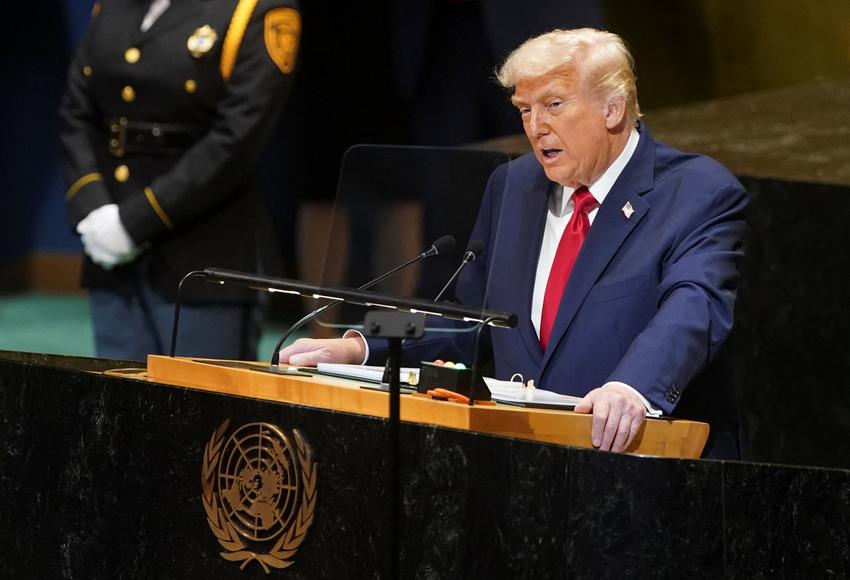
Major European Union states including Germany and France decried U.S. President Donald Trump’s tariff threats over Greenland as blackmail on Sunday, as France proposed responding with a range of untested economic countermeasures.
Trump vowed on Saturday to implement a wave of increasing tariffs on EU members Denmark, Sweden, France, Germany, the Netherlands and Finland, along with Britain and Norway, until the U.S. is allowed to buy Greenland.
All eight countries, already subject to U.S. tariffs of 10% and 15%, have sent small numbers of military personnel to Denmark’s vast Arctic island, as a row with the United States over its future escalates.
“Tariff threats undermine transatlantic relations and risk a dangerous downward spiral,” they said in a joint statement.
The Danish exercise in Greenland was designed to strengthen Arctic security and posed no threat to anyone, they said, adding that they were ready to engage in dialogue, based on principles of sovereignty and territorial integrity.
Danish Prime Minister Mette Frederiksen said in a statement she was pleased with the consistent messages from other states, adding: “Europe will not be blackmailed”, a view echoed by Germany’s finance minister and Sweden’s prime minister.
“It’s blackmail what he’s doing,” Dutch Foreign Minister David van Weel said on Dutch television of Trump’s threat.
Cyprus, holder of the rotating six-month EU presidency, summoned ambassadors to an emergency meeting in Brussels late on Sunday as EU leaders stepped up contacts.
Danish Foreign Minister Lars Lokke Rasmussen, visiting his Norwegian counterpart in Oslo, said Denmark would continue to focus on diplomacy, referring to an agreement Denmark, Greenland and the U.S. made on Wednesday to set up a working group.
“Even though we are now being confronted with these threats, we will naturally try to stay on that path,” Rasmussen said.
“The U.S. is also more than the U.S. president. I’ve just been there. There are also checks and balances in American society.” he added.
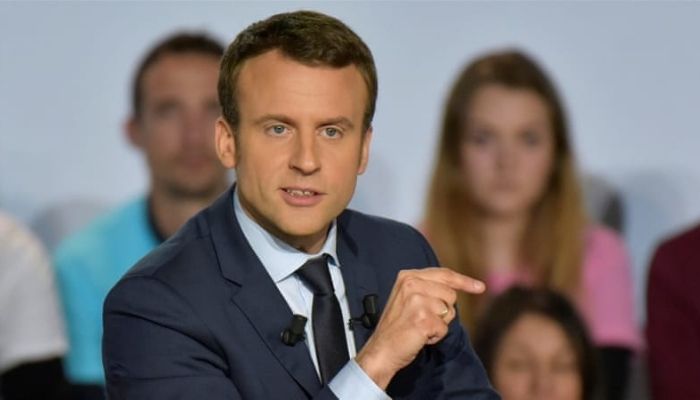
Meanwhile, a source close to Emmanuel Macron said the French President was pushing to activate the Anti-Coercion Instrument, which could limit access to public tenders, investments or banking activity or restrict trade in services, in which the U.S. has a surplus with the bloc, including digital services.
Irish Prime Minister Micheal Martin said that while there should be no doubt the EU would retaliate, it was “a bit premature” to activate the instrument.
And Italian Prime Minister Giorgia Meloni, who is closer to the U.S. President than some other EU leaders, described the tariff threat on Sunday as “a mistake”, adding she had spoken to Trump a few hours earlier and told him what she thought.
“He seemed interesting in listening,” she told a briefing with reporters during a trip to Korea.
British Culture Secretary Lisa Nandy said allies needed to work with the United States to resolve the dispute.
“Our position on Greenland is non-negotiable … It is in our collective interest to work together and not to start a war of words,” she told Sky News.
The U.S. tariff threats call into question trade deals struck with Britain in May and the EU in July.
The limited agreements have already faced criticism about their lopsided nature, with the U.S. maintaining broad tariffs, while their partners are required to remove import duties.
The European Parliament looks likely now to suspend its work on the EU-U.S. trade deal. It had been due to vote on removing many EU import duties on January 26-27, but Manfred Weber, head of the European People’s Party, the largest group in parliament, said late on Saturday that approval was not possible for now.
German Christian Democrat lawmaker Juergen Hardt also mooted what he told Bild newspaper could be a last resort “to bring President Trump to his senses on the Greenland issue”, a boycott of the soccer World Cup that the U.S. is hosting this year. (JapanToday)
Should foreign tourists pay more for state-funded galleries than locals, or should art be accessible to all, without discrimination? France is hiking prices for non-Europeans at the Louvre this week, provoking debate about so-called “dual pricing”.
From Wednesday, any adult visitor from outside the European Union, Iceland, Liechtenstein and Norway will have to pay 32 euros ($37) to enter the Louvre — a 45-percent increase — while the Palace of Versailles will up its prices by three euros.
Americans, UK citizens and Chinese nationals, who are some of the museum’s most numerous foreign visitors, will be among those affected, as will tourists from poorer countries.
The French move has few precedents elsewhere in Europe, but is more common in developing countries, where tariffs at sites such as Machu Picchu in Peru or the Taj Mahal in India vary.
Trade unions at the Louvre have denounced the policy as “shocking philosophically, socially and on a human level” and have called for strike action over the change, along with a raft of other complaints.
They argue that the museum’s vast collection of 500,000 items, including many from Egypt, the Middle East or Africa, hold universal human value.
While rejecting discriminatory pricing on principle, they are also worried for practical reasons, as staff will now need to check visitors’ identity papers.
French academic Patrick Poncet has drawn a parallel between France’s move and the policies of U.S. President Donald Trump, whose administration hiked the cost for foreign tourists of visiting U.S. National Parks by $100 on January 1.
The French policy was “symptomatic of the return, as elsewhere in the world, of unabashed nationalism”, Poncet wrote in Le Monde newspaper last month.
Other state-owned French tourist hotspots are also hiking their fees, including the Chambord Palace in the Loire region and the national opera house in Paris.
The government has justified the increases on financial grounds, looking to raise 20-30 million euros annually at a time when it is under pressure to boost revenues and cut spending.
Some of the funds will go towards a colossal plan to renovate the Louvre, which French President Emmanuel Macron announced last year.
Estimated to cost around a billion euros, unions and some art critics have called the project wasteful.
Everyone agrees the Louvre is in poor shape, however, with a recent water leak, structural problems and an embarrassing daylight robbery in October focusing minds.
“I want visitors from outside the EU to pay more for their entry tickets and for that surcharge to go toward funding the renovation of our national heritage,” Culture Minister Rachida Dati said at the end of 2024 as she announced the hikes.
“The French are not meant to pay for everything all by themselves,” she added.
It remains to be seen whether the break with European convention by the continent’s most-visited country will spur other cultural destinations to follow suit.
Pricing based on age is commonplace in Europe, with access for under-18s free at places such as the Acropolis in Athens, the Prado in Madrid or the Colosseum in Rome to encourage them to visit.
The Louvre will remain free for minors from all countries and Europeans under 26.
Other destinations, such as the Doge’s Palace in Venice, offer free entrance for city residents.
Britain has long had a policy of offering universal free access to permanent collections at its national galleries and museums.
But the former director of the British Museum, Mark Jones, backed fee-paying in one of his last interviews in charge, telling The Sunday Times newspaper in 2024 that “it would make sense for us to charge overseas visitors for admission”.
The proposal prompted debate but has not been adopted.
A research paper published last year by The Cultural Policy Unit, a British museum think tank, opposed it for both practical and philosophical reasons.
It would reduce entries, lengthen queue times and overturn a centuries-old policy, the report concluded.
“Britain holds its national collections for the world — not just its own residents,” it objected. (JapanToday)
New Chelsea boss Liam Rosenior has been convicted of speeding after fog delayed his flight back to the UK, where he was due to complete a speed awareness course.
Rosenior admitted being behind the wheel of the vehicle, which had been travelling at 36mph in a 30mph zone in Rykneld Road, Littleover, Derbyshire, at 11.41am on 7 July.
He was offered the chance to avoid a criminal prosecution by completing a speed awareness course, but did not turn up to the session, which had been arranged.
Rosenior explained, in a note to Derby Magistrates’ Court he “had to stay another night and be on a plane the next day during the time of the course”.
He added: “Unfortunately, the course could not be fulfilled due to unforeseen circumstances. Understandably, due to circumstances, I have to accept the situation as is.”
Rosenior was convicted at a single justice procedure hearing on 2 January, with a magistrate ordering him to pay out a total of £1,052 in fines, costs, and court fees.
The former Strasbourg boss was appointed as head coach on Tuesday following Enzo Maresca’s exit.
London-born Rosenior, 41, has admitted his new position at the Premier Leagueclub represents a significant step up from his previous job in France.
“The reality is Strasbourg is not on the level as Chelsea,” he said at press conference at the French club – also owned by Chelsea’s parent company BlueCo.
“There are certain clubs you just cannot just turn down. I hope the [Strasbourg] fans can see that.”
Rosenior, who played in England for 16 years, began his managerial career at Derby County – where he got the top job on an interim basis.
His first permanent position was at Hull City, where he lasted for 18 months and took the Championship to the brink of the play-offs before being sacked by the owner who said the pair had a difference in footballing philosophy.
Rosenior, who has been given a six-and-a-half year contract at Chelsea, said on Tuesday that managing a “world-class” club was “something I have always dreamed of”.
“I am looking forward to the challenge,” he said. “If I didn’t think I was ready, I wouldn’t have accepted it.
Chelsea said that the club’s new head coach had “signed a contract with the club that will take him through to 2032”.
Rosenior becomes Chelsea’s fourth permanent boss since owners BlueCo took control in 2022.
Maresca was dismissed on New Year’s Day, leaving abruptly following a deterioration in his relationship with bosses.
It also followed a disappointing run of results – one win from the last seven Premier League games – that left the club 15 points adrift of leaders Arsenal.
Maresca is understood to have stepped down because he felt his position was untenable, while Chelsea were already considering sacking the head coach due to poor results, his comments in the media, disagreements with the medical team and reports linking him with other clubs. (SkyNews)
Black Bazaar is a novel that touches the issues faced by African immigrants in France who are facing poverty, racism, migration and so on. Originally published in French in 2009 (translated into English in 2012 by Sarah Ardizzone), The novel is set in France, but there is a mention of two Congos (Kinshasha and Brazzaville) with the protagonist who we don’t know his real name but is nicknamed Buttologist.
Buttologist is the protagonist and he narrates the entire story. He is both kind and patient, sometimes he gets angry. He has spoken of his travails in a country (France) which colonized his mother country, Congo Brazzaville after leaving the military. He also narrates about his childhood (in the Congo), his parents especially his father (who he calls old man) and it is filled with nostalgia. He is an aspiring writer who confides with Jean Phillipe, another character in the book from Haiti who advises him to write about his travails in a journal titled Black Bazaar.
The reason he is called Buttologist is because of his eye for a woman’s backside and her character. He works at a printing press and has lived in Paris for fifteen years in an apartment full of migrants amongst them is a mixed-race neighbour named Mr Hippocratic. In that apartment, he has a small studio which he shares with his ex-girlfriend called Original Colour before she moved out with their daughter for another man. This broke his heart. During his spare time, he goes to an Afro-Cuban bar called the Jips which is in a Parisian neighbourhood and parleys with other African immigrants where they talk about everything. He is a dandy and he has a style for clothes (suitcases of crocodiles and anaconda Westons) which he buys from Italy. He is a sapeur or a member of the Society of Ambience-makers and People of Elegance.
Speaking of Mr Hippocratic, he is a French-Ivorian who always criticizes black Africans especially Congo Kinshasha and Mobutu Seseko. It shows that he is a racist who gives false accuracies on black history and believes what the white historians say. Our protagonist doesn’t argue with him but has a hatred towards him. He also speaks of the people he came across including his Arab neighbour who owns a corner shop and calls him my brother and offers him kind words. He criticises the colonialists who stole from Arabs and Africans and claim it as theirs by bringing suffering upon them.
It is also filled with puns, full stops, paragraphs and capital letters that are humorous that you think you are reading Amos Tutuola ‘‘The Palmwine Drinkard’’ which was filled with broken English and some Yoruba adages. Mabanckou does a wonderful depiction of what it means to be an African immigrant in Paris. He didn’t fail to express the views of the narrator on colonialism and post -colonial Africa especially in the Congo. Each of the characters represent themes; betrayal (Original Colour), trust (Jean Phillipe) friendship (Buttologist friends and the Arab neighbour) and racism (Hippocratic).
The novel explains that despite French being the official language spoken among the cultures, the characters represent immigrants who feel that they don’t belong in a class or society that is not ready to welcome them (They do not feel right at home). They leave their real homes to go to another country that is filled with milk and honey. The author does not fail to give nicknames to all the characters despite the fact that they don’t have real names but for them, it is due to their habits.
It is enjoyable but it tells us that life is hard and there will be setbacks, gains and disappointments, highs and lows, happinesses and sorrows.
Key European allies pledged to send a “reassurance force” to Ukraine in a move described as a significant step in the effort to end Russia’s nearly four-year invasion.
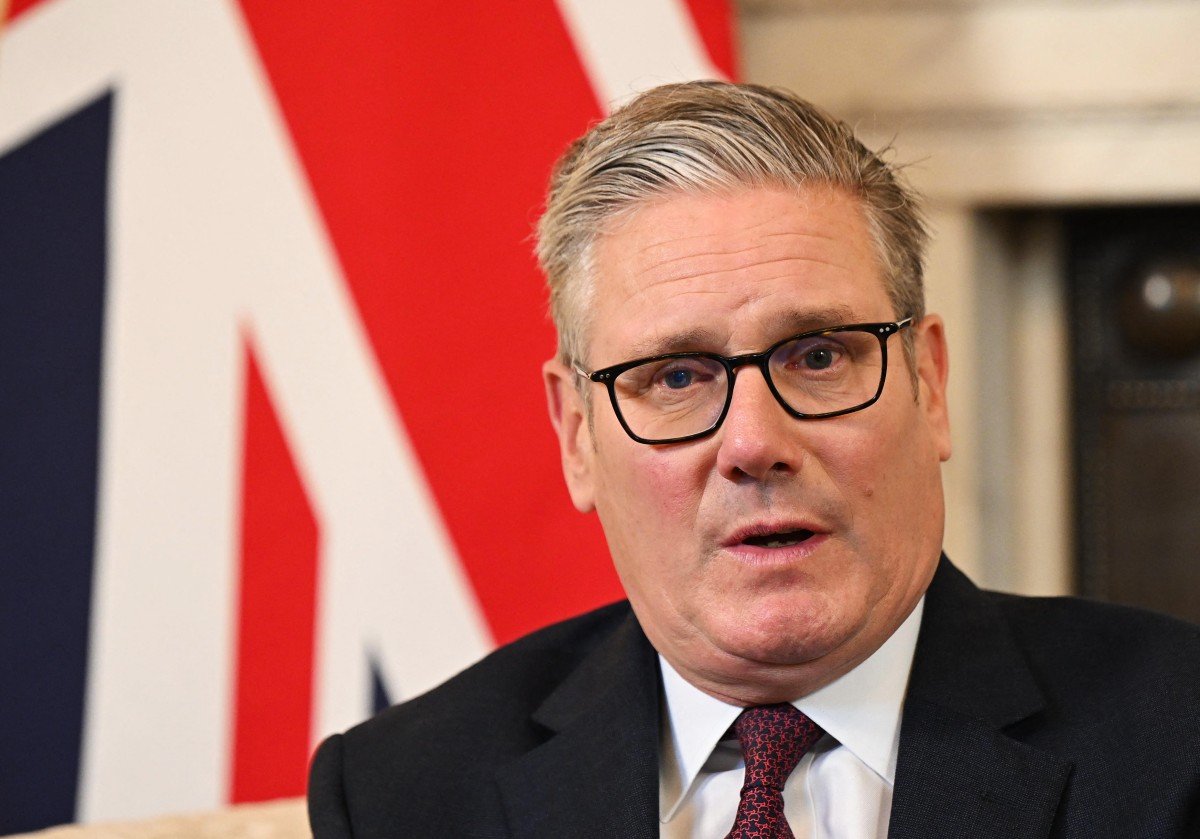
Ukrainian President Volodymyr Zelenskyy, French President Emmanuel Macron, and British Prime Minister Keir Starmer signed a declaration of intent on Tuesday for the deployment of multinational forces to support Kyiv’s defence and reconstruction – if a ceasefire with Russia is agreed on.
The announcement follows a meeting of more than two dozen countries in Paris. The nations dubbed the “coalition of the willing” have explored for months how to deter any future Russian aggression should it agree to stop fighting Ukraine.
There was no immediate response from Russia, however. President Vladimir Putin has ruled out any deployment of troops from NATO countries on Ukrainian soil.
Kyiv has long said it cannot be safe without guarantees that are comparable to the NATO alliance’s mutual defence agreement Article 5 to deter Russia from attacking again.
Zelenskyy welcomed the promised security guarantees for Ukraine.
“It’s important that today the coalition has substantive documents. These are not just words. There is concrete content: a joint declaration by all the coalition countries and a trilateral declaration by France, Britain, and Ukraine,” he said.
“It has been defined how those forces will be managed and at what levels command will be exercised,” Zelensky added.
Macron said “several thousand” French soldiers could be deployed to Ukraine to maintain peace.
“These are not forces that will be engaged in combat,” Macron told France 2 television on the sidelines of the summit, calling such a deployment “a force of reassurance”.
Starmer said allies will participate in US-led monitoring and verification of any ceasefire, support the long-term provision of armaments for Ukraine’s defence.
The UK and France will “establish military hubs across Ukraine and build protected facilities for weapons and military equipment to support Ukraine’s defensive needs” – in the event of a peace deal with Russia, he added.
Starmer said peace in Ukraine is closer than ever though the “hardest yards” still lay ahead.
US envoy Steve Witkoff said there was significant progress made on several critical issues facing Ukraine including security guarantees and a “prosperity plan”. Security protocols for Ukraine are “largely finished”, he added.
“We agree with the coalition that durable security guarantees and robust prosperity commitments are essential to a lasting peace in the Ukraine, and we will continue to work together on this effort,” Witkoff said in a post on X after talks in Paris.
Ukraine’s reconstruction is inextricably linked to security guarantees, German Chancellor Friedrich Merz said.
“Economic strength will be indispensable to guarantee that Ukraine will continue to credibly block Russia in the future,” Merz said.
However, he noted Ukraine and its European allies will have to accept “compromises” to achieve a peace deal.
“We will certainly have to make compromises” to end the nearly four-year-old war. “We will not achieve textbook diplomatic solutions,” said Merz.
Moscow has revealed few details of its stance in the US-led peace negotiations. Officials have reaffirmed Russia’s demands and insisted there can be no ceasefire until a comprehensive settlement is agreed. (AlJazeera)
The funeral for Brigitte Bardot will be held next week in Saint-Tropez, the glamorous French Riviera resort she helped make famous and where she lived for more than a half-century, local authorities said.
The cinema star and animal rights activist died last Sunday at the age of 91 at her home in southern France.
A ceremony is scheduled on Jan 7 at the Notre-Dame-de-l’Assomption Catholic Church and will be broadcast on two large screens set up at the port and on the Place des Lices central square, Saint-Tropez town hall said in a statement Monday.
The burial will then take place “in the strictest privacy” at a cemetery overlooking the Mediterranean Sea, according to the statement. The ceremony will be followed by a public homage for fans at a nearby site.
“Brigitte Bardot will forever be associated with Saint-Tropez, of which she was the most dazzling ambassador,” the statement said. “Through her presence, personality and aura, she marked the history of our town.”
The movie star settled in her Riviera villa, La Madrague, in Saint-Tropez and retired from the film industry in 1973 at age 39.
The so-called marine cemetery, where Bardot’s parents are buried, is also the final resting place of other celebrities, including filmmaker Roger Vadim, Bardot’s first husband.
Bardot’s younger sister, Marie-Jeanne Bardot, known as Mijanou, posted on Facebook a photo of Brigitte at age 12, accompanied by a message honoring “the one I adored more than anything.”
She wrote that Bardot now “knows whether our beloved pets are waiting for us on the other side.
“Let her not be afraid, and let her instead be in the love and joy of reuniting with them all.” (JapanToday)
Hollywood star George Clooney has become French, along with his wife Amal Alamuddin Clooney and their two children, an official decree seen by AFP on Monday showed.
The publication, in France’s government gazette, confirms an ambition Clooney alluded to early in December when he hailed French privacy laws that keep his family shielded from paparazzi.
“I love the French culture, your language, even if I’m still bad at it after 400 days of courses,” the 64-year-old actor told RTL radio at the time — in English.
“Here, they don’t take photos of kids. There aren’t any paparazzi hidden at the school gates. That’s number one for us,” he said.
The now-dual U.S.-French citizen has a long attachment to Europe, which even pre-dates his 2014 marriage to Amal, a British-Lebanese human rights lawyer who speaks fluent French.
Clooney owns an estate in Italy’s picturesque Lake Como region, purchased in 2002, and he and Amal bought a historic manor in England.
Their property in southern France — a former wine estate called the Domaine du Canadel, near the village of Brignoles — was purchased in 2021.
They also own a New York apartment and a property in Kentucky, but reportedly sold homes in Los Angeles and Mexico over the past decade.
The glamorous couple are parents to eight-year-old twins.
Clooney told RTL that although the family jet-sets around, their French home “is where we’re happiest”.
Clooney is also a director and producer, and has two Oscars to put on whichever mantlepiece suits: one for best supporting actor in 2006’s “Syriana” and as a producer on 2012’s “Argo”.
On top of his cinema pay checks, he has raked in millions for celebrity endorsements, including for Nespresso, and got a windfall pay-out for selling his stake in a tequila brand.
Clooney is not the only Hollywood luminary to want to go French: U.S. director Jim Jarmusch on Friday told France Inter radio that he plans to apply for French nationality.
“I would like a place that will allow me to escape from the United States,” he said, also saying he was attracted to French culture. (JapanToday)
Brigitte Bardot, the French 1960s sex symbol who became one of the greatest screen sirens of the 20th century and later a militant animal rights activist, has died. She was 91.
Bruno Jacquelin, of the Brigitte Bardot Foundation for the protection of animals, told The Associated Press that she died Sunday at her home in southern France, and would not provide a cause of death. He said no arrangements have yet been made for funeral or memorial services. She had been hospitalized last month.
Bardot became an international celebrity as a sexualized teen bride in the 1956 movie “And God Created Woman.” Directed by her then-husband, Roger Vadim, it triggered a scandal with scenes of the long-legged beauty dancing on tables naked.
At the height of a cinema career that spanned some 28 films and three marriages, Bardot came to symbolize a nation bursting out of bourgeois respectability. Her tousled, blond hair, voluptuous figure and pouty irreverence made her one of France’s best-known stars.
Such was her widespread appeal that in 1969 her features were chosen to be the model for “Marianne,” the national emblem of France and the official Gallic seal. Bardot’s face appeared on statues, postage stamps and even on coins.
Bardot’s second career as an animal rights activist was equally sensational. She traveled to the Arctic to blow the whistle on the slaughter of baby seals; she condemned the use of animals in laboratory experiments; and she opposed sending monkeys into space.
“Man is an insatiable predator,” Bardot told The Associated Press on her 73rd birthday, in 2007. “I don’t care about my past glory. That means nothing in the face of an animal that suffers, since it has no power, no words to defend itself.”
Her activism earned her compatriots’ respect and, in 1985, she was awarded the Legion of Honor, the nation’s highest honor.
Later, however, she fell from public grace as her animal protection diatribes took on a decidedly extremist tone and her far-right political views sounded racist as she frequently decried the influx of immigrants into France, especially Muslims.
She was convicted five times in French courts of inciting racial hatred. Notably, she criticized the Muslim practice of slaughtering sheep during annual religious holidays like Eid al-Adha.
Bardot’s 1992 marriage to fourth husband Bernard d’Ormale, a onetime adviser to former National Front leader Jean-Marie Le Pen, contributed to her political shift. She described the outspoken nationalist as a “lovely, intelligent man.”
In 2012, she caused controversy again when she wrote a letter in support of Marine Le Pen, the current leader of the party — now renamed National Rally — in her failed bid for the French presidency.
In 2018, at the height of the #MeToo movement, Bardot said in an interview that most actors protesting sexual harassment in the film industry were “hypocritical” and “ridiculous” because many played “the teases” with producers to land parts.
She said she had never had been a victim of sexual harassment and found it “charming to be told that I was beautiful or that I had a nice little ass.”
Brigitte Anne-Marie Bardot was born Sept. 28, 1934, to a wealthy industrialist. A shy, secretive child, she studied classical ballet and was discovered by a family friend who put her on the cover of Elle magazine at age 14.
Bardot once described her childhood as “difficult” and said her father was a strict disciplinarian who would sometimes punish her with a horse whip.
But it was French movie producer Vadim, whom she married in 1952, who saw her potential and wrote “And God Created Woman” to showcase her provocative sensuality, an explosive cocktail of childlike innocence and raw sexuality.
The film, which portrayed Bardot as a bored newlywed who beds her brother-in-law, had a decisive influence on New Wave directors Jean-Luc Godard and Francois Truffaut, and came to embody the hedonism and sexual freedom of the 1960s.
The film was a box-office hit, and it made Bardot a superstar. Her girlish pout, tiny waist and generous bust were often more appreciated than her talent.
“It’s an embarrassment to have acted so badly,” Bardot said of her early films. “I suffered a lot in the beginning. I was really treated like someone less than nothing.”
Bardot’s unabashed, off-screen love affair with co-star Jean-Louis Trintignant further shocked the nation. It eradicated the boundaries between her public and private life and turned her into a hot prize for paparazzi.
Bardot never adjusted to the limelight. She blamed the constant press attention for the suicide attempt that followed 10 months after the birth of her only child, Nicolas. Photographers had broke into her house only two weeks before she gave birth to snap a picture of her pregnant.
Nicolas’ father was Jacques Charrier, a French actor whom she married in 1959 but who never felt comfortable in his role as Monsieur Bardot. Bardot soon gave up her son to his father, and later said she had been chronically depressed and unready for the duties of being a mother.
“I was looking for roots then,” she said in an interview. “I had none to offer.”
In her 1996 autobiography “Initiales B.B.,” she likened her pregnancy to “a tumor growing inside me,” and described Charrier as “temperamental and abusive.”
Bardot married her third husband, West German millionaire playboy Gunther Sachs, in 1966, but the relationship again ended in divorce three years later.
Among her films were “A Parisian” (1957); “In Case of Misfortune,” in which she starred in 1958 with screen legend Jean Gabin; “The Truth” (1960); “Private Life” (1962); “A Ravishing Idiot” (1964); “Shalako” (1968); “Women” (1969); “The Bear And The Doll” (1970); “Rum Boulevard” (1971); and “Don Juan” (1973).
With the exception of 1963’s critically acclaimed “Contempt,” directed by Godard, Bardot’s films were rarely complicated by plots. Often they were vehicles to display Bardot’s curves and legs in scanty dresses or frolicking nude in the sun.
“It was never a great passion of mine,” she said of filmmaking. “And it can be deadly sometimes. Marilyn (Monroe) perished because of it.”
Bardot retired to her Riviera villa in St. Tropez at the age of 39 in 1973 after “The Woman Grabber.”
She emerged a decade later with a new persona: An animal rights lobbyist, her face was wrinkled and her voice was deep following years of heavy smoking. She abandoned her jet-set life and sold off movie memorabilia and jewelry to create a foundation devoted exclusively to the prevention of animal cruelty.
Her activism knew no borders. She urged South Korea to ban the sale of dog meat and once wrote to U.S. President Bill Clinton asking why the U.S. Navy recaptured two dolphins it had released into the wild.
She attacked centuries-old French and Italian sporting traditions including the Palio, a free-for-all horse race, and campaigned on behalf of wolves, rabbits, kittens and turtle doves.
By the late 1990s, Bardot was making headlines that would lose her many fans. She was convicted and fined five times between 1997 and 2008 for inciting racial hatred in incidents inspired by her anger at Muslim animal slaughtering rituals.
“It’s true that sometimes I get carried away, but when I see how slowly things move forward … and despite all the promises that have been made to me by all different governments put together — my distress takes over,” Bardot told the AP.
In 1997, several towns removed Bardot-inspired statues of Marianne — the bare-breasted statue representing the French Republic — after the actress voiced anti-immigrant sentiment. Also that year, she received death threats after calling for a ban on the sale of horse meat.
Bardot once said that she identified with the animals that she was trying to save.
“I can understand hunted animals because of the way I was treated,” Bardot said. “What happened to me was inhuman. I was constantly surrounded by the world press.” (JapanToday)
Belgium reached the semifinals of the Davis Cup after winning both singles matches against France in Bologna, where fans have been denied star power following injured Carlos Alcaraz’s late withdrawal.
Raphael Collignon and Zizou Bergs came through respective singles clashes against Corentin Moutet and Arthur Rinderknech to set up a potential clash in the last four with holders and hosts Italy.
Collignon came back from a set down to beat world number 35 Moutet 2-6, 7-5, 7-5, while Bergs saw off Rinderknech, France’s highest ranked player at 29 in the world, 6-3, 7-6 (7/4).
The two wins for Belgium mean that the scheduled doubles match featuring Belgium’s Sander Gille and Joran Vliegen against Benjamin Bonzi and Pierre-Hugues Herbert will not be played.
Italy will be favored to face Belgium in the semifinals ahead of Wednesday’s match against Austria in front of a passionate crowd in northern Italy.
The Azzurri will be without stars Jannik Sinner — recent winner of the ATP Finals — and Lorenzo Musetti, who were key to the 2023 and 2024 Davis Cup triumphs for the Mediterranean nation.
Both players sit in the top 10 of the men’s single rankings and their absence makes Italy’s match with Austria more difficult to call.
There was more bad news for the tournament as world number one Alcaraz also pulled out of the tournament on Wednesday morning with a hamstring injury suffered against Sinner in their ATP Finals showdown on Sunday night.
The six-time Grand Slam champion said in the aftermath of that defeat that his hamstring hadn’t affected him, even though it was strapped up during a medical time out.
But he has dropped out of the tournament two days before Spain’s quarterfinal with Czech Republic, leaving the beleaguered event without the hoped-for stardust.
The highest ranked player at the Davis Cup finals is former Olympic champion Alexander Zverev, ranked three in the world.
But the German, whose country faces Argentina on Thursday, recently blasted the current format, calling it “an exhibition tournament”.
He wasn’t the only one to criticize the tournament, with Sinner saying during the ATP Finals that he “never unfortunately played the Davis Cup, the real Davis Cup”, and suggested each edition be played over two years.
Ross Hutchins, the head of the International Tennis Federation which organizes the Davis Cup, insisted that the absences of three headline players were “three specific cases” and not a sign of the tournament being snubbed by the sport’s stars.
Hutchins cited Musetti saying that the imminent birth of his second child played a part in his decision, but the world number eight said last week that the physical and emotional stress of a long season was the main reason for his withdrawal.
Sinner dropped out in order to get an extra week of close-season rest after completing a complicated campaign by retaining the ATP Finals. (JapanToday)
Two suspects were arrested in connection with the theft of crown jewels from Paris’ Louvre museum, justice and police officials said Sunday, a week after the heist that stunned the world and sparked a massive manhunt.
The Paris prosecutor said that investigators made arrests Saturday evening, adding that one of the men taken into custody was preparing to leave the country from Paris Charles de Gaulle Airport.
French media BFM TV and Le Parisien newspaper earlier reported that two suspects had been arrested and taken into custody. Paris prosecutor Laure Beccuau did not confirm the number of arrests and did not say whether any jewels had been recovered.
A police official, who was not authorized to speak publicly about the ongoing case, told The Associated Press that two men in their 30s, both known to police, were taken into custody. He said one suspect was arrested as he attempted to board a plane bound for Algeria. The official added that one of the suspects was identified through DNA traces. Beccuau said earlier this week that forensics experts were analyzing 150 samples at the scene.
The suspects can be held in police custody for up to 96 hours.
Thieves took less than eight minutes last Sunday morning to steal jewels valued at 88 million euros ($102 million) from the world’s most-visited museum. French officials described how the intruders used a basket lift to scale the Louvre’s façade, forced open a window, smashed display cases and fled. The museum’s director called the incident a “terrible failure.”
Beccuau said investigators from a special police unit in charge of armed robberies, serious burglaries and art thefts made the arrests. In her statement, she rued the premature leak of information, saying it could hinder the work of over 100 investigators “mobilized to recover the stolen jewels and apprehend all of the perpetrators.” Beccuau said further details will be unveiled after the suspects’ custody period ends.
French Interior Minister Laurent Nunez praised “the investigators who have worked tirelessly, just as I asked them to, and who have always had my full confidence.”
The Louvre reopened earlier this week after one of the highest-profile museum thefts of the century stunned the world with its audacity and scale.
The thieves slipped in and out, making off with some of France’s crown jewels — a cultural wound that some compared to the burning of Notre Dame Cathedral in 2019.
The thieves escaped with a total of eight objects, including a sapphire diadem, necklace and single earring from a set linked to 19th-century queens Marie-Amélie and Hortense.
They also took an emerald necklace and earrings tied to Empress Marie-Louise, Napoleon Bonaparte’s second wife, as well as a reliquary brooch. Empress Eugénie’s diamond diadem and her large corsage-bow brooch — an imperial ensemble of rare craftsmanship — were also part of the loot.
One piece — Eugénie’s emerald-set imperial crown with more than 1,300 diamonds — was later found outside the museum, damaged but repairable.
News of the arrests was met with relief by Louvre visitors and passersby on Sunday.
“It’s important for our heritage. A week later, it does feel a bit late, we wonder how this could even happen — but it was important that the guys were caught,” said Freddy Jacquemet.
“I think the main thing now is whether they can recover the jewels,” added Diana Ramirez. “That’s what really matters.” (JapanToday)