
Posted on Leave a comment

Congo rallies to 3-1 win against Uzbekistan to seal place in knockout stage

For 52 years, Congo’s standout World Cup memory was a humiliating 9-0 rout at the hands of Yugoslavia in its only other appearance on soccer’s biggest stage.

Not anymore. Not after a new generation of players made history by advancing to the knockout stage of the World Cup for the first time and set up a clash with England.

“The weight on our shoulders was hard to bear,” said striker Yoane Wissa, whose two goals helped Congo rally to a 3-1 win against Uzbekistan on Saturday night.

Fiston Mayele was also on target in a dramatic second-half comeback as Congo joined Cape Verde as another surprise qualifier for the round of 32.

“We told ourselves we can’t give up,” Mayele said.

Congo has been one of the surprise stories of this World Cup, with few expecting it to emerge from a group that included Cristiano Ronaldo’s Portugal and Colombia. And history was hardly on its side.

Congo’s previous appearance was when it competed as Zaire in 1974 and lost all three games, including the rout by Yugoslavia.

It’s a completely different story now.After holding Cristiano Ronaldo and Portugal to a surprise 1-1 draw earlier in the tournament, Congo needed a win in its final Group K game to advance as one of the best third-place teams.

And it did just that with a breathless fight back after trailing to Eldor Shomurodov’s lobbed goal in the 10th minute.

“We’re a team that knows how to respond when we concede a goal; we keep fighting with determination,” coach Sébastien Desabre’s said.

If the weight of the occasion was evident in Congo’s first-half performance, the resilience of its players proved irresistible after the break.

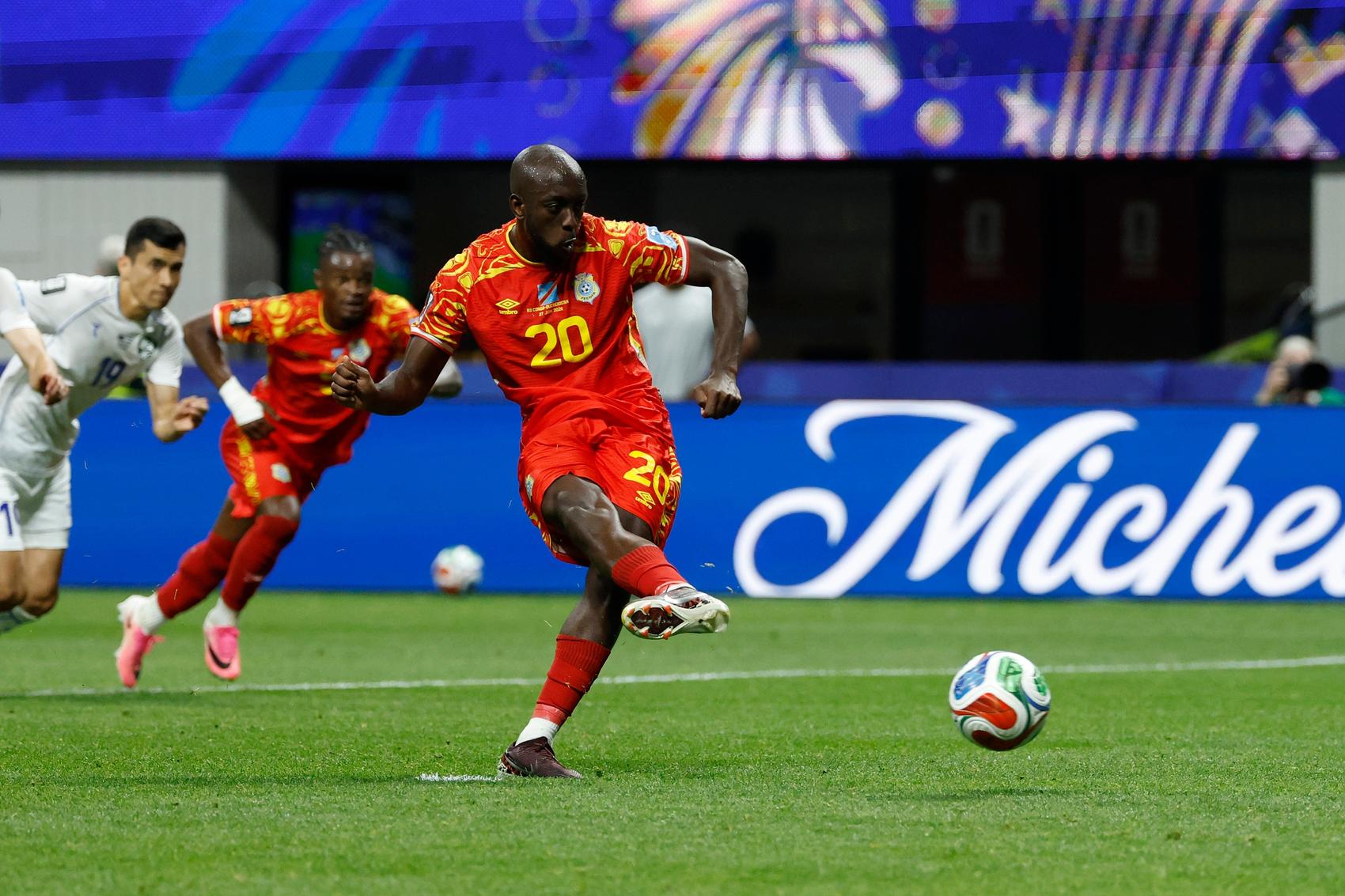
The game was level in the 68th when Wissa was brought down by Abdukodir Khusanov for a penalty.

Wissa picked himself up and sent Uzbekistan goalkeeper Abduvohid Nematov the wrong way by rolling the ball into the bottom corner for the first of a late flurry of goals.

Mayele put Congo ahead 10 minutes later when flicking past Nematov at the near post and was mobbed teammates and even substitutes, who raced off the bench and across the field to join in the wild celebrations. (ABC)

Posted on Leave a comment

BLACK BAZAAR – Alain Mabanckou

Black Bazaar is a novel that touches the issues faced by African immigrants in France who are facing poverty, racism, migration and so on. Originally published in French in 2009 (translated into English in 2012 by Sarah Ardizzone), The novel is set in France, but there is a mention of two Congos (Kinshasha and Brazzaville) with the protagonist who we don’t know his real name but is nicknamed Buttologist.

Buttologist is the protagonist and he narrates the entire story. He is both kind and patient, sometimes he gets angry. He has spoken of his travails in a country (France) which colonized his mother country, Congo Brazzaville after leaving the military. He also narrates about his childhood (in the Congo), his parents especially his father (who he calls old man) and it is filled with nostalgia. He is an aspiring writer who confides with Jean Phillipe, another character in the book from Haiti who advises him to write about his travails in a journal titled Black Bazaar. 

The reason he is called Buttologist is because of his eye for a woman’s backside and her character. He works at a printing press and has lived in Paris for fifteen years in an apartment full of migrants amongst them is a mixed-race neighbour named Mr Hippocratic. In that apartment, he has a small studio which he shares with his ex-girlfriend called Original Colour before she moved out with their daughter for another man. This broke his heart. During his spare time, he goes to an Afro-Cuban bar called the Jips which is in a Parisian neighbourhood and parleys with other African immigrants where they talk about everything. He is a dandy and he has a style for clothes (suitcases of crocodiles and anaconda Westons) which he buys from Italy.  He is a sapeur or a member of the Society of Ambience-makers and People of Elegance.

Speaking of Mr Hippocratic, he is a French-Ivorian who always criticizes black Africans especially Congo Kinshasha and Mobutu Seseko. It shows that he is a racist who gives false accuracies on black history and believes what the white historians say. Our protagonist doesn’t argue with him but has a hatred towards him. He also speaks of the people he came across including his Arab neighbour who owns a corner shop and calls him my brother and offers him kind words. He criticises the colonialists who stole from Arabs and Africans and claim it as theirs by bringing suffering upon them. 

It is also filled with puns, full stops, paragraphs and capital letters that are humorous that you think you are reading Amos Tutuola ‘‘The Palmwine Drinkard’’ which was filled with broken English and some Yoruba adages. Mabanckou does a wonderful depiction of what it means to be an African immigrant in Paris. He didn’t fail to express the views of the narrator on colonialism and post -colonial Africa especially in the Congo. Each of the characters represent themes; betrayal (Original Colour), trust (Jean Phillipe) friendship (Buttologist friends and the Arab neighbour) and racism (Hippocratic). 

The novel explains that despite French being the official language spoken among the cultures, the characters represent immigrants who feel that they don’t belong in a class or society that is not ready to welcome them (They do not feel right at home). They leave their real homes to go to another country that is filled with milk and honey.  The author does not fail to give nicknames to all the characters despite the fact that they don’t have real names but for them, it is due to their habits.  

It is enjoyable but it tells us that life is hard and there will be setbacks, gains and disappointments, highs and lows, happinesses and sorrows.

Opeyemi Ajao

3rd January, 2025