Posted on Leave a comment

Rubio’s speech to European allies takes a softer tone but sticks to Trump’s firm stance

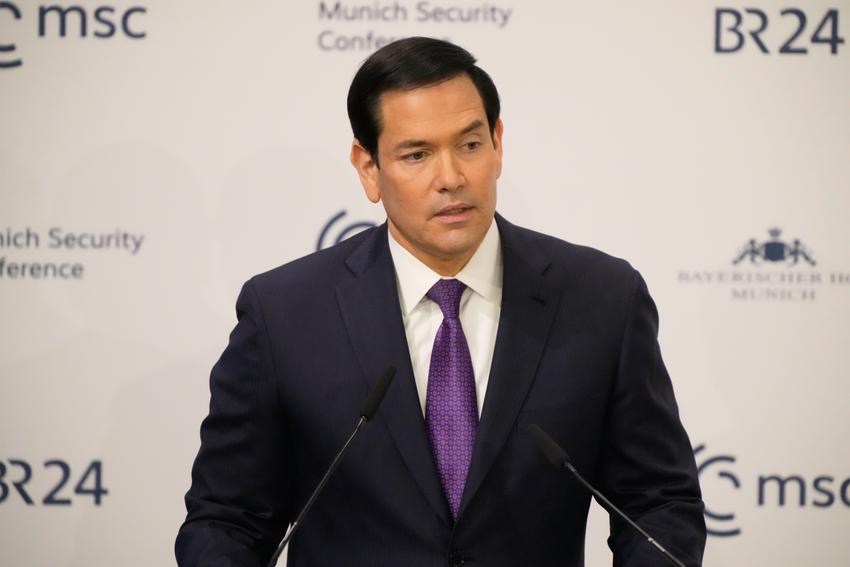
U.S. Secretary of State Marco Rubio offered a reassuring message to America’s allies on Saturday, striking a less aggressive but still firm tone about the administration’s intent to reshape the trans-Atlantic alliance and push its priorities after more than a year of President Donald Trump’s often-hostile rhetoric toward traditional allies.

Reminding his audience at the annual Munich Security Conference about America’s centuries-long roots in Europe, Rubio said the United States would remain forever tied to the continent even as it pushes for changes in the relationship and the institutions that have been the bulwark of the post-World War II world order.

Rubio addressed the conference a year after Vice President JD Vance stunned the same audience with a harsh critique of European values. A series of Trump administration statements and moves targeting allies followed, including Trump’s short-lived threat last month to impose new tariffs on several European countries in a bid to secure U.S. control of Greenland, a semiautonomous territory of NATO ally Denmark.

On Friday, German Chancellor Friedrich Merz had opened this year’s gathering by calling for the U.S. and Europe to “repair and revive trans-Atlantic trust together,” saying that even the U.S. isn’t powerful enough to go it alone in an world whose old order no longer exists. But he and other European officials made clear that they will stand by their values, including their approach to free speech, climate change and free trade.

While offering a calmer and more reassuring tone, Rubio made clear that the Trump administration is sticking to its guns on policy. He denounced “a climate cult” and “an unprecedented wave of mass migration that threatens the cohesion of our societies.”

Rubio argued that the “euphoria” of the Western victory in the Cold War led to a “dangerous delusion that we had entered ‘the end of history,’ that every nation would now be a liberal democracy, that the ties formed by trade and by commerce alone would now replace nationhood … and that we would now live in a world without borders where everyone became a citizen of the world.”

“We made these mistakes together and now together we owe it to our people to face those facts and to move forward to rebuild,” Rubio said.

“This is why we Americans may sometimes come off as a little direct and urgent in our counsel,” he said. “This is why President Trump demands seriousness and reciprocity from our friends here in Europe.”

Rubio said that an end of the trans-Atlantic era “is neither our goal nor our wish,” adding that “our home may be in the Western hemisphere, but we will always be a child of Europe.”

He acknowledged that “we have bled and died side-by-side on battlefields from Kapyong to Kandahar,” a contrast with disparaging remarks by Trump about NATO allies’ troops in Afghanistan that drew an outcry. “And I’m here today to make it clear that America is charting the path for a new century of prosperity. and that once again, we want to do it together with you, our cherished allies and our oldest friends.”

U.S. officials accompanying Rubio said his message was much the same as Vance’s last year but was intended to have a softer landing on the audience, which they acknowledged had recoiled at much of Trump’s rhetoric over the past year.

The president of the European Union’s executive commission, Ursula von der Leyen, said Rubio’s speech was “very reassuring” but noted that “in the administration, some have a harsher tone on these topics.”

In her speech to the conference, she stressed that “Europe must become more independent,” including on defense. She insisted on Europe’s “digital sovereignty” — its approach to hate speech on social media.

British Prime Minister Keir Starmer said that “we shouldn’t get in the warm bath of complacency. He said the U.K. must reforge closer ties with Europe to help the continent “stand on our own two feet” in its own defense, and said there needs to be investment that “moves us from overdependence to interdependence.”

Hanno Pevkur, the defense minister of EU and NATO member Estonia, said it was “quite a bold statement to say that America is ‘a child of Europe’.”

“It was a good speech, needed here today, but that doesn’t mean that we can rest on pillows now,” he told The Associated Press. “So still a lot of work has to be done.”

Rubio didn’t mention Greenland. After last month’s escalation over Trump’s designs on the Arctic island, the U.S., Denmark and Greenland started technical talks on an Arctic security deal.

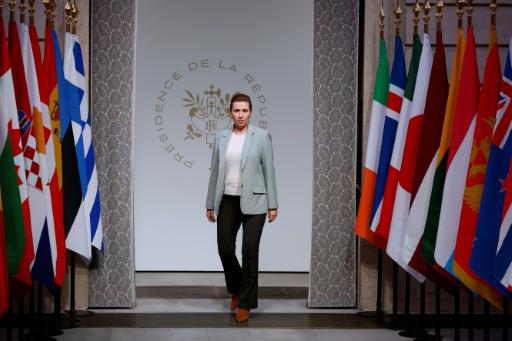
The Secretary of State met briefly in Munich on Friday with the Danish and Greenlandic leaders, a meeting Danish Prime Minister Mette Frederiksen described as constructive.

But Frederiksen suggested Saturday that although the dispute has cooled, she remains wary. Asked whether the crisis has passed, she replied: “No, unfortunately not. I think the desire from the U.S. president is exactly the same. He is very serious about this theme.”

Asked whether she can put a price on Greenland, she responded “of course not,” adding that “we have to respect sovereign states … and we have to respect people’s right for self-determination. And the Greenlandic people have been very clear, they don’t want to become Americans.” (JapanToday)
Posted on Leave a comment

Major EU states condemn Trump tariff threats; consider retaliation

Major European Union states including Germany and France decried U.S. President Donald Trump’s tariff threats over Greenland as blackmail on Sunday, as France proposed responding with a range of untested economic countermeasures.

Trump vowed ‌on Saturday to implement a wave of increasing tariffs on EU members Denmark, Sweden, France, Germany, the Netherlands and Finland, along with Britain and Norway, until the U.S. is allowed to buy Greenland.

All eight countries, already subject to U.S. tariffs of 10% and 15%, have sent small numbers of ⁠military personnel to Denmark’s vast Arctic island, as a row with the United States over ‍its future escalates.

“Tariff threats undermine transatlantic relations and risk a dangerous downward spiral,” they said in ‍a joint statement.

The Danish exercise ‍in Greenland was designed to strengthen Arctic security and posed no threat to anyone, they said, adding that they were ⁠ready to engage in dialogue, based on principles of sovereignty and territorial integrity.

Danish Prime Minister Mette Frederiksen said in a statement she was pleased with the consistent messages from other states, adding: “Europe ​will not be blackmailed”, a view echoed by Germany’s finance minister and Sweden’s prime minister.

“It’s blackmail what he’s doing,” Dutch Foreign Minister David van Weel said on Dutch television of Trump’s threat.

Cyprus, holder of the rotating six-month EU presidency, summoned ambassadors to an emergency meeting in Brussels late on Sunday as EU leaders stepped up contacts.

Danish Foreign Minister Lars Lokke Rasmussen, visiting his Norwegian counterpart in Oslo, said Denmark would continue to focus on diplomacy, ⁠referring to an agreement Denmark, Greenland and the U.S. made on Wednesday to set up a working group.

“Even though we are now being confronted with these threats, we will naturally try to stay on that path,” Rasmussen said.

“The U.S. is also more than the U.S. president. I’ve just been there. There are also checks and balances in American society.” he added.

Meanwhile, a source close to Emmanuel Macron said the French President was pushing to activate the Anti-Coercion Instrument, which could limit access to public tenders, investments or banking activity or restrict trade in services, in which the U.S. has a surplus with the bloc, including digital services.

Irish Prime Minister Micheal Martin said that while there should be no doubt the EU would retaliate, it was “a bit premature” to activate the instrument.

And Italian Prime Minister Giorgia Meloni, who is closer to the U.S. President than some other EU leaders, described the tariff threat on Sunday as “a mistake”, adding she had spoken to Trump a few hours earlier and told him what she thought.

“He seemed interesting in listening,” she told a ​briefing with reporters during a trip to Korea.

British Culture Secretary Lisa Nandy said allies needed to work with the United States to resolve the dispute.

“Our position on Greenland is non-negotiable … It is in our collective interest to work ⁠together and not to start a war of words,” she told Sky News.

The U.S. tariff threats call into question trade deals struck with Britain in May and the EU in July.

The limited agreements have already faced criticism about their lopsided nature, with the U.S. maintaining broad tariffs, while their partners ‍are required to remove import duties.

The European Parliament looks likely now to suspend its work on the EU-U.S. trade deal. ‌It had been due to vote on removing ‌many EU import duties on January 26-27, but Manfred Weber, ‍head of the European People’s Party, the largest group in parliament, said late on Saturday that approval was not possible for now.

German Christian Democrat lawmaker ‌Juergen Hardt also mooted what he told Bild newspaper could be a last resort “to bring ‍President Trump to his senses on the Greenland issue”, a boycott of the soccer World Cup that the U.S. is hosting this year. (JapanToday)

Posted on Leave a comment

Trump threatens European nations with tariffs until US can acquire Greenland

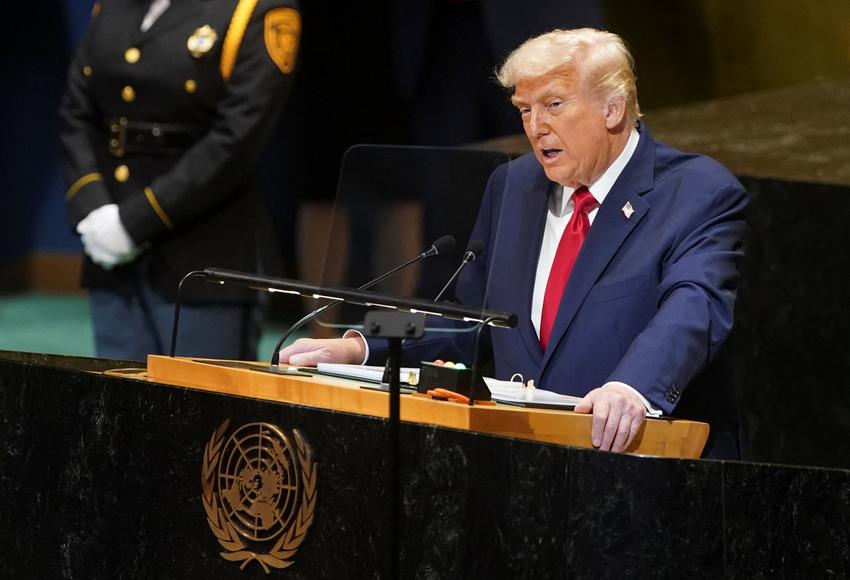
US President Donald Trump on Saturday escalated his quest to acquire Greenland, threatening multiple European nations with tariffs of up to 25 percent until his purchase of the Danish territory is achieved.

Trump aimed his ire at Denmark, a fellow NATO member, as well as several European countries that have deployed troops in recent days to the vast, mineral-rich territory at the gateway to the Arctic with a population of 57,000.

If realized, Trump’s threats against Washington’s NATO partners would create unprecedented tension within the alliance.

From February 1, Denmark, Norway, Sweden, France, Germany, the United Kingdom, the Netherlands, and Finland would be subject to a 10-percent tariff on all goods sent to the United States, Trump said in a post on his Truth Social network.

“On June 1st, 2026, the Tariff will be increased to 25%. This Tariff will be due and payable until such time as a Deal is reached for the Complete and Total purchase of Greenland,” he wrote.

“These Countries, who are playing this very dangerous game, have put a level of risk in play that is not tenable or sustainable,” Trump said.

“Therefore, it is imperative that, in order to protect Global Peace and Security, strong measures be taken so that this potentially perilous situation end quickly, and without question.”

It was not immediately clear what authority the US leader would invoke to impose the threatened tariffs of up to 25 percent.

Since returning to the presidency, Trump has unleashed sweeping tariffs on goods from virtually all trading partners, to address what Washington says are unfair trade practices and as a tool to press governments on US concerns. (Vanguard)

Posted on Leave a comment

Danish PM says Greenland showdown at ‘decisive moment’ after new Trump threats

Denmark’s Prime Minister said Sunday that her country faces a “decisive moment” in its diplomatic battle over Greenland after U.S. President Donald Trump again suggested using force to seize the Arctic territory.

Ahead of meetings in Washington from Monday on the global scramble for key raw materials, Prime Minister Mette Frederiksen said that “there is a conflict over Greenland”.

“This is a decisive moment” with stakes that go beyond the immediate issue of Greenland’s future, she added in a debate with other Danish political leaders.

Frederiksen posted on Facebook that “we are ready to defend our values – wherever it is necessary – also in the Arctic. We believe in international law and in peoples’ right to self-determination.”

Germany and Sweden backed Denmark against Trump’s latest claims to the self-governing Danish territory.

Swedish Prime Minister Ulf Kristersson condemned U.S. “threatening rhetoric” after Trump repeated that Washington was “going to do something on Greenland, whether they like it or not”.

“Sweden, the Nordic countries, the Baltic states, and several major European countries stand together with our Danish friends,” he told a defense conference in Salen where the U.S. general in charge of NATO took part.

Kristersson said a U.S. takeover of mineral-rich Greenland would be “a violation of international law and risks encouraging other countries to act in exactly the same way”.

Germany reiterated its support for Denmark and Greenland ahead of the Washington discussions.

Before meeting U.S. Secretary of State Marco Rubio on Monday, German Foreign Minister Johann Wadehpul was to hold talks in Iceland to address the “strategic challenges of the Far North”, according to a foreign ministry statement.

“The legitimate interests of all NATO Allies, as well as those of the inhabitants of the (Arctic) region, must be at the centre of our discussions,” Wadehpul said.

“It is clear that it is exclusively up to Greenland and Denmark to decide questions of Greenland’s territory and sovereignty,” he previously told Germany’s Bild daily.

“We are strengthening security in the Arctic together, as NATO allies, and not against one another,” German Finance Minister Lars Klingbeil said ahead of an international meeting on critical raw materials in Washington.

European nations have scrambled to coordinate a response after the White House said this week that Trump wanted to buy Greenland and refused to rule out military action.

On Tuesday, leaders of seven European countries including France, Britain, Germany and Italy signed a letter saying it is “only” for Denmark and Greenland to decide the territory’s future.

Trump says controlling the island is crucial for U.S. national security because of the rising Russian and Chinese military activity in the Arctic.

NATO Supreme Allied Commander General Alexus Grynkewich told the Swedish conference that alliance members were discussing Greenland’s status. The US general added that while there was “no immediate threat” to NATO territory, the Arctic’s strategic importance is fast growing.

Grynkewich said he would not comment on “the political dimensions of recent rhetoric” but that talks on Greenland were being held at the North Atlantic Council.

“Those dialogues continue in Brussels. They have been healthy dialogues from what I’ve heard,” the general said.

A Danish colony until 1953, Greenland gained home rule 26 years later and is contemplating eventually loosening its ties with Denmark. Polls indicate that Greenland’s population strongly oppose a U.S. takeover.

“I don’t think there’s an immediate threat to NATO territory right now,” Grynkewich told the conference.

But he said Russian and Chinese vessels had been seen patrolling together on Russia’s northern coast and near Alaska and Canada, working together to get greater access to the Arctic as ice recedes due to global warming. (JapanToday)