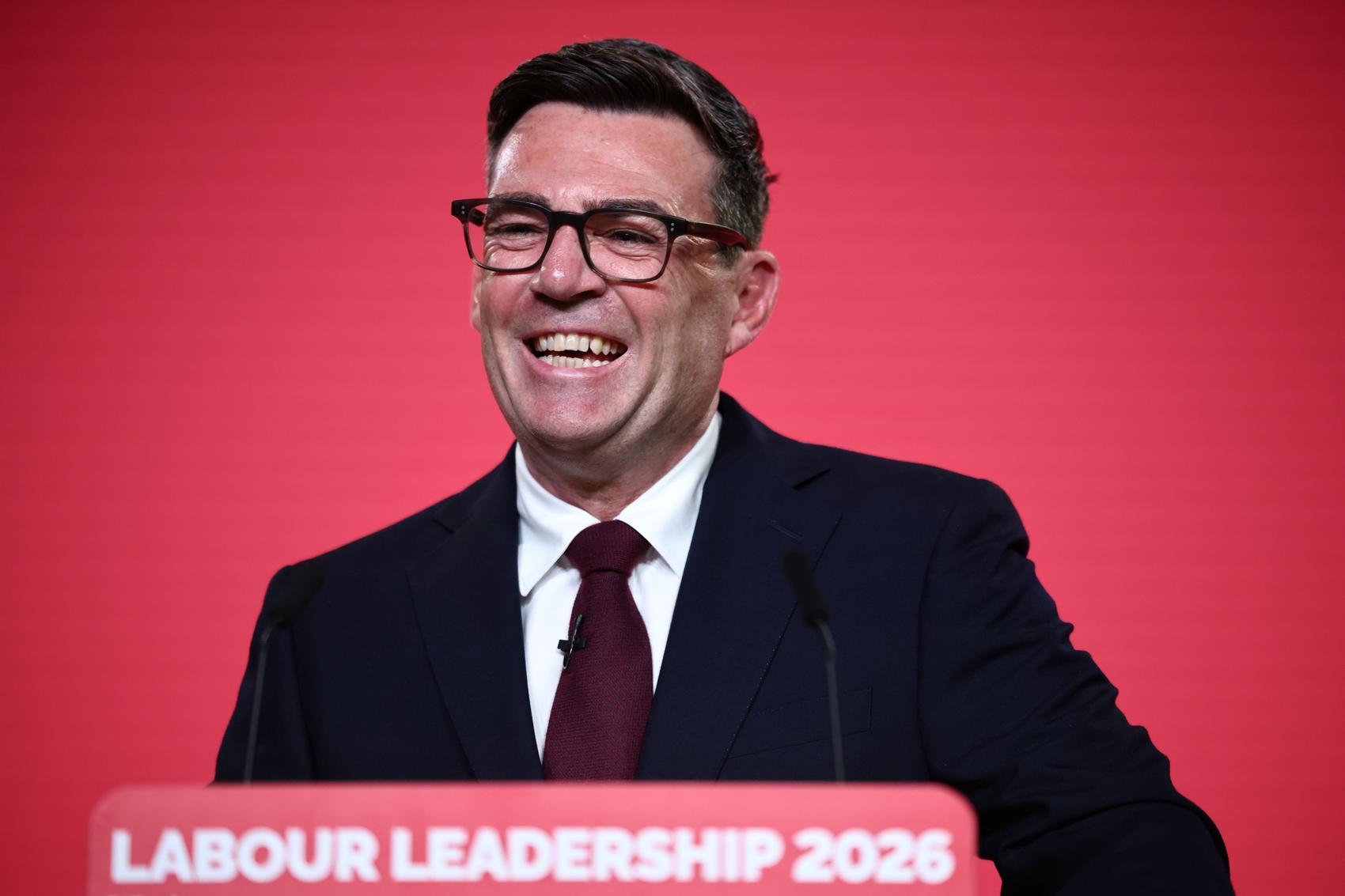
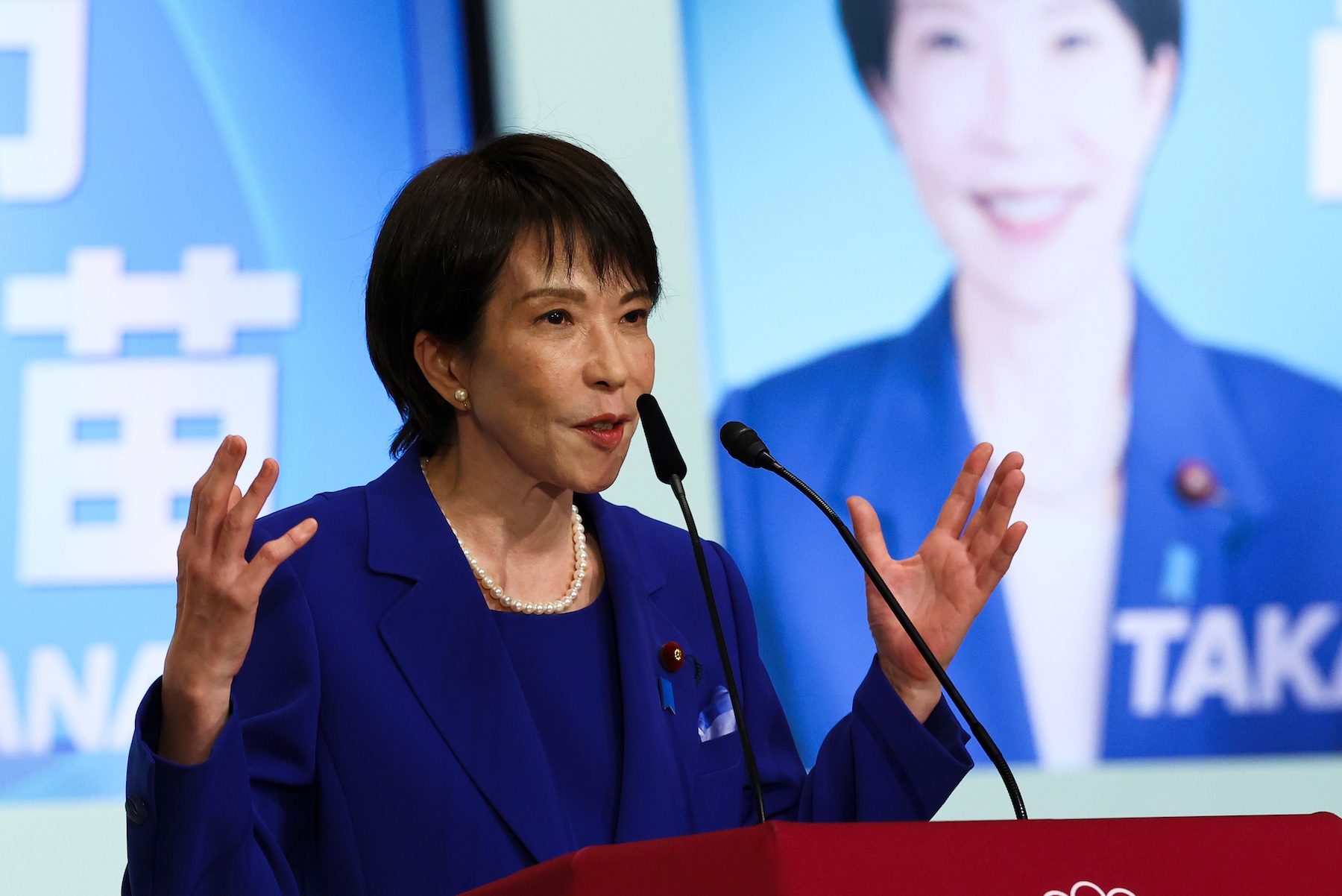
Prime Minister Sanae Takaichi said Japan will further deepen relations with Britain under new Prime Minister Andy Burnham, who took office Monday after winning the ruling Labour Party’s leadership race last week.
In a post on X on Monday evening, Takaichi said in English that she looks forward to working closely with Burnham, who succeeded Keir Starmer, to further deepen bilateral ties “across a wide range of fields” as “enhanced global strategic partners.”
Takaichi also said she believes Burnham will lead Britain with “robust leadership,” leveraging his “strong track record” from his time as the mayor of Greater Manchester, during which he promoted public services reforms before returning to national politics by winning a June by-election.
On Tuesday, Chief Cabinet Secretary Minoru Kihara said at a press conference that Japan will tackle global challenges with Britain, such as the realization of a free and open Indo-Pacific, a vision advocated by Japan that is seen as an attempt to counter China’s growing clout in the region.
Kihara, the top government spokesman, also said that Japan will continue to collaborate with Britain and Italy on their joint project of developing a next-generation fighter jet by 2035.
As the sole contender, Burnham won the party leadership contest held on Friday following Starmer’s announcement in late June of his decision to resign after the party’s heavy defeat in May local elections. (JapanToday)
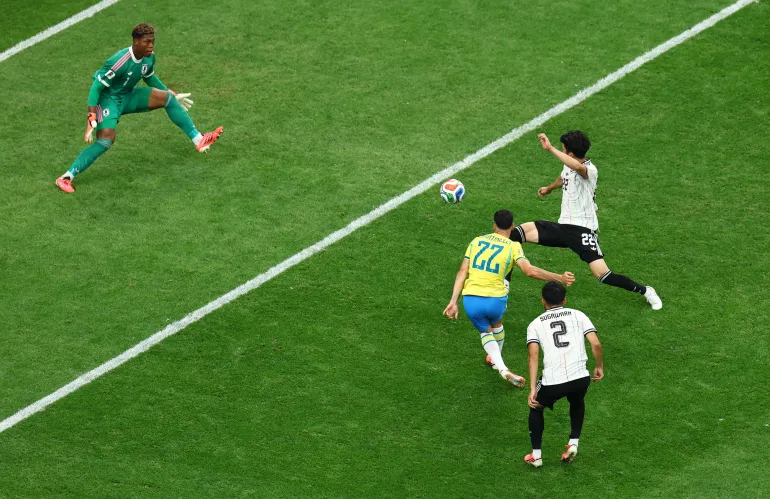
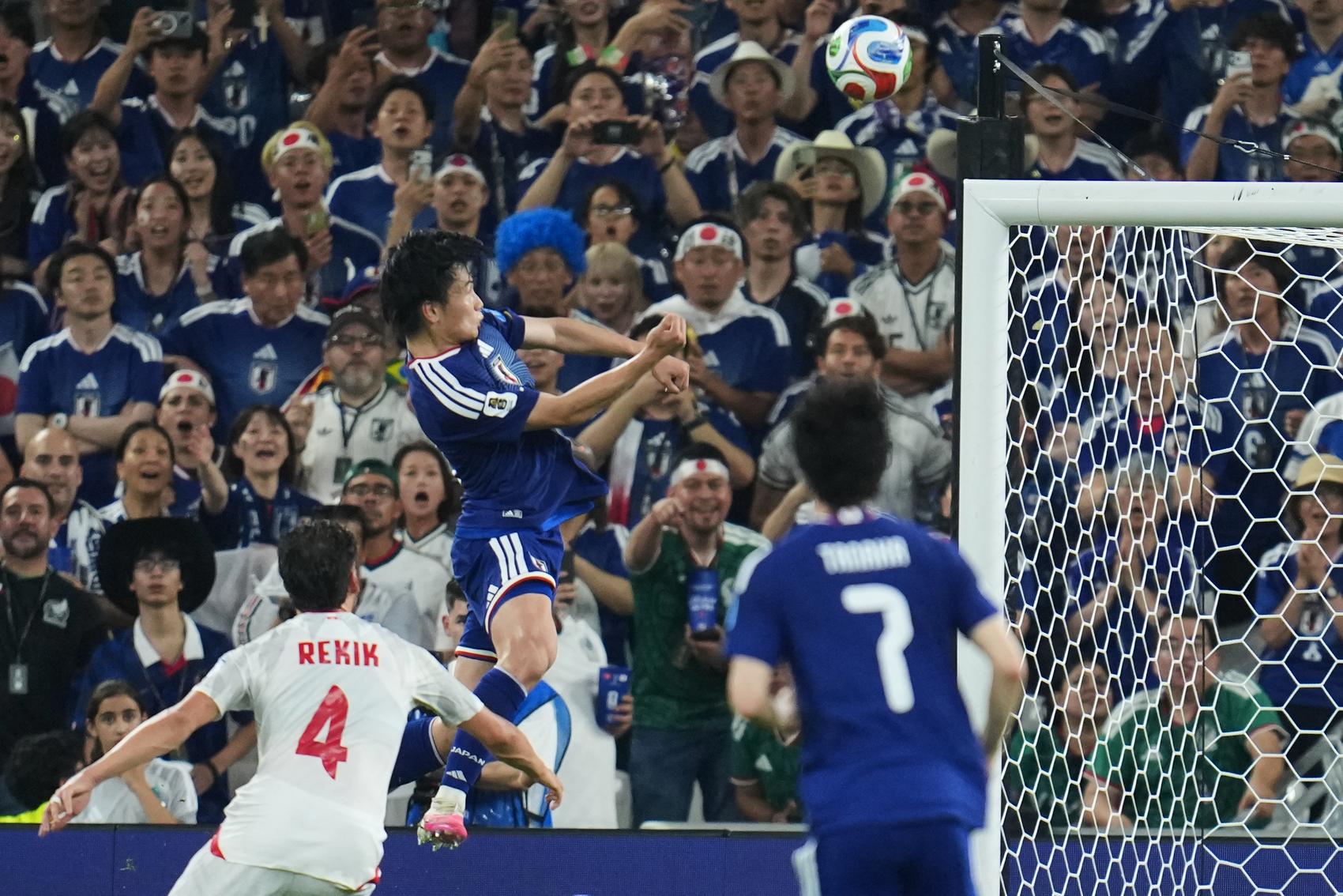
Gabriel Martinelli scored the winner late in injury time to give five-time champions Brazil a 2-1 win over Japan in the World Cup round of 32 in Houston.
Martinelli, who had come on as a second-half substitute, scored in the sixth minute of stoppage time as the match on Monday appeared to be heading to extra time.
Brazil will next face either the Ivory Coast or Norway on Sunday in East Rutherford, New Jersey, in the round of 16.
Casemiro had earlier equalised with a header in the 56th minute off an assist from Gabriel Magalhaes after just missing another chance two minutes earlier. The shot sailed just out of reach of the outstretched hand of Japan goalkeeper Zion Suzuki and into the net.
Kaishu Sano stole a misplaced pass in midfield before his right-footed shot from above the half-circle put Japan ahead after 29 minutes.
Vinicius Junior, who has scored four goals so far in the tournament, had a chance to put Brazil on top in the 58th minute, but his shot from the left was deflected by goalkeeper Suzuki and went past the far post.
Brazil had two chances to even the score early in the second half before breaking through late on. First, Suzuki blocked a header from Bruno Guimaraes in the 52nd minute. Soon after, Casemiro’s header bounced off a defender’s head and Suzuki’s face.
Japan have never won a World Cup knockout match.The win was Brazil’s 12th in 15 games against Japan.
The teams have also played to two draws, while Japan got their first win in the series in a friendly in Tokyo in October.
This was a match-up between two countries with deep ties, Brazil being home to about 2.7 million Japanese descendants, which is the largest Japanese population outside of Japan.
Those ties extend to football, where Brazil superstar Zico moved to Japan in 1991 to play for Kashima Antlers and help build Japan’s professional football network.
He coached the Japan national team from 2002–06, leading the team to the World Cup in 2006.That team lost to Brazil 4-1 in the only previous meeting between the teams at the World Cup.
Brazil won Group C after a draw with Morocco and victories over Haiti and Scotland.
Monday’s victory came on the anniversary of their first World Cup championship in Sweden in 1958, when a 17-year-old Pele scored two goals in the final against the host country.
Japan reached the round of 32 as runner-up in Group F after draws with the Netherlands and Sweden and a win over Tunisia. The loss snaps a 10-game unbeaten streak dating back to a 2-0 defeat to the United States in September. (AlJazeera)
Japan moved one step closer to reaching the knockout stages of the World Cup for the fourth consecutive time after pummeling Tunisia 4-0 in Group F.
Japan’s four goals were the most the Samurai Blue had ever scored in a World Cup game, as Japan comfortably dismantled a Tunisia side that became the first to ever fire its coach after the opening game.
Ayase Ueda scored twice, along with Daichi Kamada and Junya Ito to put Japan level with the Netherlands on four points. The Dutch are currently top the group due to having scored one more goal than Japan in its two matches.
The loss for Tunisia means it is eliminated from the tournament. Japan is guaranteed at least third in the group, which could be enough to advance to the knockout stages.
Tunisia appointed two-time Africa Cup of Nations winner Hervé Renard to try and rescue the Eagles of Carthage after its humiliating 5-1 loss to Sweden, but the North African nation could not contain Japan’s speedy attack nor create any clear chances of their own.
Kamada opened the scoring in the fourth minute, the fastest in Japan’s World Cup history. The Crystal Palace midfielder was perfectly positioned for Keito Nakamura’s cross and barely had to move to tap in his second goal of the tournament.
In the 31st minute, Ueda received the ball in the midfield and drove toward the Tunisia box. When Ueda opted not to pass to a few advancing runners, any chance of a goal seemed lost — but the 27-year-old fired an angled shot from outside the box which flew into the left corner of the goal to make it 2-0.
The Feyenoord striker had an impressive club season with Feyenoord, scoring 24 goals in the Eredivisie to earn the league’s top scorer award.
In the 69th minute, Ito slotted a third goal for Japan after a Ueda’s flick put Ito in a one-on-one with Tunisia’s goalkeeper Aymen Dahmen, which he finished calmly.
Ueda’s masterful looping header in the 83rd minute, his second of the night, capped off an impressive night for the Samurai Blue.
Japan, which has not lost to a European opponent in 90 minutes since 2019, will play Sweden in Dallas on Thursday. Tunisia will play the Netherlands in Kansas City on the same day. (JapanToday)
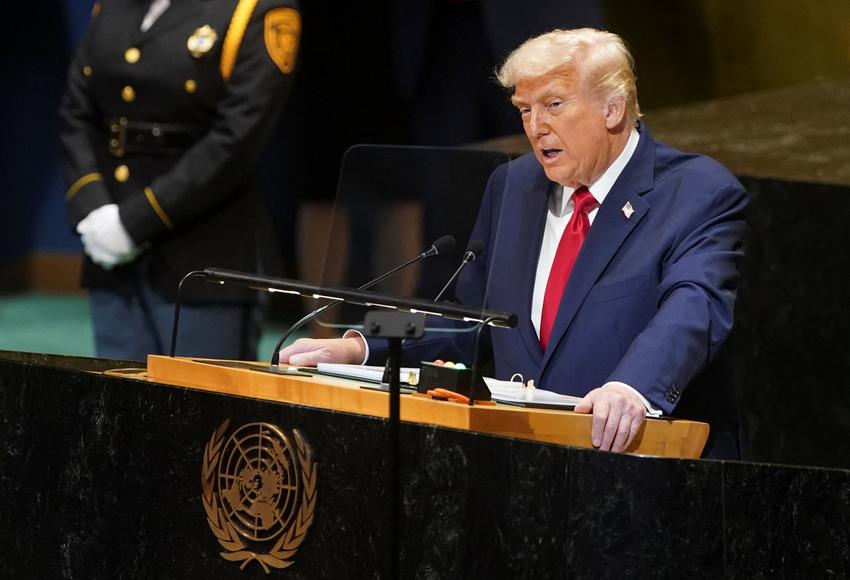
Japanese Prime Minister Sanae Takaichi sought to reaffirm her alliance with President Donald Trump on Thursday after the president this week seemed to complain that Japan was among the nations that did not join his call to help protect the Strait of Hormuz.
Takaichi, who met with Trump at the White House, told the president that Japan has opposed Iran’s development of its nuclear program and appealed to his desire to be seen as a peacemaker, despite his launching a war of choice with Iran. She told the U.S. president that in the Middle East and around the world now, there was “a very severe security environment,” but said, “Even against that backdrop, I firmly believe that it is only you, Donald, who can achieve peace across the world.”
The two leaders had warm words for each other, including Trump calling the prime minister a “popular powerful woman,” but there appeared to be some tension as they faced repeated questions from reporters about Japan’s support for the Iran war.
Trump told reporters that he and Takaichi would be discussing in their meeting Japan’s level of support for the U.S. in the Iran war, saying, “They are really stepping up to the plate.” He did not offer details.
He later said that much of the oil Japan relies on passes through the Strait of Hormuz and said, “so that’s a big reason to step up. He also mentioned U.S. spending in Japan and the number of troops it has stationed there.
“I expect Japan to step up you know, because we have that kind of relationship,” Trump said.
Taikaichi’s meeting at the White House, followed by a dinner Thursday night, was supposed to give her a prime opportunity to have Trump’s ear before he embarked on a trip to China.
The pair were all smiles in the evening, as Trump hosted a dinner in the prime minister’s office. “This is a spectacular woman, and it’s an honor to have you at the White House,” Trump said. Taikaichi referred to the leaders through an interpreter as “best buddies” before declaring, in English, “Japan is back.”
But now, the war in Iran and Trump’s unsuccessful call for Japan and other nations to help protect the vital Strait of Hormuz means the China trip has been delayed. Trump had repeatedly complained on camera and online that U.S. allies, including Japan, rejected his request to help safeguard the critical waterway for oil and gas transport.
The prime minister acknowledged before she left Japan that she expected her meeting with Trump will be “very difficult.”
Beyond facing questions about Iran, Takaichi and Trump are expected to announce a $40 billion nuclear reactor deal, according to a White House official, who was not authorized to speak publicly and spoke on the condition of anonymity to share details before the announcement.
Under the deal, U.S.-based GE Vernova Inc. and Japan-based Hitachi Ltd. will build advanced small modular reactors in Tennessee and Alabama, the official said. The deal aims to help stabilize electricity prices and expand power generation in the U.S.
Takaichi and her ministers have denied that Washington officially requested Japanese warships for the U.S.-Israeli operation.
Japan, a key U.S. ally in Asia, is one of the countries that Trump namechecked on Tuesday as he railed against the lack of help with the Strait of Hormuz before declaring the help wasn’t needed.
Kurt Campbell, the former U.S. deputy secretary of state in the Biden administration who is now chair of The Asia Group, said that in order to press for Japan’s interests, Takaichi will want to find a way to suggest that Japan is a part of the U.S. plan in the Middle East.
“She’s going to want to come out of that as a partner in this case and realize that if she can do that, that she can translate that potentially into the president listening more to Japanese concerns about Taiwan or other issues,” Campbell said.
The constraints on Japan’s involvement in Iran include a provision in its post-World War II constitution that bans the use of force except to defend its territory. The country’s military is called the Self-Defense Force.
Christopher Johnstone, a partner and chair of the defense and national security practice at The Asia Group, said Japan could help with mine-sweeping and has had “a small naval presence” in the region as part of an anti-piracy mission for at least a decade. But to join the U.S. mission would require Takaichi to clear “an exceptionally high bar politically to invoke collective self-defense” that has never been done before.
Takaichi, who had her first meeting with Trump in October in Tokyo, is Japan’s first female prime minister and a protégé of former leader Shinzo Abe, who developed a close relationship with Trump.
She is also a hardline conservative and longtime supporter of Taiwan whose comments about Japan’s willingness to provide military support to the island have heightened tensions with China.
Ahead of her meeting with Trump, Takaichi had sought to focus on trade, strengthening the U.S.-Japan relationship and security concerns. Japanese officials said the two sides would work to deepen cooperation in regional security, critical minerals, energy and dealing with China.
China views self-governed Taiwan, which the U.S. relies on for its production of computer chips, as its sovereign territory and has said it would take it by force if needed.
But beyond questions about helping with the Strait of Hormuz, the global implications of the Iran war have also put the Japanese leader in a tougher spot with Trump as she seeks to ensure U.S. commitment to the Indo-Pacific region.
Japan considers China a growing security threat and has pushed a military buildup on southwestern islands near the East China Sea. But the U.S. has shifted some troops stationed in Japan to the Middle East, removing a check against China’s power.
Takaichi is expected to raise concerns about troop shifts with Trump because they are coming at the same time China is launching a large number of exercises around Taiwan.
“This raises the prospect that — once again — the United States will be distracted and bogged down in the Middle East at a time when the deterrence problem in East Asia has never been greater,” Johnstone said. (JapanToday)
US President Donald Trump on Saturday urged other nations to send ships to help secure the Strait of Hormuz, the critical chokepoint for global oil supplies disrupted by the Mideast war.
Trump, who has said the United States will soon start escorting tankers through the strait, posted on Truth Social that “Many countries, especially those who are affected by Iran’s attempted closure of the Hormuz Strait, will be sending War Ships, in conjunction with the United States of America, to keep the Strait open and safe.”
The US president added: “Hopefully China, France, Japan, South Korea, the UK, and others, that are affected by this artificial constraint, will send Ships to the area.”
Iranian strikes have all but halted maritime traffic in the strait, through which a fifth of global crude oil and liquefied natural gas normally pass. It is just 54 kilometers (34 miles) wide at its narrowest point.
With oil prices spiking, Trump was asked Friday when the US Navy would begin escorting tankers through the Strait of Hormuz. “It’ll happen soon, very soon,” he said.
In his post on Saturday, Trump asserted that Iran’s military capability had been eliminated but he conceded that it was still able to attack the strait.
“We have already destroyed 100% of Iran’s Military capability, but it’s easy for them to send a drone or two, drop a mine, or deliver a close range missile somewhere along, or in, this Waterway, no matter how badly defeated they are,” he wrote.
As he urged nations to send ships to the strait, he added that “the United States will be bombing the hell out of the shoreline, and continually shooting Iranian Boats and Ships out of the water. One way or the other, we will soon get the Hormuz Strait OPEN, SAFE, and FREE!” (Channels)
The governing party of Prime Minister Sanae Takaichi secured a two-thirds supermajority in a key parliamentary election Sunday, Japanese media reported citing preliminary results, earning a landslide victory thanks to her popularity.
Takaichi, in a televised interview with public television network NHK following her sweeping victory, said she is now ready to pursue policies to make Japan strong and prosperous.
NHK, citing results of vote counts, said Takaichi’s Liberal Democratic Party, or LDP, alone secured 316 seats by early Monday, comfortably surpassing a 261-seat absolute majority in the 465-member lower house, the more powerful of Japan’s two-chamber parliament. That marks a record since the party’s foundation in 1955 and surpasses the previous record of 300 seats won in 1986 by late Prime Minister Yasuhiro Nakasone.
With 36 seats won by its new ally, Japan Innovation Party, Takaichi’s ruling coalition has won 352 seats.
Voter turnout was 56.23 percent, according to an estimate by Kyodo News as of 3 a.m. Monday.
A smiling Takaichi placed a big red ribbon above each winner’s name on a signboard at the LDP’s headquarters, as accompanying party executives applauded.
Despite the lack of a majority in the other chamber, the upper house, the huge jump from the preelection share in the superior lower house would allow Takaichi to make progress on a right-wing agenda that aims to boost Japan’s economy and military capabilities as tensions grow with China and she tries to nurture ties with the United States.
Takaichi said she would try to gain support from the opposition while firmly pushing forward her policy goals.
“I will be flexible,” she said.
Takaichi is hugely popular, but the governing LDP, which has ruled Japan for most of the last seven decades, has struggled with funding and religious scandals in recent years. She called Sunday’s early election only after three months in office, hoping to turn that around while her popularity is high.
The ultraconservative Takaichi, who took office as Japan’s first female leader in October, pledged to “work, work, work,” and her style, which is seen as both playful and tough, has resonated with younger fans who say they weren’t previously interested in politics.
The opposition, despite the formation of a new centrist alliance and a rising far-right, was too splintered to be a real challenger. The new opposition alliance of LDP’s former coalition partner, Buddhist-backed dovish Komeito, and the liberal-leaning Constitutional Democratic Party of Japan, is projected to sink to half of their combined preelection share of 167 seats.
Takaichi was betting with this election that her LDP party, together with its new partner, the JIP, would secure a majority.
Trump in a post on his Truth Social platform Sunday congratulated Takaichi “on a LANDSLIDE Victory in today’s very important Vote. She is a highly respected and very popular Leader. Sanae’s bold and wise decision to call for an Election paid off big time.”
Akihito Iwatake, a 53-year-old office worker, said he welcomed the big win by the LDP because he felt the party went too liberal in the past few years. “With Takaichi shifting things more toward the conservative side, I think that brought this positive result,” he said.
The prime minister wants to push forward a significant shift to the right in Japan’s security, immigration and other policies. The LDP’s right-wing partner, JIP leader Hirofumi Yoshimura, has said his party will serve as an “accelerator” for this push.
Japan has recently seen far-right populists gain ground, such as the anti-globalist and surging nationalist party Sanseito. Exit polls projected a big gain for Sanseito.
The first major task for Takaichi when the lower house reconvenes in mid-February is to work on a budget bill, delayed by the election, to fund economic measures that address rising costs and sluggish wages.
Takaichi has pledged to revise security and defense policies by December to bolster Japan’s offensive military capabilities, lifting a ban on weapons exports and moving further away from the country’s postwar pacifist principles.
She has been pushing for tougher policies on foreigners, anti-espionage and other measures that resonate with a far-right audience, but ones that experts say could undermine civil rights.
Takaichi also wants to increase defense spending in response to U.S. President Donald Trump’s pressure for Japan to loosen its purse strings.
She now has time to work on these policies, without an election until 2028. (JapanToday)
Japanese Prime Minister Sanae Takaichi said the alliance between Tokyo and Washington would collapse if Japan failed to act in the event of an attack on the U.S. military during a conflict in Taiwan.
Detailing the Japanese response to a hypothetical Taiwan crisis, Takaichi appeared to dial back on her remarks in November that suggested Tokyo could intervene militarily during a potential attack on the island.
That comment provoked the ire of Beijing, which regards the democratic island as its own territory.
Ahead of a snap election in February, Takaichi was asked during a news program Monday about her remarks in November that suggested Tokyo could intervene militarily during a potential attack on Taiwan.
Takaichi pointed out that in the event of conflict, Japan and the United States might jointly conduct an evacuation operation to rescue Japanese and American nationals.
“If the U.S. military, acting jointly with Japan, comes under attack and Japan does nothing and runs home, the Japan-U.S. alliance will collapse,” she said on the TV Asahi program.
“If something serious happens there, we would have to go to rescue the Japanese and American citizens in Taiwan. In that situation, there may be cases where Japan and the U.S. take joint action,” the prime minister said.
She added: “We will respond strictly within the bounds of the law, making a comprehensive judgment based on the circumstances.”
In the wake of Takaichi’s comments in November, China has discouraged its nationals from traveling to Japan, citing deteriorating public security and criminal acts against Chinese nationals in the country.
Beijing is reportedly also choking off exports to Japan of rare-earth products crucial for making everything from electric cars to missiles. (JapanToday)
Four-time Grand Slam singles champion Naomi Osaka is feeling under the weather at the United Cup.
After losing her first match for Japan against Greece’s Maria Sakkari on Friday, Osaka said she got “really sick” over the Christmas holiday period and wasn’t operating at 100% during the 6-4, 6-2 loss.
Osaka was coughing at times during the match and appeared to lack energy. She said she likely caught an illness from her two-year-old daughter Shai.
“I have been dealing with some health stuff, so I’m kind of just happy to be out here right now,” Osaka said. “It’s not serious but I’m not operating at the percent that I want to be operating at, which kind of sucks, because I had a really good offseason so I thought I was going to do really well here.”
Osaka, who advanced to the U.S. Open semifinals last year, said she thinks she’s nearly finished with the illness.
“I’m at the tail end of that but still not amazing,” she said. “I’m just trying to get better every day. I had a cough, a runny nose, like all that nasty stuff, so hopefully it goes away before the Australian Open.”
The first Grand Slam event of the year starts in Melbourne on Jan. 18.
Stefanos Tsitsipas wrapped up victory in the match for Greece over Japan with a 6-3, 6-4 win against Shintaro Mochizuki. (JapanToday)
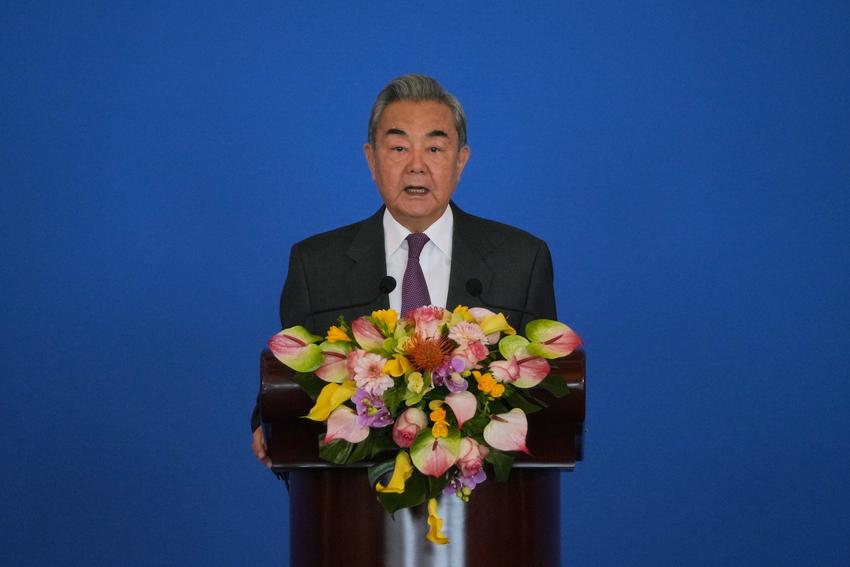
Chinese Foreign Minister Wang Yi on Tuesday lashed out at Japanese Prime Minister Sanae Takaichi for “openly challenging” Chinese territorial sovereignty after the Japanese leader’s remark on a Taiwan emergency heightened bilateral tensions.
Wang, speaking at a symposium in Beijing, also said that Japan has failed to “deeply reflect” on its wartime past, including its invasion of China.
Japan’s current leadership has been “openly challenging China’s territorial sovereignty, the historical conclusions of World War II, and the postwar international order,” Wang said.
Japan invaded a vast swath of China before World War II. The Asian neighbors have been at odds over wartime history among other issues.
Sino-Japanese relations have worsened since Takaichi, seen as a security hawk, said in early November that a Taiwan emergency could be a “survival-threatening” situation for Japan and prompt a response by Japan’s Self-Defense Forces.
China sees Taiwan as a renegade province that must be reunified with the mainland, by force if necessary.
Wang’s remarks came as China conducted military drills in five areas encircling self-ruled Taiwan in a warning against separatism and external interference. (JapanToday)
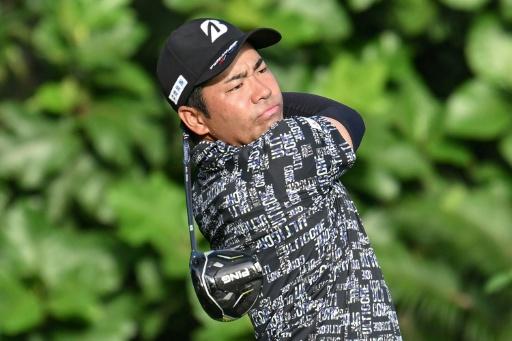
Kazuki Higa made history as the first golfer from Japan to win the Asian Tour order of merit after finishing seventh at the season-ending Saudi Open.
Higa carded a four-under-par 68 in Saturday’s final round at Dirab Golf and Country Club, near Riyadh, to finish on 16-under, seven behind the winner Bjorn Hellgren of Sweden.
It was enough to see Higa top the standings ahead of Zimbabwe’s Scott Vincent.
“I am so, so happy. This is a great honour,” said the 30-year-old Higa.
“I just love playing golf. That’s what it’s about. I can’t wait to get home to see my family.”
Higa also earned an exemption into the British Open for his achievement.
The ultra-consistent Higa started the year with three top 10s in the Philippines, India and New Zealand.
But it was back-to-back wins in September at the Shinhan Donghae Open in South Korea and the Yeangder TPC in Taiwan that shot him up the standings.
A tie for second at the International Series Philippines in October propelled him to the top of the order of merit and he never looked back.
“I have worked very hard for this,” Higa said. “I felt that last year changed things, all the hard work started to pay off and it’s amazing to see it all pay off this week.” (JapanToday)


 English