Posted on Leave a comment

President of Iran’s soccer federation says World Cup participation in US is in doubt

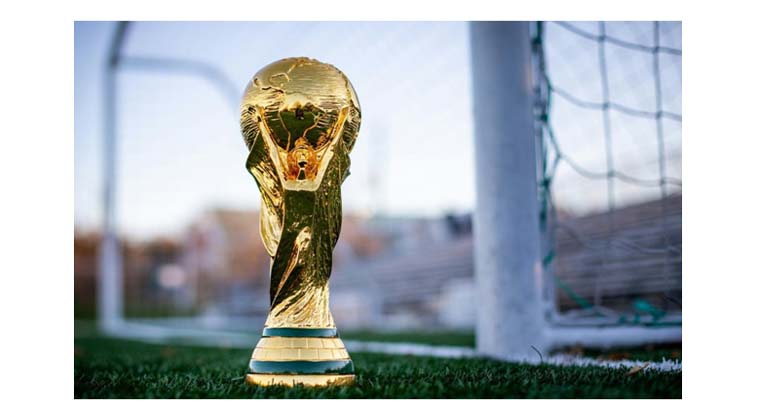
The president of Iran’s soccer federation says he does not know if the national team can play World Cup matches in the United States following the surprise U.S. and Israeli bombardment of his country.

“What is certain is that after this attack, we cannot be expected to look forward to the World Cup with hope,” Mehdi Taj told sports portal Varzesh3 as Iran traded strikes with Israel as part of a widening war prompted by the bombardment.

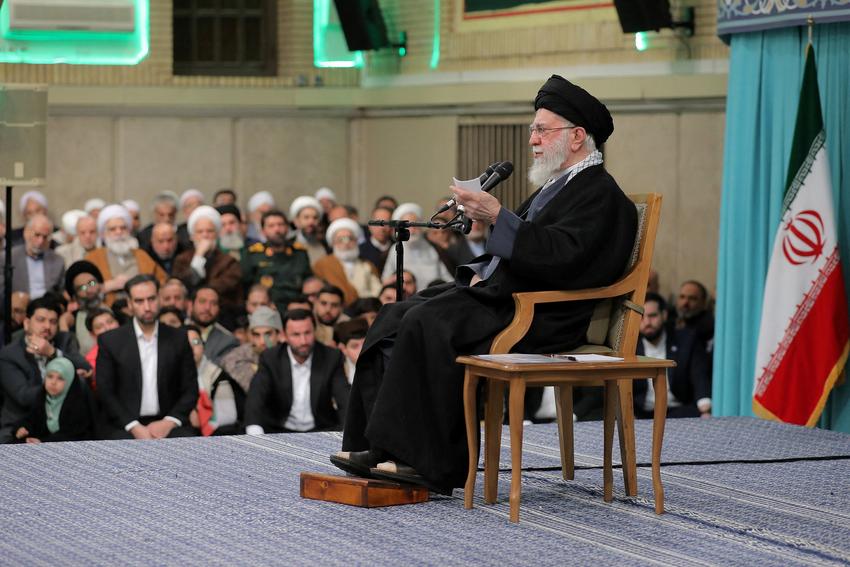
The U.S.-Israeli strikes on Iran continued for a second day on Sunday after the killing of Iranian Supreme Leader Ayatollah Ali Khamenei threw the future of the Islamic Republic into uncertainty and raised the risk of regional instability.

Iran has been drawn in Group G at the World Cup and is scheduled to play in Los Angeles – where it faces New Zealand and Belgium on June 15 and 21, respectively – before it plays Egypt in Seattle on June 26.

The United States is hosting the tournament with Canada and Mexico from June 11-July 19.

Fans from Iran were already banned from entering the U.S. in the first iteration of the travel ban announced by the Trump administration.

FIFA did not immediately reply to an email from The Associated Press over the current situation regarding Iran’s participation in the World Cup. (JapanToday)

Posted on Leave a comment

Israel hits Tehran again; 3 U.S. service personnel killed in Iran attacks

Israel launched a new wave of strikes on Tehran on Sunday and Iran responded with more missile barrages, a day after the killing of Supreme Leader Ali Khamenei pitched the Middle East and the ‌global economy into deepening uncertainty.

Iran fired renewed missile barrages across the region. Israel’s ambulance service said nine people were killed in the town of Beit Shemesh, while the United Arab Emirates said Iranian attacks killed three people and Kuwait reported one dead.

Three U.S. service personnel were also killed and five seriously wounded, the first American casualties of the operation, the U.S. military said, without giving further information.

U.S. and Israeli strikes – and Iranian retaliation – sent shockwaves through sectors from shipping to air travel to oil, amid warnings of rising energy costs and disruption to business in the Gulf, a strategic waterway and global trade hub.

U.S. President Donald Trump has said the attack was intended to ensure Iran could not have a nuclear weapon, to contain its missile program and to eliminate threats to the United States and its allies.

In an interview with ‌the Atlantic magazine on Sunday, Trump, who has encouraged the Iranian people to topple their government, said Iran’s leadership wanted to talk to him ⁠and he had agreed.

But he has yet to lay out his longer-term aims in Iran, which faces a power vacuum that could leave it in ⁠chaos, with unforeseeable consequences for the region.

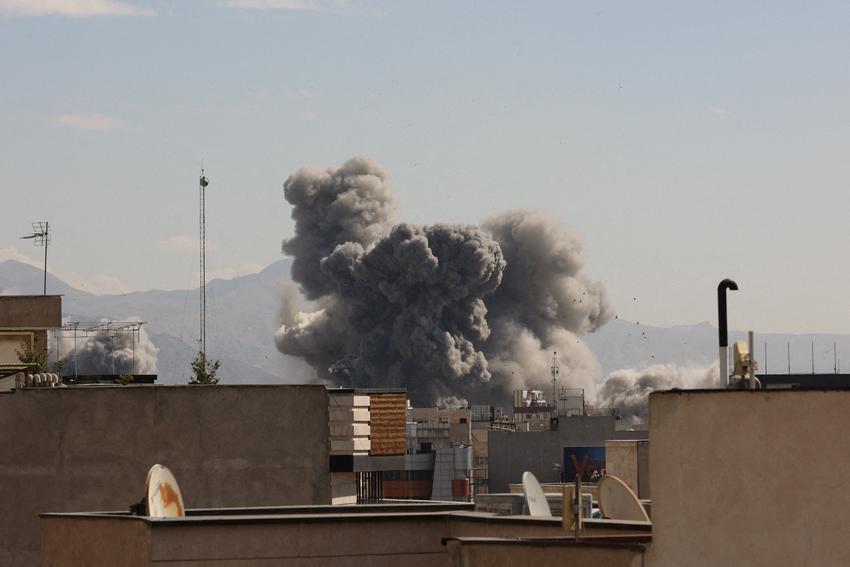
Smoke rises following an explosion, after Israel and the U.S. launched strikes on Iran, in Tehran, Iran, March 1, 2026. Majid Asgaripour/WANA (West Asia News Agency) via REUTERS

As the ⁠first U.S. casualties were reported, and with the vital Strait of Hormuz closed and the glittering Gulf cities of Dubai, Abu Dhabi and Doha under bombardment, the scale of the risk taken by ‌Trump in launching the attack was becoming clearer.

Only around one in four Americans approve of the operation, according to a Reuters/Ipsos poll on Sunday, and if Hormuz, which is the passage for about ⁠20% of world oil supplies, remains closed for more than a few days, squeezed U.S. consumers will start to ⁠feel the pressure on prices at the pumps, months before vital midterm elections.

Iran’s Revolutionary Guards said on Sunday they had hit three U.S. and UK oil tankers in the Gulf and the Strait of Hormuz, and attacked military bases in Kuwait and Bahrain with drones and missiles. Shipping data showed hundreds of vessels including oil and gas tankers dropping anchor in nearby waters with traders expecting sharp jumps in crude oil prices on Monday.

Global air travel was also heavily disrupted as continued air strikes kept major Middle Eastern airports, including Dubai – ⁠the world’s busiest international hub – closed in one of the biggest aviation interruptions in recent years.

In Iran, facing its biggest existential challenge since the 1980-88 war with Iraq, President Masoud Pezeshkian said a leadership ⁠council composed of himself, the judiciary head and a member of the ‌powerful Guardians Council had temporarily assumed the duties of Supreme Leader.

Oman’s foreign ministry said Iranian Foreign Minister Abbas Araqchi had indicated that Tehran was open to any serious efforts at de-escalation.

But it remained unclear what the longer-term prospects were for Iran to rebuild its leadership and replace the 86-year-old Khamenei, who had held power since the death of the founder of the Islamic Republic, Ayatollah Ruhollah Khomeini in 1989.

Russian President Vladimir Putin denounced Khamenei’s death as a cynical murder and China’s Foreign Minister Wang Yi described it as “blatant killing”.

Israel, which has pressed successive U.S. administrations to take action against Iran, claimed responsibility for killing ‌Khamenei, in what it said was a “precise, large-scale operation” guided by intelligence, while he was in his central leadership compound in the heart of Tehran.

It said it aimed to dominate the skies over Tehran, giving no sign of planning an end to the biggest aerial operation in its history, involving hundreds of fighter jets.

“We have the capabilities and the targets to keep going on for as long as necessary,” Israeli military spokesperson Lieutenant Colonel Nadav Shoshani said.

Trump warned that the U.S. would hit Iran “with a force that has never been seen before” if it struck back.

Trump said on social media the U.S. military had destroyed nine Iranian warships so far ​and was “going after the rest.”

Inside Iran, some grieved for Khamenei while others celebrated his death, exposing a deep fault line in a country stunned by the sudden demise of the man who ruled for decades.

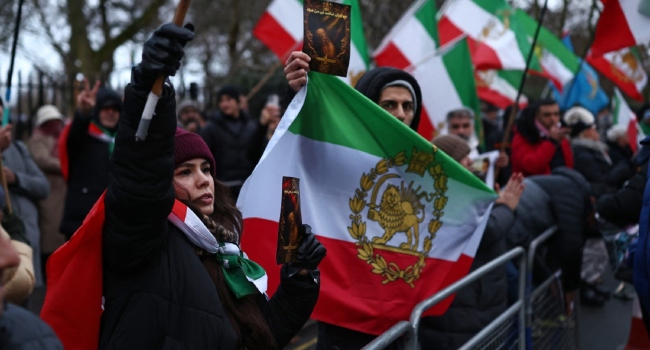
Thousands of Iranians were killed in a crackdown authorized by Khamenei against anti-government protests in January, the deadliest wave of unrest since the Islamic Revolution of 1979.

Footage from Tehran ‌showed mourners packed into a square, dressed in black and many of them weeping.

But videos posted on social media also showed joy and defiance elsewhere, with people cheering as a statue was toppled in the city of Dehloran in Ilam province, dancing in the streets of Karaj city, near Tehran in Alborz province, and celebrating in the streets of Izeh in Khuzestan province. Reuters has verified the locations of these videos.

Khamenei, who built Iran into a powerful anti-U.S. force and ‌spread its sway across the Middle East during his 36-year iron-fisted rule, was working in his office at the time of Saturday’s attack, state media said. The raid also killed his daughter, ⁠grandchild, daughter-in-law and son-in-law. (JapanToday)

Posted on Leave a comment

Iran confirms Supreme Leader Ali Khamenei dead after US-Israeli attacks

Iranian state media have confirmed that Supreme Leader Ayatollah Ali Khamenei was killed at his office in the Israeli-US attacks on Iran, following earlier reports of his killing by US and Israeli officials.

A 40-day mourning period for the longtime Iranian leader has been announced.

The Sunday confirmation comes after Iran’s Tasnim and Mehr news agencies initially reported that Khamenei remained “steadfast and firm in commanding the field”.

US President Donald Trump wrote in a post on his Truth Social platform earlier in the day that 86-year-old Khamenei was killed in the joint US-Israeli strikes, which began early on Saturday.

“He was unable to avoid our Intelligence and Highly Sophisticated Tracking Systems and, working closely with Israel, there was not a thing he, or the other leaders that have been killed along with him, could do,” Trump wrote.

“This is the single greatest chance for the Iranian people to take back their Country,” he said. “Hopefully, the IRGC [Islamic Revolutionary Guard Corps] and Police will peacefully merge with the Iranian Patriots.”

While Iranian authorities have long planned for the possible killing of Khamenei in the event of a war with the US and Israel, his assassination injects new uncertainty into an unfolding conflict that has already spurred concerns that fighting could escalate and expand further.

Israeli Prime Minister Benjamin Netanyahu had earlier also claimed that there were “growing signs” that Khamenei had been killed.

Additionally, the Reuters news agency, citing an unnamed senior Israeli official, had reported that Khamenei’s body had ⁠been located.

Khamenei has been Iran’s supreme leader since 1989, succeeding the founder of the post-shah Iran, Ayatollah Ruhollah Khomeini, who steered Iran’s 1979 revolution.

The supreme leader holds ultimate authority over all branches of government, the military and the judiciary, while also acting as the country’s spiritual leader.

Barbara Slavin, a distinguished fellow at the Stimson Center in Washington, DC, told Al Jazeera that Iran “has a plan” in place in the event that Khamenei’s death is confirmed.

“There will probably be a council that will be set up to run the country. It may already have been running the country, as far as we know,” she said.

Saturday’s strikes on Iran targeted 24 provinces, killing at least 201 people, according to Iranian media reports, citing the Red Crescent.

Among the attacks, Israel struck two schools in Iran, killing at least 108 people at the Shajareh Tayyebeh girls’ elementary school in the southern city of Minab, and two others at a school east of the capital, Tehran.

Netanyahu said in his address that many “senior figures” had been “eliminated” in the wave of attacks targeting senior leaders, as Trump called for the government to be toppled.

Israel, Netanyahu said, had killed “commanders in the Revolutionary Guard and senior officials in the nuclear programme. And we will continue.”

Trump indicated on his Truth Social post that “heavy and pinpoint bombing” of Iran would go on “uninterrupted throughout the week or, as long as necessary”.

Iran’s counterattacks on Saturday triggered air-defence interceptions in several countries where airbases with US assets are hosted, including Kuwait, Qatar, the United Arab Emirates and Bahrain.

On Saturday evening, the Iranian Revolutionary Guard Corps (IRGC) said that the third and fourth waves of “retaliatory” strikes on US and Israeli positions were ongoing, according to a statement carried by the IRNA news agency.

United Nations Secretary-General Antonio Guterres told an emergency meeting of the Security Council that he deeply regretted that an opportunity for diplomacy had been “squandered”.

“Military action carries the risk of igniting a chain of events that no one can control in the most volatile region of the world,” he told the 15-member body. “I call for de-escalation and an immediate cessation of hostilities”.

Addressing the Security Council, Iran’s UN ambassador, Amir Saeid Iravani, said the US and Israel had “initiated an unprovoked and premeditated aggression”, attacking “civilian populated areas in multiple large cities of Iran, where millions of people reside”.

“This is not only an act of aggression, it is a war crime, and a crime against humanity,” he said.

The US ambassador to the UN, Mike Waltz, insisted that the military action was lawful. “Iran cannot have a nuclear weapon,” he said. “That principle is not a matter of politics. It’s a matter of global security.”

China’s UN ambassador, Fu Cong, said Beijing was very concerned by “the sudden escalation of regional tensions”.

Russia’s ambassador, Vassily Nebenzia, condemned the US-Israeli air strikes, demanding that the US and Israel “immediately cease their aggressive actions”. (AlJazeera)

Posted on Leave a comment

Iran’s leader Khamenei accuses Trump of inciting deadly protests

Iran’s Supreme Leader Ayatollah Ali Khamenei on Saturday blamed President Donald Trump for weeks of demonstrations that rights groups said have led to more than 3,000 deaths.

“We consider the U.S. president criminal for the casualties, damages and slander ‌he inflicted on the Iranian nation,” Khamenei said, according to Iranian state media.

The protests erupted on December 28 over economic hardship and swelled into widespread demonstrations calling for the end of clerical rule in the Islamic Republic.

Trump has repeatedly threatened to intervene, including by threatening “very strong action” if Iran executed protesters.

But on ⁠Friday, in a social media post, he thanked Tehran’s leaders, saying they had called off mass ‍hangings. Iran said there was “no plan to hang people”.

In comments that appeared to respond to Trump, Khamenei ‍said: “We will not drag the ‍country into war, but we will not let domestic or international criminals go unpunished,” state media reported.

Iran’s ⁠ultimate authority Khamenei said “several thousand deaths” had happened during the nationwide protests, which are Iran’s worst unrest in years. He accused Iran’s longtime enemies the U.S. and Israel of organizing the violence.

“Those linked to Israel ​and the U.S. caused massive damage and killed several thousand,” he said, adding that they started fires, destroyed public property and incited chaos. They “committed crimes and a grave slander,” he said.

The U.S.-based Human Rights Activists News Agency, or HRANA, said it had verified 3,090 deaths, including 2,885 protesters, and over 22,000 arrests.

Last week, Iran’s prosecutor general said detainees would face severe punishment. Those held included people who “aided rioters and terrorists attacking security forces and public property” and “mercenaries who took up arms ⁠and spread fear among citizens,” he said.

“All perpetrators are mohareb,” state media quoted Mohammad Movahedi Azad as saying, adding that investigations would be conducted “without leniency, mercy or tolerance”.

Mohareb, an Islamic legal term meaning to wage war against God, is punishable by death under Iranian law.

Reuters has not been able to independently verify the numbers of casualties or details of disturbances reported by Iranian media and rights groups. The crackdown appears to have broadly quelled protests, according to residents and state media.

Getting information has been complicated by internet blackouts, which were partly lifted for a few hours early on Saturday. But internet monitoring group NetBlocks said the blackout seemed to have been reimposed late on Saturday.

“Internet connectivity continues to flatline in #Iran despite a minor short-lived bump in access earlier today,” NetBlocks said on X. “As the shutdown enters day ten, confusion surrounds whether the regime intends to restore service soon, or at all.”

A resident of Karaj, west of Tehran, reached by phone via WhatsApp, said he noticed the internet was back at 4 a.m. on Saturday. Karaj experienced some of the most severe violence during ​the protests. The resident, who asked not to be identified, said Thursday was the peak of the unrest there.

A few Iranians overseas said earlier on social media that they had also been able to message users in Iran early on Saturday.

State media has reported the arrest of thousands of “rioters and terrorists” across the country, including people linked to opposition groups abroad that advocate the overthrow of the Islamic Republic.

The arrests included several people Iranian state media described as “ringleaders”, including a woman named as Nazanin Baradaran, who was taken ‍into custody following “complex intelligence operations”.

The reports said that Baradaran operated under the pseudonym Raha Parham on behalf of Reza Pahlavi – the ‌exiled son of Iran’s last shah – and had ‌played a leading role in organizing the unrest. Reuters could not ‍verify the report or her identity.

Pahlavi, a longtime opposition figure, has positioned himself as a potential leader in the event of regime collapse and has said he ‌would seek to re-establish diplomatic ties between Iran and Israel if he were to assume a ‍leadership role in the country.

Israeli officials have expressed support for Pahlavi. In a rare public disclosure this month, Israeli Heritage Minister Amichai Eliyahu said in an interview with Israel’s Army Radio that Israel had operatives “on the ground” in Iran.

He said they aimed to weaken Iran’s capabilities, though he denied they were directly working to topple the leadership. (JapanToday)

Posted on Leave a comment

New protests hit Iran as alarm grows over crackdown ‘massacre’

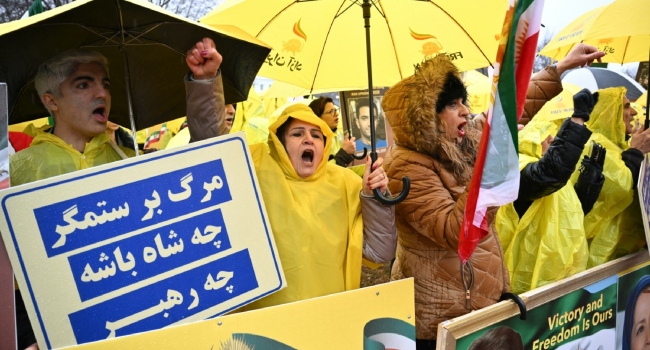
Iranians took to the streets in new protests against the clerical authorities overnight despite an internet shutdown, as rights groups warned on Sunday that authorities were committing a “massacre” to quell the demonstrations.

The protests, initially sparked by anger over the rising cost of living, have now become a movement against the theocratic government that has ruled Iran since the 1979 revolution and have already lasted two weeks.

The mass rallies are one of the biggest challenges to the rule of Supreme Leader Ayatollah Ali Khamenei, 86, coming in the wake of Israel’s 12-day war against the Islamic Republic in June, which was backed by the United States.

The protests, initially sparked by anger over the rising cost of living, have now become a movement against the theocratic government that has ruled Iran since the 1979 revolution and have already lasted two weeks.

The mass rallies are one of the biggest challenges to the rule of Supreme Leader Ayatollah Ali Khamenei, 86, coming in the wake of Israel’s 12-day war against the Islamic Republic in June, which was backed by the United States.

The internet blackout “is now past the 60 hour mark… The censorship measure presents a direct threat to the safety and well-being of Iranians at a key moment for the country’s future”, monitor Netblocks said early Sunday.

Several circulating videos, which have not been verified by AFP, allegedly showed relatives in a Tehran morgue identifying bodies of protesters killed in the crackdown.

The US-based Human Rights Activists News Agency said it had confirmed the deaths of 116 people in connection with the protests, including 37 members of the security forces or other officials.

But activists warned that the shutdown was limiting the flow of information and the actual toll risks being far higher.

The US-based Center for Human Rights in Iran (CHRI) said it had received “eyewitness accounts and credible reports indicating that hundreds of protesters have been killed across Iran during the current internet shutdown”.

“A massacre is unfolding in Iran. The world must act now to prevent further loss of life,” it said.

It said hospitals were “overwhelmed”, blood supplies were running low and that many protesters had been shot in the eyes in a deliberate tactic.

In comments to state TV late Saturday, Interior Minister Eskandar Momeni insisted that acts of “vandalism” were decreasing and warned that “those who lead the protest towards destruction, chaos and terrorist acts do not let the people’s voices be heard”.

National police chief Ahmad-Reza Radan said authorities made “significant” arrests of protest figures on Saturday night, without giving details on the number or identities of those arrested, according to state TV.

Iran’s security chief Ali Larijani drew a line between protests over economic hardship, which he called “completely understandable”, and “riots”, accusing them of actions “very similar to the methods of terrorist groups”, Tasnim news agency reported.

In Tehran, an AFP journalist described a city in a state of near paralysis.

The price of meat has nearly doubled since the start of the protests, and while some shops are open, many others are not.

Those that do open must close at around 4:00 or 5:00 pm, when security forces deploy in force.

On Saturday, mobile phone lines appeared to have gone down as well, rendering nearly all communication impossible.

Reza Pahlavi, the exiled son of the ousted shah, who has played a prominent role in calling for the protests, called for new actions later Sunday.

“Do not abandon the streets. My heart is with you. I know that I will soon be by your side,” he said.

US President Donald Trump has spoken out in support of the protests and threatened military action against Iranian authorities “if they start killing people”.

On Sunday, Iran’s parliament speaker Mohammad Bagher Ghalibaf said Iran would hit back if the US launched military action.

“In the event of a military attack by the United States, both the occupied territory and centres of the US military and shipping will be our legitimate targets,” he said in comments broadcast by state TV.

He was apparently also referring to Israel, which the Islamic Republic does not recognise and considers occupied Palestinian territory. (Channels)

Posted on Leave a comment

Trump threatens Iran over protest crackdown as deadly unrest flares

U.S. President Donald Trump threatened on Friday to come to the aid of protesters in Iran if security forces fired on them, days into unrest that has left several dead and posed the biggest internal threat to Iranian authorities in years.

“We are locked and loaded ‌and ready to go,” he said in a social media post. The United States bombed Iranian nuclear facilities in June, joining an Israeli air campaign that targeted Tehran’s atomic programme and military leadership.

Responding to Trump’s comments, top Iranian official Ali Larijani warned that U.S. interference in domestic Iranian issues would amount to a destabilization of the entire Middle East. Iran backs proxy ⁠forces in Lebanon, Iraq and Yemen.

The comments came as a local official in western Iran, where several deaths were ‍reported, was cited by state media as warning that any unrest or illegal gatherings would be met “decisively and without leniency”.

This week’s protests over soaring inflation ‍are so far smaller than some previous bouts of unrest in Iran, but have spread across the country, with deadly confrontations between demonstrators and security forces ⁠focused in western provinces.

State-affiliated media and rights groups have reported at least 10 deaths since Wednesday, including one man who authorities said was a member of the Basij paramilitary force affiliated with the elite Revolutionary Guards.

The Islamic Republic’s clerical leadership has ​seen off repeated eruptions of unrest in recent decades, often quelling protests with heavy security measures and mass arrests. But economic problems may leave authorities more vulnerable now.

This week’s protests are the biggest since nationwide demonstrations triggered by the death of a young woman in custody in 2022 paralyzed Iran for weeks, with rights groups reporting hundreds killed.

Trump did not specify what sort of action the U.S. could take in support of the protests.

Washington has long imposed broad financial sanctions on Tehran, in particular since Trump’s first term when, in 2018, he pulled the U.S. out of ⁠Iran’s nuclear deal with world powers and declared a “maximum pressure” campaign against Tehran.

Video verified by Reuters showed dozens of people gathered in front of a burning police station overnight, as gunshots sporadically rang out and people shouted “shameless, shameless” at the authorities.

In the southern city of Zahedan, where Iran’s Baluch minority predominates, the human rights news group Hengaw reported that protesters had chanted slogans including “Death to the dictator”.

Hengaw has reported at least 80 arrests so far over the unrest, mostly in the west, and including 14 members of Iran’s Kurdish minority.

State television also reported the arrest of an unspecified number of people in another western city, Kermanshah, accused of manufacturing petrol bombs and homemade pistols. Iranian media also said two heavily armed individuals were arrested in central and western Iran before they could carry out attacks.

The deaths acknowledged by official or semi-official Iranian media have been in the small western cities of Lordegan and Kuhdasht. Hengaw also reported that a man was killed in Fars province in central Iran, though state news sites denied this.

Rights groups and social media posts reported protests in a number of cities late on Friday.

Reuters could not verify all the reports of unrest, arrests or deaths.

Trump spoke a few days after he met Israeli Prime Minister Benjamin Netanyahu, a longtime advocate of military action against Iran, and warned of ​fresh strikes if Tehran resumed nuclear or ballistic work.

The Israeli and U.S. strikes in June last year have cranked up the pressure on Iranian authorities, as have the ousting of Syria’s Bashar al-Assad, a close Tehran ally, and the Israeli pounding of its main regional partner, Lebanon’s Hezbollah.

Iran continues to ⁠support groups in Iraq that have previously fired rockets at U.S. forces in the country, as well as the Houthi group that controls much of northern Yemen.

“American people should know that Trump started the adventurism. They ought to watch over their soldiers,” said Larijani, the head of Iran’s National Security Council and a top adviser to Supreme Leader Ayatollah Ali Khamenei.

During the latest unrest, Iran’s elected President Masoud Pezeshkian has struck a conciliatory tone, pledging dialogue with protest leaders over the cost-of-living crisis, even as rights ‌groups said security forces had fired on demonstrators.

Speaking on ‌Thursday, before Trump threatened U.S. action, Pezeshkian acknowledged that failings by the authorities ‍were behind the crisis.

“We are to blame… Do not look for America or anyone else to blame. We must serve properly so that people are satisfied with us…. It is us who ‌have to find a solution to these problems,” he said.

Pezeshkian’s government is trying a program of economic liberalization, but ‍one of its measures, deregulating some currency exchange, has contributed to a sharp decline in the value of Iran’s rial on the unofficial market.

The sliding currency has compounded inflation, which has hovered above 36% since March even by official estimates, in an economy battered by Western sanctions. (JapanToday)

Posted on Leave a comment

Iran, Egypt rejects LGBTQ-themed World Cup match

Iran and Egypt have both objected to plans by local organisers in the United States to brand their 2026 World Cup group-stage match as an event supporting the LGBTQ community.

The organising committee in Seattle, Washington, where the fixture is scheduled to take place next year, had previously announced its intention to hold a “Pride Match” coinciding with the northwestern city’s Pride Weekend in late June.

Following last week’s FIFA tournament draw, Egypt and Iran are now slated to face off in Seattle on June 26, the Friday before.

The head of Iran’s Football Federation, Mehdi Taj, was quoted by local news agency ISNA as saying that Tehran and Cairo had both raised “objections against the issue”, which he labelled an “irrational move that supports a certain group”.

Taj did not mention the specific branding of the fixture.

On Monday, Iranian state television said Tehran would “appeal” to FIFA over the matter.

Homosexuality is illegal in Iran under Islamic law and can be punishable by death.

In a statement, the Egyptian Football Association said it had sent a formal letter to FIFA secretary-general Mattias Grafstrom, rejecting “in absolute terms” any activities linked to LGBTQ support during the match.

The EFA said such initiatives would clash with “the cultural, religious and social values” of both Egypt and Iran and urged FIFA to ensure the match would remain focused solely on football.

In Egypt, homosexuality is not expressly outlawed, but is often punished under loosely worded laws prohibiting “debauchery”.

The EFA cited FIFA’s statutes on political and social neutrality, arguing that matches should not be used to promote causes that are “sensitive or of a contentious nature”.

The 2026 World Cup will mark Iran’s seventh participation in the tournament, which will be jointly hosted by the United States, Canada and Mexico.

Iran and the United States have had no diplomatic relations since 1980, following a hostage crisis in the wake of the 1979 Islamic revolution.

Iran had initially opted out of Friday’s draw to protest the US refusal to grant visas to several members of its delegation but eventually reversed the decision.

On Tuesday, Taj said some Iranian players might face visa problems over their service in the Iranian military, which includes the Islamic Revolutionary Guards Corps (IRGC) — designated a “terrorist organisation” by the US in 2019.

“For the World Cup, we must work on having replacement options, and we have already started that,” he said. (Punch)

Posted on Leave a comment

Iran to play at least one World Cup game in U.S.

Iran will play at least one of its World Cup matches in the United States though the tournament draw on Friday avoided a group-stage clash between the geopolitical rivals.

The Iranian team, representing a country targeted by U.S. airstrikes in June and whose citizens are subject to a travel ban imposed by President Donald Trump’s administration, will open its World Cup campaign against New Zealand in Seattle or Inglewood, California, on June 15.

Iran’s next two games could be played across the Canadian border in Vancouver or in Inglewood and Seattle. FIFA will confirm the detailed game schedule Saturday.

The United States was drawn to play Australia, Paraguay and a third team to be determined in the European playoffs in March.

Iran’s participation in the tournament, co-hosted by the U.S., Canada and Mexico, has already presented diplomatic challenges.

Last week Iran said it would boycott the draw after several officials including soccer federation president Mehdi Taj and general secretary Hedayat Momebeni were denied U.S. travel visas. The federation later modified its stance saying Iran coach Amir Ghalenoei would attend the event at the Kennedy Center in Washington.

It wasn’t immediately clear whether Ghalenoei was present at Friday’s draw.

Iran was among 12 countries subject to a travel ban ordered by Trump’s administration on June 5. A second World Cup nation, Haiti, also is on it.

Exemptions were promised for teams and support staff traveling for the World Cup, but not for fans.

The Trump administration called Iran a “state sponsor of terrorism” and barred visitors except for those already holding visas or coming special visas issued for minorities facing persecution.

Later in June, Trump ordered a bombardment of Iran by so-called “bunker buster” bombs and cruise missiles targeting underground uranium enrichment plants. Within days he declared a ceasefire in a 12-day war between U.S. ally Israel and Iran.

Iran is an established force in soccer, ranked No. 20 in the world by FIFA and second only to Japan among Asian national teams.

Team Melli, as the squad is popularly known, is preparing to play at its seventh World Cup. Its best known player is forward Mehdi Taremi, who has played for Inter Milan, Porto and now Olympiakos.

Iran’s most problematic diplomatic relations among its future World Cup opponents are with Egypt.

Their diplomatic ties were severed in 1979 after Egypt signed a peace treaty with Israel and remained strained until recent years.

New Zealand’s government condemned the death in September 2022 of 22-year-old Mahsa Amini in the custody of the country’s morality police.

Amini’s death just a few weeks before the last World Cup played in nearby Qatar brought domestic politics into the stadiums where Iran played.

The team refused to sign Iran’s national anthem before its opening game in Doha against England, and there were clashes between fans and pro-government supporters at its second game against Wales.

Many fans displayed the “Woman, Life, Freedom” slogan to protest the government before Iran’s World Cup campaign ended with a 1-0 loss to the U.S. (JapanToday)

Posted on Leave a comment

Iran to boycott 2026 World Cup draw over US visa row

Iran is to boycott next week’s World Cup finals draw in Washington because the United States refused to grant visas to several members of the delegation, the Iranian football federation announced on Friday.

“We have informed FIFA that the decisions taken have nothing to do with sports and the members of the Iranian delegation will not participate in the World Cup draw,” the federation’s spokesperson told state television.

Iranian sports website Varzesh 3 had claimed on Tuesday that the United States had declined to issue visas to several members of the delegation, including the president of the federation, Mehdi Taj.

On Thursday, Taj had denounced the decision as being a political one.

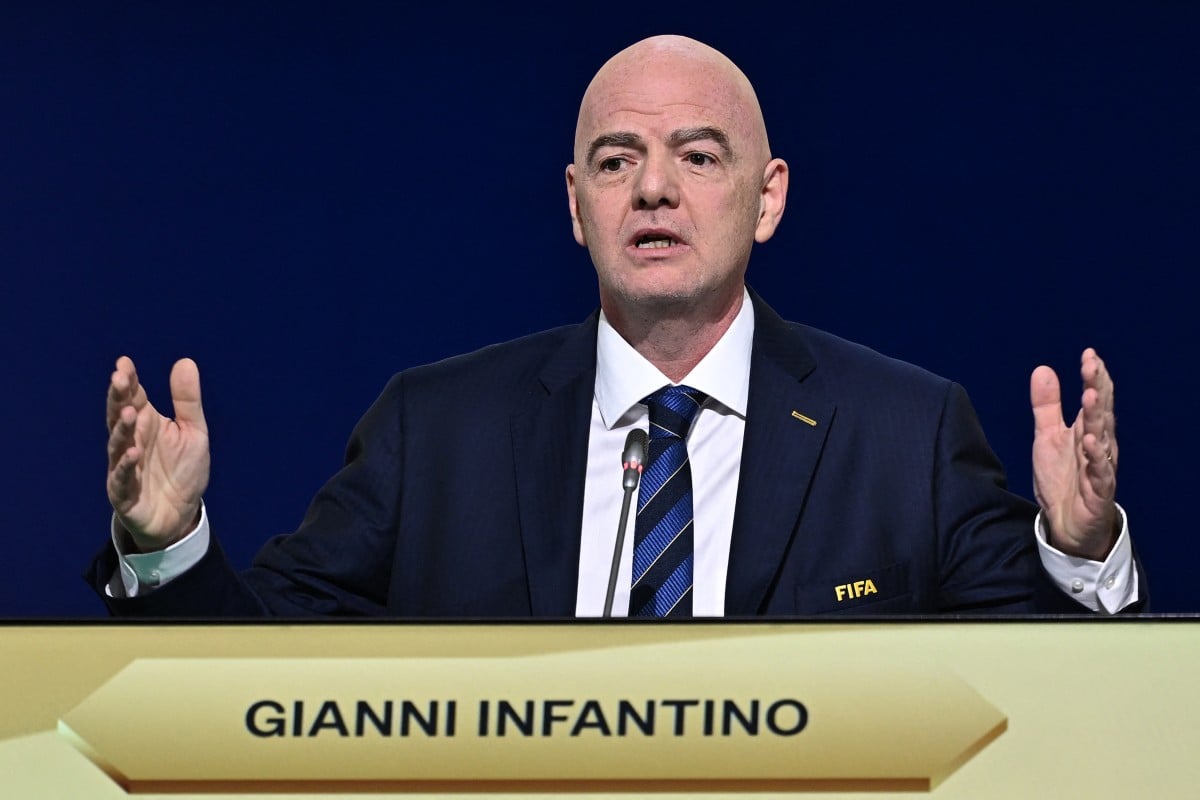
“We have told the head of FIFA mister (Gianni) Infantino, that it is purely a political position and that FIFA must tell them (US) to desist from this behaviour,” added Taj.

According to Varzesh 3, four members of the delegation, including Amir Ghalenoei, the coach, had been granted visas for the draw on December 5.

Iran qualified for the sport’s quadrennial showpiece in March, guaranteeing them a fourth successive appearance and seventh in all.

They have yet to progress to the knockout stages, but there was unconfined joy when in the 1998 finals in France, Iran beat the USA 2-1 in their group match.

The USA avenged that by beating Iran 1-0 in the 2022 edition.

The United States — which is co-hosting the World Cup with Canada and Mexico — and Iran have been at loggerheads for over four decades.

They had, though, been holding high-level nuclear talks between Tehran and Washington that had begun in April, during which the two sides were at odds over Iran’s right to enrich uranium — which Tehran defends as “inalienable”.

However, they ended when, in mid-June, Israel launched an unprecedented bombing campaign against Iran, triggering a 12-day war that the United States briefly joined with strikes on key Iranian nuclear facilities. (Punch)

Posted on Leave a comment

Putin, Modi, Erdogan to attend Tianjin Summit as Xi welcomes world leaders

Chinese President Xi Jinping began welcoming dignitaries including United Nations chief Antonio Guterres and Egyptian Premier Moustafa Madbouly on Saturday before a summit attended by leaders from more than 20 countries.

The Shanghai Cooperation Organisation gathering will be held in the northern port city of Tianjin on Sunday and Monday, days before a massive military parade in nearby Beijing to mark 80 years since the end of World War II.

North Korea’s Kim Jong Un will be among some 26 world leaders slated to attend the parade.

The SCO comprises China, India, Russia, Pakistan, Iran, Kazakhstan, Kyrgyzstan, Tajikistan, Uzbekistan and Belarus. Sixteen more countries are affiliated as observers or “dialogue partners”.

Russian President Vladimir Putin and Indian Prime Minister Narendra Modi are also due to arrive in Tianjin ahead of the summit.

China and Russia have used the organisation — sometimes touted as a counter to the Western-dominated NATO military alliance — to deepen ties with Central Asian states.

Other leaders including Iranian and Turkish presidents Masoud Pezeshkian and Recep Tayyip Erdogan will also attend the bloc’s largest meeting since its founding in 2001.

Multiple bilateral meetings are expected to be held on the sidelines of the summit.

The Kremlin said on Friday that Putin will discuss the Ukraine conflict with Erdogan on Monday.

Turkey has hosted three rounds of peace talks between Russia and Ukraine this year that have failed to break the deadlock over how to end the conflict, triggered when Moscow launched its invasion of its pro-European neighbour in February 2022.

Putin will also talk about Tehran’s nuclear programme on Monday with his Iranian counterpart Pezeshkian, a meeting that comes as Iran faces fresh Western pressure.

Britain, France and Germany, known as the E3, triggered a “snapback” mechanism on Thursday to reinstate UN sanctions on Tehran for failing to comply with commitments made in a 2015 deal over its nuclear programme.

Russia’s foreign ministry warned that the reimposition of sanctions against Iran risked “irreparable consequences”.

Tehran and Moscow have been bolstering political, military and economic ties over the past decade as Russia drifted away from the West.

Relations between them grew even closer after Moscow launched its offensive against Ukraine.

Modi’s visit comes after a trip to Japan, and is his first to China since 2018.

The world’s two most populous nations are intense rivals competing for influence across South Asia and fought a deadly border clash in 2020.

A thaw began last October when Modi met with Xi for the first time in five years at a summit in Russia. (Punch)