
Posted on Leave a comment

Rubio’s speech to European allies takes a softer tone but sticks to Trump’s firm stance

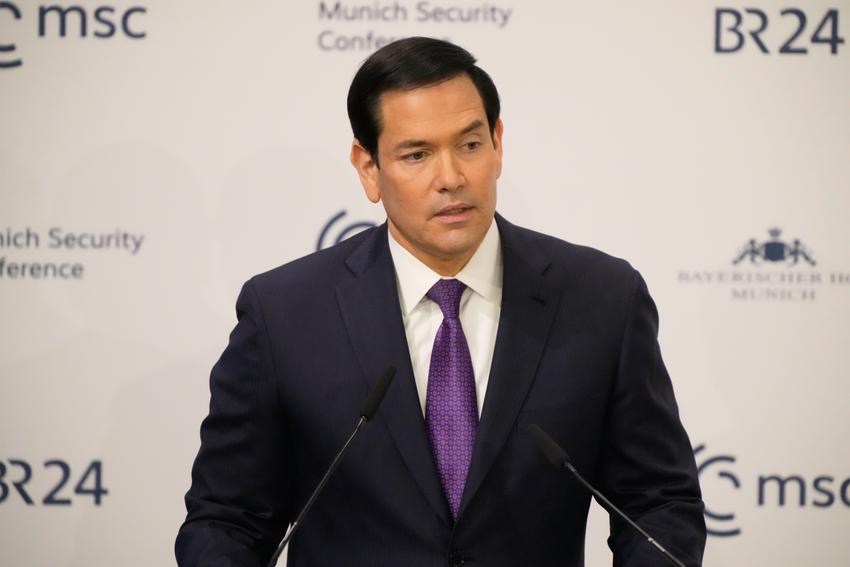
U.S. Secretary of State Marco Rubio offered a reassuring message to America’s allies on Saturday, striking a less aggressive but still firm tone about the administration’s intent to reshape the trans-Atlantic alliance and push its priorities after more than a year of President Donald Trump’s often-hostile rhetoric toward traditional allies.

Reminding his audience at the annual Munich Security Conference about America’s centuries-long roots in Europe, Rubio said the United States would remain forever tied to the continent even as it pushes for changes in the relationship and the institutions that have been the bulwark of the post-World War II world order.

Rubio addressed the conference a year after Vice President JD Vance stunned the same audience with a harsh critique of European values. A series of Trump administration statements and moves targeting allies followed, including Trump’s short-lived threat last month to impose new tariffs on several European countries in a bid to secure U.S. control of Greenland, a semiautonomous territory of NATO ally Denmark.

On Friday, German Chancellor Friedrich Merz had opened this year’s gathering by calling for the U.S. and Europe to “repair and revive trans-Atlantic trust together,” saying that even the U.S. isn’t powerful enough to go it alone in an world whose old order no longer exists. But he and other European officials made clear that they will stand by their values, including their approach to free speech, climate change and free trade.

While offering a calmer and more reassuring tone, Rubio made clear that the Trump administration is sticking to its guns on policy. He denounced “a climate cult” and “an unprecedented wave of mass migration that threatens the cohesion of our societies.”

Rubio argued that the “euphoria” of the Western victory in the Cold War led to a “dangerous delusion that we had entered ‘the end of history,’ that every nation would now be a liberal democracy, that the ties formed by trade and by commerce alone would now replace nationhood … and that we would now live in a world without borders where everyone became a citizen of the world.”

“We made these mistakes together and now together we owe it to our people to face those facts and to move forward to rebuild,” Rubio said.

“This is why we Americans may sometimes come off as a little direct and urgent in our counsel,” he said. “This is why President Trump demands seriousness and reciprocity from our friends here in Europe.”

Rubio said that an end of the trans-Atlantic era “is neither our goal nor our wish,” adding that “our home may be in the Western hemisphere, but we will always be a child of Europe.”

He acknowledged that “we have bled and died side-by-side on battlefields from Kapyong to Kandahar,” a contrast with disparaging remarks by Trump about NATO allies’ troops in Afghanistan that drew an outcry. “And I’m here today to make it clear that America is charting the path for a new century of prosperity. and that once again, we want to do it together with you, our cherished allies and our oldest friends.”

U.S. officials accompanying Rubio said his message was much the same as Vance’s last year but was intended to have a softer landing on the audience, which they acknowledged had recoiled at much of Trump’s rhetoric over the past year.

The president of the European Union’s executive commission, Ursula von der Leyen, said Rubio’s speech was “very reassuring” but noted that “in the administration, some have a harsher tone on these topics.”

In her speech to the conference, she stressed that “Europe must become more independent,” including on defense. She insisted on Europe’s “digital sovereignty” — its approach to hate speech on social media.

British Prime Minister Keir Starmer said that “we shouldn’t get in the warm bath of complacency. He said the U.K. must reforge closer ties with Europe to help the continent “stand on our own two feet” in its own defense, and said there needs to be investment that “moves us from overdependence to interdependence.”

Hanno Pevkur, the defense minister of EU and NATO member Estonia, said it was “quite a bold statement to say that America is ‘a child of Europe’.”

“It was a good speech, needed here today, but that doesn’t mean that we can rest on pillows now,” he told The Associated Press. “So still a lot of work has to be done.”

Rubio didn’t mention Greenland. After last month’s escalation over Trump’s designs on the Arctic island, the U.S., Denmark and Greenland started technical talks on an Arctic security deal.

The Secretary of State met briefly in Munich on Friday with the Danish and Greenlandic leaders, a meeting Danish Prime Minister Mette Frederiksen described as constructive.

But Frederiksen suggested Saturday that although the dispute has cooled, she remains wary. Asked whether the crisis has passed, she replied: “No, unfortunately not. I think the desire from the U.S. president is exactly the same. He is very serious about this theme.”

Asked whether she can put a price on Greenland, she responded “of course not,” adding that “we have to respect sovereign states … and we have to respect people’s right for self-determination. And the Greenlandic people have been very clear, they don’t want to become Americans.” (JapanToday)

Posted on Leave a comment

Orbán says EU and not Russia is Hungary’s real threat ahead of April vote

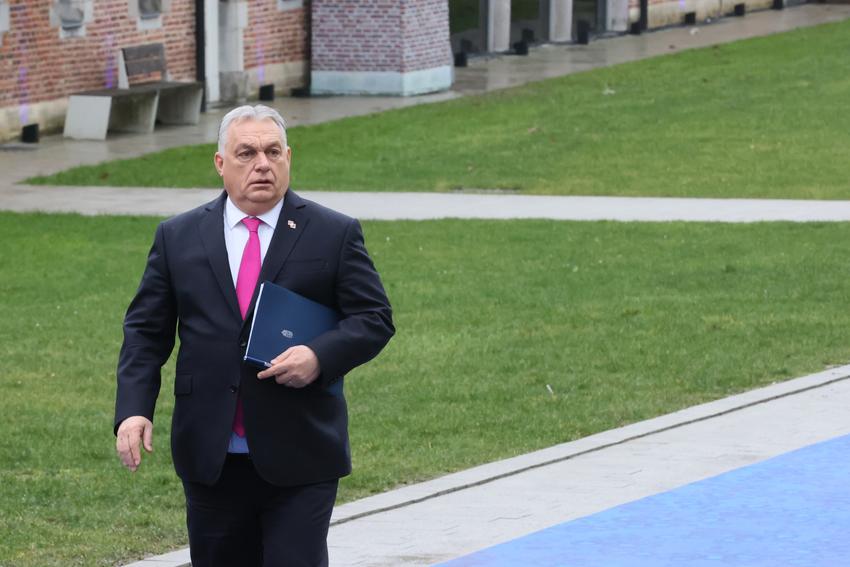
The real threat facing Hungary is not Russia but the European Union, Prime Minister Viktor Orbán said in a speech to supporters on Saturday, as his nationalist party ramps up an anti-EU campaign ahead of national elections.

With only eight weeks until the April 12 vote, Orbán and his Fidesz party are facing their most serious challenge since the right-wing populist leader retook power in 2010.

Most independent polls show Fidesz trailing the center-right Tisza party and its leader, Péter Magyar, even as Orbán has campaigned on the unsubstantiated premise that the EU would send Hungarians to their deaths in neighboring Ukraine if his party loses.

In his speech on Saturday, Orbán compared the EU to the repressive Soviet regime that dominated Hungary for over 40 years last century, and dismissed the belief of many European leaders that Russian President Vladimir Putin poses a threat to the continent’s security.

“We must get used to the idea that those who love freedom should not fear the East, but Brussels,” he said, referring to the EU’s de-facto capital in Belgium.

“Fear-mongering about Putin is primitive and unserious. Brussels, however, is a palpable reality and a source of imminent danger,” he said “This is the bitter truth, and we will not tolerate it.”

Orbán has been a firm opponent of military and financial aid for Kyiv since Russia launched its full-scale invasion nearly four years ago, and has maintained close relations with Moscow while adopting a combative posture toward Hungary’s EU and NATO partners, which he portrays as warmongers.

In December, he said it was “unclear who attacked whom” when tens of thousands of Russian forces poured across Ukraine’s borders in February 2022.

Hungary’s government has long been at odds with the EU, which has frozen billions of euros in funding to Budapest over concerns that Orbán has dismantled democratic institutions, eroded judicial independence and overseen widespread official corruption. In return, Orbán has increasingly acted as a spoiler in EU decision making, routinely threatening to veto key policies like providing financial support for Ukraine.

As the elections approach, he has increasingly portrayed the Tisza party as a puppet created by the EU to overthrow his government and serve foreign interests, claims that Tisza has firmly denied. Magyar, the party’s leader, has pledged to repair Hungary’s strained relations with its Western allies, revive the stagnant economy and return the country to a more democratic track.

On Saturday, Orbán accused multinational corporations like banks and energy companies of profiting off the war in Ukraine, and conspiring with his political opposition to defeat him in the election.

“It is crystal clear that in Hungary the oil business, the banking world and the Brussels elite are preparing to form a government,” he said. “They need someone in Hungary who will never say no to Brussels’ demands.”

If his party wins a fifth-straight majority in the election, Orbán promised to push ahead with ridding Hungary of entities that he argues infringe on the country’s sovereignty.

He credited U.S. President Donald Trump, who has endorsed him ahead of the election, with creating an environment where “fake nongovernmental organizations and bought-and-paid-for journalists, judges and politicians” can be expelled.

“The new president of the United States has rebelled against the global business, media and political network of liberals, thus improving our chances,” he said. “We, too, can go a long way and expel foreign influence from Hungary, along with its agents, that limit our sovereignty.”

“The Brussels repressive machine is still operating in Hungary. We’ll clean it up after April,” he said. (JapanToday)

Posted on Leave a comment

Zelenskyy says U.S. too often asks Ukraine, not Russia, for concessions

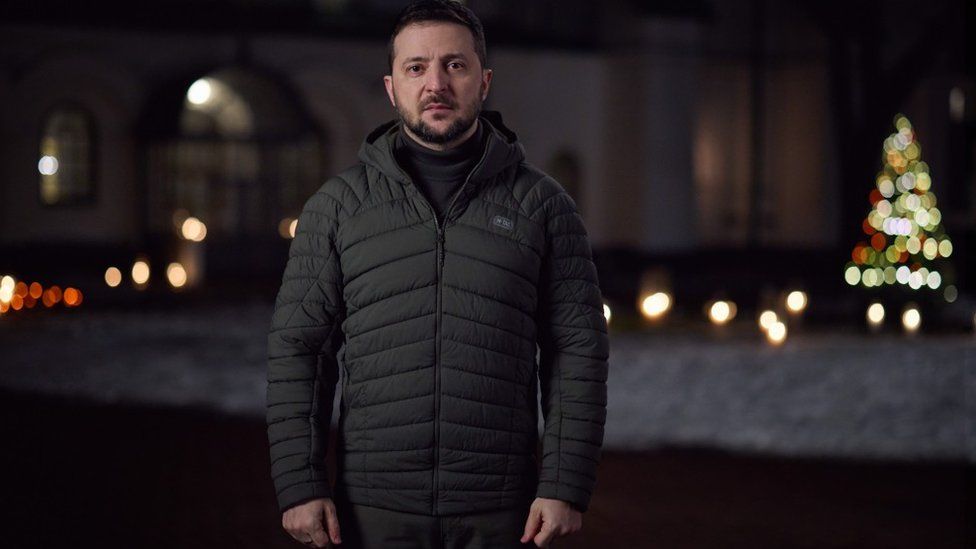
Ukrainian President Volodymyr Zelenskyy voiced hope on Saturday that U.S.-brokered peace talks in Geneva next week would be substantive, but he said Ukraine was being asked “too often” to make concessions.

He also accused Moscow of seeking to delay decisions by changing ‌its lead negotiator.

Ukrainian, Russian and American delegations are due to meet in the Swiss lakeside city on Tuesday and Wednesday as U.S. President Donald Trump seeks to push through a deal to end Europe’s biggest war since 1945.

“We truly hope that the trilateral meetings next week will be serious, substantive, helpful for all us but honestly sometimes it feels ‌like the sides are talking about completely different things,” Zelenskyy said in a speech at the annual Munich ⁠Security Conference.

Ukraine and Russia, which invaded its neighbor in February 2022, have engaged ⁠in two recent rounds of talks ⁠brokered by Washington in Abu Dhabi described by the sides as constructive but achieving no major breakthroughs.

Zelenskyy called for greater action from Ukraine’s allies ‌to press Russia into making peace – both in the form of tougher sanctions and more weapons supplies.

Recalling his appeal four years ago, when he spoke at ⁠the same conference days before tens of thousands of Russian forces poured into ⁠Ukraine, Zelenskyy said there was too much talk by Western officials and not enough action.

Trump has the power to force Putin to declare a ceasefire and needed to do so, Zelenskyy said. Ukrainian officials have said a ceasefire is required to hold a referendum on any peace deal, which would be organized alongside national elections.

The Ukrainian leader, a former television entertainer, acknowledged he was feeling “a little bit” ⁠of pressure from Trump, who yesterday said Zelenskyy should not miss the “opportunity” to make peace soon and urged him “to get moving”.

“The Americans often return ⁠to the topic of concessions and too often those concessions ‌are discussed only in the context of Ukraine, not Russia,” Zelenskyy said.

Instead, Zelenskyy said, he wanted to hear what compromises Moscow would be ready for, as Ukraine had already made many of its own.

Russia said its delegation to Geneva would be led by Putin’s adviser Vladimir Medinsky, a change from negotiations in Abu Dhabi at which Russia’s team was led by military intelligence chief Igor Kostyukov.

Zelenskyy told reporters on Saturday the change was “a surprise” for Ukraine, ‌and suggested to him that Russia wanted to delay any decisions from being agreed.

Ukrainian officials have criticized Medinsky’s handling of previous talks, accusing him of delivering history lessons to the Ukrainian team instead of engaging in constructive negotiations.

Land remains the major sticking point in negotiations, with Russia demanding that Ukraine cede the remaining 20% of the eastern region of Donetsk that Moscow has failed to capture – something Kyiv steadfastly refuses to do.

At a news conference on Saturday, Zelenskyy said that U.S. negotiators had told Ukraine that the Russians had promised a swift end to the war if Ukrainian forces immediately withdrew from the part of Donetsk it still controls.

He said earlier he was instead ready to discuss a U.S. proposal for a free trade zone ​in that region, while freezing the rest of the 1,200-km (745-mile) front line.

Ukraine’s chief negotiator Rustem Umerov, who sat beside Zelenskyy during the media briefing, said the only two options were either that Ukraine sticks to the current lines of control, or that a free economic zone ‌is established.

Russia occupies about 20% of Ukraine’s national territory, including Crimea and parts of the eastern Donbas region seized before the full-scale invasion in 2022.

Analysts say Moscow has gained about 1.5% of Ukrainian territory since early 2024. Its recent air strikes on Ukraine’s cities and electricity infrastructure have left hundreds of thousands of Ukrainians without heating and power during the ‌course of a bitterly cold winter.

Ukrainian officials have repeatedly expressed concern in recent weeks that U.S. congressional mid-term elections in November could focus the ⁠Trump administration on domestic political issues after the ⁠summer.

Zelenskyy said he hoped the U.S. would stay involved in the negotiations, ​and that there would be an opportunity for Europe, which he said was currently sidelined, to play a bigger role.

“Europe is practically ⁠not present at the table. It’s a big mistake ‌to my mind,” he said.

Zelenskyy said that Russia had to accept a ceasefire monitoring mission and an exchange ​of prisoners of war; he estimated that Russia currently had about 7,000 Ukrainian troops while Kyiv had more than 4,000 Russians.

Zelenskyy also suggested Moscow was opposed to the deployment of French and British troops in Ukraine after the war – which Paris and London have said they are willing to do – because Russian President Vladimir Putin “wants to have the opportunity to come back.” (JapanToday)

Posted on Leave a comment

Trump’s EPA revokes scientific finding that underpinned U.S. fight against climate change

The Trump administration on Thursday revoked a scientific finding that long has been the central basis for U.S. action to regulate greenhouse gas emissions and fight climate change, the most aggressive move by the Republican president to roll back climate regulations.

The rule finalized by the Environmental Protection Agency rescinds a 2009 government declaration known as the endangerment finding that determined that carbon dioxide and other greenhouse gases threaten public health and welfare.

The endangerment finding by the Obama administration is the legal underpinning of nearly all climate regulations under the Clean Air Act for motor vehicles, power plants and other pollution sources that are heating the planet.

President Donald Trump called the move “the single largest deregulatory action in American history, by far” while EPA Administrator Lee Zeldin called the endangerment finding “the Holy Grail of federal regulatory overreach.”

Trump called the endangerment finding “one of the greatest scams in history,” adding that it “had no basis in fact” or law. “On the contrary, over the generations, fossil fuels have saved millions of lives and lifted billions of people out of poverty all over the world,” Trump said at a White House ceremony.

Legal challenges are certain for an action that repeals all greenhouse gas emissions standards for cars and trucks, and could unleash a broader undoing of climate regulations on stationary sources such as power plants and oil and gas facilities, experts say. Overturning the finding will “raise more havoc” than other actions by the Trump administration to roll back dozens of environmental rules, said Ann Carlson, an environmental law professor at the UCLA School of Law.

Environmental groups described the move as the single biggest attack in U.S. history against federal authority to address climate change. Evidence backing up the endangerment finding has only grown stronger in the 17 years since it was approved, they said.

The EPA also said it will propose a two-year delay to a Biden-era rule restricting greenhouse gas emissions by cars and light trucks. And the agency will end tax credits for automakers who install automatic start-stop ignition systems in their vehicles. The device is intended to reduce emissions, but Zeldin said “everyone hates” it.

Zeldin, a former Republican congressman who was tapped by Trump to lead EPA last year, has criticized his predecessors in Democratic administrations, saying that in the name of tackling climate change, they were “willing to bankrupt the country.”

The endangerment finding “led to trillions of dollars in regulations that strangled entire sectors of the United States economy, including the American auto industry,” Zeldin said. “The Obama and Biden administrations used it to steamroll into existence a left-wing wish list of costly climate policies, electric vehicle mandates and other requirements that assaulted consumer choice and affordability.”

The endangerment finding and the regulations based on it “didn’t just regulate emissions, it regulated and targeted the American dream. And now the endangerment finding is hereby eliminated,” Zeldin said.

The Supreme Court ruled in a 2007 case that planet-warming greenhouse gases, caused by the burning of oil and other fossil fuels, are air pollutants under the Clean Air Act.

Since the high court’s decision, in a case known as Massachusetts v. EPA, courts have uniformly rejected legal challenges to the endangerment finding, including a 2023 decision by the U.S. Court of Appeals for the District of Columbia Circuit.

The endangerment finding is widely considered the legal foundation that underpins a series of regulations intended to protect against threats made increasingly severe by climate change. That includes deadly floods, extreme heat waves, catastrophic wildfires and other natural disasters in the United States and around the world.

Gina McCarthy, a former EPA administrator who served as White House climate adviser in the Biden administration, called the Trump administration’s actions reckless. “This EPA would rather spend its time in court working for the fossil fuel industry than protecting us from pollution and the escalating impacts of climate change,” she said.

EPA has a clear scientific and legal obligation to regulate greenhouse gases, McCarthy said, adding that the health and environmental hazards of climate change have “become impossible to ignore.”

Dr. Lisa Patel, a pediatrician and executive director of the Medical Society Consortium on Climate and Health, said Trump’s action “prioritizes the profits of big oil and gas companies and polluters over clean air and water” and children’s health.

“As a result of this repeal, I’m going to see more sick kids come into the Emergency Department having asthma attacks and more babies born prematurely,” she said in a statement. “My colleagues will see more heart attacks and cancer in their patients.”

David Doniger, a climate expert at the Natural Resources Defense Council, said Trump and Zeldin are trying to use repeal of the finding as a “kill shot’’ that would allow the administration to make nearly all climate regulations invalid. The repeal could erase current limits on greenhouse gas pollution from cars, factories, power plants and other sources and could prevent future administrations from proposing rules to address global warming.

The EPA action follows an executive order from Trump that directed the agency to submit a report on “the legality and continuing applicability” of the endangerment finding. Conservatives and some congressional Republicans have long sought to undo what they consider overly restrictive and economically damaging rules to limit greenhouse gases that cause global warming. (JapanToday)

Posted on Leave a comment

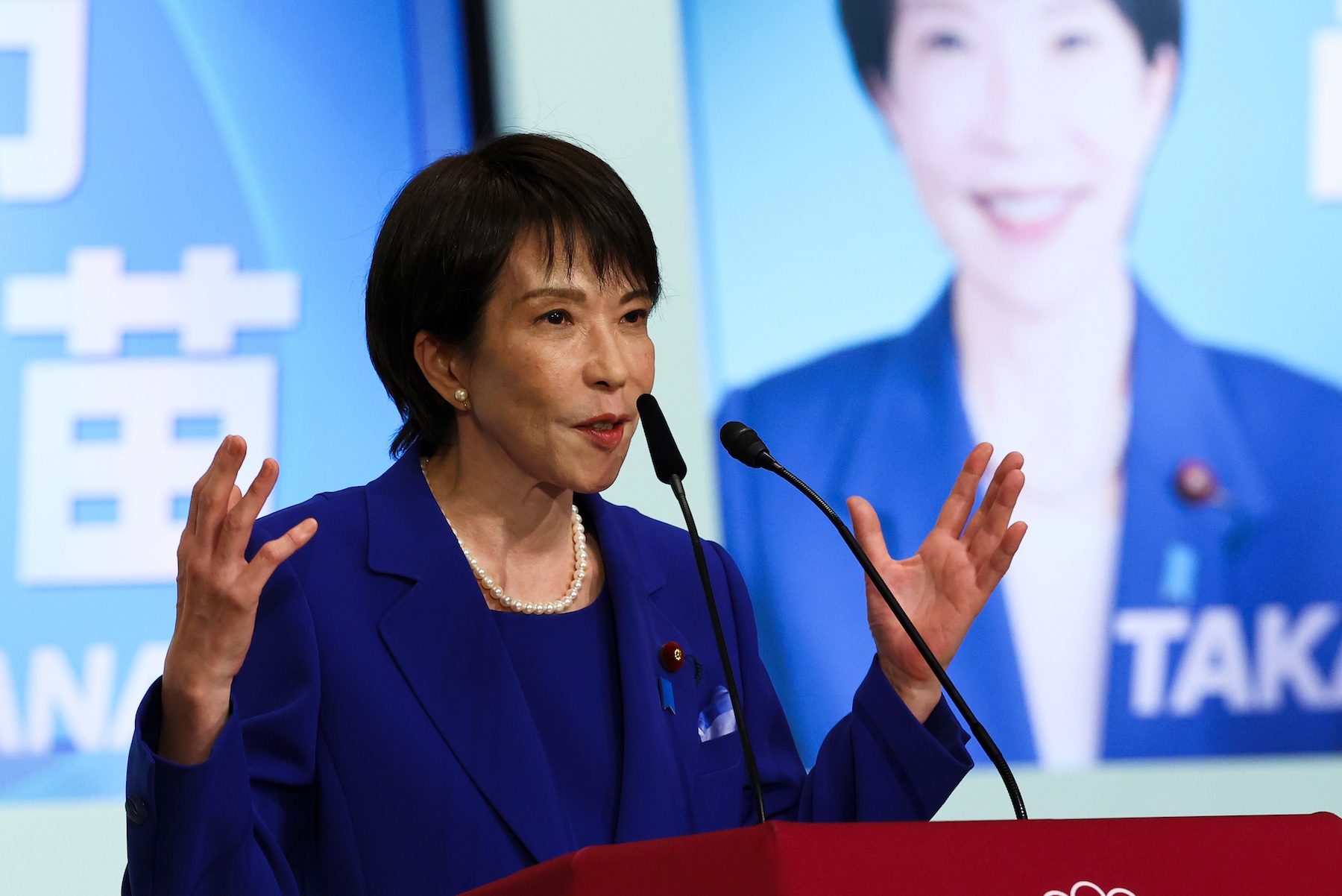
LDP secures supermajority in lower house in landslide victory for Takaichi

The governing party of Prime Minister Sanae Takaichi secured a two-thirds supermajority in a key parliamentary election Sunday, Japanese media reported citing preliminary results, earning a landslide victory thanks to her popularity.

Takaichi, in a televised interview with public television network NHK following her sweeping victory, said she is now ready to pursue policies to make Japan strong and prosperous.

NHK, citing results of vote counts, said Takaichi’s Liberal Democratic Party, or LDP, alone secured 316 seats by early Monday, comfortably surpassing a 261-seat absolute majority in the 465-member lower house, the more powerful of Japan’s two-chamber parliament. That marks a record since the party’s foundation in 1955 and surpasses the previous record of 300 seats won in 1986 by late Prime Minister Yasuhiro Nakasone.

With 36 seats won by its new ally, Japan Innovation Party, Takaichi’s ruling coalition has won 352 seats.

Voter turnout was 56.23 percent, according to an estimate by Kyodo News as of 3 a.m. Monday.

A smiling Takaichi placed a big red ribbon above each winner’s name on a signboard at the LDP’s headquarters, as accompanying party executives applauded.

Despite the lack of a majority in the other chamber, the upper house, the huge jump from the preelection share in the superior lower house would allow Takaichi to make progress on a right-wing agenda that aims to boost Japan’s economy and military capabilities as tensions grow with China and she tries to nurture ties with the United States.

Takaichi said she would try to gain support from the opposition while firmly pushing forward her policy goals.

“I will be flexible,” she said.

Takaichi is hugely popular, but the governing LDP, which has ruled Japan for most of the last seven decades, has struggled with funding and religious scandals in recent years. She called Sunday’s early election only after three months in office, hoping to turn that around while her popularity is high.

The ultraconservative Takaichi, who took office as Japan’s first female leader in October, pledged to “work, work, work,” and her style, which is seen as both playful and tough, has resonated with younger fans who say they weren’t previously interested in politics.

The opposition, despite the formation of a new centrist alliance and a rising far-right, was too splintered to be a real challenger. The new opposition alliance of LDP’s former coalition partner, Buddhist-backed dovish Komeito, and the liberal-leaning Constitutional Democratic Party of Japan, is projected to sink to half of their combined preelection share of 167 seats.

Takaichi was betting with this election that her LDP party, together with its new partner, the JIP, would secure a majority.

Trump in a post on his Truth Social platform Sunday congratulated Takaichi “on a LANDSLIDE Victory in today’s very important Vote. She is a highly respected and very popular Leader. Sanae’s bold and wise decision to call for an Election paid off big time.”

Akihito Iwatake, a 53-year-old office worker, said he welcomed the big win by the LDP because he felt the party went too liberal in the past few years. “With Takaichi shifting things more toward the conservative side, I think that brought this positive result,” he said.

The prime minister wants to push forward a significant shift to the right in Japan’s security, immigration and other policies. The LDP’s right-wing partner, JIP leader Hirofumi Yoshimura, has said his party will serve as an “accelerator” for this push.

Japan has recently seen far-right populists gain ground, such as the anti-globalist and surging nationalist party Sanseito. Exit polls projected a big gain for Sanseito.

The first major task for Takaichi when the lower house reconvenes in mid-February is to work on a budget bill, delayed by the election, to fund economic measures that address rising costs and sluggish wages.

Takaichi has pledged to revise security and defense policies by December to bolster Japan’s offensive military capabilities, lifting a ban on weapons exports and moving further away from the country’s postwar pacifist principles.

She has been pushing for tougher policies on foreigners, anti-espionage and other measures that resonate with a far-right audience, but ones that experts say could undermine civil rights.

Takaichi also wants to increase defense spending in response to U.S. President Donald Trump’s pressure for Japan to loosen its purse strings.

She now has time to work on these policies, without an election until 2028. (JapanToday)

Posted on Leave a comment

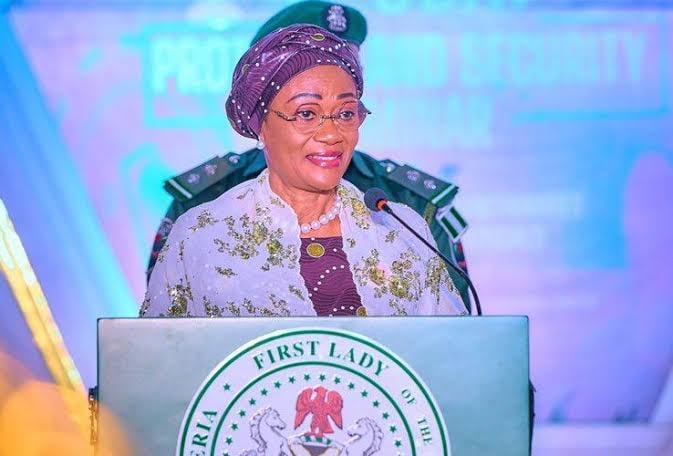
Trump recognises Remi Tinubu at US national prayer breakfast

US President Donald Trump says Oluremi Tinubu, the first lady of Nigeria, attended the country’s national prayer breakfast held in Washington DC on Thursday.

Recognising the first lady at the event,Trump described Oluremi as a “very respected woman” and a “Christian pastor at the largest church in Nigeria”.

“We are honoured to be joined by the First Lady of Nigeria (Remi Tinubu), who also happens to be a Christian pastor at the largest church in Nigeria, very respected woman…. it’s a great honour. Thank you very much,” Trump said in a video of the event.

The national prayer breakfast is an annual event where people of different political beliefs come together to pray.

Oluremi was ordained pastor of the Redeemed Christian Church of God (RCCG), one of Nigeria’s largest Pentecostal denominations, in 2018.

The first lady’s presence at the event comes amid the stance of the US government on killings and persecution of Christians in Nigeria.

In October 2025, Trump redesignated Nigeria as a ‘country of particular concern’ in response to allegations of a Christian genocide in the country.

Barely a month later, Trump asked the United States department of war to prepare for “possible action” to wipe out Islamic terrorists in Nigeria.

On December 25, 2025, the US government launched a fusillade of air strikes on ISIS terrorists in the north-western Nigerian state of Sokoto.

Subsequently, the US and Nigerian governments formed a working group to address issues on counter-terrorism and religious freedom in Nigeria. (TheCable)

Posted on Leave a comment

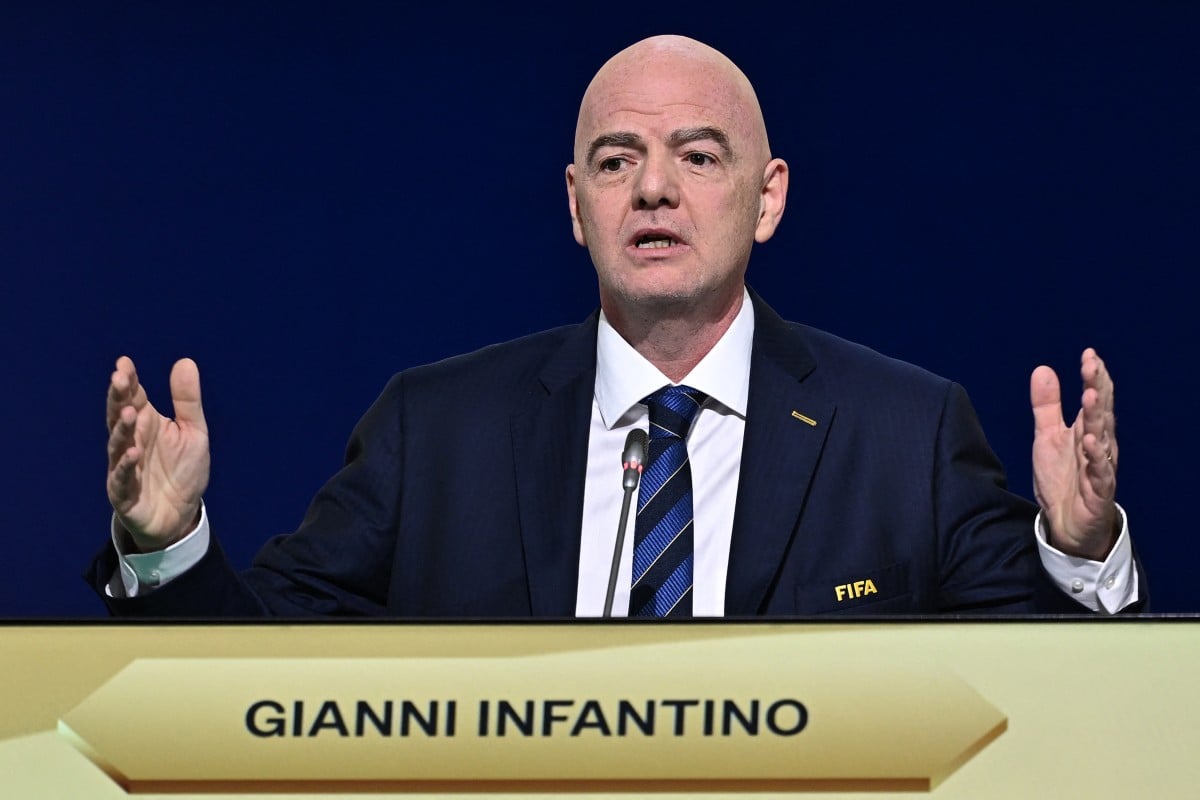
FIFA president Infantino defends giving peace prize to Trump

FIFA chief Gianni Infantino defended his controversial decision to award a peace prize to U.S. President Donald Trump as he dismissed calls for a World Cup boycott.

Infantino was widely criticized for giving Trump the honor on behalf of his governing body at the 2026 World Cup draw in Washington DC in December.

The move drew further scrutiny after U.S. forces seized Venezuelan president Miguel Maduro, while Trump caused more controversy with his desire to acquire Greenland for national security reasons.

However, Infantino insisted Trump was deserving of FIFA’s inaugural peace prize, telling Sky News on Monday: “Objectively, he deserves it.

“Whatever we can do to help peace in the world, we should be doing it, and for this reason, for some time we were thinking we should do something to reward people who do something.”

Infantino rejected suggestions there might be a boycott of this year’s World Cup — to be held in the United States, Canada and Mexico from June 11 to July 19 — due to policies adopted at home and abroad by the Trump administration.

There has been unrest in a number of U.S. cities, most notably Minneapolis, over the Trump administration’s approach to immigration enforcement.

But Infantino said there were never calls for businesses to boycott a country, “so why football?”

The 55-year-old added: “In our divided world, in our aggressive world, we need occasions where people can come, can meet around the passion (for football).”

Infantino also said FIFA and UEFA — European football’s governing body — would “have to” look at allowing Russia back into international action.

Russia has been banned since its invasion of Ukraine in 2022, but the International Olympic Committee has now recommended sports federations allow Russian teams to compete at youth level.

“We have to(look at readmitting Russia. Definitely,” Infantino said. “This ban has not achieved anything, it has just created more frustration and hatred.

“Having girls and boys from Russia being able to play football games in other parts of Europe would help.” (JapanToday)

Posted on Leave a comment

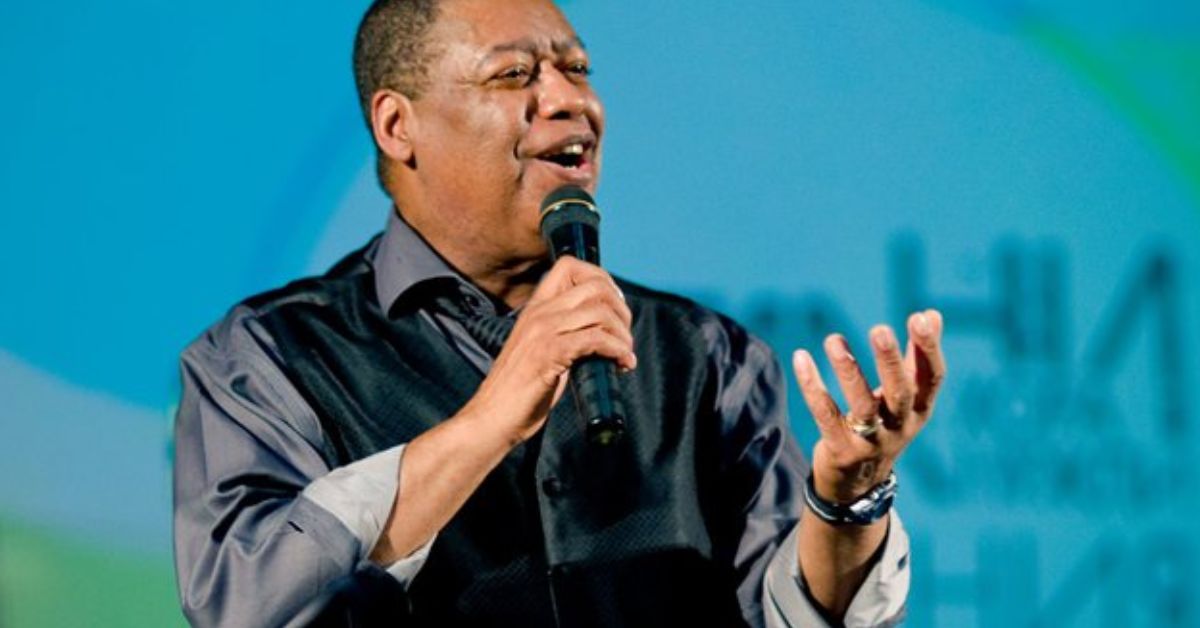
Gospel legend Ron Kenoly dies at 81

The celebrated American Christian worship leader, singer, and songwriter, Ron Kenoly, has passed away at the age of 81.

The news was confirmed by Bruno Miranda, Kenoly’s longtime music director, in a statement shared on the singer’s official Instagram page. The statement revealed that Kenoly died on February 3, 2026, though the cause of death was not disclosed.

Miranda, who worked closely with Kenoly for more than 20 years, described him as not only a mentor but also a spiritual father, emphasizing Kenoly’s dedication to his calling.

“This morning, Feb. 3, 2026, we said goodbye to Dr. Ron Kenoly,” the statement read.

“For over 20 years, I had the honor of walking alongside him in ministry around the world—not just as his music director, but as a son, a student, and a witness to a life marked by faithfulness. Doc was very intentional about one thing: he was never an artist, never an entertainer. He was a worship leader. And he took all the time necessary to explain what that truly meant.”

Miranda elaborated on Kenoly’s philosophy of worship, highlighting that he viewed his role as guiding people into sincere reverence for God.

“A worship leader’s calling is not to perform songs, but to lead people into true worship in the presence of a King; the King of Kings, Jesus Christ. He taught me that a worship leader is not merely a song leader, but a servant who connects with people whose hearts are open to worship, guiding them to ‘enter His gates with thanksgiving, and His courts with praise’ (Psalm 100:4, ESV). Worship, he would say, is always rooted in gratitude for what Christ has done for us, and never in anticipation of what we want Him to do.

“Off the stage, Doc carried the same integrity, humility, and reverence for God that the world saw under the lights. He taught me that worship begins long before the first note is played, shaped by obedience, character, and a deep fear of the Lord.


“Today we grieve deeply but not without hope. The worship he lived is now the worship he beholds.

“Until we meet again, my pastor, my mentor, my friend.”

Born on December 6, 1944, in Coffeyville, Kansas, Kenoly moved to Hollywood, California, after high school and later served in the United States Air Force from 1965 to 1968. During his military service, he performed with a cover band, the Mellow Fellows, which toured various military bases.

After his service, Kenoly returned to Los Angeles to pursue a full-time music ministry, eventually becoming one of the most influential figures in contemporary Christian worship music.

His breakthrough came in 1992 with the release of “Lift Him Up”, which became the fastest-selling worship album of its time.

Kenoly’s extensive discography includes:

  • Jesus Is Alive (1991)
  • Ancient of Days (1992)
  • God Is Able (1994)
  • Sing Out With One Voice (1995)
  • Welcome Home (1996)
  • High Places: The Best of Ron Kenoly (Channels)

Posted on Leave a comment

Takaichi says U.S.-Japan alliance would collapse if Tokyo ignored Taiwan crisis

Japanese Prime Minister Sanae Takaichi said the alliance between Tokyo and Washington would collapse if Japan failed to act in the event of an attack on the U.S. military during a conflict in Taiwan.

Detailing the Japanese response to a hypothetical Taiwan crisis, Takaichi appeared to dial back on her remarks in November that suggested Tokyo could intervene militarily during a potential attack on the island.

That comment provoked the ire of Beijing, which regards the democratic island as its own territory.

Ahead of a snap election in February, Takaichi was asked during a news program Monday about her remarks in November that suggested Tokyo could intervene militarily during a potential attack on Taiwan.

Takaichi pointed out that in the event of conflict, Japan and the United States might jointly conduct an evacuation operation to rescue Japanese and American nationals.

“If the U.S. military, acting jointly with Japan, comes under attack and Japan does nothing and runs home, the Japan-U.S. alliance will collapse,” she said on the TV Asahi program.

“If something serious happens there, we would have to go to rescue the Japanese and American citizens in Taiwan. In that situation, there may be cases where Japan and the U.S. take joint action,” the prime minister said.

She added: “We will respond strictly within the bounds of the law, making a comprehensive judgment based on the circumstances.”

In the wake of Takaichi’s comments in November, China has discouraged its nationals from traveling to Japan, citing deteriorating public security and criminal acts against Chinese nationals in the country.

Beijing is reportedly also choking off exports to Japan of rare-earth products crucial for making everything from electric cars to missiles. (JapanToday)

Posted on Leave a comment

As if! ‘‘Clueless,’’ ‘‘The Karate Kid,’’ ‘‘Inception’’ among 25 movies entering National Film Registry

As if they’d leave “Clueless” off the list.

Cher Horowitz fans, rejoice: Amy Heckerling’s 1995 teen comedy is one of 25 classic movies chosen this year by the Library of Congress for its National Film Registry.

And if “Clueless” wasn’t your jam — whatever! — maybe this will send you deep into your dreams: Christopher Nolan’s mind-bending “Inception” is in the mix. Other films chosen for preservation include “The Karate Kid,” “Glory,” “Philadelphia,” “Before Sunrise,” “The Incredibles” and “Frida.” There are four documentaries, including “Brooklyn Bridge” by Ken Burns. From old Hollywood, there’s the 1954 musical “White Christmas,” and the 1956 “High Society,” Grace Kelly’s last movie before marrying into royalty.

Since 1988, the Library of Congress has selected 25 movies each year for preservation due to their “cultural, historic or aesthetic importance.” The films must be at least 10 years old.

The oldest of the 2025 picks dates from 1896, filmmaker William Selig’s “The Tramp and the Dog.” The newest of the group is from 2014: Wes Anderson’s “The Grand Budapest Hotel,” which, the registry noted, involved “meticulous historical research at the Library of Congress to create visually striking scenery.”

Turner Classic Movies will host a TV special March 19 to screen a selection of the films.

“The Tramp and the Dog” (1896): Once deemed lost, but discovered in 2021 at the National Library of Norway, Selig’s silent film tells the story of a tramp who tries to steal a pie from a backyard windowsill — and is foiled by a dog. The registry notes it’s an early example of “pants humor” — “where a character loses (or almost loses) its pants during an altercation.”

“The Maid of McMillan” (1916): This 15-minute silent film, a “whimsical silent romance” shot by students at a drama club at Washington University in St. Louis, tells the story of the track team captain, Jack, who’s in love with Myrtle, “a pretty coed,” according to the university’s library. It is known, the registry says, as the first student film on record.

“Ten Nights in a Barroom” (1926): A silent film featuring an all-Black cast, it’s based on a stage melodrama adapted from “Ten Nights in a Bar-room and What I Saw There,” an 1854 “temperance novel” written to discourage readers from drinking alcohol.

“High Society” (1956): In what the registry calls “the last great musical of the Golden Age of Hollywood,” Bing Crosby appeared with Frank Sinatra and Grace Kelly, in her last movie before retiring and marrying Prince Rainier of Monaco. Louis Armstrong appeared with his band. Kelly wore her Cartier engagement ring during filming, the registry notes.

“Brooklyn Bridge” (1981): Ken Burns’ first documentary broadcast on PBS, in which the filmmaker recounted the building of the iconic landmark. “More than just a filmmaker, Burns has become a trusted public historian,” the registry says.

“The Big Chill” (1983): Lawrence Kasdan’s era-defining story of a group of friends reuniting after a suicide features Glenn Close, William Hurt, JoBeth Williams, Kevin Kline, Jeff Goldblum and Meg Tilly in an ensemble that “portrays American stereotypes of the time — the yuppie, the drug dealer, the TV star — and deftly humanizes them.”

“The Karate Kid (1984): The first film in the franchise, starring Ralph Macchio and Pat Morita, is “as American as they come,” the registry says — “a hero’s journey, a sports movie and a teen movie — a feel-good movie, but not without grit.”

“Glory” (1989): Denzel Washington won an Oscar as Private Trip in this story of the 54th Regiment, a unit of Black soldiers who fought in the Civil War. The cast also included Morgan Freeman, Matthew Broderick, Cary Elwes and Andre Braugher.

“Philadelphia” (1993): Tom Hanks starred — and won an Oscar — in one of the first big studio movies to confront the HIV/AIDS crisis. The film is also known for Bruce Springsteen’s Oscar-winning song, “The Streets of Philadelphia.”

“Before Sunrise” (1995): The first film of Richard Linklater’s deeply romantic “Before” trilogy, starring Ethan Hawke and Julie Delpy. The registry notes Linklater’s “innovative use of time as a defining and recurring cinematic tool.”

“Clueless” (1995): Heckerling’s teen comedy, starring Alicia Silverstone, was a loose adaptation of Jane Austen’s “Emma” and forever enshrined the phrase “As if!” into popular culture. The registry hails “its peak-1990s colorful, high-energy, soundtrack-focused on-screen dynamism.”

“The Wrecking Crew” (2008): Danny Tedesco’s documentary — not to be confused with the 2026 buddy cop movie of the same name — looks at a group of Los Angeles studio musicians who played on hit songs of the ‘60s and ’70s like “California Dreamin’” and “The Beat Goes On.”

“Inception” (2010): In a movie that asks whether it’s possible to influence a person’s thoughts by manipulating their dreams, Nolan “once again challenges audiences with multiple interconnected narrative layers while delivering thrilling action sequences and stunning visual effects.” (JapanToday)