Posted on Leave a comment

Trump says US launched strike against ISIL in northwest Nigeria

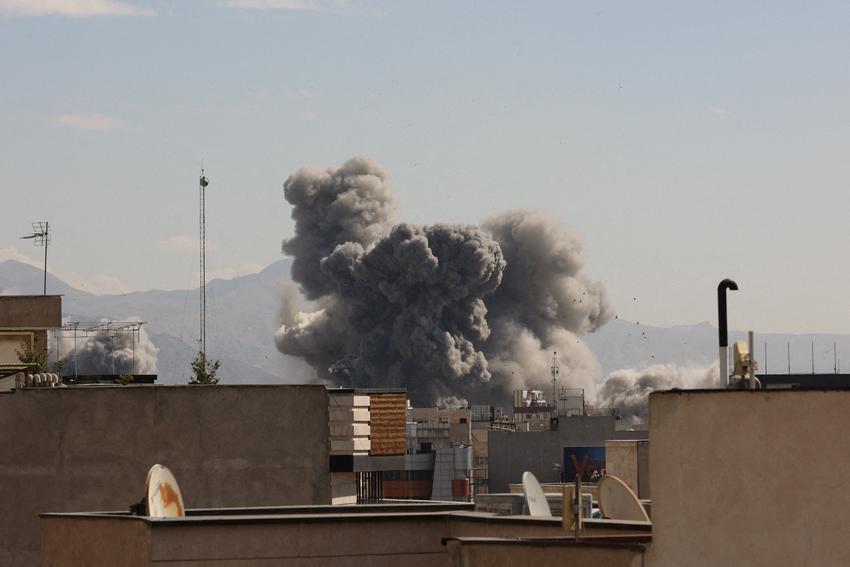
The United ‍States ‍says that it has carried out an air strike against ISIL (ISIS) fighters in northwest Nigeria that residents say caused buildings to shake and the sky to glow red.

“Tonight, ⁠at my direction as Commander in Chief, the United States launched a powerful and ​deadly strike ‌against ISIS Terrorist Scum in Northwest Nigeria,” ‌President Donald Trump said in a post on his Truth Social platform on Thursday evening.

Trump, who has previously threatened greater US intervention in Nigeria over dubious claims that a “genocide” of Christians is taking place there, said ISIL fighters had been “viciously” killing and targeting Christians at levels unseen for “centuries”.

“I have previously warned these Terrorists that if they did not stop the slaughtering of Christians, there would be hell to pay, and tonight, there was,” Trump said.

The US military’s Africa Command (AFRICOM), which is responsible for operations in Africa, said in a post on X that the air strike was carried out “at the request of Nigerian authorities” and had killed “multiple ISIS terrorists”.

Residents of Jabo have said that the strikes caused alarm and that their village has never experienced an attack by ISIL.

“As it approached our area, the heat became intense,” Abubakar Sani, who lives just a few houses from the scene of the explosion, told the news service Associated Press.

“Our rooms began to shake, and then fire broke out,” he said. “The Nigerian government should take appropriate measures to protect us as citizens. We have never experienced anything like this before.”

Another resident, 40-year-old farmer Sanusi Madabo, said that the attacks made the night sky glow red and appear “almost like daytime”.

“Grateful for Nigerian government support and cooperation,” US Secretary of Defense Pete Hegseth wrote on social media, warning also of “more to come”, without providing details.

In a statement, AFRICOM said the strike occurred in “Soboto state,” an apparent reference to Nigeria’s Sokoto State.

Nigerian Foreign Minister Yussuf Tuggar confirmed on Friday that the strike had been carried out in coordination with the country’s authorities, but said it was not aimed at targeting members of any particular religious community.

“Nigeria is a multi-religious country, and we’re working with partners like the US to fight terrorism and protect lives and property,” Tuggar told Nigeria’s Channels Television.

The US military action comes weeks after Trump said he had ordered the Pentagon to begin planning for potential military action in Nigeria following claims of Christian persecution in the country.

Nigeria’s government had dismissed Trump’s assertions, saying armed groups target both Muslim and Christian communities in the country, and US claims that Christians face persecution ‌do not represent a complex security situation and ignore efforts by Nigerian authorities to safeguard religious freedom.

Nigeria’s Ministry of Foreign Affairs issued a statement shortly after Trump announced the US strike, confirming early on Friday that Nigerian authorities were “engaged in structured security cooperation with international partners, including the United States of America, in addressing the persistent threat of terrorism and violent extremism”. (AlJazeera)

Posted on Leave a comment

Supreme Court rejects Trump’s military deployment in Chicago area, for now

The U.S. Supreme Court refused on Tuesday to let Donald Trump send National Guard troops to the Chicago area as the Republican president expands the use of the military for domestic purposes in a growing number of Democratic-led jurisdictions, a ‌policy critics call an effort to punish adversaries and stifle dissent.

The justices denied the Justice Department’s request to lift a judge’s order that has blocked the deployment of hundreds of National Guard personnel in a legal challenge brought by Illinois state officials and local leaders. The department had asked to allow the deployment while the litigation plays out.

The ⁠National Guard serves as state-based militia forces that answer to state governors except when called into federal service ‍by the president.

Trump ordered troops to Chicago, the third-largest U.S. city, and to Portland, Oregon, following his earlier ‍deployments to Los Angeles, Memphis and ‍Washington, DC.

The case has been characterized by starkly different portrayals of the protests against Trump’s aggressive immigration enforcement in and around Chicago.

Trump and his ⁠allies have described Democratic-led cities as lawless, crime-ravaged and plagued with vast, violent protests. His administration has said troops are needed to protect federal property and personnel.

Democratic mayors and governors, along with other Trump critics, have said these claims ​are a false account of the situation and a pretext for sending troops, accusing Trump of abusing his power.

Federal judges have expressed skepticism over the administration’s dire view of protests that local law enforcement officials have called limited in size, largely peaceful and manageable by their own forces – far from the “war zone” conditions described by Trump.

Trump has relied on a law that lets a president deploy state National Guard troops to suppress a rebellion, repel an invasion or if he is “unable with the regular forces to execute the laws of the ⁠United States.”

Illinois and Chicago sued after the administration federalized 300 Illinois National Guard troops and also ordered Texas National Guard troops into the state, calling the actions unlawful. Officials have since announced the administration was sending home hundreds of National Guard troops who were dispatched to Portland from California, and to Chicago from Texas.

Chicago-based U.S. District Judge April Perry temporarily blocked the move on October 9, finding that the claims of violence during protests at an immigration facility in the Chicago suburb of Broadview, Illinois, where a small group of demonstrators had gathered daily for weeks, were unreliable.

Perry, an appointee of Democratic former President Joe Biden, found that there was no evidence of rebellion or that the law was not being enforced, faulting officials for “equating protests with riots and a lack of appreciation for the wide spectrum that exists between citizens who are observing, questioning and criticizing their government, and those who are obstructing, assaulting or doing violence.”

A National Guard deployment would “only add fuel to the fire,” Perry said.

A three-judge panel of the Chicago-based 7th U.S. Circuit Court of Appeals declined to lift Perry’s order blocking the deployment, concluding that “the facts do not justify the president’s actions in Illinois.” Two of the three judges were appointed by Republican presidents, including one by ​Trump.

The Justice Department told the Supreme Court that the assessment by local officials of the protests was “implausibly rosy,” and that federal agents “have been forced to operate under the constant threat of mob violence.”

Lawyers for Illinois and Chicago told the justices that the local protests have “never hindered ⁠the continued operation” of the Broadview facility, and that state and local authorities have responded to every request for assistance and contained any sporadic disruption.

Officials from Portland and Oregon are pursuing a separate legal challenge to Trump’s planned deployment to that city. U.S. District Judge Karin Immergut, a Trump appointee, permanently blocked that deployment in a November 7 ruling. The ‍administration has appealed that ruling.

The Supreme Court in October asked the administration as well as Illinois and Chicago to provide written arguments over ‌how to interpret the words “regular forces” in the law ‌at issue in the case.

In an October 10 written ruling, Perry said ‍that historical sources indicate that “regular forces” means only members regularly enlisted in the military, including the Army and Navy, as opposed to the National Guard.

Trump’s administration “made no attempt to rely ‌on the regular forces before resorting to federalization of the National Guard,” Perry said, adding that there are ‍other limits on the use of the military for domestic law enforcement purposes.

The administration repeatedly has sought the Supreme Court’s intervention to allow implementation of Trump policies impeded by lower courts. The Supreme Court, which has a 6-3 conservative majority, has sided with the administration in almost every case that it has been called upon to review since Trump returned to the presidency in January. (JapanToday)

Posted on Leave a comment

US signs health deal to aid Christians in Nigeria

The United States has signed a five-year health cooperation agreement with Nigeria aimed at strengthening the country’s health system, with a specific focus on supporting Christian faith-based healthcare providers, Washington announced on Saturday.

Under the bilateral agreement, the United States will contribute nearly $2.1 billion to programmes targeting HIV, tuberculosis, malaria and polio, as well as initiatives to improve maternal and child health, a US State Department spokesperson said.

Nigeria, Africa’s most populous country, has committed to increasing its national health spending by almost $3 billion over the same five-year period, according to the spokesperson.

The agreement includes what the State Department described as “a strong emphasis on promoting Christian faith-based health care providers”.

The announcement comes amid heightened attention from Washington to the security situation facing Christian communities in Nigeria.

Last month, President Donald Trump said the United States was prepared to take military action in Nigeria in response to attacks on Christians, comments that drew international attention.

Trump has repeatedly said Christianity faces what he described as an “existential threat” in Nigeria and other countries, framing the issue as part of a broader concern about the global persecution of Christians.

His administration has placed Nigeria back on the US list of countries of “particular concern” over religious freedom and has imposed restrictions on the issuance of visas to Nigerian nationals.

According to the State Department, the health agreement signed on Saturday was negotiated in connection with reforms undertaken by the Nigerian government to prioritise the protection of Christian populations from violence.

Nigeria is roughly divided between a predominantly Christian south and a largely Muslim north. (ThisDay)

Posted on Leave a comment

TikTok owner signs deal to avoid US ban

TikTok’s Chinese owner ByteDance has signed binding agreements with US and global investors to operate its business in America, TikTok’s boss told employees on Thursday.

Half of the joint venture will be owned by a group of investors, including Oracle, Silver Lake and the Emirati investment firm MGX, according to a memo sent by chief executive Shou Zi Chew.

The deal, which is set to close on 22 January, would end years of efforts by Washington to force ByteDance to sell its US operations over national security concerns.

It is in ​line with a deal unveiled in September, when US President Donald Trump delayed the enforcement of a law that would ban the app unless it was sold.

In the memo, TikTok said the deal will enable “over 170 million Americans to continue discovering a world of endless possibilities as part of a vital global community”.

Under the agreement, ByteDance will retain 19.9% of the business, while Oracle, Silver Lake and Abu Dhabi-based MGX will hold 15% each.

Another 30.1% will be held by affiliates of existing ByteDance investors, according to the memo.

The White House previously said that Oracle, which was co-founded by Trump supporter Larry Ellison, will license TikTok’s recommendation algorithm as part of the deal.

The deal comes after a series of delays.

In April 2024, during President Joe Biden’s administration, the US Congress passed a law to ban the app over national security concerns, unless it was sold.

The law was set to go into effect on 20 January 2025 but was pushed back multiple times by Trump, while his administration worked out a deal to transfer ownership.

Trump said in September that he had spoken on the phone to China’s President Xi Jinping, who he said had given the deal the go ahead.

The platform’s future remained unclear after the leaders met face to face in October.

The app’s fate was clouded by ongoing tensions between the two nations on trade and other matters.

“TikTok has become a bargaining chip in the wider US-China relationship,” said Alvin Graylin, a lecturer at the Massachusetts Institute of Technology.

“With recent softening tensions, Beijing’s sign off on the structure and algorithm licensing now looks less like capitulation and more like calibrated de-escalation, letting both capitals claim a win at home.”

he White House referred the BBC to TikTok when contacted for comment.

Oracle and Silver Lake declined to comment. The BBC has contacted MGX for comment.

The deal drew critiques from Senate Democrat Ron Wyden of Oregon, who said it wouldn’t do “a thing to protect the privacy of American user”.

Under the terms, TikTok’s recommendation algorithm is set to be retrained on American user data to ensure feeds are free from outside manipulation.

“It’s unclear that it will even put TikTok’s algorithm in safer hands,” said Sen Wyden.

He opposed the 2024 law, and was among the US lawmakers who lobbied to extend the TikTok deadline in January in a bid to give Congress more time to mitigate threats from China. (BBC)

Posted on Leave a comment

US could ask foreign tourists for five-year social media history before entry

Tourists from dozens of countries including the UK could be asked to provide a five-year social media history as a condition of entry to the United States, under a new proposal unveiled by American officials.

The new condition would affect people from dozens of countries who are eligible to visit the US for 90 days without a visa, as long as they have filled out an Electronic System for Travel Authorization (ESTA) form.

Since returning to the White House in January, President Donald Trump has moved to toughen US borders more generally – citing national security as a reason.

Analysts say the new plan could pose an obstacle to potential visitors, or harm their digital rights.

Asked whether the proposal could lead to a steep drop-off in tourism to the US, Trump said he was not concerned.

“No. We’re doing so well,” the president said on Wednesday.

“We just want people to come over here, and safe. We want safety. We want security.

“We want to make sure we’re not letting the wrong people come enter our country.”

The US expects a major influx of foreign tourists next year, as it hosts the men’s football World Cup alongside Canada and Mexico, and for the 2028 Olympics in Los Angeles.

The proposal document was filed by the Department of Homeland Security (DHS) and its component agency Customs and Border Protection (CBP).

It was published in the Federal Register, the official journal of the US government.

The proposal says “the data element will require ESTA applicants to provide their social media from the last 5 years”, without giving further details of which specific information will be required.

The existing ESTA requires a comparatively limited amount of information from travellers, as well as a one-off payment of $40 (£30). It is accessible to citizens of about 40 countries – including the UK, Ireland, France, Australia and Japan – and allows them to visit the US multiple times during a two-year period.

As well as the collection of social media information, the new document proposes the gathering of an applicant’s telephone numbers and email addresses used over the last five and 10 years respectively, and more information about their family members.

The text cites an executive order from Trump in January, titled “Protecting the United States From Foreign Terrorists and Other National Security and Public Safety Threats”.

The new proposal regarding ESTA data collection for tourists invites views from the public for 60 days.

“Nothing has changed on this front for those coming to the United States,” a spokesperson for CBP said in a statement.

“This is not a final rule, it is simply the first step in starting a discussion to have new policy options to keep the American people safe.”

Sophia Cope, of digital rights organisation the Electronic Frontier Foundation, criticised the plan, telling the New York Times it could “exacerbate civil liberties harms”.

Meanwhile, immigration law practice Fragomen suggested there could be practical impacts as applicants could face longer waits for ESTA approvals. (BBC)

Posted on Leave a comment

Ukrainian drone attack kills 2 in Russia as over 1 million people in Ukraine lose power

A Ukrainian drone attack in southwestern Russia killed two people on Saturday as parts of Ukraine went without power following Russian assaults on energy infrastructure hours before peace talks were to restart in Germany.

Ukrainian President Volodymyr Zelenskyy said that Ukrainian, U.S. and European officials will hold a series of meetings in Berlin in the coming days, adding that he will personally meet with U.S. President Donald Trump’s envoys.

“Most importantly, I will be meeting with envoys of President Trump, and there will also be meetings with our European partners, with many leaders, concerning the foundation of peace — a political agreement to end the war,” Zelenskyy said in an address to the nation late Saturday.

Trump’s special envoy Steve Witkoff and his son-in-law Jared Kushner are traveling to Berlin for the talks, according to a White House official, who spoke on condition of anonymity.

American officials have tried for months to navigate the demands of each side as Trump presses for a swift end to Russia’s war and grows increasingly exasperated by delays. The search for possible compromises has run into major obstacles, including the possession of Ukraine’s eastern Donbas region, mostly occupied by Russia but parts of which remain under Ukrainian control.

“The chance is considerable at this moment, and it matters for our every city, for our every Ukrainian community,” Zelenskyy said. “We are working to ensure that peace for Ukraine is dignified, and to secure a guarantee — a guarantee, above all, that Russia will not return to Ukraine for a third invasion.”

The drone attack in Russia’s Saratov region damaged a residential building and several windows were also blown out at a kindergarten and clinic, said Gov. Roman Busargin. Russia’s Defense Ministry said it had shot down 41 Ukrainian drones over Russian territory overnight.

In Ukraine, Russia launched overnight drone and missile strikes on five Ukrainian regions, targeting energy and port infrastructure. Ukrainian Interior Minister Ihor Klymenko said that over a million people were without electricity.

Zelenskyy said Russia had sent over 450 drones and 30 missiles into Ukraine overnight.

An attack on the Black Sea city of Odesa caused grain silos to catch fire at the port, Ukrainian deputy prime minister and reconstruction minister Oleksiy Kuleba said. Two people were wounded in attacks on the wider Odesa region, according to regional head Oleh Kiper.

Kyiv and its Western allies say Russia is trying to cripple the Ukrainian power grid and deny civilians access to heat, light and running water for a fourth consecutive winter, in what Ukrainian officials call “weaponizing” the cold. (JapanToday)

Posted on Leave a comment

Shooter kills 2, wounds 9 at Brown University during final exams

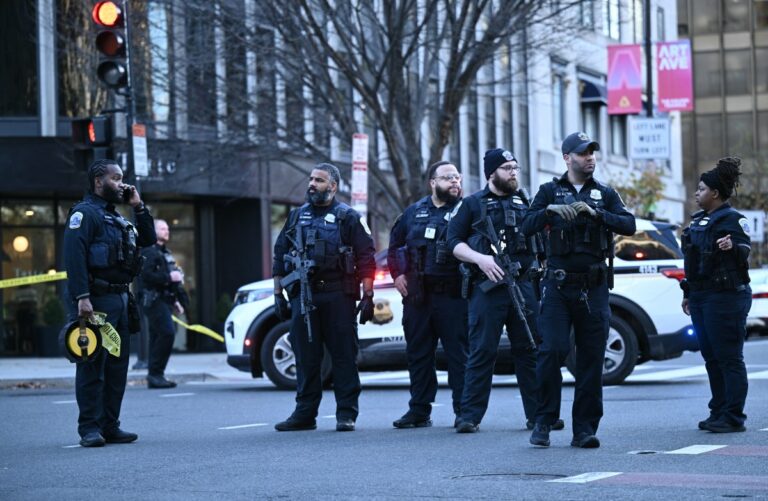
A shooter dressed in black killed at least two people and wounded nine others at Brown University on Saturday during final exams on the Ivy League campus, authorities said, and police were searching for the suspect.

University President Christina Paxson said she was told that 10 people who were shot were students. Another person was injured by fragments from the shooting, but it was not clear if that victim was a student, she said.

Officers scattered across the campus and into an affluent neighborhood filled with historic and stately brick homes, searching academic buildings, backyards and porches late into the night after the shooting erupted in the afternoon.

The suspect was a man in dark clothing who was last seen leaving the engineering building where the attack happened, said Timothy O’Hara, deputy chief of Providence police.

Security footage showed the suspect walking away from the building, but his face was not visible. Some witnesses reported that the man, who could be in his 30s, may have been wearing a camouflage mask, O’Hara said.

Investigators were not yet sure how the shooter got inside the first-floor classroom where he opened fire. Outer doors of the building were unlocked, but rooms being used for final exams required badge access, Providence’s mayor said.

Authorities believe the shooter used a handgun, according to a law enforcement official who was not authorized to discuss an ongoing investigation and spoke on condition of anonymity.

“The unthinkable has happened,” said Democratic Rhode Island Gov. Dan McKee, who vowed that all resources were being deployed to catch the suspect.

Mayor Brett Smiley said a shelter-in-place remained in effect and encouraged people living near the campus to stay inside or not return home until it is lifted. Streets that normally bustle with activity on weekends were eerily quiet.

“The Brown community’s heart is breaking, and Providence’s heart is breaking along with it,” Smiley said.

Emma Ferraro, a chemical engineering student, was in the building’s lobby working on a final project when she heard loud pops coming from the east side. Once she realized they were gunshots, she darted for the door and ran to a nearby building where she sheltered for several hours.

Nine people with gunshot wounds were taken to Rhode Island Hospital, where one was in critical condition, said Kelly Brennan, a spokesperson for the hospital. Six required intensive care but were not getting worse, and two were stable, she said.

University officials initially told students and staff that a suspect was in custody, but later said that was not the case. The mayor said a person preliminarily thought to be involved was detained but was later determined to have no involvement.

Nearly five hours after the shooting, officers in tactical gear led students out of some campus buildings and into a fitness center.

The shooting occurred in the Barus & Holley building, a seven-story complex that houses the School of Engineering and physics department. According to the university’s website, the building includes more than 100 laboratories, dozens of classrooms and offices.

Engineering design exams were underway there when the shooting occurred. (JapanToday)

Posted on Leave a comment

Trump says U.S. has seized oil tanker off coast of Venezuela

President Donald Trump said Wednesday that the United States has seized an oil tanker off the coast of Venezuela as tensions mount with the government of President Nicolás Maduro.

Using U.S. forces to seize an oil tanker is incredibly unusual and marks the Trump administration’s latest push to increase pressure on Maduro, who has been charged with narcoterrorism in the United States. The U.S. has built up the largest military presence in the region in decades and launched a series of deadly strikes on alleged drug-smuggling boats in the Caribbean Sea and eastern Pacific Ocean. The campaign is facing growing scrutiny from Congress.

“We’ve just seized a tanker on the coast of Venezuela, a large tanker, very large, largest one ever seized, actually,” Trump told reporters at the White House, later adding that “it was seized for a very good reason.”

Trump said “other things are happening,” but did not offer additional details, saying he would speak more about it later. When asked what would happen to the oil aboard the tanker, Trump said, “Well, we keep it, I guess.”

The seizure was led by the U.S. Coast Guard and supported by the Navy, according to a U.S. official who was not authorized to comment publicly and spoke on the condition of anonymity. The official added that the seizure was conducted under U.S. law enforcement authority.

Venezuela has the world’s largest proven oil reserves and produces about 1 million barrels a day. Locked out of global oil markets by U.S. sanctions, the state-owned oil company sells most of its output at a steep discount to refiners in China.

The transactions usually involve a complex network of shadowy intermediaries, as sanctions have scared away more established traders. Many are shell companies, registered in jurisdictions known for secrecy. The buyers deploy so-called ghost tankers that hide their location and hand off their valuable cargoes in the middle of the ocean before they reach their final destination.

Maduro did not address the seizure during a speech before a ruling-party organized demonstration in Caracas, Venezuela’s capital. But he told supporters that the country is “prepared to break the teeth of the North American empire if necessary.”

Maduro, flanked by senior officials, said only the ruling party can “guarantee peace, stability, and the harmonious development of Venezuela, South America and the Caribbean.”

Maduro previously has insisted the real purpose of the U.S. military operations is to force him from office.

During past negotiations, among the concessions the U.S. has made to Maduro was approval for oil giant Chevron Corp. to resume pumping and exporting Venezuelan oil. The corporation’s activities in the South American country resulted in a financial lifeline for Maduro’s government.

The seizure comes a day after the U.S. military flew a pair of fighter jets over the Gulf of Venezuela in what appeared to be the closest that warplanes had come to the South American country’s airspace. Trump has said land attacks are coming soon but has not offered more details.

The Trump administration is facing increasing scrutiny from lawmakers over the boat strike campaign, which has killed at least 87 people in 22 known strikes since early September, including a follow-up strike that killed two survivors clinging to the wreckage of a boat after the first hit.

Some legal experts and Democrats say that action may have violated the laws governing the use of deadly military force.

Lawmakers are demanding to get unedited video from the strikes, but Defense Secretary Pete Hegseth told congressional leaders Tuesday he was still weighing whether to release it. Hegseth provided a classified briefing for congressional leaders alongside Secretary of State Marco Rubio and CIA Director John Ratcliffe.

It was not immediately clear Wednesday who owned the tanker or what national flag it was sailing under. The Coast Guard referred a request for comment to the White House. (JapanToday)

Posted on Leave a comment

Trump slams ‘‘decaying’’ Europe and pushes Ukraine on elections

U.S. President Donald Trump deepened his rift with Europe in an interview published Tuesday, calling it “decaying” and blasting key allies as “weak” over immigration and Ukraine.

Speaking to Politico, Trump also called on Ukraine to hold elections despite Russia’s invasion and questioned whether the country is truly democratic under President Volodmyr Zelenskyy.

Trump doubled down on his recent extraordinary criticisms of Europe, following the release of the new U.S. national security strategy last week that recycled far-right tropes as it warned of civilizational decline on the continent.

“Most European nations, they’re, they’re decaying. They’re decaying,” Trump told Politico in the interview, conducted Monday.

The 79-year-old billionaire, whose political rise to power was built on inflammatory language about migration, echoed far-right talking points as he said that Europe’s policies on migrants were a “disaster.”

“They don’t want to send them back to where they came from,” Trump said.

The Trump administration’s strategy sparked alarm in Europe — where most countries are part of the U.S.-led NATO alliance — by calling for the cultivation of “resistance” in the EU.

Asked if European countries would not remain U.S. allies if they failed to embrace his migration policies, Trump replied that “it depends.”

“I think they’re weak, but they also want to be so politically correct,” Trump said.

He listed countries including Britain, France, Germany, Poland and Sweden that he said were being “destroyed” by migration, and launched a new attack on the “horrible, vicious, disgusting” Sadiq Khan, London’s first Muslim mayor.

Trump also brushed off the Kremlin hailing the new U.S. strategy as echoing its own views, saying Putin “would like to see a weak Europe, and to be honest with you, he’s getting that. That has nothing to do with me.”

The U.S. president then criticized Europe’s role in resolving the war between Russia and Ukraine, saying: “They talk but they don’t produce. And the war just keeps going on and on.”

Washington and its European allies are increasingly at odds over Trump’s plan to end the war, which many European capitals fear will force Kyiv to hand over territory to Moscow.

Trump also had sharp words for Ukraine and for Zelenskyy, in his latest see-saw in relations with the leader whom he called a “dictator without elections” in January and then berated in the Oval Office in February.

“I think it’s an important time to hold an election. They’re using war not to hold an election.” Trump said. “You know, they talk about a democracy, but it gets to a point where it’s not a democracy anymore.”

Elections in Ukraine were due in March 2024 but have been postponed under the imposition of martial law since the Russian invasion of Ukraine in February 2022.

Fresh elections were included in the draft U.S. plan to end the war. (JapanToday)

Posted on Leave a comment

Thousands reported to have fled DR Congo fighting as M23 closes on key city

Rwanda-backed M23 militia rapidly advanced towards the strategic city of Uvira, with tens of thousands of people fleeing over the nearby border into Burundi, sources said.

The armed group and its Rwandan allies were just a few kilometres (miles) north of Uvira, security and military sources told AFP.

The renewed violence undermined a peace agreement brokered by US President Donald Trump that Kinshasa and Kigali signed less than a week ago, on December 4.

Trump had boasted that the Rwanda-DRC conflict was one of eight he has ended since returning to power in America in January.

With the new fighting, more than 30,000 people have fled the area around Uvira for Burundi in the space of a week, a UN source and a Burundian administrative source told AFP.

The Burundian source told AFP on condition of anonymity he had recorded more than 8,000 daily arrivals over the past two days, and 30,000 arrivals in one week. A source in the UN refugee agency confirmed the figure.

The Rwanda-backed M23 offensive comes nearly a year after the group seized control of Goma and Bukavu, the two largest cities in eastern DRC, a strategic region rich in natural resources and plagued by conflict for 30 years.

Local people described a state of growing panic as bombardments struck the hills above Uvira, a city of several hundred thousand residents.

“Three bombs have just exploded in the hills. It’s every man for himself,” said one resident reached by telephone.

“We are all under the beds in Uvira — that’s the reality,” another resident said, while a representative of civil society who would not give their name described fighting on the city’s outskirts.

Fighting was also reported in Runingo, another small locality some 20 kilometres (12 miles) from Uvira, as the M23 and the Rwandan army closed in.

Burundi views the prospect of Uvira falling to Rwanda-backed forces as an existential threat, given that it sits across Lake Tanganyika from Burundi’s economic capital Bujumbura.

The city is the main sizeable locality in the area yet to fall to the M23 and its capture would essentially cut off the zone from DRC control.

Burundi deployed about 10,000 soldiers to eastern DRC in October 2023 as part of a military cooperation agreement, and security sources say reinforcements have since taken that presence to around 18,000 men.

The M23 and Rwandan forces launched their Uvira offensive on December 1.

Rich in natural resources, eastern DRC has been choked by successive conflicts for around three decades.

Violence in the region intensified early this year when M23 fighters seized the key eastern city of Goma in January, followed by Bukavu, capital of South Kivu province, a few weeks later.

The peace deal meant to quell the fighting was signed last Thursday in Washington by Congolese President Felix Tshisekedi and his Rwandan counterpart Paul Kagame, with Trump — who called it a “miracle” deal — also putting his signature to it.

The agreement includes an economic component intended to secure US supplies of critical minerals present in the region, as America seeks to challenge China’s dominance in the sector. (Guardian)