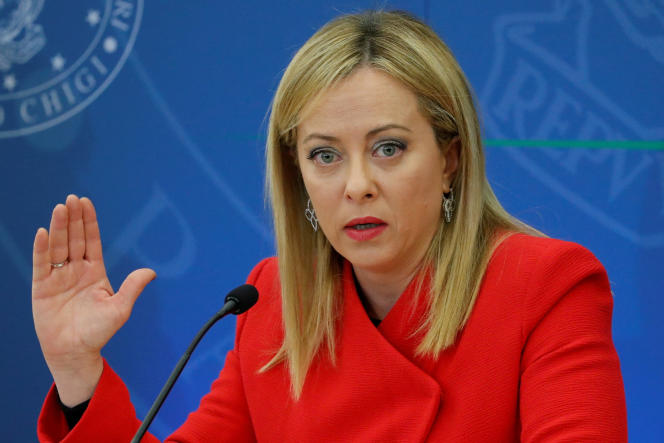
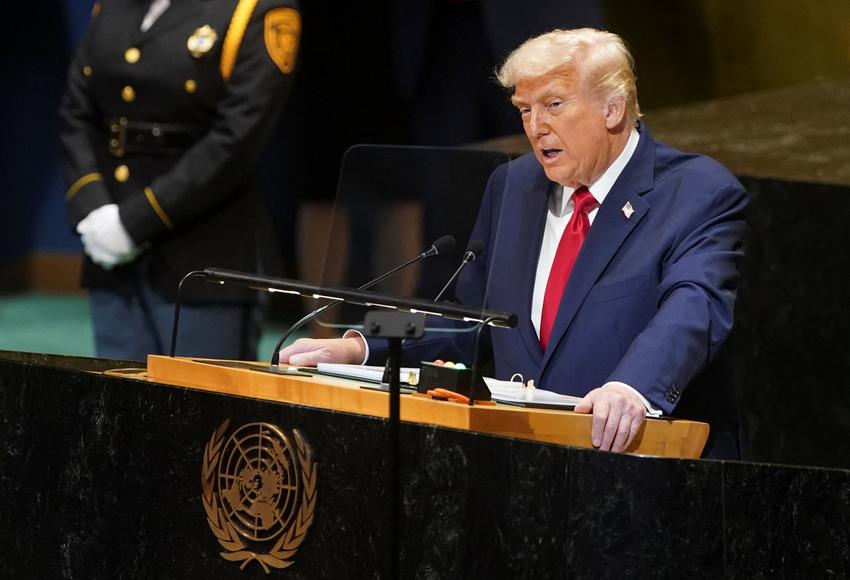
Italian Prime Minister Giorgia Meloni accused her one-time close ally Donald Trump of fabricating a story about her on Friday, after the U.S. President told an Italian TV channel that she had “begged” him to take a photo with her at a G7 summit.
Meloni said she was “astonished” by his comments, which were “completely made up”. She also chided him for acting with far greater deference to the enemies of the West than he does towards old, established allies.
Underscoring how much Trump’s comments have angered Meloni’s government, Italian Foreign Minister Antonio Tajani announced he was cancelling a planned visit to the U.S. next week.
The latest exchange marks a sharp deterioration in ties, coming just days after signs emerged at the G7 summit that the two right-wing leaders had steadied a previously strained relationship following tensions this year over the war on Iran.
Video from the event in France showed Meloni and Trump deep in conversation, sitting side-by-side on a small sofa, but the U.S. leader suggested he had merely indulged her by chatting with her.”
She’s probably happy I talked to her. I didn’t have to talk to her,” Trump was quoted as saying by La7 TV channel in a brief interview, after he himself asked the journalist about Italy’s prime minister.”
She begged me to take a picture with her. She wanted a picture with me so badly. I wouldn’t have taken it, but I felt sorry for her,” Trump said, according to La7’s translation.
The channel did not release the original audio, just a dubbed version.
Meloni responded: “Donald Trump’s statements are completely made up. I am frankly astonished. I don’t know why the president of the United States behaves like this towards his allies: it is not the first time, moreover.”
“I can only say it is disappointing that he does not show the same determination with the enemies of the West and of the United States, whose leaders he instead treats with far greater indulgence,” she said, adding: “There is one thing he should remember: neither I nor Italy ever beg.”
Announcing the cancellation of his planned U.S. trip, Foreign Minister Tajani said on X: “The serious and offensive words of President Trump towards Prime Minister Giorgia Meloni offend the whole of Italy.” (JapanToday)
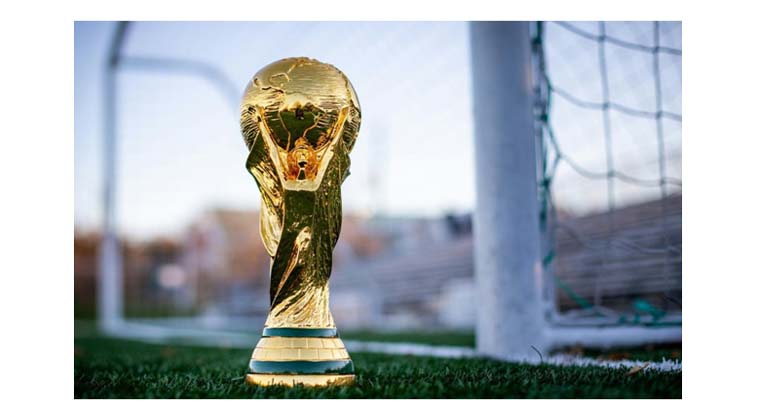
Nestory Irankunda and Connor Metcalfe scored and Australia spoiled Turkey’s return to the World Cup for the first time in 24 years with a 2-0 victory on Saturday night.
Goalkeeper Patrick Beach made eight saves for the Socceroos in their group opener as FIFA President Gianni Infantino looked on. Australia was playing in its sixth straight World Cup and seventh overall.
Turkey reached the semifinals of the 2002 World Cup but then missed five straight tournaments before qualifying this year by beating Kosovo in a playoff.
Irankunda broke through for the Socceroos in the 27th minute with a low shot while pursued by three defenders. It came less than a minute after the first-half hydration break.
Irankunda celebrated by punching the corner flag in a tribute to Australian soccer legend Tim Cahill. The 20-year-old who plays for Watford is the Socceroo’s youngest-ever goal scorer at a World Cup.
Minutes later Beach stopped Abdulkerim Bardakcı’s blast from distance. Beach started in goal for the Socceroos rather than experienced counterpart Matthew Ryan in a surprise decision from coach Tony Popovic.
Kenan Yildiz, a 21-year-old who plays for Juventus, was not in the starting lineup but subbed in for Turkey at half-time.
Turkey had a dangerous free kick in the 57th minute, but Arda Güler’s attempt was saved by Beach. Güler, a talented 21-year-old attacking midfielder who plays for Real Madrid, was not yet born the last time Turkey played in the World Cup.
Connor Metcalfe capitalized on Ismail Yüksek’s turnover in the 75th minute to double the Socceroos’ lead. The Socceroos fell to France in the opener in Qatar but then beat Tunisia and Denmark in their group before getting knocked out by eventual champion Argentina in the round of 16.
It is the third World Cup appearance for the Turks, who reached the tournament for the first time in 1954.
The teams are in Group D with the United States and Paraguay. The Americans downed Paraguay 4-1 in their group opener on Friday in Los Angeles. (JapanToday)
Boualem Khoukhi scored an equalising goal on a header in the fourth minute of stoppage time, and Qatar spoiled a dominant day by Switzerland in a 1-1 draw in Group B of the World Cup.
Several of the Qatari players fell to the ground on Saturday in celebration of the late goal, as others ran to each other to embrace.
Breel Embolo scored for Switzerland from the penalty spot in the first half just over a week after being cleared to enter the US following a visa delay, but the Swiss failed to capitalise on multiple other scoring chances.
In the 13th minute, Embolo was fouled by Qatar goalkeeper Mahmoud Abunada, who received a yellow card on the play. Abunada lay face down and appeared motionless for a couple of minutes before he began to move his legs and was able to stand up again.
When Embolo calmly sent his penalty into the upper left corner in the 17th minute, it sent the red-clad Swiss fans into a dancing frenzy in the stands of San Francisco Bay Area Stadium.
The 29-year-old forward applied for an urgent visa at the United States embassy in Bern on June 3, one day after he was denied boarding the team’s flight to travel for his third World Cup because of a 2018 criminal conviction that was only finalised in April.
Switzerland dominated the possession game on an unseasonably warm June afternoon — with sprinklers running during a first-half break.
There were thousands of empty seats scattered throughout Levi’s Stadium, home of the NFL’s San Francisco 49ers. Brazil and Colombia drew 70,971 two years ago in a group match at the Copa America. The stadium in Santa Clara staged the Super Bowl only four months ago.
Switzerland goalkeeper Gregor Kobel made a save in the second minute after Edmilson Junior got through the defence for a one-on-one. Kobel corralled the ball again in the 90th on a close-range attempt by Ahmed Alaaeldin.
Switzerland is hoping to advance further than its round-of-16 showing four years ago before losing 6-1 to Portugal — when Goncalo Ramos delivered an improbable hat-trick playing in place of benched star Cristiano Ronaldo. The loss prompted Switzerland midfielder Xherdan Shaqiri to apologize the the fans.
The Swiss used consistency and experience to go unbeaten through qualifying against Sweden, Kosovo and Slovenia. Coach Murat Yakin’s team produced four wins and two draws to secure its sixth straight World Cup appearance and hasn’t missed one since 2002, but the team has never gotten beyond the quarterfinals.
Qatar, led by Spanish coach Julen Lopetegui, had to qualify through a playoff in November — beating the United Arab Emirates and Oman — after missing an opportunity from its group stage of Asian qualifying.
The Gulf state country became the first host nation to lose all of its group matches four years ago. It lost to Senegal, Ecuador and the Netherlands in the 2022 tournament, scoring its lone goal in a 3-1 loss to Senegal. (AlJazeera)
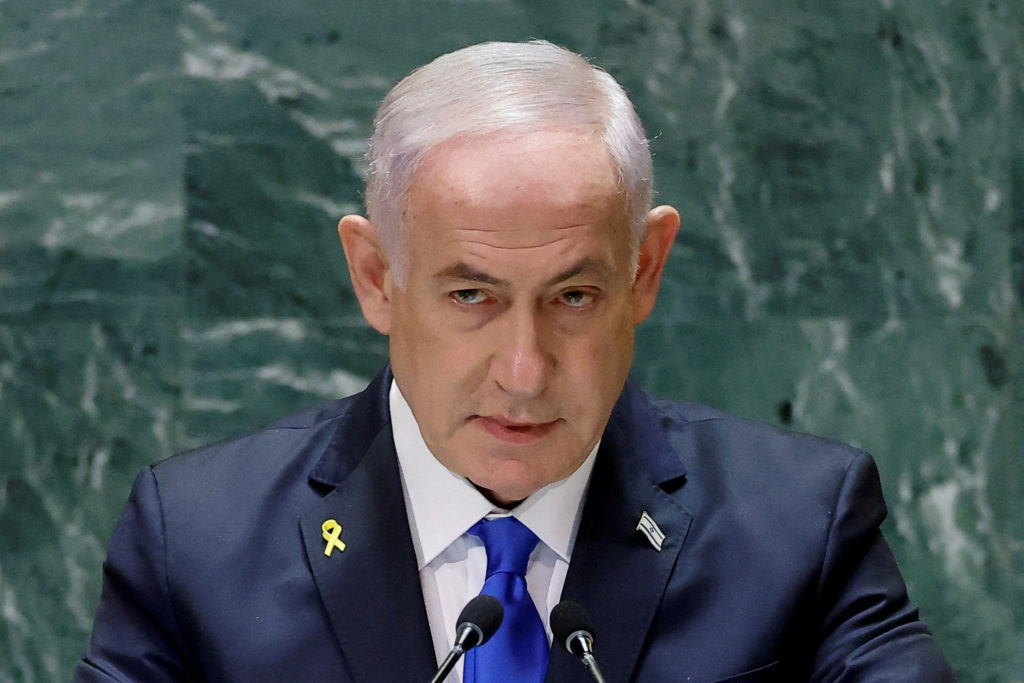
Israel’s prime minister has ordered attacks on the southern suburbs of Lebanon’s capital, Beirut, as its conflict with the Iran-backed armed group Hezbollah escalates.
Benjamin Netanyahu said “terror targets” in the Hezbollah stronghold of Dahieh would be struck in response to its rocket and drone attacks on Israeli civilians and other violations of a ceasefire announced in April that has failed to end the fighting.
Soon afterwards, there were traffic jams on roads out of the suburbs as thousands tried to flee to safety.
The conflict also poses a major obstacle to US efforts to forge a deal to end its war with Iran, with Tehran insisting that any ceasefire must include Lebanon.
The US has tried to separate events in Lebanon from the negotiations, but a US official said on Sunday that Secretary of State Marco Rubio had proposed a plan for “gradual de-escalation” there to Netanyahu and Lebanese President Joseph Aoun.
A senior Lebanese government official said it was relying on US mediation efforts to pressure Israel to end its own violations and prevent further civilian casualties.
In a joint statement released on Monday morning, the Israeli prime minister and Defence Minister Israel Katz said they had ordered strikes on Dahieh “following the Hezbollah terrorist organisation’s repeated and ongoing violations of the ceasefire in Lebanon and its attacks against our civilians and cities”.
“The Dahieh in Beirut is no different from the communities in northern Israel – if there is no calm in the north, there will be no calm in Beirut,” Katz warned.
Later, the Israeli military ordered Dahieh residents to evacuate for their own safety, without giving further details.
Families, crammed into cars stuffed with suitcases, blankets and whatever belongings they could carry, streamed out of the suburbs in response to Netanyahu and Katz’s statement, joining thousands fleeing towards the mountains as fears of further violence mounted.
Two parents and their two children were squeezed on to a single scooter. Other vehicles carried several generations packed together, with babies sitting on their parents’ laps, clutching small toys as they crawled through the gridlock.
Few drivers wanted to stop and talk, anxious not to hold up the traffic and focused on reaching safety.
But almost everyone who slowed down enough to speak said they were prepared to stand by Hezbollah, while also doing whatever they could to protect their loved ones from the threat of further Israeli attacks.
The Israeli military has struck Beirut twice since the ceasefire between Israel and Lebanon came into force on 16 April, most recently on Thursday. (BBC)
U.S. Senate Republicans abandoned plans to vote on an ICE funding bill on Thursday in an act of revolt over one of President Donald Trump’s priorities: a $1.8 billion fund for victims of government “weaponization,” including those convicted of crimes during the Capitol riot on January 6, 2021.
The Senate walked away from a planned vote on a $72 billion bill funding Trump’s massive migrant deportation program, delaying the vote at least until June, when lawmakers return from a Memorial Day holiday recess.
From the beginning, Senate Majority Leader John Thune said the legislation should be narrowly targeted to secure the $72 billion. But at Trump’s behest, the $1.8 billion “weaponization” fund and another $1 billion for building a White House ballroom became major sticking points.
“It was something that was supposed to be very narrow, targeted, focused, clean, straightforward, and it got a little bit more complicated this week,” Thune said, expressing his frustration. “It makes everything way harder than it should be.”
The battle over the partisan Immigration and Customs Enforcement funding bill came on the heels of Republican Senator Bill Cassidy of Louisiana losing his primary election to a Trump-backed challenger and the president endorsing the primary challenger to veteran Republican Senator John Cornyn of Texas.
Presidents usually back the incumbent lawmakers of their party in reelection bids.
Against that backdrop, Acting U.S. Attorney General Todd Blanche was summoned to Capitol Hill to face questions from angry senators when he made his case for the $1.8 billion fund designed to compensate Trump allies and other victims of government “weaponization.”
During Blanche’s meeting, several senators insisted the money not be used to compensate people convicted of assaulting law enforcement during the Capitol riot, the person said.
Trump had already pardoned many of those convicted for crimes they committed during that deadly assault.
“I think there are people who are concerned about public relations,” Senator Todd Young, an Indiana Republican, told reporters about the meeting.
Emotions were so raw that a planned White House meeting between Trump, Senate Republicans and House of Representatives Speaker Mike Johnson was canceled, according to a source familiar with the arrangement.
The resistance against Trump became evident late on Wednesday when Senate Republicans said “no” to $1 billion in new security funding for the 90,000-square-foot (8,360-square-meter) ballroom Trump wants to build on the site of the White House East Wing that he had razed last October.
For months, Trump has said no taxpayer dollars would be needed for the project. Nonetheless, a $1 billion tab to be picked up by taxpayers stared senators in the face as an add-in to a $72 billion bill for Trump’s migrant deportation program.
Democrats hammered away about a “glitzy,” “gauzy” “vanity project,” a preview of their midterm election pitch addressing voters’ worries about the high prices of food, housing, healthcare and particularly gasoline, which skyrocketed after the February 28 U.S. attack on Iran.
Thune, who started the week with a tense phone call with the president over his endorsement against Cornyn, told reporters after Thursday’s meeting that his party “will pick up where we left off” after the holiday recess.
Republican Senator Thom Tillis of North Carolina, who is not running for reelection, did not hold back in criticizing Trump.
“I think it’s stupid on stilts,” Tillis said of the “weaponization” fund in an interview with Spectrum News. “The American people are going to reject this out of hand. (JapanToday)
A case of Ebola has been confirmed in eastern Democratic Republic of Congo’s South Kivu province, hundreds of kilometers from the outbreak’s epicenter, the rebel alliance that controls the area said on Thursday.
The case, in a rural area near the provincial capital Bukavu, signals the spread of an outbreak that experts believe circulated undetected for around two months in Ituri province, several hundred kilometers to the north, before being identified last week.
The outbreak has resulted in 160 suspected deaths out of 670 suspected cases, and 61 of the cases have been confirmed, according to DRC health ministry data published on Thursday.
Two cases have also been confirmed in neighboring Uganda, which said on Thursday it would suspend flights to the DRC, effective within the next 48 hours, as a precautionary measure.
The WHO declared the outbreak of the virus’s Bundibugyo strain – for which there is no vaccine – a public health emergency of international concern over the weekend.
The Alliance Fleuve Congo, which includes the Rwanda-backed M23 rebels who seized swathes of eastern DRC last year, said the 28-year-old patient in South Kivu had died and been buried safely.
It said the individual had travelled from the northern city of Kisangani, but gave no details of recent movements.
South Kivu health spokesperson Claude Bahizire told Reuters earlier on Thursday that two suspected cases had been detected in the province, including the fatal case. The other patient was in isolation awaiting test results, he said.
An Ebola case was also confirmed last week in Goma, capital of neighboring North Kivu province, which is under M23 control.
In the town of Rwampara, one of the outbreak’s hotspots in Ituri, clashes broke out on Thursday after the family of a suspected Ebola victim disputed that the disease had killed him and demanded his body, Reuters witnesses said.
Protesters gathered outside the hospital and set fire to tents run by the medical charity ALIMA, prompting police to fire warning shots and tear gas, the witnesses said.
Hundreds of health centres were attacked by armed groups and angry civilians during the 2018-2020 Ebola outbreak in eastern DRC, which was the second-deadliest on record with nearly 2,300 fatalities.
First responders expect widespread armed violence across eastern DRC, where dozens of militias operate, and for community mistrust of medical workers to complicate once again efforts to contain the outbreak.
Speaking to reporters in Geneva, Jane Halton, chair of the Coalition for Epidemic Preparedness Innovations (CEPI), said the confirmed cases announced to date likely represent only “the top of the iceberg”.
CEPI, which funds vaccine development, is assessing potential candidates for Ebola. Halton said it might be possible to meet CEPI’s target of having a safe, effective vaccine for major outbreaks within 100 days, though this would be “a big lift”.
In a sign of further restrictions aimed at preventing Ebola entering the U.S., the State Department said Americans who have been in Congo, Uganda, or South Sudan within the last three weeks must only return to the United States through Washington Dulles for enhanced screening.
Aid workers responding to the outbreak have said they lack basic supplies which some have attributed to foreign aid cuts by major donors that have weakened local health services and disease surveillance.
Britain said on Thursday it was allocating up to 20 million pounds ($27 million) to the response. The United States, which gave around $600 million to the 2018-2020 response, has so far committed $23 million and said on Tuesday it would help open up to 50 clinics in DRC and Uganda.
Uganda’s health ministry said late on Wednesday it had not been consulted by the U.S. on plans to establish clinics, and stressed there was no known local transmission.
Information Minister Chris Baryomunsi told Reuters the U.S. was “overreacting” this week by banning most travellers from Uganda, along with DRC and South Sudan.
“We’ve handled cases of Ebola at other epidemics for a number of years,” he said. “There is capacity within the country to contain these epidemics.”
The African Union said the India-Africa Forum Summit scheduled to take place in New Delhi from May 28 to 31 would be rescheduled due to “the emerging public health situation on the continent”. (JapanToday)
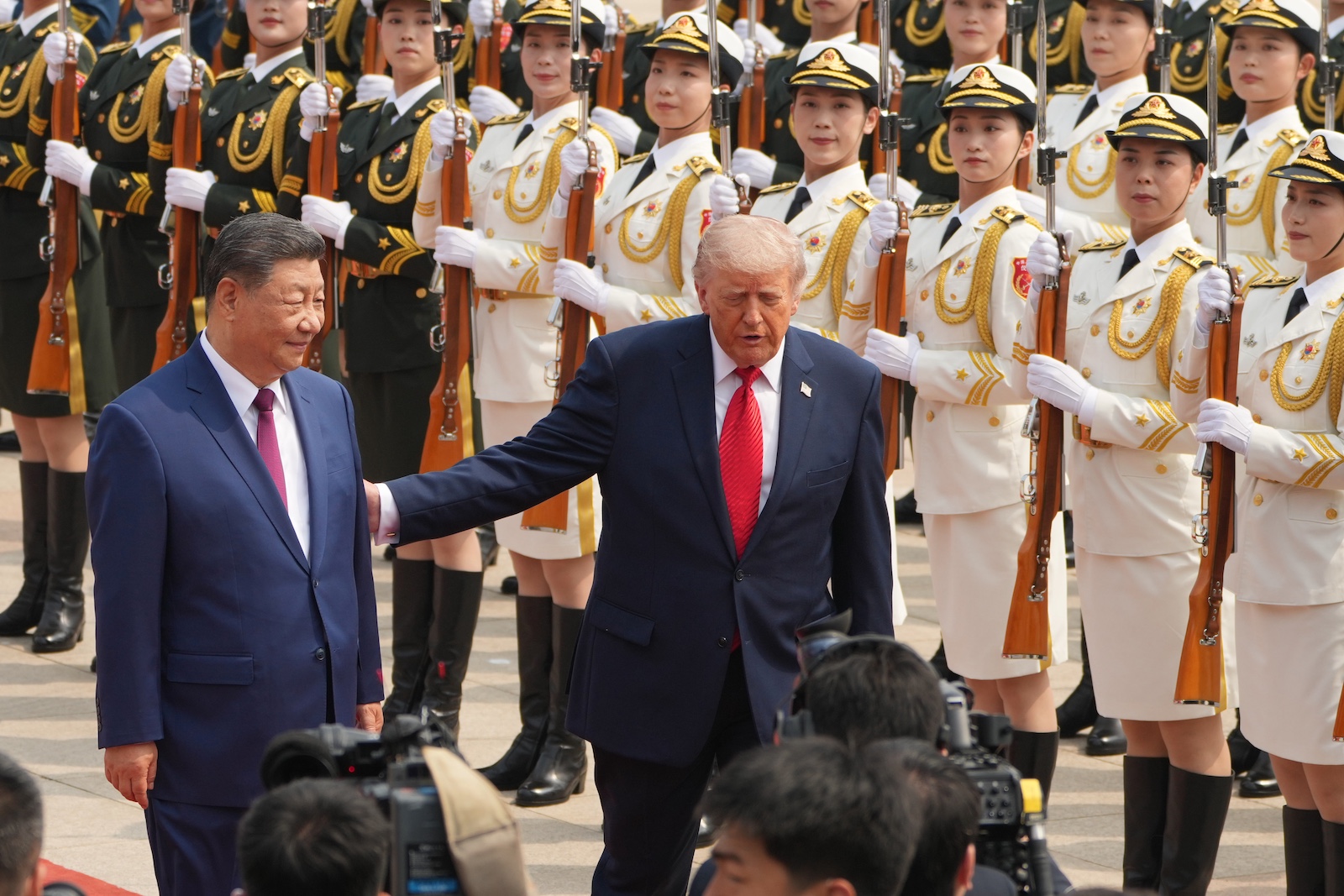
Donald Trump and Xi Jinping have been holding talks in the Chinese capital, Beijing, with a raft of meetings and events taking place on Thursday and Friday.
The US leader was greeted with a gun salute, cheering children and a tour of the stunning 15th Century Temple of Heaven.
Trump is also joined in Beijing by tech bosses, including Tesla’s Elon Musk and Nvidia’s Jensen Huang, and Trump’s son Eric.
On Thursday evening, a lavish banuquet at the Great Hall of the People was held in honour of the occasion.
BBC reporters were able to see the banquet menu, with the main course including lobster in tomato soup, Beijing roast duck and pan-fried pork bun.
Dessert options included trumpet shell-shaped pastry and tiramisu.
In a banquet speech, President Xi called it a “historic visit”, adding “the great rejuvenation of the Chinese nation” and “Make America great again” can go hand in hand.
China-US relations are the most important bilateral relations in the world, Xi says.
Their relations concern the well-being of the two countries of 1.7 billion population, and the interests of over 8 billion people in the world, he added.
Trump spoke, saying he received a “magnificent welcome like no other”.
He then invited Xi and his wife, Peng Liyuan, to visit the White House on 24 September.
Among those spotted at Thurday’s banquet were Tesla CEO Elon Musk, Apple CEO Tim Cook, US Defence Secretary Pete Hegseth and Eric and Lara Trump.
Musk was accompanied by his son X Æ A-12.
Trump landed in Beijing on Wednesday evening, where he was greeted by youths waving American and Chinese flags as he walked the red carpet with Vice President of China Han Zheng.
On Thursday, Trump was welcomed at an arrival ceremony with Xi at China’s Great Hall of the People.
After shaking hands, Trump and Xi walked the red carpet and inspected Chinese troops who lined up in impeccably neat rows.
Dozens of children also lined up along the red carpet and waved mini flags and bouquets.
Joining Trump on his trip to China are some of the US’s top business leaders, including Tim Cook of Apple, Elon Musk of Tesla and SpaceX, and Larry Fink of BlackRock.
Jensen Huang, the boss of Nvidia, a company which has been central to the US-China technology rivalry, was reportedly a last-minute addition. (BBC)
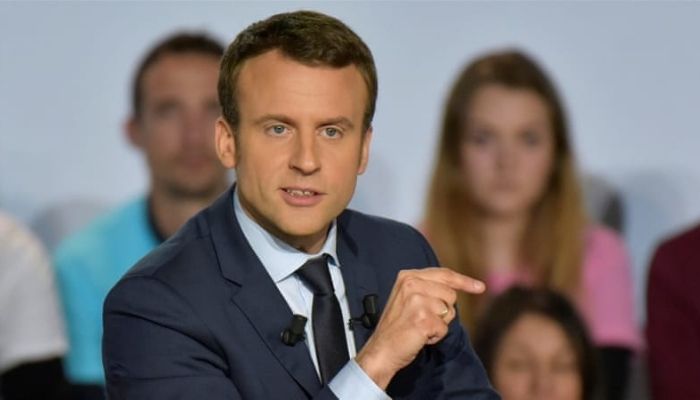
French President Emmanuel Macron urged investment in Africa on Monday as he co-hosted an economic summit in Kenya, after defending European involvement on the continent.
The European leader, speaking at the University of Nairobi, said Africa “needs investment to become more sovereign”, replacing aid with economic opportunities.
Speaking in French, Macron said that previously European chiefs would lecture African leaders on what they needed, but, “this is no longer what Africa needs or wants to hear”.
“That’s just as well, because we, too, no longer have the means, if we’re being honest,” he said.
Ahead of the summit, in an interview with the magazines Jeune Afrique and The Africa Report, the French leader said he first strongly condemned colonialism when he came to power in 2017.
In contrast, the United States and China were locked in a trade standoff, with no respect for the rules, he added.
On critical minerals and rare earths, China, he said, “operates according to a predatory logic: it does the processing at home” and creates “dependencies with the rest of the world”.
Macron, leading the two-day summit aimed at renewing France’s engagement with Africa after years of strained ties with its former colonies, said Europe was instead promoting “a strategy of autonomy” for both continents.
Central to transforming Africa’s fortunes should be an overhaul of international finance, to set up a system of financial guarantees to bring in private investment, he added. (Channels)
Britain’s King Charles III has used a speech in front of the United States Congress to pledge NATO unity and call for support for Ukraine amid Russia’s ongoing invasion.
The address on Tuesday came during the royal’s four-day visit to the US, with the US-Israel war with Iran, US President Donald Trump’s criticism of NATO, and trade tensions between the longtime allies looming large.
But Charles avoided any reference to specific frictions during his speech at the US Capitol, instead striking a light tone in his joke-heavy opening.
He praised what he called the shared history and values of the two countries, quipping at one point that Washington, DC was “a tale of two Georges”, the first US President George Washington and his ancestor, the UK’s King George.
He assured lawmakers, to laughs, he was not in the US “as part of some cunning rearguard action” in a delayed continuation of the Revolutionary War.
“I am here on this great occasion in the life of our nations to express the highest regard and friendship of the British people to the people of the United States,” the sovereign said to repeated standing ovations.
But amid broad themes of unity, more pointed messages lurked.
Charles did not directly address the US-Israel war with Iran or Trump’s outspoken criticism of NATO allies who have rejected joining Washington’s war efforts.
Instead, he praised support for NATO and the alliance’s invocation of its Article 5 collective defence treaty in the wake of the September 11, 2001 attacks.
“We answered the call together, as our people have done so for more than a century, shoulder to shoulder through two world wars, the Cold War, Afghanistan and moments that have defined our shared security,” he said.
He then turned to funding for Ukraine, an increasingly pointed issue in the Republican-controlled US Congress.
“Today, Mr Speaker, that same unyielding resolve is needed for the defence of Ukraine and her most courageous people,” he said, referring to House Speaker Mike Johnson.
In one instance, Charles hailed the “$430 billion in annual trade that continues to grow, the $1.7 trillion in mutual investment that fuels that innovation”.
Last week, Trump threatened to impose a “big tariff” on the UK if it did not drop a digital services tax on US tech companies.
At another point, Charles pointed to global environmental concerns.
“We ignore, at our peril, the fact that these natural systems, in other words, nature’s own economy, provide the foundation for our prosperity and our national security,” he said.
Trump has called climate change a “con job” and withdrew from the landmark Paris Agreement climate accords during his first and second terms. His administration has since pursued deregulation of fossil fuels and pivoted away from green energy, an approach embraced by many members of the president’s Republican party.
Other messages appeared to gently reference political trends in the US, where critics have accused Trump of using the Department of Justice for political retribution and of overturning long-standing norms of presidential authority.
Charles described the “common ideals” of the US and UK: “The rule of law, the certainty of stable and accessible rules, an independent judiciary, resolving disputes and delivering impartial justice”.
He also drew a throughline between the Magna Carta, the 13th-century document that established that the British king was subject to law, and constitutional and legal precedent in the US, calling it “the foundation of the principle that executive power is subject to checks and balances”.
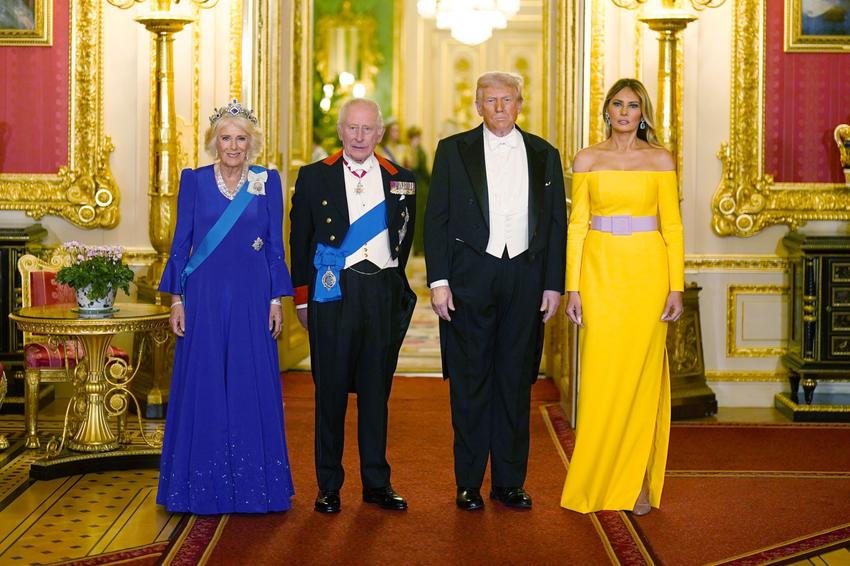
The address came shortly before Trump was set to host Charles and his wife, Queen Camilla, for an official state dinner.
The pair were then set to visit New York and Virginia, before an official farewell ceremony at the White House on Thursday. (AlJazeera)
The US’s top media watchdog announced on Tuesday that it is accelerating the review of eight local broadcasting licenses used by ABC, in a move critics see as a clear example of political and regulatory retribution against a disfavored broadcaster.
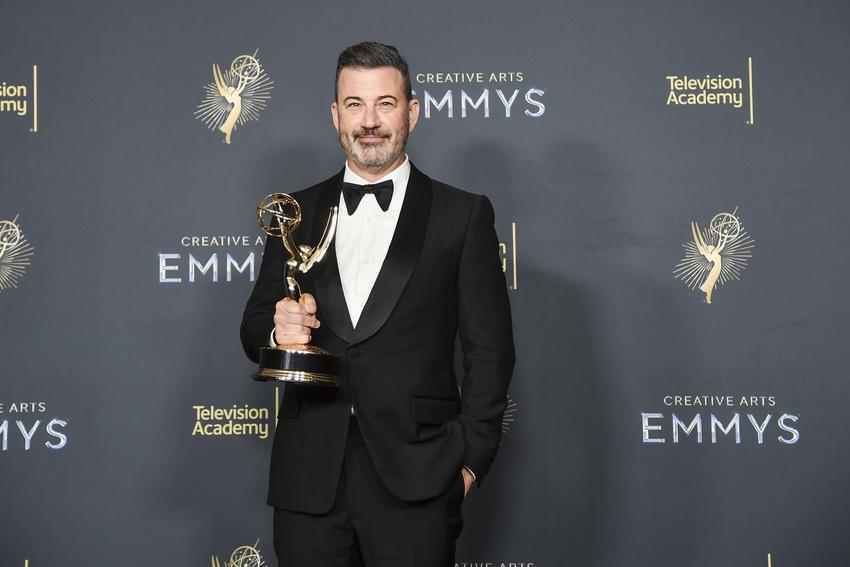
The Federal Communications Commission’s (FCC) announcement comes after the White House launched a full-on attack against the ABC’s late-night host, Jimmy Kimmel, over a joke he made last week about Melania Trump.
On Monday, Donald Trump called for Kimmel to be fired over the segment, in which Kimmel said that the first lady has “a glow like an expectant widow”. The joke was made two days before an attempted shooting – allegedly targeting Trump’s administration – interrupted the annual White House correspondents’ dinner.
The FCC – led by Trump-appointed chair Brendan Carr – does not grant licenses to national television networks; rather, it licenses each individual station that broadcasts using the public airwaves.
ABC owns and operates eight stations, though it has content agreements with many more. Those eight stations – WABC-TV New York, KABC-TV Los Angeles, WLS-TV Chicago, WPVI-TV Philadelphia, KTRK-TV Houston, KGO-TV San Francisco, WTVD-TV Raleigh-Durham and KFSN-TV Fresno – are the ones being targeted by Carr’s FCC.
Those stations were not scheduled to have to apply for renewal until 2028 at the earliest and 2031 at the latest. But now they are required to file for renewal by 28 May, years ahead of when they were originally required to do so. The FCC announcement appears connected to an investigation launched by the agency early last year into ABC parent company Disney’s diversity, equity and inclusion (DEI) practices.
“Specifically, FCC rules provide that whenever the FCC regards an application for a renewal of a license as essential to the proper conduct of an investigation, the FCC has the authority to call the broadcaster’s licenses in for early renewal. Doing so both allows the FCC to conduct its ongoing investigation and enables the FCC to ensure that the broadcaster has been meeting its public interest obligations more broadly,” David J Brown, chief of the video division at the FCC’s media bureau, wrote in a memo. “The FCC determines that calling in Disney’s ABC licenses for early renewal, at this time, under the Communications Act’s public interest standard is essential within the meaning of agency regulations.”
In a statement, a Disney spokesperson acknowledged that the company has received notice of the expedited renewal process. “ABC and its stations have a long record of operating in full compliance with FCC rules and serving their local communities with trusted news, emergency information and public‑interest programming,” the spokesperson said. “We are confident that record demonstrates our continued qualifications as licensees under the Communications Act and the first amendment and are prepared to show that through the appropriate legal channels. Our focus remains, as always, on serving viewers in the local communities where our stations operate.”
On a conservative podcast published on Tuesday, Carr weighed in on the DEI-related investigation and said: “There’s evidence that Disney has been pretty bad. There’s evidence suggests that Disney literally was dividing and categorizing employees based on race and gender, and potentially – we’ll see what the evidence establishes, ultimately – giving different opportunities to people based on their race or gender or other protected class. And we’re going to get some more discovery from Disney on that. But that could raise character questions about the company long-term.”
Carr, on the podcast, said that license renewals can be “accelerated” if there are “significant concerns” about how a network is operating, and questions about whether it is doing so in the public interest. If the FCC determines that a broadcaster is in violation, the next step would be a hearing designation, which Carr said was a “multi-month process”.
Anna M Gomez, the lone Democrat on the FCC, has decried any attempt to speed up the license renewal process for ABC – or any other television network that has been targeted by the Trump administration. “This is unprecedented, unlawful, and going nowhere,” she wrote in a post on X on Tuesday. “This political stunt won’t stick. Companies should challenge it head-on. The First Amendment is on their side.”
In an interview with the Guardian last month, Gomez said the license renewal apparatus is intentionally onerous and time-consuming to prevent any appearance of partisan decision-making.
“If they are trying to take adverse action through the license renewal process, that is an arduous, long, process with multi-layers of decisions that have to be made by different parties that are meant to protect broadcasters from capricious and arbitrary action from the commission,” Gomez said.
Tom Wheeler, who served as chair of the FCC during Barack Obama’s presidency, told the Guardian on Tuesday that Carr “has turned [the FCC] into a political organization using policy to achieve political goals” rather than “a policy agency operating in a political environment”.
While Wheeler said that Carr has the ability to schedule consideration of ABC’s license renewals, any adverse decision would ultimately be appealable – and he noted that license denials are exceedingly rare.
Wheeler said that a denial of ABC’s licenses “would have a hard time at the courts”, though he doesn’t see that as the goal. “There are two message: there’s a message that goes to the Maga base that says, ‘Boy, I’m going at them.’ There’s a message that goes to the president that says, ‘Boy, am I carrying forth what you want me to do.’ And then there’s a message to every licensee of the FCC that says, ‘I can do this to you too.’”
In February, Carr confirmed that the FCC is also investigating the ABC daytime talkshow The View for a potential violation of rules around providing equal time for opposing political candidates.
Despite calls by Trump and his wife Melania for ABC to take action against Kimmel, his show aired as scheduled on Monday night. “It was a very light roast joke about the fact that he’s almost 80 and she’s younger than I am,” Kimmel explained to viewers. “It was not – by any stretch of the definition – a call to assassination. And they know that. I’ve been very vocal for many years, speaking out against gun violence, in particular.”
In September, Carr reportedly pressured television station groups to pre-empt Kimmel’s show as punishment for a comment that he made in the wake of the assassination of conservative influencer Charlie Kirk. Two right-leaning broadcast groups, Sinclair and Nexstar, did so, and ABC opted to “indefinitely” pull Kimmel’s show. Kimmel ultimately returned to the air a week later. Carr later claimed that his comments about Kimmel’s show did not amount to a threat.
Seth Stern, chief of advocacy for Freedom of the Press Foundation, issued a statement on Tuesday calling out Carr’s FCC. “The FCC is neither the journalism police nor the humor police,” he said. “This is nothing but illegal jawboning intended to intimidate ABC into kissing the ring.”
“The FCC has no authority to cancel broadcasters’ licenses because of their perceived political views. But this isn’t just about the rights of Disney and ABC. President Trump is trying to consolidate control over what Americans see and hear on the radio, television, and social media,” Jameel Jaffer, executive director at the Knight First Amendment Institute at Columbia University, said in a statement.
“If he gets his way, we’ll have only government-aligned media organizations that broadcast only government-approved news and commentary. It would be difficult to imagine an outcome more corrosive to democracy or more offensive to the first amendment.” (Guardian)


 English