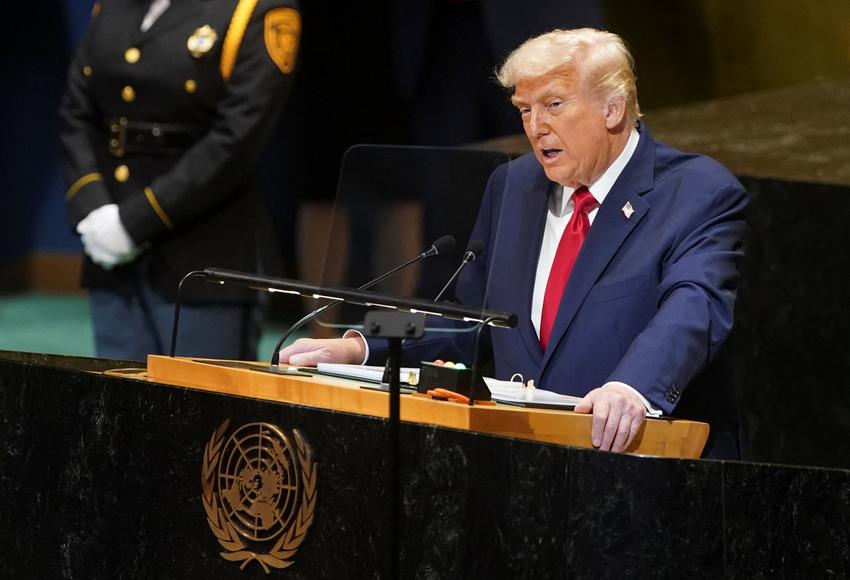
US President Donald Trump on Saturday escalated his quest to acquire Greenland, threatening multiple European nations with tariffs of up to 25 percent until his purchase of the Danish territory is achieved.
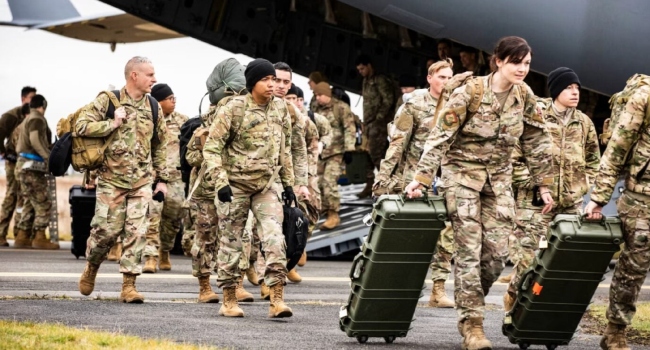
Trump aimed his ire at Denmark, a fellow NATO member, as well as several European countries that have deployed troops in recent days to the vast, mineral-rich territory at the gateway to the Arctic with a population of 57,000.
If realized, Trump’s threats against Washington’s NATO partners would create unprecedented tension within the alliance.
From February 1, Denmark, Norway, Sweden, France, Germany, the United Kingdom, the Netherlands, and Finland would be subject to a 10-percent tariff on all goods sent to the United States, Trump said in a post on his Truth Social network.
“On June 1st, 2026, the Tariff will be increased to 25%. This Tariff will be due and payable until such time as a Deal is reached for the Complete and Total purchase of Greenland,” he wrote.
“These Countries, who are playing this very dangerous game, have put a level of risk in play that is not tenable or sustainable,” Trump said.
“Therefore, it is imperative that, in order to protect Global Peace and Security, strong measures be taken so that this potentially perilous situation end quickly, and without question.”
It was not immediately clear what authority the US leader would invoke to impose the threatened tariffs of up to 25 percent.
Since returning to the presidency, Trump has unleashed sweeping tariffs on goods from virtually all trading partners, to address what Washington says are unfair trade practices and as a tool to press governments on US concerns. (Vanguard)
Scott Adams, the creator of the popular comic strip “Dilbert,” has died, according to an announcement on his social media pages.
Adams, who was 68, announced in May that he’d been diagnosed with an aggressive form of prostate cancer.
“Dilbert,” a chronicle of the indignities of American office work, was one of the country’s most widely read comic strips from its breakout success in the 1990s until February 2023, when Adams made racist comments against Black Americans, calling them a “hate group” that white people should “get the hell away from,” in response to a dubious poll about whether it’s “OK to be white.” Hundreds of newspapers stopped carrying “Dilbert” within days, and the strip was soon dropped by its distributor.
Adams, also a longtime outspoken supporter of President Donald Trump, began self-publishing the strip, in a “spicier version” called “Dilbert Reborn,” on his website for a subscription fee. He stopped personally drawing “Dilbert” in November 2025 due to cramping and partial paralysis in his hands, he said, though he continued to write scripts and have them illustrated for him.
Adams’ ex-wife Shelly Miles announced his death on Tuesday’s episode of the livestream “Coffee with Scott Adams,” which he hosted daily until his death, with a written statement from Adams.
“I had an amazing life,” Scott Adams wrote in the statement, composed on New Year’s Day. “I gave it everything I had. If I get any benefits from my work, I’m asking that you pay it forward as best as you can. That’s the legacy I want. Be useful, and please know, I loved you all to the very end.”
Adams, a New York native, worked as a bank teller from 1979 until 1986, the same year he graduated with an MBA from the University of California, Berkeley. (He was twice held at gunpoint as a teller, he wrote in the 20-year retrospective “Dilbert 2.0.”) He debuted “Dilbert” in 1989 while working as an engineer at the telephone company Pacific Bell, whose sterile setting and zany employees inspired his strip.
“For the future of ‘Dilbert,’ you could say that the group I was in was a target-rich environment,” he told EE Times, an electronics industry publication, in 2005.
“Dilbert” didn’t become a hit until a few years into its run, when Adams started to set most of its strips in his bespectacled office drone’s workplace. “It wasn’t exactly what I wanted to do, but it worked,” he told the Associated Press when he won the National Cartoonists Society’s Reuben award for the best comic strip of 1997.
He credited Dilbert’s blankness — his absence of visible eyes, for one, but also the lack of any particulars about his location or role at his company — with making the strip so popular.
“People have no reason to think it’s not just like their experience,” Adams told EE Times. “For instance, there are both engineers and programmers who are convinced Dilbert is one of them.”
And for decades, “Dilbert” was. Readers recognized their own upward-failing managers in Dilbert’s clueless “pointy-haired boss,” or identified with the everyman hero’s losing battle against incompetence in meetings with his dim coworkers. Adams included his email address in strips for years to gather stories from readers struggling in their own offices, material that “keeps me going,” he told the New Yorker in 2008.
Following the success of the strip, Adams felt unstoppable: “For a while, everything I touched turned to gold,” he told Bloomberg in 2017.
Confident in his ability to sell just about anything, he entered the food business, with much less success. In 1997, he opened a restaurant near his California home called Stacey’s Cafe. He eventually took over as boss at its sister location, where employees described him to the New York Times as “dramatically clueless about the harsh realities of the restaurant industry,” despite his years satirizing oblivious bosses. Both Stacey’s locations went “belly-up” sometime before 2017, Bloomberg reported.
He was also briefly the purveyor of the “Dilberito,” a frozen vegetarian burrito named for his cartoon and marketed as a nutrient-packed alternative to unhealthy microwavable meals. (The AV Club in 2020 remembered the product as “stomach-ruining.”) The Dilberito, launched in 1999, was discontinued in 2003. Adams told the New Yorker a few years later that “the world wasn’t interested in being healthy, so I got out of that business eventually.”
Adams started to become better known for his conservative politics when he began praising President Donald Trump in 2015, correctly predicting ahead of the 2016 election that Trump would win. Adams, who described himself as a “trained hypnotist,” said he found similarities between the persuasive methods of hypnosis and Trump’s rhetorical style.
He began blogging about Trump almost daily following the candidate’s 2015 debate against Hillary Clinton, and the new subject helped boost his readership, social media following (where he had a prolific presence up until his death) and TV news appearances.
“I could go on for pages about how Trump has good-but-not-world-class skills in a variety of areas,” he wrote on a now-defunct Dilbert blog, per Bloomberg. “And when you put all of those talents together it makes him the most persuasive human I have ever observed.”
His outspoken support for the president led to an invitation to the White House following Trump’s 2016 victory. The pair stayed in touch: In November, he publicly pleaded with the president for access to a new cancer treatment. Trump responded “on it.” Adams posted that he was scheduled to receive the drug two days after making the request, and he credited the Trump administration.
Adams began calling himself a “disgraced and canceled cartoonist” after “Dilbert” was pulled from syndication in 2023. His beliefs about race, though, had been visible well before that: In the 2005 EE Times interview, he said he “actually was told that as a Caucasian male, I had no future with the company,” referring to Pacific Bell, which he left in 1995, a few years after “Dilbert” debuted. He also wrote in “Dilbert 2.0” that the animated series based on his comic was canceled after two seasons because “the network made a strategic decision to focus on shows with African-American actors.” (CNN)
Denmark’s Prime Minister said Sunday that her country faces a “decisive moment” in its diplomatic battle over Greenland after U.S. President Donald Trump again suggested using force to seize the Arctic territory.
Ahead of meetings in Washington from Monday on the global scramble for key raw materials, Prime Minister Mette Frederiksen said that “there is a conflict over Greenland”.
“This is a decisive moment” with stakes that go beyond the immediate issue of Greenland’s future, she added in a debate with other Danish political leaders.
Frederiksen posted on Facebook that “we are ready to defend our values – wherever it is necessary – also in the Arctic. We believe in international law and in peoples’ right to self-determination.”
Germany and Sweden backed Denmark against Trump’s latest claims to the self-governing Danish territory.
Swedish Prime Minister Ulf Kristersson condemned U.S. “threatening rhetoric” after Trump repeated that Washington was “going to do something on Greenland, whether they like it or not”.
“Sweden, the Nordic countries, the Baltic states, and several major European countries stand together with our Danish friends,” he told a defense conference in Salen where the U.S. general in charge of NATO took part.
Kristersson said a U.S. takeover of mineral-rich Greenland would be “a violation of international law and risks encouraging other countries to act in exactly the same way”.
Germany reiterated its support for Denmark and Greenland ahead of the Washington discussions.
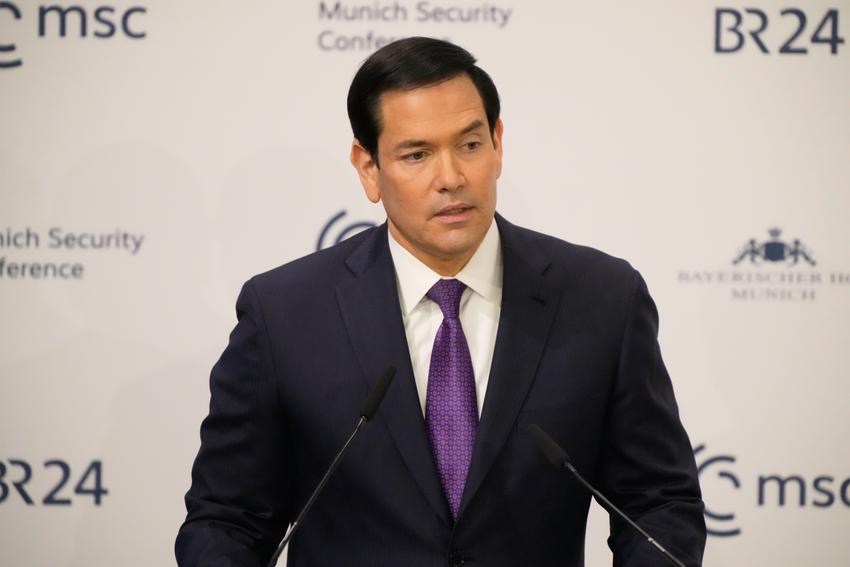
Before meeting U.S. Secretary of State Marco Rubio on Monday, German Foreign Minister Johann Wadehpul was to hold talks in Iceland to address the “strategic challenges of the Far North”, according to a foreign ministry statement.
“The legitimate interests of all NATO Allies, as well as those of the inhabitants of the (Arctic) region, must be at the centre of our discussions,” Wadehpul said.
“It is clear that it is exclusively up to Greenland and Denmark to decide questions of Greenland’s territory and sovereignty,” he previously told Germany’s Bild daily.
“We are strengthening security in the Arctic together, as NATO allies, and not against one another,” German Finance Minister Lars Klingbeil said ahead of an international meeting on critical raw materials in Washington.
European nations have scrambled to coordinate a response after the White House said this week that Trump wanted to buy Greenland and refused to rule out military action.
On Tuesday, leaders of seven European countries including France, Britain, Germany and Italy signed a letter saying it is “only” for Denmark and Greenland to decide the territory’s future.
Trump says controlling the island is crucial for U.S. national security because of the rising Russian and Chinese military activity in the Arctic.
NATO Supreme Allied Commander General Alexus Grynkewich told the Swedish conference that alliance members were discussing Greenland’s status. The US general added that while there was “no immediate threat” to NATO territory, the Arctic’s strategic importance is fast growing.
Grynkewich said he would not comment on “the political dimensions of recent rhetoric” but that talks on Greenland were being held at the North Atlantic Council.
“Those dialogues continue in Brussels. They have been healthy dialogues from what I’ve heard,” the general said.
A Danish colony until 1953, Greenland gained home rule 26 years later and is contemplating eventually loosening its ties with Denmark. Polls indicate that Greenland’s population strongly oppose a U.S. takeover.
“I don’t think there’s an immediate threat to NATO territory right now,” Grynkewich told the conference.
But he said Russian and Chinese vessels had been seen patrolling together on Russia’s northern coast and near Alaska and Canada, working together to get greater access to the Arctic as ice recedes due to global warming. (JapanToday)
Iranians took to the streets in new protests against the clerical authorities overnight despite an internet shutdown, as rights groups warned on Sunday that authorities were committing a “massacre” to quell the demonstrations.
The protests, initially sparked by anger over the rising cost of living, have now become a movement against the theocratic government that has ruled Iran since the 1979 revolution and have already lasted two weeks.
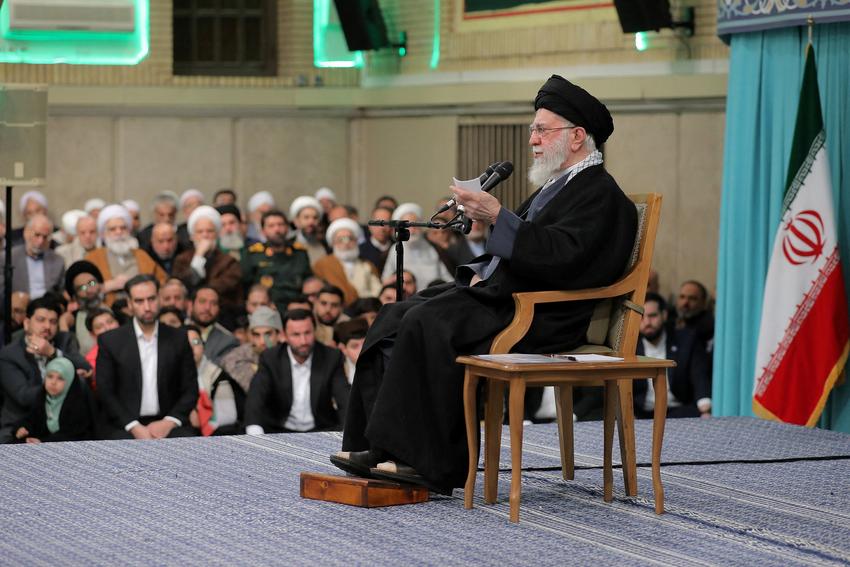
The mass rallies are one of the biggest challenges to the rule of Supreme Leader Ayatollah Ali Khamenei, 86, coming in the wake of Israel’s 12-day war against the Islamic Republic in June, which was backed by the United States.
The protests, initially sparked by anger over the rising cost of living, have now become a movement against the theocratic government that has ruled Iran since the 1979 revolution and have already lasted two weeks.
The mass rallies are one of the biggest challenges to the rule of Supreme Leader Ayatollah Ali Khamenei, 86, coming in the wake of Israel’s 12-day war against the Islamic Republic in June, which was backed by the United States.
The internet blackout “is now past the 60 hour mark… The censorship measure presents a direct threat to the safety and well-being of Iranians at a key moment for the country’s future”, monitor Netblocks said early Sunday.
Several circulating videos, which have not been verified by AFP, allegedly showed relatives in a Tehran morgue identifying bodies of protesters killed in the crackdown.
The US-based Human Rights Activists News Agency said it had confirmed the deaths of 116 people in connection with the protests, including 37 members of the security forces or other officials.
But activists warned that the shutdown was limiting the flow of information and the actual toll risks being far higher.
The US-based Center for Human Rights in Iran (CHRI) said it had received “eyewitness accounts and credible reports indicating that hundreds of protesters have been killed across Iran during the current internet shutdown”.
“A massacre is unfolding in Iran. The world must act now to prevent further loss of life,” it said.
It said hospitals were “overwhelmed”, blood supplies were running low and that many protesters had been shot in the eyes in a deliberate tactic.
In comments to state TV late Saturday, Interior Minister Eskandar Momeni insisted that acts of “vandalism” were decreasing and warned that “those who lead the protest towards destruction, chaos and terrorist acts do not let the people’s voices be heard”.
National police chief Ahmad-Reza Radan said authorities made “significant” arrests of protest figures on Saturday night, without giving details on the number or identities of those arrested, according to state TV.
Iran’s security chief Ali Larijani drew a line between protests over economic hardship, which he called “completely understandable”, and “riots”, accusing them of actions “very similar to the methods of terrorist groups”, Tasnim news agency reported.
In Tehran, an AFP journalist described a city in a state of near paralysis.
The price of meat has nearly doubled since the start of the protests, and while some shops are open, many others are not.
Those that do open must close at around 4:00 or 5:00 pm, when security forces deploy in force.
On Saturday, mobile phone lines appeared to have gone down as well, rendering nearly all communication impossible.
Reza Pahlavi, the exiled son of the ousted shah, who has played a prominent role in calling for the protests, called for new actions later Sunday.
“Do not abandon the streets. My heart is with you. I know that I will soon be by your side,” he said.
US President Donald Trump has spoken out in support of the protests and threatened military action against Iranian authorities “if they start killing people”.
On Sunday, Iran’s parliament speaker Mohammad Bagher Ghalibaf said Iran would hit back if the US launched military action.
“In the event of a military attack by the United States, both the occupied territory and centres of the US military and shipping will be our legitimate targets,” he said in comments broadcast by state TV.
He was apparently also referring to Israel, which the Islamic Republic does not recognise and considers occupied Palestinian territory. (Channels)
Venezuela’s interim president Delcy Rodriguez insisted Tuesday no foreign power was governing her country, after US President Donald Trump said Washington would “run” it pending a transition after ousting her predecessor.
“The government of Venezuela is in charge in our country, and no one else. There is no foreign agent governing Venezuela,” Rodriguez said in a televised address.
Rodriguez on Tuesday got down to the business of running the country, under pressure from Washington to give access to Caracas’s oil while trying to keep supporters of ousted Nicolas Maduro on her side.
Former deputy president Rodriguez, 56, was sworn in as acting leader Monday, as Maduro appeared in a New York court, where he pleaded not guilty to drug trafficking and “narco-terrorism.”
His wife, Cilia Flores, who was snatched with him by US special forces from a military base in Caracas on Saturday during a bombing raid, also pleaded not guilty.
Rodriguez, whom US President Donald Trump has indicated he is willing to work with, faces a delicate balancing act.
She has suggested that she will cooperate with Washington, which wants to tap Venezuela’s massive oil reserves.
But she has also sought to project unity with the hardliners in Maduro’s administration, who control the security forces and powerful paramilitaries.
Venezuela’s journalists’ union said Tuesday that 14 journalists and media workers, most of them representing foreign media, were detained while covering the presidential inauguration at parliament on Monday and later released.
Two other journalists for foreign media were detained near the Colombian border and later released, it added.
Thousands of people marched through Caracas in support of Maduro on Monday and further demonstrations were planned on Tuesday.
On Monday, Rodriguez told the opening of parliament she was “in pain over the kidnapping of our heroes, the hostages in the United States,” referring to Maduro and Flores.
The session turned into an impromptu rally for “Chavismo” — the anti-US, socialist policies of late firebrand leader Hugo Chavez and his anointed heir Maduro.
Opposition leader Maria Corina Machado, who has been given no role by Washington in the post-Maduro transition, warned in a Fox News interview that Rodriguez was not to be trusted.
“Delcy Rodriguez as you know is one of the main architects of torture, persecution, corruption, narcotrafficking,” she said.
“She’s the main ally and liaison with Russia, China, Iran, certainly not an individual that could be trusted by international investors.”
The Nobel Peace Prize laureate vowed to return home “as soon as possible” from her current undisclosed location outside the country.
Trump has so far backed Rodriguez, but warned she would pay “a very big price, probably bigger than Maduro” if she does not comply with Washington’s agenda.
So far she has made no changes to the cabinet, with Interior Minister Diosdado Cabello and Defense Minister Vladimir Padrino Lopez, widely seen as wielding the real power in Venezuela, retaining their posts.
“Delcy had better be sleeping with one eye open right now because right behind her are two men who would be more than happy to cut her throat and take control themselves,” Brian Naranjo, a former US diplomat who was previously stationed in Venezuela, told AFP.
Venezuelan political analyst Mariano de Alba agreed that the new government was “unstable,” but said that Chavismo had understood that “only through apparent cohesion can they keep themselves in power.” (Channels)
U.S. President Donald Trump threatened on Friday to come to the aid of protesters in Iran if security forces fired on them, days into unrest that has left several dead and posed the biggest internal threat to Iranian authorities in years.
“We are locked and loaded and ready to go,” he said in a social media post. The United States bombed Iranian nuclear facilities in June, joining an Israeli air campaign that targeted Tehran’s atomic programme and military leadership.
Responding to Trump’s comments, top Iranian official Ali Larijani warned that U.S. interference in domestic Iranian issues would amount to a destabilization of the entire Middle East. Iran backs proxy forces in Lebanon, Iraq and Yemen.
The comments came as a local official in western Iran, where several deaths were reported, was cited by state media as warning that any unrest or illegal gatherings would be met “decisively and without leniency”.
This week’s protests over soaring inflation are so far smaller than some previous bouts of unrest in Iran, but have spread across the country, with deadly confrontations between demonstrators and security forces focused in western provinces.
State-affiliated media and rights groups have reported at least 10 deaths since Wednesday, including one man who authorities said was a member of the Basij paramilitary force affiliated with the elite Revolutionary Guards.
The Islamic Republic’s clerical leadership has seen off repeated eruptions of unrest in recent decades, often quelling protests with heavy security measures and mass arrests. But economic problems may leave authorities more vulnerable now.
This week’s protests are the biggest since nationwide demonstrations triggered by the death of a young woman in custody in 2022 paralyzed Iran for weeks, with rights groups reporting hundreds killed.
Trump did not specify what sort of action the U.S. could take in support of the protests.
Washington has long imposed broad financial sanctions on Tehran, in particular since Trump’s first term when, in 2018, he pulled the U.S. out of Iran’s nuclear deal with world powers and declared a “maximum pressure” campaign against Tehran.
Video verified by Reuters showed dozens of people gathered in front of a burning police station overnight, as gunshots sporadically rang out and people shouted “shameless, shameless” at the authorities.
In the southern city of Zahedan, where Iran’s Baluch minority predominates, the human rights news group Hengaw reported that protesters had chanted slogans including “Death to the dictator”.
Hengaw has reported at least 80 arrests so far over the unrest, mostly in the west, and including 14 members of Iran’s Kurdish minority.
State television also reported the arrest of an unspecified number of people in another western city, Kermanshah, accused of manufacturing petrol bombs and homemade pistols. Iranian media also said two heavily armed individuals were arrested in central and western Iran before they could carry out attacks.
The deaths acknowledged by official or semi-official Iranian media have been in the small western cities of Lordegan and Kuhdasht. Hengaw also reported that a man was killed in Fars province in central Iran, though state news sites denied this.
Rights groups and social media posts reported protests in a number of cities late on Friday.
Reuters could not verify all the reports of unrest, arrests or deaths.
Trump spoke a few days after he met Israeli Prime Minister Benjamin Netanyahu, a longtime advocate of military action against Iran, and warned of fresh strikes if Tehran resumed nuclear or ballistic work.
The Israeli and U.S. strikes in June last year have cranked up the pressure on Iranian authorities, as have the ousting of Syria’s Bashar al-Assad, a close Tehran ally, and the Israeli pounding of its main regional partner, Lebanon’s Hezbollah.
Iran continues to support groups in Iraq that have previously fired rockets at U.S. forces in the country, as well as the Houthi group that controls much of northern Yemen.
“American people should know that Trump started the adventurism. They ought to watch over their soldiers,” said Larijani, the head of Iran’s National Security Council and a top adviser to Supreme Leader Ayatollah Ali Khamenei.
During the latest unrest, Iran’s elected President Masoud Pezeshkian has struck a conciliatory tone, pledging dialogue with protest leaders over the cost-of-living crisis, even as rights groups said security forces had fired on demonstrators.
Speaking on Thursday, before Trump threatened U.S. action, Pezeshkian acknowledged that failings by the authorities were behind the crisis.
“We are to blame… Do not look for America or anyone else to blame. We must serve properly so that people are satisfied with us…. It is us who have to find a solution to these problems,” he said.
Pezeshkian’s government is trying a program of economic liberalization, but one of its measures, deregulating some currency exchange, has contributed to a sharp decline in the value of Iran’s rial on the unofficial market.
The sliding currency has compounded inflation, which has hovered above 36% since March even by official estimates, in an economy battered by Western sanctions. (JapanToday)
The United States hit Venezuela with a “large-scale strike” early Saturday and said its president, Nicolás Maduro, had been captured and flown out of the country after months of stepped-up pressure by Washington — an extraordinary nighttime operation announced by President Donald Trump on social media hours after the attack.
Multiple explosions rang out and low-flying aircraft swept through Caracas, the capital, as Maduro’s government immediately accused the United States of attacking civilian and military installations. The Venezuelan government called it an “imperialist attack” and urged citizens to take to the streets.
It was not immediately clear who was running the country, and Maduro’s whereabouts were not immediately known. Trump announced the developments on Truth Social shortly after 4:30 a.m. Under Venezuelan law the vice president, Delcy Rodríguez, would take power. There was no confirmation that had happened, though she did issue a statement after the strike.
“We do not know the whereabouts of President Nicolás Maduro and First Lady Cilia Flores,” Rodriguez said. “We demand proof of life.”
Maduro, Trump said, “has been, along with his wife, captured and flown out of the Country. This operation was done in conjunction with U.S. Law Enforcement. Details to follow.” He set a news conference for later Saturday morning.
The legal implications of the strike under U.S. law were not immediately clear. Sen Mike Lee, R-Utah, posted on X that he had spoken with Secretary of State Marco Rubio, who briefed him on the strike. Rubio told Lee that Maduro “has been arrested by U.S. personnel to stand trial on criminal charges in the United States.”
The White House did not immediately respond to queries on where Maduro and his wife were being flown to. Maduro was indicted in March 2020 on “narco-terrorism” conspiracy charges in the Southern District of New York.
Maduro last appeared on state television Friday while meeting with a delegation of Chinese officials in Caracas.
The explosions in Caracas, Venezuela’s capital, early on the third day of 2026 — at least seven blasts — sent people rushing into the streets, while others took to social media to report hearing and seeing the explosions. It was not immediately clear if there were casualties on either side. The attack itself lasted less than 30 minutes and it was unclear if more actions lay ahead, though Trump said in his post that the strikes were carried out “successfully.”
The Federal Aviation Administration issued a ban on U.S. commercial flights in Venezuelan airspace because of “ongoing military activity” ahead of the explosions.
The strike came after the Trump administration spent months escalating pressure on Maduro. The CIA was behind a drone strike last week at a docking area believed to have been used by Venezuelan drug cartels — the first known direct operation on Venezuelan soil since the U.S. began strikes in September.
For months, Trump had threatened that he could soon order strikes on targets on Venezuelan land following months of attacks on boats accused of carrying drugs. Maduro has decried the U.S. military operations as a thinly veiled effort to oust him from power.
Some streets in Caracas fill up
Armed individuals and uniformed members of a civilian militia took to the streets of a Caracas neighborhood long considered a stronghold of the ruling party. But in other areas of the city, the streets remained empty hours after the attack. Parts of the city remained without power, but vehicles moved freely.
Video obtained from Caracas and an unidentified coastal city showed tracers and smoke clouding the landscape sky as repeated muted explosions illuminated the night sky. Other footage showed an urban landscape with cars passing on a highway as blasts illuminated the hills behind them. Unintelligible conversation could be heard in the background. The videos were verified by The Associated Press.
Smoke was seen rising from the hangar of a military base in Caracas, while another military installation in the capital was without power.
“The whole ground shook. This is horrible. We heard explosions and planes,” said Carmen Hidalgo, a 21-year-old office worker, her voice trembling. She was walking briskly with two relatives, returning from a birthday party. “We felt like the air was hitting us.”
Venezuela’s government responded to the attack with a call to action. “People to the streets!” it said in a statement. “The Bolivarian Government calls on all social and political forces in the country to activate mobilization plans and repudiate this imperialist attack.”
The statement added that Maduro had “ordered all national defense plans to be implemented” and declared “a state of external disturbance.” That state of emergency gives him the power to suspend people’s rights and expand the role of the armed forces.
The website of the U.S. Embassy in Venezuela, a post that has been closed since 2019, issued a warning to American citizens in the country, saying it was “aware of reports of explosions in and around Caracas.”
“U.S. citizens in Venezuela should shelter in place,” the warning said. (JapanToday)
Russia accused Ukraine on Monday of trying to attack President Vladimir Putin’s residence in northern Russia, although it provided no evidence to back up an assertion that Kyiv dismissed as baseless and designed to undermine peace negotiations.
The angry exchanges – including a statement by Russia that it was reviewing its stance in negotiations in response to the attack – dealt a new blow to prospects for peace in Ukraine.
U.S. President Donald Trump said Putin had told him about the alleged attack in a phone call on Monday morning, which had angered him. Still, Trump repeated his belief that a peace deal may be near.
“It’s one thing to be offensive,” Trump told reporters. “It’s another thing to attack his house. It’s not the right time to do any of that. And I learned about it from President Putin today. I was very angry about it.”
On Sunday, Trump met Ukrainian President Volodymyr Zelenskyy in Florida and the U.S. president said they were “getting a lot closer, maybe very close” to an agreement to end the war, although “thorny” territorial issues remained.
On Monday, Putin struck a defiant tone, telling his army to press on with a campaign to take full control of Ukraine’s Zaporizhzhia region. The Kremlin repeated demands for Kyiv to pull its forces out of the last part of the Donbas area that they still hold in eastern Ukraine.
Putin told Trump in Monday’s phone call that Russia, which invaded Ukraine in February 2022, was reviewing its stance following the reported drone attack, an aide said.
After the call with Putin, Trump told reporters outside his home in Palm Beach, Florida, that he had no further information about the alleged attack.
“I don’t like it, it’s not good,” Trump said. Asked if U.S. intelligence agencies had evidence of such an attack, Trump said: “We’ll find out.”
Trump said the conversation with Putin was productive.
“We have a couple of issues that we’re going to get resolved, hopefully, and if we get them resolved, you’re going to have peace,” Trump said.
Russian Foreign Minister Sergei Lavrov said Ukraine had tried to attack Putin’s residence in the Novgorod region west of Moscow on December 28-29 with 91 long-range drones which were all destroyed by Russian air defenses. No one was injured and there was no damage, he said in comments reported by Russian media.
“Such reckless actions will not go unanswered,” Lavrov said in a statement, describing the attack as “state terrorism” and adding that targets had already been selected for retaliatory strikes by Russia’s armed forces.
Lavrov did not offer any evidence for his assertions in his statement. It was not clear where Putin was at the time.
Lavrov said the attack took place during negotiations about a possible peace deal, and said Russia would review its negotiating stance but not quit the negotiations.
Denying Ukraine had planned such an attack, Zelenskyy accused Russia of preparing the ground to strike government buildings in Kyiv, saying Russia wanted to undermine progress at U.S.-Ukrainian talks on ending the war.
“Another round of lies from the Russian Federation,” Zelenskyy told reporters via WhatsApp. “It is clear that we had a meeting with Trump yesterday, and it is clear that for the Russians, if there is no scandal between us and America, and we are making progress – for them it is a failure, because they do not want to end this war.”
He added: “I am sure they are simply preparing the ground for strikes, probably on the capital, probably on government buildings.”
Ukrainian Foreign Minister Andrii Sybiha said on social media the attack was a fabrication intended to create a pretext for more Russian attacks on Ukraine and to undermine the peace process. He urged world leaders to condemn Russia over its accusations. (JapanToday)
On the eve of Christmas, President Donald Trump has unleashed a fresh blast of vitriol at late-night comedy talk shows, saying comedian Stephen Colbert is a “pathetic train wreck” who should be “put to sleep.”
Colbert’s “The Late Show” is scheduled to end in May 2026, a decision his fans say smacks of censorship.
In a late night Truth Social post, Trump wrote that Colbert “has actually gotten worse” since being “terminated by CBS, but left out to dry.”
“Stephen is running on hatred and fumes ~ A dead man walking! CBS should, ‘put him to sleep,’ NOW,” Trump wrote.
Colbert has hosted the “The Late Show” since 2015 and it has been the highest-rated late night talk show on U.S. television. His opening monologues often take aim at the Republican president.
There was no immediate public response from Colbert or CBS to Trump’s post.
CBS announced the sunsetting of Colbert’s show after one more season in July, the same month its parent company reached a $16 million settlement with Trump. CBS called the cancellation “a purely financial decision.”
Trump had sued Paramount, alleging that CBS News’ “60 Minutes” program deceptively edited an interview with his 2024 election rival, Kamala Harris, in her favor.
In another overnight post, Trump repeated threats to yank the broadcast licenses of networks whose content he deemed overly critical.
“If Network NEWSCASTS, and their Late Night Shows, are almost 100% Negative to President Donald J. Trump, MAGA, and the Republican Party, shouldn’t their very valuable Broadcast Licenses be terminated? I say, YES!”
On Sunday, CBS’s new editor-in-chief, Bari Weiss, pulled a “60 Minutes” segment on alleged torture at El Salvador’s CECOT prison — where Trump sent hundreds of deported Venezuelans — saying it needed more reporting.
In August, Disney-owned ABC briefly suspended its late-night star, Jimmy Kimmel, before bringing him back on a one-year contract.
Kimmel had annoyed conservatives with comments in the wake of the murder of right-wing activist Charlie Kirk.
Trump appears to be aiming to reshape the U.S. media landscape, which he says is biased against conservatives.
His appointee to head the Federal Communications Commission, Brendan Carr, turned heads when he told a Congressional hearing that “the FCC is not formally an independent agency,” implying that his actions could justifiably be aligned with the political priorities of the White House. (JapanToday)
The United States says that it has carried out an air strike against ISIL (ISIS) fighters in northwest Nigeria that residents say caused buildings to shake and the sky to glow red.
“Tonight, at my direction as Commander in Chief, the United States launched a powerful and deadly strike against ISIS Terrorist Scum in Northwest Nigeria,” President Donald Trump said in a post on his Truth Social platform on Thursday evening.
Trump, who has previously threatened greater US intervention in Nigeria over dubious claims that a “genocide” of Christians is taking place there, said ISIL fighters had been “viciously” killing and targeting Christians at levels unseen for “centuries”.
“I have previously warned these Terrorists that if they did not stop the slaughtering of Christians, there would be hell to pay, and tonight, there was,” Trump said.
The US military’s Africa Command (AFRICOM), which is responsible for operations in Africa, said in a post on X that the air strike was carried out “at the request of Nigerian authorities” and had killed “multiple ISIS terrorists”.
Residents of Jabo have said that the strikes caused alarm and that their village has never experienced an attack by ISIL.
“As it approached our area, the heat became intense,” Abubakar Sani, who lives just a few houses from the scene of the explosion, told the news service Associated Press.
“Our rooms began to shake, and then fire broke out,” he said. “The Nigerian government should take appropriate measures to protect us as citizens. We have never experienced anything like this before.”
Another resident, 40-year-old farmer Sanusi Madabo, said that the attacks made the night sky glow red and appear “almost like daytime”.
“Grateful for Nigerian government support and cooperation,” US Secretary of Defense Pete Hegseth wrote on social media, warning also of “more to come”, without providing details.
In a statement, AFRICOM said the strike occurred in “Soboto state,” an apparent reference to Nigeria’s Sokoto State.
Nigerian Foreign Minister Yussuf Tuggar confirmed on Friday that the strike had been carried out in coordination with the country’s authorities, but said it was not aimed at targeting members of any particular religious community.
“Nigeria is a multi-religious country, and we’re working with partners like the US to fight terrorism and protect lives and property,” Tuggar told Nigeria’s Channels Television.
The US military action comes weeks after Trump said he had ordered the Pentagon to begin planning for potential military action in Nigeria following claims of Christian persecution in the country.
Nigeria’s government had dismissed Trump’s assertions, saying armed groups target both Muslim and Christian communities in the country, and US claims that Christians face persecution do not represent a complex security situation and ignore efforts by Nigerian authorities to safeguard religious freedom.
Nigeria’s Ministry of Foreign Affairs issued a statement shortly after Trump announced the US strike, confirming early on Friday that Nigerian authorities were “engaged in structured security cooperation with international partners, including the United States of America, in addressing the persistent threat of terrorism and violent extremism”. (AlJazeera)