
Posted on Leave a comment

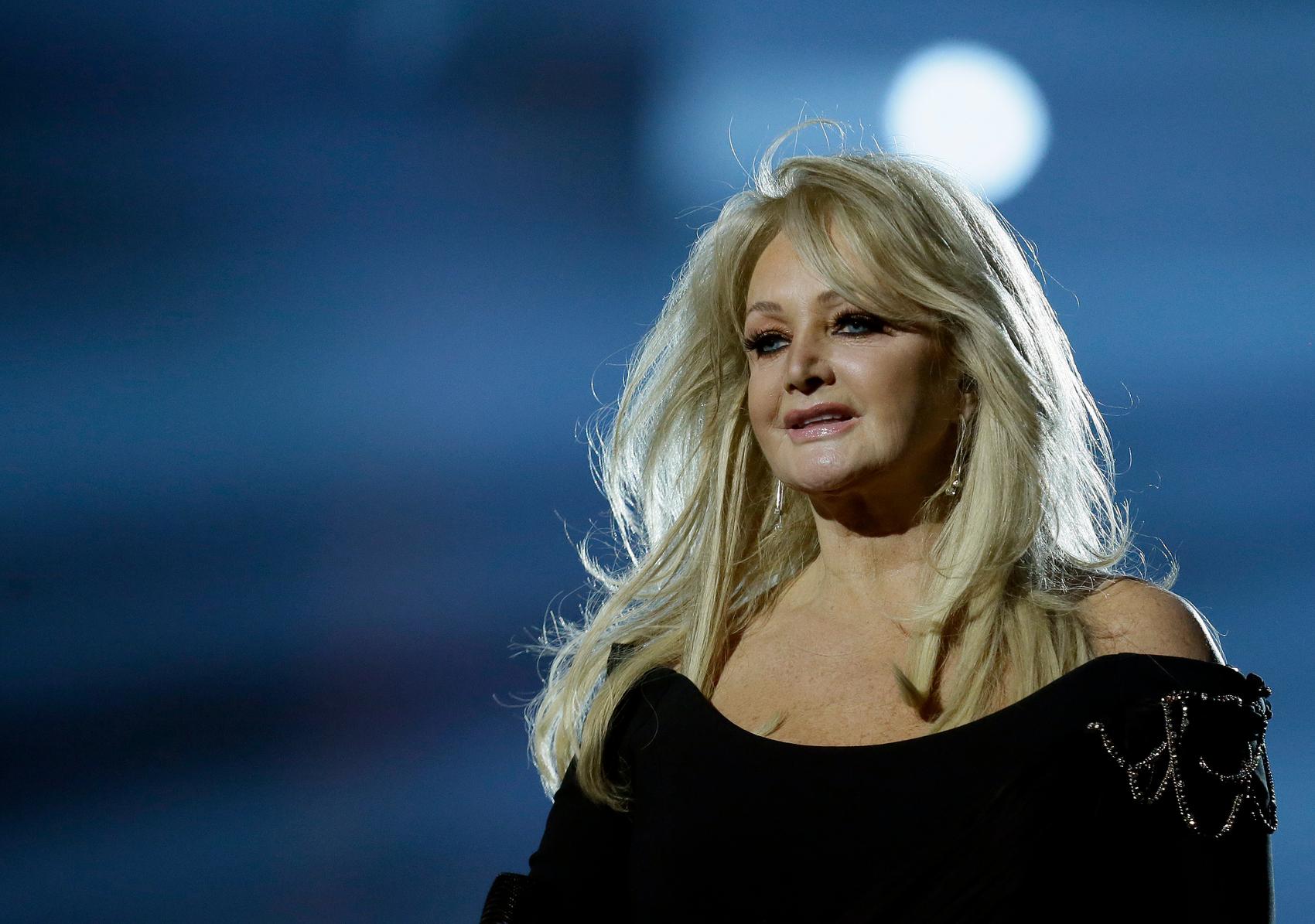
Bonnie Tyler, who topped charts with epic “Total Eclipse of the Heart,” dies at 75

Bonnie Tyler, the gravelly voiced, Grammy-nominated Welsh pop star whose 1983 chart-topping power ballad “Total Eclipse of the Heart” enchanted succeeding generations with its bombastic charms during solar and lunar eclipses, has died. She was 75.

Tyler died unexpectedly in a hospital in Portugal where she was being treated for an illness, her family said Thursday in a statement on her website. She was hospitalized in May in Faro, where she had a home, for emergency intestinal surgery. She had been placed in an induced coma for a period but was reportedly improving last month and expected to make a good recovery.

“Bonnie’s family and team are heartbroken to announce that Bonnie unexpectedly passed away last night in hospital in Portugal as a result of the illness that she was being treated for,” her family said.

Tyler earned three Grammy nods and in 2013 represented Britain at the Eurovision Song Contest, where she came in 19th. She was honored as a Member of the Order of the British Empire in 2022 for her services to music by Queen Elizabeth II, thanks mainly to “Total Eclipse of the Heart,” which has had more than 1 billion streams, boosted by real eclipses in 2017 and 2024.

The song spent four weeks at No. 1, and when Stereogum reevaluated it in 2020, the music outlet declared it an “extinction-level event rendered in musical form.”

“It’s pop music as heart-pounding, chest-thumping, blood-gargling, heavens-falling passion explosion. It’s sheer spectacle. It’s fireworks and lasers and lightning and thunder. It soars and swoops and barrel-rolls,” the site said.

The song has never really gone away: it was covered by the English singer Nicki French in 1995, and the band Westlife in 2006. Cate Blanchett sang it while hitting Billy Bob Thornton with her car in 2001’s “Bandits,” it appeared in a wedding scene in 2003’s “Old School” and One Direction sang it in 2010 on a U.K. version of “The X Factor.”

Tyler was born — as Gaynor Hopkins — a coal miner’s daughter in public housing with an outside toilet in Skewen, Wales, about 7 miles (11 kilometers) outside Swansea. She grew up with three sisters and two brothers.

She adored the Beatles and her first album was “A Hard Day’s Night.” The first song she bought, at 13, was “Hippy Hippy Shake” by the Swinging Blue Jeans and she watched “Top of the Pops” religiously, according to her memoir, “Straight From the Heart.”

She would record “Top of the Pops” on a reel-to-reel two-track recorder and write down the lyrics of songs she loved. Her favorites were by Janis Joplin, Nina Simone, Tina Turner, Wilson Pickett and Otis Redding.

“I used to sing them into my hairbrush for hours and hours, and that’s how it all started for me. I fell in love with singing just from doing that. Looking back, even then my voice had a husky tone to it, but I didn’t think much of it. I thought everyone’s voices were different from each other’s,” she wrote.

In 1976 she had to have surgery to remove nodules on her throat, leaving her with that trademark vocal sound. Changing her name to Sherene Davis, she was fronting a soul band when she was discovered by talent scout Roger Bell, who brought her to London for demo sessions. Then she waited for a label until RCA said it was interested.

Under her new RCA-sanctioned name Bonnie Tyler, her debut album “The World Starts Tonight” in 1977 contained her first chart hit, “Lost in France,” and she was nominated for a breakthrough artists award at the Brit Awards. She then had a No. 3 hit in 1978 with “It’s a Heartache,” but soon drifted. She then signed with Sony and saw Meat Loaf perform “Bat Out of Hell” on the BBC. Impressed, she requested to work with Meat Loaf songwriter and producer Jim Steinman.

Steinman introduced her to his song “Total Eclipse of the Heart,” which would become the debut single for her fifth studio album, “Faster Than the Speed of Night.” He borrowed one of the song’s lyrics — “Turn around, bright eyes” — from his 1969 musical “The Dream Engine,” written when he was a student at Massachusetts’ Amherst College. He told her the song was from a prospective musical version of “Nosferatu.”

“Jim liked to put down a basic rhythm track, do nine takes of the song, choose the best one and then put the kitchen sink on there, like Phil Spector used to,” Tyler told The Guardian in 2023. “He gave me a cassette to listen to in my hotel and we both preferred take two.”

Featuring E Street Band members Roy Bittan on piano and Max Weinberg on drums, “Total Eclipse” is a rumination on lost love: “Once upon a time there was light in my life/But now there’s only love in the dark,” she sings.

The video, a staple of early-days MTV, was shot in a frightening gothic former asylum in Surrey, where the guard dogs apparently wouldn’t set foot in the rooms downstairs where they used to give people electric shock treatment. The visuals included slow-motion tossed doves, candles, dancing ninjas, dancing greasers, Tyler in frighteningly big shoulder pads, fencers, gymnasts, wind machines and shirtless boys wearing swim goggles being doused with water.

“Faster Than the Speed of Night” earned a Grammy nomination for best rock vocal performance — losing to Pat Benatar’s “Love Is a Battlefield” — and Tyler got another nod for “Total Eclipse of the Heart” in the best pop vocal performance category, losing to Irene Cara’s “Flashdance — What a Feeling.”

Tyler never reached such dizzying heights again but stayed current with such movie soundtrack singles as “Holding Out For a Hero” — from 1984’s “Footloose” — and “Here She Comes” from “Metropolis” also in 1984.

Her 2019 disc “Between the Earth and the Stars” featured duets with Rod Stewart, Cliff Richard and Status Quo’s Francis Rossi, and she ended that year performing a Vatican Christmas concert before Pope Francis. (JapanToday)

Posted on Leave a comment

Trump threatens legal action against Grammy host over Epstein comment


Donald Trump threatened legal action on Monday against the host of the 68th Grammy Awards over the comedian’s comment on the U.S. president and convicted sex offender Jeffrey Epstein.

After congratulating Billie Eilish for winning the Grammy for Song of the Year for her track “Wildflower,” host Trevor Noah brought up Trump and Epstein.

“Wow. That’s a Grammy that every artist wants — almost as much as Trump wants Greenland,” he quipped, referring to the president’s threats to seize the autonomous Arctic territory.

Noah then added: “Which makes sense because, since Epstein’s gone, he needs a new island to hang out with Bill Clinton.”

Noah, who announced that this will be his final year hosting the Grammys after six turns as emcee, has been light on political commentary in previous years.

His comments drew the ire of the president, who took to his Truth Social platform first saying that the “Grammy Awards are the WORST and virtually unwatchable,” before criticizing Noah.

“I can’t speak for Bill, but I have never been to Epstein Island, nor anywhere close, and until tonight’s false and defamatory, statement, have never been accused of being there, not even by the Fake News Media,” Trump asserted.

The Republican then branded South African Noah a “total loser” who needs to “get his facts straight.”

“I’ll be sending my lawyers to sue this poor, pathetic, talentless, dope of an M.C. … Get ready Noah, I’m going to have some fun with you!” Trump added.

Trump, who moved in the same social circles as Epstein in Florida and New York, has fought for months to prevent the release of a vast trove of documents about the disgraced financier and has given varying accounts of why he eventually fell out with Epstein.

More than three million documents were released on Friday that included mention of numerous powerful figures, including the 79-year-old president, Elon Musk, Bill Gates, Bill Clinton and former prince Andrew Mountbatten-Windsor. (JapanToday)

Posted on Leave a comment

Grammys 2026: Bad Bunny makes history with Album of the Year, Kendrick Lamar becomes most-awarded rapper ever

Bad Bunny made history at the 68th Grammy Awards in Los Angeles Sunday night, becoming the first-ever artist to win the Grammy for album of the year for a non-English language album for his landmark DeBÍ TiRAR MáS FOToS.

“I want to dedicate this award to all the people who had to leave their homeland, their country, to follow their dreams,” Benito said.

Outside of album of the year, Kendrick Lamar, who was the most-nominated act coming into the evening with nine overall, went back-to-back for record of the year with “Luther,” his collaboration with SZA. The record of the year win, though, came with a bit of confusion as Cher, who’d just received a Lifetime Achievement Award, began to walk off stage before announcing the category, then announced “Luther Vandross” as the winner. Lamar earned five wins on the night, including for best rap album and best rap song, and he became the most-awarded rapper in Grammy history, surpassing Jay-Z as the new record-holder.

A full list of winners is available here.

This year’s Grammys — the final year the show airs on CBS and the last time Trevor Noah is hosting — carried a strong political undercurrent throughout the night as many of the industry’s biggest artists called out ICE amid the turmoil that’s rocked Minneapolis in recent weeks. Many of the evening’s winners either directly called out the government or voicing their support to immigrants.

SZA came backstage Sunday night after the “Luther” win, calling it “dystopian that we’re dressed up and able to celebrate accolades in the material world.”

“People are getting snatched up and shot in the face on the street, it just feels bizarre,” she said.

Billie Eilish had one of the bigger surprises of the evening as “Wildflower,” her hit off 2024 album Hit Me Hard and Soft, took home song of the year, winning out in a category that featured the likes of Kpop Demon Hunters smash “Golden,” Carpenter’s “Manchild” and Bad Bunny’s “DtMF,” among others. During her speech, alongside her brother Finneas, Eilish said “fuck ICE,” further adding that “no one is illegal on stolen land.”

Before the album of the year win, Bad Bunny began his acceptance speech for best música urbana album by saying “ICE out.” “We’re not savages, we’re not animals, we’re not aliens, we are humans and we are Americans,” he said, drawing cheers from the crowd.

Meanwhile, Olivia Dean won out for best new artist, and during her acceptance speech, the “Man I Need” singer called herself “a granddaughter of immigrants.”

“I’m a product of bravery and I think those people deserve to be celebrated,” Dean said. “We’re nothing without each other.”

Bad Bunny, Lamar, Lady Gaga and Carpenter all came into Sunday with nominations across the major three categories, and while Gaga won for pop vocal album of the year, she was left out in the general field and is still yet to win a Grammy outside of the genre categories. Carpenter, who had six nominations this evening, came away empty-handed.

Rosé and Bruno Mars opened the show with global smash “Apt.,” itself a historic performance putting K-pop on music’s biggest stage. (While the song didn’t win for its record of the year nomination, another K-pop tune made history as “Golden” became the first K-pop song to ever win a Grammy). Carpenter followed soon after Mars and Rosé an instant classic “Manchild” performance that had Carpenter playing the role of pilot running through an airport.

Lamar started the night strong, winning the first award of the night for best rap album with GNX, beating out Clipse’s Let God Sort Em Out and Tyler, the Creator’s Chromakopia. All three rap albums were up for album of the year. Clipse, meanwhile, took home a Grammy during the pre-telecast for best rap performance with “Chains and Whips,” which featured Lamar as well. (THR)

Posted on Leave a comment

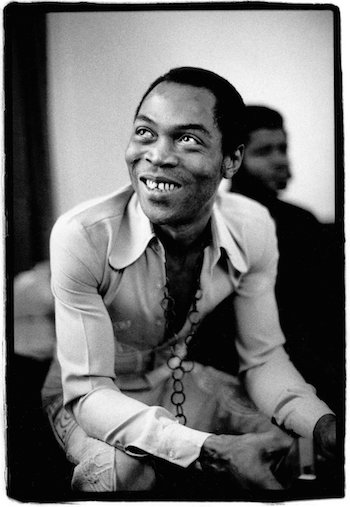
Fela Kuti receives Posthumous Grammy Lifetime Achievement Award

Afrobeat pioneer Fela Kuti has been honoured with a Grammy Lifetime Achievement Award, nearly three decades after his death, marking a historic milestone for African music.

The prestigious recognition was conferred on Saturday, January 31, 2026, at the Recording Academy’s Special Merit Awards ceremony held at the Wilshire Ebell Theatre in Los Angeles, on the eve of the 68th Annual Grammy Awards.

With the honour, Fela becomes the first African artist to receive the Lifetime Achievement Award, which has been presented since 1963 to music legends including Bing Crosby.

The award recognises performers who have made outstanding artistic contributions to the recording field over their lifetimes.

Fela, who died in 1997 at the age of 58, was celebrated posthumously for his enduring cultural, political and musical impact.

Other recipients at the ceremony included Chaka Khan, Cher, Carlos Santana, Paul Simon and Whitney Houston, who was also honoured posthumously.

The award was accepted on Fela’s behalf by his children, Femi Kuti, Yeni Kuti and Kunle Kuti, in the presence of family members, friends and prominent figures from the global music industry.

During the presentation, Fela was described as a “producer, arranger, political radical, outlaw and the father of Afrobeat.”

In his acceptance speech, Femi said, “Thank you for bringing our father here. It’s so important for us, it’s so important for Africa, it’s so important for world peace and the struggle.”

Yeni expressed the family’s excitement at the recognition, noting that Fela was never nominated for a Grammy during his lifetime.

“The family is happy about it. And we’re excited that he’s finally being recognised,” she said, adding that while the honour was “better late than never”, there remained “a way to go” in fully acknowledging African artists globally.

Seun Kuti also welcomed the recognition, describing it as a “symbolic moment.”

“Fela has been in the hearts of the people for such a long time. Now the Grammys have acknowledged it, and it’s a double victory. It’s bringing balance to a Fela story. The global human tapestry needs this, not just because it’s my father.”

Fela’s cousin and head of the Kuti family, Yemisi Ransome-Kuti, reflected on how the musician might have responded to the honour.

Footage from the ceremony showed a large screen bearing Fela’s image alongside a summary of his legacy, including his expansive music catalogue, the Tony Award-winning Broadway musical inspired by his life, and global cultural projects celebrating his work. (Channels)