The UK’s Prince Andrew Friday renounced his title of Duke of York under pressure from his brother King Charles, amid further revelations about his ties to US sex offender Jeffrey Epstein.
“I will… no longer use my title or the honours which have been conferred upon me,” Andrew, 65, said in a bombshell announcement.
He said his decision came after discussions with the head of state, King Charles III.
“I have decided, as I always have, to put my duty to my family and country first,” Andrew said in a statement, sent out by Buckingham Palace.
He again denied all allegations of wrongdoing, but said: “We have concluded the continued accusations about me distract from the work of His Majesty and the Royal Family.”
Andrew, who stepped back from public life in 2019 amid the Epstein scandal, will remain a prince, as he is the second son of the late queen Elizabeth II.
But he will no longer hold the title of Duke of York that she had conferred on him.
UK media reported that he would also give up membership of the prestigious Order of the Garter, the most senior knighthood in the British honours system which dates back to 1348.
Andrew’s ex-wife Sarah Ferguson will also no longer use the title of Duchess of York, although his daughters Beatrice and Eugenie remain princesses and it is thought that Friday’s move will not affect their status.
The disgraced royal has become a source of deep embarrassment for his brother Charles, following a devastating 2019 TV interview in which Andrew defended his friendship with the late billionaire paedophile Epstein.
In the interview, he vowed he had cut ties in 2010 with Epstein, who was disgraced after an American woman, Virginia Giuffre, accused him of using her as a sex slave.
But in a reported exchange which emerged in UK media this week, Andrew told the convicted sex offender in 2011 that they were “in this together” when a photo of the prince with his arm around Giuffre was published.
But he added that the two would “play together soon”.
Andrew was stripped of his military titles in 2022 and shuffled off into retirement after Giuffre accused him of sexually assaulting her when she was 17.
New allegations emerged this week in Giuffre’s posthumous memoir in which she wrote that Andrew had behaved as if having sex with her was his “birthright”. (Vanguard)
Former Kenyan prime minister and revered long-time opposition leader Raila Odinga was buried in the west of the country after a service attended by thousands on Sunday.
“Now finally Baba is home,” his son, Raila Odinga junior, said beside his father’s casket, draped in the Kenyan flag.
The burial concluded days of memorials that at times led to chaos, with at least five mourners dying at other events and dozens injured at a public viewing on Saturday.
Odinga died on Wednesday aged 80 in an Indian hospital.
He became prime minister after the bloody and disputed 2007 election, and was the main opposition leader for many years, losing five presidential campaigns, most recently three years ago.
He retains a devotional following in the west of the country. Former US President Barack Obama, whose Kenyan family hails from the same region, called Odinga a “true champion of democracy”.
Politicians, relatives and throngs of his supporters waved Kenyan flags and held his picture aloft as they gathered at Sunday’s memorial service, which was held at a university in Bondo.
“Even in the grave, he still remains our hero,” one mourner told the AFP news agency.
Military personnel carried Odinga’s coffin to the front, where a choir sang and speakers, including Kenyan President William Ruto, remembered him.
“His courage, his vision, and his unyielding faith in our collective destiny will forever illuminate the path of our nation,” Ruto said in a post on Facebook about the event.
“His return to Bondo was not merely a homecoming; it was the embrace of a grateful Republic bidding farewell to one of its greatest sons, a patriot who devoted his life to the cause of justice, democracy, and the enduring unity of our beloved Kenya.”
Odinga was buried nearby at his late father’s homestead, where there is a family mausoleum.
Multiple memorial events had already taken place, including a state funeral in Nairobi on Friday and a public viewing in a stadium in his home city of Kisumu on Saturday.
At the viewing, tens of thousands filed past his open coffin, many crying out the phrase “we are orphans”.
At least three people were killed when police opened fire to disperse mourners, with dozens more injured in the chaotic scenes that followed. (BBC)
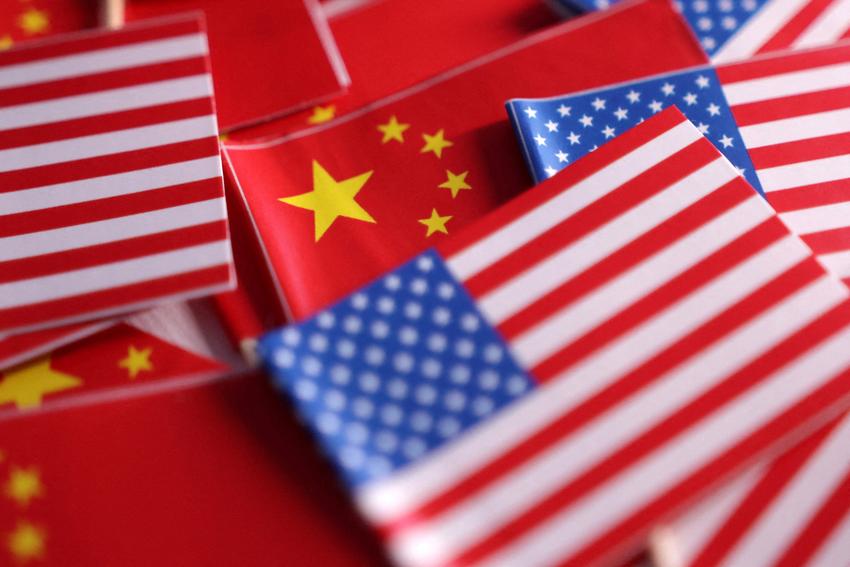
New US tariffs on imported kitchen cabinets, vanities, lumber, timber and certain upholstered furniture have come into effect.
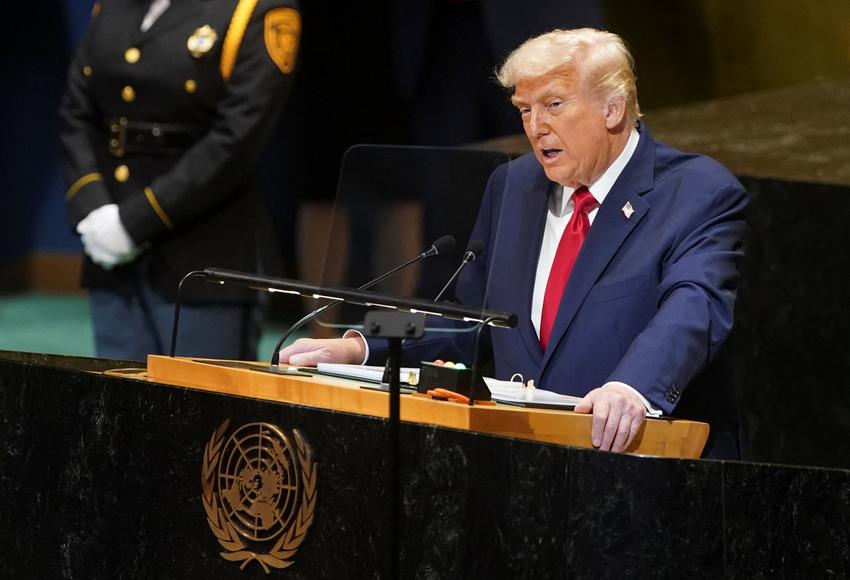
Under a proclamation signed by President Donald Trump last month, a 10% tariff on softwood lumber and timber imports will apply as of Tuesday.
A 25% tariff will also apply to imported kitchen cabinets and vanities – rising to 50% on 1 January – and a 25% tariff on upholstered wooden furniture will increase to 30%, unless new trade agreements are reached.
Trump has cited the need to protect US manufacturers and national security concerns for the move, but some in the industry worry the tariffs could raise housing costs and make customers postpone home renovations.
Tariffs are taxes on imported goods typically charged as a percentage of a good’s value and are paid to the US government by companies bringing in the products.
These firms may pass some or all of the extra cost on to their customers, which in this case means ordinary Americans and other US businesses.
The president’s tariff policies have been a key feature of his second term in the White House.
Trump has previously imposed sector-specific tariffs on steel, copper, aluminium, cars and vehicle components.
The additional global 10% tariffs on softwood lumber means the product from Canada – the second largest producer globally and a major US supplier – is now tariffed at more than 45%.
There is already a combined 35.16% US countervailing and anti-dumping duties placed on most Canadian producers as part of a decades-long dispute over the product between the two countries.
As part of existing trade deals with the US, duties on wood products from the UK will not exceed 10%, while those from the European Union and Japan will not exceed 15%.
The White House says Trump’s tariffs have been implemented “to protect against threats” to the US’s national security and to “strengthen manufacturing”.
But the National Association of Homebuilders said in a statement in late September that the new levies could raise housing costs.
“These new tariffs will create additional headwinds for an already challenged housing market by further raising construction and renovation costs,” said chairman Buddy Hughes.
According to Telsey Advisory Group managing director and senior retail analyst Cristina Fernández, retailers will have no choice but to raise prices on imported goods.
Speaking to the BBC’s US partner CBS News last month, she said retailers would try not to raise prices too much ahead of the holiday season, but “they can’t absorb 30% tariffs on top of other tariffs that are already in place”.
“They’ll have to pass through pricing, probably in the form of a double-digit price increase,” she added.
Last month Swedish furniture giant Ikea said the tariffs on furniture imports make doing business “more difficult”.
“The tariffs are impacting our business similarly to other companies, and we are closely monitoring the evolving situation,” the company said. (BBC)
Donald Trump was heckled by left-wing politicians as he told Israel’s parliament the Gaza peace deal marks “the historic dawn of a new Middle East”.
Addressing the Knesset for more than an hour before signing the peace deal in Egypt on Monday afternoon, the US president said: “This is not only the end of a war.
“This is the end of an age of terror and death and the beginning of the age of faith and hope, and of God.
“It’s the start of a grand concord and lasting harmony for Israel and all the nations of what will soon be a truly magnificent region. I believe that so strongly. This is the historic dawn of a new Middle East.”
He added: “Against all odds, we have done the impossible, and brought our hostages home.”
The US president entered the Knesset to a two-minute standing ovation, before several members of the US and Israeli negotiating teams had their names read out to cheers and applause.
There was a particularly enthusiastic reaction for America’s envoy to the Middle East Steve Witkoff and Mr Trump’s son-in-law Jared Kushner who spearheaded the negotiations for the US president.
As Mr Trump heaped praise on Mr Witkoff, saying how he was a “great negotiator because he’s a great guy”, two left-wing Knesset members, Ayman Odeh and Ofer Kassif, heckled the president before being swiftly removed from the chamber.
Mr Trump said he has now stopped eight wars in eight months, claiming his personality “is all about stopping wars” – in reference to Hillary Clinton previously saying he has a personality that’s all about war.
The president called the peace deal, agreed on Thursday, an “incredible triumph” for Israel and the world to have so many nations working together for peace, and said the US joins Israel in “two everlasting vows – never forget, and never again”.
Mr Trump said “generations from now” this moment “will be remembered as the moment that everything began to change, and change very much for the better”.
“From Gaza to Iran, those bitter hatreds have delivered nothing but misery, suffering and failure,” he said.
The “total focus” of Gazans must be on restoring the fundamentals of stability, safety, dignity and economic development, he said.
“At last, not only for Israelis, but also for Palestinians and for many others, the long and painful nightmare is finally over, and as the dust settles, the smoke fades, the debris is removed and the ashes clear from the air,” he said.
During the lengthy speech, Mr Trump went off script, to much applause, as he called on Israeli President Isaac Herzog to pardon Israeli Prime Minister Benjamin Netanyahu, who is accused of corruption.
Earlier on Monday, Mr Trump simply said “yes” when asked by Israeli media if the war with Hamas was over.
In the Knesset gallery, a few people were wearing red hats that said: “Trump, The Peace President.”
Knesset speaker Amir Ohana announced he and US speaker of the house Mike Johnson will “rally speakers and presidents” from around the world to submit a nomination for Mr Trump for next year’s Nobel Peace Prize, to which the president smiled broadly.
Speaking ahead of the president, Mr Netanyahu said Mr Trump is “the greatest friend the state of Israel has had in the White House” and thanked him for the peace deal that returned all the remaining hostages.
He said the agreement “achieves all our objectives” and “opens the door to a historic expansion of peace in our region and beyond”.
Mr Netanyahu said he is “committed to this peace” as he admitted Israel has paid “a high price for this war”.
“But our enemies now understand just how powerful and just how determined Israel is,” the Israeli PM added.
“They understand that attacking Israel on October 7th was a catastrophic mistake. They understand that Israel is strong and that Israel is here to stay.”
Just before Mr Trump addressed the Knesset, the remaining 20 living hostages – all men – were released by Hamas to Red Cross officials, the Israeli military said.
The bodies of the remaining 28 dead hostages are also expected to be handed over as part of the deal, although timings remained unclear.
Palestinians were also awaiting the release of hundreds of prisoners held by Israel as part of the peace agreement.
The peace deal comes two years after Hamas stormed Israel on October 7 2023, killing 1,200 people and taking 251 hostages.
Israel’s military offensive has killed more than 67,000 Palestinians in Gaza, according to the Hamas-run health ministry, which the UN deems reliable, and a famine has been declared in parts of the area. (SkyNews)
Israel’s Cabinet early Friday approved President Donald Trump’s plan for a ceasefire in the Gaza Strip and the release of all the remaining hostages held by Hamas, a key step toward ending a ruinous two-year war that has destabilized the Middle East.
A brief statement from Prime Minister Benjamin Netanyahu’s office said the Cabinet approved the “outline” of a deal to release the hostages, without mentioning other aspects of the plan that are more controversial.
The broader ceasefire plan included many unanswered questions, such as whether and how Hamas will disarm and who will govern Gaza. But the sides appeared closer than they have been in months to ending a war that has killed tens of thousands of Palestinians, reduced much of Gaza to rubble, brought famine to parts of the territory and left dozens of hostages, living and dead, in Gaza.
The war, which began with Hamas’ deadly attack on Israel on Oct. 7, 2023, has also triggered other conflicts in the region, sparked worldwide protests and led to allegations of genocide that Israel denies.
Some 1,200 people were killed in the Hamas-led assault, and 251 were taken hostage. In Israel’s ensuing offensive, more than 67,000 Palestinians have been killed in Gaza and nearly 170,000 wounded, according to Gaza’s Health Ministry, which doesn’t differentiate between civilians and combatants but says around half of the deaths were women and children.
In the hours leading up to the Israeli Cabinet’s vote, Israeli strikes continued. Explosions were seen Thursday in northern Gaza, and a strike on a building in Gaza City killed at least two people and left more than 40 trapped under rubble, according to the Palestinian Civil Defense.
At least 11 dead Palestinians and another 49 who were wounded arrived at hospitals over the past 24 hours, Gaza’s Health Ministry said.
An Israeli military official who spoke on the condition of anonymity in line with military guidelines said Israel was hitting targets that posed a threat to its troops as they reposition. Hamas blasted Israel over the strike, saying Netanyahu was trying to “shuffle the cards and confuse” efforts by mediators to end the war in Gaza.
A senior Hamas official and lead negotiator made a speech Thursday laying out what he says are the core elements of the ceasefire deal: Israel releasing around 2,000 Palestinian prisoners, opening the border crossing with Egypt, allowing aid to flow and withdrawing from Gaza.
Khalil al-Hayya said all women and children held in Israeli jails will also be freed. He did not offer details on the extent of the Israeli withdrawal from Gaza.
Al-Hayya said the Trump administration and mediators had given assurances that the war is over, and that Hamas and other Palestinian factions will now focus on achieving self-determination and establishing a Palestinian state.
“We declare today that we have reached an agreement to end the war and the aggression against our people,” Al-Hayya said in a televised speech Thursday evening.
In other developments, U.S. officials announced that they would send about 200 troops to Israel to help support and monitor the ceasefire deal as part of a broader, international team. The officials spoke on condition of anonymity to discuss details not authorized for release.
In the southern Gaza city of Khan Younis, reactions to the announcement of a ceasefire were relatively muted and often colored by grief.
“I am happy and unhappy. We have lost a lot of people and lost loved ones, friends and family. We lost our homes,” said Mohammad Al-Farra. “Despite our happiness, we cannot help but think of what is to come. … The areas we are going back to, or intending to return to, are uninhabitable.”
In Tel Aviv, families of the remaining hostages popped champagne and cried tears of joy after Trump announced the deal.
In Jerusalem on Thursday, Sharon Canot celebrated with some others.
“We are so excited this morning. We cried all morning,” she said. “It’s been two years that we are in horror.”
Under the terms, Hamas intends to release all living hostages in a matter of days, while the Israeli military will begin a withdrawal from the majority of Gaza, people familiar with the matter told The Associated Press. They spoke on condition of anonymity to discuss details of an agreement that has not fully been made public. Some 20 of the 48 hostages still in captivity are believed to be alive.
In a short video posted by U.S. Commerce Secretary Howard Lutnick, Trump was seen speaking by phone to a group of elated hostage families.
“They are all coming back on Monday,” said Trump, who is expected to visit the region in the coming days.
Tom Fletcher, the U.N. humanitarian chief, told reporters Thursday that officials have 170,000 metric tons of medicine, aid and other supplies at ready for transport into Gaza when they are given a green light.
The deal, which was expected to be signed in Egypt, will include a list of prisoners to be released and maps for the first phase of an Israeli withdrawal to new positions in Gaza, according to two Egyptian officials briefed on the talks, a Hamas official and another official.
Israel will publish the list of the prisoners, and victims of their attacks will have 24 hours to lodge objections.
The withdrawal could start as soon as Thursday evening, said the officials, who spoke on condition of anonymity because they were not authorized to be publicly named speaking about the negotiations. The hostage and prisoner releases are expected to begin Monday, the officials from Egypt and Hamas said, though the other official said they could occur as early as Sunday night.
Five border crossings would reopen, including the Rafah crossing between Gaza and Egypt, the Egyptian and Hamas officials said.
The Trump plan calls for Israel to maintain an open-ended military presence inside Gaza, along its border with Israel. An international force, comprised largely of troops from Arab and Muslim countries, would be responsible for security inside Gaza. The U.S. would lead a massive internationally funded reconstruction effort.
The plan also envisions an eventual role for the Palestinian Authority — something Netanyahu has long opposed. But it requires the authority, which administers parts of the West Bank, to undergo a sweeping reform program that could take years.
The Trump plan is even more vague about a future Palestinian state, which Netanyahu firmly rejects. (PBS)
The World Health Organisation has called for stronger integration of eye care into health systems, increased investment, and targeted strategies to improve access to quality vision services across African countries.
WHO Regional Director for Africa, Dr Mohamed Janabi, made the call in a message on Wednesday, commemorating World Sight Day, which will be observed globally on October 9, 2025.
Janabi said the day aimed to raise public awareness about the importance of eye health and promote action to reduce preventable vision loss and blindness, especially in low-resource settings.
He revealed that as of 2021, only 32 per cent of WHO Member States had developed a national policy specifically addressing vision loss and blindness, showing a gap in eye health prioritisation.
“This limited policy coverage reflects broader challenges in resource allocation and health planning for eye care.
“The existing levels of service coverage highlight the magnitude of unmet vision health needs,” he stated.
Janabi disclosed that effective cataract surgery coverage in the African Region stood at only 26 per cent, meaning just one in four affected individuals achieved a good visual outcome post-surgery.
“Similarly, effective coverage for refractive error correction, such as with eyeglasses, is estimated at 30 per cent, indicating one in three people with visual impairment have received appropriate vision correction.
“These figures underscore the urgent need for stronger health system integration, targeted investment, and people-centred strategies to ensure everyone can access quality eye care services,” he said.
Janabi emphasised that good vision significantly impacted well-being, education, productivity, and employment, while vision impairment remained a major public health concern expected to increase without urgent intervention.
He acknowledged that Africa had made progress in reducing vision loss from diseases like trachoma, vitamin A deficiency, and onchocerciasis, but new challenges were rapidly emerging across the continent.
“These include ageing populations, poor eye health awareness, unhealthy diets, sedentary lifestyles, and the growing burden of noncommunicable diseases that increase risk of cataracts and refractive errors.
“To tackle this growing challenge, several strategic global initiatives have been introduced, including Vision 2020: The Right to Sight, which aimed to eliminate avoidable blindness,” he explained.
Janabi said the Vision 2020 initiative focused on scaling up affordable, sustainable cataract services and strengthening national capacities to eliminate preventable blindness by establishing eye health infrastructure and skilled workforce. (Punch)
Emmanuel Macron’s first prime minister on Tuesday urged the cornered French head of state to resign in a shock call that compounded an escalating political crisis.
The intervention by Edouard Philippe, Macron’s longest-serving prime minister from 2017 to 2020 and who now heads an allied political party, came as frustration grew even within the president’s own camp over the biggest domestic political crisis of his eight years in office.
Prime Minister Sebastien Lecornu, appointed less than a month ago, stepped down on Monday morning after failing to rally support across the centre-right coalition for his new government, which is also only supported by a minority in parliament.
Macron ordered him to make a last-ditch effort to rally support for a coalition government, but there was no sign of progress with the far-right refusing to even attend a meeting.
France’s next presidential elections are scheduled to take place in 2027 and are seen as a historic crossroads in French politics, with the French far right under Marine Le Pen sensing its best chance yet of taking power.
Macron is constitutionally barred from seeking a third mandate.
Philippe, who has already declared he will stand, said the polls should be held early once a budget is passed, in comments Le Parisien daily described as “political bomb”.
Denouncing a “distressing political game”, he said it was up to Macron to help France “emerge in an orderly and dignified manner from a political crisis that is harming the country”.
“He must take the decision that is worthy of his function, which is to guarantee the continuity of the institutions by leaving in an orderly manner,” Philippe told the RTL broadcaster.
France has been locked in a political crisis since Macron’s gamble to hold legislative elections in the summer of 2024 backfired and resulted in a hung parliament and a strengthened far right.
In a scathing editorial, the Le Monde daily said the crisis was “yet another demonstration of the unravelling” of Macron’s second mandate following his win in the 2022 presidential elections.
“The president finds himself in a major crisis,” it said.
The domestic isolation of the president, who was filmed Monday walking alone by the banks of the Seine deep in a telephone conversation, contrasts with his clout on the international stage where he is seeking to end Russia’s war on Ukraine alongside President Donald Trump. (Punch)
The United Nations Secretary General, António Guterres, has called on all parties to adhere to the reached agreement between Israel and Hamas on the first phase of a U.S.-backed Gaza peace plan.
“All hostages must be released in a dignified manner. A permanent ceasefire must be secured,” Guterres said in a statement on X on Thursday, urging an end to fighting and immediate, unhindered access for humanitarian aid into Gaza. “The suffering must end,” he added.
Guterres praised diplomatic efforts by the United States, Qatar, Egypt and Turkey, which helped broker the deal at talks in the Egyptian coastal resort of Sharm el-Sheikh.
The United Nations would support full implementation of the agreement, expand humanitarian aid and assist reconstruction efforts in Gaza, Guterres said.
The UN chief also encouraged both sides to seize this momentous opportunity to advance a two-state solution that would allow Israelis and Palestinians to live in peace and security. “The stakes have never been higher,” he said.
The two-state solution envisages an independent Palestinian state coexisting peacefully alongside Israel.
Both Israeli Prime Minister Benjamin Netanyahu and Hamas currently reject such an outcome. (Punch)
Madagascar’s President Andry Rajoelina on Monday appointed an army general as prime minister, hoping to quell surging protests against his leadership that have plunged the country into crisis.
In the latest in days of youth-led marches, security forces dispersed hundreds of demonstrators with tear gas in Madagascar’s capital, Antananarivo, injuring at least one, AFP reporters saw.
Sparked by anger against persistent water and power cuts in the impoverished Indian Ocean island, the demonstrations started on September 25 and have grown into an angry campaign for Rajoelina to resign.
“With wisdom, I have decided to appoint Ruphin Fortunat Dimbisoa Zafisambo, divisional general, as prime minister of the government,” Rajoelina said late Monday in a declaration at the presidential palace.
The new premier should “serve the people” and be “someone clean, with integrity, and who works quickly”, he said, promising he was “ready to save Madagascar”.
The Gen Z movement that rallied the protests on social media responded by repeating calls for Rajoelina to resign.
It said it was giving him a 48-hour “ultimatum” to “respond favourably” to their demands.
“As long as Andry Rajoelina remains in power, we will continue to fight,” the group said on social media.
Rajoelina’s move to sack his entire government last week failed to placate the demonstrators.
University students and residents gathered near the University of Ankatso on the outskirts of the capital on Monday, the 12th day of the movement.
They then marched towards the city centre, where they were stopped by a barricade put up by security forces.
Clashes erupted throughout the afternoon, with at least one young man wounded and evacuated to the main hospital, AFP reporters saw.
“There are about 120 hours of power cuts per week where I live,” said 21-year-old protester Tommy Fanomezantsoa.
“We are protesting for everyone’s sake,” he told AFP. “The president is not listening to the anger of the people at the bottom. He always does what he wants.”
The Ankatso district was the birthplace of a 1972 revolt that led to the ousting of the first president of the poverty-stricken island, Philibert Tsiranana.
“The future of this country depends on me, on you, on all of us,” one of the protest leaders told the crowd of several hundred people, urging them not to allow the movement to lose momentum.
“We can clearly see that democracy in Madagascar is not respected at all,” said another protest leader.
“They are even destroying it with brutality,” he said.
He was referring to a United Nations statement last week that at least 22 people had been killed in the protests and more than 100 wounded, a figure rejected by the authorities. (Punch)
France’s outgoing Prime Minister, Sébastien Lecornu, was due to start a last-ditch effort on Tuesday to rally cross-party support for a cabinet lineup that would pull his country out of a political deadlock.
President Emmanuel Macron tasked Lecornu, 39, with forming a government in early September after parliament toppled his predecessor over an unpopular austerity budget.
Lecornu unveiled a new cabinet on Sunday evening, but it immediately drew criticism for containing many of the same faces from the previous government, and Lecornu resigned on Monday morning.
But in a twist, Lecornu had by Monday evening accepted Macron’s request that he spend two days trying to salvage his administration.
Macron tasked Lecornu with “conducting final negotiations by Wednesday evening to define a platform of action and stability for the country,” a presidential official said, asking not to be named.
The president was ready to “assume his responsibilities” in case of failure, the official said, appearing to allude to his calling new legislative elections.
Lecornu was from 9:00 am (0700 GMT) to meet party leaders at the prime minister’s office in an attempt to breach the impasse.
A political crisis has rocked France for over a year, after Macron called snap polls in mid-2024, which ended in a hung parliament.
The chaos comes ahead of the 2027 presidential elections, expected to be a historic crossroads in French politics, with the French far right under Marine Le Pen sensing its best chance yet of taking power.
Edouard Philippe, a former premier and centre-right contender in the next presidential elections, on Tuesday slammed what he called a “distressing political game”.
He urged Macron to call early presidential elections as soon as the 2026 budget was approved.
Within Macron’s own ranks, Gabriel Attal — who was prime minister until last year and now leads the president’s centrist party — on Monday evening said he no longer understood Macron’s decisions.
After a succession of new premiers, it was “time to try something else”, he said.
Le Pen on Monday said it would be “wise” for Macron to resign but also urged snap legislative polls as “necessary”.
The party leader of Le Pen’s far-right National Rally (RN), Jordan Bardella, said it would be “ready to govern”.
Socialist party leader Olivier Faure late Monday called for “a change of course” with a “left-wing government”.
Bruno Retailleau, leader of the right-wing Republicans and outgoing interior minister, said he was not against remaining in a cabinet with Macron’s centrists as long as it did not mean fewer members from his party.
Lecornu’s two immediate predecessors, Francois Bayrou and Michel Barnier, were ousted by parliament in a standoff over an austerity budget.
Any next premier will still face the challenge of finding enough support for the spending bill in a chamber where the Macron-friendly bloc is in a minority.
The crisis comes as France’s public debt has reached a record high.
France’s debt-to-GDP ratio is now the European Union’s third-highest after Greece and Italy, and is close to twice the 60 percent permitted under EU rules.
Macron has so far resisted calls for fresh parliamentary polls and ruled out resigning before his mandate ends in 2027.He could also look for a new prime minister, who would be the eighth of the president’s mandate, but would face a struggle to survive without radical change. (Punch)