
Posted on Leave a comment

Starmer quits as Labour leader and paves way for contest for new prime minister

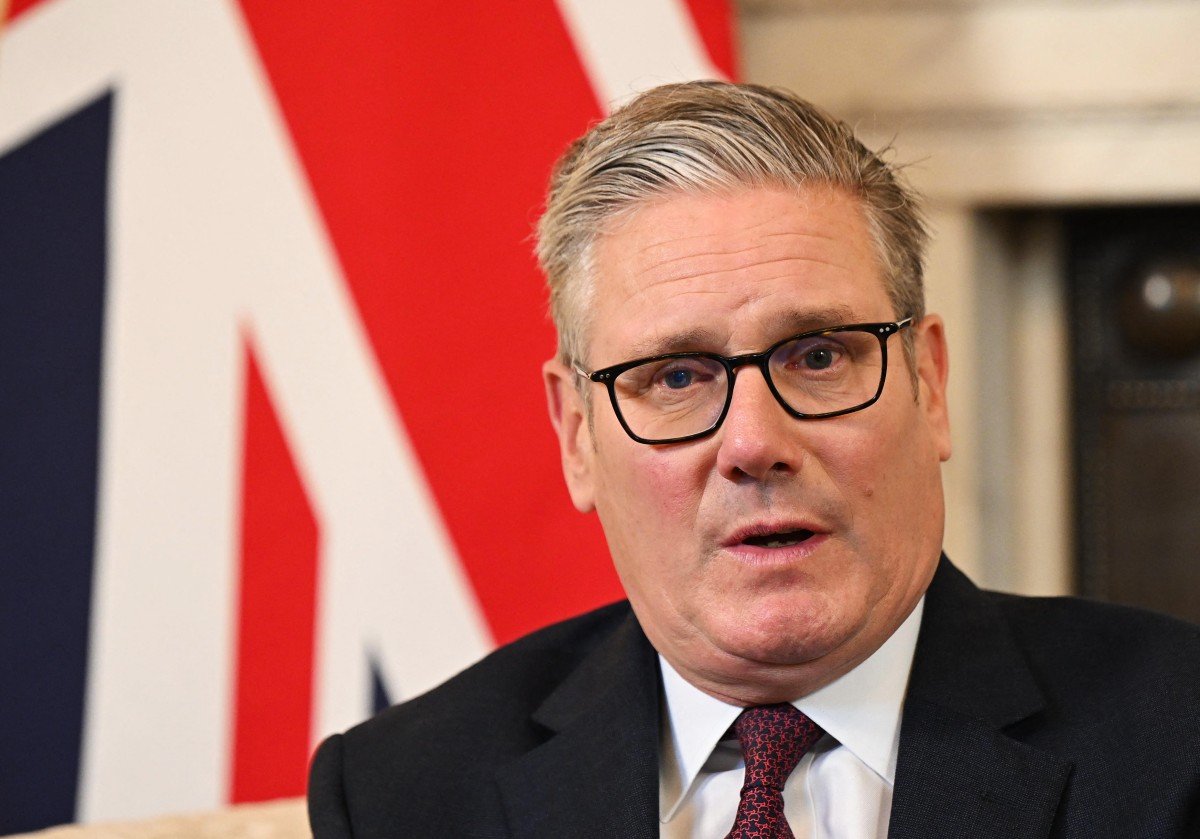
Sir Keir Starmer has said he will quit as Labour Party leader, paving the way for a contest to decide a new prime minister.

Speaking in Downing Street, Sir Keir said he accepted he was not best placed to lead Labour into the next general election and he had informed the King of his decision to step down.

Sir Keir added he has asked Labour’s governing body to set out a timetable to replace him, with nominations opening on 9 July and ending by the summer recess on 16 July.

He said if there was a contest then a new leader would be in place before Parliament returns in September, and he will “do everything” he can to ensure an “orderly” transition of power.

Sir Keir said he would remain as prime minister until the leadership contest is complete.

He added he would also give his successor “my full and unequivocal support, knowing that they will inherit a Britain that is far stronger and fairer than the one I inherited two years ago”.

Andy Burnham is regarded by many as the frontrunner to replace Sir Keir after he secured an emphatic win over his Reform UK rival in last week’s Makerfield by-election.

Burnham announced on Monday that he would put himself forward as a candidate in the leadership contest, hours before he is expected to formally take up his seat as an MP.

His chances were given an immediate boost by former Health Secretary Wes Streeting, who had been viewed as his main rival, offering his backing to the former Greater Manchester mayor.

Sir Keir was elected leader of the Labour Party in April 2020 and became prime minister on 5 July 2024 following Labour’s landslide general election victory.

He will leave Downing Street as the shortest-serving Labour prime minister in history.

His period in office will last longer than his Conservative predecessors Rishi Sunak and Liz Truss but behind all six previous Labour prime ministers.

Sir Keir’s decision to step down also means the UK will soon have its seventh prime minister since 2016. (BBC)


Posted on Leave a comment

French PM’s cabinet plan collapses, gridlock deepens

France’s outgoing Prime Minister, Sébastien Lecornu, was due to start a last-ditch effort on Tuesday to rally cross-party support for a cabinet lineup that would pull his country out of a political deadlock.

President Emmanuel Macron tasked Lecornu, 39, with forming a government in early September after parliament toppled his predecessor over an unpopular austerity budget.

Lecornu unveiled a new cabinet on Sunday evening, but it immediately drew criticism for containing many of the same faces from the previous government, and Lecornu resigned on Monday morning.

But in a twist, Lecornu had by Monday evening accepted Macron’s request that he spend two days trying to salvage his administration.

Macron tasked Lecornu with “conducting final negotiations by Wednesday evening to define a platform of action and stability for the country,” a presidential official said, asking not to be named.

The president was ready to “assume his responsibilities” in case of failure, the official said, appearing to allude to his calling new legislative elections.

Lecornu was from 9:00 am (0700 GMT) to meet party leaders at the prime minister’s office in an attempt to breach the impasse.

A political crisis has rocked France for over a year, after Macron called snap polls in mid-2024, which ended in a hung parliament.

The chaos comes ahead of the 2027 presidential elections, expected to be a historic crossroads in French politics, with the French far right under Marine Le Pen sensing its best chance yet of taking power.

Edouard Philippe, a former premier and centre-right contender in the next presidential elections, on Tuesday slammed what he called a “distressing political game”.

He urged Macron to call early presidential elections as soon as the 2026 budget was approved.

Within Macron’s own ranks, Gabriel Attal — who was prime minister until last year and now leads the president’s centrist party — on Monday evening said he no longer understood Macron’s decisions.

After a succession of new premiers, it was “time to try something else”, he said. 

Le Pen on Monday said it would be “wise” for Macron to resign but also urged snap legislative polls as “necessary”.

The party leader of Le Pen’s far-right National Rally (RN), Jordan Bardella, said it would be “ready to govern”.

Socialist party leader Olivier Faure late Monday called for “a change of course” with a “left-wing government”.

Bruno Retailleau, leader of the right-wing Republicans and outgoing interior minister, said he was not against remaining in a cabinet with Macron’s centrists as long as it did not mean fewer members from his party.

Lecornu’s two immediate predecessors, Francois Bayrou and Michel Barnier, were ousted by parliament in a standoff over an austerity budget. 

Any next premier will still face the challenge of finding enough support for the spending bill in a chamber where the Macron-friendly bloc is in a minority.

The crisis comes as France’s public debt has reached a record high.

France’s debt-to-GDP ratio is now the European Union’s third-highest after Greece and Italy, and is close to twice the 60 percent permitted under EU rules.

Macron has so far resisted calls for fresh parliamentary polls and ruled out resigning before his mandate ends in 2027.He could also look for a new prime minister, who would be the eighth of the president’s mandate, but would face a struggle to survive without radical change. (Punch)

Posted on Leave a comment

Four lawmakers suspended after fight erupts in Ghana’s Parliament

The Speaker of Ghana’s Parliament, Alban Bagbin, has suspended four lawmakers for two weeks following a violent altercation during a ministerial screening session on Thursday.

The suspended lawmakers, Rockson Dafeamakpor, Frank Annor-Dompreh, Alhassan Tampuuli, and Jerry Shai, were on Friday penalised for what Bagbin described as a “gross affront to the dignity of parliament and a blatant contempt of the House”.

It was gathered that the speaker also announced a two-week suspension of four lawmakers for “contemptus parlamenti in facie parlamenti”.

The clash occurred during the vetting of ministerial nominees from the ruling National Democratic Congress.

Lawmakers from the opposition New Patriotic Party accused the vetting committee of rushing the process, while NDC members alleged that the opposition was deliberately stalling proceedings with prolonged questioning.

Tensions reached a breaking point when NPP’s leader in parliament, Alexander Afenyo-Markin, questioned Samuel George, the nominee for communications minister, for over five hours.

The prolonged interrogation led to frustration among committee members, triggering the brawl.

Furniture was overturned, microphones were destroyed, and lawmakers exchanged blows.

A special seven-member committee has been tasked with investigating the incident and is expected to submit its report within 10 days.

Additionally, the cost of repairs for damaged parliamentary property will be deducted from the allowances of those found responsible.

This marks the third time in four years that Ghana’s lawmakers have resorted to physical confrontations during legislative proceedings.

Similar incidents occurred in 2021 during the election of a new speaker and later that year during debates on the electronic transaction levy bill. (Punch)