The United States has signed a five-year health cooperation agreement with Nigeria aimed at strengthening the country’s health system, with a specific focus on supporting Christian faith-based healthcare providers, Washington announced on Saturday.
Under the bilateral agreement, the United States will contribute nearly $2.1 billion to programmes targeting HIV, tuberculosis, malaria and polio, as well as initiatives to improve maternal and child health, a US State Department spokesperson said.
Nigeria, Africa’s most populous country, has committed to increasing its national health spending by almost $3 billion over the same five-year period, according to the spokesperson.
The agreement includes what the State Department described as “a strong emphasis on promoting Christian faith-based health care providers”.
The announcement comes amid heightened attention from Washington to the security situation facing Christian communities in Nigeria.
Last month, President Donald Trump said the United States was prepared to take military action in Nigeria in response to attacks on Christians, comments that drew international attention.
Trump has repeatedly said Christianity faces what he described as an “existential threat” in Nigeria and other countries, framing the issue as part of a broader concern about the global persecution of Christians.
His administration has placed Nigeria back on the US list of countries of “particular concern” over religious freedom and has imposed restrictions on the issuance of visas to Nigerian nationals.
According to the State Department, the health agreement signed on Saturday was negotiated in connection with reforms undertaken by the Nigerian government to prioritise the protection of Christian populations from violence.
Nigeria is roughly divided between a predominantly Christian south and a largely Muslim north. (ThisDay)
The Vatican has announced that Richard Moth will be the new Archbishop of Westminster, making him the head of the Catholic Church in England and Wales.
He succeeds Cardinal Vincent Nichols, who has held the role since 2009 and has stepped down aged 80.
For the past 10 years Richard Moth has been Bishop of Arundel and Brighton, and before that served as Bishop of the Forces.
As Archbishop of Westminster he will become president of the Bishops’ Conference of England and Wales and lead an estimated four million Catholics.
Cardinal Nichols reached retirement age when he was 75, but was asked to stay on by Pope Francis. In May he took part in the conclave that elected Pope Leo XIV.
The search for a replacement for Cardinal Nichols was led by the Apostolic Nuncio, or papal ambassador to the UK, who presented a list of potential candidates to Pope Leo.
Earlier this week, Archbishop Moth released a joint statement calling for empathy for “those who come to this country for their safety”, reminding Catholics that Jesus’s family fled to Egypt as refugees.
He has been one of the bishops leading the Church’s response to social justice issues in the UK, including praising the scrapping of the two-child benefit cap.
Speaking at a news conference on Friday, outgoing Cardinal Nichols said his successor would bring “experience and practical wisdom to the life of the diocese”.
Archbishop Moth said: “My first task here is to get to know everybody… to get to know priests and people, to get to know schools, to get to know the life of this wonderful diocese here in Westminster”.
He said his focus had “consistently been in the area of social justice”, adding he had a “particular concern for prisons”.
Archbishop Moth will face the challenge of declining numbers of people attending churches nationally, though there is growth in some churches with immigrant Catholics.
In response to the growing use of Christian symbols at, for example, rallies organised by the far-right activist Tommy Robinson, Bishop Moth has talked of his concern.
Last weekend, Robinson held an event in London saying he wanted to “reclaim” the country’s heritage and Christian identity.
“We are concerned about the tensions that are growing in society and the desire by some groups to sow seeds of division within our communities. This does not reflect the spirit or message of Christmas,” Bishop Moth said in a statement with the Archbishop of Birmingham.
The Catholic Church has been heavily involved in providing assistance to those who have suffered in the cost of living crisis.
As archbishop, Richard Moth will also lead the Church’s constant challenge of dealing with safeguarding issues.
In 2020, a wide-ranging inquiry into child sexual abuse found that between 1970 and 2015 the Catholic Church in England and Wales received more than 3,000 complaints of child sexual abuse against more than 900 individuals connected to the Church.
In fact, the leadership of Archbishop Moth’s predecessor, Cardinal Nichols, was criticised in the inquiry report, which said he cared more about the impact of abuse on the Church’s reputation than on the victims.
At the time, Cardinal Nichols apologised and said he accepted the report, adding: “That so many suffered is a terrible shame with which I must live and from which I must learn.”
Cardinal Nichols retires having led the Church in England and Wales for 16 years, during which it faced enormous change.
He is the son of two teachers and was born in Crosby. The lifelong Liverpool FC fan took up his first role as a priest in Wigan.
In 2010, he welcomed Pope Benedict XVI to England on an official visit. (BBC)
Tourists from dozens of countries including the UK could be asked to provide a five-year social media history as a condition of entry to the United States, under a new proposal unveiled by American officials.
The new condition would affect people from dozens of countries who are eligible to visit the US for 90 days without a visa, as long as they have filled out an Electronic System for Travel Authorization (ESTA) form.
Since returning to the White House in January, President Donald Trump has moved to toughen US borders more generally – citing national security as a reason.
Analysts say the new plan could pose an obstacle to potential visitors, or harm their digital rights.
Asked whether the proposal could lead to a steep drop-off in tourism to the US, Trump said he was not concerned.
“No. We’re doing so well,” the president said on Wednesday.
“We just want people to come over here, and safe. We want safety. We want security.
“We want to make sure we’re not letting the wrong people come enter our country.”
The US expects a major influx of foreign tourists next year, as it hosts the men’s football World Cup alongside Canada and Mexico, and for the 2028 Olympics in Los Angeles.
The proposal document was filed by the Department of Homeland Security (DHS) and its component agency Customs and Border Protection (CBP).
It was published in the Federal Register, the official journal of the US government.
The proposal says “the data element will require ESTA applicants to provide their social media from the last 5 years”, without giving further details of which specific information will be required.
The existing ESTA requires a comparatively limited amount of information from travellers, as well as a one-off payment of $40 (£30). It is accessible to citizens of about 40 countries – including the UK, Ireland, France, Australia and Japan – and allows them to visit the US multiple times during a two-year period.
As well as the collection of social media information, the new document proposes the gathering of an applicant’s telephone numbers and email addresses used over the last five and 10 years respectively, and more information about their family members.
The text cites an executive order from Trump in January, titled “Protecting the United States From Foreign Terrorists and Other National Security and Public Safety Threats”.
The new proposal regarding ESTA data collection for tourists invites views from the public for 60 days.
“Nothing has changed on this front for those coming to the United States,” a spokesperson for CBP said in a statement.
“This is not a final rule, it is simply the first step in starting a discussion to have new policy options to keep the American people safe.”
Sophia Cope, of digital rights organisation the Electronic Frontier Foundation, criticised the plan, telling the New York Times it could “exacerbate civil liberties harms”.
Meanwhile, immigration law practice Fragomen suggested there could be practical impacts as applicants could face longer waits for ESTA approvals. (BBC)
A Ukrainian drone attack in southwestern Russia killed two people on Saturday as parts of Ukraine went without power following Russian assaults on energy infrastructure hours before peace talks were to restart in Germany.
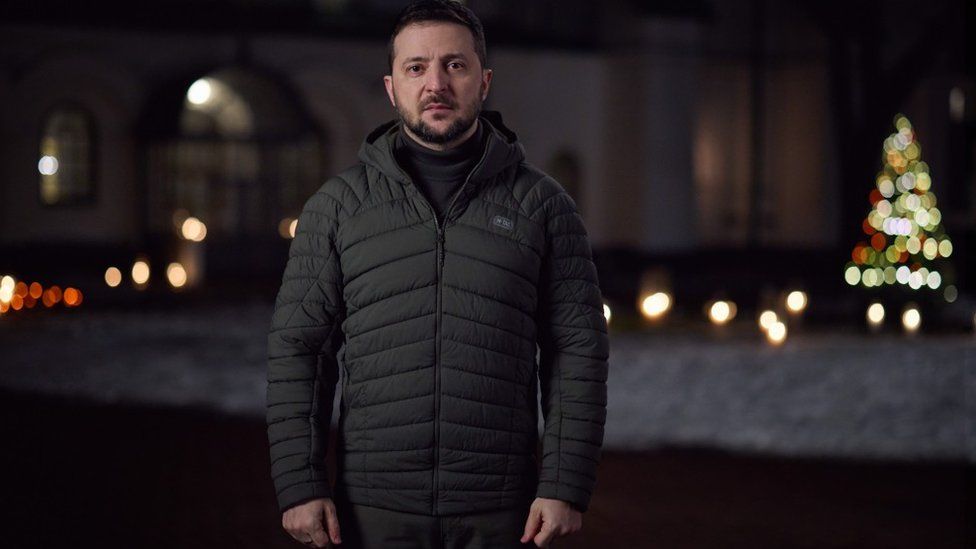
Ukrainian President Volodymyr Zelenskyy said that Ukrainian, U.S. and European officials will hold a series of meetings in Berlin in the coming days, adding that he will personally meet with U.S. President Donald Trump’s envoys.
“Most importantly, I will be meeting with envoys of President Trump, and there will also be meetings with our European partners, with many leaders, concerning the foundation of peace — a political agreement to end the war,” Zelenskyy said in an address to the nation late Saturday.
Trump’s special envoy Steve Witkoff and his son-in-law Jared Kushner are traveling to Berlin for the talks, according to a White House official, who spoke on condition of anonymity.
American officials have tried for months to navigate the demands of each side as Trump presses for a swift end to Russia’s war and grows increasingly exasperated by delays. The search for possible compromises has run into major obstacles, including the possession of Ukraine’s eastern Donbas region, mostly occupied by Russia but parts of which remain under Ukrainian control.
“The chance is considerable at this moment, and it matters for our every city, for our every Ukrainian community,” Zelenskyy said. “We are working to ensure that peace for Ukraine is dignified, and to secure a guarantee — a guarantee, above all, that Russia will not return to Ukraine for a third invasion.”
The drone attack in Russia’s Saratov region damaged a residential building and several windows were also blown out at a kindergarten and clinic, said Gov. Roman Busargin. Russia’s Defense Ministry said it had shot down 41 Ukrainian drones over Russian territory overnight.
In Ukraine, Russia launched overnight drone and missile strikes on five Ukrainian regions, targeting energy and port infrastructure. Ukrainian Interior Minister Ihor Klymenko said that over a million people were without electricity.
Zelenskyy said Russia had sent over 450 drones and 30 missiles into Ukraine overnight.
An attack on the Black Sea city of Odesa caused grain silos to catch fire at the port, Ukrainian deputy prime minister and reconstruction minister Oleksiy Kuleba said. Two people were wounded in attacks on the wider Odesa region, according to regional head Oleh Kiper.
Kyiv and its Western allies say Russia is trying to cripple the Ukrainian power grid and deny civilians access to heat, light and running water for a fourth consecutive winter, in what Ukrainian officials call “weaponizing” the cold. (JapanToday)
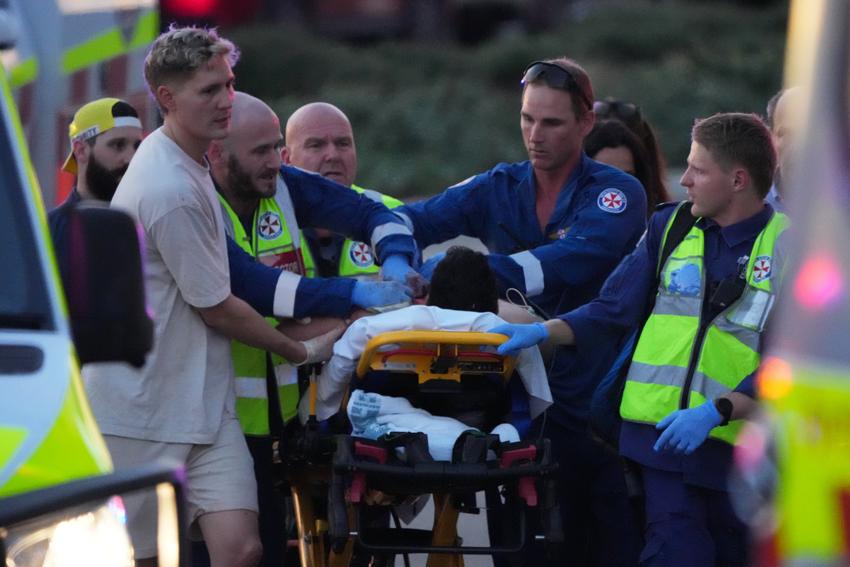
At least 12 people were killed and 29 wounded when gunmen fired on a Jewish holiday event at Sydney’s Bondi Beach on Sunday in what Australian police and officials described as a terrorist attack.
One suspected gunman was killed and another was in a critical condition, New South Wales Police Commissioner Mal Lanyon told a press conference. At least 29 people injured, including two police officers, were taken to hospital, he said.
Police were investigating whether a third gunman was involved in the shooting, and a bomb-disposal unit was working on several suspected improvised explosive devices in cars parked near the beach, Lanyon said.
Mike Burgess, a top Australian intelligence official, said one of the suspected attackers was known to authorities but had not been deemed an immediate threat.
Sunday’s shootings were the most serious of a string of antisemitic attacks on synagogues, buildings and cars in Australia since the beginning of Israel’s war in Gaza in October 2023.
Mass shootings are rare in Australia, one of the world’s safest countries. Sunday’s attack was the worst such incident in the country since 1996, when a gunman killed 35 people at a tourist site in the southern state of Tasmania.
Prime Minister Anthony Albanese convened a meeting of the country’s national security council and condemned the attack, saying the evil that was unleashed was “beyond comprehension”.
“This is a targeted attack on Jewish Australians on the first day of Hanukkah, which should be a day of joy, a celebration of faith,” he said. “At this dark moment for our nation, our police and security agencies are working to determine anyone associated with this outrage.”
Witnesses said the shooting at the famed beach on a hot summer’s evening lasted about 10 minutes, sending hundreds of people scattering along the sand and into nearby streets and parks. Police said around 1,000 people had attended the Hanukkah event alone.
“I was just getting ready to go home, and I was packing my bag, was ready to catch my bus, and then I started hearing the shots,” said Bondi Junction resident Marcos Carvalho, 38.
“We all panicked and started running as well. So we left everything behind. We just ran through the hill,” he said. “I must have heard, I don’t know, maybe, like, 40, 50 shots.”
Israeli President Isaac Herzog said Jewish people who had gone to light the first candle of the Hanukkah holiday on the beach had been attacked by “vile terrorists”.
Israeli Foreign Minister Gideon Saar said he was appalled by the shooting and that Australia’s government must “come to its senses” after countless warnings.
“These are the results of the antisemitic rampage in the streets of Australia over the past two years, with the antisemitic and inciting calls of ‘Globalise the Intifada’ that were realized today.”
One of the world’s most famous beaches, Bondi is typically crowded with locals and tourists.
“If we were targeted deliberately in this way, it’s something of a scale that none of us could have ever fathomed. It’s a horrific thing,” Alex Ryvchin, co-chief executive of the Executive Council of Australian Jewry, told Sky News, adding his media adviser had been wounded in the attack. (JapanToday)
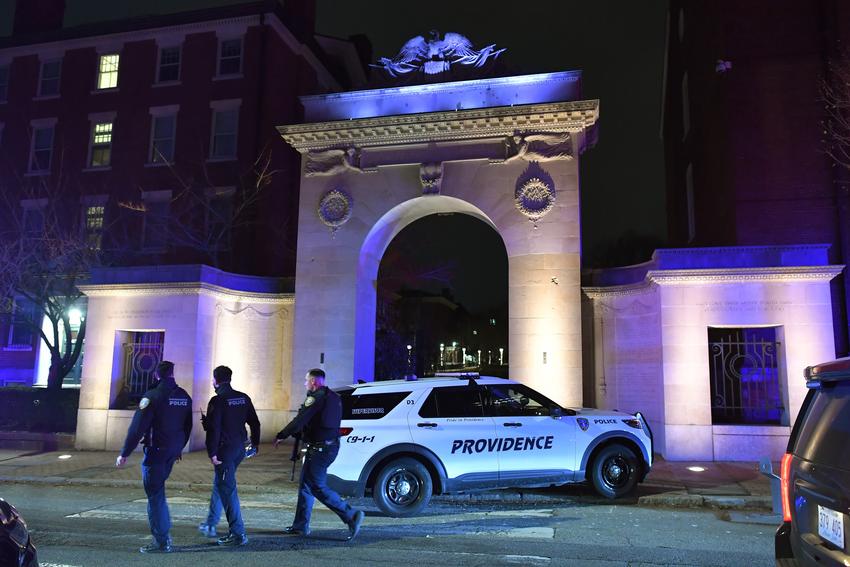
A shooter dressed in black killed at least two people and wounded nine others at Brown University on Saturday during final exams on the Ivy League campus, authorities said, and police were searching for the suspect.
University President Christina Paxson said she was told that 10 people who were shot were students. Another person was injured by fragments from the shooting, but it was not clear if that victim was a student, she said.
Officers scattered across the campus and into an affluent neighborhood filled with historic and stately brick homes, searching academic buildings, backyards and porches late into the night after the shooting erupted in the afternoon.
The suspect was a man in dark clothing who was last seen leaving the engineering building where the attack happened, said Timothy O’Hara, deputy chief of Providence police.
Security footage showed the suspect walking away from the building, but his face was not visible. Some witnesses reported that the man, who could be in his 30s, may have been wearing a camouflage mask, O’Hara said.
Investigators were not yet sure how the shooter got inside the first-floor classroom where he opened fire. Outer doors of the building were unlocked, but rooms being used for final exams required badge access, Providence’s mayor said.
Authorities believe the shooter used a handgun, according to a law enforcement official who was not authorized to discuss an ongoing investigation and spoke on condition of anonymity.
“The unthinkable has happened,” said Democratic Rhode Island Gov. Dan McKee, who vowed that all resources were being deployed to catch the suspect.
Mayor Brett Smiley said a shelter-in-place remained in effect and encouraged people living near the campus to stay inside or not return home until it is lifted. Streets that normally bustle with activity on weekends were eerily quiet.
“The Brown community’s heart is breaking, and Providence’s heart is breaking along with it,” Smiley said.
Emma Ferraro, a chemical engineering student, was in the building’s lobby working on a final project when she heard loud pops coming from the east side. Once she realized they were gunshots, she darted for the door and ran to a nearby building where she sheltered for several hours.
Nine people with gunshot wounds were taken to Rhode Island Hospital, where one was in critical condition, said Kelly Brennan, a spokesperson for the hospital. Six required intensive care but were not getting worse, and two were stable, she said.
University officials initially told students and staff that a suspect was in custody, but later said that was not the case. The mayor said a person preliminarily thought to be involved was detained but was later determined to have no involvement.
Nearly five hours after the shooting, officers in tactical gear led students out of some campus buildings and into a fitness center.
The shooting occurred in the Barus & Holley building, a seven-story complex that houses the School of Engineering and physics department. According to the university’s website, the building includes more than 100 laboratories, dozens of classrooms and offices.
Engineering design exams were underway there when the shooting occurred. (JapanToday)
President Donald Trump said Wednesday that the United States has seized an oil tanker off the coast of Venezuela as tensions mount with the government of President Nicolás Maduro.
Using U.S. forces to seize an oil tanker is incredibly unusual and marks the Trump administration’s latest push to increase pressure on Maduro, who has been charged with narcoterrorism in the United States. The U.S. has built up the largest military presence in the region in decades and launched a series of deadly strikes on alleged drug-smuggling boats in the Caribbean Sea and eastern Pacific Ocean. The campaign is facing growing scrutiny from Congress.
“We’ve just seized a tanker on the coast of Venezuela, a large tanker, very large, largest one ever seized, actually,” Trump told reporters at the White House, later adding that “it was seized for a very good reason.”
Trump said “other things are happening,” but did not offer additional details, saying he would speak more about it later. When asked what would happen to the oil aboard the tanker, Trump said, “Well, we keep it, I guess.”
The seizure was led by the U.S. Coast Guard and supported by the Navy, according to a U.S. official who was not authorized to comment publicly and spoke on the condition of anonymity. The official added that the seizure was conducted under U.S. law enforcement authority.
Venezuela has the world’s largest proven oil reserves and produces about 1 million barrels a day. Locked out of global oil markets by U.S. sanctions, the state-owned oil company sells most of its output at a steep discount to refiners in China.
The transactions usually involve a complex network of shadowy intermediaries, as sanctions have scared away more established traders. Many are shell companies, registered in jurisdictions known for secrecy. The buyers deploy so-called ghost tankers that hide their location and hand off their valuable cargoes in the middle of the ocean before they reach their final destination.
Maduro did not address the seizure during a speech before a ruling-party organized demonstration in Caracas, Venezuela’s capital. But he told supporters that the country is “prepared to break the teeth of the North American empire if necessary.”
Maduro, flanked by senior officials, said only the ruling party can “guarantee peace, stability, and the harmonious development of Venezuela, South America and the Caribbean.”
Maduro previously has insisted the real purpose of the U.S. military operations is to force him from office.
During past negotiations, among the concessions the U.S. has made to Maduro was approval for oil giant Chevron Corp. to resume pumping and exporting Venezuelan oil. The corporation’s activities in the South American country resulted in a financial lifeline for Maduro’s government.
The seizure comes a day after the U.S. military flew a pair of fighter jets over the Gulf of Venezuela in what appeared to be the closest that warplanes had come to the South American country’s airspace. Trump has said land attacks are coming soon but has not offered more details.
The Trump administration is facing increasing scrutiny from lawmakers over the boat strike campaign, which has killed at least 87 people in 22 known strikes since early September, including a follow-up strike that killed two survivors clinging to the wreckage of a boat after the first hit.
Some legal experts and Democrats say that action may have violated the laws governing the use of deadly military force.
Lawmakers are demanding to get unedited video from the strikes, but Defense Secretary Pete Hegseth told congressional leaders Tuesday he was still weighing whether to release it. Hegseth provided a classified briefing for congressional leaders alongside Secretary of State Marco Rubio and CIA Director John Ratcliffe.
It was not immediately clear Wednesday who owned the tanker or what national flag it was sailing under. The Coast Guard referred a request for comment to the White House. (JapanToday)
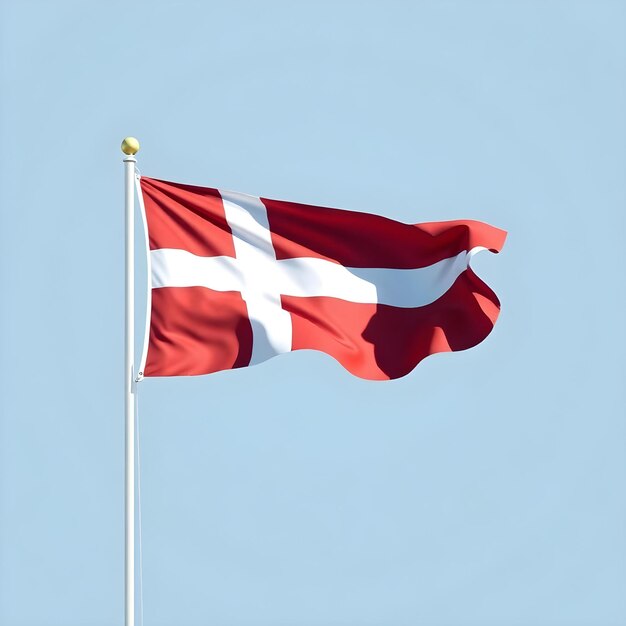
As Australia began enforcing a world-first social media ban for children under 16 years old this week, Denmark is planning to follow its lead and severely restrict social media access for young people.
The Danish government announced last month that it had secured an agreement by three governing coalition and two opposition parties in parliament to ban access to social media for anyone under the age of 15. Such a measure would be the most sweeping step yet by a European Union nation to limit use of social media among teens and children.
The Danish government’s plans could become law as soon as mid-2026. The proposed measure would give some parents the right to let their children access social media from age 13, local media reported, but the ministry has not yet fully shared the plans.
Many social media platforms already ban children younger than 13 from signing up, and a EU law requires Big Tech to put measures in place to protect young people from online risks and inappropriate content. But officials and experts say such restrictions don’t always work.
Danish authorities have said that despite the restrictions, around 98% of Danish children under age 13 have profiles on at least one social media platform, and almost half of those under 10 years old do.
The minister for digital affairs, Caroline Stage, who announced the proposed ban last month, said there is still a consultation process for the measure and several readings in parliament before it becomes law, perhaps by “mid to end of next year.”
“In far too many years, we have given the social media platforms free play in the playing rooms of our children. There’s been no limits,” Stage said in an interview with The Associated Press last month.
“When we go into the city at night, there are bouncers who are checking the age of young people to make sure that no one underage gets into a party that they’re not supposed to be in,” she added. “In the digital world, we don’t have any bouncers, and we definitely need that.”
Under the new Australian law, Facebook, Instagram, Kick, Reddit, Snapchat, Threads, TikTok, X and YouTube face fines of up to 50 million Australian dollars ($33 million) if they fail to take reasonable steps to remove accounts of Australian children younger than 16.
Some students say they are worried that similar strict laws in Denmark would mean they will lose touch with their virtual communities.
“I myself have some friends that I only know from online, and if I wasn’t fifteen yet, I wouldn’t be able to talk with those friends,” 15-year-old student Ronja Zander, who uses Instagram, Snapchat and TikTok, told the AP.
Copenhagen high school student Chloé Courage Fjelstrup-Matthisen, 14, said she is aware of the negative impact social media can have, from cyberbullying to seeing graphic content. She said she saw video of a man being shot several months ago.
“The video was on social media everywhere and I just went to school and then I saw it,” she said.
Line Pedersen, a mother from Nykøbing in Denmark, said she believed the plans were a good idea.
“I think that we didn’t really realize what we were doing when we gave our children the telephone and social media from when they were eight, 10 years old,” she said. “I don’t quite think that the young people know what’s normal, what’s not normal.”
Danish officials are yet to share how exactly the proposed ban would be enforced and which social media platforms would be affected.
However, a new “digital evidence” app, announced by the Digital Affairs Ministry last month and expected to launch next spring, will likely form the backbone of the Danish plans. The app will display an age certificate to ensure users comply with social media age limits, the ministry said.
“One thing is what they’re saying and another thing is what they’re doing or not doing,” Stage said, referring to social media platforms. “And that’s why we have to do something politically.”
Some experts say restrictions, such as the ban planned by Denmark, don’t always work and they may also infringe on the rights of children and teenagers.
“To me, the greatest challenge is actually the democratic rights of these children. I think it’s sad that it’s not taken more into consideration,” said Anne Mette Thorhauge, an associate professor at the University of Copenhagen.
“Social media, to many children, is what broadcast media was to my generation,” she added. “It was a way of connecting to society.”
Currently, the EU’s Digital Services Act, which took effect two years ago, requires social media platforms to ensure there are measures including parental controls and age verification tools before young users can access the apps.
EU officials have acknowledged that enforcing the regulations aiming at protecting children online has proven challenging because it requires cooperation between member states and many resources. (ABC)
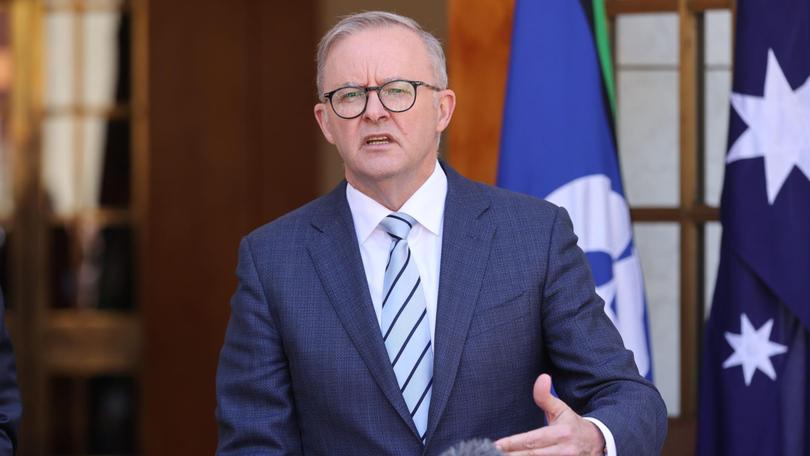
Australian Prime Minister Anthony Albanese on Thursday acknowledged some young people were still on social media a day after a world-first ban on under-16s went live, saying the rollout was always going to be bumpy but would ultimately save lives.
A day after the law took effect, Australian social media feeds were flooded with comments from people claiming to be under 16, including one on the prime minister’s TikTok account saying “I’m still here, wait until I can vote”.
Under the law, 10 of the biggest platforms including TikTok, Meta’s Instagram and Alphabet’s YouTube must bar underage users or face a fine of up to A$49.5 million ($33 million). The government has said previously that it would take some time for the platforms to set up processes to do this.
“Of course it isn’t smooth,” Albanese told Melbourne radio station FOX. “You can’t in one day switch off over a million accounts across the board. But it is happening.”
On Nova Radio in Sydney, Albanese added: “If it was easy, someone else would have done it.”
Governments around the world have said they would monitor the Australian rollout as they weigh whether to do something similar. U.S. Republican senator Josh Hawley endorsed the ban as it took effect, Nine newspapers reported.
The United Nations children’s agency UNICEF warned in a statement the ban might encourage children to visit less regulated parts of the internet and could not work alone.
“Laws introducing age restrictions are not an alternative to companies improving platform design and content moderation,” the statement said.
Albanese has pitched the ban as an intervention to protect young people from mental health risks associated with social media, including bullying, body image problems and addictive algorithms.
The measure would “save lives and it will change lives for this and future generations”, he told Nova.
Australian searches for virtual private networks (VPNs), which can mask an internet user’s location, surged to the highest in about 10 years in the week before the ban took effect, according to publicly available Google data.
Free VPN provider hide.me told Reuters it experienced a 65% spike in visits from Australia in the days before the ban kicked in, although that had not translated to a rising number of downloads.
All 10 platforms named by the ban opposed it before saying they would comply. As the ban took effect, some platforms not covered by the ban rose to the top of app download charts, prompting the Australian government to say the platform list was “dynamic”.
One app, Lemon8, which is owned by TikTok parent Bytedance, introduced an age minimum of 16. Photo-sharing app Yope told Reuters it had experienced “very fast growth” to about 100,000 Australian users. About half its users were over 16.
The company told Reuters it had told the Australian internet regulator overseeing the rollout that it considered itself a private messaging service, not social media. (JapanToday)
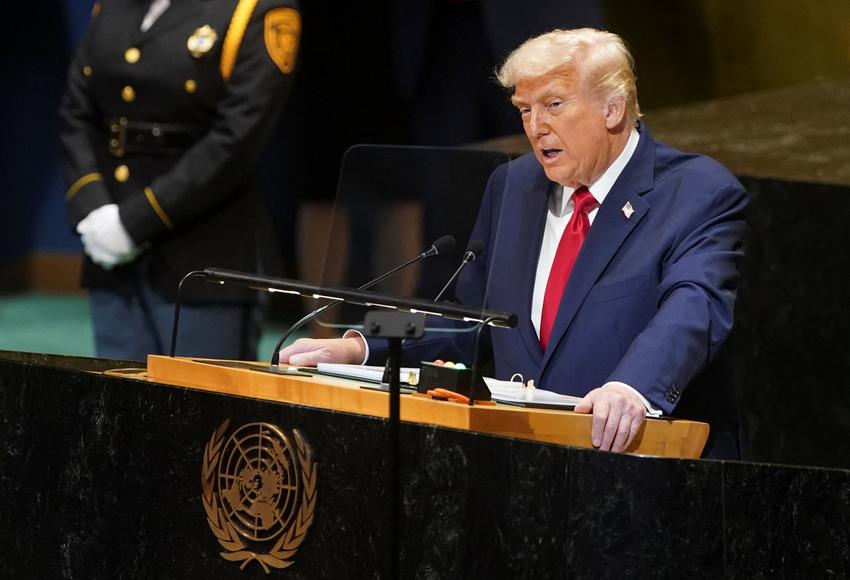
U.S. President Donald Trump deepened his rift with Europe in an interview published Tuesday, calling it “decaying” and blasting key allies as “weak” over immigration and Ukraine.
Speaking to Politico, Trump also called on Ukraine to hold elections despite Russia’s invasion and questioned whether the country is truly democratic under President Volodmyr Zelenskyy.
Trump doubled down on his recent extraordinary criticisms of Europe, following the release of the new U.S. national security strategy last week that recycled far-right tropes as it warned of civilizational decline on the continent.
“Most European nations, they’re, they’re decaying. They’re decaying,” Trump told Politico in the interview, conducted Monday.
The 79-year-old billionaire, whose political rise to power was built on inflammatory language about migration, echoed far-right talking points as he said that Europe’s policies on migrants were a “disaster.”
“They don’t want to send them back to where they came from,” Trump said.
The Trump administration’s strategy sparked alarm in Europe — where most countries are part of the U.S.-led NATO alliance — by calling for the cultivation of “resistance” in the EU.
Asked if European countries would not remain U.S. allies if they failed to embrace his migration policies, Trump replied that “it depends.”
“I think they’re weak, but they also want to be so politically correct,” Trump said.
He listed countries including Britain, France, Germany, Poland and Sweden that he said were being “destroyed” by migration, and launched a new attack on the “horrible, vicious, disgusting” Sadiq Khan, London’s first Muslim mayor.
Trump also brushed off the Kremlin hailing the new U.S. strategy as echoing its own views, saying Putin “would like to see a weak Europe, and to be honest with you, he’s getting that. That has nothing to do with me.”
The U.S. president then criticized Europe’s role in resolving the war between Russia and Ukraine, saying: “They talk but they don’t produce. And the war just keeps going on and on.”
Washington and its European allies are increasingly at odds over Trump’s plan to end the war, which many European capitals fear will force Kyiv to hand over territory to Moscow.
Trump also had sharp words for Ukraine and for Zelenskyy, in his latest see-saw in relations with the leader whom he called a “dictator without elections” in January and then berated in the Oval Office in February.
“I think it’s an important time to hold an election. They’re using war not to hold an election.” Trump said. “You know, they talk about a democracy, but it gets to a point where it’s not a democracy anymore.”
Elections in Ukraine were due in March 2024 but have been postponed under the imposition of martial law since the Russian invasion of Ukraine in February 2022.
Fresh elections were included in the draft U.S. plan to end the war. (JapanToday)


 English