Prime Minister Sanae Takaichi said Japan will further deepen relations with Britain under new Prime Minister Andy Burnham, who took office Monday after winning the ruling Labour Party’s leadership race last week.
In a post on X on Monday evening, Takaichi said in English that she looks forward to working closely with Burnham, who succeeded Keir Starmer, to further deepen bilateral ties “across a wide range of fields” as “enhanced global strategic partners.”
Takaichi also said she believes Burnham will lead Britain with “robust leadership,” leveraging his “strong track record” from his time as the mayor of Greater Manchester, during which he promoted public services reforms before returning to national politics by winning a June by-election.
On Tuesday, Chief Cabinet Secretary Minoru Kihara said at a press conference that Japan will tackle global challenges with Britain, such as the realization of a free and open Indo-Pacific, a vision advocated by Japan that is seen as an attempt to counter China’s growing clout in the region.
Kihara, the top government spokesman, also said that Japan will continue to collaborate with Britain and Italy on their joint project of developing a next-generation fighter jet by 2035.
As the sole contender, Burnham won the party leadership contest held on Friday following Starmer’s announcement in late June of his decision to resign after the party’s heavy defeat in May local elections. (JapanToday)
Andy Burnham took office Monday as Britain’s new prime minister, promising a 10-year plan to restore political stability and revive the economy while acknowledging that six other U.K. leaders have tried and failed to do so in the past decade.
Speaking outside 10 Downing Street minutes after being formally appointed by King Charles III, Burnham pledged to ease the cost of living for ordinary people, decentralize political power, revitalize industry and end street sleeping by homeless people. He said he would deliver a “circuit breaker” for a system that has taken wrong turns since the 1980s, when public services and utilities were privatized and local government eroded.
“We will take power out of here and carry it into every postcode in the land so that they can do more and in doing more, build a new economy where we put life’s essentials back under stronger public control to make them affordable to you again,” he said.
Burnham said he was “acutely conscious” of the political revolving door he was walking through.
“This is a moment for reflection and new resolution,” he said. “It requires my generation of politicians to raise our game and rise to the new challenge. Britain needs to show the world that we can regain our stability once again, and that is our challenge to make politics work, to make it work better.”
One of Burnham’s biggest tasks on his first day was to appoint a cabinet. The key post of chancellor of the exchequer went to John Healey, the former defense secretary who quit the previous government a few weeks ago over funding plans for his department. His appointment as Treasury chief was a surprise.
Healey replaces Rachel Reeves, the architect of much of the economic agenda of Burnham’s predecessor, Keir Starmer, as well as some of the missteps that ate away at his support. Others leaving the cabinet included David Lammy, who was deputy prime minister.
Energy Secretary Ed Miliband was given the role of foreign secretary. He replaces Yvette Cooper, who was appointed health secretary, a demotion but a hugely important post for the Labour Party’s reelection prospects. Shabana Mahmood remains as home secretary. The full cabinet meets Tuesday.
Burnham became the seventh U.K. prime minister since 2016 in a now well-rehearsed handover after replacing Starmer as leader of the center-left governing Labour Party on Friday. Starmer announced last month that he would resign.
Starmer left office just two years after winning a landslide election victory, forced out by his own party after a series of missteps and U-turns.
Britain’s parliamentary democracy allows governing parties to change leaders, and thus prime ministers, without the need for a general election. The next national poll does not have to be held until 2029, though Burnham can call one sooner if he wants.
Burnham was the only candidate in a contest to become the party’s new leader, securing nominations from 379 of the 403 Labour lawmakers in the House of Commons.
He will confront many of the same struggles as his predecessor: a sluggish economy, a cost-of-living crisis, overstretched public services, concerns about migration and foreign affairs that include wars in Ukraine and the Middle East.
He will also try to navigate relations with U.S. President Donald Trump, who first warmed to, then soured on, Starmer. Burnham’s office said the prime minister spoke to Trump on Monday afternoon and “underlined his commitment to defense and security.”
The former mayor of Greater Manchester previously pledged to make politics “less toxic,” improve living standards across the country and “bring back the hope we have all been missing.”
Burnham said he will set out a 10-year plan for Britain later this year. Before that, he will lay out first steps “to give people some breathing space now, some help with the cost of living.”
“And I will set out some of those measures starting tomorrow, including how we pay for them,” he said.
After his speech, he told reporters that he has “always taken a very prudent approach” to the economy in previous jobs, and will not take any economic risks now.
Tim Bale, professor of politics at Queen Mary University of London, said Labour had backed Burnham “to inject a sense of positivity, of hope, of purpose, a sense of direction.”
Burnham says “he is going to mark a big break, not just with Keir Starmer, but also with what he regards as four decades of the country going in the wrong direction,” Bale said. “But quite what that means in terms of concrete policies, in terms how much he’s going to spend and on what, and how much is going to tax … we’re not sure yet.”
In the rapid-fire world of British political transitions, Burnham entered Downing Street only minutes after Starmer left.
“I go with good grace. I go with a smile, and I go proud of everything that we have achieved,” Starmer said before heading to Buckingham Palace to offer his resignation to the king. It was an offer the king “was graciously pleased to accept,” the palace said in a statement.
Starmer became Labour leader in 2020 after one of the party’s worst election defeats, and he led Labour to a landslide victory four years later. But he was soon defeated by the challenges of governing.
“It has been the privilege of my life to serve you and this great country as prime minister,” Starmer said before leaving Downing Street, hand-in-hand with his wife, Victoria. “I am confident that Britain is now stronger and fairer than it was two years ago.” (JapanToday)
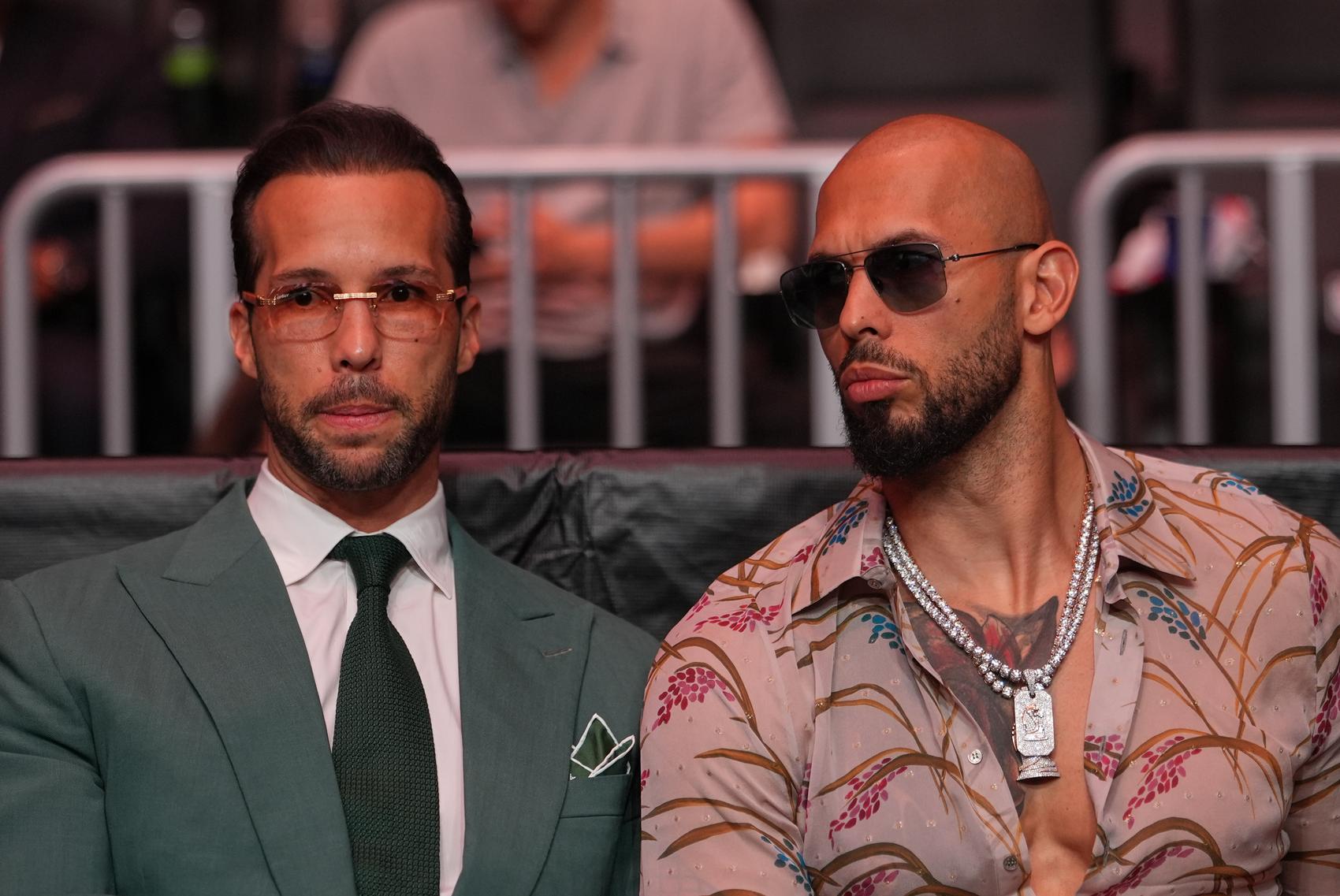
Influencer brothers Andrew and Tristan Tate, whose social media empire promoting wealth, male dominance and misogyny has made them among the world’s most polarizing internet personalities, were arrested Saturday in Miami as British authorities sought their extradition on rape and sex trafficking charges.
The brothers were taken into custody by the U.S. Marshals Service on a sealed warrant, agency spokesperson Brady McCarron told The Associated Press, placing the United States at the center of an international legal saga that has stretched from Romania to Britain.
British prosecutors announced Saturday that they were seeking the brothers’ extradition on charges alleging they raped and trafficked women between 2010 and 2017.
The dual U.S. and British citizens moved to Romania in 2016. They were arrested there in 2022, accused of participating in schemes to lure women for sexual exploitation. They denied those allegations and the Romanian case hasn’t gone forward because of legal and procedural problems.
Last year, they were allowed to leave Romania and flew to Florida on a private jet.
The brothers are expected to appear in Miami’s federal court early next week, according to a person familiar with the matter who spoke to on the condition of anonymity to discuss sensitive law enforcement operations.
The pending charges in the United Kingdom accused the brothers of abusing women in an area north of London, where they grew up. Their lawyers had said they denied the allegations.
Joseph McBride, an attorney representing the Tate brothers, said in a phone interview Saturday evening that he has not been able to speak with his clients but called the new charges out of the U.K. “filth and slander” intended to derail defamation lawsuits filed by the brothers in the U.S.
“They’re pulling out all the stops to make sure these guys never get their day in court,” McBride said.
“We are confident that once a competent judge sees the facts, and once the Department of Justice confronts this egregious abuse of its own authority, Andrew and Tristan Tate will walk free. America does not do Britain’s political dirty work.”
Andrew Tate, 39, first reached a mainstream audience as a contestant on the U.K. reality television show “Big Brother” in 2016. He was removed from the show when a video surfaced that appeared to show Tate assaulting a woman. He and his brother Tristan Tate, 38, are vocal supporters of U.S. President Donald Trump.
Andrew Tate has amassed over 10 million followers on X but has been banned from platforms like YouTube, TikTok and Instagram for violating hate speech guidelines. His most widely condemned rhetoric includes comments that women who are sexually assaulted should bear some responsibility for their attacks, graphic descriptions of how he might attack women and criticisms of people who seek treatment for mental illness.
The Tate brothers have consistently denied allegations of abuse and human trafficking, claiming that violent and misogynistic statements have been taken out of context or were intended as jokes.
In a statement Saturday, the U.K.’s Crown Prosecution Services said that in addition to the charges publicly announced against the brothers in 2025, involving alleged crimes against three women, it was bringing a total of 38 new charges related to “four further victims.”
Both brothers are accused of rape and human trafficking. Andrew Tate faces an additional charge of profiting from prostitution, and 19 charges “for offences relating to indecent images of a child and extreme pornography,” according to U.K. authorities.
“There is no place for male violence against women and girls, and we will continue to work tirelessly to support victims and investigate all reports made to us,” said Karena Thomas, an assistant chief constable of the Bedfordshire Police, which investigated the case. (JapanToday)
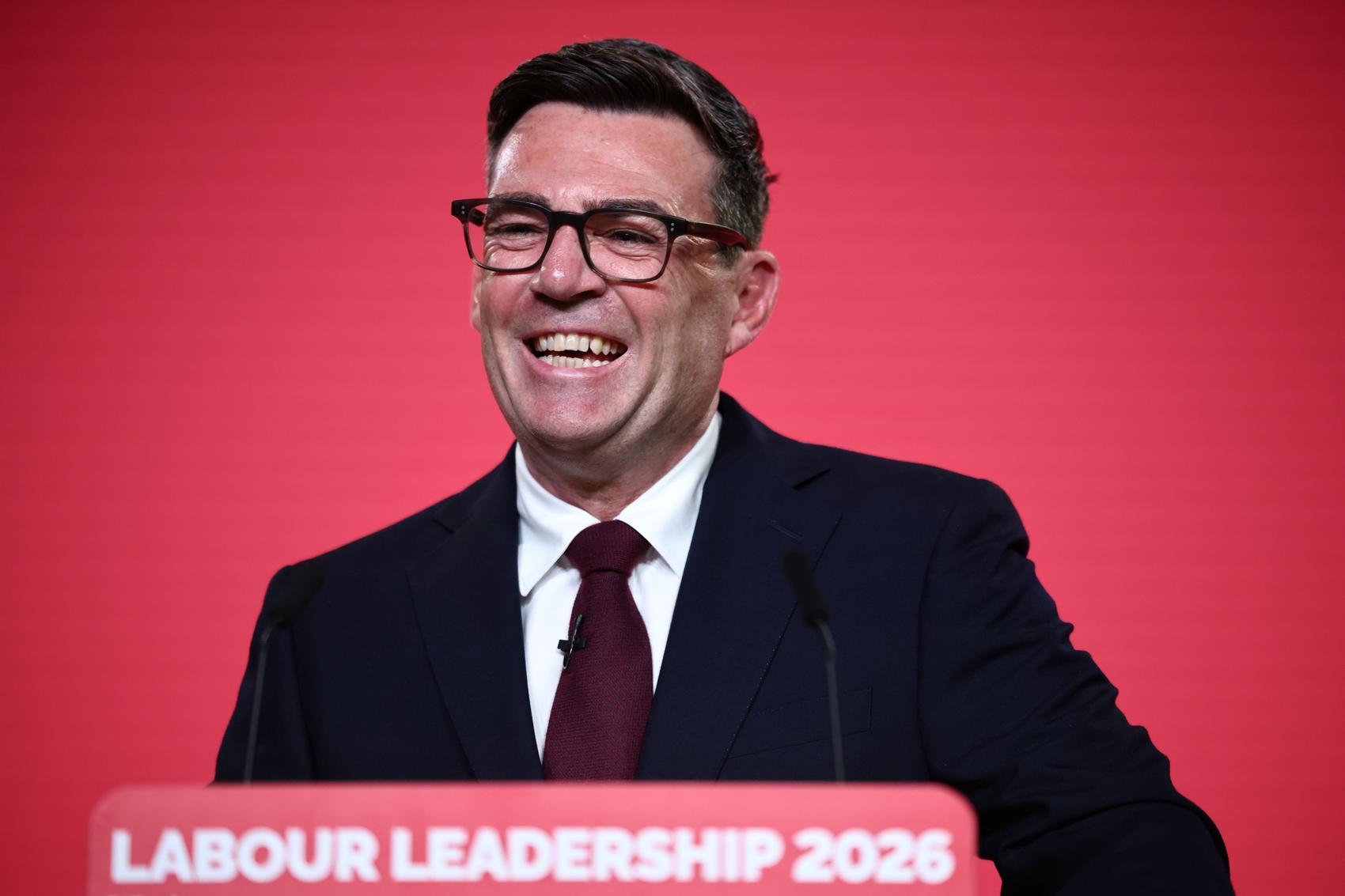
Andy Burnham was officially declared leader of Britain’s governing Labour Party on Friday, promising to bring hope to the British people and purpose to the floundering government as he cleared his final hurdle to take office as prime minister next week.
The former mayor of Greater Manchester was the only contender in the center-left party’s leadership contest to replace departing Prime Minister Keir Starmer, who was forced out by a rebellion within his party. Friday’s announcement was a foregone conclusion after Burnham secured nominations from 379 of the 403 Labour lawmakers in the House of Commons.
Burnham pledged to serve “people and places who have been waiting too long for politics to let them hope again.”
“We’re going to give them hope back,” he told an audience of lawmakers, party activists and trade union leaders in his first speech as leader. “I am ready.”
“I have a plan,” he added, in a bid to reassure a party that has seen its popularity nosedive since winning a landslide election victory two years ago. He pledged to end Labour’s factional disputes, saying “we won’t beat Britain’s new right if we are consumed by infighting and pulling in different directions.”
Burnham has been prime minister-in-waiting for weeks, since winning a special election for a seat in Parliament a month ago, but he has revealed little detail about his policy priorities. He will arrive in Number 10 Downing Street largely unknown to voters outside Manchester.
He sketched out some priorities in Friday’s speech, promising to deliver “hope in every heart” and “good growth in every post code,” in part by transferring power from central government in London to local leaders in cities and regions.
“We will take power back from Westminster and Whitehall and give it to the place you live,” he told the audience. “More power over life’s essentials so you can make them work better.”
Starmer announced last month that he would resign after two years in office marred by missteps and judgment errors that eroded his standing with his party and the public.
Labour regularly trails behind anti-immigration party Reform UK in opinion polls, and the governing party had catastrophic results in local elections in May, triggering pressure on Starmer to step down that he couldn’t resist.
Burnham brings a more relaxed style of leadership than the rather stern Starmer, and is regarded as one of the Labour Party’s best communicators. But he faces many of the same problems as his predecessor, including a sluggish economy, a cost-of-living squeeze fueled by wars in Ukraine and the Middle East and overstretched public services.
And his promises of a new, less divisive politics are not too different to what Starmer pledged when he took office in 2024.
“I will work to build a new politics. The country is crying out for it,” Burnham said. “How can politicians point fingers when living standards are falling and politics as a whole isn’t working for them? It infuriates them and makes them switch off.”
He said he would have the “courage to fix the big things that politics has neglected,” such as tackling the patchy access to social care for those who need it because of age, illness or disability. It’s a pressing issue in a country with an aging population, and one that has foxed previous Labour and Conservative governments.
He highlighted plans to focus on economic renewal, more public control of key sectors and creating new modern industrial jobs, arguing that Britain took “a series of wrong turns in the 1980s” when “political power was centralized and economic power privatized.”
That’s the decade when Conservative Prime Minister Margaret Thatcher oversaw policies of privatization, deindustrialization and political centralization that transformed the U.K. economy.
“Slowly, at times imperceptibly, over four decades, political and economic power drained away out of our communities in every region and nation of the U.K.,” Burnham said, calling Britain’s change of prime ministers — for the sixth time in a decade — “the most significant change moment in our politics for 40 years.”
Starmer will remain prime minister until Monday, when he formally tenders his resignation to King Charles III. The king will then ask Burnham to form a government.
Britain’s parliamentary democracy allows governing parties to change leaders, and thus prime ministers, without the need for a general election. The next national election doesn’t have to be held until 2029.
New prime ministers have come with increasing frequency in recent years. Burnham will be the U.K.’s seventh leader since 2016. (JapanToday)
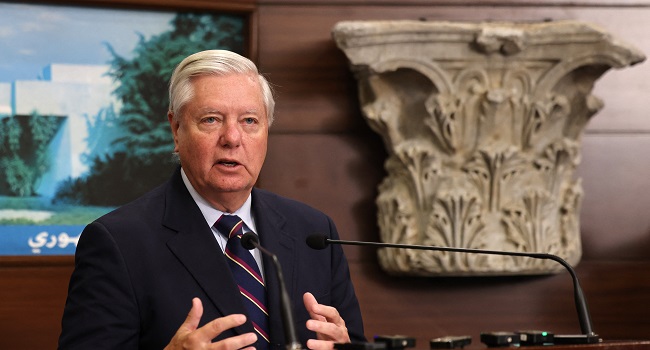
Prominent US Senator Lindsey Graham, a key ally of President Donald Trump, died on Saturday aged 71 following a “brief and sudden illness,” his office said.
“On the evening of Saturday, July 11, U.S. Senator Lindsey Graham passed away from a brief and sudden illness,” the Republican senator from South Carolina’s office said in a statement on his official X account.
“Senator Graham’s family appreciates prayers at this time and asks for privacy during this incredibly difficult period.”
Graham was first elected to the US House of Representatives in 1994, before being elected to the Senate in 2002.
He was later re-elected to the Senate in 2008, 2014 and 2020 and most recently served as chairman of the Senate Budget Committee.
South Carolina Governor Henry McMaster described Graham as “irreplaceable” in a post on X.
“The fiercest of fighters for South Carolina and America — and a loyal and steadfast friend,” McMaster said.
Graham was also a strong supporter of Israel and a hawkish backer of the Iran war.
Israeli President Isaac Herzog said the news of Graham’s death left him “shocked and heartbroken.”
“Senator Graham was a beacon of moral clarity and a true leader of the U.S.-Israel partnership,” he said in a post on X.
“We will never forget how he stood by the people of Israel in our most difficult moments, and we will remain eternally grateful for his sense of justice, truth, and loyalty,” Herzog said.
“The people of Israel mourn his loss, and I will miss my great friend very dearly.” (Channels)
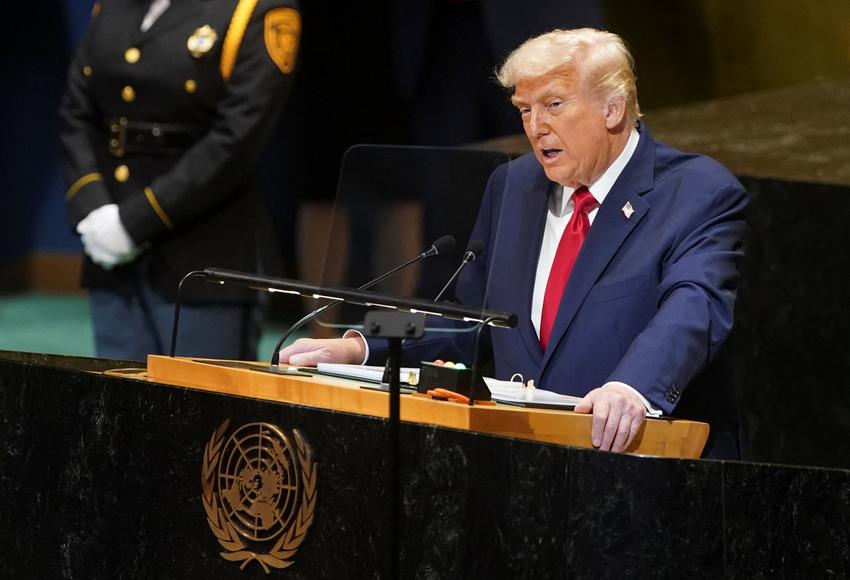
The U.S. Supreme Court handed President Donald Trump a painful defeat on Tuesday by rejecting his move to restrict birthright citizenship on the final day of its momentous term, while also letting states ban transgender student athletes from women’s sports teams and striking down more campaign finance limits.
The top U.S. judicial body’s annual term — nine months long — was packed with major rulings, including some big victories for Trump in areas such as presidential powers and immigration as well as losses for him on tariffs, firing a Federal Reserve official and, on Tuesday, birthright citizenship.
The Supreme Court has a 6-3 conservative majority that includes three Trump appointees.
Limiting birthright citizenship was one of the top priorities in the Republican president’s crackdown on immigration — so much so that he signed an executive order on the matter on his first day back in office last year.
Conservative Chief Justice John Roberts, who authored Tuesday’s 6-3 decision, said Trump’s directive violated language in the U.S. Constitution’s 14th Amendment that guarantees citizenship to virtually anyone born in the United States, with a few narrow exceptions.
The 14th Amendment, ratified in 1868 in the aftermath of the Civil War that ended slavery in the United States, confers citizenship to those born in the United States who are “subject to the jurisdiction thereof.” There were narrow exceptions such as the children of foreign diplomats or members of an enemy occupying force.
“Citizenship, then and now, was the right to have rights — to freely participate in our political community,” Roberts wrote, adding that the authors of the 14th Amendment extended that promise to every free-born person in the land.
“We keep that promise today,” Roberts wrote.
Trump’s directive instructed federal agencies not to recognize the citizenship of children born in the United States if neither parent is an American citizen or legal permanent resident, also called a “green card” holder. Critics have accused Trump of racial and religious discrimination in his approach to immigration.
Ahead of the ruling, some experts had estimated that Trump’s directive could affect the legal status of as many as 250,000 babies born each year and could require the families of millions more to prove the citizenship status of their newborns.
“The court’s decision reaffirms a fundamental American promise — if you are born here, you are a citizen,” said ACLU National Legal Director Cecillia Wang, who argued the case on behalf of the challengers at the Supreme Court.
“A president cannot change the Constitution by executive fiat,” Wang added.
Following Tuesday’s ruling, Trump wrote on his Truth Social platform that the ruling was “too bad for our Country” and urged Congress “to work on ending expensive and unfair to our Country, Birthright Citizenship.”
The controversy over transgender athletes has become enmeshed in the American culture wars.
Laws in West Virginia and Idaho designate sports teams at public schools including universities according to “biological sex” and bar “students of the male sex” from female teams. The states said the laws preserve fair and safe competition for women and girls. Twenty-five other states have similar laws.
Critics saw the measures as part of a broader assault on the rights of transgender Americans by Trump and various states.
The Supreme Court on Tuesday overturned decisions by lower courts siding with transgender students who challenged the bans in the two states as violating the Constitution and a federal anti-discrimination law.
The court decided 9-0 that the state laws do not violate the Title IX civil rights statute that bars discrimination in education “on the basis of sex.” The justices divided along ideological lines — with the six conservative justices in the majority — in deciding that the measures also do not violate the 14th Amendment guarantee of equal protection under the law.
“Consistent with Title IX and the Equal Protection Clause, we hold that the states may maintain women’s and girls’ sports for biological females. They may determine eligibility for women’s and girls’ sports based on biological sex. The Constitution and Title IX do not require an overhaul of women’s and girls’ sports throughout America,” conservative Justice Brett Kavanaugh wrote in the ruling.
Writing on Truth Social, Trump said after the ruling: “BIG WIN: The United States Supreme Court just RULED AGAINST MEN PLAYING IN WOMEN’S SPORTS. Wow! That takes that ridiculous situation off the table!!!”
It was the court’s second major ruling against transgender plaintiffs in a span of a year. In a case from Tennessee in June 2025, it let states ban gender-affirming medical treatments for transgender minors.
Sir Keir Starmer has said he will quit as Labour Party leader, paving the way for a contest to decide a new prime minister.
Speaking in Downing Street, Sir Keir said he accepted he was not best placed to lead Labour into the next general election and he had informed the King of his decision to step down.
Sir Keir added he has asked Labour’s governing body to set out a timetable to replace him, with nominations opening on 9 July and ending by the summer recess on 16 July.
He said if there was a contest then a new leader would be in place before Parliament returns in September, and he will “do everything” he can to ensure an “orderly” transition of power.
Sir Keir said he would remain as prime minister until the leadership contest is complete.
He added he would also give his successor “my full and unequivocal support, knowing that they will inherit a Britain that is far stronger and fairer than the one I inherited two years ago”.
Andy Burnham is regarded by many as the frontrunner to replace Sir Keir after he secured an emphatic win over his Reform UK rival in last week’s Makerfield by-election.
Burnham announced on Monday that he would put himself forward as a candidate in the leadership contest, hours before he is expected to formally take up his seat as an MP.
His chances were given an immediate boost by former Health Secretary Wes Streeting, who had been viewed as his main rival, offering his backing to the former Greater Manchester mayor.
Sir Keir was elected leader of the Labour Party in April 2020 and became prime minister on 5 July 2024 following Labour’s landslide general election victory.
He will leave Downing Street as the shortest-serving Labour prime minister in history.
His period in office will last longer than his Conservative predecessors Rishi Sunak and Liz Truss but behind all six previous Labour prime ministers.
Sir Keir’s decision to step down also means the UK will soon have its seventh prime minister since 2016. (BBC)
Ukraine President Volodymyr Zelensky says he has returned Poland’s highest honour after his Polish counterpart Karol Nawrocki said he was stripping him of the award.
The Polish Order of the White Eagle was bestowed on Zelensky in 2023 by then-President Andrzej Duda.
But Kyiv caused outrage last month after renaming a Ukrainian army unit after a group of controversial World War Two fighters called the Ukrainian Insurgent Army (UPA).
Three senior Ukrainian officials have also said they are returning awards bestowed by Poland, to show solidarity with their president.
Many in Ukraine regard the UPA, which existed in the 1940s and 1950s, as heroes who fought for Ukrainian independence against the Soviet Red Army, Nazi Germany and Polish authorities. The group’s red and black flag is often used by Ukrainian troops on the front line today.
Poland, however, accuses the UPA of carrying out a genocide of about 100,000 ethnic Poles in Volhynia (now Volyn in Ukraine) in 1943-45.
In a statement on social media, Zelensky said Ukraine would “remain open to all meaningful formats of engagement with Poland in order to try to avoid conflicting interpretations of the difficult and painful chapters of our shared past”.
He added Ukraine was “grateful to the Polish People for their support and co-operation”.
Poland has been one of Ukraine’s main allies during the war against Russia, taking in hundreds of thousands of refugees and serving as a logistics hub for aid to Ukraine.
Polish President Karol Nawrocki branded Ukraine’s decision late last month to name the unit after the UPA “outrageous”, “incomprehensible” and “deeply disappointing”.
“For the overwhelming majority of Polish society, the UPA remains, above all, a formation responsible for the brutal crimes committed against citizens of the Republic of Poland during World War Two,” Nawrocki said in a video released on the president’s official website.
“It hurts not only our historical memory. It also undermines the trust built up over the years and in recent months,” he added.
However, Nawrocki stressed the diplomatic row would not impact Poland’s support for Ukraine against Russia.
Polish Prime Minister Donald Tusk said on social media that any feud between the two “delights” Russia’s Vladimir Putin and called on Zelensky and Nawrocki to “calm emotions, not to stoke tensions”.
Ukraine has ambitions to become an EU member state and attended the first phase of membership negotiations this week in Luxembourg. (BBC)
Italian Prime Minister Giorgia Meloni accused her one-time close ally Donald Trump of fabricating a story about her on Friday, after the U.S. President told an Italian TV channel that she had “begged” him to take a photo with her at a G7 summit.
Meloni said she was “astonished” by his comments, which were “completely made up”. She also chided him for acting with far greater deference to the enemies of the West than he does towards old, established allies.
Underscoring how much Trump’s comments have angered Meloni’s government, Italian Foreign Minister Antonio Tajani announced he was cancelling a planned visit to the U.S. next week.
The latest exchange marks a sharp deterioration in ties, coming just days after signs emerged at the G7 summit that the two right-wing leaders had steadied a previously strained relationship following tensions this year over the war on Iran.
Video from the event in France showed Meloni and Trump deep in conversation, sitting side-by-side on a small sofa, but the U.S. leader suggested he had merely indulged her by chatting with her.”
She’s probably happy I talked to her. I didn’t have to talk to her,” Trump was quoted as saying by La7 TV channel in a brief interview, after he himself asked the journalist about Italy’s prime minister.”
She begged me to take a picture with her. She wanted a picture with me so badly. I wouldn’t have taken it, but I felt sorry for her,” Trump said, according to La7’s translation.
The channel did not release the original audio, just a dubbed version.
Meloni responded: “Donald Trump’s statements are completely made up. I am frankly astonished. I don’t know why the president of the United States behaves like this towards his allies: it is not the first time, moreover.”
“I can only say it is disappointing that he does not show the same determination with the enemies of the West and of the United States, whose leaders he instead treats with far greater indulgence,” she said, adding: “There is one thing he should remember: neither I nor Italy ever beg.”
Announcing the cancellation of his planned U.S. trip, Foreign Minister Tajani said on X: “The serious and offensive words of President Trump towards Prime Minister Giorgia Meloni offend the whole of Italy.” (JapanToday)
Israel’s prime minister has ordered attacks on the southern suburbs of Lebanon’s capital, Beirut, as its conflict with the Iran-backed armed group Hezbollah escalates.
Benjamin Netanyahu said “terror targets” in the Hezbollah stronghold of Dahieh would be struck in response to its rocket and drone attacks on Israeli civilians and other violations of a ceasefire announced in April that has failed to end the fighting.
Soon afterwards, there were traffic jams on roads out of the suburbs as thousands tried to flee to safety.
The conflict also poses a major obstacle to US efforts to forge a deal to end its war with Iran, with Tehran insisting that any ceasefire must include Lebanon.
The US has tried to separate events in Lebanon from the negotiations, but a US official said on Sunday that Secretary of State Marco Rubio had proposed a plan for “gradual de-escalation” there to Netanyahu and Lebanese President Joseph Aoun.
A senior Lebanese government official said it was relying on US mediation efforts to pressure Israel to end its own violations and prevent further civilian casualties.
In a joint statement released on Monday morning, the Israeli prime minister and Defence Minister Israel Katz said they had ordered strikes on Dahieh “following the Hezbollah terrorist organisation’s repeated and ongoing violations of the ceasefire in Lebanon and its attacks against our civilians and cities”.
“The Dahieh in Beirut is no different from the communities in northern Israel – if there is no calm in the north, there will be no calm in Beirut,” Katz warned.
Later, the Israeli military ordered Dahieh residents to evacuate for their own safety, without giving further details.
Families, crammed into cars stuffed with suitcases, blankets and whatever belongings they could carry, streamed out of the suburbs in response to Netanyahu and Katz’s statement, joining thousands fleeing towards the mountains as fears of further violence mounted.
Two parents and their two children were squeezed on to a single scooter. Other vehicles carried several generations packed together, with babies sitting on their parents’ laps, clutching small toys as they crawled through the gridlock.
Few drivers wanted to stop and talk, anxious not to hold up the traffic and focused on reaching safety.
But almost everyone who slowed down enough to speak said they were prepared to stand by Hezbollah, while also doing whatever they could to protect their loved ones from the threat of further Israeli attacks.
The Israeli military has struck Beirut twice since the ceasefire between Israel and Lebanon came into force on 16 April, most recently on Thursday. (BBC)

 English