Posted on Leave a comment

U.S. to limit refugees to record low 7,500, mostly white South Africans

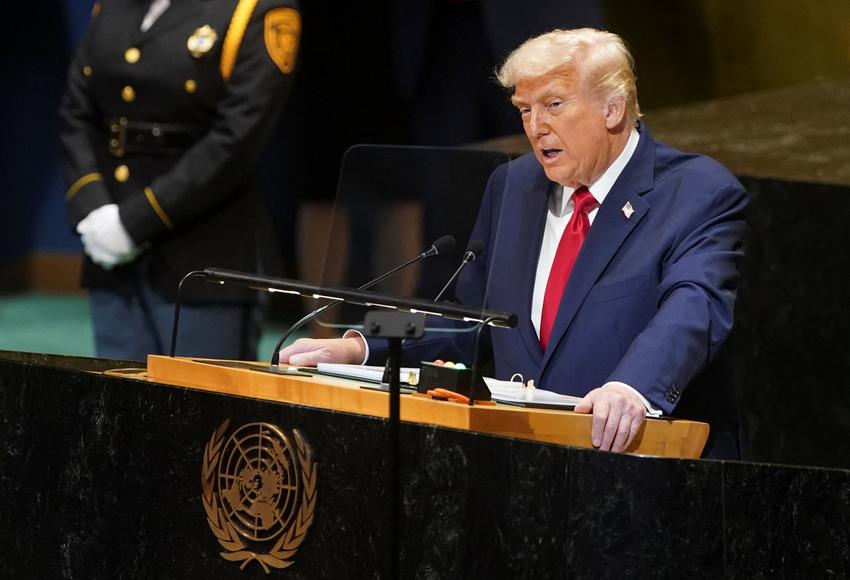
The Trump administration announced plans on Thursday to drastically cut back the number of refugees to be accepted annually by the United States to a record low and give priority to white South Africans.

Under the new policy, the United States would welcome 7,500 refugees in fiscal 2026, down from more than 100,000 a year under Democratic president Joe Biden.

The vast majority of those being accepted during the fiscal year which began on October 1 would be white South Africans and “other victims of illegal or unjust discrimination in their respective homelands,” according to a White House memo.

“The admissions numbers shall primarily be allocated among Afrikaners from South Africa,” it said.

Republican President Donald Trump essentially halted refugee arrivals after taking office in January, but has been making an exception for white South Africans despite Pretoria’s insistence that they do not face persecution in their homeland.

A first group of around 50 Afrikaners — descendants of the first European settlers of South Africa — arrived for resettlement in the United States in May.

Trump campaigned for the White House on a pledge to deport millions of undocumented migrants and signed an executive order in January suspending the U.S. Refugee Admissions Program.

Aaron Reichlin-Melnick, a senior fellow at the American Immigration Council, said that since 1980 more than two million people fleeing persecution have been admitted into the United States under the program.

“Now it will be used as a pathway for white immigration,” Reichlin-Melnick said on X. “What a downfall for a crown jewel of America’s international humanitarian programs.”

Krish O’Mara Vignarajah, president of another immigration-focused group, Global Refuge, also criticized the move by the Trump administration.

“For more than four decades, the U.S. refugee program has been a lifeline for families fleeing war, persecution, and repression,” Vignarajah said in a statement.

“At a time of crisis in countries ranging from Afghanistan to Venezuela to Sudan and beyond, concentrating the vast majority of admissions on one group undermines the program’s purpose as well as its credibility.”

In addition to slashing refugee numbers, the Trump administration has moved to strip Temporary Protected Status (TPS) for Afghans, Haitians, Venezuelans and nationals of several other countries.

The United States grants TPS to foreign citizens who cannot safely return home because of war, natural disasters or other “extraordinary” conditions.

Trump has said the Afrikaners being taken in as refugees by the United States are fleeing a “terrible situation” back home and has even gone so far as to describe it as “genocide,” an allegation widely dismissed as absurd.

Whites, who make up 7.3 percent of South Africa’s population, generally enjoy a higher standard of living than the Black majority. They still own two-thirds of farmland and on average earn three times as much as Black South Africans.

Mainly Afrikaner-led governments imposed the race-based apartheid system that denied Black people political and economic rights until it was voted out in 1994. (JapanToday)

Posted on Leave a comment

Jamaica hurricane death toll hits 28 as Caribbean Island reels from colossal disaster

Storm-ravaged communities in western Jamaica were facing dire straits Sunday, days after record-setting Hurricane Melissa left towns demolished and at least 28 people dead across the island.

Prime Minister Andrew Holness confirmed the new death toll — nine higher than the previous tally of 19 — and posted on X late Saturday that “there are additional reports of possible fatalities that are still being verified”.

Melissa became the most intense storm to make landfall in 90 years when it barreled into Jamaica last Tuesday as a Category 5 hurricane packing winds of 185 miles (300 kilometers) per hour.

It ripped a terrifying path through the Caribbean, leaving at least 31 dead in Haiti, Dominican Republicincluding 10 children who drowned in heavy flooding, and ravaged parts of Cuba and the Dominican Republic.

In Jamaica, devastation was rampant in western parishes including Westmoreland and Saint Elizabeth.

AFP reporters witnessed residents grappling with the enormity of the disaster.

Buildings in Whitehouse were destroyed or crumpled, with corrugated roofs strewn across the ground.

Power lines were down, and trees were shorn of all leaves.

Many communities have been cut off.

Countless homes, hospitals, businesses, and other buildings have been badly damaged or destroyed.

With large swathes of the country still without electricity or phone service, it was difficult to gain an accurate assessment of the death toll or the scope of the search and rescue operations needed.

The staggering economic losses will be a “burden” weighing on Jamaica and the rest of the region for years, a senior United Nations official said Sunday in Panama.

“It is estimated that Melissa could cause economic losses equivalent to Jamaica’s annual GDP,” said Nahuel Arenas, head of the UN Office for Disaster Risk Reduction (UNDRR) for the Americas and the Caribbean.

According to the World Bank, the gross domestic product of Jamaica stood at nearly $20 billion in 2024.

“These are losses that will weigh heavily on the economy of all Jamaicans for years and years to come,” Arenas said.

The World Health Organisation and other groups have sent medical teams in the country, and the United States says its emergency response teams are on the ground.

United Nations chief Antonio Guterres “emphasised that international support is crucial at this time,” and called for the “mobilisation of massive resources” to address the loss and damage, a spokesman for the secretary-general said Sunday in a statement.

The UN has allocated $4 million from its Central Emergency Response Fund to help scale up humanitarian operations in Jamaica. (Channels)

Posted on Leave a comment

Kamala Harris hints at running for president again

Former US vice president Kamala Harris said in a British television interview previewed in Saturday that she may “possibly” run again to be president.

Harris, who replaced Joe Biden as the 2024 Democratic presidential candidate but lost to Donald Trump, told the BBC that she had not yet decided whether to make another White House bid.

But the 61-year-old insisted she was “not done” in American politics and that her young grandnieces would see a female president in the Oval Office “in their lifetime, for sure”.

“I have lived my entire career a life of service, and it’s in my bones, and there are many ways to serve.

“I’ve not decided yet what I will do in the future, beyond what I am doing right now,” Harris told the British broadcaster in an interview set to air in full on Sunday.

The comments are the strongest hint yet that Harris could attempt to be the Democratic Party nominee for the 2028 election.

The interview follows the release of her memoir last month, in which she argued it had been “recklessness” to let Biden run for a second term as president.

She also accused his White House team of failing to support her while she was his deputy, and at times of actively hindering her. (Punch)

Posted on Leave a comment

U.S., China talks sketch out rare earths deal, tariff pause for Trump and Xi to consider

Top Chinese and U.S. economic officials on Sunday hashed out the framework of a trade deal for U.S. President Donald Trump and Chinese President Xi Jinping to decide on later this week that would pause steeper American tariffs and Chinese rare earths export controls, U.S. officials said.

U.S. Treasury Secretary Scott Bessent said talks on the sidelines of the ASEAN Summit in Kuala Lumpur had eliminated the threat of Trump’s 100% tariffs on Chinese imports starting November 1. Bessent also said he expects China to delay implementation of its rare earth minerals and magnets licensing regime by a year while the policy is reconsidered.

Chinese officials were more circumspect about the talks and offered no details about the outcome of the meetings.

Trump and Xi are due to meet on Thursday on the sidelines of the Asia-Pacific Economic Cooperation (APEC) summit in Gyeongju, South Korea, to sign off on the terms. While the White House has officially announced the highly anticipated Trump-Xi talks, China has yet to confirm that the two leaders will meet.

“I think we have a very successful framework for the leaders to discuss on Thursday,” Bessent told reporters after he and the U.S. Trade Representative Jamieson Greer met with Chinese Vice Premier He Lifeng and top trade negotiator Li Chenggang for their fifth round of in-person discussions since May.

Bessent said he anticipates that a tariff truce with China will be extended beyond its November 10 expiration date, and that China will revive substantial purchases of U.S. soybeans after buying none in September while favouring soybeans from Brazil and Argentina.

U.S. soybean farmers “will feel very good about what’s going on both for this season and the coming seasons for several years” once the deal’s terms are announced, Bessent told the ABC program “This Week.”

Greer told the “Fox News Sunday” program that both sides agreed to pause some punitive actions and found “a path forward where we can have more access to rare earths from China, we can try to balance out our trade deficit with sales from the United States.”

China’s Li Chenggang said the two sides reached a “preliminary consensus” and will next go through their respective internal approval processes.

“The U.S. position has been tough, whereas China has been firm in defending its own interests and rights,” Li said through an interpreter. “We have experienced very intense consultations and engaged in constructive exchanges in exploring solutions and arrangements to address these concerns.”

Trump arrived in Malaysia on Sunday for a summit of the Association of Southeast Asian Nations, his first stop in a five-day Asia tour that is expected to culminate in Thursday’s face-to-face with Xi in South Korea.

After the weekend talks, Trump struck a positive tone, saying: “I think we’re going to have a deal with China”.

Trump had threatened new 100% tariffs on Chinese goods and other trade curbs starting on November 1, in retaliation for China’s expanded export controls on rare earth magnets and minerals.

China controls more than 90% of the world’s supply for the materials, which are essential for high-tech manufacturing from electric vehicles to semiconductors and missiles. The export controls and Trump’s threatened retaliation would disrupt a delicate six-month truce under which China and the U.S. reduced tariffs that had quickly escalated to triple-digit rates on each side.

The U.S. and Chinese officials said that, in addition to rare earths, they discussed trade expansion, the U.S. fentanyl crisis, U.S. port entrance fees and the transfer of TikTok to U.S. ownership control.

Bessent told NBC’s “Meet the Press” program that the two sides have to iron out details of the TikTok deal, allowing Trump and Xi to “consummate the transaction” in South Korea.

On the sidelines of the ASEAN Summit, Trump hinted at possible meetings with Xi in China and the United States.

“We’ve agreed to meet. We’re going to meet them later in China, and we’re going to meet in the U.S., in either Washington or at Mar-a-Lago,” Trump said.

Among Trump’s talking points with Xi are Chinese purchases of U.S. soybeans, concerns around democratically governed Taiwan, which China views as its own territory, and the release of jailed Hong Kong media tycoon Jimmy Lai.

The detention of the founder of the now-defunct pro-democracy newspaper Apple Daily has become the most high-profile example of China’s crackdown on rights in Hong Kong.

Trump also said he will seek China’s help in U.S. dealings with Moscow, as Russia’s war in Ukraine grinds on.

Tensions between the world’s two largest economies flared in the past few weeks as a delicate trade truce, reached after a first round of trade talks in Geneva in May and extended in August, failed to prevent the United States and China from hitting each other with more sanctions, export curbs and threats of stronger retaliatory measures.

China’s expanded controls of rare earths exports have caused a global shortage. That has prompted the United States to consider a block on software-powered exports to China, from laptops to jet engines, according to a Reuters report. (JapanToday)

Posted on Leave a comment

2 suspects arrested over theft of crown jewels from Paris’ Louvre museum

Two suspects were arrested in connection with the theft of crown jewels from Paris’ Louvre museum, justice and police officials said Sunday, a week after the heist that stunned the world and sparked a massive manhunt.

The Paris prosecutor said that investigators made arrests Saturday evening, adding that one of the men taken into custody was preparing to leave the country from Paris Charles de Gaulle Airport.

French media BFM TV and Le Parisien newspaper earlier reported that two suspects had been arrested and taken into custody. Paris prosecutor Laure Beccuau did not confirm the number of arrests and did not say whether any jewels had been recovered.

A police official, who was not authorized to speak publicly about the ongoing case, told The Associated Press that two men in their 30s, both known to police, were taken into custody. He said one suspect was arrested as he attempted to board a plane bound for Algeria. The official added that one of the suspects was identified through DNA traces. Beccuau said earlier this week that forensics experts were analyzing 150 samples at the scene.

The suspects can be held in police custody for up to 96 hours.

Thieves took less than eight minutes last Sunday morning to steal jewels valued at 88 million euros ($102 million) from the world’s most-visited museum. French officials described how the intruders used a basket lift to scale the Louvre’s façade, forced open a window, smashed display cases and fled. The museum’s director called the incident a “terrible failure.”

Beccuau said investigators from a special police unit in charge of armed robberies, serious burglaries and art thefts made the arrests. In her statement, she rued the premature leak of information, saying it could hinder the work of over 100 investigators “mobilized to recover the stolen jewels and apprehend all of the perpetrators.” Beccuau said further details will be unveiled after the suspects’ custody period ends.

French Interior Minister Laurent Nunez praised “the investigators who have worked tirelessly, just as I asked them to, and who have always had my full confidence.”

The Louvre reopened earlier this week after one of the highest-profile museum thefts of the century stunned the world with its audacity and scale.

The thieves slipped in and out, making off with some of France’s crown jewels — a cultural wound that some compared to the burning of Notre Dame Cathedral in 2019.

The thieves escaped with a total of eight objects, including a sapphire diadem, necklace and single earring from a set linked to 19th-century queens Marie-Amélie and Hortense.

They also took an emerald necklace and earrings tied to Empress Marie-Louise, Napoleon Bonaparte’s second wife, as well as a reliquary brooch. Empress Eugénie’s diamond diadem and her large corsage-bow brooch — an imperial ensemble of rare craftsmanship — were also part of the loot.

One piece — Eugénie’s emerald-set imperial crown with more than 1,300 diamonds — was later found outside the museum, damaged but repairable.

News of the arrests was met with relief by Louvre visitors and passersby on Sunday.

“It’s important for our heritage. A week later, it does feel a bit late, we wonder how this could even happen — but it was important that the guys were caught,” said Freddy Jacquemet.

“I think the main thing now is whether they can recover the jewels,” added Diana Ramirez. “That’s what really matters.” (JapanToday)

Posted on Leave a comment

Mosquitoes found in Iceland for first time after record heat

Mosquitoes have been found in Iceland for the first time after the country experienced record-breaking heat this spring.

Insect enthusiast Bjorn Hjaltason encountered the mosquitoes over several nights last week while using wine-soaked ropes to observe moths, local media reported.

Mr Hjaltason found two female mosquitoes and one male which were later confirmed to be Culiseta annulata, one of few species that can successfully survive winter.

Iceland was one of only two mosquito-free havens in the world prior to the discovery, partly due to its cold climate. The only other recorded mosquito-free zone is Antarctica.

The mosquitoes were found in Kjós, a glacial valley to the South West of the Icelandic capital of Reykjavik.

Mr Hjaltason shared the news of his discovery on a Facebook page for local wildlife alongside pictures of the insects, describing “a strange fly on a red wine ribbon”, according to Icelandic media.

“I could tell right away that this was something I had never seen before” he said in the post, which was screenshotted and shared by Iceland’s Morgunblaðið news site, adding “the last fortress seems to have fallen.”

Mr Hjaltason sent the insects to the Icelandic Institute of Natural History to be identified, where entomologist Matthías Alfreðsson confirmed his suspicions.

The species are common across parts of Europe and North Africa but it it isn’t clear how they reached Iceland, Alfreðsson told CNN.

Iceland’s cold climate and lack of stagnant water in which the insects can breed are key contributors to the country’s former lack of mosquitoes, the World Population Review said.

But this year, the country broke multiple records for its high temperatures.

Typically, Iceland rarely experiences highs of more than 20C (68F) in May, and when it does those heatwaves will last for no more than two to three days, its Met Office notes. That threshold was exceeded for 10 consecutive days this year in different parts of the country, though.

Iceland also saw its hottest ever day in May, with temperatures reaching 26.6C (79.8F) at Eglisstaðir Airport.

A June study published by the Global Heat Health Information Network noted that such shifts could have “significant” impacts on delicate ecosystems, which have adapted to the cold climate and are sensitive to temperature shifts.

Last year was the world’s hottest on record, and the UN’s climate body has established that human influence has “unequivocally” warmed the atmosphere, oceans and land.

Further monitoring will be required in spring to see if the mosquito species has “truly become established in Iceland”, Alfreðsson added.

Hjaltason, meanwhile, has speculated on the origin of the specimens he observed.

“One always suspects Grundartangi – it’s only about six kilometers from me, and things often arrive with ships and containers, so it’s possible something came in that way,” he told Morgunblaðið.

“But if three of them came straight into my garden, there were probably more.” (BBC)

Posted on Leave a comment

Trump says he’s ending all trade talks with Canada over TV ads


President Donald Trump said late Thursday that he was ending “all trade negotiations” with Canada because of a television ad opposing U.S. tariffs that he said misstated the facts and called “egregious behavior” aimed at influencing U.S. court decisions.

The post on Trump’s social media site came after Canadian Prime Minister Mark Carney said he aims to double his country’s exports to countries outside the U.S. because of the threat posed by Trump’s tariffs. Trump’s call for an abrupt end to negotiations could further inflame trade tensions that already have been building between the two neighboring countries for months.

Trump posted, “The Ronald Reagan Foundation has just announced that Canada has fraudulently used an advertisement, which is FAKE, featuring Ronald Reagan speaking negatively about Tariffs.”

“The ad was for $75,000. They only did this to interfere with the decision of the U.S. Supreme Court, and other courts,” Trump wrote on his social media site. “TARIFFS ARE VERY IMPORTANT TO THE NATIONAL SECURITY, AND ECONOMY, OF THE U.S.A. Based on their egregious behavior, ALL TRADE NEGOTIATIONS WITH CANADA ARE HEREBY TERMINATED.”

Carney’s office didn’t immediately respond to a request for comment. The prime minister was set to leave Friday morning for a summit in Asia, while Trump is set to do the same Friday evening.

Earlier Thursday night, the Ronald Reagan Presidential Foundation and Institute posted on X that an ad created by the government of Ontario “misrepresents the ‘Presidential Radio Address to the Nation on Free and Fair Trade’ dated April 25, 1987.” It added that Ontario did not receive foundation permission “to use and edit the remarks.”

The foundation said it is “reviewing legal options in this matter” and invited the public to watch the unedited video of Reagan’s address.

Carney met with Trump earlier this month to try to ease trade tensions, as the two countries and Mexico prepare for a review of the U.S.-Mexico-Canada Agreement — a trade deal Trump negotiated in his first term, but has since soured on.

More than three-quarters of Canadian exports go to the U.S., and nearly $3.6 billion Canadian (US$2.7 billion) worth of goods and services cross the border daily.

In his own post on X last week, Doug Ford, the premier of Ontario, posted a link to the ad and the message: “It’s official: Ontario’s new advertising campaign in the U.S. has launched.”

He continued, “Using every tool we have, we’ll never stop making the case against American tariffs on Canada. The way to prosperity is by working together.”

Trump said earlier this week that he had seen the ad on television and said that it showed that his tariffs were having an impact.

“I saw an ad last night from Canada. If I was Canada, I’d take that same ad also,” he said then.

The president has moved to impose steep U.S. tariffs on many goods from Canada. In April, Canada’s government imposed retaliatory levies on certain U.S. goods — but it carved out exemptions for some automakers to bring specific numbers of vehicles into the country, known as remission quotas.

Trump’s tariffs have especially hurt Canada’s auto sector, much of which is based in Ontario. This month, Stellantis said it would move a production line from Ontario to Illinois. (JapanToday)

Posted on Leave a comment

Ghana’s former first lady, Nana Agyeman-Rawlings, dies at 76

Ghana’s former First Lady and prominent women’s rights advocate, Nana Konadu Agyeman-Rawlings, has died at the age of 76.

She was the widow of the country’s longest-serving leader, Jerry John Rawlings, who died five years ago.

Rawlings led two military coups before twice being elected president under Ghana’s multiparty system.

The former first lady passed away on Thursday morning after a short illness, according to presidential spokesperson Felix Kwakye Ofosu.

As reported by the BBC, her family formally notified President John Mahama of her passing on Thursday afternoon.

Mahama, who leads the National Democratic Congress party, founded by Jerry Rawlings, paused to honour the memory of the late Agyeman-Rawlings during the swearing-in of new High Court Justices on Thursday.

Born in November 1948 in Cape Coast, Agyeman-Rawlings came from a middle-class background and attended the prestigious Achimota School in Accra, where she met her future husband.

She later studied art and textiles at university, while Rawlings joined the Air Force, rising to the rank of flight lieutenant in 1978—the year after their marriage.

By the time Rawlings seized power in 1979 at age 32, Nana Konadu had become one of his most trusted advisers.

Together, they formed one of Ghana’s most dynamic and controversial political partnerships.

The couple had four children, including their eldest, Dr. Zanetor Agyeman-Rawlings, who now serves as an NDC member of parliament.

Through her advocacy, Agyeman-Rawlings helped shape national policy on women’s rights.

She was instrumental in the 1989 law that guaranteed inheritance rights for women and children and contributed to the gender equality provisions in Ghana’s 1992 constitution, which ushered in the era of multiparty democracy.

Ghana’s parliament adjourned in her honour, while social media has since been flooded with tributes celebrating her life as a pioneering politician and tireless advocate for women’s rights.

The spokesperson of the country’s Ministry of Energy and Green Transition, Richmond Rockson, in a statement via X, extolled Nana as “an exceptional First Lady whose visionary leadership and strong organisational skills left an indelible mark on Ghana’s history.

“She stood firmly by Chairman Jerry John Rawlings during the revolution, displaying courage, loyalty and resilience at a defining moment in our nation’s journey.

“Her unwavering commitment to women’s empowerment led to the establishment of the 31st December Women’s Movement, which she led as president,” the statement read.

Agyeman-Rawlings was herself a political figure who sought the NDC’s presidential ticket in 2012 but lost the bid.

Her organisation, Women’s Movement, aimed at empowering women and promoting community development through entrepreneurship and education.

The organisation was named after the date of her husband’s second coup in 1981. (Punch)

Posted on Leave a comment

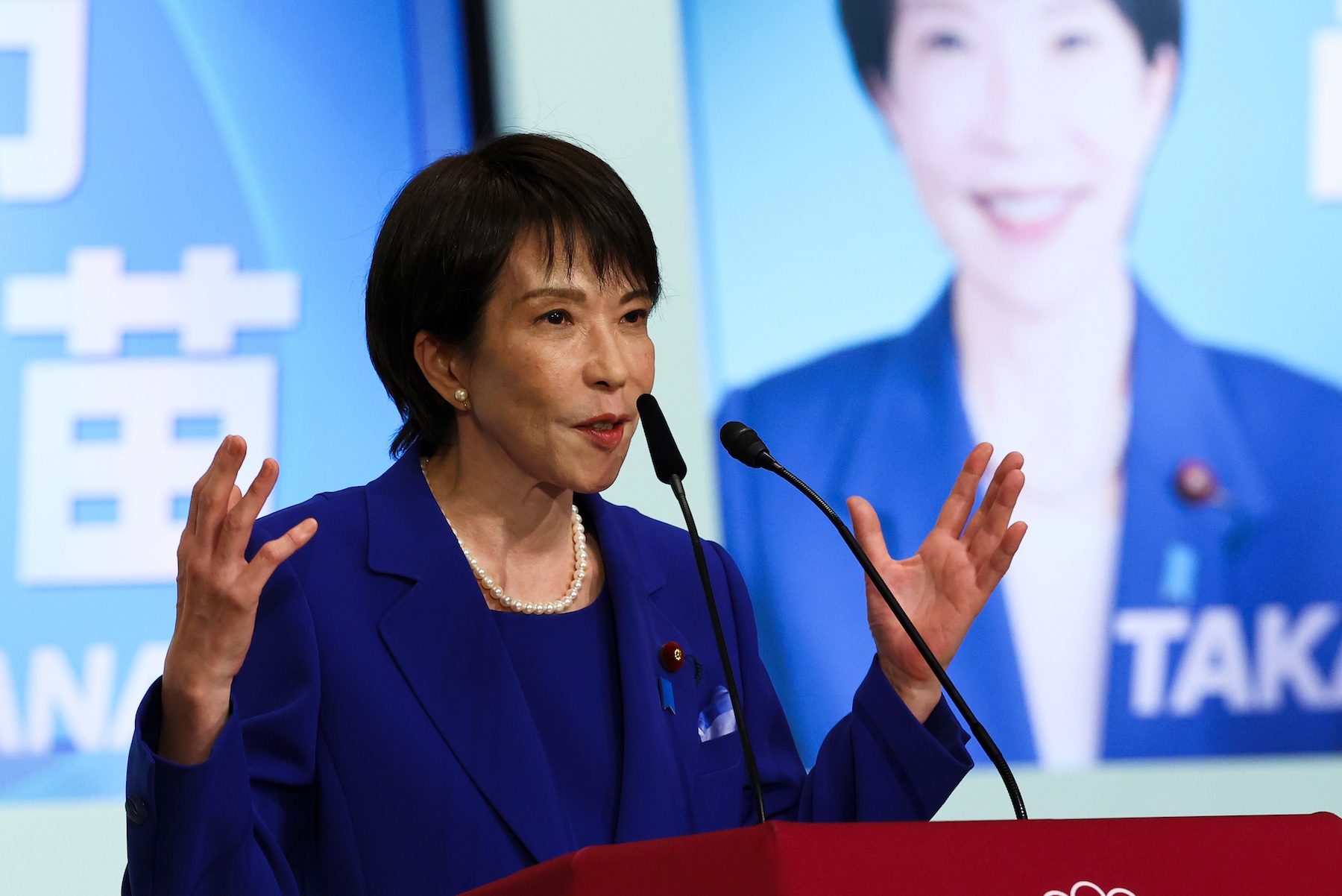
Diet elects Sanae Takaichi as Japan’s first female prime minister

Japan’s Diet elected ultraconservative Sanae Takaichi as the country’s first female prime minister Tuesday, a day after her struggling party struck a coalition deal with a new partner expected to pull her governing bloc further to the right.

Takaichi replaces Shigeru Ishiba, ending a three-month political vacuum and wrangling since the Liberal Democratic Party’s disastrous election loss in July.

Ishiba, who lasted only one year as prime minister, resigned with his cabinet earlier in the day, paving the way for his successor.

Takaichi won 237 votes — four more than a majority — compared to 149 won by Yoshikoko Noda, head of the largest opposition party, the Constitutional Democratic Party of Japan, in the lower house, which elects the prime minister. As the results were announced, Takaichi stood up and bowed deeply.

The LDP’s alliance with the Osaka-based rightwing Japan Innovation Party, or Ishin no Kai, ensured her premiership because the opposition is not united. Takaichi’s untested alliance is still short of a majority in both houses of parliament and will need to court other opposition groups to pass any legislation — a risk that could make her government unstable and short-lived.

The two parties signed a coalition agreement on policies underscoring Takaichi’s hawkish and nationalistic views.

Their last-minute deal came after the Liberal Democrats lost its longtime partner, the Buddhist-backed Komeito, which has a more dovish and centrist stance. The breakup threatened a change of power for the LDP, which has governed Japan almost uninterrupted for decades.

Tackling rising prices and other economic measures is the top priority for the Takaichi government, LDP Secretary General Shunichi Suzuki told NHK public television as he apologized over the delay because of the party’s internal power struggle since the July election. He said the new coalition will cooperate with other opposition parties to quickly tackle rising prices to “live up to the expectations of the people.”

Later in the day, Takaichi, 64, will present a cabinet with a number of allies of LDP’s most powerful kingmaker, Taro Aso, and others who backed her in the party leadership vote.

JIP will not hold ministerial posts in Takaichi’s cabinet until his party is confident about its partnership with the LDP, Yoshimura said.

Takaichi is running on a deadline, as she prepares for a major policy speech later this week, talks with U.S. President Donald Trump and regional summits. She needs to quickly tackle rising prices and compile economy-boosting measures by late December to address public frustration.

While she is the first woman serving as Japan’s prime minister, she is in no rush to promote gender equality or diversity.

Takaichi is among Japanese politicians who have stonewalled measures for women’s advancement. Takaichi supports the imperial family’s male-only succession and opposes same-sex marriage and allowing separate surnames for married couples.

A protege of assassinated former Prime Minister Shinzo Abe, Takaichi is expected to emulate his policies including a stronger military and economy, as well as revising Japan’s pacifist constitution. With her potentially weak grip on power, it’s unknown how much Takaichi will be able to achieve.

Also an admirer of former British Prime Minister Margaret Thatcher, Takaichi was first elected to parliament in 1993 and has served in a number of senior party and government posts, including as ministers of economic security and internal affairs, but her diplomatic background is thin.

When Komeito left the governing coalition, it cited the LDP’s lax response to slush fund scandals that led to their consecutive election defeats.

The centrist party also raised concern about Takaichi’s revisionist view of Japan’s wartime past and her regular prayers at Yasukuni Shrine despite protests from Beijing and Seoul that see the visits as lack of remorse about Japanese aggression, as well as her recent xenophobic remarks.

Takaichi has toned down her hawkish rhetoric. On Friday, she sent a religious ornament instead of going to Yasukuni. (JapanToday)

Posted on Leave a comment

Transgender woman jailed for deceiving man about gender in UK

A British court has sentenced a transgender woman, Ciara Watkin, to 21 months in prison for deceiving a man into sexual activity by falsely claiming to be a biological female.

According to a BBC report on Friday, the victim told Durham Crown Court he would not have consented to the sexual encounter had he known Watkin was biologically male.

The court heard that Watkin, 21, from Thornaby in Stockton-on-Tees, was found guilty of sexual assault after jurors rejected her claim that the man “would have realised” her gender identity.

Recorder Peter Makepeace KC said he was “certain” the victim “fully believed from start to finish” that Watkin was a woman due to her “lies and deception.”

Watkin, who was born male and had used the name Ciara since childhood, had not undergone any medical transition or surgery, the BBC reported.

Both Watkin and the victim were 18 when they met on Snapchat, where she used a female cartoon character as her profile picture. They later met in person, leading to sexual contact. Prosecutor Paul Reid told the court that Watkin even claimed to be menstruating to stop the man from touching her below the waist.

When Watkin later confessed to being biologically male, the man said he was “physically sick” and immediately reported the matter to the police.

Transgender woman jailed for deceiving man about gender in UK

A British court has sentenced a transgender woman, Ciara Watkin, to 21 months in prison for deceiving a man into sexual activity by falsely claiming to be a biological female.

According to a BBC report on Friday, the victim told Durham Crown Court he would not have consented to the sexual encounter had he known Watkin was biologically male.

The court heard that Watkin, 21, from Thornaby in Stockton-on-Tees, was found guilty of sexual assault after jurors rejected her claim that the man “would have realised” her gender identity.

Recorder Peter Makepeace KC said he was “certain” the victim “fully believed from start to finish” that Watkin was a woman due to her “lies and deception.”

Watkin, who was born male and had used the name Ciara since childhood, had not undergone any medical transition or surgery, the BBC reported.

Both Watkin and the victim were 18 when they met on Snapchat, where she used a female cartoon character as her profile picture. They later met in person, leading to sexual contact. Prosecutor Paul Reid told the court that Watkin even claimed to be menstruating to stop the man from touching her below the waist.

When Watkin later confessed to being biologically male, the man said he was “physically sick” and immediately reported the matter to the police.

“He said he was shocked and upset about being deceived, adding that he felt ashamed, embarrassed, and had been ridiculed online due to Watkin’s actions and deception,” the report stated.

The victim, who described himself as heterosexual, told the court he felt “part of his masculinity was taken away.”

Defence counsel Victoria Lamballe argued that Watkin’s actions were not “predatory or sadistic” but stemmed from “shame and a deep sense of discomfort” with her own body.

She said Watkin, who has been diagnosed with gender dysphoria, identified as female from primary school and had endured years of bullying.

“It is hardly surprising that Watkin built up a façade and presented almost as a caricature of herself to mask the inner turmoil she feels at having been born into the wrong body,” Lamballe said, adding that Watkin “simply wanted to be loved.”

However, Recorder Makepeace ruled that the victim was “totally deceived,” saying Watkin had lied to “get away” with her deception and was aware the man would not have consented if he knew her biological sex.

The judge also criticised Watkin’s attitude during the trial, describing her as “flippant, disinterested, and bored,” showing “not a shred of remorse.” (Punch)