Posted on Leave a comment

Former French president Sarkozy given five-year sentence after Libya case

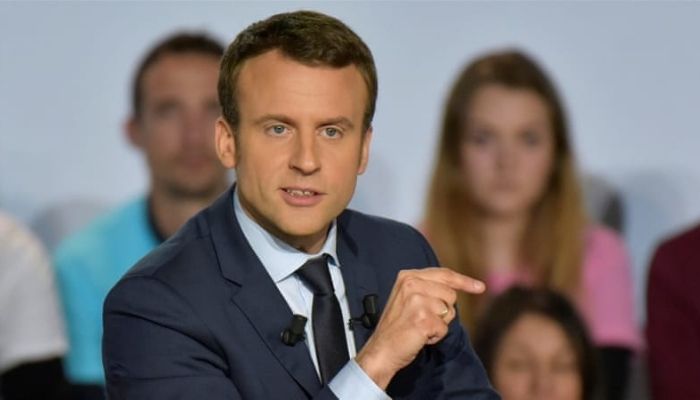
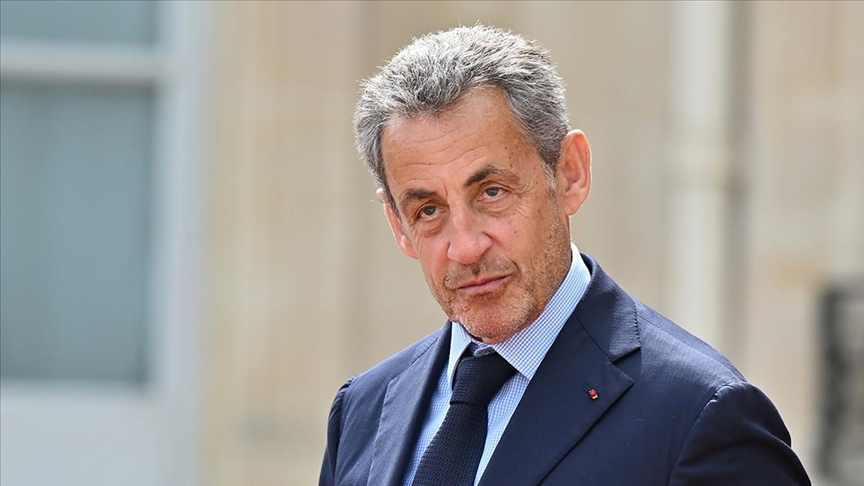
Former French president Nicolas Sarkozy has been sentenced to five years in jail after being found guilty of criminal conspiracy in a case related to millions of euros of illicit funds from the late Libyan leader Col Muammar Gaddafi.

The Paris criminal court acquitted him of all other charges, including passive corruption and illegal campaign financing.

The ruling means he will spend time in jail even if he launches an appeal, which Sarkozy says he intends to do.

Speaking after Thursday’s hearing, the 70-year-old, who was president from 2007-12, said the verdict was “extremely serious for rule of law”.

Sarkozy, who claims the case is politically motivated, was accused of using the funds from Gaddafi to finance his 2007 election campaign.

In exchange, the prosecution alleged Sarkozy promised to help Gaddafi combat his reputation as a pariah with Western countries.

Judge Nathalie Gavarino said Sarkozy had allowed close aides to contact Libyan officials with a view to obtaining financial support for his campaign.

But the court ruled that there was not enough evidence to find Sarkozy was the beneficiary of the illegal campaign financing.

He was also ordered to pay a fine of €100,000 ($117,000, £87,000).

There was a shocked intake of breath in court when the judge read out her sentence.

Sarkozy could be sent to prison in Paris in the coming days – a first for a former French president and a humiliating blow for a man who has always protested his innocence in this trial and the other legal cases against him.

“What happened today… is of extreme gravity in regard to the rule of law, and for the trust one can have in the justice system,” Sarkozy said outside the court building.

“If they absolutely want me to sleep in jail, I will sleep in jail, but with my head held high,” he said.

The investigation was opened in 2013, two years after Saif al-Islam, son of the then-Libyan leader, first accused Sarkozy of taking millions of his father’s money for campaign funding.

The following year, Lebanese businessman Ziad Takieddine – who for a long time acted as a middleman between France and the Middle East – said he had written proof that Sarkozy’s campaign bid was “abundantly” financed by Tripoli, and that the €50m (£43m) worth of payments continued after he became president.

Among the others accused in the trial were former interior ministers, Claude Gueant and Brice Hortefeux. The court found Gueant guilty of corruption, among other charges, and Hortefeux was found guilty of criminal conspiracy.

Sarkozy’s wife, Italian-born former supermodel and singer Carla Bruni-Sarkozy, was charged last year with hiding evidence linked to the Gaddafi case and associating with wrongdoers to commit fraud, both of which she denies.

Since losing his re-election bid in 2012, Sarkozy has been targeted by several criminal investigations.

He also appealed against a February 2024 ruling which found him guilty of overspending on his 2012 re-election campaign, then hiring a PR firm to cover it up. He was handed a one-year sentence, of which six months were suspended.

In 2021, he was found guilty of trying to bribe a judge in 2014 and became the first former French president to get a custodial sentence. In December, the Paris appeals court ruled that he could serve his time at home wearing a tag instead of going to jail. (BBC)

Posted on Leave a comment

House Democrats to send letter to Trump on Friday urging US to recognize Palestinian statehood

Dozens of House Democrats have signed a letter to Donald Trump and secretary of state Marco Rubio, urging the administration to recognize Palestinian statehood.

The letter, led by California Democrat Ro Khanna, has 46 signatures, and lawmakers will send it to the US president on Friday, according to plans first provided to the Guardian.

The letter’s delivery will coincide with the conclusion of the United Nations general assembly. France joined the growing chorus of US allies – including the UK, Canada, Australia and Portugal – and on Monday called for the formal recognition of a Palestinian state.

The conflict has resulted in a catastrophic humanitarian crisis in Gaza, more than 60,000 people killed in the region, and rampant famine. Most recently, the Israeli government has continued its military offensive on Gaza City, killing dozens of Palestinians this week alone. Hundreds of thousands have been displaced from the capital since August.

“Just as the lives of Palestinians must be immediately protected, so too must their rights as a people and nation urgently be acknowledged and upheld,” the letter reads. “We encourage the governments of other countries that have yet to recognize Palestinian statehood, including the United States, to do so as well.”

Joining Khanna in signing the letter are several House progressives including Congressman Greg Casar of Texas, Congresswoman Pramila Jayapal of Washington state and Congressman Maxwell Frost of Florida. In August, the Guardian reported on the draft of the letter, which, at the time, had a little over a dozen signatures.

The letter calls for the adoption of the same framework that French president Emmanuel Macron laid out earlier this year in order to “guarantee Israel’s security”. This includes “the disarmament of and relinquishing of power by Hamas in Gaza”, as well as working with the Palestinian people, the Palestinian Authority, Arab allies, and Israel to ensure this is possible.

Khanna told the Guardian that the letter is a “litmus test” for the Democratic party and any Democratic candidates. He added that lawmakers from his own party that are holding out on signing are “totally out of touch with our base and Democratic voters, they’re totally out of touch with the young generation, and they’re totally out of touch with the world”.

Khanna has been “surprised” by the number of signatures on the letter, and is confident that it will gain even more by Friday. “We’re expecting to cross 50,” he added.

J Street, the prominent pro-Israel advocacy group, will endorse Khanna’s letter. “In light of the explicit efforts being made by the far right in Israel to bury the idea of a Palestinian state, actions like this letter are vital to affirm the global commitment to Palestinian self-determination,” said Jeremy Ben-Ami, the lobby’s president. “From the pro-Israel perspective, a Palestinian state next to Israel is vital if Israel is to remain Jewish and democratic in nature.”

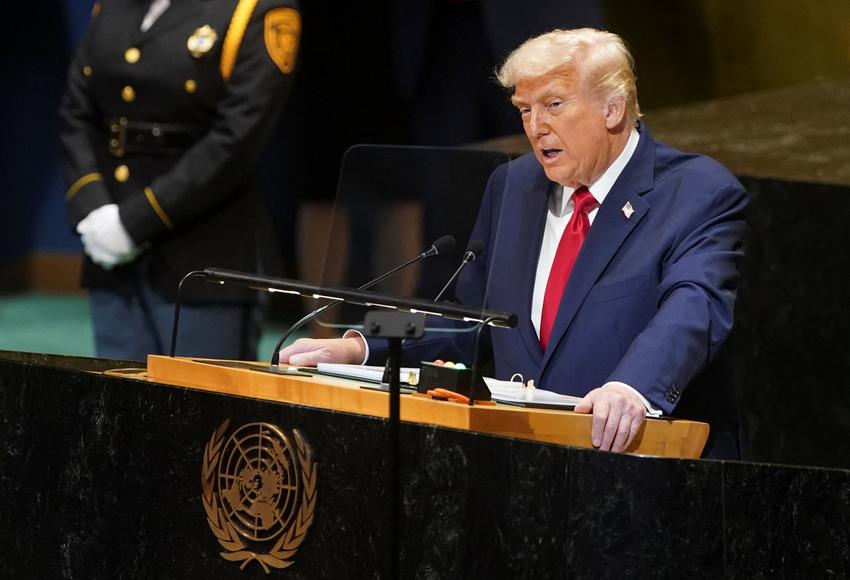
Trump has disagreed publicly with foreign leaders who have pledged to recognize a Palestinian state. During his hour-long address at the UN this week, he called the move a “reward” for acts of terrorism carried out by Hamas, including the 7 October attack.

Senior cabinet members have said that the coordinated recognition is merely superficial. “It’s almost a vanity project for a couple of these world leaders who want to be relevant, but it really makes no difference,” Rubio said in an interview with CBS Mornings.

The Israeli prime minister, Benjamin Netanyahu, who is due to address the UN general assembly on Friday, has remained resolute that a Palestinian state is not an option. “The shameful capitulation of some leaders to Palestinian terror does not obligate Israel in any way,” his office said in a statement. “There will be no Palestinian state.”

Khanna is not expecting the letter to force the president’s hand in any way. “I’m not holding my breath as he [Trump] is giving a total blank check to Netanyahu,” the congressman said. But he does hope it will send a “clear” statement.

“America has a new generation that will recognize a Palestinian state when we come to power, that vehemently disagrees with Donald Trump, and that disagrees with how Biden handled the war,” Khanna said.

The United States is currently the only permanent member of the UN security council – which includes Britain, Russia, China and France – who objects to Palestinian statehood, “hurting America’s claim to be the moral leader of the world”, Khanna said.

Meanwhile, in the Senate, a Democratic-led resolution to recognize a demilitarised Palestine state and secure Israel was introduced last week by Jeff Merkley,a senator from Oregon. The first-of-its-kind measure, however, is unlikely to clear the Republican-controlled upper chamber. (Guardian)

Posted on Leave a comment

Macron phones Trump after US president’s motorcade blocks his car

Emmanuel Macron had to walk half an hour by foot through New York after his speech to the United Nations on recognising Palestine as a state.

Video footage shows him getting out of his car to talk to police officers after they stop his vehicle to make way for the expected arrival of the motorcade of Donald Trump, the US president.

The footage, which was captured by a reporter from the social media outlet Brut, appears to show the French president saying he needs to get to his country’s consulate.

“I’m sorry, president, I’m really sorry, everything has been frozen, there’s a motorcade coming right now,” an officer tells Macron.

The president then looks out over the empty street and replies: “If you don’t see it, let me cross. I’ll negotiate with you.”

Macron, who remains stuck behind a metal barrier, takes out his phone and appears to call Trump directly. Leaning on the barrier, he says, laughingly: “How are you? Guess what? I’m waiting in the street because everything is frozen for you.”

Macron later appears to be allowed through on foot but not in his car. Still on his phone, he proceeds to stride off down the street, past shoppers and pedestrians. The reporter from Brut said Macron walked for about 30 minutes with his security detail. He stopped and posed with passersby who asked for photographs, including one encounter with a man who kissed him on the forehead.

“The time has come to end the war in Gaza, the massacres and the death,” Macron had said during his opening speech to a special summit at the UN on Monday evening. “The time has come to do justice for the Palestinian people and thus to recognise the state of Palestine in Gaza, the West Bank and Jerusalem.”

Announcing France’s official recognition of Palestine, the president set out a plan for a UN-mandated international stabilisation force in postwar Gaza that is expected to find support in many countries but not in Israel or the US. (Guardian)

Posted on Leave a comment

France among six more countries to formally recognise Palestinian statehood

The leaders of six countries, including France, have moved to recognise Palestinian statehood at a high-level summit ahead of the annual United Nations General Assembly (UNGA) meeting in New York.

Alongside France, which co-convened the meeting with Saudi Arabia on Monday in New York, Andorra, Belgium, Luxembourg, Malta and Monaco said they were recognising a Palestinian state.

Leaders from Australia, Canada, Portugal and the United Kingdom, which formally made the move to recognise Palestine a day earlier, also spoke at the meeting.

“We have gathered here because the time has come,” Emmanuel Macron said at the summit convened to revive the long-delayed two-state solution to end the Israel-Palestine conflict.

“It falls on us, this responsibility, to do everything in our power to preserve the possibility of a two-state solution,” Macron said.

“Today, I declare that France recognises the state of Palestine,” he said.

The additional countries recognising Palestine now join some 147 of the 193 UN member states that had already formally recognised Palestinian statehood as of April this year.

With more than 80 percent of the international community now recognising the state of Palestine, diplomatic pressure has ramped up on Israel as it continues its genocidal war on Gaza, where more than 65,300 Palestinians have been killed and the has been enclave turned into rubble.

Spain, Norway and Ireland recognised Palestinian statehood last year, with Madrid also imposing sanctions on Israel for its war on Gaza.

Spanish Prime Minister Pedro Sanchez told the summit on Monday that a two-state solution was not possible “when the population of one of those two states is the victim of a genocide”.

“The Palestinian people are being annihilated, [so] in the name of reason, in the name of international law and in the name of human dignity, we have to stop this slaughter,” Sanchez said.

Macron, in his speech to the summit, also outlined a framework for the creation of a “renewed Palestinian Authority”. The post-war framework envisages an International Stabilisation Force (ISF) that would assist in preparing the Palestinian Authority (PA) to take over governance in Gaza.

PA President Mahmoud Abbas commended the countries that had recognised Palestine. He made his statement to the conference by video because he was denied a visa by the administration of US President Donald Trump to attend the UNGA this week.

“We call on those that have not yet done so to do so to follow suit”, Abbas said, adding that the PA also demanded “support for Palestine’s full membership in the United Nations”.

Israel and the US, which are becoming increasingly isolated internationally on the issue, boycotted the summit, with Israel’s UN ambassador, Danny Danon, describing the event as a “circus”.

Although the vast majority of UN member states now recognise Palestinian statehood, new UN member states must have the support of the UN Security Council, where the US has used its veto to block Palestine from becoming a full UN member state.

Speaking at the summit, UN Secretary-General Antonio Guterres reiterated his support for the two-state solution, framing it as the only viable path towards peace after years of failed negotiations and ongoing violence.

Guterres said that statehood for Palestinians “is a right, not a reward”, rejecting US and Israeli claims that it was a reward for Hamas.

Saudi Arabia’s foreign minister, Prince Faisal bin Farhan Al Saud, thanked Macron and the UN chief for their efforts towards a two-state solution, which he said is “the only way to achieve just and lasting peace”.

He said the conference comes at a time when “the Israeli occupation authorities continue their aggression and their brutal crimes” against Palestinians in Gaza.

Israel also continues its “violations in the West Bank, and its repeated attacks on Arab and Muslim countries, with the most recent attack on Qatar”, he said.

“These actions underline Israel’s insistence on continuing aggressive practices that threaten regional and international peace and stability and undermine efforts of peace in the region,” he added. (AlJazeera)

Posted on Leave a comment

Ballon d’Or 2025: Ousmane Dembele and Aitana Bonmati win top prizes as Sarina Wiegman lands award for best coach

Ousmane Dembele and Aitana Bonmati were crowned the best men’s and women’s player in the world at the 2025 Ballon d’Or ceremony in Paris.

Dembele, the Paris Saint-Germain and France forward, took the men’s prize after leading his club to a treble-winning season and their first Champions League success. Barcelona’s Lamine Yamal,18, was runner-up after being voted the best young player.

A tearful Dembele collected the prize in Paris in front of a partisan crowd that chanted his name. If not for injury, he would have been playing for PSG in Marseille in a rearranged league fixture.

Barcelona and Spain midfielder Bonmati becomes the first woman to win the Ballon d’Or for three consecutive years. Lionel Messi and Michel Platini are the only men to have achieved that feat.

“It’s incredible this feeling. I never thought when I was a kid that I could achieve this because I didn’t think women’s football can exist,” Bonmati said.

“I had idols like Andres Iniesta and Xavi and when I was a kid I only saw them on TV. It’s incredible to be here and make history.

“But all of these trophies are because of collective work. We had a difficult season because we won some trophies, but we also lost some to amazing footballers.”

Arsenal and England’s Alessia Russo got the better of Bonmati in the Champions League and Euros finals, but finished third in the women’s rankings. Her club-mate, Mariona Caldentey of Spain, came second.

Lionesses head coach Sarina Wiegman was named best women’s coach after England’s triumph over Spain in Switzerland, while PSG boss Luis Enrique picked up the men’s Johan Cruyff award.

England and Chelsea’s Hannah Hampton won the inaugural award for best women’s goalkeeper, with Man City’s Gianluigi Donnarumma picking up the seventh edition of the men’s prize for his season with PSG.

Former Lionesses keeper Mary Earps was on stage presenting the award to Hampton, who took her spot as England’s No 1 ahead of the Euros, prompting her to retire from international football five weeks before the tournament.

Arsenal and PSG won the awards for women’s and men’s club of the year after their Champions League successes.

Viktor Gyokeres’ 63 goals for Sporting and Sweden last season earned him the men’s Gerd Muller Trophy. Barcelona and Poland’s Ewa Pajor, scorer of 48 goals, scooped the women’s award. (SkySports)

Posted on Leave a comment

Spain reclaims FIFA top ranking, knocks Argentina off No. 1 spot

Spain has returned to the summit of the FIFA World Rankings for the first time in over a decade, dislodging Argentina after a strong run in the 2026 FIFA World Cup qualifiers.

The updated rankings, released on FIFA’s official X handle on Thursday, mark Spain’s first time at the top since 2014. Argentina, which had led the standings since April 2023, dropped to third place, with France moving up to second.

Portugal, Croatia, and Italy recorded slight gains, now occupying fifth, ninth, and tenth positions respectively.

Brazil slipped to sixth following a poor run of form, while Germany fell to 12th after a shock defeat to Slovakia in their qualifiers—pushing them outside the top 10 for the first time since October 2024.

Slovakia proved the biggest movers, climbing 10 places to 42nd after consecutive qualifying wins, including their upset victory against Germany.

Morocco remained just outside the top 10 after securing eight wins in their last nine matches, while other notable risers include The Gambia, Madagascar, Paraguay, Uganda, Libya, Suriname, and the Faroe Islands, each improving by at least five places.

Co-hosts of the 2026 World Cup, Canada, moved up two spots to 26th, while Kosovo achieved a historic milestone by climbing four places to 91st.

The latest rankings highlight the shifting balance of power in world football as nations gear up for upcoming qualifiers and tournaments. (Punch)

Posted on Leave a comment

Tinubu returns to Abuja after vacation in Europe

President Bola Tinubu on Tuesday returned to Abuja after concluding his annual working vacation in Europe.

Tinubu arrived at the Nnamdi Azikiwe International Airport and was received by Senate President Godswill Akpabio and Nasarawa State Governor Abdullahi Sule.

Also at the airport were his Chief of Staff, Femi Gbajabiamila, and Coordinating Minister of the Economy, Wale Edun.

The Special Adviser on Information and Strategy, Bayo Onanuga, confirmed the President’s return in a statement issued on Monday.

He said Tinubu concluded his work vacation ahead of schedule and would resume official duties on Tuesday.

The President departed Nigeria on September 4 for France, intending to split his annual holiday between France and the United Kingdom.

During his stay in Paris, Tinubu held a private luncheon with French President Emmanuel Macron at the Élysée Palace.

Both leaders discussed bilateral cooperation and pledged to strengthen partnerships for mutual prosperity and global stability. (Channels)

Posted on Leave a comment

Macron names ally Sébastien Lecornu as new French PM

President Emmanuel Macron has named close ally Sébastien Lecornu as the new French prime minister, 24 hours after a vote of confidence ousted François Bayrou as head of government.

Lecornu, 39, was among the favourites to take over, and he has spent the past three years as armed forces minister focusing on France’s response to Russia’s war in Ukraine.

In a statement the Elysée Palace said Lecornu – the seventh PM in the Macron presidency – had been given the task of consulting political parties with the aim of adopting France’s next budget.

Pushing through a budget as head of a minority government was what brought down Bayrou, with left and far-right opponents condemning Lecornu’s appointment.

Bayrou had visited the president hours earlier to hand in his resignation, paving the way for Sébastien Lecornu to become the fifth prime minister of Macron’s second term as president.

Lecornu wrote on social media that he had been entrusted by the president with “building a government with clear direction: defending our independence and our strength, serving the French people, and [ensuring] political and institutional stability for the unity of our country”.

His immediate task is tackling France’s spiralling public debt, which hit €3.3tn (£2.8tn) earlier this year and represents 114% of the country’s economic output or GDP.

Bayrou had proposed €44bn in budget cuts, and his decision to put his plans to a vote of confidence was always going to fail. In the end France’s National Assembly decided to oust his government by 364 votes to 194.

Lecornu’s appointment was welcomed by centrist allies such as Marc Fesneau from Bayrou’s MoDem party. He called on every political force to reach a compromise – “for the stability of the country and its recovery, especially its budget”.

Jean-Luc Mélenchon of the radical left France Unbowed was unimpressed, complaining that nothing had changed and it was time for Macron’s departure from the presidency.

There had been suggestions that Macron might try to approach the centre left to broaden his minority government, and Olivier Faure of the Socialists had offered his services the night before.

It soon became clear that Faure would not be getting the call: “I slept pretty soundly so I didn’t hear the phone ring.”

On the far right, Marine Le Pen said the president was ”giving Macronism its last shot from his bunker, along with his little circle of loyalists”.

France has had a hung parliament since Macron surprised his country by calling snap national elections last year, after a poor performance in the June 2024 European vote. There are broadly three main political blocs: the left, far right and the centre.

Édouard Philippe, who was Macron’s first prime minister from 2017-20, thought Lecornu was a good choice as he had learned a lot as defence minister.

“I’ve known him for a long time because he was elected like me in Normandy,” the Horizons party leader told TF1 TV. “He knows how to debate and he’ll need this talent for debate and listening to find a deal in circumstances he knows are pretty complicated.”

Philippe believed Lecornu would have to find some way of bringing the Socialists on board. It was certainly possible to find a majority and also necessary, he thought, because without a compromise on a budget deal, a fresh political crisis would erupt and new elections would be inevitable.

More immediately, a grassroots movement called Bloquons Tout – “Let’s Block Everything” – is planning widespread anti-government protests on Wednesday and authorities are planning to deploy 80,000 police.

Then on Friday the credit agency Fitch will reassess France’s debts and could make its borrowing costs higher if it lowers its rating from AA-. (BBC)

Posted on Leave a comment

Canada to recognise Palestinian state at UN General Assembly

Canada plans to recognise a Palestinian state at the UN General Assembly in September, Prime Minister Mark Carney said Wednesday, a major policy shift that drew an angry response from US President Donald Trump and was rejected by Israel.

Carney said the move was necessary to preserve hopes of a two-state solution to the Israeli-Palestinian conflict, a long-standing Canadian goal that was “being eroded before our eyes.”

“Canada intends to recognise the State of Palestine at the 80th Session of the United Nations General Assembly in September 2025,” the prime minister said.

This makes Canada — a G7 nation — the third country, following recent announcements by France and the United Kingdom, to signal plans to recognise a Palestinian state in September.

Carney said the worsening suffering of civilians in Gaza left “no room for delay in coordinated international action to support peace.”

Israel blasted Canada’s announcement as part of a “distorted campaign of international pressure,” while Trump warned that trade negotiations with Ottawa may not proceed smoothly.

“Wow! Canada has just announced that it is backing statehood for Palestine,” the US president wrote on his Truth Social platform.

“That will make it very hard for us to make a Trade Deal with them.”

Asked by reporters if there was a scenario where Canada could change its position before the UN meeting, Carney said: “There’s a scenario (but) possibly one that I can’t imagine.”

Canada’s intention “is predicated on the Palestinian Authority’s commitment to much-needed reforms,” Carney said, referring to the body led by President Mahmoud Abbas, which has civil authority in parts of the Israeli-occupied West Bank.

Carney said his plans were further predicated on Abbas’s pledge to “hold general elections in 2026 in which Hamas can play no part, and to demilitarise the Palestinian state.”

With Wednesday’s announcement, Carney positioned Canada alongside France, after President Emmanuel Macron said his country would formally recognise a Palestinian state during the UN meeting, the most powerful European nation to announce such a move.

The Israeli embassy in Ottawa said, “Recognising a Palestinian state in the absence of accountable government, functioning institutions, or benevolent leadership, rewards and legitimises the monstrous barbarity of Hamas on October 7, 2023.”

The PA’s Abbas welcomed the announcement as a “historic” decision, while France said the countries would work together “to revive the prospect of peace in the region.”

Canada’s plan goes a step further than this week’s announcement by British Prime Minister Keir Starmer.

Starmer said the UK will formally recognise the State of Palestine in September unless Israel takes various “substantive steps,” including agreeing to a ceasefire in Gaza.

Carney stressed that Canada has been an unwavering member of the group of nations that hoped a two-state solution “would be achieved as part of a peace process built around a negotiated settlement between the Israeli government and the Palestinian Authority.”

“Regrettably, this approach is no longer tenable,” he said, citing “Hamas terrorism” and the group’s “longstanding violent rejection of Israel’s right to exist.”

The peace process has also been eroded by the expansion of Israeli settlements across the occupied West Bank and east Jerusalem, Carney said.

The prime minister said a two-state solution was growing increasingly remote, with a vote in Israel’s parliament “calling for the annexation of the West Bank,” as well as Israel’s “ongoing failure” to prevent a humanitarian catastrophe in Gaza.

He framed his decision as one aimed at safeguarding Israel’s future.

“Any path to lasting peace for Israel also requires a viable and stable Palestinian state, and one that recognises Israel’s inalienable right to security and peace,” Carney said. (Punch)

Posted on Leave a comment

France defends move to recognise Palestinian state

France defended its decision to recognise Palestinian statehood amid domestic and international criticism on Friday, including against the charge that the move plays into the hands of militant group Hamas.

President Emmanuel Macron said Thursday that his country would formally recognise a Palestinian state during a UN meeting in September, the most powerful European nation to announce such a move.

Macron’s announcement drew condemnation from Israel, which said it “rewards terror”, while US Secretary of State Marco Rubio called it “reckless” and said it “only serves Hamas propaganda”.

Mike Huckabee, US ambassador to Israel, quipped that Macron did not say where a future Palestinian state would be located.

“I can now exclusively disclose that France will offer the French Riviera & the new nation will be called ‘Franc-en-Stine’,” he said on X.

Hamas itself — which is designated a terrorist group by the United States and the European Union — praised the French initiative, saying it was “a positive step in the right direction toward doing justice to our oppressed Palestinian people”.

But French Foreign Minister Jean-Noel Barrot on Friday argued that Macron’s initiative went against what the militant group wanted.

“Hamas has always ruled out a two-state solution. By recognising Palestine, France goes against that terrorist organisation,” Barrot said on X.

With its decision, France was “backing the side of peace against the side of war”, Barrot added.

Domestic reactions ranged from praise on the left, condemnation on the right and awkward silence in the ranks of the government itself.

The leader of the far-right National Rally (RN), Jordan Bardella, said the announcement was “rushed” and afforded Hamas “unexpected institutional and international legitimacy”.

Marine Le Pen, the RN’s parliamentary leader, said the French move amounted to “recognising a Hamas state and therefore a terrorist state”.

On the other side of the political spectrum, Jean-Luc Melenchon, boss of the far-left France Unbowed party, called Macron’s announcement “a moral victory”, although he deplored that it did not take effect immediately.

By September, Gaza could be a “graveyard”, Melenchon said.

Interior Minister Bruno Retailleau, a right winger whose relationship with Macron is tense, declined on Friday to give his opinion, saying he was currently busy with an unrelated “serious topic” linked to the “security of French people on holiday”.

But the vice president of his Les Republicains party, Francois-Xavier Bellamy, blasted the decision as possibly “counter-productive” or, at best, “pointless”.

The move risked “endangering Israeli civilians” as well as “Palestinian civilians who are victims of Hamas’s barbarism”, he said.

Bellamy said that Macron’s move was a departure from the president’s previously set conditions for recognition of Palestine, which included a Hamas de-militarisation, the movement’s exclusion from any future government, the liberation of all Israeli hostages in Gaza and the recognition of Israel by several Arab states.

“None of them have been met,” he said.

Among people reacting to the news in the streets of Paris was Julien Deoux, a developer, who said it had been “about time” that France recognised Palestinian statehood.

“When you’ve been talking about two-state solutions for decades but you don’t recognise one of the two states, it’s a bit difficult,” he told AFP.

But Gil, a 79-year-old pensioner who gave only his first name, said he felt “betrayed” by his president.

“As a Frenchman, I’m ashamed to see that tomorrow Hamas could come to power in the territory,” he said.

While France would be the most significant European country to recognise a Palestinian state, others have hinted they could do the same.

Britain’s Prime Minister Keir Starmer announced he would hold a call on Friday with counterparts in Germany and France on efforts to stop the fighting, adding that a ceasefire would “put us on a path to the recognition of a Palestinian state”.

Germany, meanwhile, said on Friday it had no plans to recognise a Palestinian state “in the short term”.

Norway, Spain, Ireland and Slovenia all announced recognition following the outbreak of the Gaza conflict, along with several other non-European countries.

Once France follows through on its announcement, a total of at least 142 countries will have recognised Palestinian statehood. (Vanguard)