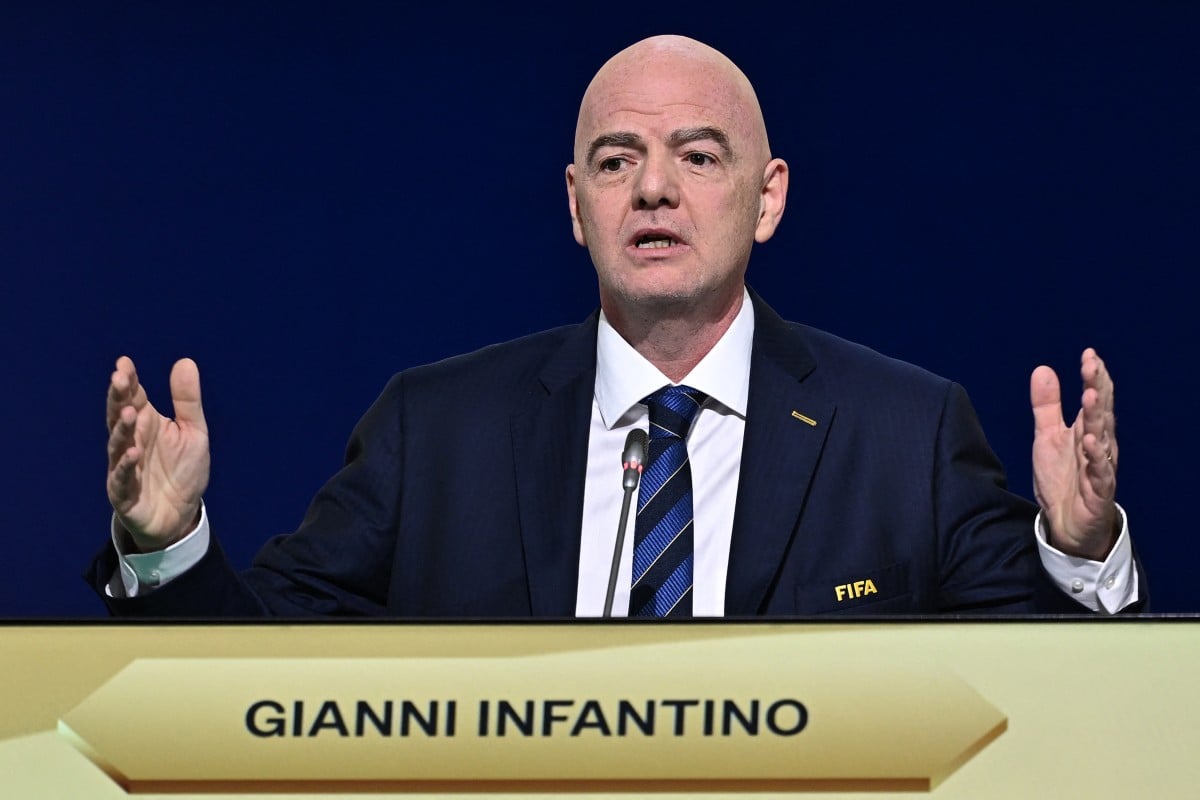
FIFA is putting more World Cup tickets on sale after angering some fans by adding new, more expensive categories.
Soccer’s governing body announced Tuesday it will make more tickets available at 11 a.m. EDT Wednesday for all 104 games in Categories 1, 2 and 3 plus the new “front category” pricing it added this month.
The new category sparked online complaints from fans who said they thought the better seats in the categories they had bought tickets for were withheld and they were assigned less favorable locations.
FIFA in December put tickets on sale at prices ranging from $140 for Category 3 in the first round to $8,680 for the final, then raised prices to as much as $10,990 when sales reopened on April 1.
FIFA did not respond to an April 9 request for comment about the new ticket categories it added.
Also Tuesday, The Athletic reported that tickets sales are lagging for the U.S. opener against Paraguay on June 12 at Inglewood, California. It said a document distributed to local organizers dated April 10 said 40,934 tickets had been purchased for the U.S.-Paraguay game and 50,661 for the Iran-New Zealand contest on April 15. FIFA projects SoFi’s World Cup capacity at about 69,650, noting it may change.
FIFA’s December sale priced U.S.-Paraguay tickets at $1,120, $1,940 and $2,735, and Iran-New Zealand seats at $140, $380 and $450. (JapanToday)
FIFA added new, even more expensive tiers of tickets for this year’s World Cup, asking up to $4,105 for a front category 1 seat at the U.S. opener against Paraguay in Inglewood, California, on June 12.
Last week, FIFA had asked for a top price of $2,735 for category 1 tickets for the match but added new “front category” pricing.
FIFA also added a front category 2 tier to its ticket sales website without public announcement, asking $1,940 to $2,330 for those tickets for the U.S. opener. The new categories were first reported Thursday by The Athletic.
The World Cup will be held from June 11 to July 19 in 16 cities in the U.S., Mexico and Canada.
Soccer’s governing body had in its Sept. 9 “ticket products and categories” information called category 1 “the highest-priced seats, located primarily in the lower tier” but appears to have withheld some seats from that category. It had labeled category 2 as “positioned outside of category 1 areas, available in both lower and upper tiers.”
FIFA did not respond to an email sent to its media office seeking comment.
FIFA added seats at up to $3,360 in front category 1 for Canada’s opener against Bosnia and Herzegovina on June 12 in Toronto.
For round of 16 games, it added $905 seats in Philadelphia.
FIFA last week raised its top ticket price for the World Cup final to $10,990 during the glitch-hampered reopening of sales. The price had been $8,680 when FIFA sold tickets after the tournament draw in December.
FIFA’s category 2 tickets for the July 19 game at MetLife Stadium in East Rutherford, New Jersey, were $7,380, up from $5,575, and category 3 cost $5,785, an increase from $4,185.
No tickets appeared to be available for the final on Thursday on FIFA’s ticket site. (JapanToday)
Iranian football had a good week on its troubled path to playing World Cup games in the United States in June.
A first face-to-face meeting with FIFA President Gianni Infantino since the US and Israel started a war against Iran on February 28 made genuine progress in football diplomacy at the end of a fraught month.
The Iranian football federation’s upbeat readout of the meeting in Turkiye made no mention of moving World Cup games to Mexico — a subject Infantino has repeatedly shut down for the past two weeks.
Infantino also offered tangible help for the squad to prepare for the World Cup in the next two months. Most Iran players are with clubs in the national league, which has shut down during the war.
Iran’s World Cup hosts in Arizona in the US said this week that they were pressing on with training-camp upgrades plus local and federal security plans – echoing the “stick to the schedule” mantra that FIFA has used.
Infantino stayed on in the Turkish coastal resort of Antalya to watch Iran rout Costa Rica 5-0 in a warm-up.
Clearly, the next two months are full of uncertainty for Iran’s team and for the nation itself amid mixed messages about US intentions for the war.
Still, talk of Iran boycotting football’s biggest event or seeking to move its games from Los Angeles and Seattle to Mexico has faded.
The Iranian delegation is due at its Tucson, Arizona training camp no later than June 10 for the June 11-July 19 tournament.
The war immediately cast doubt on Iran’s ability and willingness to fulfil a World Cup entry that it secured in March 2025 as one of the best teams in Asia.
In the first half of March, government officials variously suggested that the team could not play at the World Cup, that it could not travel to the US, and that FIFA should move Iran’s games to cohost Mexico.
A spokesman for the Iran Football Association did not respond on Thursday to a request for comment. Iran has not withdrawn its entry with FIFA.
Mexico’s President Claudia Sheinbaum appeared to suggest hosting Iran games was possible, without advocating for an unprecedented late change to the World Cup schedule.
US President Donald Trump added to the confusion with mixed messaging. He said, “I really don’t care” if Iran comes to the World Cup, then said that players were not safe, seeming to mean they were at risk from regime reprisals at home. He then went on to promise that the players would be treated like stars.
FIFA has been the most consistent commentator, and Infantino the only top soccer official openly talking about the delicate diplomacy: That Iran will come to the US, that the schedule will not change, and that no formal negotiations about Mexico had or would take place.
Iran, therefore, is on track to come to Arizona and start preparing for a first game on June 15 against New Zealand at the Los Angeles Rams’ SoFi Stadium in Inglewood. (AlJazeera)
Mexican President Claudia Sheinbaum said on Tuesday that her country is prepared to host Iran’s first-round matches at the 2026 World Cup if needed due to the conflict in the Middle East.
Iran’s participation at this summer’s finals in the United States, Canada and Mexico has been in doubt since the war began last month, with President Donald Trump warning that Iranian players’ safety would be at risk if they travelled to the U.S.
Iran’s football federation has opened talks with FIFA about potentially relocating its matches from the United States, though the global governing body has so far maintained that the tournament’s schedule remains unchanged.
Asked directly if Mexico was open to hosting the matches, and if the decision will purely come down to FIFA logistics, Sheinbaum told a press conference: “Yes.”
“Mexico maintains diplomatic relations with every country in the world, therefore we will wait to see what FIFA decides,” she added.
Iran’s place at the tournament was thrown into question after the U.S. and Israel launched a massive offensive against the Islamic Republic, which responded with waves of missiles and drones targeting Israeli territory and American targets across the Middle East.
FIFA President Gianni Infantino initially said that Trump had given assurances that the Iranian team — scheduled to face New Zealand and Belgium in Los Angeles, followed by Egypt in Seattle — would still be welcome.
But the Republican president then triggered uproar last week after stating that Iran’s football team should not travel to the tournament “for their own life and safety”.
Iran hit back at Trump’s comments saying that “no one can exclude Iran’s national team from the World Cup”.
Iran were the second Asian team after Japan to qualify for the World Cup, securing their place almost a year ago as they topped their qualifying group.
On Monday, Iranian soccer chief Mehdi Taj wrote on social media: “When Trump has explicitly stated that he cannot ensure the security of the Iranian national team, we will certainly not travel to America.
“We are currently negotiating with FIFA to hold Iran’s matches in the World Cup in Mexico.”
Iranian soccer authorities “are currently discussing with FIFA whether it is feasible — since they were originally scheduled to go to the United States — to see if they can” move Iran’s games to Mexico, confirmed Sheinbaum. “The matter is under review and we will provide an update in due course.”
When contacted by AFP on the matter, FIFA said it was “looking forward to all participating teams competing as per the match schedule announced on 6 December 2025”.
“FIFA is in regular contact with all participating member associations, including IR Iran, to discuss planning for the FIFA World Cup 2026,” a spokesperson said.
The Iran team’s base camp for the tournament is currently slated to be located in Tucson, Arizona.
Abolfazl Pasandideh, Iran’s ambassador to Mexico, on Monday denounced “the U.S. government’s lack of cooperation regarding visa issuance and the provision of logistical support” for the Iranian delegation ahead of the World Cup, in a statement published on the embassy’s website.
Should Iran not take part in the World Cup, it is not yet clear which country might replace them. (JapanToday)
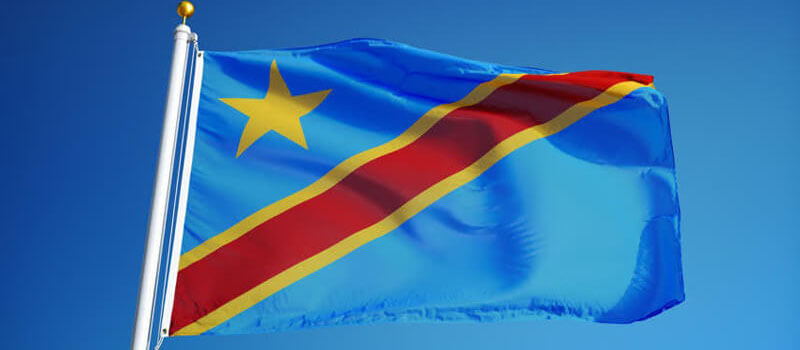
The Democratic Republic of Congo have omitted two players highlighted in the Nigeria Football Federation’s complaint to FIFA as they unveiled a 26-man squad for the 2026 World Cup intercontinental play-offs, a development that adds fresh intrigue to an eligibility dispute still awaiting a verdict from world football’s governing body, PUNCH Sports Extra reports.
Head coach Sébastien Desabre released the Leopards’ squad on Wednesday, retaining the core players who guided the team past Nigeria on penalties in the African play-off round while recalling several names absent from the Africa Cup of Nations in Morocco.
Captain Chancel Mbemba leads the side alongside established figures such as Cedric Bakambu, Yoane Wissa and Samuel Moutoussamy as DR Congo pursue a second appearance at the World Cup.
However, the announcement is notable for the absence of Michel-Ange Balikwisha and Mario Stroeykens , two of the players Nigeria specifically highlighted in its formal complaint to FIFA over alleged eligibility breaches.
Only Matheu Epolo, the third player mentioned prominently in the Nigerian petition, has been included in Desabre’s squad.
Nigeria lodged the complaint after losing the African play-off tie to DR Congo 4–3 on penalties, arguing that the Congolese federation misled FIFA in securing nationality switches for several overseas-born players.
The petition, made public on December 15, 2025, asked FIFA to investigate the matter and potentially disqualify DR Congo from the qualification process.
The Nigerian federation’s document listed numerous foreign-born players who featured against the Super Eagles, including Lionel Mpasi, Aaron Wan-Bissaka, Axel Tuanzebe, Arthur Masuaku, Samuel Moutoussamy, Ngal’ayel Mukau, Noah Sadiki, Nathanael Mbuku and Cedric Bakambu in the starting line-up, as well as substitutes Timothy Fayulu, Matheu Epolo, Joris Kayembe, Edo Kayembe, Steve Kapuadi, Gédéon Kalulu, Michel-Ange Balikwisha and Mario Stroeykens.
In the complaint, released publicly by journalist Osasu Obayiuwana, Nigeria argued that several players obtained clearance to represent DR Congo only days before the decisive play-off match against them, despite having been called up earlier for the fixture.
The document questioned how the Congolese federation could summon players before final approval had been granted by FIFA.
“It should be added for context that at least three of these players with unrenounced Belgian nationality (Michel-Ange Balikwisha, Mario Stroeykens, and Matheu Epolo) received their final clearance to play for DRC between November 11 and 12, 2025, just before the play-off match against Nigeria on November 16, 2025,” the complaint read.
“Notably, Balikwisha played his debut match for DRC in this game against Nigeria.”
The document further suggested that the timeline surrounding the call-ups raised serious concerns about procedural compliance.
“It is most curious, however, that these players had already been called up by DRC on November 1, 2025, to play in the play-offs, approximately eleven days before receiving FIFA clearance and approvals.”
“This raises the question of what gave FECOFA the confidence to take the unusual step of calling up players of a foreign nationality for such crucial play-offs well before securing the necessary FIFA approval for those players.”
“We request a formal investigation into these serious matters.”
Balikwisha had made his debut against Nigeria and converted one of the penalties in the shoot-out that secured DR Congo’s progression, while Stroeykens was unable to earn his first senior cap after sustaining an injury soon after the match.
Epolo, meanwhile, only made his international debut for the Leopards on December 16, 2025, a day after Nigeria’s complaint became public.
Their absence from the new squad, particularly Balikwisha’s omission despite his decisive role in the previous round, inevitably raises questions about whether the Congolese coaching staff are attempting to avoid further scrutiny while the case remains unresolved. (Punch)
Iran’s sports and youth minister said it’s “not possible” for the country to take part in the World Cup after the United States killed its supreme leader, Ayatollah Ali Khamenei, in its ongoing war.
Iran was expected to take part in the World Cup that will be held across North America in June, but Iranian Sports and Youth Minister Ahmad Donyamali told state television that his country’s soccer team players are not safe in the U.S., according to a video of the interview posted Tuesday.
“Due to the wicked acts they have done against Iran — they have imposed two wars on us over just eight or nine months and have killed and martyred thousands of our people — definitely it’s not possible for us to take part in the World Cup,” he said.
Iran is scheduled to play in Inglewood, California, against New Zealand on June 15 and Belgium on June 21 before finishing group play against Egypt in Seattle on June 26. The U.S. is hosting the tournament with Canada and Mexico from June 11 to July 19.
FIFA said Tuesday night that it anticipates that Iran’s national team will be allowed to come to the United States.
Last week, U.S. President Donald Trump said “I really don’t care” if Iran takes part in the 48-nation tournament.
FIFA President Gianni Infantino said he met with Trump on Tuesday night “to discuss the status of preparations” for the tournament. During the meeting, Trump “reiterated that the Iranian team is, of course, welcome to compete in the tournament in the United States,” Infantino wrote in an Instagram post.
A White House official, granted anonymity to discuss private conversations, confirmed Trump’s message to Infantino about Iran’s participation.
Since June, Iran has been subject to a travel ban into the U.S. as part of the Trump administration’s immigration crackdown. But athletes and coaches from the target nations are exempt, which means the Iranian team would be allowed to enter. (JapanToday)
Tributes are still pouring in for the late Super Eagles coach, Adegboye Onigbinde, who passed away on Monday.
Led by the National Sports Commission and the Nigeria Football Federation, Onigbinde’s passing has been described as “the exit of a great man who served Nigerian football wholeheartedly and was diligent and devoted to the development of the game.”
“His legacies as a former national team coach and former CAF and FIFA technical instructor will continue to shape the sport for decades to come. A true legend has gone home. Rest on, High Chief,” the Director-General of the NSC, Bukola Olopade, wrote.
Similarly, the Director-General and Chief Executive Officer of the National Institute for Sports, Philip Shaibu, said, “Coach Onigbinde represents an era of discipline, courage and football intelligence. At the National Institute for Sports, we believe our legends must be celebrated, respected and preserved as national treasures while we also tap into their experience and wisdom in navigating our core mandate. Unfortunately, as part of the natural course of life, he is no longer with us.”
NFF General Secretary Dr Mohammed Sanusi said the Modakeke high chief was “an extraordinary achiever who impacted positively not only on Nigerian football but on the African and global game at large.”
“Indeed, a big tree has fallen. Chief Onigbinde ate, drank, breathed, slept and lived football development. We will miss him greatly, as he was never tired of offering advice on the game’s development even at his ripe old age. We pray that God will grant him eternal rest and also grant his family, relations, friends and the Nigerian football fraternity the fortitude to bear the loss.”
The Nigeria Football Coaches Association also paid tribute to the man widely regarded as a trailblazer of coaching education in the country.
“Beyond his technical contributions on the pitch, he was a respected leader, mentor and elder statesman whose influence extended through generations of coaches, players and football administrators across Nigeria and Africa,” the association said in a statement.
Respected globally for his deep knowledge of the game’s tactics and techniques, Onigbinde served as Technical Director of the Nigeria Football Federation and also as Technical Adviser to the Trinidad and Tobago Football Federation, where he worked with the country’s youth teams. He was for many years a technical adviser to the Confederation of African Football and also served on several Technical Study Groups of FIFA and CAF at major championships.
He began his coaching career in the 1960s and rose to national prominence in 1977, when he led Water Corporation FC of Ibadan to the quarter-finals of the African Cup of Champions Clubs. Seven years later, he guided Shooting Stars Sports Club of Ibadan to the final of the same competition.
A quintessential teacher, educator and instructor, Onigbinde was the first indigenous coach to lead Nigeria’s senior men’s national team to an Africa Cup of Nations silver medal, achieving the feat with a largely youthful squad at the 1984 tournament in Côte d’Ivoire.
The cerebral tactician later guided the Super Eagles to the 2002 FIFA World Cup in Korea and Japan, where a blend of emerging talents and experienced players narrowly lost to Argentina and Sweden and drew with England. He became the first Nigerian coach to manage the Super Eagles at the FIFA World Cup, following foreign managers Clemens Westerhof (1994) and Bora Milutinović (1998).
Afterwards, he served as an instructor and educator for the NFF, CAF and FIFA, dedicating his time to training coaches and football administrators, a contribution that earned him recognition and accolades across the football world. (Punch)
All 104 matches of the 2026 World Cup will be “sold out,” FIFA president Gianni Infantino said on Wednesday, even though tickets are still available ahead of the tournament’s June 11 kickoff.
“The demand is there. Every match is sold out,” Infantino told CNBC.
Infantino, in an interview from President Donald Trump’s Mar-a-Lago resort in Florida, said that there had been 508 million ticket requests in four weeks for some seven million available tickets.
He said requests during the main sales phase in January came from more than 200 countries.
“(We’ve) never see anything like that — incredible,” said Infantino, adding that football’s global governing body has kept “some tickets back” for the last-minute sales phase that will begin in April and run until the end of the World Cup on July 19.
Infantino addressed the issue of ticket prices, described as “exorbitant” by supporters associations and which have already reached record levels on resale sites.
“I think it is because it’s in America, Canada and Mexico,” he said. “Everybody wants to be part of something special.
“Ticket prices have been fixed but you have, in the US in particular, something called dynamic prices, meaning the prices will go up or down.
“You are able as well to resell your tickets on official platforms, secondary markets, so the prices as well will go up.
“That’s part of the market we are in.”
Infantino estimated that the first 48-team World Cup would bring FIFA some $11 billion or more in revenue, adding that “every dollar” will be reinvested in football in FIFA’s 211 member countries.
He put the World Cup’s impact on the US economy at around $30 billion “in terms of tourism, catering, security investments and so on.”
Infantino estimated that in addition to seven million spectators, the World cup would also attract 20 to 30 million tourists and create “185,000 full-time jobs”.
“It’s a big impact,” he said. “I hope this impact will not just be limited to the World Cup but for the future as well.” (Punch)
FIFA chief Gianni Infantino defended his controversial decision to award a peace prize to U.S. President Donald Trump as he dismissed calls for a World Cup boycott.
Infantino was widely criticized for giving Trump the honor on behalf of his governing body at the 2026 World Cup draw in Washington DC in December.
The move drew further scrutiny after U.S. forces seized Venezuelan president Miguel Maduro, while Trump caused more controversy with his desire to acquire Greenland for national security reasons.
However, Infantino insisted Trump was deserving of FIFA’s inaugural peace prize, telling Sky News on Monday: “Objectively, he deserves it.
“Whatever we can do to help peace in the world, we should be doing it, and for this reason, for some time we were thinking we should do something to reward people who do something.”
Infantino rejected suggestions there might be a boycott of this year’s World Cup — to be held in the United States, Canada and Mexico from June 11 to July 19 — due to policies adopted at home and abroad by the Trump administration.
There has been unrest in a number of U.S. cities, most notably Minneapolis, over the Trump administration’s approach to immigration enforcement.
But Infantino said there were never calls for businesses to boycott a country, “so why football?”
The 55-year-old added: “In our divided world, in our aggressive world, we need occasions where people can come, can meet around the passion (for football).”
Infantino also said FIFA and UEFA — European football’s governing body — would “have to” look at allowing Russia back into international action.
Russia has been banned since its invasion of Ukraine in 2022, but the International Olympic Committee has now recommended sports federations allow Russian teams to compete at youth level.
“We have to(look at readmitting Russia. Definitely,” Infantino said. “This ban has not achieved anything, it has just created more frustration and hatred.
“Having girls and boys from Russia being able to play football games in other parts of Europe would help.” (JapanToday)
Senegalese President Bassirou Diomaye Faye has officially declared Monday a paid public holiday across the country in celebration of Senegal’s Africa Cup of Nations victory.
This decision followed the victory of the Senegalese national football team (“Teranga Lions”) over host nation Morocco in the AFCON 2025 final, which took place on Sunday, January 18, 2026, in Rabat.
The Head of State declared the day off, and fully paid salaries to be paid to public sector workers to allow the nation to celebrate the victory.
Senegal on Sunday night defeated hosts Morocco 1-0 after extra time to win the 2025 Africa Cup of Nations final in Rabat, in a match marred by controversy, prolonged stoppages and players briefly leaving the pitch.
The dramatic final at the Prince Moulay Abdellah Stadium was interrupted late in regulation time after a contentious penalty decision awarded to Morocco following a VAR review, sparking protests from Senegal players.
The penalty, awarded deep into stoppage time, led to chaotic scenes as Senegal players surrounded the referee, with play halted for several minutes.
Meanwhile, Football governing bodies FIFA and the Confederation of African Football (CAF) have condemned the “unacceptable scenes” that marred Sunday’s Africa Cup of Nations final in Rabat, with CAF pledging to take “appropriate action” against those found guilty.
The AFCON final between hosts Morocco and Senegal was disrupted late in normal time when referee Jean Jacques Mdala awarded Morocco a penalty following a VAR review for a challenge on Brahim Diaz, with the match level at 0-0.
In protest, most Senegal players walked off the pitch, while clashes broke out in the stands involving some Senegalese fans and Moroccan security personnel.
CAF, in a statement issued on Monday, condemned the behaviour of some players and officials but stopped short of assigning blame to either team.
The body said it is reviewing all available footage and will refer the matter to its disciplinary bodies.
“The Confederation Africaine de Football (CAF) condemns the unacceptable behaviour from some players and officials during the CAF Africa Cup of Nations Morocco 2025 Final between Morocco and Senegal in Rabat last night,” read their statement.
“CAF strongly condemns any inappropriate behaviour which occurs during matches, especially those targeting the refereeing team or match organizers.“CAF is reviewing all footage and will refer the matter to competent bodies for appropriate action to be taken against those found guilty.” (Channels)