Posted on Leave a comment

Senegal declares public holiday after AFCON win

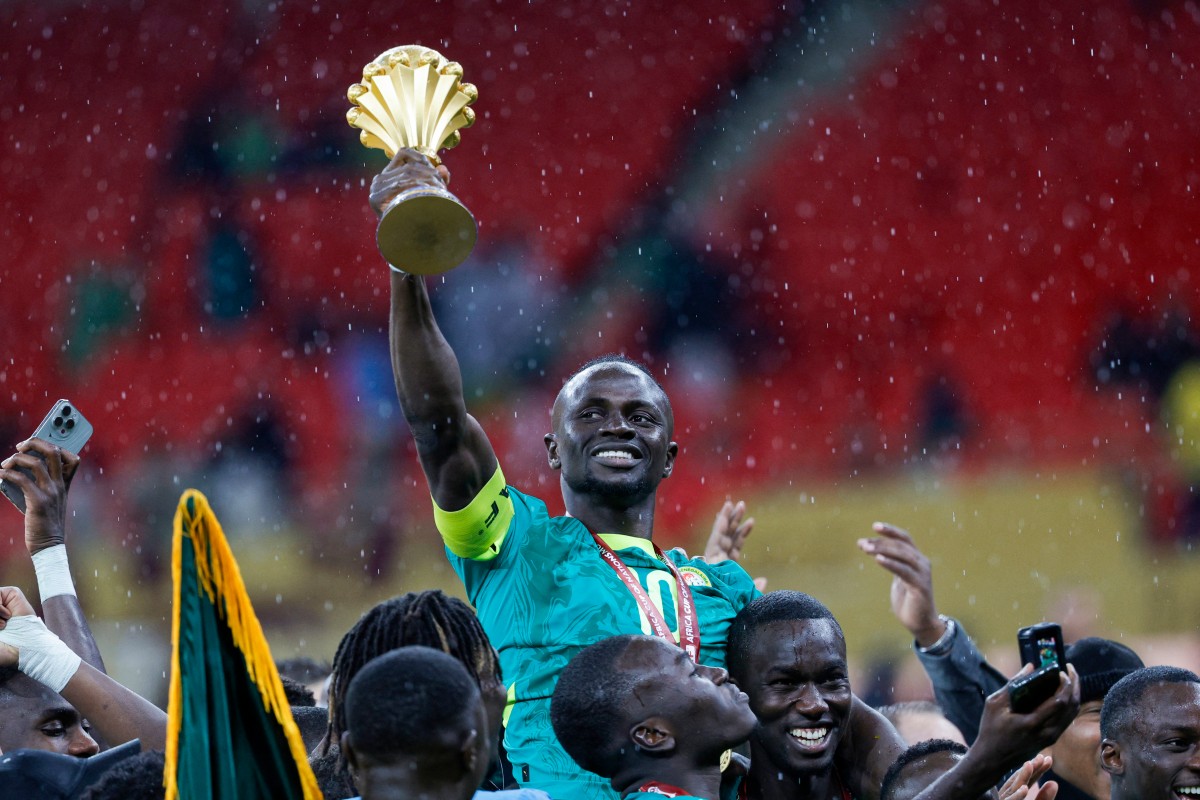
Senegalese President Bassirou Diomaye Faye has officially declared Monday a paid public holiday across the country in celebration of Senegal’s Africa Cup of Nations victory.

This decision followed the victory of the Senegalese national football team (“Teranga Lions”) over host nation Morocco in the AFCON 2025 final, which took place on Sunday, January 18, 2026, in Rabat.

The Head of State declared the day off, and fully paid salaries to be paid to public sector workers to allow the nation to celebrate the victory.

Senegal on Sunday night defeated hosts Morocco 1-0 after extra time to win the 2025 Africa Cup of Nations final in Rabat, in a match marred by controversy, prolonged stoppages and players briefly leaving the pitch.

The dramatic final at the Prince Moulay Abdellah Stadium was interrupted late in regulation time after a contentious penalty decision awarded to Morocco following a VAR review, sparking protests from Senegal players.

The penalty, awarded deep into stoppage time, led to chaotic scenes as Senegal players surrounded the referee, with play halted for several minutes.

Meanwhile, Football governing bodies FIFA and the Confederation of African Football (CAF) have condemned the “unacceptable scenes” that marred Sunday’s Africa Cup of Nations final in Rabat, with CAF pledging to take “appropriate action” against those found guilty.

The AFCON final between hosts Morocco and Senegal was disrupted late in normal time when referee Jean Jacques Mdala awarded Morocco a penalty following a VAR review for a challenge on Brahim Diaz, with the match level at 0-0.

In protest, most Senegal players walked off the pitch, while clashes broke out in the stands involving some Senegalese fans and Moroccan security personnel.

CAF, in a statement issued on Monday, condemned the behaviour of some players and officials but stopped short of assigning blame to either team.

The body said it is reviewing all available footage and will refer the matter to its disciplinary bodies.

“The Confederation Africaine de Football (CAF) condemns the unacceptable behaviour from some players and officials during the CAF Africa Cup of Nations Morocco 2025 Final between Morocco and Senegal in Rabat last night,” read their statement.

“CAF strongly condemns any inappropriate behaviour which occurs during matches, especially those targeting the refereeing team or match organizers.“CAF is reviewing all footage and will refer the matter to competent bodies for appropriate action to be taken against those found guilty.” (Channels)

Posted on Leave a comment

Mali coach launches stinging attack on FIFA-led AFCON changes

Mali head coach Tom Saintfiet has launched a stinging attack on the Confederation of African Football’s decision to reschedule the Africa Cup of Nations (AFCON), insisting that it’s a decision taken by UEFA, European clubs and FIFA, but which does not have the continent’s sporting interests at heart.

The decision to make the biennial AFCON a quadrennial tournament was announced by CAF President Dr Patrice Motsepe in a press conference on Saturday, with the football administrator announcing the decision alongside the launch of a new African Nations League, that would take place annually.

The announcement has prompted mixed reactions across the continent, with Mali’s Saintfiet, speaking ahead of his team’s AFCON fixture with hosts Morocco on Friday, outlining his disgust with a decision that he believes disrespects African football.

“I’m shocked with it, very disappointed,” he told ESPN on Thursday. “It’s all instructed by the big people in UEFA, the big clubs from the five leagues, and also by FIFA…and that makes me so sad.

“We fight so long to get respected in Africa, for African people and Africa’s own identity to get respected, but then to listen to Europe to change your history, a 68-year history, for financial reasons…I think we disrespect [Africa] by going to four years.

“I’m sad about that, and I hope the love for Africa would win out over the pressure of Europe.”

Motsepe blamed the need to change the schedule, which will begin after the 2028 Nations Cup, on the ongoing club-vs-country rows, which take place every time the AFCON is organised during the European football season, among other reasons.

The 63-year-old Mamelodi Sundowns owner also used the need to generate extra revenue as a reason for reducing the volume of AFCONs, although presence of FIFA General Secretary Mattias Grafstrom sitting alongside him for the announcement, reinforced the suspicion that it’s the world football governing body’s interests which are best being served by the changes.

“[We are changing] for the pressure of the clubs, who are giving the load on the players as an excuse for the change,” Saintfiet continued, “but who have created a Club World Cup for teams, a World Cup with 40 teams, a Champions League without champions.

“If you want to respect players, you should play the Champions League with only champions, don’t create new leagues which put more load on players, and then they can still play in a competition [the AFCON] which has existed for 60 years, on a two-year basis.”

The vagueness of CAF’s announcement and the lack of clarity about competition logistics has created much uncertainty around the specifics of the future vision for African football, with the continent’s governing body yet to outline what this reorganisation and the regional Nations League means for World Cup or AFCON qualification, or existing regional competitions as well as the African Nations Championship for domestic players.

Similarly, even though the AFCON has been moved to every four years, it may not solve the club-vs-country debates if some editions of the competition are held within the European season, a necessity given the climate conditions across much of sub-Saharan Africa.

“Africa is the world’s biggest football continent, given the passion of the players, the quality of the players, the big African stars in Europe,” Saintfiet concluded. “1957 was the first AFCON, and since that period, every two years there’s been one.

“It’s the pride of African football, the best players from Africa, the best players in Europe come together, and it’s a celebration of fans.

‘It’s the honour and the glory of African football, but to take it away and go to four years…I could understand if it was a question from Africa, a request from Africa, if, for whatever reason, it was needed by African players, the federations, or CAF,” Saintfiet said. (ESPN)

Posted on Leave a comment

AFCON 2025 winner to earn $10m as CAF hikes prize money

The winner of the CAF Africa Cup of Nations Morocco 2025 will receive $10 million in prize money, the Confederation of African Football has announced.

CAF President Patrice Motsepe disclosed this on Saturday after a meeting of the CAF Executive Committee in Rabat, Morocco, a day before the kick-off of the tournament.

The AFCON Morocco 2025 is scheduled to run from Sunday, December 21, 2025, to Sunday, January 18, 2026.

According to a statement posted on CAF’s website, “The prize money for the winner represents a 43% increase from the 2023 edition, when hosts Cote d’Ivoire pocketed USD 7 million.”

The prize money has also doubled over a four-year period.

Winners of the TotalEnergies CAF AFCON Cameroon 2021 earned $5 million, before the figure rose to $7 million at the Côte d’Ivoire 2023 tournament and now to $10 million in 2025, marking a 100 per cent increase.

CAF said the runners-up at the Morocco 2025 tournament will receive $4 million, while the two semi-finalists will each earn $2.5 million.

The continental body described the increment as part of efforts to enhance the value, competitiveness and global appeal of Africa’s flagship football competition. (Punch)

Posted on Leave a comment

AFCON moves to 4-year cycle as new Africa Nations League created

African football is getting a major shake-up with the creation of the African Nations League and conversion of the biennial Africa Cup of Nations to a four-year cycle.

Patrice Motsepe, the president of the Confederation of African Football, announced the changes Saturday during his news conference before the 2025 Africa Cup hosted by Morocco..

Motsepe said that the 2027 Africa Cup, to be hosted by Uganda, Kenya and Tanzania, will go ahead as planned and that the following edition – originally scheduled for 2029 – will be moved forward to take place in 2028. The next Africa Cup after that will be in 2032.

This would allow the first African Nations League to take place in 2029. Motsepe said it would involve each of the continent’s 54 members, divided into four geographical zones, with games in September and October before the finals are held in November.

“What is new is that … in Africa there’s going to be a competition every year where the best African players who play in Europe and worldwide will be with us on the continent,” Motsepe said.

CAF officials did not immediately specify if the African Nations League will be held on a biennial or annual basis. (AlJazeera)

Posted on Leave a comment

Super Eagles set for Gabon clash in World Cup play-offs

Nigeria’s Super Eagles will square off against Gabon in the semi-finals of the African zone play-offs for the 2026 FIFA World Cup, following the conclusion of the group stage on Tuesday.

The three-time African champions stormed into the play-offs with an emphatic 4–0 thrashing of Benin Republic, sealing second place in their qualifying group. Gabon also booked their spot after a 2–0 win over Burundi, aided by Ivory Coast’s victory against Kenya, which left the Panthers in second place in Group F.

Elsewhere, DR Congo edged Sudan 1–0 to finish runners-up to Senegal in Group B, while Cameroon clinched second place in Group D behind Cape Verde, rounding out the four best runners-up heading to the play-offs.

The mini-tournament will be held in Morocco from November 13 to 16, featuring Nigeria, Gabon, Cameroon, and DR Congo. The format will see the two semi-final winners face off in a single-leg final for a ticket to the inter-confederation play-offs in March 2026, where one African team will have a final shot at qualifying for the World Cup in Canada, Mexico, and the United States.

According to the seeding arrangement, Nigeria—projected to remain Africa’s highest-ranked team among the four when FIFA releases its updated rankings on October 23—will face Gabon, the lowest-ranked side of the quartet. Cameroon and DR Congo will meet in the other semi-final.

Both semi-finals are scheduled for November 13, with the final taking place three days later. All matches will be single-leg encounters, with extra time and penalties to decide the outcome if necessary.

The Confederation of African Football (CAF) is expected to confirm the host cities and venues in the coming days.

While Africa’s nine group winners have already secured direct qualification for next year’s expanded 48-team World Cup, the play-offs offer the continent one more pathway to add an extra representative via the inter-continental route. (Vanguard)

Posted on Leave a comment

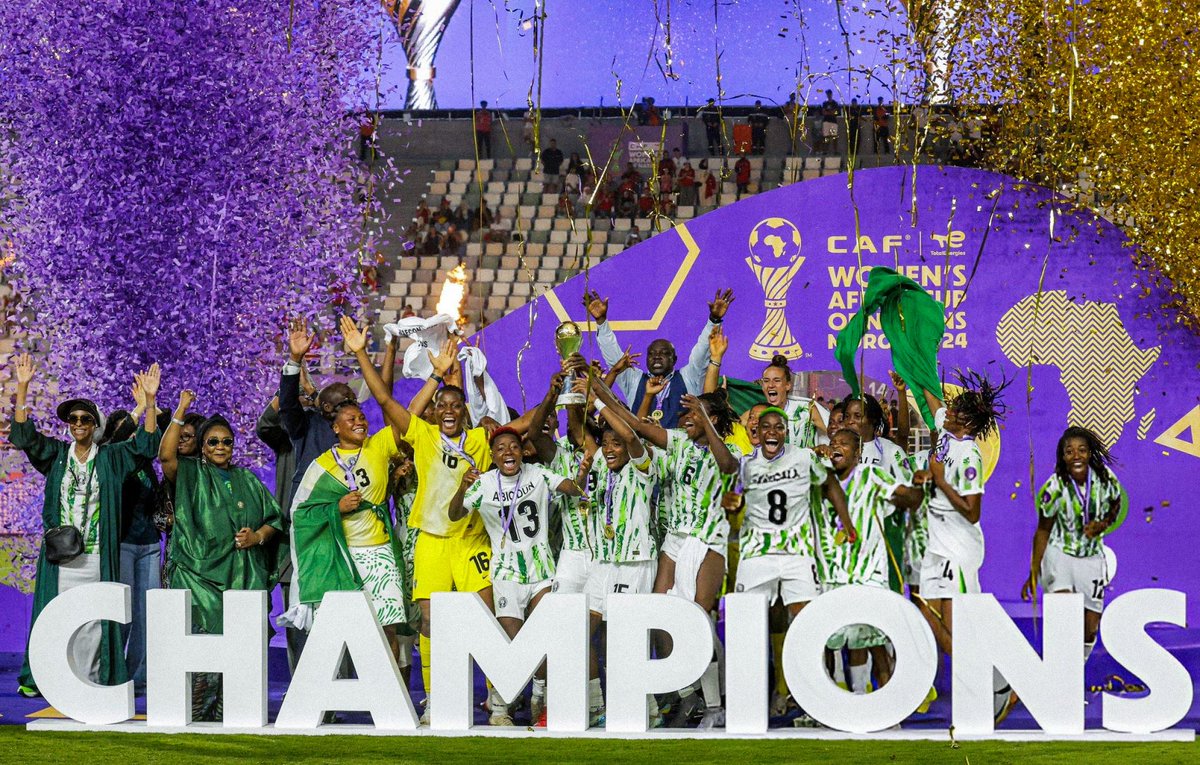
Nigeria seal 10th Wafcon as comeback stuns Morocco

Nigeria produced a sensational second-half comeback to beat hosts Morocco 3-2 and seal a record-extending 10th Women’s Africa Cup of Nations title.

The Atlas Lionesses led 2-0 at the break in Rabat through Ghizlane Chebbak’s fine curling effort and a scuffed shot from Sanaa Mssoudy.

But Esther Okoronkwo inspired the West Africans after the break, pulling a goal back from the penalty spot in the 64th minute after Nouhaila Benzina handled Folamide Ijamilusi’s cross.

Okoronkwo burst into the Morocco box and squared for Ijamilusi to equalise in the 71st minute, then teed up substitute Jennifer Echegini to score the winner with two minutes of the game remaining.

The 21,000-capacity Olympic Stadium was stunned into silence as the Super Falcons players collapsed to the turf in celebrations at the final whistle after producing a seemingly unlikely revival that will live long in the memory.

Nigeria billed their campaign as Mission X and have achieved their target, reclaiming the title they last won in 2018 and preserving their 100% record in Wafcon finals.

Morocco, meanwhile, had hired 2023 Women’s World Cup-winning coach Jorge Vilda after he parted company with Spain in a bid to land their first continental crown, but have now lost back-to-back Wafcon finals.

The Super Falcons pick up $1m in prize money – which has been doubled since the last edition – and become the first side to lift the new-look Wafcon trophy.

However, the stadium had largely emptied out by the time Fifa president Gianni Infantino and Confederation of African Football counterpart Patrice Motsepe took to the stage for the presentation.

The 2024 edition of the tournament had been delayed because of scheduling issues last year, which included the participation of the West Africans and Zambia at the Paris 2024 Olympics.

Nigeria had not been shy in expressing their intentions of winning their 10th Wafcon, with players consistently asked about that target in media engagements.

The Super Falcons have certainly backed up their off-field talk in their performances in Morocco this month as coach Justin Madugu found the right blend in the knockout phase.

Yet the top-ranked side in Africa made a poor start and Nigeria were unable to match Morocco’s level in the first half.

The North Africans went ahead in the 13th minute when Halimatu Ayinde gave the ball to Chebbak, who sent a fine shot just inside the left-hand upright, and doubled their lead 11 minutes later when Mssoudy shot across goal.

Okoronkwo was composure personified after the intervention of VAR to make it 2-1 from the spot, and then kept her head when she burst through the Morocco defence to control, pause and put the ball on a plate for Ijamilusi.

Another big moment came when Morocco were awarded a penalty in the 79th minute when Imane Saoud helped a cross onto the hand of Blessing Demehin, who was barely two yards away.

Chebbak had the ball on the spot when Namibian referee Antsino Twanyanyukwa was called to the VAR screen and overturned her decision almost four minutes later.

And the comeback was completed when Okoronkwo provided a pin-point free-kick delivery and Echegini got ahead of centre-back Benzina to sweep home from six yards out.

The West Africans have now beaten a third host nation in a Wafcon final following successes over South Africa and Cameroon in 2000 and 2016 respectively. (BBC)