
Posted on Leave a comment

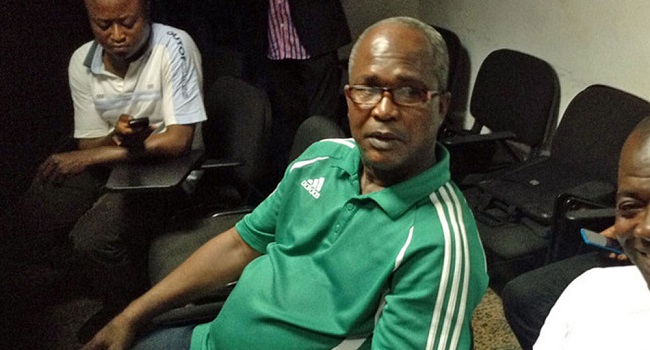
Former Super Eagles midfielder Henry Nwosu dies at 62

Nigeria’s football community has been hit with yet another bout of grief following the death of former Super Eagles midfielder, Henry Nwosu, who passed away early Saturday morning at the age of 62.

The news of Nwosu’s passing was announced by Nigerian football legend Segun Odegbami through his social media platforms on Saturday.

According to Odegbami, Nwosu died at about 4:00 a.m. at the Lagos State University Teaching Hospital in Idi-Araba, where he had been receiving intensive medical care since Wednesday, March 11.

“Henry Nwosu passes on! After five days in hospital battling for his life, the one I call ‘Youngest Millionaire’ passed on at 4:00 a.m. this morning at the Lagos State University Teaching Hospital, Ikeja, Lagos, where he had been in intensive care since Wednesday,” Odegbami wrote.

“It is with deep pain in my heart that I have to be the conveyor of the news of the death of Henry Nwosu MON. May he rest peacefully with our Creator in Heaven.”

Born in Imo State, Nwosu rose to prominence as a gifted midfielder known for his vision, creativity, and technical skill. He was the youngest member of Nigeria’s victorious squad at the 1980 Africa Cup of Nations, where the then Green Eagles secured the country’s first continental title on home soil.

His performances during the tournament and in subsequent international appearances established him as one of the most exciting midfielders of his generation.

Beyond his international career, Nwosu was also a prominent figure in Nigerian domestic football, where he earned admiration for his intelligence on the ball and leadership on the field.

After retiring from active football, the former international remained deeply involved in the game, working as a coach and mentor to younger players while contributing to grassroots development.

Nwosu’s death comes just days after the passing of former NFF technical director and Super Eagles coach Adegboye Onigbinde, who led Nigeria to the 2002 FIFA World Cup and died at the age of 88. (Channels)
Posted on Leave a comment

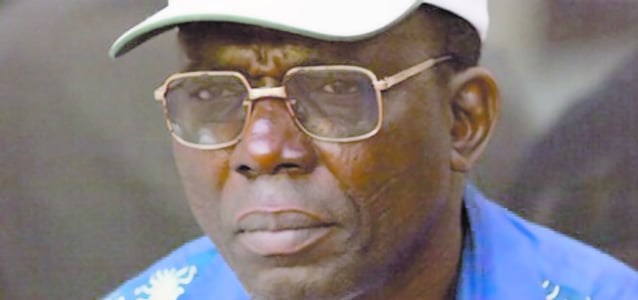
Odegbami tells NFF, NSC to immortalise Onigbinde

Former Super Eagles captain and 1980 Africa Cup of Nations winner, Segun Odegbami, has urged the Nigeria Football Federation and the National Sports Commission to immortalise the late Super Eagles coach, Adegboye Onigbinde, to preserve his legacy in Nigerian football, The PUNCH reports.

Onigbinde, who handled the Nigeria national team twice and also served as a CAF and FIFA instructor, died on Monday, March 9, at the age of 88.

The Modakeke-born coach first led Nigeria between 1982 and 1984, guiding the Green Eagles to a second-place finish at the 1984 AFCON in Ivory Coast. The achievement made him the first Nigerian coach to win an AFCON medal.

He returned in 2002 as the Technical Director of the Nigeria Football Association and led a new-look Super Eagles side to the 2002 FIFA World Cup in Korea and Japan.

While tributes have continued to pour in for the late tactician, Odegbami believes he deserves a permanent place in the history of Nigerian football.

“He stands out as one of the most successful Nigerians to coach the national team and work in coaching within the country. Nigeria must find a way to immortalise him. The Nigeria Football Federation and the National Sports Commission must ensure that he is immortalised. He deserves it,” Odegbami said during a radio programme, Sports Salsa, on Kennis FM.

“It is painful for all of us. His love for football, his passion for developing the game, and the feeling that he was not fully utilised to transform Nigerian football remain notable. But he has left a legacy that is unmatched. Nigerians should always remember him for his great contributions to our football history.”

Onigbinde also served as Technical Adviser to the Trinidad and Tobago Football Federation, where he oversaw the country’s youth teams.

The Nigeria Football Federation described his death as “the exit of a great man who served Nigeria football wholeheartedly and was diligent and devoted to the development of the game.”

For many years, he worked as a technical adviser to the Confederation of African Football and served on several Technical Study Groups for both FIFA and CAF at major international tournaments.

He began his coaching career in the 1960s and rose to national prominence in 1977 when he led Water Corporation FC of Ibadan to the quarter-finals of the African Cup of Champions Clubs. Seven years later, he guided Ibadan giants Shooting Stars to the final of the same competition.

Burial arrangements for the late coach will be announced by his family in the coming days. (Punch)

Posted on Leave a comment

Nigeria sports community mourns Onigbinde

Tributes are still pouring in for the late Super Eagles coach, Adegboye Onigbinde, who passed away on Monday.

Led by the National Sports Commission and the Nigeria Football Federation, Onigbinde’s passing has been described as “the exit of a great man who served Nigerian football wholeheartedly and was diligent and devoted to the development of the game.”

“His legacies as a former national team coach and former CAF and FIFA technical instructor will continue to shape the sport for decades to come. A true legend has gone home. Rest on, High Chief,” the Director-General of the NSC, Bukola Olopade, wrote.

Similarly, the Director-General and Chief Executive Officer of the National Institute for Sports, Philip Shaibu, said, “Coach Onigbinde represents an era of discipline, courage and football intelligence. At the National Institute for Sports, we believe our legends must be celebrated, respected and preserved as national treasures while we also tap into their experience and wisdom in navigating our core mandate. Unfortunately, as part of the natural course of life, he is no longer with us.”

NFF General Secretary Dr Mohammed Sanusi said the Modakeke high chief was “an extraordinary achiever who impacted positively not only on Nigerian football but on the African and global game at large.”

“Indeed, a big tree has fallen. Chief Onigbinde ate, drank, breathed, slept and lived football development. We will miss him greatly, as he was never tired of offering advice on the game’s development even at his ripe old age. We pray that God will grant him eternal rest and also grant his family, relations, friends and the Nigerian football fraternity the fortitude to bear the loss.”

The Nigeria Football Coaches Association also paid tribute to the man widely regarded as a trailblazer of coaching education in the country.

“Beyond his technical contributions on the pitch, he was a respected leader, mentor and elder statesman whose influence extended through generations of coaches, players and football administrators across Nigeria and Africa,” the association said in a statement.

Respected globally for his deep knowledge of the game’s tactics and techniques, Onigbinde served as Technical Director of the Nigeria Football Federation and also as Technical Adviser to the Trinidad and Tobago Football Federation, where he worked with the country’s youth teams. He was for many years a technical adviser to the Confederation of African Football and also served on several Technical Study Groups of FIFA and CAF at major championships.

He began his coaching career in the 1960s and rose to national prominence in 1977, when he led Water Corporation FC of Ibadan to the quarter-finals of the African Cup of Champions Clubs. Seven years later, he guided Shooting Stars Sports Club of Ibadan to the final of the same competition.

A quintessential teacher, educator and instructor, Onigbinde was the first indigenous coach to lead Nigeria’s senior men’s national team to an Africa Cup of Nations silver medal, achieving the feat with a largely youthful squad at the 1984 tournament in Côte d’Ivoire.

The cerebral tactician later guided the Super Eagles to the 2002 FIFA World Cup in Korea and Japan, where a blend of emerging talents and experienced players narrowly lost to Argentina and Sweden and drew with England. He became the first Nigerian coach to manage the Super Eagles at the FIFA World Cup, following foreign managers Clemens Westerhof (1994) and Bora Milutinović (1998).

Afterwards, he served as an instructor and educator for the NFF, CAF and FIFA, dedicating his time to training coaches and football administrators, a contribution that earned him recognition and accolades across the football world. (Punch)