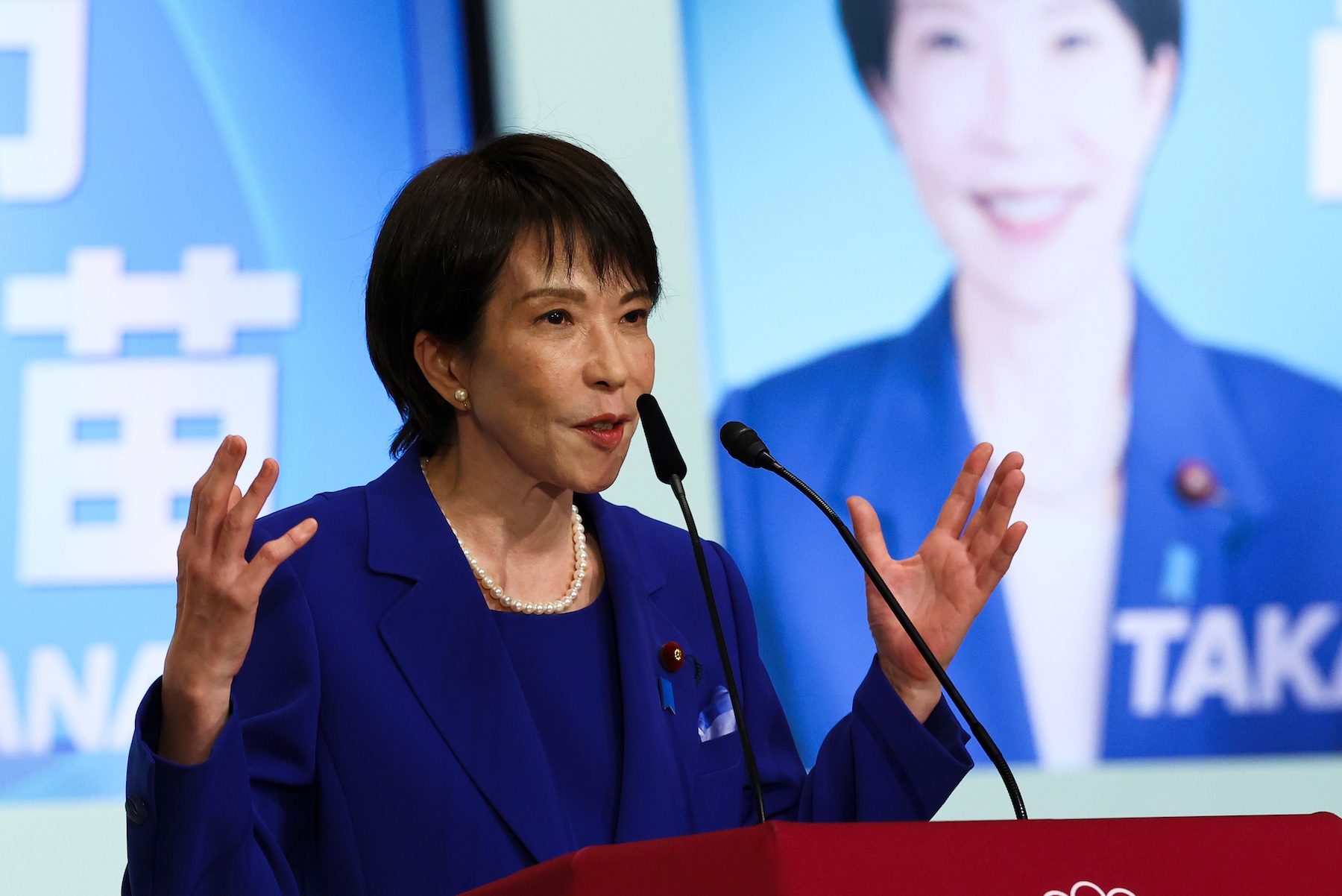
Japan’s ruling party, led by Prime Minister Sanae Takaichi, is considering raising the country’s income tax in January 2027 to cover part of a substantial increase in defense spending, sources close to the matter said Thursday.
The plan being floated within the Liberal Democratic Party would collect revenue for defense-related spending through a special income tax, the sources said.
Before Takaichi became premier in October, Japan decided to boost its defense-related spending to a combined 43 trillion yen over five years through March 2028 to cope with growing security threats.
The increase will be partly funded by raising corporate, tobacco and income taxes, but details have yet to be worked out on the timing of the income tax hike at a time of persistent inflation hurting households.
The plan under discussion within the LDP would raise the income tax so it would translate into upwards of 200 billion yen in added revenue, according to the sources.
A special income tax levied to finance rebuilding projects after the 2011 tsunami and nuclear disaster would also be reduced in an apparent effort to soften the expected blow to taxpayers.
But given that the temporary disaster-related income tax would then be extended to bring in the same amount of revenue overall, the envisioned defense-use income tax would still represent an added burden for households in the long term.
Before entering a coalition arrangement with the Takaichi-led LDP, the formerly opposition Japan Innovation Party was against tax hikes to pay for increased defense-related spending.
The corporate and tobacco taxes will be raised beginning next April, with an additional levy of 4 percent of the amount paid in corporate taxes. The tobacco tax hike will start with higher levies on vaping products.
Through the increases in the three tax categories alone, the government intends to secure slightly over 1 trillion yen annually by the end of March 2028. (JapanToday)
Ukrainian sumo wrestler Danylo Yavhusishyn said Monday that he had surprised even himself by becoming the first from his country to win a tournament in the ancient Japanese sport.
The 21-year-old, who fled the war in Ukraine three years ago, is set to be promoted to sumo’s second-highest rank this week after winning the Kyushu Grand Sumo Tournament.
The victory earned Yavhusishyn, who is known by his ring name Aonishiki, his first title in only his 14th tournament.
He did it by beating Mongolian grand champion Hoshoryu on Sunday.
“To be quite honest I wanted to win the tournament but I didn’t really think that I could,” he told reporters in Fukuoka. “I’m really happy.”
Yavhusishyn was born in central Ukraine and took up sumo at the age of seven, becoming a national champion at 17.
His age meant he narrowly avoided Ukraine’s military draft for men aged 18 and older after Russia invaded and he sought refuge in Germany, before moving to Japan.
His parents stayed in Germany and he arrived in Japan knowing nothing of the language.
Yavhusishyn said he spoke to his parents after winning the tournament and that he had also received messages from friends in Ukraine.
“I’ve had lots but I haven’t been able to reply to them all yet,” he said. “It will take time to reply to them all but I’ll start doing them one by one after this.”
Yavhusishyn became the second Ukraine-born professional sumo wrestler when he made his debut in July 2023, following in the footsteps of Serhii Sokolovskyi, better known as Shishi.
Yavhusishyn’s promotion to sumo’s upper divisions was the fifth fastest since the current system of six tournaments a year was introduced in 1958.
He kept his title hopes alive at the Kyushu Grand Sumo Tournament by beating Hoshoryu on the penultimate day, then triumphed over the Mongolian again to clinch the title.
“It was the last tournament of the year, so I wanted to give a good account of myself so that I wouldn’t end the year with any regrets,” said Yavhusishyn. (JapanToday)
Japan has warned its citizens in China to be careful of their surroundings and to avoid big crowds amid a diplomatic row over Prime Minister Sanae Takaichi’s comments on Taiwan.
The escalating spat has already seen Beijing advise Chinese citizens to avoid traveling to Japan and hit Tokyo stocks.
“Pay attention to your surroundings and avoid as much as possible squares where large crowds gather or places that are likely to be identified as being used by many Japanese people,” the Japanese embassy in China said in a statement on its website dated Monday.
Minoru Kihara, Japan’s top government spokesman, said Tuesday that such advice was issued “based on a comprehensive assessment of the political situation, including the security situation in the relevant country or region, as well as the social conditions.”
The diplomatic feud between China and Japan was ignited by Takaichi’s suggestion that Tokyo could intervene militarily in any attack on Taiwan.
China, which claims Taiwan as part of its territory and has not ruled out using force to take the democratic island, reacted furiously to Takaichi’s comments.
It called for her to retract the remarks and summoned the Japanese ambassador on Friday.
In a post on X on November 8, the Chinese consul general in Osaka, Xue Jian, threatened to “cut off that dirty head”, apparently referring to Takaichi, who took office in October.
Tokyo said it had summoned the Chinese ambassador over the now-deleted social media post.
Masaaki Kanai, the top official in the foreign ministry for Asia-Pacific affairs arrived in China Monday seeking to defuse the row, and was at the Chinese foreign ministry Tuesday, Jiji press agency reported.
He had been expected to hold talks with his Chinese counterpart Liu Jinsong, earlier reports said.
The Japanese embassy warning also advised citizens to “respect local customs and be careful about your words and attitudes when interacting with local people”.
“If you see a person or group that you feel suspicious of, stay away from it and leave the place immediately,” it said.
Tokyo shares fell three percent Tuesday as the diplomatic spat weighed on sentiment.
Japanese tourism and retail shares dived on Monday after China warned its citizens to avoid Japan, a tourist hotspot.
Asia’s two top economies are closely entwined, with China the biggest source of tourists — almost 7.5 million visitors in the first nine months of 2025 — coming to Japan.
Before taking power last month, Takaichi was a vocal critic of China and its military build-up in the Asia-Pacific.
If a Taiwan emergency entails “battleships and the use of force, then that could constitute a situation threatening the survival (of Japan)”, Takaichi, 64, told parliament on November 7.
Under Japan’s self-imposed rules, an existential threat is one of the few cases where it can act militarily. (JapanToday)
A spat between China and Japan over Japanese Premier Sanae Takaichi’s Taiwan comments showed no signs of abating on Wednesday with a series of vitriolic commentaries in Chinese state media and calls in Tokyo to expel a Chinese diplomat.
Takaichi sparked the furore with remarks in parliament last week that a Chinese attack on Taiwan could amount to a “survival-threatening situation” and trigger a potential military response from Tokyo.
That drew a formal protest from China and a threatening post from China’s Consul General in Osaka, Xue Jian, which Tokyo said was “extremely inappropriate” and complained to Beijing about.
While Takaichi has since said she would refrain from making such comments again and Tokyo called for mutual efforts to reduce friction on Tuesday, a brace of Chinese state media commentaries suggest the furore could rumble on.
State broadcaster CCTV said in an editorial late on Tuesday that Takaichi’s remarks were of “extremely malicious nature and impact” and have “crossed the line” with China.
A post on a social media account affiliated with CCTV called Takaichi a “troublemaker”, using the word as a play on the pronunciation of her family name in Chinese.
“Has her head been kicked by a donkey?” said the post on the Yuyuan Tantian account. “If she continues to spew shit without any boundaries like this, Takaichi might have to pay the price!”
The CCTV editorial also likened Takaichi’s reference to “survival-threatening situations” with Japan’s 1931 invasion of northeast China’s Manchuria.
Japan’s foreign ministry did not immediately respond to a request for comment. (JapanToday)
Japan’s Diet elected ultraconservative Sanae Takaichi as the country’s first female prime minister Tuesday, a day after her struggling party struck a coalition deal with a new partner expected to pull her governing bloc further to the right.
Takaichi replaces Shigeru Ishiba, ending a three-month political vacuum and wrangling since the Liberal Democratic Party’s disastrous election loss in July.
Ishiba, who lasted only one year as prime minister, resigned with his cabinet earlier in the day, paving the way for his successor.
Takaichi won 237 votes — four more than a majority — compared to 149 won by Yoshikoko Noda, head of the largest opposition party, the Constitutional Democratic Party of Japan, in the lower house, which elects the prime minister. As the results were announced, Takaichi stood up and bowed deeply.
The LDP’s alliance with the Osaka-based rightwing Japan Innovation Party, or Ishin no Kai, ensured her premiership because the opposition is not united. Takaichi’s untested alliance is still short of a majority in both houses of parliament and will need to court other opposition groups to pass any legislation — a risk that could make her government unstable and short-lived.
The two parties signed a coalition agreement on policies underscoring Takaichi’s hawkish and nationalistic views.
Their last-minute deal came after the Liberal Democrats lost its longtime partner, the Buddhist-backed Komeito, which has a more dovish and centrist stance. The breakup threatened a change of power for the LDP, which has governed Japan almost uninterrupted for decades.
Tackling rising prices and other economic measures is the top priority for the Takaichi government, LDP Secretary General Shunichi Suzuki told NHK public television as he apologized over the delay because of the party’s internal power struggle since the July election. He said the new coalition will cooperate with other opposition parties to quickly tackle rising prices to “live up to the expectations of the people.”
Later in the day, Takaichi, 64, will present a cabinet with a number of allies of LDP’s most powerful kingmaker, Taro Aso, and others who backed her in the party leadership vote.
JIP will not hold ministerial posts in Takaichi’s cabinet until his party is confident about its partnership with the LDP, Yoshimura said.
Takaichi is running on a deadline, as she prepares for a major policy speech later this week, talks with U.S. President Donald Trump and regional summits. She needs to quickly tackle rising prices and compile economy-boosting measures by late December to address public frustration.
While she is the first woman serving as Japan’s prime minister, she is in no rush to promote gender equality or diversity.
Takaichi is among Japanese politicians who have stonewalled measures for women’s advancement. Takaichi supports the imperial family’s male-only succession and opposes same-sex marriage and allowing separate surnames for married couples.
A protege of assassinated former Prime Minister Shinzo Abe, Takaichi is expected to emulate his policies including a stronger military and economy, as well as revising Japan’s pacifist constitution. With her potentially weak grip on power, it’s unknown how much Takaichi will be able to achieve.
Also an admirer of former British Prime Minister Margaret Thatcher, Takaichi was first elected to parliament in 1993 and has served in a number of senior party and government posts, including as ministers of economic security and internal affairs, but her diplomatic background is thin.
When Komeito left the governing coalition, it cited the LDP’s lax response to slush fund scandals that led to their consecutive election defeats.
The centrist party also raised concern about Takaichi’s revisionist view of Japan’s wartime past and her regular prayers at Yasukuni Shrine despite protests from Beijing and Seoul that see the visits as lack of remorse about Japanese aggression, as well as her recent xenophobic remarks.
Takaichi has toned down her hawkish rhetoric. On Friday, she sent a religious ornament instead of going to Yasukuni. (JapanToday)
Japan’s ruling party picked hardline conservative Sanae Takaichi as its head on Saturday, putting her on course to become the country’s first female prime minister in a move set to jolt investors and neighbors.
The Liberal Democratic Party, which has ruled Japan for almost all of the postwar era, elected Takaichi, 64, to regain trust from a public angered by rising prices and drawn to opposition groups promising stimulus and clampdowns on migrants.
A vote in parliament to choose a replacement for outgoing Shigeru Ishiba is expected on October 15. Takaichi is favored as the ruling coalition has the largest number of seats.
Takaichi, the only woman among the five LDP candidates, beat a challenge from the more moderate Shinjiro Koizumi, 44, who was bidding to become the youngest modern leader.
Takaichi got 183 votes, while Koizumi garnered 156 in a runoff.
A former economic security and internal affairs minister with an expansionary fiscal agenda for the world’s fourth-largest economy, Takaichi takes over a party in crisis.
Various other parties, including the expansionist Democratic Party for the People and the anti-immigration Sanseito, have been steadily luring voters, especially younger ones, away from the LDP.
The LDP and its coalition partner lost their majorities in both houses under Ishiba over the past year, triggering his resignation.
“Recently, I have heard harsh voices from across the country saying we don’t know what the LDP stands for anymore,” Takaichi said in a speech before the second-round vote. “That sense of urgency drove me. I wanted to turn people’s anxieties about their daily lives and the future into hope.”
Takaichi, who says her hero is Margaret Thatcher, Britain’s first female prime minister, offers a starker vision for change than Koizumi and is potentially more disruptive.
An advocate of late premier Shinzo Abe’s “Abenomics” strategy to boost the economy with aggressive spending and easy monetary policy, she has previously criticized the Bank of Japan’s interest rate increases.
Such a spending shift could spook investors worried about one of the world’s biggest debt loads.
Naoya Hasegawa, chief bond strategist at Okasan Securities in Tokyo, said Takaichi’s election had weakened the chances of the BOJ raising rates this month, which markets had priced at around a 60% chance before the vote.
Takaichi has also raised the possibility of redoing an investment deal with U.S. President Donald Trump that lowered his punishing tariffs in return for Japanese taxpayer-backed investment.
The U.S. ambassador to Japan, George Glass, congratulated Takaichi, posting on X that he looked forward to strengthening the Japan-U.S. partnership “on every front”.
But her nationalistic positions – such as her regular visits to the Yasukuni shrine to Japan’s war dead, viewed by some Asian countries as a symbol of its past militarism – may rile neighbors like South Korea and China.
South Korea will seek to “cooperate to maintain the positive momentum in South Korea-Japan relations”, President Lee Jae Myung’s office said in a statement.
Takaichi also favors revising Japan’s pacifist postwar constitution and suggested this year that Japan could form a “quasi-security alliance” with Taiwan, the democratically governed island claimed by China.
Taiwan President Lai Ching-te welcomed her election, saying she was a “steadfast friend of Taiwan”.
“It is hoped that under the leadership of the new (LDP) President Takaichi, Taiwan and Japan can deepen their partnership in areas such as economic trade, security, and technological cooperation,” he said in a statement.
If elected prime minister, Takaichi said she would travel overseas more regularly than her predecessor to spread the word that “Japan is Back!”
“I have thrown away my own work-life balance and I will work, work, work,” Takaichi said in her victory speech.
Some of her supporters viewed her selection as a watershed in Japan’s male-dominated politics, though opinion polls suggest her socially conservative positions are favored more by men than women.
“The fact that a woman was chosen might be seen positively. I think it shows that Japan is truly starting to change and that message is getting across,” 30-year-old company worker Misato Kikuchi said outside Tokyo’s Shimbashi station.
Takaichi must also seek to blunt the rise of Sanseito, which broke into the political mainstream in a July election, appealing to conservative voters disillusioned with the LDP.
Echoing Sanseito’s warnings about foreigners, she kicked off her first official campaign speech with an anecdote about tourists reportedly kicking sacred deer in her hometown of Nara.
Takaichi, whose mother was a police officer, promised to clamp down on rule-breaking visitors and immigrants, who have come to Japan in record numbers in recent years.”We hope she will … steer Japanese politics in an ‘anti-globalism’ direction to protect national interests and help the people regain prosperity and hope,” Sanseito said in a statement. (JapanToday)
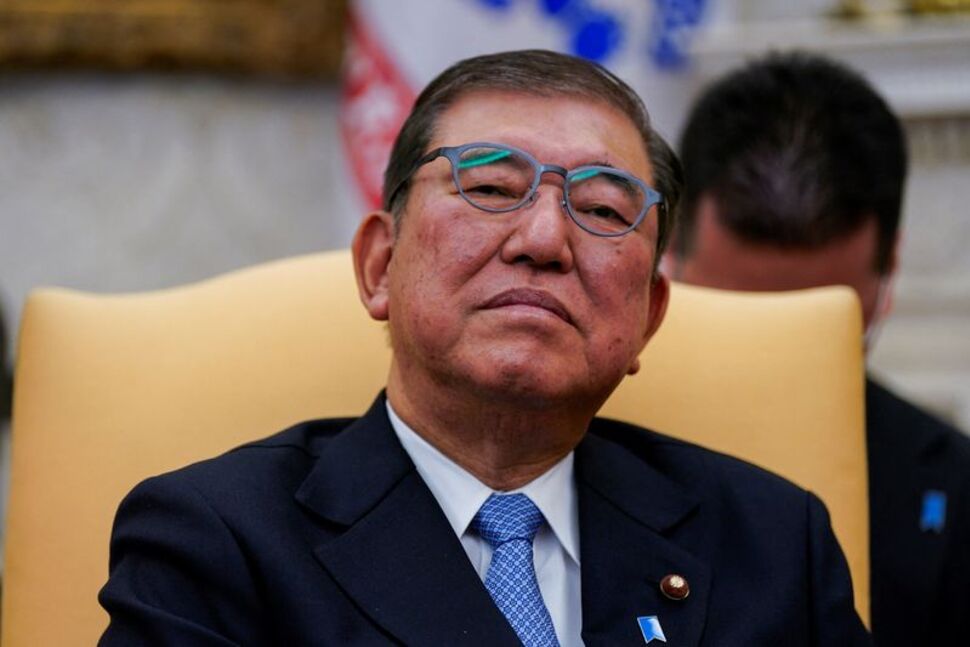
Japan’s Prime Minister Shigeru Ishiba has announced he is stepping down after less than a year in the role, following two major election losses.
The move comes a day before his Liberal Democratic Party (LDP) was expected to vote on whether to hold an internal leadership vote that could have forced him out.
The LDP has governed Japan for most of the past seven decades, but under Ishiba it lost its majority in the lower house for the first time in 15 years and then lost its majority in the upper house in July.
Japan, the world’s fourth-largest economy and a key US ally, now faces a period of political uncertainty as tensions rise with China and regional insecurity mounts.
“Now that a conclusion has been reached in the negotiations concerning the US tariff measures, I believe this is precisely the appropriate time,” Ishiba said, referring to a deal signed last week to ease tariffs imposed by US President Donald Trump on Japanese cars and other exports.
Until Sunday, he had resisted calls to resign, saying it was his responsibility to settle the dispute with Washington before stepping down.
“I have strongly believed that negotiations concerning the US tariff measures, which could be described as a national crisis, must be brought to a conclusion under our administration’s responsibility,” he said.
The 68-year-old said he would continue his responsibilities “to the people” until a successor was selected.
The LDP will now choose a new leader, who will become prime minister following a vote in parliament.
Ishiba, who took office in October 2024 promising to tackle rising prices, struggled to inspire confidence as the country faced economic headwinds, a cost-of-living crisis and fractious politics with the US.
Inflation, particularly the doubling of rice prices in the past year, was politically damaging.
Public support further slid after a series of controversies, including criticism of his decision to appoint only two women to his cabinet and handing out expensive gifts to party members. (BBC)
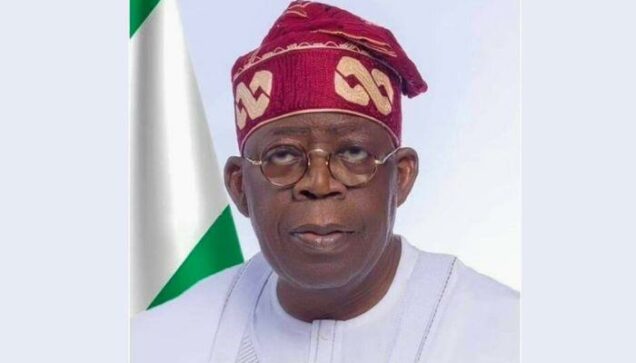
President Bola Ahmed Tinubu returned to Abuja around 1:20am on Thursday after concluding a three-day state visit to Brazil that yielded a raft of bilateral agreements and high-level engagements aimed at deepening Nigeria’s economic and diplomatic ties with South America’s largest economy.
The President, who arrived aboard the presidential jet, was received at the Presidential Wing of the Nnamdi Azikiwe International Airport by a high-powered delegation of political leaders and senior government officials.
Among those present were Governors Caleb Mutfwang (Plateau); Uba Sani (Kaduna); Hope Uzodinma (Imo) and AbdulRahman AbdulRazaq (Kwara).
Also on hand to welcome the President were Speaker of the House of Representatives, Tajudeen Abbas; Deputy Senate President, Barau Jibrin; Chief of Staff to the President, Femi Gbajabiamila; National Security Adviser, Nuhu Ribadu; and some Ministers, including Nyesom Wike (FCT); Abubakar Atiku Bagudu (Budget and Economic Planning) and Bello Matawalle (Defence, State).
President Tinubu’s visit to Brazil was marked by the signing of five Memoranda of Understanding (MoUs) covering aviation, trade, science, diplomacy, and finance.
At a joint press conference in Brasília, he welcomed the imminent return of Petrobras, Brazil’s state-owned oil giant, to Nigeria—five years after it halted its joint ventures.
“We have the largest gas repository. So I don’t see why Petrobras doesn’t join as a partner in Nigeria as soon as possible. I appreciate President Lula’s promise that this will be done,” he said.
The agreements also included a Bilateral Air Services Agreement, paving the way for direct flights between Lagos and São Paulo, to be operated by Air Peace.
Other MoUs targeted political consultations, scientific collaboration, and agricultural financing through Nigeria’s Bank of Agriculture and Brazil’s National Bank for Economic and Social Development.
Beyond the MoUs, President Tinubu underscored his administration’s economic reforms, assuring Brazilian investors of a stable, transparent financial climate.
He cited Nigeria’s capital market growth as evidence of renewed investor confidence and pledged continued reforms to “unlock capital, protect investors, and drive innovation.”
In a meeting with Nigerians in Brazil, Tinubu called on the diaspora to contribute actively to nation-building, pledging technology-driven development and food security as the pillars of a prosperous future.
“We must bring Nigeria to the forefront of Africa’s progress, driven by technology, food sovereignty, and the courage to change our destiny,” he told the gathering.
The visit, which featured red-carpet honours, bilateral meetings with President Luiz Inácio Lula da Silva, and cultural engagements, signalled what both leaders described as a new era in Nigeria–Brazil relations.
Tinubu’s state visit to Brazil was preceded by his participation at the recently concluded ninth edition of the Tokyo International Conference on African Development (TICAD9). (Nation)
President Bola Tinubu has called on Nigerians in the Diaspora to contribute their expertise and resources to consolidating national development and building a stronger and more prosperous country.
The President said the government has also reversed the trend of medical tourism by upgrading healthcare infrastructure and expanding access to quality services at home.
President Tinubu spoke on Thursday at Kahala Hotel and Resort, Yokohama, Japan, during an interactive meeting with select members of the Nigerian community on the sidelines of the ongoing Tokyo International Conference on African Development (TICAD9).
The meeting, which brought together professionals and entrepreneurs across various fields, allowed the President to share his administration’s achievements and assure them of his commitment to drive economic growth.
President Tinubu according to a statement by his spokesman, Bayo Onanuga, expressed delight at meeting those he described as a vibrant representation of Nigeria’s diversity, assuring the Diaspora community that his government is determined to make the country conducive for all citizens.
The statement partly read: “The President invited the Minister of State for Industry, Senator John Enoh, and the executive vice chairman of NASENI, Khalil Suleiman Halilu, to speak on the government’s programmes and achievements. Wale Tinubu, the President’s nephew, provided insight into how the government’s reforms have impacted the economy positively by making businesses more competitive, attracting investment, and expanding the stock market.
“President Tinubu said Nigeria is on the rise again under his leadership. He reiterated that leadership is about “thinking and doing” — blending visionary ideas with practical actions to drive stability, unity, and growth.”
He noted significant improvements in passport issuance, making the process seamless for residents and the Diaspora. He reaffirmed his administration’s priority to create an environment where every Nigerian can feel the positive impact of change.
“I am happy to listen to you. I’m happy to report that many of our people are returning home. Yes, for economic reasons, some people might decide to stay away; it’s a fundamental right of the individual, but for the economic growth and opportunity available in Nigeria, don’t stay away. Your contribution is very much needed. If you stay away, who will build it?” the President asked.
President Tinubu stressed that national development cannot be left to the government alone; it requires a shared sense of responsibility between citizens at home and those abroad.
He urged the Diaspora community to remain ambassadors of the country by projecting Nigeria positively in their engagements abroad.
“If we don’t join hands and work together, then we’ve lost the hope of being the leaders we are supposed to be,” he cautioned.
He reminded his audience that the strength of citizenship is not only in holding a Nigerian passport but in character and commitment to the nation’s progress.
According to him, negative portrayals of Nigeria do little to advance the cause of development and discourage the investment and partnerships the country needs.
Regarding the economy, Tinubu assured that his administration has stabilised key fundamentals and is driving reforms to unlock immense opportunities for investment and job creation.
“He said the government has also reversed the trend of medical tourism by upgrading healthcare infrastructure and expanding access to quality services at home,” the statement added.
Some of the Nigerians in Japan expressed their satisfaction with the pace of the government’s reforms, affirming their support. They also pledged to explore avenues for greater involvement in Nigeria’s economic and social transformation.
Mr. Emeka Ebogota, President of the Nigerian Union in Japan, thanked President Tinubu for finding time to meet with them. He affirmed his members’ support for the administration’s efforts to reposition Nigeria.
Other notable attendees included John Ologbotsere, a Japanese national award winner for electrotechnical standardisation; Mr. Kingsley Kabuyashi, entrepreneur and investor; and businesspeople, doctors, and students.
Also present were the Minister of Foreign Affairs, Ambassador Yusuf Tuggar; Charge d’Affaires, Mrs. Florence Akinyemi Adeseke; Minister of Solid Minerals, Dele Alake; Minister of Regional Development, Abubakar Momoh; Minister of Science and Technology, Uche Nnaji; Minister of Budget, Atiku Bagudu; Minister of State for Finance, Doris Uzoka-Anite; the Director-General of the National Intelligence Agency, Ambassador Mohammed; senior government officials, and top private sector leaders. (Vanguard)
President Bola Tinubu departed Yokohama, Japan, on Thursday night for Brazil, where he is scheduled to commence a state visit on August 24, according to a statement issued by the Special Adviser to the President on Information and Strategy, Bayo Onanuga.
Onanuga, in a release dated August 22, 2025, said the President will make a stopover in Los Angeles before continuing to Brasilia, the Brazilian capital.
“President Tinubu will continue his diplomatic engagements in Brazil after successfully attending the ninth Tokyo International Conference for African Development (TICAD9),” the statement read.
The President embarked on his two-nation tour on August 15, leaving Abuja with a brief stopover in Dubai, UAE, before arriving in Yokohama on August 18.
During his stay in Japan, Tinubu participated in the opening ceremony and plenary of TICAD9 on August 20 and held bilateral meetings with key partners.
The visit culminated in an interactive session with Nigerians in the diaspora on Thursday night.
“The engagements have been productive, and the President is now set to build on these discussions with strategic cooperation in Brazil,” Onanuga added.
Tinubu arrived in Tokyo, Japan, in the early hours of August 20 for a series of official engagements at the Ninth Tokyo International Conference on African Development (TICAD9) in Yokohama, held from August 20 to 22.
The conference, co-hosted by Japan, the United Nations, UNDP, the African Union Commission, and the World Bank, focused on Africa’s economic transformation, private investment, innovation, and creating a resilient and sustainable society.
Tinubu held bilateral meetings and engaged with Japanese companies investing in Nigeria before departing for Brazil. (Punch)


 English