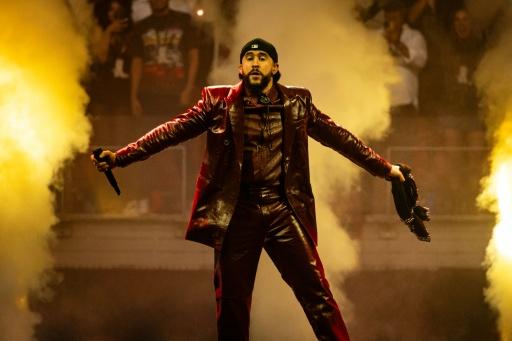
Supporters of President Donald Trump, including a senior White House official, have lashed out after Latin megastar Bad Bunny was named as the headliner for next year’s Super Bowl halftime show.
The Grammy-winning Puerto Rican rapper had already sparked right-wing ire after saying he would skip the United States during his upcoming world tour due to fears of immigration raids at his concerts.
But Trump’s Make America Great Again movement was doubly infuriated by the naming on Sunday of an artist who mainly sings in Spanish as the star performer for the NFL’s flagship event in February.
“Is the @NFL incapable of reading the room?” Sebastian Gorka, Trump’s Senior Director for Counter Terrorism, posted on X late Monday after the announcement.
Gorka’s comment accompanied a post by a conservative podcaster calling Bad Bunny “a rapper with a catalog of vulgar lyrics in Spanish and English” — including one aimed at Trump.
Former racing driver turned right-wing commentator Danica Patrick said separately on X: “No songs in English should not be allowed at one of America’s highest rated television events of the year.”
Sage Steele, a former host on sports network ESPN who appeared in the White House’s “new media” seat at a briefing earlier this year, called Bad Bunny “DEMONIC” and added: “NFL…I just don’t get it.”
The artist himself said in a statement released by the NFL that his naming as Super Bowl halftime act was “for my people, my culture, and our history.”
Puerto Rico, where Bad Bunny hails from, is a U.S. territory in the Caribbean. In June, Bad Bunny posted video footage on his social media channels from an ICE raid that took place on his home island.
Super Bowl halftime shows have traditionally attracted the biggest names in the music industry, including the likes of Michael Jackson, the Rolling Stones, Madonna, Bruce Springsteen, Prince and Paul McCartney.
More recent performers have included this past year’s headliner Kendrick Lamar, the rapper who cut out profanity but still performed a viral diss track of his rival Drake. (JapanToday)
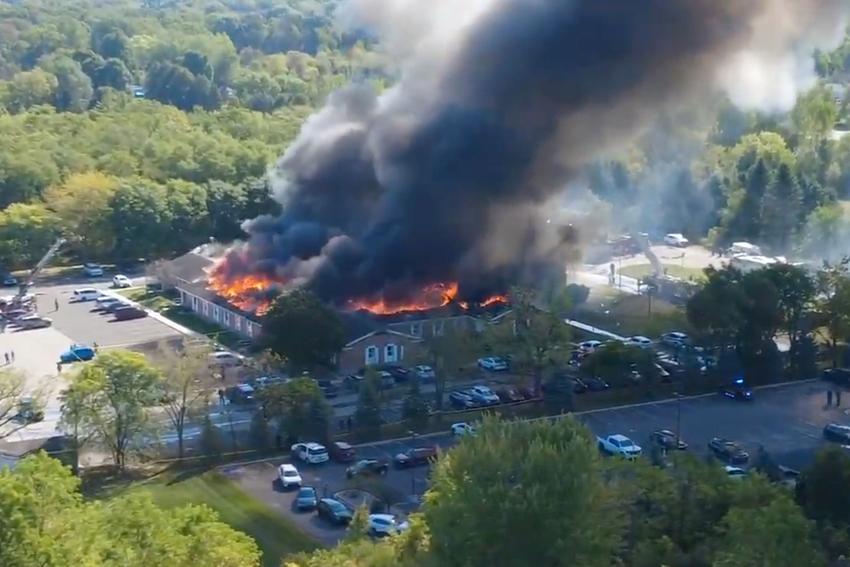
A gunman opened fire inside a Church of Jesus Christ of Latter-day Saints chapel in Michigan during a Sunday service and set the building ablaze, killing at least four people and injuring eight others. Police shot and killed the suspect, authorities said.
Hundreds of people were inside the church in Grand Blanc Township when a man rammed a four-door pickup with two American flags in the truck bed through the front door, then got out of the vehicle and started shooting, Police Chief William Renye told reporters. Investigators believe he deliberately set the building on fire, Renye said.
Officers responded to a 911 call and were at the church within 30 seconds and killed the shooter about eight minutes later, Renye said. After the suspect left the church, two officers pursued him and “engaged in gunfire,” the chief said.
Flames and smoke could be seen pouring from the church for hours before the blaze was put out.
Renye identified the suspect as Thomas Jacob Sanford, 40, from neighboring Burton. Reyne did not specify a motive at a news conference on Sunday evening. Police cordoned off the street leading to the suspect’s home.
Renye said one of the wounded people was in critical condition Sunday evening and seven others were stable.
The bodies of two of the victims were found as authorities searched the debris in the church, Renye said, emphasizing the search was continuing and that more victims could be found.
Investigators were searching the suspect’s residence in nearby Burton. Authorities did not provide any additional details about the suspect, including whether he was a member of The Church of Jesus Christ of Latter-day Saints, widely known as the Mormon church.
It was the latest of many shooting attacks on houses of worship in the U.S. over the past 20 years, including one in August that killed two children during Mass at the Church of the Annunciation in Minneapolis.
President Donald Trump said in a social media post that he was briefed on the shooting and applauded the FBI for its response. Local authorities said the FBI was sending 100 agents to Grand Blanc Township, a community of roughly 40,000 people outside Flint.
“PRAY for the victims, and their families. THIS EPIDEMIC OF VIOLENCE IN OUR COUNTRY MUST END, IMMEDIATELY!” Trump wrote.
The church building, circled by a parking lot and a large lawn, is near residential areas and a Jehovah’s Witness church.
Brad Schneemann, whose home is about 365 meters from the church, told The Associated Press that he and his daughter heard “two rounds of four to five shots” around 10:30 a.m. “Then, we really didn’t hear anything for a while” before they left their home to see what was going on.
Timothy Jones, 48, said his family is part of another Church of Jesus Christ of Latter-day Saints congregation, or ward, about 15 minutes away, but that his children were at the Grand Blanc Township ward Saturday night for a youth fall festival. He and his family moved to Flint two years ago in large part because of how strong the faith’s community is in the area, he said.
As people in his congregation got word of the shooting from texts and phone calls during their Sunday service, his ward went into lockdown and police came as a precaution, he said. His children were “frantically, just trying to get word that people were OK.”
Sundays are “supposed to be a time of peace and a time of reflection and worship,” Jones said. Yet in the wake of violence at other houses of worship, a shooting “feels inevitable, and all the more tragic because of that,” he added.
The shooting occurred the morning after Russell M Nelson, the oldest-ever president of the Utah-based faith, died at 101. The next president is expected to be Dallin H Oaks, per church protocol.
“The church is in communication with local law enforcement as the investigation continues and as we receive updates on the condition of those affected,” spokesperson Doug Anderson said. “Places of worship are meant to be sanctuaries of peacemaking, prayer and connection. We pray for peace and healing for all involved.”
When striking nurses at nearby Henry Ford Genesys Hospital heard about the shooting, some left the picket line and ran the short distance to the church to help first responders, Teamsters Local 332 President Dan Glass said.
“Human lives matter more than our labor dispute,” Glass said.
Michigan Gov. Gretchen Whitmer said in a statement that her heart was breaking for the community. “Violence anywhere, especially in a place of worship, is unacceptable,” she said.
The impact spread quickly to neighboring communities, including the small city that shares a name with the township.
“Although we are two separate governmental units, we are a very cohesive community,” said city of Grand Blanc Mayor John Creasey. “This sort of thing is painful for our entire community.” (JapanToday)
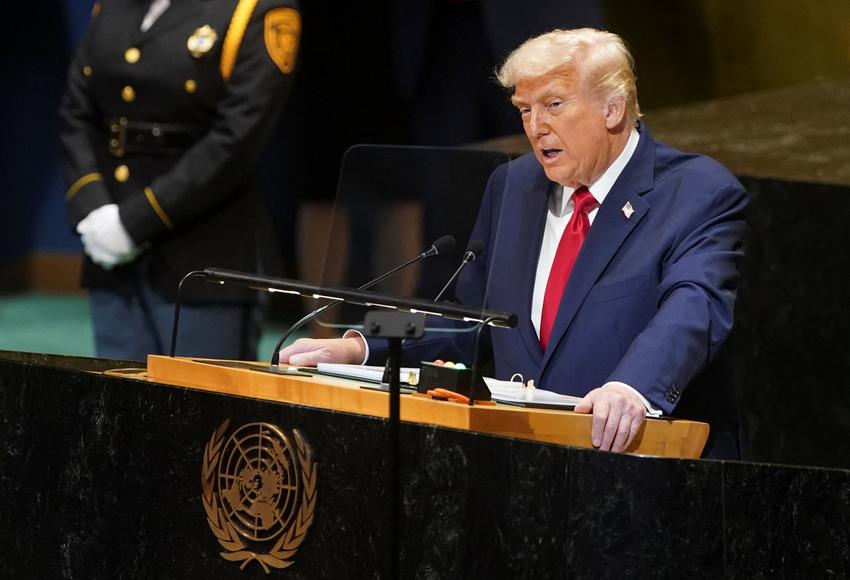
U.S. President Donald Trump told the UN General Assembly on Tuesday that he hopes “countless people from all over the globe” will attend the 2026 World Cup and 2028 Olympics hosted by the U.S., making no mention of his migration crackdown that has deterred some visitors.
Overseas travel to the U.S. fell 2.9% year-on-year in August to about 3.5 million visitors, according to preliminary U.S. government data. It was the sixth month this year that travel declined from a year ago, bucking the global tourism trend and defying expectations that in 2025 annual inbound visitors would finally surpass the pre-pandemic level of 79.4 million.
In a wide-ranging speech, Trump said next year the United States will celebrate the 250th anniversary of its independence. “We will also be proudly hosting the 2026 FIFA World Cup, and shortly thereafter, the 2028 Olympics,” he said.
“It’s going to be very exciting. I hope you all come. I hope that countless people from all over the globe will take part.”
More than 1.5 million ticket applications from fans in 210 countries were received by FIFA for the World Cup within 24 hours of the presale draw, the governing body of world soccer said earlier this month. The 48-team tournament will be hosted by Mexico, Canada and the U.S. and will feature 104 matches across 16 host cities.
But a U.S. trip may be expensive and complicated for many. Visitors from non-visa waiver countries face a $250 “visa integrity fee,” on top of the existing fee, with travelers already navigating long average visa wait times. Such visitors face an average 169 days for a B-1/B-2 tourism or business visa interview, according to data from the U.S. State Department.
That will hit fans from countries that traditionally send a large contingent to the World Cup, including Mexico, Argentina and Brazil.
Global ticket demand for the tournament came primarily from the three host countries, followed by Argentina, Colombia, and Brazil, according to FIFA.
Tourists from visa-waiver countries – mostly in Europe – will not need to pay the new fee, but industry experts say some are being put off U.S. vacations by fears of being stopped at the border after a number of widely publicized cases.
The White House is also looking to tighten the duration of visas for students, cultural exchange visitors and members of the media, according to a proposed government regulation issued in August.
The 2028 Summer Olympics is set to be held in Los Angeles, California, in July 2028. (JapanToday)
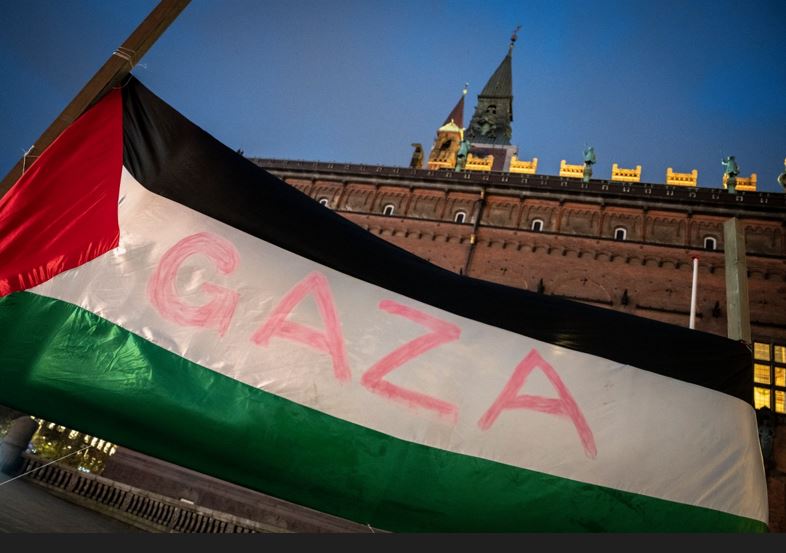
European soccer body UEFA is moving toward a vote to suspend its member federation Israel over the war in Gaza, people familiar with the proposal told The Associated Press on Thursday.
A majority of UEFA’s 20-member executive committee is expected to support any vote in favor of suspending Israeli teams from international play, two sources told The Associated Press on condition of anonymity because of the sensitivity of the subject.
Such a step would prevent Israeli national and club teams from playing in international competitions including next year’s World Cup. Israel’s men’s team is set to resume its World Cup qualifying campaign in two weeks with away games against Norway and Italy.
It is unclear whether world soccer body FIFA will support excluding Israel given the close relations between FIFA’s leader, Gianni Infantino, and President Donald Trump.
The Trump administration’s support to secure the World Cup, and process visas for players, officials and potentially hundreds of thousands of visiting fans, is seen as key to FIFA delivering a successful tournament in the U.S., Canada and Mexico next year.
A State Department spokesperson said it will work to stop any efforts that tried to ban Israel’s team from the World Cup.
FIFA’s ruling council is scheduled to meet in Zurich next week. The 37-member council includes eight from UEFA.
FIFA declined to comment on Thursday. Infantino is based this week at FIFA’s satellite office in Trump Tower in Manhattan while attending events on the fringes of the United Nations General Assembly.
Calls to exclude Israel from soccer and other sports have increased in recent weeks amid an outcry over the humanitarian toll of its military campaign in Gaza. Last week Spanish Prime Minister Pedro Sánchez said Israel should be banned from international sports events just like Russia, which was sidelined after its full-scale invasion of Ukraine in 2022.
Earlier this week seven independent experts working with the U.N. Human Rights Council urged FIFA and UEFA to suspend Israel from international competitions.
UEFA and its president Aleksander Ceferin signaled a tougher view on Israel last month when banners saying “Stop Killing Children. Stop Killing Civilians” were placed on the field in front of the Paris Saint-Germain and Tottenham teams ahead of the Super Cup game in Udine, Italy.
The discussion about whether to ban Israel from international sports comes as Israel faces increasing criticism and isolation over its military campaign, launched in response to the Hamas-led attack on Oct. 7, 2023.
Last week, Israel was accused of committing genocide in Gaza by an inquiry commission commissioned by the United Nations Human Rights Council.
Israel’s sports and culture minister, Miki Zohar, Prime Minister Benjamin Netanyahu and the head of Israel’s soccer federation, Moshe Zuares, have been working “intensively behind the scenes” to block efforts to oust Israel from UEFA, Zohar’s office said Thursday. “The right step now is to act responsibly with the professionals and not to make statements, and this is how all the parties involved in the efforts are acting. We will address this later.”
The decision to ban Russia in 2022 was partly driven by a swath of UEFA member federations refusing to play scheduled games against Russian opponents. No national or club team in Europe has so far refused to play an Israeli opponent, though soccer leaders in Norway and Italy have publicly expressed their unease in recent weeks.
The Norwegian soccer federation also pledged to give its profits from ticket sales for the Oct. 11 game in Oslo to humanitarian work in Gaza by Doctors Without Borders.
Both Italy’s Gabriele Gravina and Lise Klaveness of Norway are elected members of the UEFA executive committee which could vote on suspending Israel. Zuares, the Israeli soccer federation president, is also on the panel as is Nasser Al-Khelaïfi, a member of the Qatari government who is president of European champion Paris Saint-Germain.
Israel enraged Qatar, an influential U.S. ally that has been a key mediator throughout the war, with a Sept. 9 airstrike targeting Hamas leaders in Doha, the Qatari capital.
At the Champions League final in May, PSG fans displayed a banner saying “Stop Genocide in Gaza” in French. UEFA did not open a disciplinary case despite having rules against political messaging inside stadiums.
On Wednesday evening in Greece, Israeli club Maccabi Tel Aviv played PAOK in the UEFA-organized Europa League. There were pro-Palestinian protests outside the stadium in Thessaloniki and a “Stop Genocide” banner displayed inside. (JapanToday)
Dozens of House Democrats have signed a letter to Donald Trump and secretary of state Marco Rubio, urging the administration to recognize Palestinian statehood.
The letter, led by California Democrat Ro Khanna, has 46 signatures, and lawmakers will send it to the US president on Friday, according to plans first provided to the Guardian.
The letter’s delivery will coincide with the conclusion of the United Nations general assembly. France joined the growing chorus of US allies – including the UK, Canada, Australia and Portugal – and on Monday called for the formal recognition of a Palestinian state.
The conflict has resulted in a catastrophic humanitarian crisis in Gaza, more than 60,000 people killed in the region, and rampant famine. Most recently, the Israeli government has continued its military offensive on Gaza City, killing dozens of Palestinians this week alone. Hundreds of thousands have been displaced from the capital since August.
“Just as the lives of Palestinians must be immediately protected, so too must their rights as a people and nation urgently be acknowledged and upheld,” the letter reads. “We encourage the governments of other countries that have yet to recognize Palestinian statehood, including the United States, to do so as well.”
Joining Khanna in signing the letter are several House progressives including Congressman Greg Casar of Texas, Congresswoman Pramila Jayapal of Washington state and Congressman Maxwell Frost of Florida. In August, the Guardian reported on the draft of the letter, which, at the time, had a little over a dozen signatures.
The letter calls for the adoption of the same framework that French president Emmanuel Macron laid out earlier this year in order to “guarantee Israel’s security”. This includes “the disarmament of and relinquishing of power by Hamas in Gaza”, as well as working with the Palestinian people, the Palestinian Authority, Arab allies, and Israel to ensure this is possible.
Khanna told the Guardian that the letter is a “litmus test” for the Democratic party and any Democratic candidates. He added that lawmakers from his own party that are holding out on signing are “totally out of touch with our base and Democratic voters, they’re totally out of touch with the young generation, and they’re totally out of touch with the world”.
Khanna has been “surprised” by the number of signatures on the letter, and is confident that it will gain even more by Friday. “We’re expecting to cross 50,” he added.
J Street, the prominent pro-Israel advocacy group, will endorse Khanna’s letter. “In light of the explicit efforts being made by the far right in Israel to bury the idea of a Palestinian state, actions like this letter are vital to affirm the global commitment to Palestinian self-determination,” said Jeremy Ben-Ami, the lobby’s president. “From the pro-Israel perspective, a Palestinian state next to Israel is vital if Israel is to remain Jewish and democratic in nature.”
Trump has disagreed publicly with foreign leaders who have pledged to recognize a Palestinian state. During his hour-long address at the UN this week, he called the move a “reward” for acts of terrorism carried out by Hamas, including the 7 October attack.
Senior cabinet members have said that the coordinated recognition is merely superficial. “It’s almost a vanity project for a couple of these world leaders who want to be relevant, but it really makes no difference,” Rubio said in an interview with CBS Mornings.
The Israeli prime minister, Benjamin Netanyahu, who is due to address the UN general assembly on Friday, has remained resolute that a Palestinian state is not an option. “The shameful capitulation of some leaders to Palestinian terror does not obligate Israel in any way,” his office said in a statement. “There will be no Palestinian state.”
Khanna is not expecting the letter to force the president’s hand in any way. “I’m not holding my breath as he [Trump] is giving a total blank check to Netanyahu,” the congressman said. But he does hope it will send a “clear” statement.
“America has a new generation that will recognize a Palestinian state when we come to power, that vehemently disagrees with Donald Trump, and that disagrees with how Biden handled the war,” Khanna said.
The United States is currently the only permanent member of the UN security council – which includes Britain, Russia, China and France – who objects to Palestinian statehood, “hurting America’s claim to be the moral leader of the world”, Khanna said.
Meanwhile, in the Senate, a Democratic-led resolution to recognize a demilitarised Palestine state and secure Israel was introduced last week by Jeff Merkley,a senator from Oregon. The first-of-its-kind measure, however, is unlikely to clear the Republican-controlled upper chamber. (Guardian)
President Donald Trump on Monday used the platform of the presidency to promote unproven and in some cases discredited ties between Tylenol, vaccines and autism as his administration announced a wide-ranging effort to study the causes of the complex brain disorder.
“Don’t take Tylenol,” Trump instructed pregnant women around a dozen times during the unwieldy White House news conference, also urging mothers not to give their infants the drug, known by the generic name acetaminophen. He also fueled long-debunked claims that ingredients in vaccines or timing shots close together could contribute to rising rates of autism in the U.S., without providing any medical evidence.
The rambling announcement, which appeared to rely on existing studies rather than significant new research, comes as the Make America Healthy Again movement has been pushing for answers on the causes of autism. The diverse coalition of supporters of Health Secretary Robert Kennedy Jr. includes several anti-vaccine activists who have long spread debunked claims that immunizations are responsible.
The announcement also sheds light on Trump’s own long-held fascination with autism and his trepidation about the childhood vaccine schedule, even as the president has taken pride in his work to disseminate COVID-19 vaccines during his first term.
Medical experts said Trump’s remarks were irresponsible. New York University bioethicist Art Caplan said it was “the saddest display of a lack of evidence, rumors, recycling old myths, lousy advice, outright lies, and dangerous advice I have ever witnessed by anyone in authority.”
Trump announced during the event that the Food and Drug Administration would begin notifying doctors that the use of acetaminophen “can be associated” with an increased risk of autism, but did not immediately provide justification for the new recommendation.
Some studies have raised the possibility that taking acetaminophen during pregnancy might increase the risk of autism — but many others haven’t found that concern, said autism expert David Mandell of the University of Pennsylvania.
One challenge is that it’s hard to disentangle the effects of Tylenol use from the effects of high fevers during pregnancy. Fevers, especially in the first trimester, can increase the risk for miscarriages, preterm birth and other problems, according to the Society for Maternal-Fetal Medicine.
Trump also urged not giving Tylenol to young children, but scientists say that research indicates autism develops in the fetal brain.
Responding to Trump’s warnings, the Society for Maternal-Fetal Medicine said they still recommend Tylenol as an appropriate option to treat fever and pain during pregnancy. The president of the American College of Obstetricians and Gynecologists said Monday that suggestions that Tylenol use in pregnancy causes autism are “irresponsible when considering the harmful and confusing message they send to pregnant patients.”
Trump press secretary Karoline Leavitt said in a statement Monday evening that the administration “does not believe popping more pills is always the answer for better health” and that it “will not be deterred in these efforts as we know millions across America are grateful.”
Tylenol maker Kenvue disputed any link between the drug and autism on Monday and said in a statement that if pregnant mothers don’t use Tylenol when in need, they could face a dangerous choice between suffering fevers or using riskier painkiller alternatives. Shares of Kenvue Inc. fell 7.5% in trading Monday, reducing the company’s market value by about $2.6 billion.
Kennedy announced during the news conference that at Trump’s urging, he was launching a new all-agency effort to uncover all the factors that could be contributing to autism, even as scientists have already been researching that question for decades.
FDA Commissioner Dr. Marty Makary also took the stage to announce it was taking the first steps to try to approve a folic acid metabolite called leucovorin as a treatment option for patients believed to have low levels of folate in the brain. That may include some people with autism.
Leucovorin is used to counteract the side effects of various prescription drugs, including chemotherapy and other high-dose medications that can negatively impact the immune system. It works by boosting folate levels, a form of vitamin B that’s critical to the body’s production of healthy red blood cells.
Women already are told to take folic acid before conception and during pregnancy because it reduces the chances of certain birth defects known as neural tube defects.
In recent years a handful of studies have suggested positive results when high-dose folic acid is used to treat children with autism, with researchers in China and other countries reporting improvements in social skills and other metrics. Those small studies have been quickly embraced by some parts of the autism community online.
The theory is that some, not all, children with autism may not properly metabolize folate, Mandell said. But the recent studies “are really tiny,” he said. To prove an effect, “we would need an independent, large, rigorously controlled randomized trial.”
During the press conference, Trump said he’s a believer in vaccines but claimed without evidence that giving vaccinations close together at the recommended ages has a link to autism. Spacing out shots as he suggests can lead to an increased risk that children become infected with a vaccine-preventable disease before returning for another visit.
Though anti-vaccine activists, including Kennedy, have long suggested a link between vaccines and autism, widespread scientific consensus and decades of studies have firmly concluded there isn’t one.
Autism is not a disease but a complex developmental condition that affects different people in different ways. It can include delays in language, learning or social and emotional skills. For some people, profound autism means being nonverbal and having intellectual disabilities, but the vast majority of people with autism experience far milder effects.
The disorder affects 1 in 31 U.S. children today, a sharp rise from just a few years ago, according to the CDC. Experts say the increase is mainly due to a new definition for the disorder that now includes mild cases on a “spectrum” and better diagnoses. They say there is no single cause to the disorder and say the rhetoric appears to ignore and undermine decades of science into the genetic and environmental factors that can play a role.
The announcement is the latest step the administration, driven by Kennedy and his supporters, has taken to reshape America’s public health landscape.
Beyond cutbacks at federal health agencies, the Centers for Disease Control and Prevention has been roiled by disagreements over Kennedy’s vaccine policies. An influential immunization panel stocked by Kennedy with figures who have been critical of vaccines last week changed shot guidance for COVID-19 and other diseases. (JapanToday)
U.S. President Donald Trump argued for lower levels of global migration and urged a turn away from climate change policies on Tuesday in a combative, wide-ranging speech to the U.N. General Assembly that leveled scathing criticism of world leaders.
The 56-minute speech was a rebuke to the world body and a return to form for Trump, who routinely bashed the U.N. during his first term as president. Leaders gave him polite applause when he exited the chamber.
He rejected moves by allies to endorse a Palestinian state amid Israel’s latest Gaza offensive and urged European nations to adopt the same set of economic measures he is proposing against Russia to force an end to the war in Ukraine.
Much of his speech was dominated by two of his biggest grievances: immigration and climate change.
Trump offered his U.S. immigration crackdown as a case study for what other world leaders should do to curb mass migration that he says is altering the fabric of nations. Human rights advocates argue the migrants are seeking better lives.
“I’m really good at this stuff,” Trump said. “Your countries are going to hell.”
Trump, who met last week with Britain’s environmentally conscious King Charles at Windsor Castle, called climate change a “con job” and urged a return to a greater reliance on fossil fuels. Scientists say climate change caused by humans is real.
“Immigration and their suicidal energy ideas will be the death of Western Europe,” Trump said.
Trump’s administration plans to call for sharply narrowing the right to asylum at the United Nations later this month, Reuters reported last week, as it seeks to undo the post-World War II framework around humanitarian protection.
Trump sprinkled into his speech a litany of false and misleading statements, such as that London Mayor Sadiq Khan wants to impose “sharia law” on London and that “inflation has been defeated” in the United States six days after the Federal Reserve said inflation has gone up.
European powers have spent months trying to stabilize their relationship with the U.S. leader with a focus on winning U.S. support to end the war in Ukraine. At a NATO summit in June, Trump and European leaders lavished each other with praise.
But in Tuesday’s speech, Trump mocked NATO allies for not shutting down purchases of Russian oil and said he would impose strong economic measures against Moscow.
“They’re funding the war against themselves. Who the hell ever heard of that one? In the event that Russia is not ready to make a deal to end the war, then the United States is fully prepared to impose a very strong round of powerful tariffs,” he said.
“But for those tariffs to be effective, European nations, all of you are gathered here right now, would have to join us in adopting the exact same measures.”
He did not detail the measures, but he has been considering a package that includes sanctions against countries that do business with Russia, like India and China. The main buyers of Russian oil in Europe are Hungary, Slovakia and Turkey.
Trump later held talks with Ukrainian President Volodymyr Zelenskiy, who pressed for more U.S. support to resist Russian advances. Trump, asked by reporters if NATO countries should shoot down Russian aircraft if they enter their airspace, said, “Yes, I do.”
On the Israel-Palestinian conflict, Trump rejected efforts by world leaders to embrace a Palestinian state, a move that faces fierce resistance from Israel.
“The rewards would be too great for Hamas terrorists, for their atrocities,” he said, repeating his call for the return of hostages taken by the Palestinian militant group.
Trump said the United States wants a ceasefire-for-hostages deal that would see the return of all remaining hostages, alive and dead.
“We have to stop the war in Gaza immediately. We have to immediately negotiate peace,” he said.
He was to discuss the future of Gaza during afternoon talks with several Gulf leaders.
Trump, who has cast himself as a peacemaker in a bid to win the Nobel Peace Prize, complained that the United Nations did not support his efforts to end conflicts around the world.
He added to his complaints with personal grievances about the U.N. infrastructure, saying he and first lady Melania Trump were briefly marooned on a malfunctioning U.N. escalator and that his teleprompter was not initially working.
“These are the two things I got from the United Nations – a bad escalator and a bad teleprompter,” Trump said, noting that Melania Trump nearly fell when the escalator stopped abruptly. (JapanToday)
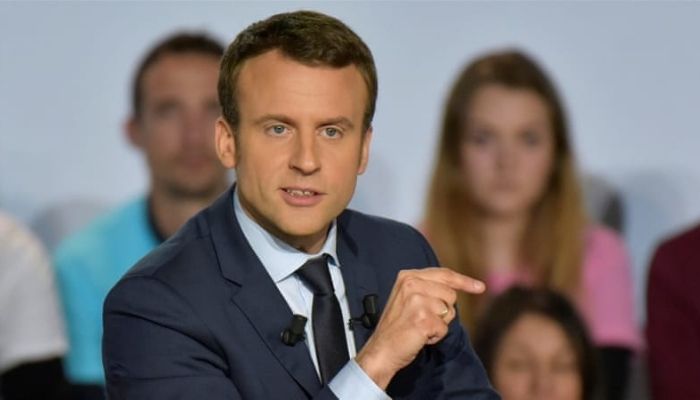
Emmanuel Macron had to walk half an hour by foot through New York after his speech to the United Nations on recognising Palestine as a state.
Video footage shows him getting out of his car to talk to police officers after they stop his vehicle to make way for the expected arrival of the motorcade of Donald Trump, the US president.
The footage, which was captured by a reporter from the social media outlet Brut, appears to show the French president saying he needs to get to his country’s consulate.
“I’m sorry, president, I’m really sorry, everything has been frozen, there’s a motorcade coming right now,” an officer tells Macron.
The president then looks out over the empty street and replies: “If you don’t see it, let me cross. I’ll negotiate with you.”
Macron, who remains stuck behind a metal barrier, takes out his phone and appears to call Trump directly. Leaning on the barrier, he says, laughingly: “How are you? Guess what? I’m waiting in the street because everything is frozen for you.”
Macron later appears to be allowed through on foot but not in his car. Still on his phone, he proceeds to stride off down the street, past shoppers and pedestrians. The reporter from Brut said Macron walked for about 30 minutes with his security detail. He stopped and posed with passersby who asked for photographs, including one encounter with a man who kissed him on the forehead.
“The time has come to end the war in Gaza, the massacres and the death,” Macron had said during his opening speech to a special summit at the UN on Monday evening. “The time has come to do justice for the Palestinian people and thus to recognise the state of Palestine in Gaza, the West Bank and Jerusalem.”
Announcing France’s official recognition of Palestine, the president set out a plan for a UN-mandated international stabilisation force in postwar Gaza that is expected to find support in many countries but not in Israel or the US. (Guardian)
US President Donald Trump early Thursday said he would designate “Antifa” – a shorthand term for “anti-fascist” used by Trump allies to describe diffuse left-wing groups – as “a major terrorist organization”.
Trump, who is on a state visit to the United Kingdom, made the announcement in a social media post, calling Antifa a “SICK, DANGEROUS, RADICAL LEFT DISASTER”. He also said he will be “strongly recommending” that funders of antifa be investigated.
Trump and his supporters have, without evidence, ascribed blame to Antifa for various actions Trump dislikes, from violence against police to the US Capitol riot on January 6, 2021.
It’s unclear how the administration would label what is effectively a decentralized ideology as a terrorist organization, and the White House on Wednesday did not immediately offer details.
Trump’s previous FBI director, Christopher Wray, said in testimony in 2020 that Antifa is an ideology, not an organization, and lacks the hierarchical structure that would usually allow it to be designated as a terror group by the federal government.
While federal law enforcement includes combating domestic terrorism under its purview, the United States does not have a list of designated domestic terrorist organizations.
Senior White House official Stephen Miller has vowed the administration would dismantle an alleged “vast domestic terror movement” that he linked to the killing of right-wing activist Charlie Kirk. The political leanings of the suspect in Kirk’s death remain unclear.
After Trump’s post, Senator Bill Cassidy, R-La., praised the announcement, saying: “Antifa seized upon a movement of legitimate grievances to promote violence and anarchy, working against justice for all. The President is right to recognize the destructive role of Antifa by designating them domestic terrorists.”
Cassidy and Senator Ted Cruz, R-Texas, introduced a July 2019 resolution in the Senate to condemn “Antifa” and designate it a domestic terror organization. (France24)
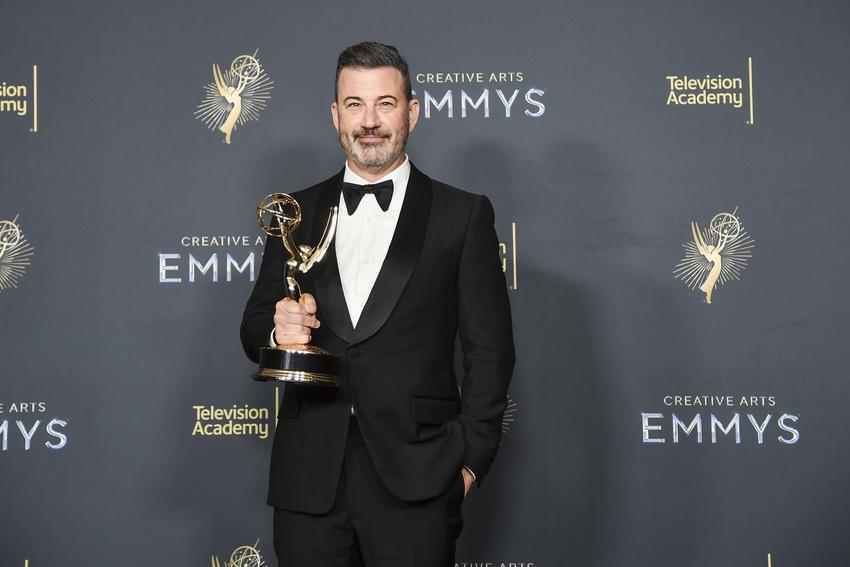
Hollywood blasted the White House for targeting free speech after ABC pulled Jimmy Kimmel’s talk on Wednesday under regulatory threats from Donald Trump’s administration, rallying behind the late-night comic after his comments about the assassination of conservative activist Charlie Kirk.
The Walt Disney-owned broadcaster said it was yanking “Jimmy Kimmel Live” indefinitely after at least one affiliate said it would replace the show on its airwaves and the nation’s top communications regulator threatened investigations due to Kimmel’s statements.
The late-night host, a frequent Trump critic, had suggested in his monologue on Monday that Kirk’s allies were using his death to “score political points”.
Unions representing writers and actors said the move amounted to an attack on constitutionally protected free-speech rights, saying ABC should not have caved in the face of U.S. government pressure.
The suspension of Kimmel’s show marked the latest action against media figures, academic workers, teachers and corporate employees over their remarks about Kirk following the 31-year-old’s assassination a week ago in Utah.
“What we have signed on to – painful as it may be at times – is the freeing agreement to disagree,” the Writers Guild of America West and Writers Guild of America East said in a joint statement. “Shame on those in government who forget this founding truth. As for our employers, our words have made you rich. Silencing us impoverishes the whole world.”
A 22-year-old suspect has been charged with Kirk’s murder, and his precise motive remains unclear. Kirk’s death spurred an outpouring of grief among fans while also galvanizing some prominent right-wing supporters to target people who were critical of Kirk’s views or joked about his killing.
SAG-AFTRA, the union representing actors, condemned the scrapping of the show, saying “the decision to suspend airing Jimmy Kimmel Live! is the type of suppression and retaliation that endangers everyone’s freedoms,” while actor Ben Stiller wrote “this isn’t right” on social media site X.
President Donald Trump has repeatedly threatened to pull licenses from television stations and has pressured broadcasters to stop airing content he finds objectionable. He has also trained his ire on print media with the filing of a $15 billion defamation lawsuit against the New York Times.
Earlier on Wednesday, Federal Communications Commission Chair Brendan Carr had urged local broadcasters to stop airing the show. Kimmel, who has frequently targeted Trump on his late-night comedy show, did not respond to a request for comment.
ABC pulled the show after Nexstar Media Group, which owns 32 ABC affiliates, said it would stop airing the show following Kimmel’s September 10 comments, when he suggested that “the MAGA gang” was “doing everything they can to score political points” off of Kirk’s assassination. He also criticized Trump’s mourning, comparing it to “how a four-year-old mourns a goldfish.”
Carr, in Wednesday remarks to conservative podcaster Benny Johnson, said “we can do this the easy way or the hard way,” suggesting the regulator could open investigations and broadcasters could face fines. He praised Nexstar, saying that “it is important for broadcasters to push back on Disney programming that they determine falls short of community values.”
The American Federation of Musicians said that “Trump’s FCC identified speech it did not like and threatened ABC with extreme reprisals. This is state censorship.” (JapanToday)

 English