Posted on Leave a comment

Mali coach launches stinging attack on FIFA-led AFCON changes

Mali head coach Tom Saintfiet has launched a stinging attack on the Confederation of African Football’s decision to reschedule the Africa Cup of Nations (AFCON), insisting that it’s a decision taken by UEFA, European clubs and FIFA, but which does not have the continent’s sporting interests at heart.

The decision to make the biennial AFCON a quadrennial tournament was announced by CAF President Dr Patrice Motsepe in a press conference on Saturday, with the football administrator announcing the decision alongside the launch of a new African Nations League, that would take place annually.

The announcement has prompted mixed reactions across the continent, with Mali’s Saintfiet, speaking ahead of his team’s AFCON fixture with hosts Morocco on Friday, outlining his disgust with a decision that he believes disrespects African football.

“I’m shocked with it, very disappointed,” he told ESPN on Thursday. “It’s all instructed by the big people in UEFA, the big clubs from the five leagues, and also by FIFA…and that makes me so sad.

“We fight so long to get respected in Africa, for African people and Africa’s own identity to get respected, but then to listen to Europe to change your history, a 68-year history, for financial reasons…I think we disrespect [Africa] by going to four years.

“I’m sad about that, and I hope the love for Africa would win out over the pressure of Europe.”

Motsepe blamed the need to change the schedule, which will begin after the 2028 Nations Cup, on the ongoing club-vs-country rows, which take place every time the AFCON is organised during the European football season, among other reasons.

The 63-year-old Mamelodi Sundowns owner also used the need to generate extra revenue as a reason for reducing the volume of AFCONs, although presence of FIFA General Secretary Mattias Grafstrom sitting alongside him for the announcement, reinforced the suspicion that it’s the world football governing body’s interests which are best being served by the changes.

“[We are changing] for the pressure of the clubs, who are giving the load on the players as an excuse for the change,” Saintfiet continued, “but who have created a Club World Cup for teams, a World Cup with 40 teams, a Champions League without champions.

“If you want to respect players, you should play the Champions League with only champions, don’t create new leagues which put more load on players, and then they can still play in a competition [the AFCON] which has existed for 60 years, on a two-year basis.”

The vagueness of CAF’s announcement and the lack of clarity about competition logistics has created much uncertainty around the specifics of the future vision for African football, with the continent’s governing body yet to outline what this reorganisation and the regional Nations League means for World Cup or AFCON qualification, or existing regional competitions as well as the African Nations Championship for domestic players.

Similarly, even though the AFCON has been moved to every four years, it may not solve the club-vs-country debates if some editions of the competition are held within the European season, a necessity given the climate conditions across much of sub-Saharan Africa.

“Africa is the world’s biggest football continent, given the passion of the players, the quality of the players, the big African stars in Europe,” Saintfiet concluded. “1957 was the first AFCON, and since that period, every two years there’s been one.

“It’s the pride of African football, the best players from Africa, the best players in Europe come together, and it’s a celebration of fans.

‘It’s the honour and the glory of African football, but to take it away and go to four years…I could understand if it was a question from Africa, a request from Africa, if, for whatever reason, it was needed by African players, the federations, or CAF,” Saintfiet said. (ESPN)

Posted on Leave a comment

European soccer body UEFA moves toward vote to suspend Israel

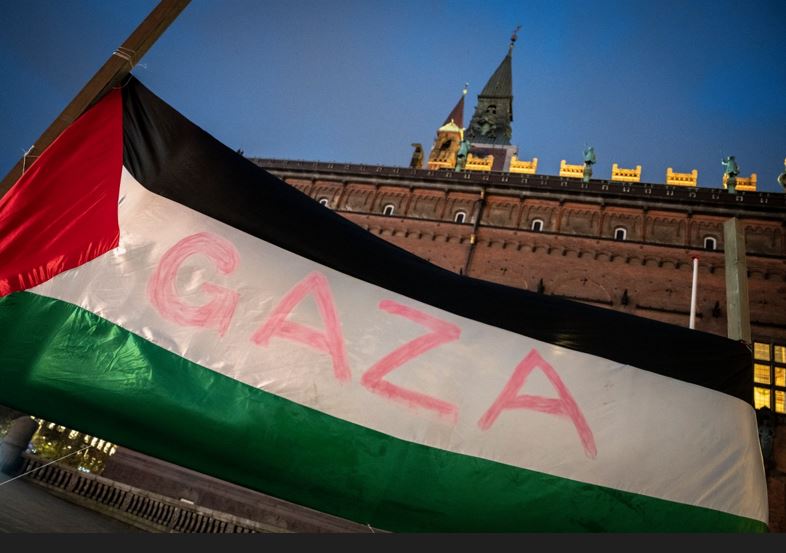
European soccer body UEFA is moving toward a vote to suspend its member federation Israel over the war in Gaza, people familiar with the proposal told The Associated Press on Thursday.

A majority of UEFA’s 20-member executive committee is expected to support any vote in favor of suspending Israeli teams from international play, two sources told The Associated Press on condition of anonymity because of the sensitivity of the subject.

Such a step would prevent Israeli national and club teams from playing in international competitions including next year’s World Cup. Israel’s men’s team is set to resume its World Cup qualifying campaign in two weeks with away games against Norway and Italy.

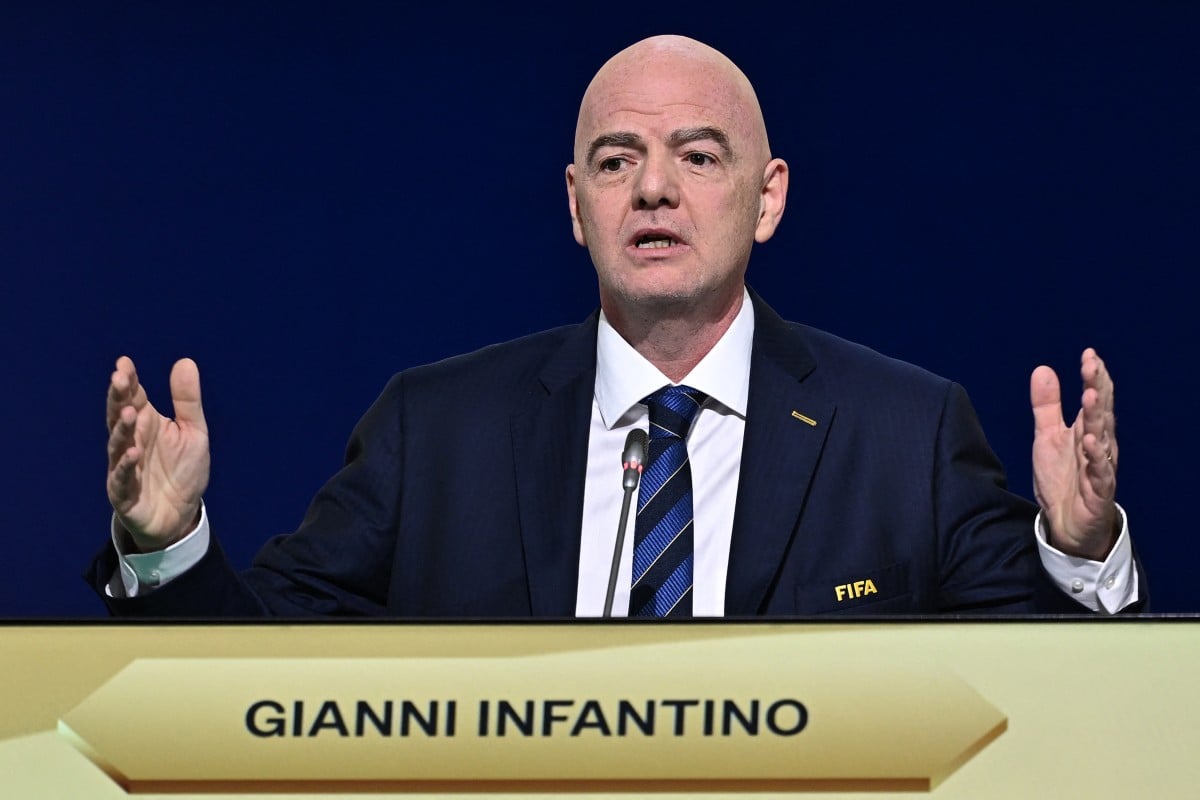
It is unclear whether world soccer body FIFA will support excluding Israel given the close relations between FIFA’s leader, Gianni Infantino, and President Donald Trump.

The Trump administration’s support to secure the World Cup, and process visas for players, officials and potentially hundreds of thousands of visiting fans, is seen as key to FIFA delivering a successful tournament in the U.S., Canada and Mexico next year.

A State Department spokesperson said it will work to stop any efforts that tried to ban Israel’s team from the World Cup.

FIFA’s ruling council is scheduled to meet in Zurich next week. The 37-member council includes eight from UEFA.

FIFA declined to comment on Thursday. Infantino is based this week at FIFA’s satellite office in Trump Tower in Manhattan while attending events on the fringes of the United Nations General Assembly.

Calls to exclude Israel from soccer and other sports have increased in recent weeks amid an outcry over the humanitarian toll of its military campaign in Gaza. Last week Spanish Prime Minister Pedro Sánchez said Israel should be banned from international sports events just like Russia, which was sidelined after its full-scale invasion of Ukraine in 2022.

Earlier this week seven independent experts working with the U.N. Human Rights Council urged FIFA and UEFA to suspend Israel from international competitions.

UEFA and its president Aleksander Ceferin signaled a tougher view on Israel last month when banners saying “Stop Killing Children. Stop Killing Civilians” were placed on the field in front of the Paris Saint-Germain and Tottenham teams ahead of the Super Cup game in Udine, Italy.

The discussion about whether to ban Israel from international sports comes as Israel faces increasing criticism and isolation over its military campaign, launched in response to the Hamas-led attack on Oct. 7, 2023.

Last week, Israel was accused of committing genocide in Gaza by an inquiry commission commissioned by the United Nations Human Rights Council.

Israel’s sports and culture minister, Miki Zohar, Prime Minister Benjamin Netanyahu and the head of Israel’s soccer federation, Moshe Zuares, have been working “intensively behind the scenes” to block efforts to oust Israel from UEFA, Zohar’s office said Thursday. “The right step now is to act responsibly with the professionals and not to make statements, and this is how all the parties involved in the efforts are acting. We will address this later.”

The decision to ban Russia in 2022 was partly driven by a swath of UEFA member federations refusing to play scheduled games against Russian opponents. No national or club team in Europe has so far refused to play an Israeli opponent, though soccer leaders in Norway and Italy have publicly expressed their unease in recent weeks.

The Norwegian soccer federation also pledged to give its profits from ticket sales for the Oct. 11 game in Oslo to humanitarian work in Gaza by Doctors Without Borders.

Both Italy’s Gabriele Gravina and Lise Klaveness of Norway are elected members of the UEFA executive committee which could vote on suspending Israel. Zuares, the Israeli soccer federation president, is also on the panel as is Nasser Al-Khelaïfi, a member of the Qatari government who is president of European champion Paris Saint-Germain.

Israel enraged Qatar, an influential U.S. ally that has been a key mediator throughout the war, with a Sept. 9 airstrike targeting Hamas leaders in Doha, the Qatari capital.

At the Champions League final in May, PSG fans displayed a banner saying “Stop Genocide in Gaza” in French. UEFA did not open a disciplinary case despite having rules against political messaging inside stadiums.

On Wednesday evening in Greece, Israeli club Maccabi Tel Aviv played PAOK in the UEFA-organized Europa League. There were pro-Palestinian protests outside the stadium in Thessaloniki and a “Stop Genocide” banner displayed inside. (JapanToday)

Posted on Leave a comment

Crystal Palace lose appeal to CAS over Europa League demotion

The Court of Arbitration for Sport (CAS) has rejected Crystal Palace’s appeal against their demotion from the Europa League to the Conference League over multi-club ownership (MCO) rules.

UEFA’s Club Financial Control Body (CFCB) ruled last month that Palace were too closely linked to Lyon.

Palace’s appeal had three strands: the CFCB’s decision was unfair and unjust, against Forest being elevated to the Europa League, and against Lyon’s participation. All three were rejected by CAS.

Nottingham Forest are the beneficiaries, promoted from the Conference League to play in the Europa League. Palace must enter the Conference League in the playoff round later this month, when they will play the losers of the Europa League tie between Fredrikstad and FC Midtjylland — the second leg is being played on Thursday.

Palace qualified for the Europa League by beating Manchester City in the FA Cup final in May, but seven days later Paris Saint-Germain’s victory in the Coupe de France final meant Lyon moved up from the Conference League to the Europa League.

If two clubs are in violation of the MCO regulation, the team that finishes higher in the league will play in the European competition. Even though Palace (12th) won the FA Cup and Lyon (sixth) only qualified on a technicality, the league placing alone determined the right to play.

It all came down to the shareholding of John Textor, through Eagle Football Holdings Limited, who had a controlling interest in Lyon and 43.9% of Palace. The Premier League club argued that Textor had no say in the running of Palace, but regulations relating to decisive influence forbid any party from holding more than 30% of the total shareholding in more than one club in the same competition.

Textor last month completed the sale of his Palace stake to New York Jets owner Woody Johnson, but UEFA’s rules are determined by a club’s situation as of March 1.

A CAS statement said: “After considering the evidence, the Panel found that John Textor, founder of Eagle Football Holdings, had shares in CPFC and OL and was a board member with decisive influence over both clubs at the time of UEFA’s assessment date.

“The Panel also dismissed the argument by CPFC that they received unfair treatment in comparison to Nottingham Forest and OL. The Panel considered that the UEFA Regulations are clear and do not provide flexibility to clubs that are non-compliant on the assessment date, as CPFC claimed.”

Before this summer, no club had been removed from European competition due to MCO rules, but Palace became the third to be affected by the new stricter application of the regulations which required clubs to be compliant by March 1, rather than June 3 as in recent seasons.

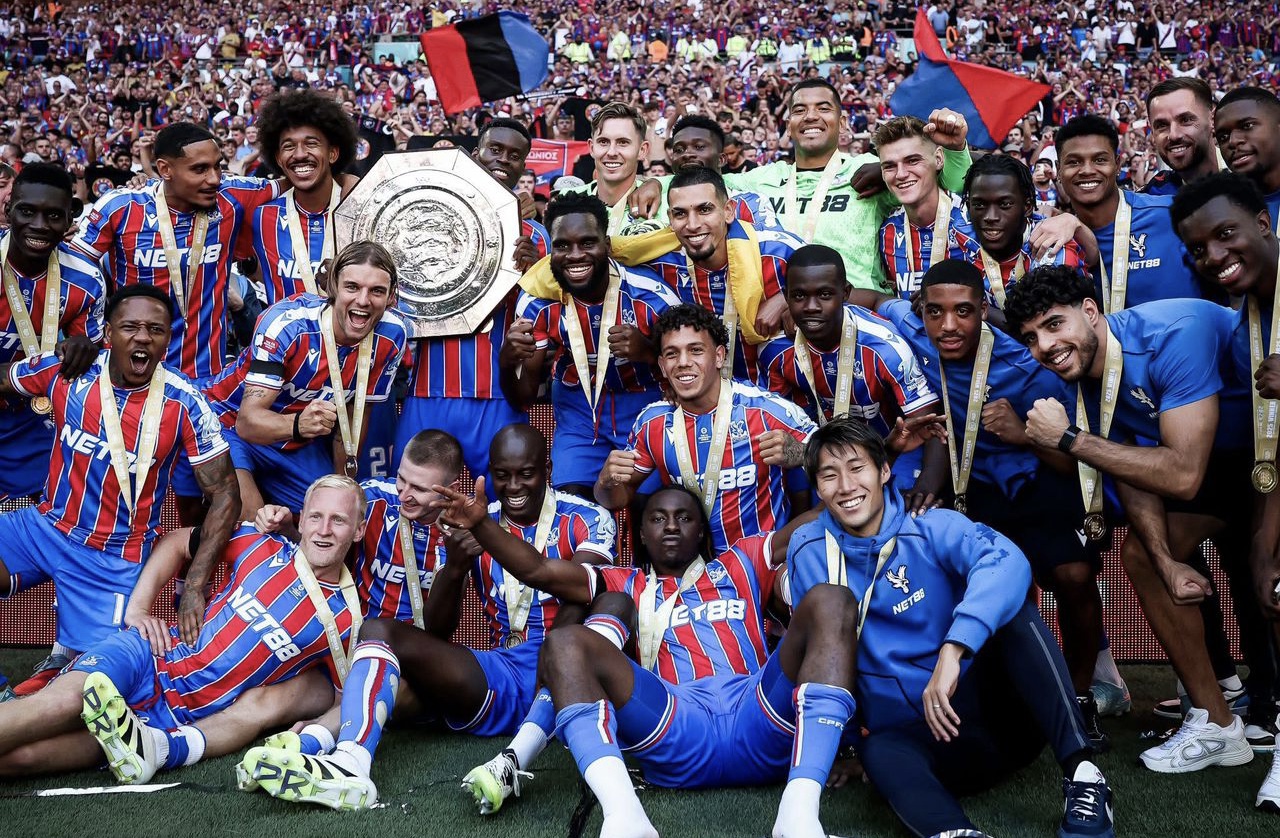
Crystal Palace players with the Community Shield trophy

Irish club Drogheda United were scratched from the Conference League due to an ownership conflict with Danish club Silkeborg IF, and Hungary’s Győri ETO will take part in the Conference League with FC DAC 1904 Dunajská Streda removed.

Drogheda won the FAI Cup in November, with the Irish league run on a calendar basis. It wasn’t until June 1 that Silkeborg qualified for the Conference League — three months after the new MCO deadline. Drogheda and FC DAC 1904 Dunajská Streda appealed to the CAS, but lost.

Drogheda’s appeal was very similar to Palace’s, with complaints about the March 1 deadline and “alleged unequal treatment by UEFA.” As CAS had already ruled against the Irish side, creating precedent, Palace were always going to face a difficult struggle to come away with a favourable verdict.

Palace and Drogheda would both likely argue that it’s unfair to place such restrictions on clubs that usually have no chance of qualifying for Europe.

When the March 1 deadline approached, Palace had not played their fifth round tie in the FA Cup. For Drogheda, who finished ninth, they did already know they had European football, but Silkeborg (seventh) were not expected to do so and claimed a European playoff in Denmark only after finishing top of the relegation group.

Earlier this year, Liga MX’s Club León were removed from the FIFA Club World Cup due to an ownership conflict with fellow Mexican club Pachuca, indicating a change in approach to MCO from football’s regulatory bodies.

The decision from CAS comes after Palace triumphed over Liverpool to lift the Community Shield on Sunday.

With the scores locked at 2-2 after 90 minutes, Palace prevailed with a 3-1 win in the shootout to lift their second piece of silverware in the space of three months.

Palace chairman and co-owner Steve Parish, speaking after his team’s win at Wembley, said the south London club would look for any alternative solutions should the verdict not go their way.

“If we don’t get the right outcome, then we will have to look if there’s any steps after that,” Parish said. (ESPN)