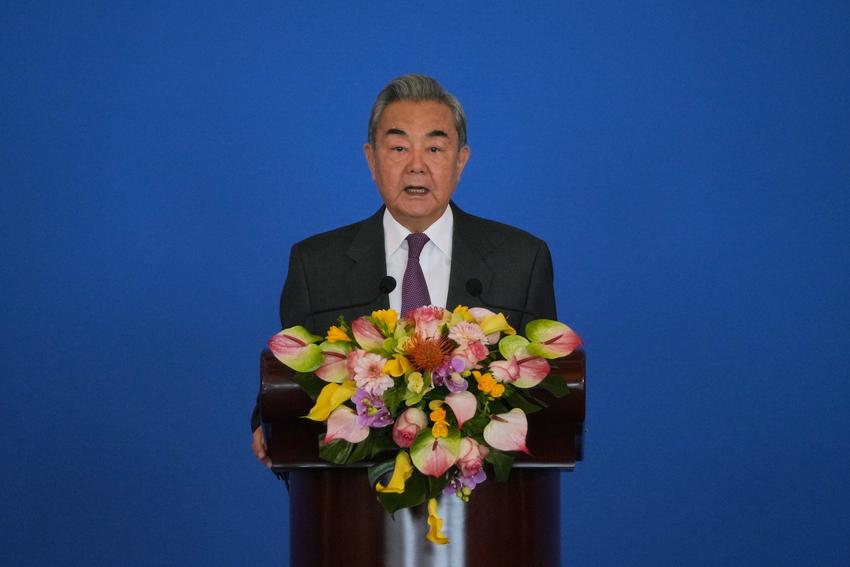
Chinese Foreign Minister Wang Yi on Tuesday lashed out at Japanese Prime Minister Sanae Takaichi for “openly challenging” Chinese territorial sovereignty after the Japanese leader’s remark on a Taiwan emergency heightened bilateral tensions.
Wang, speaking at a symposium in Beijing, also said that Japan has failed to “deeply reflect” on its wartime past, including its invasion of China.
Japan’s current leadership has been “openly challenging China’s territorial sovereignty, the historical conclusions of World War II, and the postwar international order,” Wang said.
Japan invaded a vast swath of China before World War II. The Asian neighbors have been at odds over wartime history among other issues.
Sino-Japanese relations have worsened since Takaichi, seen as a security hawk, said in early November that a Taiwan emergency could be a “survival-threatening” situation for Japan and prompt a response by Japan’s Self-Defense Forces.
China sees Taiwan as a renegade province that must be reunified with the mainland, by force if necessary.
Wang’s remarks came as China conducted military drills in five areas encircling self-ruled Taiwan in a warning against separatism and external interference. (JapanToday)
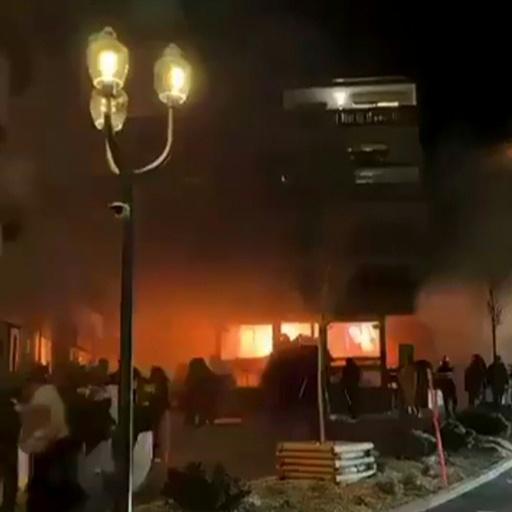
Moments before flames and smoke engulfed the bar in Switzerland where 40 people died, staff were seen holding aloft sparklers stuck in Champagne bottles, videos posted online showed.
The mini-fireworks were being waved near the basement bar’s low wooden ceiling, covered in thin soundproofing fabric, according to the images on social media.
One video showed the ceiling catching alight and the flames spreading quickly — but revelers initially continuing to dance, unaware of the death trap they were in.
A young man is seen attempting to extinguish the flames with a large white cloth.
Authorities investigating the deadly blaze said they suspected that “sparklers or Bengal candles” sparked the fire.
Witness accounts later relayed to various media said the sparkler parade was a regular “show” for patrons in the bar, which typically drew a young crowd.
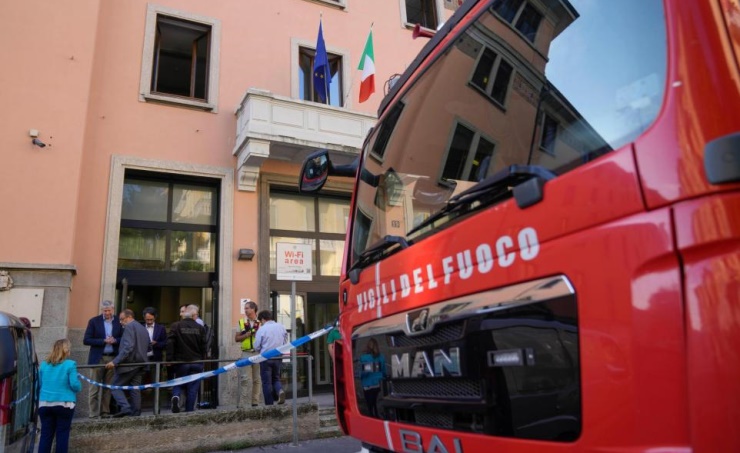
The flames spread with terrifying speed in the bar, in the Swiss luxury ski resort town Crans-Montana, which was packed with New Year’s Eve partygoers.
The video which showed the ceiling catching fire went to on capture a scene of panic: people scrambling and screaming in the dark as smoke and flames around them grew bigger.
Elliot Alvarez, a local who had been at a next-door bar with friends, told AFP: “We received a call from a friend who was clearly panicked on the phone and explained that there had apparently been an explosion.”
When he and his friends arrived at the scene, they found the place crawling with emergency responders and “people on the ground being treated, people coming out, burned”.
Police commander Frederic Gisler told reporters that “the red alarm, which mobilizes the fire department, was triggered” immediately when authorities were alerted to the situation.
Passers-by shortly, before 1:30 a.m. on Thursday, had seen smoke coming out of the centrally located bar and called the emergency services.
Less than a minute later, at 1:32 a.m., the first police patrols arrived on the scene. Firefighters and other emergency workers also rushing in.
At that time, inside the bar, flames had engulfed the basement. Smoke was everywhere, also filling the first floor, according to videos.
Outside, bystanders could see flames, later describing scenes of chaos as people tried to break the windows to escape and others, covered in burns, poured into the street.
Young patrons in the bar, disoriented by the smoke and panic, tried to escape through the front door, causing a crush at the exit.
Nathan, who had been in the bar before the blaze, saw burned people streaming out of the site.
“They were asking for help, crying out for help,” he said.
Adrien, a young vacationer from Dijon, France, described on TikTok how he “saw people breaking windows with chairs”.
“They were in a terrible state, covered in blood, their clothes melted … It was a catastrophe.”
Leandre, who was outside, told the Blick newspaper of the “very sad” scene, with “people burned beyond recognition”.
“We tried to rescue them as best we could … tried to cover them, because they had no clothes left,” he said.
“It was really difficult. We tried to pull people out who were conscious, people who were unconscious, and get them to a warm place.”
He said that even the rescue workers “were overwhelmed”, because everything happened so quickly, with “people who were burned alive”.
Edmond Cocquyt, a Belgian tourist, told AFP he saw bodies “covered with a white sheet” and “young people, totally burned, who were still alive … screaming in pain”.
After emergency units at local hospitals filled, many of the injured were transported across Switzerland, and beyond.
Outside a Milan hospital, Umberto Marcucci told reporters he was “thanking the heavens” that his son Manfredi — one of four Italians being treated at the hospital — made it out alive.
“My son is sick but he’s fine, he’s alive,” he said. Manfredi, he said, had been at Le Constellation with many friends and escaped with “burns on 30 to 40 percent of his body”.
“He told me that at a certain point, someone yelled ‘fire’ in the bar area… and from there the fire spread incredibly quickly.” (JapanToday)
The United States hit Venezuela with a “large-scale strike” early Saturday and said its president, Nicolás Maduro, had been captured and flown out of the country after months of stepped-up pressure by Washington — an extraordinary nighttime operation announced by President Donald Trump on social media hours after the attack.
Multiple explosions rang out and low-flying aircraft swept through Caracas, the capital, as Maduro’s government immediately accused the United States of attacking civilian and military installations. The Venezuelan government called it an “imperialist attack” and urged citizens to take to the streets.
It was not immediately clear who was running the country, and Maduro’s whereabouts were not immediately known. Trump announced the developments on Truth Social shortly after 4:30 a.m. Under Venezuelan law the vice president, Delcy Rodríguez, would take power. There was no confirmation that had happened, though she did issue a statement after the strike.
“We do not know the whereabouts of President Nicolás Maduro and First Lady Cilia Flores,” Rodriguez said. “We demand proof of life.”
Maduro, Trump said, “has been, along with his wife, captured and flown out of the Country. This operation was done in conjunction with U.S. Law Enforcement. Details to follow.” He set a news conference for later Saturday morning.
The legal implications of the strike under U.S. law were not immediately clear. Sen Mike Lee, R-Utah, posted on X that he had spoken with Secretary of State Marco Rubio, who briefed him on the strike. Rubio told Lee that Maduro “has been arrested by U.S. personnel to stand trial on criminal charges in the United States.”
The White House did not immediately respond to queries on where Maduro and his wife were being flown to. Maduro was indicted in March 2020 on “narco-terrorism” conspiracy charges in the Southern District of New York.
Maduro last appeared on state television Friday while meeting with a delegation of Chinese officials in Caracas.
The explosions in Caracas, Venezuela’s capital, early on the third day of 2026 — at least seven blasts — sent people rushing into the streets, while others took to social media to report hearing and seeing the explosions. It was not immediately clear if there were casualties on either side. The attack itself lasted less than 30 minutes and it was unclear if more actions lay ahead, though Trump said in his post that the strikes were carried out “successfully.”
The Federal Aviation Administration issued a ban on U.S. commercial flights in Venezuelan airspace because of “ongoing military activity” ahead of the explosions.
The strike came after the Trump administration spent months escalating pressure on Maduro. The CIA was behind a drone strike last week at a docking area believed to have been used by Venezuelan drug cartels — the first known direct operation on Venezuelan soil since the U.S. began strikes in September.
For months, Trump had threatened that he could soon order strikes on targets on Venezuelan land following months of attacks on boats accused of carrying drugs. Maduro has decried the U.S. military operations as a thinly veiled effort to oust him from power.
Some streets in Caracas fill up
Armed individuals and uniformed members of a civilian militia took to the streets of a Caracas neighborhood long considered a stronghold of the ruling party. But in other areas of the city, the streets remained empty hours after the attack. Parts of the city remained without power, but vehicles moved freely.
Video obtained from Caracas and an unidentified coastal city showed tracers and smoke clouding the landscape sky as repeated muted explosions illuminated the night sky. Other footage showed an urban landscape with cars passing on a highway as blasts illuminated the hills behind them. Unintelligible conversation could be heard in the background. The videos were verified by The Associated Press.
Smoke was seen rising from the hangar of a military base in Caracas, while another military installation in the capital was without power.
“The whole ground shook. This is horrible. We heard explosions and planes,” said Carmen Hidalgo, a 21-year-old office worker, her voice trembling. She was walking briskly with two relatives, returning from a birthday party. “We felt like the air was hitting us.”
Venezuela’s government responded to the attack with a call to action. “People to the streets!” it said in a statement. “The Bolivarian Government calls on all social and political forces in the country to activate mobilization plans and repudiate this imperialist attack.”
The statement added that Maduro had “ordered all national defense plans to be implemented” and declared “a state of external disturbance.” That state of emergency gives him the power to suspend people’s rights and expand the role of the armed forces.
The website of the U.S. Embassy in Venezuela, a post that has been closed since 2019, issued a warning to American citizens in the country, saying it was “aware of reports of explosions in and around Caracas.”
“U.S. citizens in Venezuela should shelter in place,” the warning said. (JapanToday)
Russia accused Ukraine on Monday of trying to attack President Vladimir Putin’s residence in northern Russia, although it provided no evidence to back up an assertion that Kyiv dismissed as baseless and designed to undermine peace negotiations.
The angry exchanges – including a statement by Russia that it was reviewing its stance in negotiations in response to the attack – dealt a new blow to prospects for peace in Ukraine.
U.S. President Donald Trump said Putin had told him about the alleged attack in a phone call on Monday morning, which had angered him. Still, Trump repeated his belief that a peace deal may be near.
“It’s one thing to be offensive,” Trump told reporters. “It’s another thing to attack his house. It’s not the right time to do any of that. And I learned about it from President Putin today. I was very angry about it.”
On Sunday, Trump met Ukrainian President Volodymyr Zelenskyy in Florida and the U.S. president said they were “getting a lot closer, maybe very close” to an agreement to end the war, although “thorny” territorial issues remained.
On Monday, Putin struck a defiant tone, telling his army to press on with a campaign to take full control of Ukraine’s Zaporizhzhia region. The Kremlin repeated demands for Kyiv to pull its forces out of the last part of the Donbas area that they still hold in eastern Ukraine.
Putin told Trump in Monday’s phone call that Russia, which invaded Ukraine in February 2022, was reviewing its stance following the reported drone attack, an aide said.
After the call with Putin, Trump told reporters outside his home in Palm Beach, Florida, that he had no further information about the alleged attack.
“I don’t like it, it’s not good,” Trump said. Asked if U.S. intelligence agencies had evidence of such an attack, Trump said: “We’ll find out.”
Trump said the conversation with Putin was productive.
“We have a couple of issues that we’re going to get resolved, hopefully, and if we get them resolved, you’re going to have peace,” Trump said.
Russian Foreign Minister Sergei Lavrov said Ukraine had tried to attack Putin’s residence in the Novgorod region west of Moscow on December 28-29 with 91 long-range drones which were all destroyed by Russian air defenses. No one was injured and there was no damage, he said in comments reported by Russian media.
“Such reckless actions will not go unanswered,” Lavrov said in a statement, describing the attack as “state terrorism” and adding that targets had already been selected for retaliatory strikes by Russia’s armed forces.
Lavrov did not offer any evidence for his assertions in his statement. It was not clear where Putin was at the time.
Lavrov said the attack took place during negotiations about a possible peace deal, and said Russia would review its negotiating stance but not quit the negotiations.
Denying Ukraine had planned such an attack, Zelenskyy accused Russia of preparing the ground to strike government buildings in Kyiv, saying Russia wanted to undermine progress at U.S.-Ukrainian talks on ending the war.
“Another round of lies from the Russian Federation,” Zelenskyy told reporters via WhatsApp. “It is clear that we had a meeting with Trump yesterday, and it is clear that for the Russians, if there is no scandal between us and America, and we are making progress – for them it is a failure, because they do not want to end this war.”
He added: “I am sure they are simply preparing the ground for strikes, probably on the capital, probably on government buildings.”
Ukrainian Foreign Minister Andrii Sybiha said on social media the attack was a fabrication intended to create a pretext for more Russian attacks on Ukraine and to undermine the peace process. He urged world leaders to condemn Russia over its accusations. (JapanToday)
Italian police have arrested nine people accused of raising around €7m (£6m) for Hamas over more than two years.
The money was ostensibly collected as humanitarian aid for Palestinian civilians, a police statement said, but was instead sent to the militant group via a “complex fundraising system”.
Alongside the arrests, police say they have seized more than €8m (£7m) in assets as part of the investigation.
Police say the suspects are “specifically accused of carrying out financing operations believed to have contributed to terrorist activities”.
The arrests were made as part of a joint initiative between Italy’s counter-terror police and financial police.
The investigation began after the 7 October 2023 Hamas attack in southern Israel.
Police say they analysed “a series of reports of suspicious financial transactions” involving some of the suspects in the lead up to the attack.
Investigators uncovered a “complex” system of fundraising, which was headquartered in Genoa with branches in Milan, the statement adds.
“The suspects collected donations intended for the civilian population of Gaza, however, it emerged that over 71% of these funds were diverted to Hamas’s coffers to finance its military wing and support the families of suicide bombers or those detained for terrorism,” the police statement says.
Interior Minister Matteo Piantedosi said the most well-known of the arrested suspects was Mohammad Hannoun, the president of the Palestinian Association in Italy.
Piantedosi thanked police for their work in a post on X, but also noted that “the presumption of innocence… must always be recognised at this stage”.
Mr Hannoun said that he is “neither closely nor remotely” related to Hamas but has always supported them.
“I have always declared with utmost transparency that I am a Palestinian citizen and publicly support the legitimate resistance of the Palestinian people,” he told reporters. (BBC)
Two people have been killed in what police say was a “rolling terror attack” in northern Israel.
Police said the attacker ran over a pedestrian in the eastern city of Beit Shean, then drove on before stabbing a woman near Ein Harod, about 8 miles (12.5km) to the west. The suspect was eventually shot and wounded by a civilian outside the city of Afula, according to police.
Shimshon Mordechai, a 68-year-old man, was killed and a 16-year-old boy was hurt in Friday’s ramming, officials said, while the stabbing victim was Aviv Maor, aged 18.
A day before the attack, an Israeli reservist was fired after video emerged of him ramming a praying Palestinian with a quad bike.
The suspect in the attack came from the village of Qabatiya, in the northern occupied West Bank, Israeli Defence Minister Israel Katz said.
Following the incident, the Israel Defense Forces (IDF) said it was preparing to carry out an operation in the Qabatiya area. Katz said he had instructed the IDF to act “forcefully and immediately”.
The IDF said the suspect had “infiltrated into Israeli territory several days ago”.
Israel’s Kan News public broadcaster said the 37-year-old man had been working illegally in Israel and had used his employer’s vehicle in the attack.
Prime Minister Benjamin Netanyahu expressed “deepest condolences” to the victims’ families.
In a post on X, he also praised “the heroic citizen who neutralised the terrorist”.
The incident comes a day after the army reservist drove a quad bike into a Palestinian man who was praying on a roadside in the West Bank.
Video shows the man, dressed in civilian clothes but with a firearm, ramming the victim with the vehicle. Reports say the victim was unhurt.
The Israeli military said the soldier – who had earlier opened fire in a nearby village – had been fired and his weapon confiscated.
Attacks by Israeli settlers on Palestinians have surged in the West Bank in recent years, according to the United Nations, with more than a thousand killed since the Hamas attacks on Israel of 7 October 2023 in which about 1,200 people were killed and 251 abducted into Gaza.
More than 70,600 people have been killed in Israeli attacks in Gaza since then, according to the territory’s Hamas-run health ministry. (BBC)
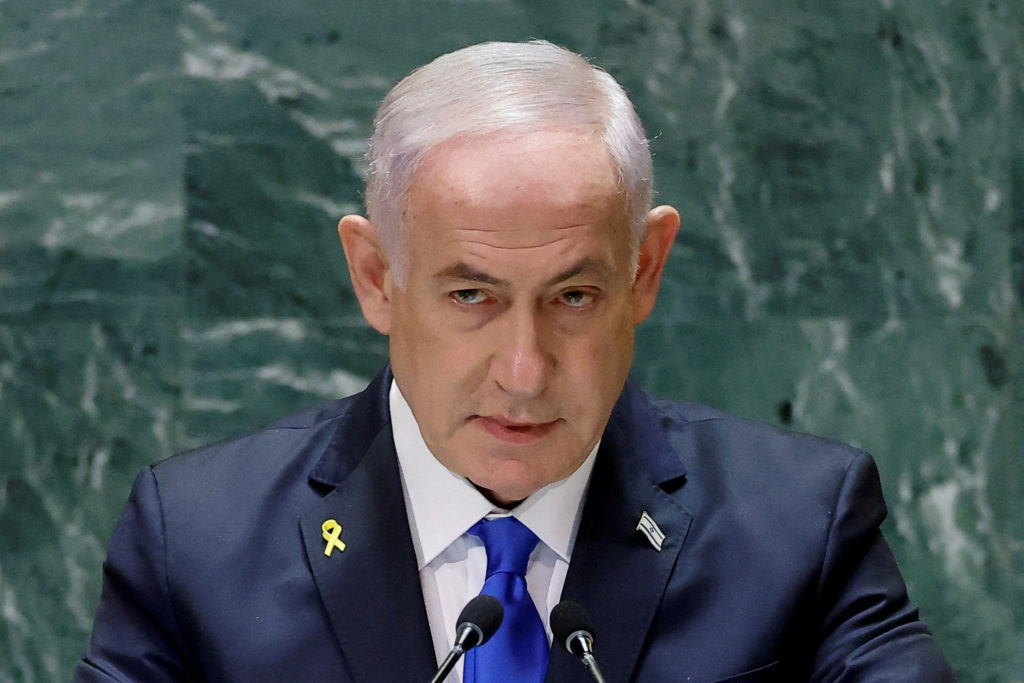
Israel has become the first country to formally recognise Somalia’s breakaway region of Somaliland as an independent nation.
Prime Minister Benjamin Netanyahu, said Israel intended to immediately expand cooperation in agriculture, health, and technology. Somaliland’s president, Abdirahman Mohamed Abdullahi, called the development “a historic moment”.
Recognition by Israel could encourage other nations to follow suit, increasing the region’s diplomatic credentials and access to international markets.
Somalia’s prime minister, Hamza Abdi Barre, said his country categorically and unequivocally rejected what he called a deliberate attack by Israel on its sovereignty.
Abdullahi said in a statement that Somaliland would join the Abraham Accords, in what he called a step toward regional and global peace.
Somaliland was committed to building partnerships, boosting mutual prosperity and promoting stability across the Middle East and Africa, he added.
The decision has been condemned by the foreign ministers of Somalia, Egypt, Turkey and Djibouti, who in a statement affirmed their “total rejection” of Israel’s announcement.
The two countries had agreed to establish “full diplomatic ties, which will include the appointment of ambassadors and the opening of embassies”, Israeli Foreign Minister Gideon Saar said in a statement on X.
“I have instructed my ministry to act immediately to institutionalise ties between the two countries across a wide range of fields,” he said.
Meanwhile, Egypt’s foreign minister held separate phone calls with his counterparts in Somalia, Turkey and Djibouti to discuss issues including Israel’s declaration.
In a statement, Egypt’s foreign ministry said the four countries reaffirmed their support for Somalia’s unity, sovereignty and territorial integrity, and warned against unilateral steps that could undermine stability or create what they called “parallel entities” to Somalia’s state institutions.
They also argued that recognising the independence of parts of sovereign states would set a dangerous precedent under international law and the United Nations Charter.
The statement added that the ministers reiterated their rejection of any plans to displace Palestinians outside their homeland.
Israel has for years been trying to bolster relations with countries in the Middle East and Africa, but recent wars including in Gaza and against Iran have been seen as a hindrance to democracy.
Historic deals struck late in Trump’s first term in 2020, known as the Abraham Accords, saw several countries including Muslim-majority United Arab Emirates and Morocco normalise relations with Israel, with other countries joining later.
Somaliland has a strategic position on the Gulf of Aden, and has its own money, passports and police force. Born in 1991 after a war of independence against former dictator General Siad Barre, it has grappled with decades of isolation ever since.
With a population of almost six million, the self-proclaimed republic has recently been at the centre of several regional disputes involving Somalia, Ethiopia and Egypt.
Last year, an agreement between landlocked Ethiopia and Somaliland to lease a stretch of coastline for a port and military base angered Somalia. (BBC)
The United States says that it has carried out an air strike against ISIL (ISIS) fighters in northwest Nigeria that residents say caused buildings to shake and the sky to glow red.
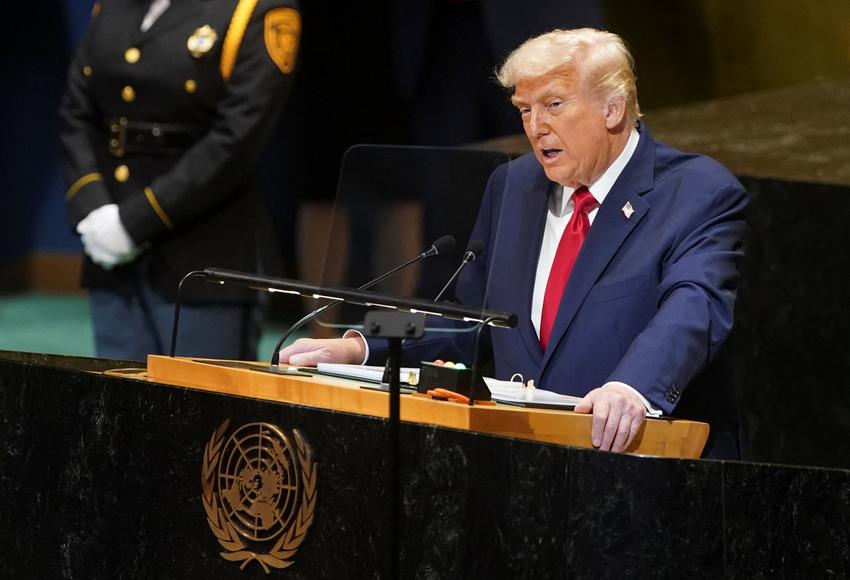
“Tonight, at my direction as Commander in Chief, the United States launched a powerful and deadly strike against ISIS Terrorist Scum in Northwest Nigeria,” President Donald Trump said in a post on his Truth Social platform on Thursday evening.
Trump, who has previously threatened greater US intervention in Nigeria over dubious claims that a “genocide” of Christians is taking place there, said ISIL fighters had been “viciously” killing and targeting Christians at levels unseen for “centuries”.
“I have previously warned these Terrorists that if they did not stop the slaughtering of Christians, there would be hell to pay, and tonight, there was,” Trump said.
The US military’s Africa Command (AFRICOM), which is responsible for operations in Africa, said in a post on X that the air strike was carried out “at the request of Nigerian authorities” and had killed “multiple ISIS terrorists”.
Residents of Jabo have said that the strikes caused alarm and that their village has never experienced an attack by ISIL.
“As it approached our area, the heat became intense,” Abubakar Sani, who lives just a few houses from the scene of the explosion, told the news service Associated Press.
“Our rooms began to shake, and then fire broke out,” he said. “The Nigerian government should take appropriate measures to protect us as citizens. We have never experienced anything like this before.”
Another resident, 40-year-old farmer Sanusi Madabo, said that the attacks made the night sky glow red and appear “almost like daytime”.
“Grateful for Nigerian government support and cooperation,” US Secretary of Defense Pete Hegseth wrote on social media, warning also of “more to come”, without providing details.
In a statement, AFRICOM said the strike occurred in “Soboto state,” an apparent reference to Nigeria’s Sokoto State.
Nigerian Foreign Minister Yussuf Tuggar confirmed on Friday that the strike had been carried out in coordination with the country’s authorities, but said it was not aimed at targeting members of any particular religious community.
“Nigeria is a multi-religious country, and we’re working with partners like the US to fight terrorism and protect lives and property,” Tuggar told Nigeria’s Channels Television.
The US military action comes weeks after Trump said he had ordered the Pentagon to begin planning for potential military action in Nigeria following claims of Christian persecution in the country.
Nigeria’s government had dismissed Trump’s assertions, saying armed groups target both Muslim and Christian communities in the country, and US claims that Christians face persecution do not represent a complex security situation and ignore efforts by Nigerian authorities to safeguard religious freedom.
Nigeria’s Ministry of Foreign Affairs issued a statement shortly after Trump announced the US strike, confirming early on Friday that Nigerian authorities were “engaged in structured security cooperation with international partners, including the United States of America, in addressing the persistent threat of terrorism and violent extremism”. (AlJazeera)
The U.S. Supreme Court refused on Tuesday to let Donald Trump send National Guard troops to the Chicago area as the Republican president expands the use of the military for domestic purposes in a growing number of Democratic-led jurisdictions, a policy critics call an effort to punish adversaries and stifle dissent.
The justices denied the Justice Department’s request to lift a judge’s order that has blocked the deployment of hundreds of National Guard personnel in a legal challenge brought by Illinois state officials and local leaders. The department had asked to allow the deployment while the litigation plays out.
The National Guard serves as state-based militia forces that answer to state governors except when called into federal service by the president.
Trump ordered troops to Chicago, the third-largest U.S. city, and to Portland, Oregon, following his earlier deployments to Los Angeles, Memphis and Washington, DC.
The case has been characterized by starkly different portrayals of the protests against Trump’s aggressive immigration enforcement in and around Chicago.
Trump and his allies have described Democratic-led cities as lawless, crime-ravaged and plagued with vast, violent protests. His administration has said troops are needed to protect federal property and personnel.
Democratic mayors and governors, along with other Trump critics, have said these claims are a false account of the situation and a pretext for sending troops, accusing Trump of abusing his power.
Federal judges have expressed skepticism over the administration’s dire view of protests that local law enforcement officials have called limited in size, largely peaceful and manageable by their own forces – far from the “war zone” conditions described by Trump.
Trump has relied on a law that lets a president deploy state National Guard troops to suppress a rebellion, repel an invasion or if he is “unable with the regular forces to execute the laws of the United States.”
Illinois and Chicago sued after the administration federalized 300 Illinois National Guard troops and also ordered Texas National Guard troops into the state, calling the actions unlawful. Officials have since announced the administration was sending home hundreds of National Guard troops who were dispatched to Portland from California, and to Chicago from Texas.
Chicago-based U.S. District Judge April Perry temporarily blocked the move on October 9, finding that the claims of violence during protests at an immigration facility in the Chicago suburb of Broadview, Illinois, where a small group of demonstrators had gathered daily for weeks, were unreliable.
Perry, an appointee of Democratic former President Joe Biden, found that there was no evidence of rebellion or that the law was not being enforced, faulting officials for “equating protests with riots and a lack of appreciation for the wide spectrum that exists between citizens who are observing, questioning and criticizing their government, and those who are obstructing, assaulting or doing violence.”
A National Guard deployment would “only add fuel to the fire,” Perry said.
A three-judge panel of the Chicago-based 7th U.S. Circuit Court of Appeals declined to lift Perry’s order blocking the deployment, concluding that “the facts do not justify the president’s actions in Illinois.” Two of the three judges were appointed by Republican presidents, including one by Trump.
The Justice Department told the Supreme Court that the assessment by local officials of the protests was “implausibly rosy,” and that federal agents “have been forced to operate under the constant threat of mob violence.”
Lawyers for Illinois and Chicago told the justices that the local protests have “never hindered the continued operation” of the Broadview facility, and that state and local authorities have responded to every request for assistance and contained any sporadic disruption.
Officials from Portland and Oregon are pursuing a separate legal challenge to Trump’s planned deployment to that city. U.S. District Judge Karin Immergut, a Trump appointee, permanently blocked that deployment in a November 7 ruling. The administration has appealed that ruling.
The Supreme Court in October asked the administration as well as Illinois and Chicago to provide written arguments over how to interpret the words “regular forces” in the law at issue in the case.
In an October 10 written ruling, Perry said that historical sources indicate that “regular forces” means only members regularly enlisted in the military, including the Army and Navy, as opposed to the National Guard.
Trump’s administration “made no attempt to rely on the regular forces before resorting to federalization of the National Guard,” Perry said, adding that there are other limits on the use of the military for domestic law enforcement purposes.
The administration repeatedly has sought the Supreme Court’s intervention to allow implementation of Trump policies impeded by lower courts. The Supreme Court, which has a 6-3 conservative majority, has sided with the administration in almost every case that it has been called upon to review since Trump returned to the presidency in January. (JapanToday)
Nine people were killed when gunmen opened fire at a bar outside Johannesburg early Sunday, police said, in the second such shooting in South Africa this month.
Ten more were wounded in the early morning attack at the tavern in the impoverished Bekkersdal township in a gold mining area around 40 kilometres (25 miles) southwest of the city.
It follows a shooting at a tavern near Pretoria on December 6 when gunmen killed a dozen people, including a three‑year‑old child.
Police initially said 10 people were killed when the Bekkersdal bar was attacked just before 1:00 am (2300 GMT), but later revised the toll downwards.
Most of the attackers were armed with pistols and one had an AK-47 rifle, deputy provincial police commissioner Major General Fred Kekana told SABC television from the scene.
“They entered the tavern and randomly shot at the patrons, unprovoked,” he said.
Three people were killed inside the bar and others as they fled the scene, with the attackers continuing to shoot as they left, he said.
“It’s also reported that after they shot the people, they searched them. They took their valuables, including cell phones,” Kekana said.
The dead included a driver from an online car-hailing service who was driving past.
“It’s pure criminality,” Kekana said. Police launched a manhunt for the attackers and appealed for public assistance.
South Africa, the continent’s most industrialised nation, is grappling with a high crime rate, much of it driven by organised networks and gangs.
The country is awash with legal and illegal firearms and shootings are common, often fuelled by gang rivalry and competition between informal businesses.
The tavern hit in the Pretoria attack earlier this month was an unlicenced outlet in a hostel for migrant workers at Saulsville township.
The dead included children aged three, 12 and 16.
The country was also shocked by the daylight assassination in central Johannesburg last week of a popular former radio presenter known as DJ Warras.
The 40-year-old, whose real name was Warris Stock, was gunned down on December 16 outside a building that he had visited as part of his work with a private security company.
In another high-profile killing, a witness in a corruption inquiry was shot dead in front of his family on December 5, just weeks after testifying against a municipal police chief.
The murder of Marius Van der Merwe, 41, reignited a debate about the targeting of whistleblowers who provide information related to crime and corruption, including the public sector and cases implicating government officials.
South Africa has one of the highest murder rates in the world, with an average of 63 people killed each day between April and September, according to police data.
The victims, who had gathered for a traditional ceremony, were aged 14 to 64 years old, and 15 were women. Several men have been arrested. (RFI)


 English