Temilade Openiyi, popularly known as Tems, has her hit single, ‘Me & U’, featured in the first official teaser for the Hollywood fantasy film, Children of Blood & Bone.
Oyinkansola Aderibigbe, popularly known as Ayra Starr, also appeared in the teaser, marking her Hollywood acting debut.
The behind-the-scenes teaser, shared on Monday by director Gina Prince-Bythewood on her Instagram page @gpbmadeit, features scenes from the film’s production, including costume preparations, action sequences and brief appearances by cast members
Its caption reads: “So excited to share a peek behind the scenes of our incredible journey to Orisha. CHILDREN OF BLOOD AND BONE TRAILER drops TOMORROW! And in theaters Jan 15!”
Tems’ Me & U soundtracks the teaser, while Ayra Starr appears briefly alongside other cast members in the Paramount Pictures adaptation of Tomi Adeyemi’s bestselling novel.
The film stars Viola Davis, Idris Elba, Cynthia Erivo, Damson Idris, Thuso Mbedu, Lashana Lynch, Chiwetel Ejiofor, Amandla Stenberg and Ayra Starr.
The plot follows Zélie Adebola as she seeks to restore magic to her people after it was violently taken from them, in a world inspired by West African mythology.
The plot follows Adebola, a young woman who seeks to restore magic to the West African-inspired kingdom of Orïsha after it was violently taken from its people.
Children of Blood & Bone is based on Tomi Adeyemi’s 2018 novel, the first book in the Legacy of Orïsha series. (Vanguard)
Cate Blanchett brought Hollywood starpower to Brussels on Tuesday as she launched a free tool to give people the right to decide how their image can be used by AI firms.
Blanchett announced the Human Consent Registry was live at the European Parliament also attended by Hollywood directing heavyweight Steven Soderbergh.
The public tool available online will allow anyone to register how they want their identity — name, image, voice, likeness, movement and/or other personal attributes — to be used by artificial intelligence systems.
They will have three options: allowed, allowed with terms, or prohibited.”Human consent is not an impediment to progress.
Human consent does not diminish the struggles and the joys of technological innovation or inhuman creativity,” Blanchett said at the event in the parliament’s library.
She insisted the issue did not just affect public figures like herself, but for anyone who has been photographed “or simply lived some part of their life online”.
The registry has been launched by RSL Media, co-founded by Blanchett, a non-profit organization focused on ensuring consent in AI use.
RSL Media hopes AI companies will voluntarily consult the registry.
Blanchett has been a staunch proponent of protecting rights in the age of generative artificial intelligence.
She was among over 800 creatives including fellow actor Scarlett Johansson as well as director Guillermo Del Toro, who published an open letter accusing AI giants of “theft” in January this year.
Hosting Tuesday’s event was EU lawmaker Eva Maydell who hailed the new tool.
The registry “represents an ambitious attempt to turn the principles into practice and make consent more accessible and feasible, to make rights more transparent, and to make trust more scalable”, Maydell said. (JapanToday)
Cate Blanchett said the #MeToo movement “got killed very quickly” in Hollywood, speaking Sunday at the Cannes Film Festival.
In a wide-ranging staged conversation, Blanchett lamented that the tide of #MeToo has been turned in Hollywood, where she has been outspoken about gender equality.
“It got killed very quickly, which I think is interesting,” said Blanchett.
“There are a lot of people with platforms who are able to speak up with relative safety and say this has happened to me,” Blanchett said. “And the so-called average woman on the street, person on the street, is saying MeToo. Why does that get shut down?”
In 2018, when she was president of the jury in Cannes, Blanchett took part in a red-carpet protest. She and 81 other women appeared on the steps of the Palais des Festivals, symbolically representing the number of female director who were selected for Cannes’ competition lineup. Over the same period, 1,866 male directors had been selected.
“I’m still on film sets and I do the headcount every day. There’s 10 women and there’s 75 men every morning,” Blanchett said.
“I love men, but what happens is the jokes become the same,’ she said. “You just have to brace yourself slightly, and I’m used to that, but it just gets boring for everybody when you walk into a homogeneous workplace.” (JapanToday)
Hollywood star John Travolta was given a surprise lifetime achievement award at the Cannes Film Festival Friday as he premiered the first movie he has ever directed.
The man who became an icon overnight with “Saturday Night Fever” was visibly moved as he accepted the honorary Palme d’Or before the screening of “Propeller One-Way Night Coach”, which is based on a book about his first experience in an airliner.
“I just can’t believe it. This is beyond the Oscar, really,” he said as he accepted the tribute.
The festival has been laying on the love for Hollywood legends this year despite the big studios staying away, with honorary Palmes for Barbra Streisand and Peter Jackson as well as a gala screening for Vin Diesel and the stars of “The Fast and the Furious” franchise to mark its 25th anniversary.
Travolta — who has never won an Oscar — revived his flagging career with his iconic turn as hitman Vincent Vega in Quentin Tarantino’s “Pulp Fiction”, which won the festival’s Palme d’Or top prize in 1994.
Many critics hailed it as his greatest performance, one that has since gone down in cinema history.
“My favorite movies in the history of my life have always been the winners of the Palme d’Or,” Travolta said.
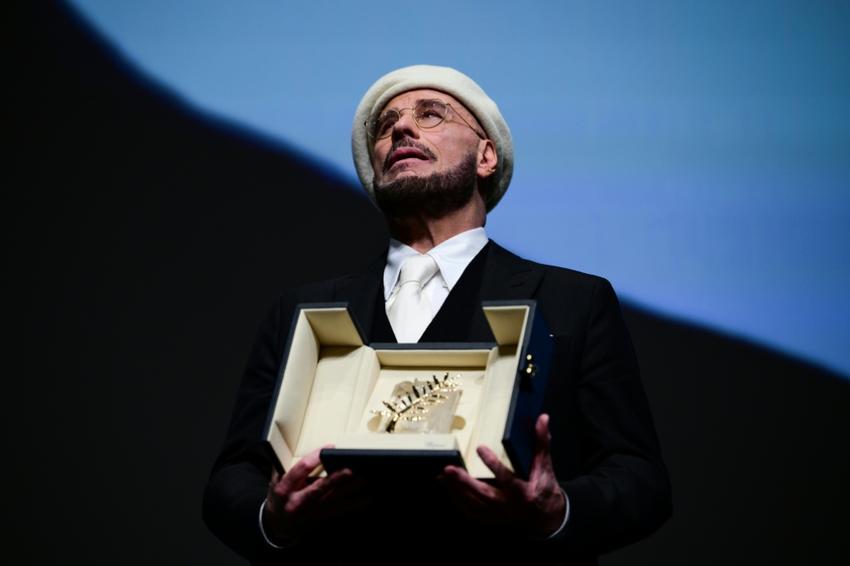
Cannes had kept the award under wraps until the actor walked on stage for the premiere wearing a black suit and a white beret.
The 72-year-old said he had been hugely surprised to have his directorial debut, which stars his daughter Ella Bleu as an air hostess, accepted at the world’s most prestigious film festival.
When Cannes director Thierry Fremaux told him in November that “it would be the first film ever accepted that early I cried like a baby,” he said.
“I had no expectation my film would be accepted,” he added.
“Propeller One-Way Night Coach” is a one-hour self-financed autobiographical tale about Travolta’s flight as an eight-year-old with his actress mother from New York to Los Angeles in 1962.
“This is the blueprint of my life,” said the actor, a lifelong aeroplane nut, who narrates the story. What you’ll see in the movie is completely my perspective on what I witnessed people go through.
“Everyone that was in the movie is sitting in the audience right there, my family,” he added.
Travolta was bitten by the acting bug early.
Born in New Jersey to the an Irish mother and an Italian-American father who ran a tyre store, he left school at 16 to try his hand at acting and dancing.
Two years later he landed his first big stage role in the Broadway musical “Grease”.
He was nominated for an Oscar in 1978 for playing disco-dancing champion Tony Manero in the low-budget “Saturday Night Fever” and was launched into the Hollywood stratosphere by his role in the movie version of “Grease” the same year.
The rights to “Propeller One-Way Night Coach” have been bought by Apple, Travolta said.
Asked if he would direct again, he said he had watched all sorts of directors as an actor.
“I really believe that I can navigate around all of that, and anything I would choose to do, but I really feel I have to have passion about the material to do again what I’ve done here,” he said. (JapanToday)
Paul Thomas Anderson’s “One Battle After Another” was crowned best picture at the 98th Academy Awards, handing Hollywood’s top honor to a comic, multi-generational American saga of political resistance.
The ceremony Sunday, which also saw Michael B Jordan win best actor and “Sinners” cinematographer Autumn Durald Arkapaw make Oscar history as the first female director of photography to win the award, was a long-in-coming coronation for Anderson, a San Fernando Valley native who made his first short at age 18 and has been one of America’s most lionized filmmakers for decades. Before Sunday, Anderson had never won an Oscar.
But “One Battle After Another,” the favorite coming in, won six Oscars, including best director and best adapted screenplay for Anderson, the Oscars’ first trophy for best casting and best supporting actor for an absent Sean Penn.
“I wrote this movie for my kids to say sorry for the housekeeping mess that we left in this world — we’re handing off to them,” said Anderson while accepting the screenplay trophy. “But also with the encouragement that they will be the generation that hopefully brings us some common sense and decency.”
Ryan Coogler’s Jim Crow-set, blues-soaked vampire tale “Sinners,” which came in with a record 16 nominations, also landed some big and even historic wins. Coogler, the widely loved filmmaker, won the first Oscar in an unblemished career that started out with Jordan in 2013’s “Fruitvale Station.”
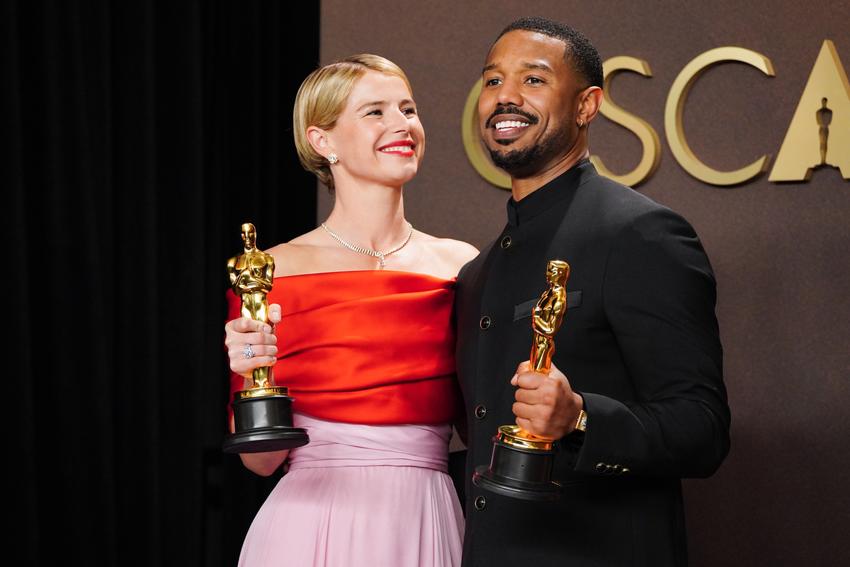
Jessie Buckley, left, winner of the award for best actress in a leading role for “Hamnet,” and Michael B. Jordan, winner of the award for best actor in a leading role for “Sinners,” pose in the press room at the Oscars on Sunday, March 15, 2026, at the Dolby Theatre in Los Angeles. (Photo by Jordan Strauss/Invision/AP)
Arkapaw was also the first Black person to win for best cinematography. Only the fourth female cinematographer ever nominated, her win was a long-in-coming triumph for women behind the camera.
“I really want all the women in room to stand up,” said Arkapaw. “Because I don’t feel like I get here without you guys.”
And Jordan, one of Hollywood’s most liked leading men, won best actor in one of the night’s closest races. The Dolby Theatre rose to its feet in the most thunderous applause of the night.
“Yo, momma, what’s up?” said Jordan after staggering to the stage.
The Oscar night belonged to Warner Bros., the studio of “One Battle After Another” and “Sinners,” which scored a record-tying 11 wins. It was an oddly poignant note of triumph for the fabled studio, which weeks earlier agreed to a sale to Paramount Skydance, David Ellison’s rapidly assembled media monolith. The $111 billion deal, which awaits regulatory approval, has Hollywood bracing for more layoffs.
But “Sinners” and “One Battle After Another” — the much-acclaimed heavyweights of the season — were each Hollywood anomalies: big-budget originals born from a personal vision. In a year where anxiety over studio contraction and the rise of artificial intelligence often consumed the industry, both films gave Hollywood fresh hope.
Jessie Buckley won best actress for her performance as Agnes Shakespeare in “Hamnet,” making her the first Irish performer to ever win in the category. At an Oscars where no other acting award seemed a sure thing, Buckley cruised into Sunday’s Oscars at the Dolby Theatre as the overwhelming favorite.
“It’s Mother’s Day in the UK,” said Buckley on the stage. “I would like to dedicated this to the beautiful chaos of a mother’s heart.”
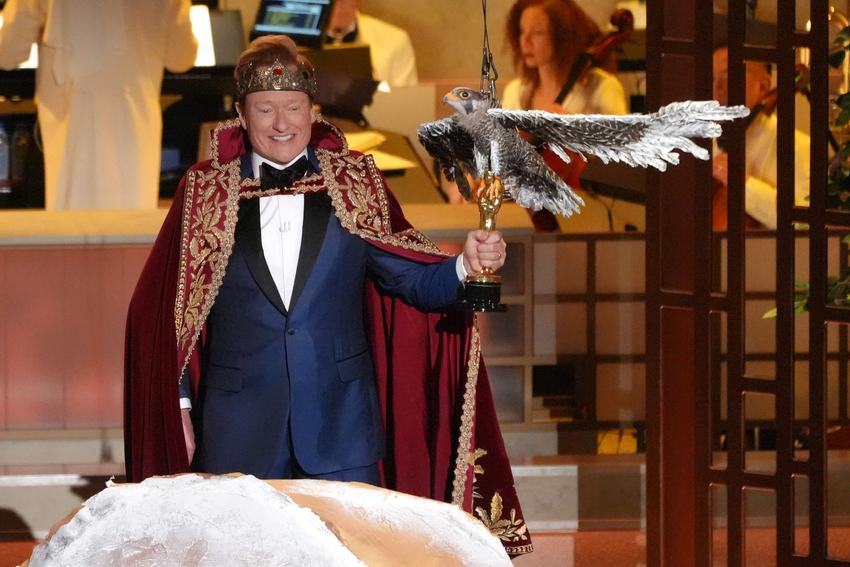
From the start, when host Conan O’Brien sprinted through the year’s nominees as Amy Madigan’s character in the horror thriller “Weapons” in a pre-taped bit, Sunday’s ceremony was quirky, a little clunky and preoccupied with the shifting place of movies in culture. There was, of all things, a tie for best live-action short film.
Host Conan O’Brien performs during the Oscars on Sunday, March 15, 2026, at the Dolby Theatre in Los Angeles. (AP Photo/Chris Pizzello)
As expected, the Netflix sensation “KPop Demon Hunters,” 2025’s most-watched film, won best animated feature, as well as best song for “Golden.” It was a big win for Netflix but a more qualified victory for the movie’s producer, Sony Pictures. Though it developed and produced the film, Sony sold “KPop Demon Hunters” to the streaming giant instead of giving it a theatrical release.
On Netflix, “KPop Demon Hunters” became a cultural phenomenon and the streaming platform’s biggest hit. It has more than 325 million views and counting.
“This is for Korea and Koreans everywhere,” said co-director Maggie Kang.
Another Netflix release, Guillermo del Toro’s “Frankenstein” picked up three awards for its lavish craft, for costume design, makeup and hairstyling and for production design.
Amy Madigan won best supporting actress for her performance in the horror thriller “Weapons,” a win that came 40 years after the 75-year-old actor was first nominated, in 1986, for “Twice in a Lifetime.” Letting out a giant laugh as she hit the stage, Madigan exclaimed, “This is great!”
Hosting for the second time, O’Brien began the Dolby Theatre show alluding to “chaotic and frightening times.” But he argued that the current geopolitical climate made the Oscars all the more resonate as a globally unifying force.
“We pay tribute tonight, not just to film, but to the ideals of global artistry, collaboration, patience, resilience and that rarest of qualities today — optimism,” O’Brien said. “We’re going to celebrate. Not because we think all is well, but because we work, and hope, for better.”
Throughout the show, O’Brien hit a number of targets, like Timothée Chalamet — who again missed out on winning his first Oscar, this time for “Marty Supreme” — for his diss of opera and ballet. But the ceremony seldom wasn’t shadowed by politics, whether in references to changes under U.S. President Donald Trump or the recently launched war in Iran.
Joachim Trier, whose Norwegian family drama “Sentimental Value” won best international film, quoted James Baldwin in his acceptance speech: “All adults are responsible for all children,” he said. “Let’s not vote for politicians that don’t take this seriously into account.”
Presenter Jimmy Kimmel, whose late-night show last year was suspended after comments he made about Charlie Kirk’s killing, was among the most blunt.
“There are some countries that don’t support free speech,” said Kimmel. “I’m not at liberty to say which. Let’s just leave it at North Korea and CBS.”
Shortly after, “Mr. Nobody Against Putin,” a film about a Russian primary schoolteacher who documents his students’ indoctrination to support Russia’s war with Ukraine, won best documentary.
“’Mr. Nobody Against Putin’ is about how you lose your country,” co-director said. “And what we saw when working with this footage is that you lose it through countless, small, little acts of complicity.”
“We all face a moral choice,” he added, “but, luckily, a nobody is more powerful than you think.”
Elegy also marked the Oscars. Producers expanded the in memoriam segment following a year that featured the deaths of so many Hollywood legends, including Keaton, Robert Duvall and Redford. Barbra Streisand spoke about Redford, her “The Way We Were” co-star.
“Bob had real backbone,” said Streisand, who called Redford “an intellectual cowboy” before singing a few bars of “The Way We Were.”
Billy Crystal paid tribute to Rob and Michele Reiner, who were killed in their home in December. Crystal, a close friend of Rob Reiner’s who memorably starred in 1989’s “When Harry Met Sally…” and 1987’s “Princess Bride.” In his moving remarks, Crystal quoted the latter.
“All we can say is: Buddy, how much fun we had storming the castle,” said Crystal.
Yet again, the night’s final award again didn’t go to a streaming release; Apple’s “CODA” remains the only streaming film to achieve that distinction. “Sinners” and “One Battle After Another” were both theatrical releases shot on film.
Apple’s top contender this time, the Formula One race drama “F1,” a movie that it partnered with Warner Bros. to distribute theatrically, won for best sound. The lone blockbuster of the year to go home with a win was “Avatar: Fire and Ash,” for visual effects.
Some of O’Brien’s best digs came at the expense of the streamers. Netflix chief Ted Sarandos, he joked, was in a theater for the first time. The host also lamented the lack of nominees for Amazon MGM: “Why isn’t the website I order toilet paper from winning more Oscars?”
“I’m honored to be the last human host of the Academy Awards,” said O’Brien. “Next year it’s going to be a Waymo in a tux.” (JapanToday)
The nominations for the 98th Academy Awards have been unveiled, with vampire period horror film Sinners emerging as the year’s biggest contender.
The film earned a record 16 nominations, setting a new mark for the most nominations in a single year and surpassing One Battle After Another, which secured 13 nods.
Other strong contenders include Frankenstein, Marty Supreme and Sentimental Value, each receiving nine nominations across several categories.
The awards ceremony is scheduled to take place in Hollywood on Sunday.
Below are nominees in key categories:
Best Picture Bugonia F1 Frankenstein Hamnet Marty Supreme One Battle After Another The Secret Agent Sentimental Value Sinners Train Dreams
Best Director Paul Thomas Anderson — One Battle After Another Ryan Coogler — Sinners Josh Safdie — Marty Supreme Joachim Trier — Sentimental Value Chloé Zhao — Hamnet
Best Actor Timothée Chalamet — Marty Supreme Leonardo DiCaprio — One Battle After Another Ethan Hawke — Blue Moon Michael B. Jordan — Sinners Wagner Moura — The Secret Agent
Best Actress Jessie Buckley — Hamnet Rose Byrne — If I Had Legs I’d Kick You Kate Hudson — Song Sung Blue Renate Reinsve — Sentimental Value Emma Stone — Bugonia
Best Supporting Actor Benicio del Toro — One Battle After Another Jacob Elordi — Frankenstein Delroy Lindo — Sinners Sean Penn — One Battle After Another Stellan Skarsgård — Sentimental Value
Best Supporting Actress Elle Fanning — Sentimental Value Inga Ibsdotter Lilleaas — Sentimental Value Amy Madigan — Weapons Wunmi Mosaku — Sinners Teyana Taylor — One Battle After Another
Best International Feature Film
The Secret Agent (Brazil) It Was Just an Accident (France) Sentimental Value (Norway) Sirat (Spain) The Voice of Hind Rajab (Tunisia)
Best Animated Feature Arco Elio Kpop Demon Hunters Little Amelie or the Character of Rain Zootopia 2
Best Documentary Feature
The Alabama Solution Come See Me In The Good Light Cutting Through Rocks Mr. Nobody Against Putin The Perfect Neighbor
Films With the Most Nominations Sinners — 16 One Battle After Another — 13 Frankenstein — 9 Marty Supreme — 9 Sentimental Value — 9 Hamnet — 8 (Leadership)
Netflix’s stock is surging as investors applauded its decision to exit the race for Warner Bros Discovery, a months-long bidding war with Paramount Skydance for some of Hollywood’s most prized assets.
The stock jumped more than 10 percent on Friday. That came on the heels of Netflix’s decision on Thursday evening that it would not match Paramount’s latest $31 per share bid or raise its offer of $27.75 a share for Warner Bros’s studio and streaming assets, stating that the deal was “no longer financially attractive”.
Warner had given Netflix four business days to come up with a counteroffer for Paramount’s latest bid — but Netflix, instead, responded less than two hours later, declining to raise its proposal. It said the new price it would have to pay made the deal “no longer financially attractive”.
“We believe we would have been strong stewards of Warner Bros′ iconic brands,” Netflix’s co-CEOs Ted Sarandos and Greg Peters said in a joint statement. “But this transaction was always a ‘nice to have’ at the right price, not a ‘must have’ at any price.”
The decision was welcomed by investors. Shares of the streaming giant had shed more than 18 percent since Netflix announced its deal with Warner Bros on December 5.
The latest move is a “tick in the box” for discipline, said Ben Barringer, head of technology research at Quilter Cheviot.
“What you want from a management team is an ability to look at acquisitions, value them, pay what they think is a fair price, but to not overpay.”
Analysts and investors had questioned whether Netflix’s bid was a defensive attempt to block a future competitor or an offensive shift away from its historically disciplined build-versus-buy approach.
“A positive turn of events in our view, as we believe NFLX’s withdrawal from the race will leave it free to refocus on its business, while its closest competitors grapple with long and distracting regulatory approval and merger integration processes, and with PSKY saddled with sizable deal debts,” HSBC analysts said.
Shares of the David Ellison-led Paramount, meanwhile, were up 17 percent.
Paramount’s deal, valued at $110bn, including debt, represents nearly 13 times Warner Bros’ EBITDA – earnings before interest, tax, depreciation and amortisation or core profits – this year, according to estimates from LSEG. That is well above what Paramount is worth on the same basis, which is 7 times its estimated earnings.
A tie-up with Warner Bros would allow Paramount’s storied Hollywood studio to tap into Warner’s deep trove of intellectual property – including franchises such as Fantastic Beasts and The Matrix – across film, television and streaming.
“WBD’s largest asset is declining, and the company is still under debt from its last failed merger. But this deal is more about Ellison taking over Hollywood and ego than it is about good business sense,” said Ross Benes, senior analyst at Emarketer.
For Paramount’s streaming unit, a combination with HBO Max and Discovery+ would reshape its position in a streaming era long dominated by Netflix.
“Paramount was the streaming market laggard, and it needs Warner Bros’ content and capabilities to play catch-up. It will need more than Harry Potter for the deal to work its magic and enable Paramount to fight off Netflix, Disney and Amazon in the streaming wars,” said Dan Coatsworth, head of markets at AJ Bell.
In the fight for Warner Bros, the Paramount consortium – backed by Larry Ellison, billionaire and ally of United States President Donald Trump, and led by his son, Paramount CEO David Ellison – also boosted its termination fee to $7bn and expanded its financing commitments, including $45.7bn in equity.
“There is a right price and wrong price for any acquisition, and the pressure is now on Paramount to prove the big financial outlay is worth it,” said Coatsworth. (AlJazeera)
Tyler Perry was sued for sexual assault by an actor who appeared in “Boo! A Madea Halloween,” marking the second lawsuit in recent months accusing the filmmaker and studio mogul of leveraging his power in Hollywood to make sexual advances.
Mario Rodriguez filed the lawsuit Thursday in California, alleging Perry subjected him to repeated unwanted sexual advances over several years, including sexual battery and assault at Perry’s Los Angeles home. Rodriguez is seeking at least $77 million in damages and also has sued Lionsgate, which distributed the 2016 film, accusing the studio of turning a blind eye to Perry’s alleged misconduct.
Lionsgate did not immediately respond to an email seeking comment.
In a statement, Perry’s lawyer denied the allegations.
According to the complaint, Rodriguez was approached in 2014 by a trainer at an Equinox gym in Los Angeles who said Perry wanted his phone number to discuss an acting role. Perry later encouraged Rodriguez to audition for “Boo! A Madea Halloween,” telling him, “I’m not a bad person to know and have in your corner,” the lawsuit claims.
After Rodriguez was cast, he was invited to Perry’s home, where Perry allegedly touched him inappropriately while they watched a movie. The lawsuit describes additional alleged incidents in 2016, 2018 and 2019, including one encounter in which Perry allegedly attempted to unbuckle Rodriguez’s pants and another in which Perry placed Rodriguez’s hand on his genitals. The complaint says Perry gave Rodriguez $5,000 on multiple occasions following the encounters.
Rodriguez says he resisted the advances and ultimately decided to file suit after learning of similar allegations made by another actor, Derek Dixon.
Dixon sued Perry in June, alleging the filmmaker groped him while Dixon worked on Perry’s television series “The Oval” and “Ruthless.” That lawsuit, which was originally filed in Los Angeles Superior Court, has reportedly since been moved to federal court in Georgia, where Perry’s studio is based.
Rodriguez’s lawsuit includes claims of sexual assault, sexual battery and intentional infliction of emotional distress. (JapanToday)
Warner Bros Discovery has told its shareholders to reject Paramount Skydance’s $108.4bn (£80.75bn) takeover bid.
Paramount had said its offer was”superior” to a $72bn deal that Warner Bros struck with Netflix for its film and streaming businesses.
But in a dramatic plot twist in the story of who will take control of one of Hollywood’s oldest and most famous movie studios, Warner Brother’s board “unanimously” recommended rejecting the offer and agreed the deal with Netflix was in the firm’s best interests.
The media giant put itself up for sale in October after receiving “multiple” expressions of interest from potential buyers, including approaches from Paramount Skydance.
On 5 December, Warner Bros Discovery said it had agreed to sell its film and streaming businesses to Netflix.
In a lengthy legal filing, Warner Bros Discovery’s board said the offer from Paramount poses numerous and significant risks, and strongly rejects the idea that the Ellison family – one of America’s richest – is financially supporting the bid.
Paramount is backed by the billionaire Ellison family, which has close ties to the president.
In a reflection of where power now lies in the entertainment industry, the Warner Bros board says the offer from streaming giant Netflix is well financed and offers better long term value to shareholders.
Netflix welcomed the recommendation from Warner Bros. Ted Sarandos, Netflix’s co-chief executive, called the company’s merger agreement “superior” and “in the best interest of stockholders”.
In a letter to Warner Bros shareholders, Netflix reiterated its stance that its bid for Warner Bros involves a clearer funding structure and less regulatory risk.
Paramount could still come back with another offer, meaning the take-over saga gripping Hollywood isn’t over yet.
The are considerable differences between the Netflix and Paramount offers.
Netflix wants to buy Warner Bros. movie studio and its HBO streaming service, which would also give it access to Warner Bros’ rich library of content and secure access to those movies and shows for its subscribers.
But it doesn’t want the media giant’s pay-TV channels. If Warner Bros. goes with the Netflix deal it would leave Warner Bros to sell off its television networks, such as CNN and TNT, into a separate company before the takeover is completed.
Paramount, on the other hand, wants to buy Warner Bros in its entirety, which would mean acquiring competitors to its own TV channels such as CBS, MTV and Showtime.
Regulators might raise questions about an erosion of consumer choice, as the entertainment industry continues to consolidate ownership. (BBC)
Pope Leo has held an audience with Hollywood stars, urging actors and directors including Cate Blanchett, Viggo Mortensen and Monica Bellucci to continue their work as “pilgrims of the imagination”, helping to “bring hope”.
The celebrity meeting was a sprinkling of star dust for a still relatively new pope and a way for the Catholic Church to engage more with the world beyond.
It was also a strong show of support from Leo XIV for the global film industry, as he spoke out against the “troubling decline” in cinema-going.
Hailed by director Spike Lee as a “great day”, the gathering was the first of its kind in the Vatican.
Beneath the magnificent frescoes of the Clementine Hall, Pope Leo spoke in Italian to praise the power of cinema to entertain and to educate – and for its “capacity to amaze”.
But he urged filmmakers not to shy away from what he called “the world’s wounds”.
“Violence, poverty, exile, loneliness, addiction and forgotten wars are issues that need to be acknowledged and narrated,” the Pope said. “Good cinema does not exploit pain; it recognizes and explores it. This is what all the great directors have done.”
Six months since a conclave of cardinals elected the first North American to the Papacy, some Catholics feel that Leo has been slow to stamp his own mark on the role.
His predecessor, Francis, was a charismatic Argentinian known for his off-the-cuff comments and dramatic gestures. Leo’s style is far quieter, so this star-studded engagement is a new look.
It’s not clear how the cast list was drawn up, although none of the directors in the hall – who came from all over the world – made it onto the Pope’s own top film list.
This week, the Vatican revealed that his favourite four watches of all time included the 1960s nun-themed classic The Sound of Music, It’s a Wonderful Life and Italian Roberto Benigni’s multi award-winning Life is Beautiful.
Among those who did join today’s A-list audience were Mortensen, Chris Pine and filmmaker Gus Van Sant – of Milk and Good Will Hunting fame. The large Italian contingent included Gianni Amelio and Cinema Paradiso creator, Giuseppe Tornatore.
At a time of immense pressure on film, not long after a major Hollywood strike and with funding strains here in Italy, the Pope spoke in defence of the industry.
He was applauded loudly when he talked of the “quiet dedication” of all those behind the scenes with vital roles.
He also warned against the closure of cinemas which he characterised as the “beating heart of communities”.
“More than a few people are saying that the art of cinema and the cinematic experience are in danger. I urge institutions not to give up, but to cooperate in affirming the social and cultural value of this activity,” the Pope said.
After a fifteen-minute speech and a blessing he then received each audience member in turn, led by Blanchett.
“He really urged us to go back into our day jobs and inspire people,” the Australian-born star told reporters.
One of many who came bearing gifts, the actress – who works with the UN refugee agency, UNHCR – placed a woven bracelet in the Pope’s hand. “It was a bracelet I wear in solidarity with people who are displaced,” she explained later.
Lee handed the Chicago-born Pope a New York Knicks shirt printed with the number 14 and the words Pope Leo. (BBC)



 English