
Posted on Leave a comment

FCC chair Brendan Carr says media were ‘lied to’ over Stephen Colbert controversy

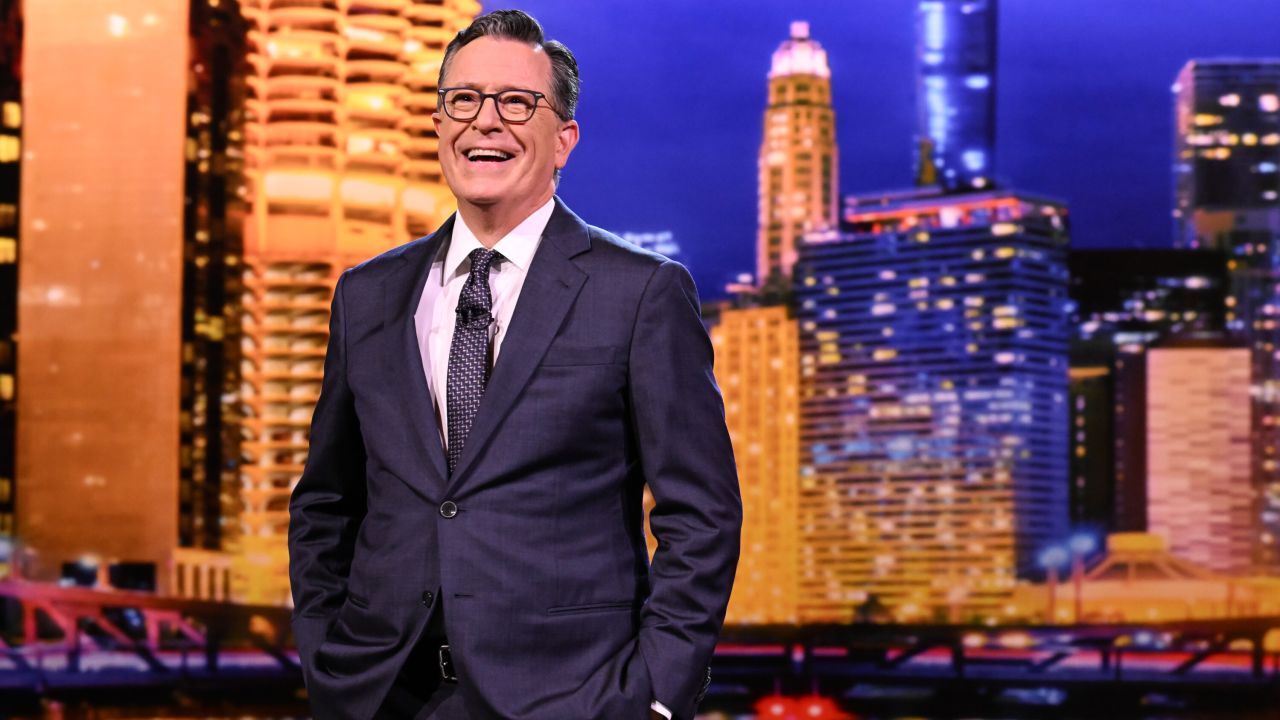
The chair of the US’s top media regulator claimed on Wednesday that journalists had been tricked into covering claims by the late-night host Stephen Colbert that he had been blocked by his network from interviewing a Texas Senate candidate.

Brendan Carr, the avowedly pro-Trump chairman of the Federal Communications Commission (FCC), made his comments after Colbert accused the Trump administration and CBS of censorship.

CBS has countered Colbert’s claims in a statement, saying it had not blocked him from interviewing James Talarico, a Texas Democrat, but had merely provided legal guidance that such an interview might trigger equal time regulations that would require him to also platform Talarico’s campaign rivals.

“I think yesterday was a perfect encapsulation of why the American people have more trust in gas station sushi than they do in the national news media,” Carr said, speaking at an FCC meeting in his first public comments on the controversy. “I think you guys should feel a bit ashamed for having been lied to and then run with those lies.”

In guidance issued in January, the FCC said that daytime and late-night talkshows would not automatically be eligible for exemptions to the equal time rule, which was enacted as part of the Communications Act of 1934. Based on Colbert’s comments, CBS had faced criticism for “corporate capitulation”, as the lone Democrat on the FCC, Anna M Gomez, put it, for enforcing the rule even before the network had received a complaint.

But Carr told reporters that the FCC was simply enforcing the rules on the books. “If you have a legally qualified candidate on, you have to give comparable air time to all other legally qualified candidates, and we’re going to apply that law,” he said. “There was no censorship here at all.”

Networks can request exceptions for what are called bona fide news interviews – but Carr said that CBS and ABC’s parent company, Disney, had not done so. Late-night and daytime shows had previously operated under the assumption that host-conducted interviews with politicians would qualify for the exception, based on past precedent.

A day after his initial broadside against his bosses, Colbert on Tuesday night harshly criticized a statement released by the network that contested his version of events. In the end, Colbert aired the interview – but only on YouTube, where it has piled up nearly 6.1m views by the time of publication, far greater than the average traditional television viewership for the Late Show. The controversy has also been a boon for Talarico’s campaign, which has said it raised $2.5m in the 24 hours since Colbert’s initial comments.

On Wednesday, Carr also confirmed to the Guardian that the FCC had opened an enforcement action into ABC’s The View over an appearance Talarico made on the program earlier in the month. He declined to provide further comment on the nature of the investigation.

“Every single broadcaster in this country has an obligation to be responsible for the programming that they choose to air, and they’re responsible whether it complies with FCC rules or not, and if it doesn’t, those individual broadcasters are also going to have a potential liability,” Carr said.

But, in her own remarks, Gomez took a different approach. “This equal time rule issue is just one of a long pattern of this administration using the FCC to go after content it doesn’t like,” she said in response to a question from the Guardian. “What you are seeing is using and weaponizing our enforcement process in order to pressure broadcasters to self-censor.”

Colbert, whose show ends in May, said it was “really surprising” that CBS had not consulted him on the statement it released on Tuesday afternoon, which he said seemed to be written by a panel of lawyers. At the end of his segment, Colbert picked up a printed copy of the statement as if it was pet waste.

“Here’s where I do want to tell the lawyers how to do their jobs: they know damn well that every word of my script last night was approved by CBS lawyers who, for the record, approve every script that goes on the air,” Colbert told viewers. “They told us the language they wanted me to use to describe that equal time exception. So, I don’t know what this is about.”

While it’s unusual for a network host to criticize their employer, Colbert said he did not wish to start a war with CBS – though he did take a shot at the network.

“For the record, I’m not even mad,” he said. “I really don’t want an adversarial relationship with the network. I’ve never had one. I’m just so surprised that this giant global corporation would not stand up to these bullies.”

Gigi Sohn, who served as counselor to then-FCC chair Tom Wheeler during Barack Obama’s administration, said she was less concerned about the equal time rule than about what she fears is unequal enforcement of it to crack down on liberal media opposition to Trump.

“My feeling is that if Stephen Colbert is going to give James Talarico 20 minutes to basically give a campaign speech, then CBS should provide equal opportunity,” she told the Guardian in an interview. “In theory, I don’t oppose what he’s doing. What I worry about is that it’s going to be unevenly unenforced.”

Sohn also said that the onus was on rival candidates, not the FCC, to request and pursue the equal time opportunity.

“It’s not for the FCC to go around sniffing around what The View did three months ago,” Sohn said. “[Carr] has a tendency to start his own investigations when nobody is complaining. If Carr sets his enforcement bureau out to find liberal bias shows and starts to go after them, that’s not how the equal opportunities rule is supposed to work.”

Carr ended his comments to reporters with an attack on Colbert, who has relentlessly mocked him on his show. Carr said that Colbert sees that, with the cancellation of his show, his time in the limelight is “coming to an end”.

“That’s got to be a difficult time for him. I get it,” he said. “But that doesn’t change the facts of what happened here.” (Guardian)
Posted on Leave a comment

Trump says comedian Colbert should be ‘put to sleep’

On the eve of Christmas, President Donald Trump has unleashed a fresh blast of vitriol at late-night comedy talk shows, saying comedian Stephen Colbert is a “pathetic train wreck” who should be “put to sleep.”

Colbert’s “The Late Show” is scheduled to end in May 2026, a decision his fans say smacks of censorship.

In a late night Truth Social post, Trump wrote that Colbert “has actually gotten worse” since being “terminated by CBS, but left out to dry.”

“Stephen is running on hatred and fumes ~ A dead man walking! CBS should, ‘put him to sleep,’ NOW,” Trump wrote.

Colbert has hosted the “The Late Show” since 2015 and it has been the highest-rated late night talk show on U.S. television. His opening monologues often take aim at the Republican president.

There was no immediate public response from Colbert or CBS to Trump’s post.

CBS announced the sunsetting of Colbert’s show after one more season in July, the same month its parent company reached a $16 million settlement with Trump. CBS called the cancellation “a purely financial decision.”

Trump had sued Paramount, alleging that CBS News’ “60 Minutes” program deceptively edited an interview with his 2024 election rival, Kamala Harris, in her favor.

In another overnight post, Trump repeated threats to yank the broadcast licenses of networks whose content he deemed overly critical.

“If Network NEWSCASTS, and their Late Night Shows, are almost 100% Negative to President Donald J. Trump, MAGA, and the Republican Party, shouldn’t their very valuable Broadcast Licenses be terminated? I say, YES!”

On Sunday, CBS’s new editor-in-chief, Bari Weiss, pulled a “60 Minutes” segment on alleged torture at El Salvador’s CECOT prison — where Trump sent hundreds of deported Venezuelans — saying it needed more reporting.

In August, Disney-owned ABC briefly suspended its late-night star, Jimmy Kimmel, before bringing him back on a one-year contract.

Kimmel had annoyed conservatives with comments in the wake of the murder of right-wing activist Charlie Kirk.

Trump appears to be aiming to reshape the U.S. media landscape, which he says is biased against conservatives.

His appointee to head the Federal Communications Commission, Brendan Carr, turned heads when he told a Congressional hearing that “the FCC is not formally an independent agency,” implying that his actions could justifiably be aligned with the political priorities of the White House. (JapanToday)

Posted on Leave a comment

US FCC clears $8bn Skydance-Paramount merger

An $8bn (£5.9bn) merger between Paramount Global and Skydance Media has been approved by the US Federal Communications Commission (FCC).

The merger between the independent film studio and one of Hollywood’s oldest and most storied companies was first announced in 2024.

The approval came just weeks after Paramount Global agreed to pay $16m (£13.5m) to settle a legal dispute with US President Donald Trump over an interview it broadcast on subsidiary CBS with former Vice-President Kamala Harris.

The settlement did not include a statement of apology or regret.

FCC head Brendan Carr, who was appointed by the president, announced the merger’s approval on Thursday, saying he welcomed Skydance’s ideas to make “significant changes” at CBS.

The approval means the merger could be finalised soon but Paramount did not provide an expected completion date when asked by the BBC. Skydance did not immediately reply to a request for comment.

The FCC agreed to transfer broadcast licences for 28 owned-and-operated CBS television stations to the new owner.

“Americans no longer trust the legacy national news media to report fully, accurately, and fairly,” Mr Carr said. “It is time for a change.”

Mr Carr said Skydance had made promises to the agency, including a “commitment to unbiased journalism” where the merged company would install a ombudsman to evaluate complaints of bias.

Skydance also promised to end diversity, equity, and inclusion efforts, something the Trump administration has targeted.

The FCC voted 2-1 to approve the deal, with one commissioner, Anna Gomez, a Democrat, dissenting.

“After months of cowardly capitulation to this administration, Paramount finally got what it wanted. Unfortunately, it is the American public who will ultimately pay the price for its actions,” she wrote.

Paramount Global traces its origins back more than a century to the founding of Paramount Pictures Corporation in 1914. The studio has made many hit films, including the Godfather, Star Trek, and Mission: Impossible series.

Paramount owns streaming service Paramount+, as well as Paramount Pictures, CBS, Nickelodeon, BET, MTV, Comedy Central and other media brands.

But the entertainment giant has struggled over the past decade.

Skydance is owned by David Ellison, the son of Larry Ellison, who founded US technology giant Oracle.

The FCC’s approval was necessary for the deal to move forward.

The deal, which includes CBS, Paramount Pictures and Comedy Central, was approved after a series of moves by Paramount, including settling a lawsuit from Trump.

According to both the Wall Street Journal and New York Times, the settlement over the 60 Minutes interview was agreed – with the help of mediator – so as to not affect the planned merger, which the FCC was reviewing and therefore Trump technically had the power to halt.

Trump had alleged the network had deceptively edited an interview that aired on its 60 Minutes news programme with his presidential election rival Kamala Harris, to “tip the scales in favour of the Democratic party”.

Paramount said it would pay to settle the suit, but with the money allocated to Trump’s future presidential library, not paid to him “directly or indirectly”.

It also comes just days after CBS, owned by Paramount, announced it would end The Late Show with Stephen Colbert, who has been critical of Trump.

The network said the move “is purely a financial decision against a challenging backdrop in late night [television]” and “is not related in any way to the show’s performance, content or other matters”. (BBC)

Posted on Leave a comment

Colbert says The Late Show will end after 33 years

The Late Show with Stephen Colbert will end in May 2026 after 33 years on air, the CBS television network announced in a surprise statement on Thursday.

The move “is purely a financial decision against a challenging backdrop in late night [television]” and “is not related in any way to the show’s performance, content or other matters”, CBS said.

Colbert broke the news at a taping of the show, earlier on Thursday evening, triggering a chorus of boos from the live studio audience.

“I do want to say that the folks at CBS have been great partners,” he said, adding: “And of course, I’m grateful to you, the audience, who have joined us every night in here, out there, all around the world.”

The move brings a close to the more than three-decade old programme, leaving the network without a late-night comedy talk show for the first time since 1993.

Colbert, who took over the CBS programme from David Letterman in 2015, has become one of US President Donald Trump’s staunchest critics on late-night TV.

The presenter was informed of the decision to cancel his show on Wednesday night, he told the audience during his Thursday monologue.

“Yeah, I share your feeling,” he said as the crowd in the Ed Sullivan Theatre in New York shouted “no” and booed.

“It’s not just the end of our show, but it’s the end of The Late Show on CBS. I’m not being replaced. This is all just going away,” he continued. “It is a fantastic job. I wish somebody else was getting it.”

The announcement comes two weeks after CBS parent company Paramount settled a lawsuit with Trump stemming from a CBS interview with his 2024 election rival Kamala Harris.

The Late Show was created by CBS, the BBC’s US news partner, in 1993 as a competitor to NBC’s own talk show. It came after a dispute between hosts David Letterman and Jay Leno over who should succeed Johnny Carson on the wildly-popular Tonight Show.

Before taking over the job at The Late Show, Colbert had been the host of “The Colbert Report” on Comedy Central – a programme which skewered US conservative politics and culture.

The announcement of the ending of the programme came amid talks between Paramount and Skydance Media to merge the two companies, a move that would require approval from the US federal government.

Democratic Senator Adam Schiff posted on X on Thursday that he had finished taping an interview with Colbert just before the cancellation was announced.

He questioned whether the announcement was tied to the $16m (£12m) settlement the network agreed to pay to Trump, writing: “If Paramount and CBS ended the Late Show for political reasons, the public deserved to know”.

Another US senator, Elizabeth Warren, echoed those sentiments, posting on X: “America deserves to know if his show was cancelled for political reasons.”

The settlement came after Trump sued CBS last October alleging the network had deceptively edited an interview that aired on its 60 Minutes news programme with his presidential election rival Kamala Harris, to “tip the scales in favour of the Democratic party”.

Paramount said it would pay to settle the suit, but with the money allocated to Trump’s future presidential library, not paid to him “directly or indirectly”. (BBC)

Posted on Leave a comment

Paramount to pay Trump $16m to settle 60 Minutes lawsuit

US media company Paramount Global has agreed to pay $16 million (£13.5m) to settle a legal dispute with US President Donald Trump regarding an interview it broadcast on CBS with former Vice President Kamala Harris.

Trump filed a lawsuit last October, alleging the network had deceptively edited an interview that aired on its 60 Minutes news programme with his presidential election rival Kamala Harris, to “tip the scales in favour of the Democratic party”.

Paramount said it would pay to settle the suit, but with the money allocated to Trump’s future presidential library, not paid to him “directly or indirectly”.

The company noted the settlement does not include a statement of apology or regret.

CBS, which is owned by Paramount, previously said the case was “completely without merit” and had asked a judge to dismiss it.

The settlement marks the latest concession by a US media company to a president who has targeted outlets over what he describes as false or misleading coverage.

According to the lawsuit filed in federal court in Texas, CBS aired two versions of the Harris interview in which she appeared to give different answers to the same question about the Israel-Gaza war.

Interviewer Bill Whitaker asked the Democratic nominee about the Biden administration’s relationship with Israel. The network later aired two different versions of her response, according to the claim.

One clip aired on Face the Nation and the other on 60 Minutes. Trump claimed Harris’s “word salad” answer had been deceptively edited in one version to shield her from backlash.

CBS said it edited Harris’s answer for time, in accordance with television news standards.

Trump sued, originally claiming for $10bn (£8.5bn) but that figure was later increased to $20bn ($17bn) for damages.

In May this year, the company offered $15m (12.7m) to settle the suit but Trump wanted more than $25m (£21m).

In a statement released on Tuesday, Paramount confirmed the settlement fee included the president’s legal fees, and that it had agreed that 60 Minutes will release transcripts of interviews with future presidential candidates.

According to both the Wall Street Journal and New York Times, the settlement was agreed – with the help of mediator – so as to not affect Paramount’s planned merger with Skydance Media, which the Federal Communications Commission has been reviewing and therefore Trump technically has the power to halt.

During the month-long settlement talks, some CBS News executives including chief executive Wendy McMahon have left their roles, due to their unwillingness to issue an apology to Trump.

There were also reportedly concerns over whether paying to settle the lawsuit could be viewed as bribing a public official.

A spokesman for Trump’s legal team said the settlement was “another win for the American people as he, once again, holds the Fake News media accountable for their wrongdoing and deceit.”

He added that CBS and Paramount “realised the strength of this historic case.”

CBS has said the broadcast was “not doctored or deceitful”.

The Paramount settlement follows a decision by Walt Disney-owned ABC News to settle a defamation case brought by Trump. (BBC)