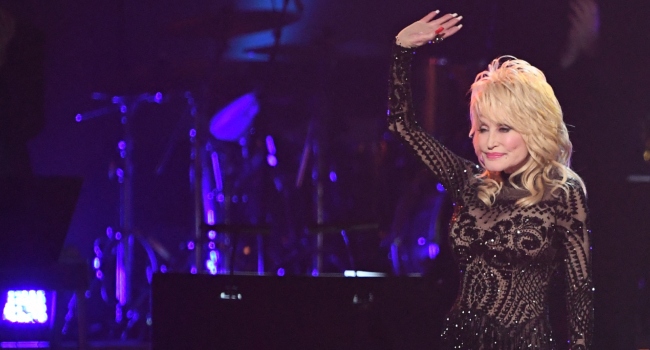
Dolly Parton, the American country music singer who rose from poverty in Tennessee to become a US cultural giant with hits like “Jolene” and “Coat of Many Colours”, has died at 80, her family said Tuesday.
“Dolly has lived in the light and is in the arms of Jesus,” her nephew Bryan Seaver said in a video on social media.
He said the multiple award-winning artist had “opened doors for generations of singers, songwriters, musicians, and dreamers from every walk of life.”
The family did not give a cause of death, but the singer-songwriter — who was also an actress, philanthropist, and extraordinarily successful businesswoman — had spoken about her recent ill health. Her husband Carl Dean died last year.
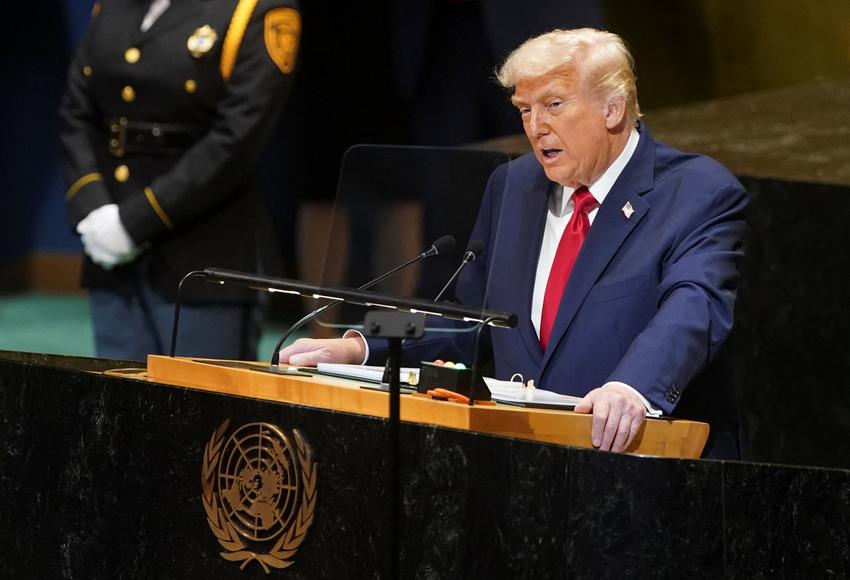
President Donald Trump ordered the lowering of American flags to half-staff across the United States for a week for Parton, calling her passing a “true loss for millions of people”.
“There has never been anyone like her, and never will,” Trump posted on his Truth Social network.
In May, Parton had announced the cancellation of a series of Las Vegas concerts, citing ongoing health concerns. In videos posted to her social media accounts, she said that while treatment for an unspecified illness was going well, she was not ready to be performing on stage.
Parton lived her entire adult life in the heart of Americana, folk and country music. The day after graduating from high school, she struck out for the country music capital Nashville.
By 1967, at age 21, she was among the most recognised figures in American music, having joined Porter Wagoner’s syndicated country music television show that broadcast her voice and face into millions of US homes.
Parton was prolific in a career spanning six decades, during which she penned some 3,000 tunes.
They included the soundtrack smash hit “9 to 5”, “Islands In the Stream”, and the iconic ballad “I Will Always Love You”, which became an international success for Whitney Houston.
Releasing 49 studio albums and more than 100 compilation and collaboration albums, she earned the title of “queen of country music”.
“By her example, we believed that anything was possible. She never saw a door she couldn’t open, and the doors she opened made and changed history,” her nephew said.
Parton — never one to downplay her striking looks — essentially wrote the book on how a woman can rule the airwaves in a male-dominated industry, ultimately becoming an American treasure whose songs were covered by the likes of Shania Twain, Sinead O’Connor and the White Stripes. (Channels)
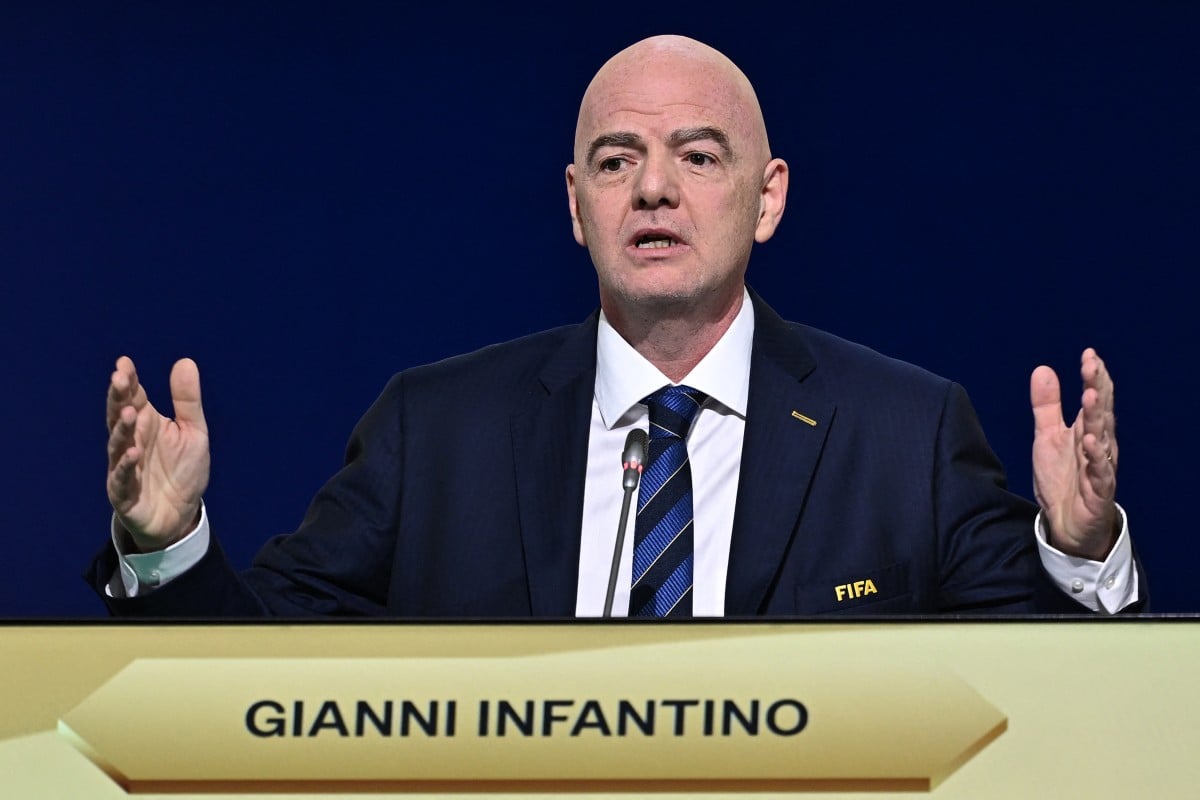
FIFA President Gianni Infantino is abandoning his divisive plan to sell World Cup profits to private equity after receiving pushback from all corners of the soccer world.
Infantino’s decision came after his senior adviser who sat on a White House panel resigned and Asia’s soccer body joined Europe and North America in opposing it.
“Having listened carefully to all the views, it has become clear that the project has created divisions of a nature that, regardless of the level of support, are no longer in the interest of the objective set out in the first place,” Infantino said in a statement on Friday. “Our purpose has always been — and will always be — to unite and improve. As a result, this proposal will not proceed.”
Infantino had proposed creating a $20 billion company to run the World Cup with private investors including the Kushner family, but drew backlash that grew every day since Tuesday’s announcement.
UEFA’s 55-member nations agreed to boycott the World Cup and all other FIFA competitions over Infantino’s plan on Thursday. North America’s CONCACAF and the Asian Football Confederation also said they opposed the plan.
“Some things are simply too important to sell,” UEFA said in a statement. “The FIFA World Cup belongs to football. It always will. And so long as Europe has a voice, it will never be for sale.”
Infantino’s senior adviser, Carlos Cordeiro, a former Goldman Sachs banker who represented the soccer body on the White House Task Force for the World Cup, resigned on Friday and urged other senior FIFA staff to speak out.
“I cannot stand by while FIFA considers selling a stake in the World Cup,” Cordeiro said in a statement, just hours after FIFA insisted: “Nobody is selling football.”
Hours later, FIFA chief operating officer Kevin Lamour issued a statement to The Associated Press, saying FIFA staff were deceived by Infantino’s lack of openness in planning the sale over recent months and that the project must not continue.
“It is the project of one person,” Lamour, a longtime colleague of Infantino at both FIFA and European soccer body UEFA, wrote. “Not only must this project not go ahead … but the time has now come for football political leaders to ask themselves the right questions and make the right decisions.”
Infantino has proposed spinning off FIFA’s commercial businesses — including World Cups and Club World Cups for men and women — into a $20 billion subsidiary with 20% owned by private investors.
The “anchor investor,” described by FIFA, is a New York-based investment firm created by Joshua Kushner, the younger brother of U.S. President Donald Trump’s son-in-law, Jared Kushner.
The next FIFA competition is the Women’s Under-20 World Cup starting Sept. 5 in Poland — which UEFA members said they would boycott.
The misstep could prove costly for Infantino, particularly after the interventions by Lamour and Cordeiro.
Reelected unopposed in 2019 and 2023, Infantino is allowed one more four-year term under FIFA statutes. The deadline for the next presidential contest is Nov. 18, exactly four months ahead of the vote in Rabat, Morocco, where FIFA has its African headquarters.
Infantino’s job seemed secured despite long-term unease with his style and previous attempts to force through unpopular projects, but could become more tenuous with the failed private equity proposal. (JapanToday)
Ferran Torres scored an extra-time winner as Spain defeated holders Argentina 1-0 to win the World Cup on Sunday and shatter Lionel Messi’s dreams of a triumphant farewell to football’s greatest stage.
Barcelona striker Torres lashed home a thumping finish in the 106th minute to reward a dominant display by Spain against an Argentina team who failed to register a single shot on target in 120 minutes.
A star-studded crowd of 80,663 that included U.S. President Donald Trump packed East Rutherford’s MetLife Stadium to see if Argentina captain Messi could crown his glittering career with a second World Cup victory.
But the 39-year-old maestro — almost certainly playing in his final World Cup game — was reduced to irrelevance as Spain took control early on against an Argentina team who committed a catalogue of cynical fouls throughout.
The South Americans’ skullduggery ended with midfielder Enzo Fernandez being sent off after a brutal challenge on Spain defender Pau Cubarsi in injury time.
For long periods though it looked as if Argentina may somehow hold on for a penalty shoot-out as Spain struggled to make the breakthrough.
But after Nico Williams had a goal controversially disallowed in extra-time, Spain struck.
A lofted cross to the back post by Pedro Porro found Williams who nodded into the path of Torres to crash home the goal that would clinch Spain’s second World Cup title after their maiden 2010 triumph.
Earlier, a clear sign of Argentina’s frustration came in the 15th minute when Alexis Mac Allister went flying in with a studs-up challenge that struck Dani Olmo’s ankle.
Mac Allister escaped an early yellow card although after Slovenian referee Slavko Vincic only awarded a foul.
Spain made their presence felt moments later though, with Alex Baena poleaxing Messi with an elbow to the back that again escaped sanction.
Argentina continued to test referee Vincic’s patience with a series of niggly challenges, and Nicolas Tagliafico was lucky not to be cautioned after raking Lamine Yamal’s calf in a clumsy challenge.
Spain meanwhile continued to probe for openings but Mikel Oyarzabal failed to seriously test Emi Martinez with a low shot that the Argentina goalkeeper gathered easily in the 39th minute.
Eventually though Vincic did reach for a yellow card, with Lisandro Martinez booked for a cynical challenge on Oyarzabal.
Martinez was substituted shortly afterwards with an apparent injury, veteran Nicolas Otamendi coming on in his place.
The final’s controversial extended half-time show featuring the likes of Madonna, Shakira and Justin Bieber stretched to 27 minutes but did little to upset Spain’s rhythm.
The Spanish piled on the pressure in a lopsided second half as Argentina hung on grimly.
Spain coach de la Fuente sent on Pedri and Ferran Torres for Fabian Ruiz and Oyarzabal and the chances continued with Argentina in full siege mode.
Yamal twisted away and chipped a cross for Torres, whose downward header was saved by Martinez.
Pedri and Cubarsi both lashed long-range shots that Martinez failed to grasp at the first attempt but somehow Argentina continued to hold on.
But the arrival of substitutes Williams and Mikel Merino gave fresh life to Spain’s attacking momentum, and the onslaught continued.
Fernandez was booked for dissent in the 82nd minute before Torres and Rodri both fired long-range shots from Martinez.
Fernandez’s dismissal left Spain down to 10 men heading into extra-time.
Martinez had one last save deep in stoppage time when Yamal’s superb whipped free-kick was clawed wide.
The Spanish dominance continued in extra-time, with Williams almost opening the scoring with a glancing header that Martinez got down well to save one-handed.
Moments later it looked as if Spain had made the breakthrough when Williams slid a low finish into the net but referee Vincic blew for a marginal foul on Nicolas Otamendi. (JapanToday)
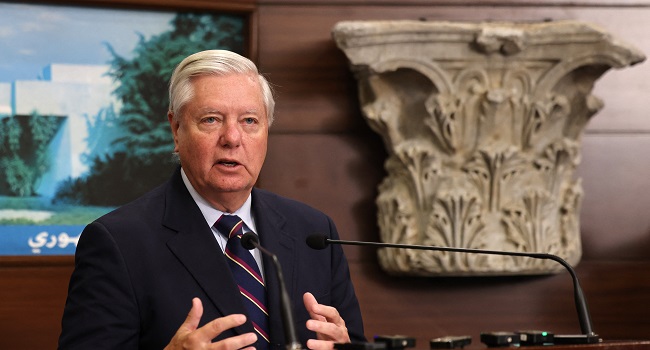
Prominent US Senator Lindsey Graham, a key ally of President Donald Trump, died on Saturday aged 71 following a “brief and sudden illness,” his office said.
“On the evening of Saturday, July 11, U.S. Senator Lindsey Graham passed away from a brief and sudden illness,” the Republican senator from South Carolina’s office said in a statement on his official X account.
“Senator Graham’s family appreciates prayers at this time and asks for privacy during this incredibly difficult period.”
Graham was first elected to the US House of Representatives in 1994, before being elected to the Senate in 2002.
He was later re-elected to the Senate in 2008, 2014 and 2020 and most recently served as chairman of the Senate Budget Committee.
South Carolina Governor Henry McMaster described Graham as “irreplaceable” in a post on X.
“The fiercest of fighters for South Carolina and America — and a loyal and steadfast friend,” McMaster said.
Graham was also a strong supporter of Israel and a hawkish backer of the Iran war.
Israeli President Isaac Herzog said the news of Graham’s death left him “shocked and heartbroken.”
“Senator Graham was a beacon of moral clarity and a true leader of the U.S.-Israel partnership,” he said in a post on X.
“We will never forget how he stood by the people of Israel in our most difficult moments, and we will remain eternally grateful for his sense of justice, truth, and loyalty,” Herzog said.
“The people of Israel mourn his loss, and I will miss my great friend very dearly.” (Channels)
The U.S. Supreme Court handed President Donald Trump a painful defeat on Tuesday by rejecting his move to restrict birthright citizenship on the final day of its momentous term, while also letting states ban transgender student athletes from women’s sports teams and striking down more campaign finance limits.
The top U.S. judicial body’s annual term — nine months long — was packed with major rulings, including some big victories for Trump in areas such as presidential powers and immigration as well as losses for him on tariffs, firing a Federal Reserve official and, on Tuesday, birthright citizenship.
The Supreme Court has a 6-3 conservative majority that includes three Trump appointees.
Limiting birthright citizenship was one of the top priorities in the Republican president’s crackdown on immigration — so much so that he signed an executive order on the matter on his first day back in office last year.
Conservative Chief Justice John Roberts, who authored Tuesday’s 6-3 decision, said Trump’s directive violated language in the U.S. Constitution’s 14th Amendment that guarantees citizenship to virtually anyone born in the United States, with a few narrow exceptions.
The 14th Amendment, ratified in 1868 in the aftermath of the Civil War that ended slavery in the United States, confers citizenship to those born in the United States who are “subject to the jurisdiction thereof.” There were narrow exceptions such as the children of foreign diplomats or members of an enemy occupying force.
“Citizenship, then and now, was the right to have rights — to freely participate in our political community,” Roberts wrote, adding that the authors of the 14th Amendment extended that promise to every free-born person in the land.
“We keep that promise today,” Roberts wrote.
Trump’s directive instructed federal agencies not to recognize the citizenship of children born in the United States if neither parent is an American citizen or legal permanent resident, also called a “green card” holder. Critics have accused Trump of racial and religious discrimination in his approach to immigration.
Ahead of the ruling, some experts had estimated that Trump’s directive could affect the legal status of as many as 250,000 babies born each year and could require the families of millions more to prove the citizenship status of their newborns.
“The court’s decision reaffirms a fundamental American promise — if you are born here, you are a citizen,” said ACLU National Legal Director Cecillia Wang, who argued the case on behalf of the challengers at the Supreme Court.
“A president cannot change the Constitution by executive fiat,” Wang added.
Following Tuesday’s ruling, Trump wrote on his Truth Social platform that the ruling was “too bad for our Country” and urged Congress “to work on ending expensive and unfair to our Country, Birthright Citizenship.”
The controversy over transgender athletes has become enmeshed in the American culture wars.
Laws in West Virginia and Idaho designate sports teams at public schools including universities according to “biological sex” and bar “students of the male sex” from female teams. The states said the laws preserve fair and safe competition for women and girls. Twenty-five other states have similar laws.
Critics saw the measures as part of a broader assault on the rights of transgender Americans by Trump and various states.
The Supreme Court on Tuesday overturned decisions by lower courts siding with transgender students who challenged the bans in the two states as violating the Constitution and a federal anti-discrimination law.
The court decided 9-0 that the state laws do not violate the Title IX civil rights statute that bars discrimination in education “on the basis of sex.” The justices divided along ideological lines — with the six conservative justices in the majority — in deciding that the measures also do not violate the 14th Amendment guarantee of equal protection under the law.
“Consistent with Title IX and the Equal Protection Clause, we hold that the states may maintain women’s and girls’ sports for biological females. They may determine eligibility for women’s and girls’ sports based on biological sex. The Constitution and Title IX do not require an overhaul of women’s and girls’ sports throughout America,” conservative Justice Brett Kavanaugh wrote in the ruling.
Writing on Truth Social, Trump said after the ruling: “BIG WIN: The United States Supreme Court just RULED AGAINST MEN PLAYING IN WOMEN’S SPORTS. Wow! That takes that ridiculous situation off the table!!!”
It was the court’s second major ruling against transgender plaintiffs in a span of a year. In a case from Tennessee in June 2025, it let states ban gender-affirming medical treatments for transgender minors.
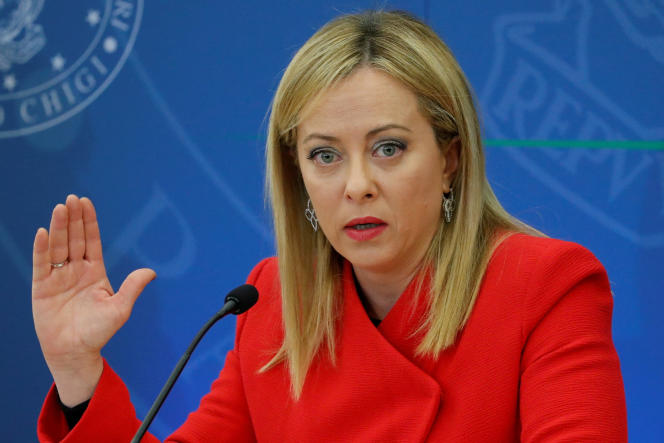
Italian Prime Minister Giorgia Meloni accused her one-time close ally Donald Trump of fabricating a story about her on Friday, after the U.S. President told an Italian TV channel that she had “begged” him to take a photo with her at a G7 summit.
Meloni said she was “astonished” by his comments, which were “completely made up”. She also chided him for acting with far greater deference to the enemies of the West than he does towards old, established allies.
Underscoring how much Trump’s comments have angered Meloni’s government, Italian Foreign Minister Antonio Tajani announced he was cancelling a planned visit to the U.S. next week.
The latest exchange marks a sharp deterioration in ties, coming just days after signs emerged at the G7 summit that the two right-wing leaders had steadied a previously strained relationship following tensions this year over the war on Iran.
Video from the event in France showed Meloni and Trump deep in conversation, sitting side-by-side on a small sofa, but the U.S. leader suggested he had merely indulged her by chatting with her.”
She’s probably happy I talked to her. I didn’t have to talk to her,” Trump was quoted as saying by La7 TV channel in a brief interview, after he himself asked the journalist about Italy’s prime minister.”
She begged me to take a picture with her. She wanted a picture with me so badly. I wouldn’t have taken it, but I felt sorry for her,” Trump said, according to La7’s translation.
The channel did not release the original audio, just a dubbed version.
Meloni responded: “Donald Trump’s statements are completely made up. I am frankly astonished. I don’t know why the president of the United States behaves like this towards his allies: it is not the first time, moreover.”
“I can only say it is disappointing that he does not show the same determination with the enemies of the West and of the United States, whose leaders he instead treats with far greater indulgence,” she said, adding: “There is one thing he should remember: neither I nor Italy ever beg.”
Announcing the cancellation of his planned U.S. trip, Foreign Minister Tajani said on X: “The serious and offensive words of President Trump towards Prime Minister Giorgia Meloni offend the whole of Italy.” (JapanToday)
U.S. Senate Republicans abandoned plans to vote on an ICE funding bill on Thursday in an act of revolt over one of President Donald Trump’s priorities: a $1.8 billion fund for victims of government “weaponization,” including those convicted of crimes during the Capitol riot on January 6, 2021.
The Senate walked away from a planned vote on a $72 billion bill funding Trump’s massive migrant deportation program, delaying the vote at least until June, when lawmakers return from a Memorial Day holiday recess.
From the beginning, Senate Majority Leader John Thune said the legislation should be narrowly targeted to secure the $72 billion. But at Trump’s behest, the $1.8 billion “weaponization” fund and another $1 billion for building a White House ballroom became major sticking points.
“It was something that was supposed to be very narrow, targeted, focused, clean, straightforward, and it got a little bit more complicated this week,” Thune said, expressing his frustration. “It makes everything way harder than it should be.”
The battle over the partisan Immigration and Customs Enforcement funding bill came on the heels of Republican Senator Bill Cassidy of Louisiana losing his primary election to a Trump-backed challenger and the president endorsing the primary challenger to veteran Republican Senator John Cornyn of Texas.
Presidents usually back the incumbent lawmakers of their party in reelection bids.
Against that backdrop, Acting U.S. Attorney General Todd Blanche was summoned to Capitol Hill to face questions from angry senators when he made his case for the $1.8 billion fund designed to compensate Trump allies and other victims of government “weaponization.”
During Blanche’s meeting, several senators insisted the money not be used to compensate people convicted of assaulting law enforcement during the Capitol riot, the person said.
Trump had already pardoned many of those convicted for crimes they committed during that deadly assault.
“I think there are people who are concerned about public relations,” Senator Todd Young, an Indiana Republican, told reporters about the meeting.
Emotions were so raw that a planned White House meeting between Trump, Senate Republicans and House of Representatives Speaker Mike Johnson was canceled, according to a source familiar with the arrangement.
The resistance against Trump became evident late on Wednesday when Senate Republicans said “no” to $1 billion in new security funding for the 90,000-square-foot (8,360-square-meter) ballroom Trump wants to build on the site of the White House East Wing that he had razed last October.
For months, Trump has said no taxpayer dollars would be needed for the project. Nonetheless, a $1 billion tab to be picked up by taxpayers stared senators in the face as an add-in to a $72 billion bill for Trump’s migrant deportation program.
Democrats hammered away about a “glitzy,” “gauzy” “vanity project,” a preview of their midterm election pitch addressing voters’ worries about the high prices of food, housing, healthcare and particularly gasoline, which skyrocketed after the February 28 U.S. attack on Iran.
Thune, who started the week with a tense phone call with the president over his endorsement against Cornyn, told reporters after Thursday’s meeting that his party “will pick up where we left off” after the holiday recess.
Republican Senator Thom Tillis of North Carolina, who is not running for reelection, did not hold back in criticizing Trump.
“I think it’s stupid on stilts,” Tillis said of the “weaponization” fund in an interview with Spectrum News. “The American people are going to reject this out of hand. (JapanToday)
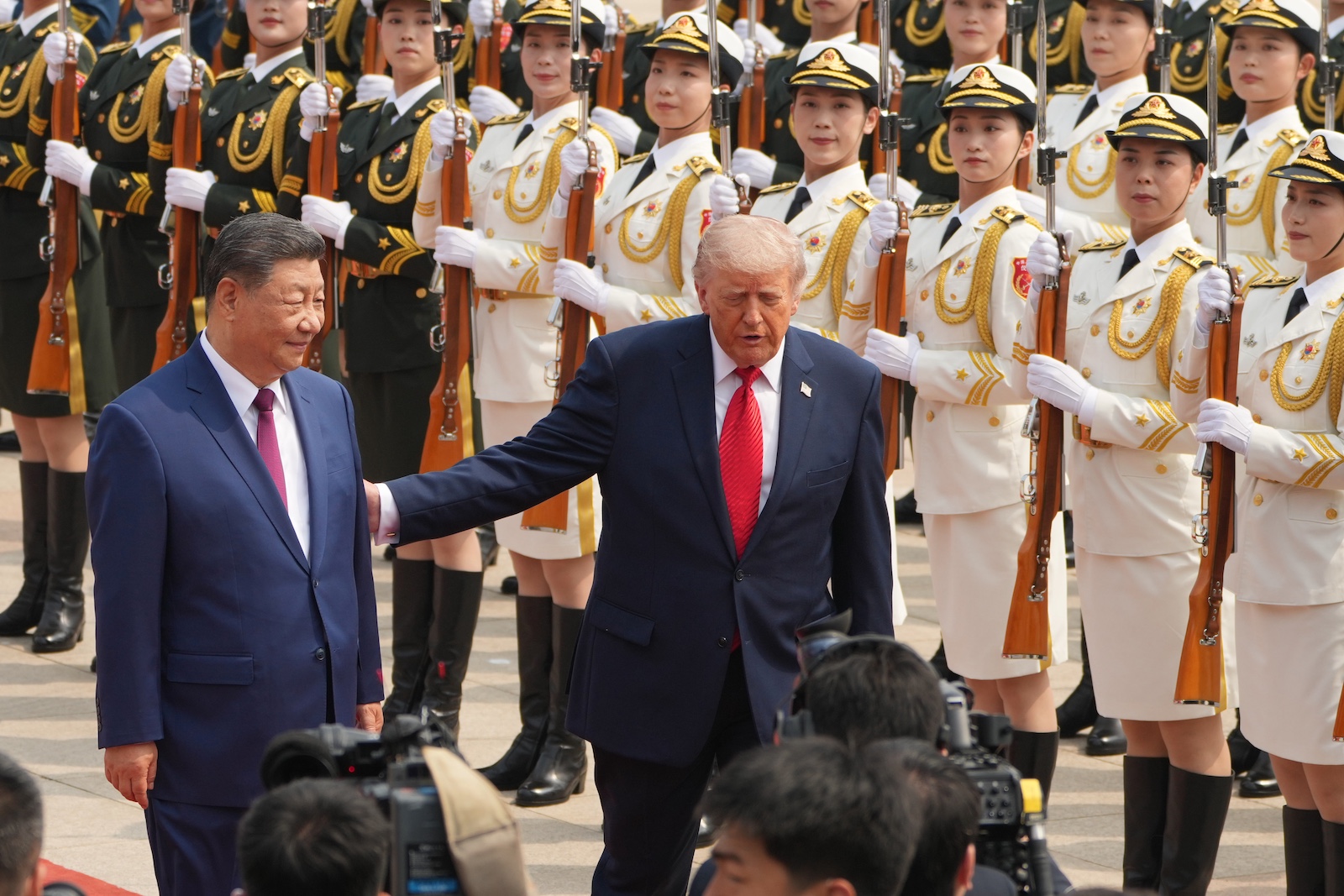
Donald Trump and Xi Jinping have been holding talks in the Chinese capital, Beijing, with a raft of meetings and events taking place on Thursday and Friday.
The US leader was greeted with a gun salute, cheering children and a tour of the stunning 15th Century Temple of Heaven.
Trump is also joined in Beijing by tech bosses, including Tesla’s Elon Musk and Nvidia’s Jensen Huang, and Trump’s son Eric.
On Thursday evening, a lavish banuquet at the Great Hall of the People was held in honour of the occasion.
BBC reporters were able to see the banquet menu, with the main course including lobster in tomato soup, Beijing roast duck and pan-fried pork bun.
Dessert options included trumpet shell-shaped pastry and tiramisu.
In a banquet speech, President Xi called it a “historic visit”, adding “the great rejuvenation of the Chinese nation” and “Make America great again” can go hand in hand.
China-US relations are the most important bilateral relations in the world, Xi says.
Their relations concern the well-being of the two countries of 1.7 billion population, and the interests of over 8 billion people in the world, he added.
Trump spoke, saying he received a “magnificent welcome like no other”.
He then invited Xi and his wife, Peng Liyuan, to visit the White House on 24 September.
Among those spotted at Thurday’s banquet were Tesla CEO Elon Musk, Apple CEO Tim Cook, US Defence Secretary Pete Hegseth and Eric and Lara Trump.
Musk was accompanied by his son X Æ A-12.
Trump landed in Beijing on Wednesday evening, where he was greeted by youths waving American and Chinese flags as he walked the red carpet with Vice President of China Han Zheng.
On Thursday, Trump was welcomed at an arrival ceremony with Xi at China’s Great Hall of the People.
After shaking hands, Trump and Xi walked the red carpet and inspected Chinese troops who lined up in impeccably neat rows.
Dozens of children also lined up along the red carpet and waved mini flags and bouquets.
Joining Trump on his trip to China are some of the US’s top business leaders, including Tim Cook of Apple, Elon Musk of Tesla and SpaceX, and Larry Fink of BlackRock.
Jensen Huang, the boss of Nvidia, a company which has been central to the US-China technology rivalry, was reportedly a last-minute addition. (BBC)
Britain’s King Charles III has used a speech in front of the United States Congress to pledge NATO unity and call for support for Ukraine amid Russia’s ongoing invasion.
The address on Tuesday came during the royal’s four-day visit to the US, with the US-Israel war with Iran, US President Donald Trump’s criticism of NATO, and trade tensions between the longtime allies looming large.
But Charles avoided any reference to specific frictions during his speech at the US Capitol, instead striking a light tone in his joke-heavy opening.
He praised what he called the shared history and values of the two countries, quipping at one point that Washington, DC was “a tale of two Georges”, the first US President George Washington and his ancestor, the UK’s King George.
He assured lawmakers, to laughs, he was not in the US “as part of some cunning rearguard action” in a delayed continuation of the Revolutionary War.
“I am here on this great occasion in the life of our nations to express the highest regard and friendship of the British people to the people of the United States,” the sovereign said to repeated standing ovations.
But amid broad themes of unity, more pointed messages lurked.
Charles did not directly address the US-Israel war with Iran or Trump’s outspoken criticism of NATO allies who have rejected joining Washington’s war efforts.
Instead, he praised support for NATO and the alliance’s invocation of its Article 5 collective defence treaty in the wake of the September 11, 2001 attacks.
“We answered the call together, as our people have done so for more than a century, shoulder to shoulder through two world wars, the Cold War, Afghanistan and moments that have defined our shared security,” he said.
He then turned to funding for Ukraine, an increasingly pointed issue in the Republican-controlled US Congress.
“Today, Mr Speaker, that same unyielding resolve is needed for the defence of Ukraine and her most courageous people,” he said, referring to House Speaker Mike Johnson.
In one instance, Charles hailed the “$430 billion in annual trade that continues to grow, the $1.7 trillion in mutual investment that fuels that innovation”.
Last week, Trump threatened to impose a “big tariff” on the UK if it did not drop a digital services tax on US tech companies.
At another point, Charles pointed to global environmental concerns.
“We ignore, at our peril, the fact that these natural systems, in other words, nature’s own economy, provide the foundation for our prosperity and our national security,” he said.
Trump has called climate change a “con job” and withdrew from the landmark Paris Agreement climate accords during his first and second terms. His administration has since pursued deregulation of fossil fuels and pivoted away from green energy, an approach embraced by many members of the president’s Republican party.
Other messages appeared to gently reference political trends in the US, where critics have accused Trump of using the Department of Justice for political retribution and of overturning long-standing norms of presidential authority.
Charles described the “common ideals” of the US and UK: “The rule of law, the certainty of stable and accessible rules, an independent judiciary, resolving disputes and delivering impartial justice”.
He also drew a throughline between the Magna Carta, the 13th-century document that established that the British king was subject to law, and constitutional and legal precedent in the US, calling it “the foundation of the principle that executive power is subject to checks and balances”.
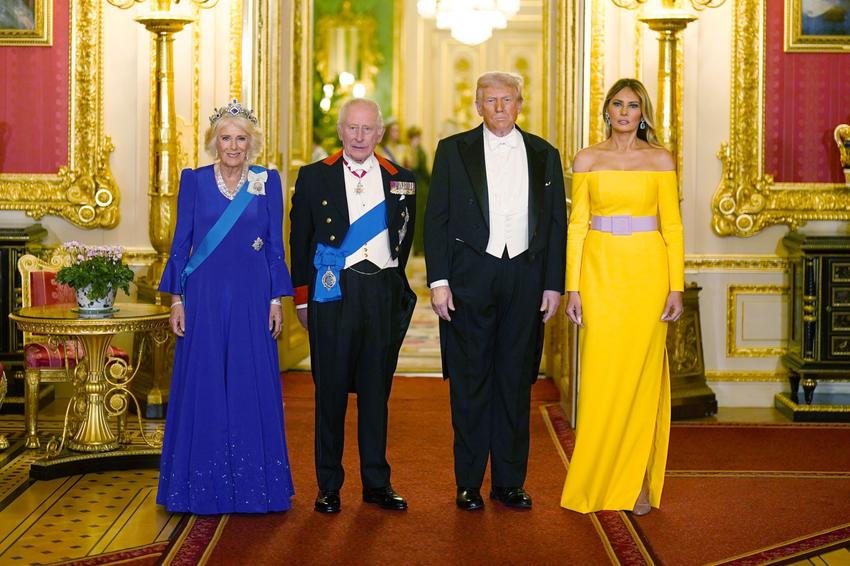
The address came shortly before Trump was set to host Charles and his wife, Queen Camilla, for an official state dinner.
The pair were then set to visit New York and Virginia, before an official farewell ceremony at the White House on Thursday. (AlJazeera)
The US’s top media watchdog announced on Tuesday that it is accelerating the review of eight local broadcasting licenses used by ABC, in a move critics see as a clear example of political and regulatory retribution against a disfavored broadcaster.
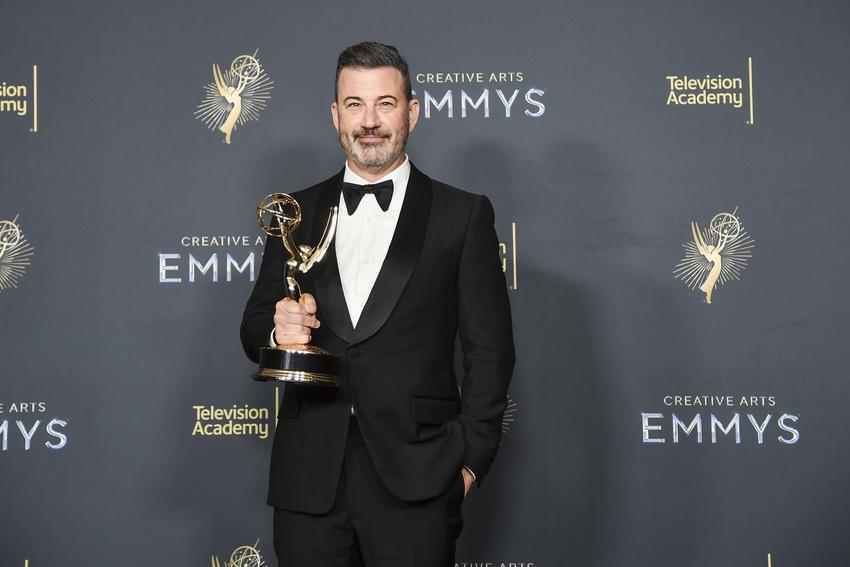
The Federal Communications Commission’s (FCC) announcement comes after the White House launched a full-on attack against the ABC’s late-night host, Jimmy Kimmel, over a joke he made last week about Melania Trump.
On Monday, Donald Trump called for Kimmel to be fired over the segment, in which Kimmel said that the first lady has “a glow like an expectant widow”. The joke was made two days before an attempted shooting – allegedly targeting Trump’s administration – interrupted the annual White House correspondents’ dinner.
The FCC – led by Trump-appointed chair Brendan Carr – does not grant licenses to national television networks; rather, it licenses each individual station that broadcasts using the public airwaves.
ABC owns and operates eight stations, though it has content agreements with many more. Those eight stations – WABC-TV New York, KABC-TV Los Angeles, WLS-TV Chicago, WPVI-TV Philadelphia, KTRK-TV Houston, KGO-TV San Francisco, WTVD-TV Raleigh-Durham and KFSN-TV Fresno – are the ones being targeted by Carr’s FCC.
Those stations were not scheduled to have to apply for renewal until 2028 at the earliest and 2031 at the latest. But now they are required to file for renewal by 28 May, years ahead of when they were originally required to do so. The FCC announcement appears connected to an investigation launched by the agency early last year into ABC parent company Disney’s diversity, equity and inclusion (DEI) practices.
“Specifically, FCC rules provide that whenever the FCC regards an application for a renewal of a license as essential to the proper conduct of an investigation, the FCC has the authority to call the broadcaster’s licenses in for early renewal. Doing so both allows the FCC to conduct its ongoing investigation and enables the FCC to ensure that the broadcaster has been meeting its public interest obligations more broadly,” David J Brown, chief of the video division at the FCC’s media bureau, wrote in a memo. “The FCC determines that calling in Disney’s ABC licenses for early renewal, at this time, under the Communications Act’s public interest standard is essential within the meaning of agency regulations.”
In a statement, a Disney spokesperson acknowledged that the company has received notice of the expedited renewal process. “ABC and its stations have a long record of operating in full compliance with FCC rules and serving their local communities with trusted news, emergency information and public‑interest programming,” the spokesperson said. “We are confident that record demonstrates our continued qualifications as licensees under the Communications Act and the first amendment and are prepared to show that through the appropriate legal channels. Our focus remains, as always, on serving viewers in the local communities where our stations operate.”
On a conservative podcast published on Tuesday, Carr weighed in on the DEI-related investigation and said: “There’s evidence that Disney has been pretty bad. There’s evidence suggests that Disney literally was dividing and categorizing employees based on race and gender, and potentially – we’ll see what the evidence establishes, ultimately – giving different opportunities to people based on their race or gender or other protected class. And we’re going to get some more discovery from Disney on that. But that could raise character questions about the company long-term.”
Carr, on the podcast, said that license renewals can be “accelerated” if there are “significant concerns” about how a network is operating, and questions about whether it is doing so in the public interest. If the FCC determines that a broadcaster is in violation, the next step would be a hearing designation, which Carr said was a “multi-month process”.
Anna M Gomez, the lone Democrat on the FCC, has decried any attempt to speed up the license renewal process for ABC – or any other television network that has been targeted by the Trump administration. “This is unprecedented, unlawful, and going nowhere,” she wrote in a post on X on Tuesday. “This political stunt won’t stick. Companies should challenge it head-on. The First Amendment is on their side.”
In an interview with the Guardian last month, Gomez said the license renewal apparatus is intentionally onerous and time-consuming to prevent any appearance of partisan decision-making.
“If they are trying to take adverse action through the license renewal process, that is an arduous, long, process with multi-layers of decisions that have to be made by different parties that are meant to protect broadcasters from capricious and arbitrary action from the commission,” Gomez said.
Tom Wheeler, who served as chair of the FCC during Barack Obama’s presidency, told the Guardian on Tuesday that Carr “has turned [the FCC] into a political organization using policy to achieve political goals” rather than “a policy agency operating in a political environment”.
While Wheeler said that Carr has the ability to schedule consideration of ABC’s license renewals, any adverse decision would ultimately be appealable – and he noted that license denials are exceedingly rare.
Wheeler said that a denial of ABC’s licenses “would have a hard time at the courts”, though he doesn’t see that as the goal. “There are two message: there’s a message that goes to the Maga base that says, ‘Boy, I’m going at them.’ There’s a message that goes to the president that says, ‘Boy, am I carrying forth what you want me to do.’ And then there’s a message to every licensee of the FCC that says, ‘I can do this to you too.’”
In February, Carr confirmed that the FCC is also investigating the ABC daytime talkshow The View for a potential violation of rules around providing equal time for opposing political candidates.
Despite calls by Trump and his wife Melania for ABC to take action against Kimmel, his show aired as scheduled on Monday night. “It was a very light roast joke about the fact that he’s almost 80 and she’s younger than I am,” Kimmel explained to viewers. “It was not – by any stretch of the definition – a call to assassination. And they know that. I’ve been very vocal for many years, speaking out against gun violence, in particular.”
In September, Carr reportedly pressured television station groups to pre-empt Kimmel’s show as punishment for a comment that he made in the wake of the assassination of conservative influencer Charlie Kirk. Two right-leaning broadcast groups, Sinclair and Nexstar, did so, and ABC opted to “indefinitely” pull Kimmel’s show. Kimmel ultimately returned to the air a week later. Carr later claimed that his comments about Kimmel’s show did not amount to a threat.
Seth Stern, chief of advocacy for Freedom of the Press Foundation, issued a statement on Tuesday calling out Carr’s FCC. “The FCC is neither the journalism police nor the humor police,” he said. “This is nothing but illegal jawboning intended to intimidate ABC into kissing the ring.”
“The FCC has no authority to cancel broadcasters’ licenses because of their perceived political views. But this isn’t just about the rights of Disney and ABC. President Trump is trying to consolidate control over what Americans see and hear on the radio, television, and social media,” Jameel Jaffer, executive director at the Knight First Amendment Institute at Columbia University, said in a statement.
“If he gets his way, we’ll have only government-aligned media organizations that broadcast only government-approved news and commentary. It would be difficult to imagine an outcome more corrosive to democracy or more offensive to the first amendment.” (Guardian)


 English