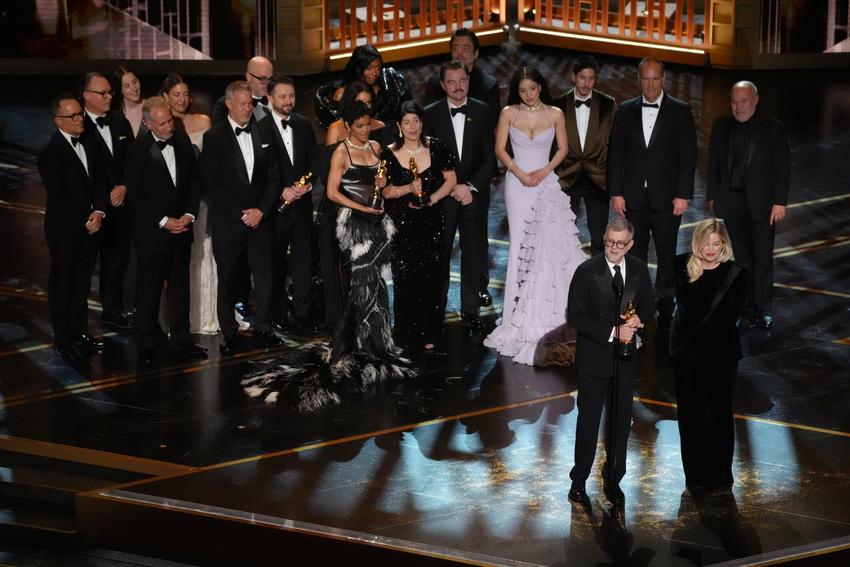
Renowned American actor Robert Duvall has passed away at the age of 95.
His wife, Luciana Duvall, announced his death in a heartfelt statement on his Facebook page, saying he died peacefully at home on Sunday, surrounded by love and comfort.
She wrote, “Yesterday we said goodbye to my beloved husband, cherished friend, and one of the greatest actors of our time. Bob passed away peacefully at home, surrounded by love and comfort,” she wrote.
“To the world, he was an Academy Award-winning actor, a director, a storyteller. To me, he was simply everything. His passion for his craft was matched only by his deep love for characters, a great meal, and holding court.
“For each of his many roles, Bob gave everything to his characters and to the truth of the human spirit they represented. In doing so, he leaves something lasting and unforgettable to us all.
“Thank you for the years of support you showed Bob and for giving us this time and privacy to celebrate the memories he leaves behind.”
Duvall’s impressive career spanned over six decades, with iconic roles in The Godfather, Apocalypse Now, and Tender Mercies, for which he won the Academy Award for Best Actor.
He was also recognised for his performances in To Kill a Mockingbird, The Great Santini, and Lonesome Dove.
Luciana Duvall praised her husband as “one of the greatest actors of our time” and “simply everything” to her, highlighting his dedication to his craft and love for characters, food, and storytelling. (Nation)
Donald Trump threatened legal action on Monday against the host of the 68th Grammy Awards over the comedian’s comment on the U.S. president and convicted sex offender Jeffrey Epstein.
After congratulating Billie Eilish for winning the Grammy for Song of the Year for her track “Wildflower,” host Trevor Noah brought up Trump and Epstein.
“Wow. That’s a Grammy that every artist wants — almost as much as Trump wants Greenland,” he quipped, referring to the president’s threats to seize the autonomous Arctic territory.
Noah then added: “Which makes sense because, since Epstein’s gone, he needs a new island to hang out with Bill Clinton.”
Noah, who announced that this will be his final year hosting the Grammys after six turns as emcee, has been light on political commentary in previous years.
His comments drew the ire of the president, who took to his Truth Social platform first saying that the “Grammy Awards are the WORST and virtually unwatchable,” before criticizing Noah.
“I can’t speak for Bill, but I have never been to Epstein Island, nor anywhere close, and until tonight’s false and defamatory, statement, have never been accused of being there, not even by the Fake News Media,” Trump asserted.
The Republican then branded South African Noah a “total loser” who needs to “get his facts straight.”
“I’ll be sending my lawyers to sue this poor, pathetic, talentless, dope of an M.C. … Get ready Noah, I’m going to have some fun with you!” Trump added.
Trump, who moved in the same social circles as Epstein in Florida and New York, has fought for months to prevent the release of a vast trove of documents about the disgraced financier and has given varying accounts of why he eventually fell out with Epstein.
More than three million documents were released on Friday that included mention of numerous powerful figures, including the 79-year-old president, Elon Musk, Bill Gates, Bill Clinton and former prince Andrew Mountbatten-Windsor. (JapanToday)
Ebo Taylor, the iconic Ghanaian guitarist and composer whose work helped define the highlife genre, has passed away at the age of 90.
His family announced the news on Sunday via his Instagram page, although the cause of death was not revealed.
Taylor died at the Saltpond Hospital, according to a statement from the Musicians Union of Ghana (MUSIGA).
His death came just one day after he launched the inaugural Ebo Taylor Music Festival, and exactly one month after celebrating his 90th birthday.
“The world has lost a giant. A colossus of African music,” the post reads.
“Ebo Taylor passed away yesterday; a day after the launch of Ebo Taylor Music Festival and exactly a month after his 90th birthday, leaving behind an unmatched artistry legacy. @ebo.taylor your light will never fade.”
Born Deroy Taylor in Cape Coast on January 6, 1936, he rose to prominence in the late 1950s and 1960s, an era when highlife was Ghana’s dominant musical form. Playing with leading bands like the Stargazers and the Broadway Dance Band, he gained a reputation for his distinctive guitar style and intricate arrangements.
Taylor’s six-decade career was marked by prolific innovation. He masterfully fused Ghanaian rhythms with jazz, funk, soul, and early Afrobeat, influencing generations of musicians both within Africa and beyond.
A pivotal moment came in the 1960s when he took his Black Star Highlife Band to London, leading to a historic collaboration with the legendary Afrobeat pioneer Fela Kuti.
He later led renowned groups such as the Ghana Black Star Band and the Uhuru Dance Band in Ghana, and collaborated with greats like the Apagya Show Band, CK Mann, and Pat Thomas throughout the 1970s.
While a celebrated figure in West Africa for decades, Taylor gained broader international recognition in 2010 with the release of ‘Love and Death’ on Strut Records.
This was followed by acclaimed albums including ‘Appia Kwa Bridge’ (2012) and ‘Yen Ara’ (2018). His vast catalogue of influential songs includes ‘Heaven’, ‘Atwer Abroba’, ‘Life Stories’, ‘Ayesama’, ‘Saana’, and ‘You Need Love’.
Taylor is widely regarded as one of the most influential figures in Ghanaian music history. (TheCable)
Walt Disney has named Josh D’Amaro, the head of its amusement park business, as its new chief executive.
D’Amaro, a 28-year veteran of the company, will replace current boss Bob Iger. He is due to start in the new role on 18 March.
In selecting D’Amaro, Disney has turned to the leader of the part of its business that has delivered the most reliable profits in recent years, as the company works to find its way in the world of streaming.
The decision ends a succession puzzle for the entertainment giant, which Iger has led for roughly two decades, except for a brief interlude that ended in 2022 when the board ousted his successor and asked Iger to return.
Iger quickly set about restructuring the firm, aiming to tackle ballooning expenses in the streaming, television and film business, regain momentum for sports-focused ESPN and expand its parks and cruise lines.
In the announcement, Iger said he was “proud to step away at a moment when Disney’s future has never been brighter”.
D’Amaro joined the company in 1998 at Disneyland Resort, before rising to his current position as chairman of the Disney Experiences division, which has 185,000 employees and generated $36bn in revenue last year.
In the role, the 54-year-old oversees 12 theme parks and 54 resorts globally.
He has handled projects such as World of Frozen and Star Wars: Galaxy’s Edge, as well as managing digital ventures such as Disney’s collaboration with the firm behind Fortnite.
In an interview on CNBC, Disney board chair James Gorman said D’Amaro brought not just financial skills but “great creative touch”.
As chief executive, D’Amaro will be taking on the top role at a moment when media companies in the US are facing increased political pressure.
Disney itself has been a prime target, blasted in recent years by Republicans such as Florida Governor Ron DeSantis for promoting “woke” values.
The company most recently drew headlines when it temporarily suspended comedian Jimmy Kimmel, a decision linked to comments over the killing of conservative activist Charlie Kirk.
Disney’s parks business in the US has also drawn attention for rising costs faced by visitors, while investors have been frustrated with its share price, which has lagged that of other publicly listed firms.
Shares dipped 1% in early trading after the announcement.
D’Amaro will receive a $2.5m base salary, as well as Disney shares worth at least $26.3m annually, according to company filings. The firm has also granted him a bonus award worth $9.7m this year for the new role.
Disney also named Dana Walden, currently co-chair of its entertainment business, to a new role as chief creative officer, reporting to D’Amaro.
Walden, who is known outside of work for her friendship with former Vice President Kamala Harris, had been seen as D’Amaro’s chief rival for the top job.
Disney is trying to avoid a repeat of 2020’s botched hand-off.
That year, it also elevated the successful head of the theme parks business, Bob Chapek, to chief executive. But within weeks, the Covid-19 pandemic had forced the company to shut its doors.
His tenure was marked by strains on the content side of the business, which saw costs rise, as well as the brand’s involvement in several high-profile public clashes, including with actress Scarlett Johansson.
Analyst Paolo Pescatore warned that, despite the profits delivered by parks, the key to Disney’s success lies in its content.
“Disney can ill afford another messy handover,” he said. “While it is a strong endorsement of D’Amaro’s abilities to elevate Experiences to the fore…. he should not lose sight of Disney’s core capabilities.” (BBC)
The celebrated American Christian worship leader, singer, and songwriter, Ron Kenoly, has passed away at the age of 81.
The news was confirmed by Bruno Miranda, Kenoly’s longtime music director, in a statement shared on the singer’s official Instagram page. The statement revealed that Kenoly died on February 3, 2026, though the cause of death was not disclosed.
Miranda, who worked closely with Kenoly for more than 20 years, described him as not only a mentor but also a spiritual father, emphasizing Kenoly’s dedication to his calling.
“This morning, Feb. 3, 2026, we said goodbye to Dr. Ron Kenoly,” the statement read.
“For over 20 years, I had the honor of walking alongside him in ministry around the world—not just as his music director, but as a son, a student, and a witness to a life marked by faithfulness. Doc was very intentional about one thing: he was never an artist, never an entertainer. He was a worship leader. And he took all the time necessary to explain what that truly meant.”
Miranda elaborated on Kenoly’s philosophy of worship, highlighting that he viewed his role as guiding people into sincere reverence for God.
“A worship leader’s calling is not to perform songs, but to lead people into true worship in the presence of a King; the King of Kings, Jesus Christ. He taught me that a worship leader is not merely a song leader, but a servant who connects with people whose hearts are open to worship, guiding them to ‘enter His gates with thanksgiving, and His courts with praise’ (Psalm 100:4, ESV). Worship, he would say, is always rooted in gratitude for what Christ has done for us, and never in anticipation of what we want Him to do.
“Off the stage, Doc carried the same integrity, humility, and reverence for God that the world saw under the lights. He taught me that worship begins long before the first note is played, shaped by obedience, character, and a deep fear of the Lord.
“Today we grieve deeply but not without hope. The worship he lived is now the worship he beholds.
“Until we meet again, my pastor, my mentor, my friend.”
Born on December 6, 1944, in Coffeyville, Kansas, Kenoly moved to Hollywood, California, after high school and later served in the United States Air Force from 1965 to 1968. During his military service, he performed with a cover band, the Mellow Fellows, which toured various military bases.
After his service, Kenoly returned to Los Angeles to pursue a full-time music ministry, eventually becoming one of the most influential figures in contemporary Christian worship music.
His breakthrough came in 1992 with the release of “Lift Him Up”, which became the fastest-selling worship album of its time.
Bad Bunny made history at the 68th Grammy Awards in Los Angeles Sunday night, becoming the first-ever artist to win the Grammy for album of the year for a non-English language album for his landmark DeBÍ TiRAR MáS FOToS.
“I want to dedicate this award to all the people who had to leave their homeland, their country, to follow their dreams,” Benito said.
Outside of album of the year, Kendrick Lamar, who was the most-nominated act coming into the evening with nine overall, went back-to-back for record of the year with “Luther,” his collaboration with SZA. The record of the year win, though, came with a bit of confusion as Cher, who’d just received a Lifetime Achievement Award, began to walk off stage before announcing the category, then announced “Luther Vandross” as the winner. Lamar earned five wins on the night, including for best rap album and best rap song, and he became the most-awarded rapper in Grammy history, surpassing Jay-Z as the new record-holder.
This year’s Grammys — the final year the show airs on CBS and the last time Trevor Noah is hosting — carried a strong political undercurrent throughout the night as many of the industry’s biggest artists called out ICE amid the turmoil that’s rocked Minneapolis in recent weeks. Many of the evening’s winners either directly called out the government or voicing their support to immigrants.
SZA came backstage Sunday night after the “Luther” win, calling it “dystopian that we’re dressed up and able to celebrate accolades in the material world.”
“People are getting snatched up and shot in the face on the street, it just feels bizarre,” she said.
Billie Eilish had one of the bigger surprises of the evening as “Wildflower,” her hit off 2024 album Hit Me Hard and Soft, took home song of the year, winning out in a category that featured the likes of Kpop Demon Hunters smash “Golden,” Carpenter’s “Manchild” and Bad Bunny’s “DtMF,” among others. During her speech, alongside her brother Finneas, Eilish said “fuck ICE,” further adding that “no one is illegal on stolen land.”
Before the album of the year win, Bad Bunny began his acceptance speech for best música urbana album by saying “ICE out.” “We’re not savages, we’re not animals, we’re not aliens, we are humans and we are Americans,” he said, drawing cheers from the crowd.
Meanwhile, Olivia Dean won out for best new artist, and during her acceptance speech, the “Man I Need” singer called herself “a granddaughter of immigrants.”
“I’m a product of bravery and I think those people deserve to be celebrated,” Dean said. “We’re nothing without each other.”
Bad Bunny, Lamar, Lady Gaga and Carpenter all came into Sunday with nominations across the major three categories, and while Gaga won for pop vocal album of the year, she was left out in the general field and is still yet to win a Grammy outside of the genre categories. Carpenter, who had six nominations this evening, came away empty-handed.
Rosé and Bruno Mars opened the show with global smash “Apt.,” itself a historic performance putting K-pop on music’s biggest stage. (While the song didn’t win for its record of the year nomination, another K-pop tune made history as “Golden” became the first K-pop song to ever win a Grammy). Carpenter followed soon after Mars and Rosé an instant classic “Manchild” performance that had Carpenter playing the role of pilot running through an airport.
Lamar started the night strong, winning the first award of the night for best rap album with GNX, beating out Clipse’s Let God Sort Em Out and Tyler, the Creator’s Chromakopia. All three rap albums were up for album of the year. Clipse, meanwhile, took home a Grammy during the pre-telecast for best rap performance with “Chains and Whips,” which featured Lamar as well. (THR)
Afrobeat pioneer Fela Kuti has been honoured with a Grammy Lifetime Achievement Award, nearly three decades after his death, marking a historic milestone for African music.
The prestigious recognition was conferred on Saturday, January 31, 2026, at the Recording Academy’s Special Merit Awards ceremony held at the Wilshire Ebell Theatre in Los Angeles, on the eve of the 68th Annual Grammy Awards.
With the honour, Fela becomes the first African artist to receive the Lifetime Achievement Award, which has been presented since 1963 to music legends including Bing Crosby.
The award recognises performers who have made outstanding artistic contributions to the recording field over their lifetimes.
Fela, who died in 1997 at the age of 58, was celebrated posthumously for his enduring cultural, political and musical impact.
Other recipients at the ceremony included Chaka Khan, Cher, Carlos Santana, Paul Simon and Whitney Houston, who was also honoured posthumously.
The award was accepted on Fela’s behalf by his children, Femi Kuti, Yeni Kuti and Kunle Kuti, in the presence of family members, friends and prominent figures from the global music industry.
During the presentation, Fela was described as a “producer, arranger, political radical, outlaw and the father of Afrobeat.”
In his acceptance speech, Femi said, “Thank you for bringing our father here. It’s so important for us, it’s so important for Africa, it’s so important for world peace and the struggle.”
Yeni expressed the family’s excitement at the recognition, noting that Fela was never nominated for a Grammy during his lifetime.
“The family is happy about it. And we’re excited that he’s finally being recognised,” she said, adding that while the honour was “better late than never”, there remained “a way to go” in fully acknowledging African artists globally.
Seun Kuti also welcomed the recognition, describing it as a “symbolic moment.”
“Fela has been in the hearts of the people for such a long time. Now the Grammys have acknowledged it, and it’s a double victory. It’s bringing balance to a Fela story. The global human tapestry needs this, not just because it’s my father.”
Fela’s cousin and head of the Kuti family, Yemisi Ransome-Kuti, reflected on how the musician might have responded to the honour.
Footage from the ceremony showed a large screen bearing Fela’s image alongside a summary of his legacy, including his expansive music catalogue, the Tony Award-winning Broadway musical inspired by his life, and global cultural projects celebrating his work. (Channels)
Cher Horowitz fans, rejoice: Amy Heckerling’s 1995 teen comedy is one of 25 classic movies chosen this year by the Library of Congress for its National Film Registry.
And if “Clueless” wasn’t your jam — whatever! — maybe this will send you deep into your dreams: Christopher Nolan’s mind-bending “Inception” is in the mix. Other films chosen for preservation include “The Karate Kid,” “Glory,” “Philadelphia,” “Before Sunrise,” “The Incredibles” and “Frida.” There are four documentaries, including “Brooklyn Bridge” by Ken Burns. From old Hollywood, there’s the 1954 musical “White Christmas,” and the 1956 “High Society,” Grace Kelly’s last movie before marrying into royalty.
Since 1988, the Library of Congress has selected 25 movies each year for preservation due to their “cultural, historic or aesthetic importance.” The films must be at least 10 years old.
The oldest of the 2025 picks dates from 1896, filmmaker William Selig’s “The Tramp and the Dog.” The newest of the group is from 2014: Wes Anderson’s “The Grand Budapest Hotel,” which, the registry noted, involved “meticulous historical research at the Library of Congress to create visually striking scenery.”
Turner Classic Movies will host a TV special March 19 to screen a selection of the films.
“The Tramp and the Dog” (1896): Once deemed lost, but discovered in 2021 at the National Library of Norway, Selig’s silent film tells the story of a tramp who tries to steal a pie from a backyard windowsill — and is foiled by a dog. The registry notes it’s an early example of “pants humor” — “where a character loses (or almost loses) its pants during an altercation.”
“The Maid of McMillan” (1916): This 15-minute silent film, a “whimsical silent romance” shot by students at a drama club at Washington University in St. Louis, tells the story of the track team captain, Jack, who’s in love with Myrtle, “a pretty coed,” according to the university’s library. It is known, the registry says, as the first student film on record.
“Ten Nights in a Barroom” (1926): A silent film featuring an all-Black cast, it’s based on a stage melodrama adapted from “Ten Nights in a Bar-room and What I Saw There,” an 1854 “temperance novel” written to discourage readers from drinking alcohol.
“High Society” (1956): In what the registry calls “the last great musical of the Golden Age of Hollywood,” Bing Crosby appeared with Frank Sinatra and Grace Kelly, in her last movie before retiring and marrying Prince Rainier of Monaco. Louis Armstrong appeared with his band. Kelly wore her Cartier engagement ring during filming, the registry notes.
“Brooklyn Bridge” (1981): Ken Burns’ first documentary broadcast on PBS, in which the filmmaker recounted the building of the iconic landmark. “More than just a filmmaker, Burns has become a trusted public historian,” the registry says.
“The Big Chill” (1983): Lawrence Kasdan’s era-defining story of a group of friends reuniting after a suicide features Glenn Close, William Hurt, JoBeth Williams, Kevin Kline, Jeff Goldblum and Meg Tilly in an ensemble that “portrays American stereotypes of the time — the yuppie, the drug dealer, the TV star — and deftly humanizes them.”
“The Karate Kid (1984): The first film in the franchise, starring Ralph Macchio and Pat Morita, is “as American as they come,” the registry says — “a hero’s journey, a sports movie and a teen movie — a feel-good movie, but not without grit.”
“Glory” (1989): Denzel Washington won an Oscar as Private Trip in this story of the 54th Regiment, a unit of Black soldiers who fought in the Civil War. The cast also included Morgan Freeman, Matthew Broderick, Cary Elwes and Andre Braugher.
“Philadelphia” (1993): Tom Hanks starred — and won an Oscar — in one of the first big studio movies to confront the HIV/AIDS crisis. The film is also known for Bruce Springsteen’s Oscar-winning song, “The Streets of Philadelphia.”
“Before Sunrise” (1995): The first film of Richard Linklater’s deeply romantic “Before” trilogy, starring Ethan Hawke and Julie Delpy. The registry notes Linklater’s “innovative use of time as a defining and recurring cinematic tool.”
“Clueless” (1995): Heckerling’s teen comedy, starring Alicia Silverstone, was a loose adaptation of Jane Austen’s “Emma” and forever enshrined the phrase “As if!” into popular culture. The registry hails “its peak-1990s colorful, high-energy, soundtrack-focused on-screen dynamism.”
“The Wrecking Crew” (2008): Danny Tedesco’s documentary — not to be confused with the 2026 buddy cop movie of the same name — looks at a group of Los Angeles studio musicians who played on hit songs of the ‘60s and ’70s like “California Dreamin’” and “The Beat Goes On.”
“Inception” (2010): In a movie that asks whether it’s possible to influence a person’s thoughts by manipulating their dreams, Nolan “once again challenges audiences with multiple interconnected narrative layers while delivering thrilling action sequences and stunning visual effects.” (JapanToday)
Netflix has never been against putting its movies in theaters, according to the streamer’s top execs — but before it agreed to buy Warner Bros., it was too busy managing the fast-growing streaming business.
Co-CEOs Ted Sarandos and Greg Peters, speaking on the company’s Q4 2025 earnings interview, said the company had in the past internally debated whether or not to launch a business to distribute original Netflix films in theaters. But that always fell short of Netflix’s priorities list as the streaming side of the company continued to grow quickly.
Of course, the perception that Netflix doesn’t think theatrical is a great business was crystallized by Sarandos’ comments last year that moviegoing was “outmoded.” At the Time100 Summit in April 2025, Sarandos called the communal moviegoing experience “an outmoded idea.”
But that was then, and this is now, Sarandos told analysts Tuesday. “We were not in the theatrical business when I made those observations,” Sarandos said. “Remember, I’ve said it many times, this is a business, not a religion. So conditions change. Insights change. And we have a culture that we reevaluate things when they do.” He called out Netflix’s prior “pivots” around advertising, sports rights and live events — areas the company had previously said it had no interest in developing.
According to Sarandos, “we debated many times over the years whether we should build a theatrical distribution engine or not. And in a world of priority-setting and constrained resources, it just didn’t make the priority cut.”
When the WB deal closes, he said, “We will have the benefit of a scaled, world-class theatrical distribution business with more than $4 billion of global box office. And we’re excited to maintain it and further strengthen that business.” Sarandos, as part of his campaign to win over opponents to the megadeal, has committed to keeping Warner Bros. movies in a 45-day theatrical window.
Netflix’s default position going into talks with Warner Bros. Discovery was that “we were not buyers,” Sarandos said. “We went into this though with our eyes open, and our minds open. And when we got into, we both [Sarandos and Peters] got very excited about this amazing opportunity.”
Peters said that, based on Netflix’s film output deals, it already knew that the theatrical model is an “effective complement to the streaming model.” But when it came to recurring the question of building a theatrical distribution business, he said, “we were busy investing in other areas.”
Netflix has seen upside from special event releases of its originals in movie theaters, including the New Year’s Eve run of the “Stranger Things 5” finale (which generated more than $25 million at the box office) and the company’s limited runs of smash hit “KPop Demon Hunters.”
According to Netflix CFO Spence Neumann, the company sees the WB deal as an accelerant to its existing business. Roughly 85% of the revenue of the combined Netflix-WB, on a pro-forma basis, will come from the core streaming business with the added benefit of the Warner Bros. films and TV studios, he said.
Earlier Tuesday, Netflix announced it was switching the $83 billion deal to buy Warner Bros. Discovery’s studios and HBO Max streaming business to an all-cash offer. That was driven by pressure from Paramount Skydance, which has been pursuing a hostile takeover attempt of Warner Bros. Discovery with what it alleges is a superior deal for WBD shareholders. Netflix and WBD expect the transaction to close in 12-18 months, but right now it’s unclear how much resistance the deal with face from regulators. (Variety)
The horror film “Sinners” by Ryan Coogler broke Oscar history by earning a total 16 Oscar nominations on Thursday for the 98th Academy Awards, which will be presented on March 15. The previous record of 14 had been held by “All About Eve,” “Titantic” and “La La Land.”
The nominations were additionally notable as horror films tend to be excluded from Oscar honors.
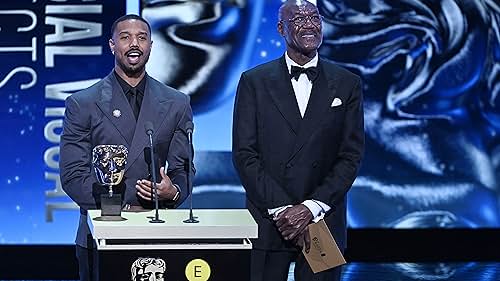
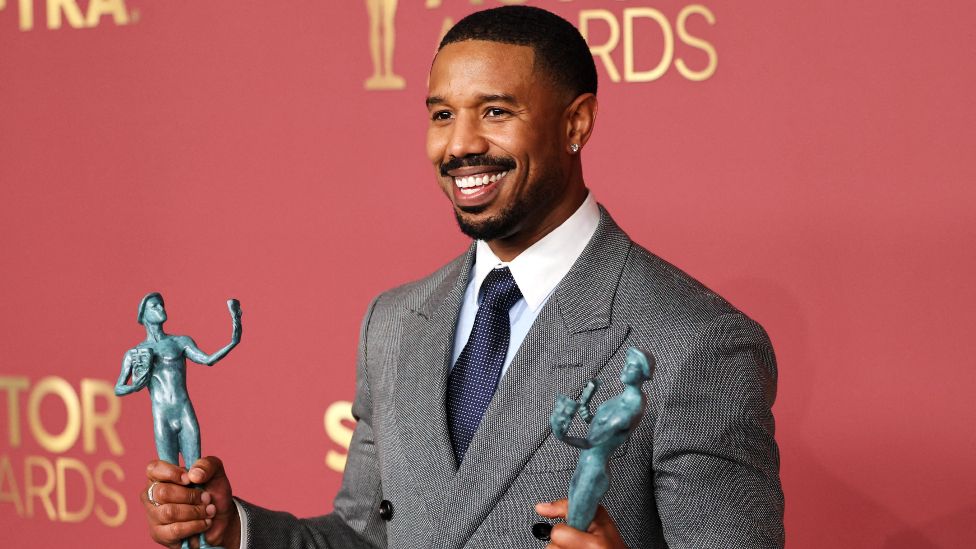
Directed by Ryan Coogler, the film features actor Michael B. Jordan in a dual role of twin brothers who face supernatural forces in the southern US of the Jim Crow era.
“Sinners” is considered a frontrunner in the best picture category. It will also compete for best director, best screenplay, best lead actor, and best original song, among others.
A total of 10 films were nominated for the best picture Oscar on Thursday. In addition to “Sinners,” “One Battle After Another” and “Sentimental Value” are also seen as strong contenders.
The latter, “Sentimental Value,” a family drama, recently swept the European Film Awards.
The other best picture nominees are “Bugonia,” “F1,” “Frankenstein,” “Hamnet,” “Marty Supreme,” “The Secret Agent,” and “Train Dreams.” The films were selected out of 201 contenders.
“One Battle After Another,” a father-daughter revolutionary saga, placed second for total nominations, with a total of 13 nods that included best director (Paul Thomas Anderson) and four best actor awards.
Alongside Coogler and Anderson, the other contenders for best director are Chloe Zhao (“Hamnet”), Josh Safdie (“Marty Supreme”) and Joachim Trier (“Sentimental Value”).
Timothee Chalamet, Leonardo DiCaprio, Ethan Hawke, Michael B. Jordan and Wagner Moura all received nominations for best actor in a leading role, while Jessie Buckley, Rose Byrne, Kate Hudson, Renate Reinsve and Emma Stone were nominated in the leading actress category.
Best casting, the first new category to be added to the Oscars in 25 years, highlights the work of selecting actors for a film. Five films received nominations, including “Sinners.”
The animated musical smash hit “KPop Demon Hunters” received nods for best animated film, where it is considered the favorite, and for best original song for the earworm “Golden.” The film was released on Netflix — and went on to break the streaming platform’s all-time viewing record — but qualified for the Oscars based on a limited sing-along release in theaters.
Meanwhile, on the international front, films from Brazil (“The Secret Agent”), France (“It was Just an Accident”), Norway (“Sentimental Value”), Spain (“Sirat”) and Tunisia (“The Voice of Hind Rajab”) made it to the final for the best international feature film award.
Germany’s entry to the competition, “Sound of Falling,” did not make it to the final.