Posted on Leave a comment

Ebo Taylor, Ghanaian highlife icon who collaborated with Fela, dies at 90

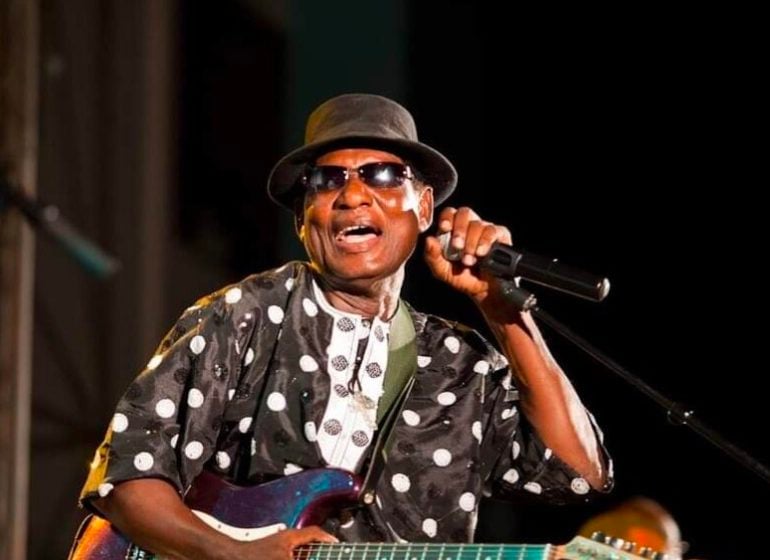
Ebo Taylor, the iconic Ghanaian guitarist and composer whose work helped define the highlife genre, has passed away at the age of 90.

His family announced the news on Sunday via his Instagram page, although the cause of death was not revealed.

Taylor died at the Saltpond Hospital, according to a statement from the Musicians Union of Ghana (MUSIGA).

His death came just one day after he launched the inaugural Ebo Taylor Music Festival, and exactly one month after celebrating his 90th birthday.

“The world has lost a giant. A colossus of African music,” the post reads.

“Ebo Taylor passed away yesterday; a day after the launch of Ebo Taylor Music Festival and exactly a month after his 90th birthday, leaving behind an unmatched artistry legacy. @ebo.taylor your light will never fade.”

Born Deroy Taylor in Cape Coast on January 6, 1936, he rose to prominence in the late 1950s and 1960s, an era when highlife was Ghana’s dominant musical form. Playing with leading bands like the Stargazers and the Broadway Dance Band, he gained a reputation for his distinctive guitar style and intricate arrangements.

Taylor’s six-decade career was marked by prolific innovation. He masterfully fused Ghanaian rhythms with jazz, funk, soul, and early Afrobeat, influencing generations of musicians both within Africa and beyond.

A pivotal moment came in the 1960s when he took his Black Star Highlife Band to London, leading to a historic collaboration with the legendary Afrobeat pioneer Fela Kuti.

He later led renowned groups such as the Ghana Black Star Band and the Uhuru Dance Band in Ghana, and collaborated with greats like the Apagya Show Band, CK Mann, and Pat Thomas throughout the 1970s.

While a celebrated figure in West Africa for decades, Taylor gained broader international recognition in 2010 with the release of ‘Love and Death’ on Strut Records.

This was followed by acclaimed albums including ‘Appia Kwa Bridge’ (2012) and ‘Yen Ara’ (2018). His vast catalogue of influential songs includes ‘Heaven’, ‘Atwer Abroba’, ‘Life Stories’, ‘Ayesama’, ‘Saana’, and ‘You Need Love’.

Taylor is widely regarded as one of the most influential figures in Ghanaian music history. (TheCable)

Posted on Leave a comment

Fela Kuti receives Posthumous Grammy Lifetime Achievement Award

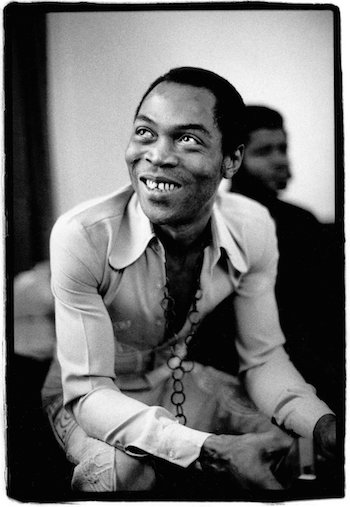
Afrobeat pioneer Fela Kuti has been honoured with a Grammy Lifetime Achievement Award, nearly three decades after his death, marking a historic milestone for African music.

The prestigious recognition was conferred on Saturday, January 31, 2026, at the Recording Academy’s Special Merit Awards ceremony held at the Wilshire Ebell Theatre in Los Angeles, on the eve of the 68th Annual Grammy Awards.

With the honour, Fela becomes the first African artist to receive the Lifetime Achievement Award, which has been presented since 1963 to music legends including Bing Crosby.

The award recognises performers who have made outstanding artistic contributions to the recording field over their lifetimes.

Fela, who died in 1997 at the age of 58, was celebrated posthumously for his enduring cultural, political and musical impact.

Other recipients at the ceremony included Chaka Khan, Cher, Carlos Santana, Paul Simon and Whitney Houston, who was also honoured posthumously.

The award was accepted on Fela’s behalf by his children, Femi Kuti, Yeni Kuti and Kunle Kuti, in the presence of family members, friends and prominent figures from the global music industry.

During the presentation, Fela was described as a “producer, arranger, political radical, outlaw and the father of Afrobeat.”

In his acceptance speech, Femi said, “Thank you for bringing our father here. It’s so important for us, it’s so important for Africa, it’s so important for world peace and the struggle.”

Yeni expressed the family’s excitement at the recognition, noting that Fela was never nominated for a Grammy during his lifetime.

“The family is happy about it. And we’re excited that he’s finally being recognised,” she said, adding that while the honour was “better late than never”, there remained “a way to go” in fully acknowledging African artists globally.

Seun Kuti also welcomed the recognition, describing it as a “symbolic moment.”

“Fela has been in the hearts of the people for such a long time. Now the Grammys have acknowledged it, and it’s a double victory. It’s bringing balance to a Fela story. The global human tapestry needs this, not just because it’s my father.”

Fela’s cousin and head of the Kuti family, Yemisi Ransome-Kuti, reflected on how the musician might have responded to the honour.

Footage from the ceremony showed a large screen bearing Fela’s image alongside a summary of his legacy, including his expansive music catalogue, the Tony Award-winning Broadway musical inspired by his life, and global cultural projects celebrating his work. (Channels)

Posted on Leave a comment

Fela Kuti to receive Posthumous Lifetime Achievement Award at 2026 Grammy

Legendary Nigerian musician and Afrobeat pioneer, Fela Anikulapo-Kuti, will be posthumously honoured with a Special Merit Lifetime Achievement Award at the 2026 Grammy Awards.

The Recording Academy recognised Fela as the “architect of Afrobeat,” highlighting his transformative influence on the genre and his enduring impact on generations of artists.

“An architect of Afrobeat, honoured for a lifetime of influence. Fela Kuti was a Nigerian musician, producer, arranger, political radical, activist, and the father of Afrobeat. In the 1960s, he created the genre by combining funk, jazz, salsa, calypso, and a blend of traditional Nigerian rhythms,” the statement said.

Fela will join an illustrious list of past recipients, including Whitney Houston, Cher, and Paul Simon.

His innovative fusion of musical styles in the 1960s laid the foundation for modern Afrobeat, and his influence reaches global stars such as Beyoncé, Paul McCartney, and Thom Yorke.

Fela’s legacy continues through his family, the Kalakuta Museum, and the New Afrika Shrine.

“His influence spans generations, shaping modern Nigerian Afrobeats and inspiring global artists such as Beyoncé, Paul McCartney, and Thom Yorke. His legacy continues to live on not only through music, but through his family and through the Kalakuta Museum and the New Afrika Shrine,” the Academy added.

The Special Merit Awards ceremony will be held on January 31, 2026, during Grammy Week, ahead of the main Grammy Awards event. (TVCNews)

Posted on Leave a comment

Fela influenced me, but didn’t inspire my music — Burna Boy

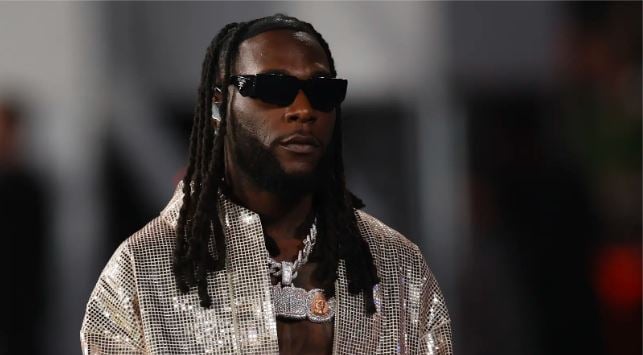
Nigerian music star Burna Boy, born Damini Ogulu, has clarified the role of Afrobeat legend Fela Kuti in shaping his career in a recent interview with tennis icon Roger Federer on Complex’s GOAT Talk.

The episode, titled “Burna Boy & Roger Federer Debate The Best & Worst Things Ever”, originally aired on YouTube on September 24 and has recently resurfaced online, giving fans an intimate look at the superstar’s influences, personal tastes, and the cherished traditions that shaped him.

During the conversation, Federer asked Burna Boy about the albums he considers the greatest of all time.

The Afro star listed a wide range of classics, including Joe’s My Name Is Joe, Lil Wayne’s Tha Carter III, and 2Pac’s Makaveli.

He also emphasised all of Fela Kuti’s albums. However, when pressed on which of these works inspired him the most, Burna Boy said, “Honestly, none. I promise you. But, well, Fela was a big influence on me.”

He explained that Fela’s records were part of the soundtrack of his childhood, shaping his environment and awareness of Afrobeat, even if they did not directly guide his own music.

Burna Boy also shared that his first albums included the Joe album he received for his 10th birthday, alongside Fela’s full collection from his grandfather, emphasising that every Fela album remains a “goat album” in his eyes.

“First album, I got the Joe album for my 10th birthday gift… I got all Fela albums from my granddad. So every Fela album is a goat album. Lil Wayne’s The Carter III. Tupac’s Makaveli.”

The interview offered fans a peek into Burna Boy’s broader musical taste, listing rappers like Tupac, Big Pun, J-Hus, and DMX across generations, and citing singers, including Fuji artists like Saeed Osupa, as well as global icons such as Whitney Houston, Tina Turner, and Freddie Mercury.

He also recounted how Freddie Mercury and Queen were part of his father’s musical influence, showing a blend of both African and international inspirations in his upbringing.

Beyond music, Burna Boy delved into more personal aspects of his life. He revealed the origin of his stage name, linking it to a comic-book persona he created as a child, endowed with fire powers and the ability to fly.

“That’s actually how I got the name Burna Boy, because I wanted to be a character in the comic book,” he explained.

He also talked about family traditions, particularly Christmas, which he described as a sacred time to be home with loved ones.

Despite the demands of a professional schedule, he emphasised the importance of spending the day together.

Burna Boy painted a vivid picture of family Christmas celebrations, sharing how they prioritise presence over plans. He noted the challenge of juggling careers and traditions, but highlighted that the holiday remains a time for reconnecting, sharing meals, and creating lasting memories with extended family.

Food was another nostalgic topic, as Burna Boy reflected on his childhood favourites. He fondly remembered, “Fried yams and stew with all the meats you can get… Like beef or sausage… When I was a kid, I used to eat yams and sleep off on the bench.”

While Fela Kuti’s music played a formative role in his upbringing, Burna Boy makes it clear that his artistic journey has been guided by his own vision and experiences. (Punch)