Posted on Leave a comment

Three killed in explosion at Los Angeles police training facility

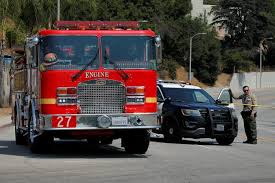
Three officers were killed in an explosion at a law enforcement training facility in East Los Angeles, officials say.

The blast occurred at around 07:30 local time (15:30 BST) on Friday at the Biscailuz Center Academy Training facility, which houses the Sheriff’s department’s special enforcement bureau and arson explosives detail, including the bomb squad.

The exact cause of the explosion is still under investigation, but Sheriff Robert Luna of the LASD described it as “an isolated incident”. There were no additional injuries.

The three officers killed in the blast were “fantastic experts” and veterans of the department, each serving between 19 to 33 years, the sheriff said.

Authorities have not released the names of the deceased officers, citing the need to notify their families first. All three were assigned to the sheriff department’s arson explosives detail.

Friday’s incident represents the department’s largest loss of life in a single incident since its founding in 1857, Sheriff Luna said.

“We have to go back and investigate what happened from the very beginning,” he said. The FBI and the Bureau of Alcohol, Tobacco, Firearms and Explosives are assisting with the investigation.

US Attorney General Pam Bondi called the incident “horrific” and said federal agents had been deployed on the scene and “working to learn more”.

Authorities say the explosion took place in the parking lot of the facility’s special enforcement bureau.

US media, citing sources, report that officers were handling an unexploded ordnance recovered from a recent bomb disposal call when it detonated.

The bomb squad typically picks up potential explosives across the region daily, but it’s a situation that’s always fraught with danger because it’s hard to assess the stability of materials and their age, the Los Angeles Times reported citing law enforcement sources.

The area surrounding the facility was evacuated and has since been sealed off as investigators continue to work at the scene.

California Governor Gavin Newsom has been briefed about the explosion and he is “closely monitoring the situation”, his office said in a statement on X.

Newsom’s office added that state assistance has also been offered to help respond to the incident.

Kathryn Barger, Chief of the Los Angeles County Board of Supervisors, wrote in a statement that she is “closely tracking the situation as we learn more about what occurred and the condition of those affected”.

“My heart is heavy, and my thoughts are with the brave men and women of the Sheriff’s Department during this difficult time,” she said. (BBC)

Posted on Leave a comment

North Korea bans foreigners from seaside resort weeks after opening

North Korea has announced that its newly opened seaside resort will not be receiving foreign tourists.

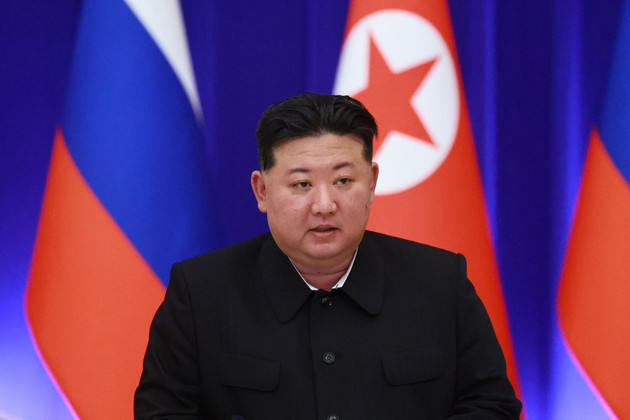
The Wonsan Kalma Coastal Tourist Zone, opened on 1 July, has been touted as a key part of North Korean leader Kim Jong Un’s ambitions to boost tourism.

In the lead-up to its opening, the resort was promoted as an attraction for both locals and foreigners. But as of this week, a notice on North Korea’s tourism website says that foreigners are “temporarily” not allowed to visit.

Last week, the first Russian tourists reportedly arrived at the resort in Wonsan – around the same time that Russian foreign minister Sergei Lavrov met Kim in the city.

Lavrov hailed the seaside development as a “good tourist attraction”, and said he hoped it would become popular among Russians, AFP reported. The two countries are set to launch direct flights between Moscow and Pyongyang by the end of the month.

A Russian tour guide previously told NK News that they had planned several more trips to the resort in the coming months.

Wonsan, a city along North Korea’s east coast, is home to some of the country’s missile facilities and a large maritime complex. It’s also where Kim spent much of his youth, among holiday villas belonging to the country’s elites.

The new seaside resort has lined 4km (2.5 miles) of its beachfront with hotels, restaurants, shopping malls and a water park. It has a capacity of some 20,000 people, according to state media.

However, since the resort began construction in 2018, human rights groups have protested the alleged mistreatment of its workers. They point to reports of people being forced to work long hours to finish the massive project, under harsh conditions and inadequate compensation.

Russian ambassadors attended the resort’s completion ceremony on 24 June, along with Kim and his family.

Last year, North Korea allowed Russian tourists to visit North Korea after a years-long suspension of tourism during the pandemic.

In February, North Korea also started to receive tourists from the West, including Australia, France, Germany and the UK. It abruptly halted tourism weeks later, however, without saying why. (BBC)

Posted on Leave a comment

British spies and SAS named in Afghan data breach

The identities of more than 100 British officials, including members of the special forces and MI6, were compromised in a data breach that also put thousands of Afghans at risk of reprisal, it can be reported.

The latest fallout from the breach was kept secret by an injunction until Thursday, when the order was lifted in part by a High Court judge.

That allowed media organisations to reveal that detailed case notes in the database contained secret personal data of special forces and spies.

The government had already admitted on Tuesday the data of nearly 19,000 Afghans who had worked with the British during the 20-year war in Afghanistan and had applied to resettle in the UK had been inadvertently leaked.

Many were judged to be at risk of serious harm or even death as the Taliban sought retribution against those who had worked with the British government during the conflict.

This was part of the reason the information was protected by a so-called “super-injunction” – a kind of gagging order that prevents the reporting of even the existence of the injunction.

The data breach occurred in February 2022 but was not discovered by the government until August 2023, when someone in Afghanistan who had obtained the data posted part of it on Facebook and indicated he could release the rest.

The BBC revealed on Wednesday that the Ministry of Defence (MoD) had offered to expedite a review of the individual’s application and brought him to the country after he posted the data – a sequence of events that government sources said was “essentially blackmail”.

The MoD declined to comment on the actions of the individual but said that “anyone who comes to the UK under any Afghan relocation schemes” must go through “robust security checks in order to gain entry”.

The discovery of the breach in 2023 forced the government to covertly set up the Afghanistan Response Route (ARR) – a resettlement scheme for those affected, who were not told about the breach despite the risk to their security.

The scheme has already allowed 4,500 Afghans and family members to move to the UK and a further 2,400 people are expected, at an estimated cost of £850m.

The accidental leak was the result of someone working at UK Special Forces headquarters in London inadvertently emailing more than 30,000 resettlement applications to an individual outside of government, thinking that he was sending data on just 150 people.

After the lifting of the super-injunction on Tuesday, a secondary injunction had prevented the revelations about special forces and security services personal being compromised.

But that was also lifted on Thursday that barristers representing both the MoD and a group of media organisations reached a compromise that meant journalists could report the additional facts.

Defence Secretary John Healey told Parliament on Tuesday that the breach was a “serious departmental error” and acknowledged that it was “just one of many data losses” relating to the Afghan relocation schemes.

The shadow defence secretary, James Cartlidge, apologised on behalf of the former Conservative government, which was in power when the leak was discovered.

The MoD has refused to say how many people in Afghanistan may have been harmed as a result of the data breach. The Taliban government said on Thursday that it had not arrested or monitored Afghans affected by the leak.

But relatives of Afghans named in the leak told the BBC that they fear for their family still in the country, with one saying efforts by the Taliban to find their named relative intensified following the leak.

An MoD spokesperson said: “It’s longstanding policy of successive governments to not comment on special forces.

“We take the security of our personnel very seriously, particularly of those in sensitive positions, and always have appropriate measures in place to protect their security.” (BBC)

Posted on Leave a comment

White House says Trump diagnosed with vein condition after questions about bruises

US President Donald Trump is suffering from a chronic vein condition, the White House announced on Thursday, after days of speculation regarding photographs showing bruising on the president’s hand.

After recently experiencing swelling in his legs, Trump underwent a “comprehensive exam” including a diagnostic vascular study, according to White House Press Secretary Karoline Leavitt.

Leavitt said Trump’s bruised hand was consistent with “tissue damage from frequent handshaking” while taking aspirin, which she said is “part of a standard cardio-vascular prevention regimen”.

Trump, 79, has regularly touted his good health and once described himself as “the healthiest president that’s ever lived”.

The vein condition discovered in the recent exam is called chronic venous insufficiency, which occurs when leg veins fail to pump blood to the heart, causing it to pool in the lower limbs, which can then become swollen.

Leavitt said that there was “no evidence of deep vein thrombosis or arterial disease” and that all results from the test were “within normal limits”.

According to a note from White House physician Sean Barbabella released to reporters, the condition is “benign and common”, especially in people over age 70.

Additional testing showed “no signs of heart failure, renal impairment, or systemic illness” in Trump, Barbabella said in the note, which confirmed the information from Leavitt’s earlier briefing.

Overall, Trump is in “excellent health”, the doctor wrote.

Photographers captured what appeared to be Trump’s swollen legs during the Fifa Club World Cup final in New Jersey on 13 July, with subsequent photos taken earlier this week showing his bruised hands during a meet with Bahraini Prime Minister Salman bin Hamad bin Isa Al Khalifa at the White House.

A bruised hand on the president had previously been photographed during a meeting with French President Emmanuel Macron in February.

The swollen legs and bruising prompted online speculation and rumours that the president may have been experiencing an illness that hadn’t been made public.

Following an annual physical exam in April, Barbabella wrote that Trump “exhibits cognitive and physical health”.

Trump was 78 years and seven months old when he was sworn in for his second term in January, making him the oldest president to ever be inaugurated as US leader. (BBC)

Posted on Leave a comment

60 dead after fire tears through Iraqi shopping centre, officials say

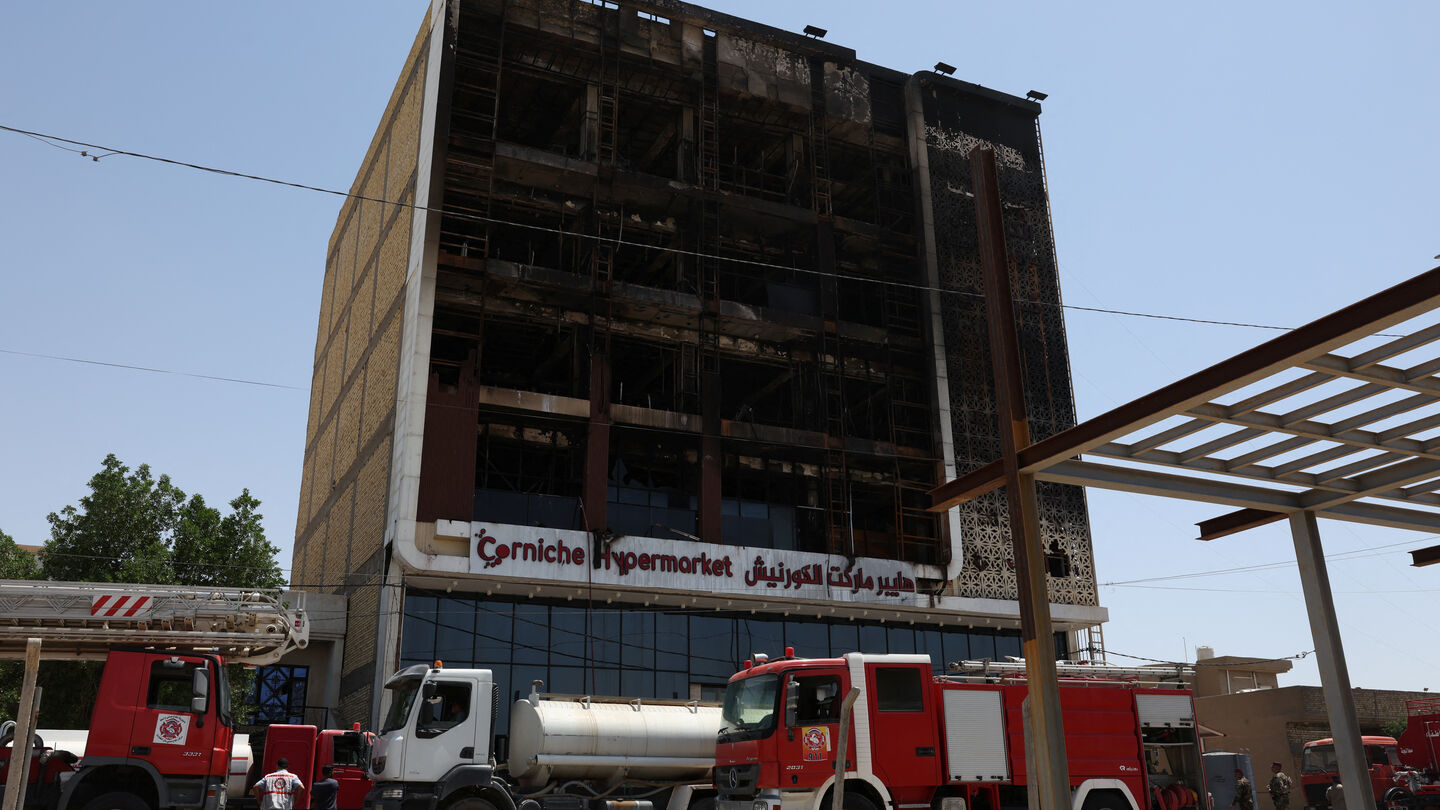
A fire that tore through a five-storey shopping centre in the Iraqi city of Kut has left at least 60 dead, officials said.

The blaze at the mall, which opened seven days ago, broke out on Wednesday night and has since been brought under control.

Social media videos showed firefighters rescuing people from the mall’s roof, but state media reported that many are still missing.

“A tragedy and a calamity has befallen us,” regional governor Mohammed al-Miyahi said, adding that legal action would be brought against the shopping centre’s owner.

The governor has also declared three days of mourning.

Videos on INA’s news channel show flames ripping through several floors of the Corniche Hypermarket in the city’s centre, as firefighters try to douse them.

Other clips circulating on social media appear to show a small number of people on the roof during the fire, as well as the burned out insides of the centre.

A number of people were rescued from the building by firefighters, al-Miyahi told local media.

Ambulances were still taking casualties to hospitals in the city, which is about 160 km (100 miles) southeast of Baghdad, at 04:00 local time.

“The tragic fire claimed the lives of 61 innocent citizens, most of whom suffocated in bathrooms, and among them 14 charred bodies yet to be identified,” the interior ministry said in a statement.

It added that 45 people were rescued from inside the building.

Nasir al-Quraishi, a doctor in his 50s, told AFP he lost five family members in the blaze.

“A disaster has befallen us,” he said. “We went to the mall to have some food, eat dinner and escape power cuts at home.

“An air conditioner exploded on the second floor and then the fire erupted and we couldn’t escape it.”

Ali Kadhim, 51, had been looking for his cousin, who is missing alongside his wife and three children, at the main hospital and the mall where rescuers were searching the wreckage.

“We don’t know what happened to them,” he said.

Moataz Karim, 45, identified the bodies of two of his relatives – one of whom began working at the mall three days ago – on Thursday morning.

“There is no fire extinguishing system,” he told AFP, as he waited for further news of a third missing relative outside the forensic department.

Iraqi Prime Minister Mohammed Shia al-Sudani expressed condolences to the families of victims in a statement.

He has also asked the interior ministry to launch an immediate investigation into the fire’s causes, as well as to identify shortcomings and “to take all necessary strict measures to prevent the recurrence of such incidents”.

The mall, which included a restaurant, opened a week ago, according to the interior ministry.

Safety standards are often poorly observed at Iraqi construction sites, which have face decades of mismanagement and corruption. (BBC)

Posted on Leave a comment

US Senate approves $9bn cuts to foreign aid and public broadcasting funds

The US Senate has passed a bill that seeks to cut $9bn (£6.7bn) from funds previously approved for spending by Congress, including cuts to public broadcasting and foreign aid.

The 51-48 vote happened just before dawn on Thursday, following an hours-long overnight “vote-a-rama”, as the Republican-led Senate negotiated amendments.

The bill – a so-called rescissions package that allows Congress to claw back approved funding – is part of a larger effort to reduce federal spending by President Donald Trump.

It now returns to the House of Representatives, the lower chamber of Congress that had previously passed a version of the bill with $9.4bn in proposed cuts.

“It’s a small but important step toward fiscal sanity that we all should be able to agree is long overdue,” Senate Majority Leader John Thune said before the final vote.

Senators had previously disagreed over a proposition in the House version of the bill that would have included roughly $400m in cuts to Pepfar, the US-backed HIV/Aids programme.

Republicans were able to reach a majority after an amendment was made to keep the funding in the budget.

However, dozens of other amendments to maintain international aid spending levels and funding for public broadcasting were rejected.

The Senate version of the bill approved on Thursday would still cut roughly $8bn from multiple aid programmes, including global health programmes under USAID, the US’s main philanthropic arm.

The bill would also cut more than $1bn from the Corporation for Public Broadcasting, disproportionately impacting radio stations relied upon by rural Americans.

Senator Lisa Murkowski, from Alaska, was one of two Republicans who joined all Democrats in voting against the bill, in part due to the cuts to public broadcasting.

The bill will next head to the House for a vote, where its path remains unclear after $400m was reduced from House-proposed spending cuts.

When asked about the changes, House Speaker Mike Johnson said: “We wanted them to pass it unaltered like we did.”

Both the House and Senate must agree on a version of the rescissions package before it expires on Friday, and Republicans lose their chance to cut the funds. (BBC)

Posted on Leave a comment

Israel bombards Syria’s Damascus as US says steps agreed to end violence

Israel has carried out powerful air strikes near Syria’s presidential palace and on the military headquarters in the heart of Damascus, a major escalation in its bombardment of the neighbouring country.

At least three people were killed and 34 others were wounded in the attacks on Damascus on Wednesday, Syrian state media reported, citing the Ministry of Health.

While targeting Damascus, the Israeli military continued to pound areas in southern Syria, including Suwayda, where a new ceasefire deal has been struck after four days of clashes between Druze armed groups, Bedouin tribes and government forces, which left hundreds dead.

Syria’s Ministry of Foreign Affairs said the Israeli attacks on Damascus and Suwayda were “part of a systematic Israeli policy to ignite tension and chaos and undermine security in Syria”, calling on the international community to take “urgent action” against Israeli aggression.

Israel said its bombing campaign is aimed at protecting the Druze minority, and it has called on the Syrian government to withdraw its troops from the city of Suwayda, where much of the violence has taken place.

Defence Minister Israel Katz said on X that the Israeli military would “continue to operate vigorously in Suwayda to destroy the forces that attacked the Druze until they withdraw completely”.

Later on Wednesday, United States Secretary of State Marco Rubio said that the parties to the fighting in southern Syria had agreed on “specific steps that will bring this troubling and horrifying situation to an end tonight”.

“This will require all parties to deliver on the commitments they have made and this is what we fully expect them to do,” Rubio said on X of the ceasefire deal, reached one day after an earlier iteration had collapsed.

More than 300 people had been killed in fighting as of Wednesday morning, including four children, eight women and 165 soldiers and security forces, according to the UK-based war monitor, the Syrian Observatory for Human Rights.

(AlJazeera)

Posted on Leave a comment

Fuel to engines of Air India plane that crashed cut off moments after take-off, report finds

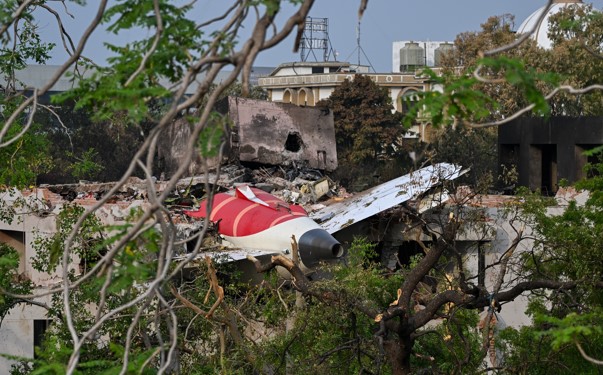
Fuel to the engines of the Air India plane that crashed last month appears to have cut off shortly after take-off, a preliminary report has found.

According to the report by India’s Aircraft Accident Investigation Bureau (AAIB), switches in the Boeing 787 Dreamliner’s cockpit that controlled fuel moved to a “CUTOFF” position.

It said: “Engine 1 and Engine 2 fuel cutoff switches transitioned from RUN to CUTOFF position one after another with a time gap of one second.

“The Engine N1 and N2 began to decrease from their take-off values as the fuel supply to the engines was cut off.”

There was then confusion in the cockpit. In the voice recording, one of the pilots is heard asking the other why he “cut off”. The other pilot responds that he did not do so.

The 15-page report did not identify which comments were made by the flight’s captain and which were made by the first officer. One of the pilots made a “mayday, mayday, mayday” call just before the crash.

Both pilots were experienced, with around 19,000 flying hours between them, including more than 9,000 on the 787.

Flipping to cutoff almost immediately cuts the engines, and is most often used to turn the engines off once a plane has arrived at its airport gate and in certain emergency situations, such as an engine fire – though both switches together are rarely used simultaneously.

The report does not indicate there was any emergency requiring an engine cutoff. It also does not give a conclusion as to how the switches moved.

However, aviation expert David Learmount told Sky News “it sounds deliberate”, but also noted “there are cases of pilots carrying out an incorrect action instead of what they should be doing”.

Mr Learmount said the only action the pilots needed to conduct at the time was retracting the plane’s undercarriage, but this was not done.

He added: “Was that it? These switches are nowhere near the undercarriage lever and look totally different. The fuel switches cannot be turned on or off by mistake. They have to be pulled out before selecting up (run) or down (cut off).”

Similarly, Tim Atkinson, a pilot and aviation consultant, told Sky News’ Gillian Joseph “there are very few situations or circumstances which would explain this”.

He explained: “One would be an utterly extraordinary human error, an unintentional act, and the other – I’m very sorry to say – would be an intentional act. And that’s not a suggestion or allegation, it’s simply an analysis of the small amount of information that we have at hand at this moment.”

One of the engines was able to be restarted, but could not reverse the plane’s deceleration, the report found.

India’s AAIB said in its report: “At this stage of investigation, there are no recommended actions to Boeing 787-8 and/or GE GEnx-1B engine operators and manufacturers.”

No significant bird activity was observed in the vicinity of the plane’s flight path, the report said. The aircraft started to lose altitude before crossing the airport perimeter wall, it added.

The plane plummeted into a busy area, killing 241 passengers and 19 others on the ground while incinerating everything around it.

The only surviving passenger was Briton Vishwash Kumar Ramesh, who was sitting next to an emergency exit and, according to police, “managed to escape by jumping out the emergency door”.

The plane crashed and struck a medical college hostel in a residential part of Ahmedabad, with the report stating: “The aircraft was destroyed due to impact with the buildings on the ground and subsequent fire.”

The plane’s two black boxes, which combined cockpit voice recorders and flight data recorders, were recovered in the days after the crash.

They provide vital data such as altitude, airspeed and final pilot conversations, which can help narrow down the possible causes behind a crash.

The AAIB’s report is based on the initial findings of the probe, marking 30 days since the crash. It said the investigation is continuing. A final report is expected within a year. (SkyNews)

Posted on Leave a comment

Donald Trump announces 30% tariffs on goods from the EU and Mexico

Donald Trump announced on Saturday that goods imported from both the European Union and Mexico will face a 30% US tariff rate starting 1 August, in letters posted on his social media platform, Truth Social.

The tariff assault on the EU came as a shock to European capitals as the European Commission and the US trade representative Jamieson Greer had spent months hammering out a deal they believed was acceptable to both sides.

The agreement in principle put on Trump’s table last Wednesday involved a 10% tariff, five times the pre-Trump tariff, which the bloc already described as “pain”.

EU trade ministers will meet on Monday for a pre-arranged summit and will be under pressure from some countries to show a tough reaction by implementing €21bn ($24.6bn) in retaliatory measures, which they had paused until midnight the same day.

In his letter to Mexico’s leader, Trump acknowledged that the country had been helpful in stemming the flow of undocumented immigrants and fentanyl into the United States.

But, he said, the country had not done enough to stop North America from turning into a “Narco-Trafficking Playground”.

“We have had years to discuss our Trading Relationship with The European Union, and we have concluded we must move away from these long-term, large, and persistent, Trade Deficits, engendered by your Tariff, and Non-Tariff, Policies, and Trade Barriers,” Trump wrote in the letter to the EU. “Our relationship has been, unfortunately, far from Reciprocal.”

Claudia Sheinbaum said on Saturday she is sure an agreement can be reached before Trump’s threatened tariffs take effect on 1 August.

Speaking during an event in the Mexican state of Sonora, the Mexican president added that Mexico’s sovereignty is never negotiable.

The higher-than-expected rate has dealt a blow to the EU’s hopes of de-escalation and a trade deal and could risk a trade war with goods of low margins including Belgian chocolate, Irish butter and Italian olive oil.

The EU was informed of the tariff hike before Trump’s declaration on social media.

In a letter to the EU, Trump warned that the EU would pay a price if they retaliated: “If for any reason you decide to raise your Tariffs and retaliate, then, whatever the number you choose to raise them by, will be added onto the 30% that we charge.”

The European Commission president, Ursula von der Leyen, said the 30% rate would “disrupt transatlantic supply chains, to the detriment of businesses, consumers and patients on both sides of the Atlantic”.

She said the bloc was one of the more open trading places in the world, and still hoped to persuade Trump to climb down.

“We remain ready to continue working towards an agreement by August 1. At the same time, we will take all necessary steps to safeguard EU interests, including the adoption of proportionate countermeasures if required,” she said.

The French president, Emmanuel Macron, called on the bloc to “resolutely defend European interests”. Expressing Paris’s “very strong disapproval” of Trump’s announcement, Macron urged the EU to “step up the preparation of credible countermeasures by mobilising all instruments at its disposal” if the two sides failed to reach agreement by 1 August.

Germany’s economy minister, Katherina Reiche, called on the EU to “negotiate in a pragmatic manner”, while the Federation of German Industries (BDI) warned that a trade conflict between the two partners “harms economic recovery, innovation strength, and ultimately confidence in international cooperation.”

Italy’s prime minister, Giorgia Meloni, called for “goodwill  … to reach a fair agreement that can strengthen the west as a whole. It would make no sense to trigger a trade war between the two sides of the Atlantic.” She added that both sides should avoid “polarisation”.

The decision to hike the tariffs will also be another test of Trump’s ability to act in good faith in negotiations.

Brussels will view the latest threat as a maneuver by Trump to extract more concessions from the EU, which he once described as “nastier” than China when it came to trade.

Bernd Lange, head of the European Parliament’s trade committee, said on Saturday that Brussels should react immediately with countermeasures against Trump’s “outrageous” threat to hike tariffs on imports from the European Union.

The EU had been negotiating intensively with Washington for more than three weeks and had made concessions, said Lange.

“It is brazen and disrespectful to increase the tariffs on European goods announced on April 2 from 20% to 30%,” Lange told Reuters.

“This is a slap in the face for the negotiations. This is no way to deal with a key trading partner.”

While Trump indicated earlier this week that his new rates, also levelled against big economies including Japan, South Korea and Brazil, will not apply until 1 August, his latest tactic will create much distrust.

Europe should make it clear that these “unfair trade practices” were unacceptable, Lange said. (Guardian)

Posted on Leave a comment

Donald Trump threatens to revoke Rosie O’Donnell’s US citizenship

Donald Trump has said he is considering “taking away” the US citizenship of actress and comedian Rosie O’Donnell, despite a Supreme Court ruling that expressly prohibits a government from doing so.

In a post on Truth Social on Saturday, the US president said: “Because of the fact that Rosie O’Donnell is not in the best interests of our Great Country, I am giving serious consideration to taking away her Citizenship.”

He also labelled O’Donnell, who has moved to Ireland, as a “threat to humanity” and said she should “remain in the wonderful country of Ireland, if they want her”.

O’Donnell responded on Instagram by posting a photograph of Mr Trump with Jeffrey Epstein.

“You are everything that is wrong with America and I’m everything you hate about what’s still right with it,” she wrote in the caption.

“I’m not yours to silence. I never was.”

O’Donnell moved to Ireland with her 12-year-old son in January after Mr Trump had secured a second term.

She has said she’s in the process of obtaining Irish citizenship based on family lineage and that she would only return to the US “when it is safe for all citizens to have equal rights there in America”.

O’Donnell and the US president have criticised each other publicly for years, in an often-bitter back-and-forth that predates Mr Trump’s move into politics.

This is just the latest threat by the president to revoke the citizenship of someone he has disagreed with, most recently his former ally Elon Musk.

But the two situations are different as while Musk was born in South Africa, O’Donnell was born in the US and has a constitutional right to American citizenship.

Amanda Frost, a law professor at the University of Virginia School of Law, said the Supreme Court ruled in a 1967 case that the fourteenth amendment of the constitution prevents the government from taking away citizenship.

“The president has no authority to take away the citizenship of a native-born US citizen,” he added.

“In short, we are nation founded on the principle that the people choose the government; the government cannot choose the people.” (SkyNews)