Posted on Leave a comment

MI6 appoints first female chief in 116-year history

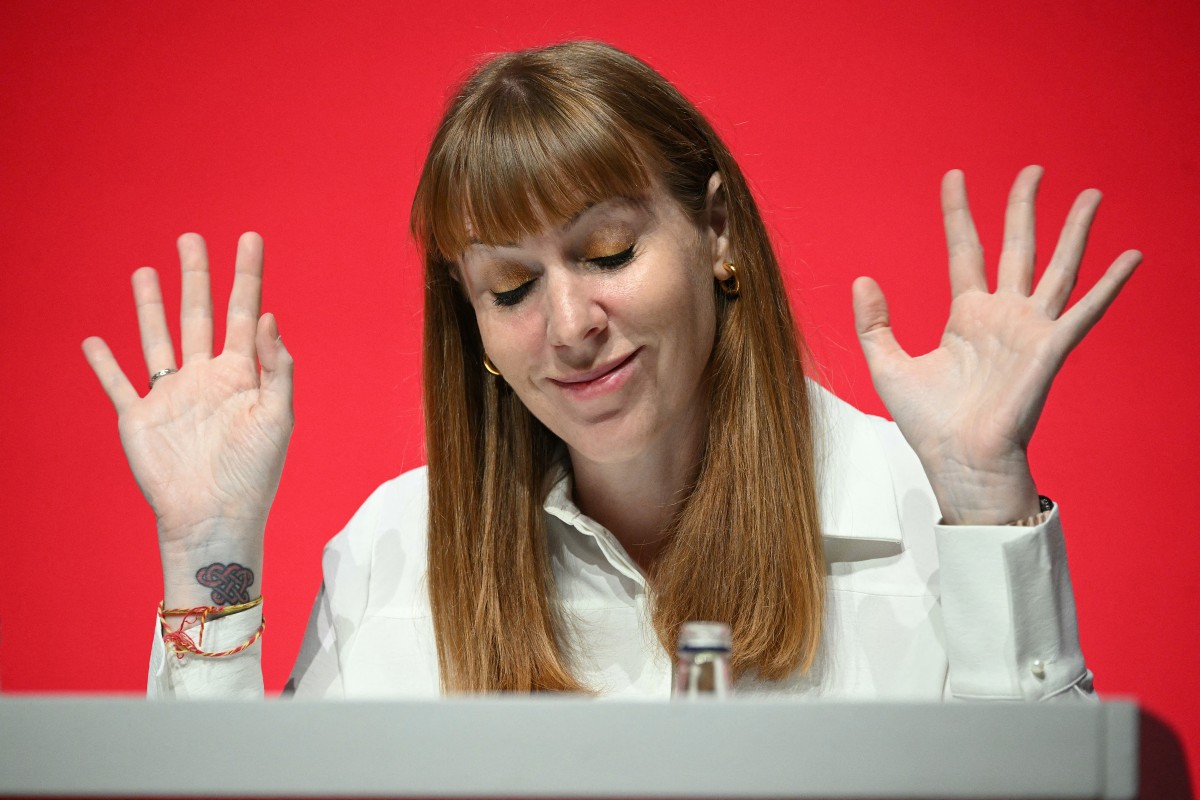
MI6 will be led by a woman for the first time in the foreign intelligence service’s 116-year history.

Blaise Metreweli, who joined the Secret Intelligence Service in 1999, will become the 18th chief of the organisation and take over from Sir Richard Moore later this year.

She is currently responsible for technology and innovation at the service and said she was “proud and honoured” to have been asked to lead.

Prime Minister Sir Keir Starmer called the appointment “historic” at a time “when the work of our intelligence services has never been more vital”.

MI6 is tasked with gathering intelligence overseas to improve the UK’s security, with its core aims being to stop terrorism, disrupt the activities of hostile states and bolster cyber-security.

Its chief, commonly referred to as “C”, is the only publicly named member of the service.

Ms Metreweli, 47, is currently Director General “Q” – head of the crucial technology and innovation division that aims to keep the identities of secret agents secret, and come up with new ways to evade adversaries like China’s biometric surveillance.

“MI6 plays a vital role – with MI5 and GCHQ – in keeping the British people safe and promoting UK interests overseas,” she said.

“I look forward to continuing that work alongside the brave officers and agents of MI6 and our many international partners.”

Ms Metreweli, who studied anthropology at the University of Cambridge, has previously held director level roles in MI5 – MI6’s sister, domestic security agency – and spent most of her career working in the Middle East and Europe.

On the King’s overseas and international birthday honours list in 2024, she received the Companion of the Order of St Michael and St George (CMG) for her services to British foreign policy.

Speaking to the Telegraph in December 2021 when she was at MI5, under the pseudonym of “Director K”, Ms Metreweli said threats to UK national security “really are diverse”.

“The threats we are looking at primarily exist around protecting government, protecting secrets, protecting our people – so counter-assassination – protecting our economy, sensitive technology and critical knowledge,” she said.

She added that “Russian state activity – not Russia itself – remains a threat” and that China was “changing the way the world is and that presents amazing opportunities and threats for the UK”. (BBC)

Posted on Leave a comment

Dozens killed as Israeli tanks shell aid crowd in Southern Gaza

The health ministry on Tuesday reported that Israeli tank shellfire killed at least 51 Palestinians as they awaited aid trucks in Khan Younis in the southern Gaza Strip.

The ministry added that dozens of others were wounded.

According to medics, more than 200 people were wounded, with at least 20 of them in critical condition.

There was no immediate comment by the Israeli military on the incident.

Witnesses said Israeli tanks fired at least two shells at thousands of people awaiting aid trucks.

Nasser Hospital wards were crowded with casualties, and medical workers had to place some on the ground and in corridors due to the lack of space.

The incident was the latest in nearly daily mass deaths of Palestinians who were seeking aid in the past weeks, including near sites operated by the U.S.-backed Gaza Humanitarian Foundation.

Local health officials said at least 23 people were killed by Israeli gunfire on Monday as they approached a GHF aid distribution site in Rafah in the southern Gaza Strip.

The GHF released a press release on Monday stating that it had distributed more than three million meals at its four distribution sites without incident.

There was no immediate comment from the Israeli military about Monday’s reports of shootings.

In previous incidents, it has occasionally acknowledged troops opening fire near aid sites while blaming militants for provoking the violence.

Israel has put responsibility for distributing much of the aid it allows into Gaza into the hands of the GHF which operates sites in areas guarded by Israeli troops.

The United Nations has rejected the plan, saying GHF distribution is inadequate, dangerous, and violates humanitarian impartiality principles.

The latest bloodshed in the decades-old Israeli-Palestinian conflict was triggered in October 2023, when Palestinian Hamas militants attacked Israel, killing 1,200 and taking about 250 hostages, according to Israeli allies.

Israel’s subsequent military assault on Gaza has killed nearly 55,000 Palestinians, according to Gaza’s health ministry, while internally displacing nearly Gaza’s entire population and causing a hunger crisis.

The assault has also triggered accusations of genocide at the International Court of Justice and of war crimes at the International Criminal Court.

Israel, however, denies the accusations. (Punch)

Posted on Leave a comment

North Korea refloats warship after failed launch

North Korea has reportedly refloated a warship after it capsized during a launch attempt, in an incident that drew harsh criticism from the country’s leader Kim Jong Un.

State-run news agency KCNA reported on Friday that the warship had “safely entered the water vertically” and had then been “moored at the pier”.

It is expected to be fully repaired before a key meeting led by Kim which top officials in the one-party state will attend, KCNA said.

The 5,000-tonne destroyer can be seen upright at the pier and then about three hours later,”floating in the harbour” in satellite images published by specialist news sites 38 North and NK News.

The effort to right the ship, which had happened on Thursday, was a manual process, researchers at 38 North said, noting that satellite imaging showed workers on the quay pulling tethers and using barrage balloons to bring the vessel back to balance.

Some of the balloons appeared to still be attached to the vessel, they added.

Kim, who witnessed the warship tipping over during the failed launch about two weeks ago, had criticised the incident as a “criminal act” that “severely damaged the [country’s] dignity and pride”.

It was the result of “absolute carelessness, irresponsibility and unscientific empiricism”, he added.

At least four officials, including Ri Hyong-son, the deputy director of the ruling Workers’ Party’s Munitions Industry Department, have been arrested over the incident.

Ri is part of the party’s Central Military Commission, which commands the Korean People’s Army and is responsible for developing and implementing North Korea’s military policies.

It is not clear what punishment the officials might face, but the secretive dictatorship has been known to sentence officials it finds guilty of wrongdoing to forced labour or even death.

Some analysts saw Kim’s swift and severe response to the earlier failed launch as a signal that Pyongyang would continue to advance its military capabilities.

The regime is “deeply invested in the image of a rising military power” and the failure may harden their resolve to push that forward, according to Jihoon Yu, a research fellow at the Korea Institute for Defense Analyses.

Kim’s “unusually severe” response to the failure is aimed at protecting the leader’s image and reasserting his authority, he said.

Michael Madden, a North Korea expert from the Stimson Center in Washington, saw Kim’s response as a sign of the “high priority” his regime is putting into developing warships.

Just weeks before the botched launch, Pyongyang had unveiled a similar warship in another part of the country.

Kim called that warship a “breakthrough” in modernising North Korea’s navy and said it would be deployed early next year. (BBC)

Posted on Leave a comment

UK to spend £1.5bn on six new weapons factories

The government will spend £1.5bn on at least six new munitions and explosives factories to “better deter our adversaries”, Defence Secretary John Healey has said.

The factories will support up to 7,000 UK-built long-range weapons and create about 1,800 new jobs, the Ministry of Defence (MoD) said.

The announcement is part of the government’s strategic defence review (SDR), which is due to be published on Monday.

The Conservatives said they welcomed investment in new munitions but shadow defence secretary James Cartlidge called for “greater ambition for the pace and scale of rearmament our armed forces require”

The war in Ukraine has highlighted serious deficiencies in the West’s ability to produce weapons and munitions, and senior British military officers have long warned about the UK’s depleted stockpiles.

As part of its review, the government said it would build new factories to make key munitions and explosives as part of its plans to have an “always on” munitions production capacity that could be scaled up quickly.

It also said the UK would purchase more than 7,000 British-built long-range weapons, including drones and missiles, over several years.

According to the MoD, the new funding will see UK munitions spend hit £6bn during this parliament.

Ministers said the extra investment – which came after Healy said that UK defence spending would rise to 3% of GDP by 2034 at the latest – would strengthen the armed forces and boost British jobs.

Chancellor Rachel Reeves said: “A strong economy needs a strong national defence, and investing in weaponry and munitions and backing nearly 2,000 jobs across Britain in doing so is proof the two go hand-in-hand.

“We are delivering both security for working people in an uncertain world and good jobs, putting more money in people’s pockets.”

Healey said the UK’s defence industry would become an “engine for economic growth” and would “boost skilled jobs in every nation and region”.

“The hard-fought lessons from [Russian President Vladimir] Putin’s illegal invasion of Ukraine show a military is only as strong as the industry that stands behind them,” he added. (BBC)

Posted on Leave a comment

Trump tariffs can stay in place for now, appeals court rules

US President Donald Trump can keep collecting import taxes, an appeals court has ruled, a day after a trade ruling found the sweeping global tariffs to be illegal.

A federal appeals court granted a bid from the White House to temporarily suspend the lower court’s order, which ruled that Trump had overstepped his power by imposing the international duties.

Wednesday’s judgement from the US Court of International Trade drew the ire of Trump officials, who said it was an example of judicial overreach.

Small businesses and a group of states had challenged the measures, which are at the heart of Trump’s economic and international agendas.US President Donald Trump can keep collecting import taxes, an appeals court has ruled, a day after a trade ruling found the sweeping global tariffs to be illegal.

A federal appeals court granted a bid from the White House to temporarily suspend the lower court’s order, which ruled that Trump had overstepped his power by imposing the international duties.

Wednesday’s judgement from the US Court of International Trade drew the ire of Trump officials, who said it was an example of judicial overreach.

Small businesses and a group of states had challenged the measures, which are at the heart of Trump’s economic and international agendas.

In its appeal, the Trump administration said the decision issued by the trade court a day earlier had improperly second-guessed the president and threatened to unravel months of hard-fought trade negotiations.

“The political branches, not courts, make foreign policy and chart economic policy,” it said in the filing, which threatened to seek emergency relief from the Supreme Court if the earlier ruling was not put on hold.

Shortly before Thursday’s tariff reprieve from the appeals court, White House spokesperson Karoline Leavitt told a press briefing: “America cannot function if President Trump, or any other president, for that matter, has their sensitive diplomatic or trade negotiations railroaded by activist judges.” (BBC)

Posted on Leave a comment

Mother who sold six-year-old daughter given life term in South Africa

A South African woman convicted of kidnapping and trafficking her six-year-old daughter has been sentenced to life in prison, along with her two accomplices.

The jail terms for Racquel “Kelly” Smith, her boyfriend Jacquen Appollis and their friend Steveno van Rhyn come more than a year after Joshlin Smith mysteriously disappeared outside her home in Saldanha Bay, near Cape Town.

Despite a highly publicised search for the girl, who vanished in February 2024, she is yet to be found.

South African prosecutors say she was sold into slavery however this was not definitively proven during the trial.

It is believed that Smith, who was addicted to drugs, needed the money.

The sentencing follows an eight-week trial that captivated South Africa, with witnesses and prosecutors making a number of shocking allegations.

Judge Nathan Erasmus said he “drew no distinction” between the trio in handing down the sentences.

“On the human trafficking charge, you are sentenced to life imprisonment. On the kidnapping charge, you are sentenced to 10 years imprisonment,” he said to loud applause in the courtroom.

Judge Erasmus took over an hour to deliver the sentence and was measured as he gave a brief summary of the case and highlighted points that stood out during the trial.

He rebuked the trio, especially Van Rhyn and Smith, saying they showed no remorse for their actions.

“There is nothing that I can find that is redeeming or deserving of a lesser sentence,” he said.

He also spoke of the impact their conduct had on the community of Middelpos, where the girl lived, saying it had left residents “fractured”.

Smith, 35, and her accomplices showed no emotion as their sentences were read out in the community centre in Saldanha where the trial was held to allow residents to attend proceedings.

Police said the search for the little girl would continue, even beyond South Africa’s borders.

“We will not rest until we find [out] what happened to Joshlin. We are continuing day and night looking for her,” Western Cape police commissioner Thembisile Patekile told local media.

The National Prosecuting Authority (NPA) welcomed the sentence and lauded the work of its team in proving that Joshlin was “sold [and] delivered to the intended buyer” for the purpose of “exploitation, namely slavery or practices similar to slavery”.

During the trial, the identity of the “intended buyer” was never revealed.

The BBC asked the NPA for further details, however a spokesperson was unable to provide any.

Emotions were high ahead of the sentencing, with angry community members saying the trio should get a “harsh sentence because they deserve it”. (BBC)

Posted on Leave a comment

President Trump signs order seeking to end federal funding for NPR and PBS

President Donald Trump signed an executive order Thursday directing the Corporation for Public Broadcasting to end federal funding for America’s two biggest public broadcasters, which have faced a series of attacks from the White House and Republican lawmakers accusing them of biased reporting.

The order instructs the CPB’s board to terminate direct funding for National Public Radio and the Public Broadcasting Service to the “maximum extent allowed by law and shall decline to provide future funding.” It also orders the board to take steps to “minimize or eliminate” indirect funding to NPR and PBS.

The corporation, however, is a private entity that is supposed to be protected from government interference, including executive orders from the president. The corporation is currently suing Trump because the White House tried to terminate three of its board members earlier this week.

“CPB is not a federal executive agency subject to the President’s authority,” the corporation’s CEO, Patricia Harrison, said in a statement. “Congress directly authorized and funded CPB to be a private nonprofit corporation wholly independent of the federal government.”

“The President’s blatantly unlawful Executive Order, issued in the middle of the night, threatens our ability to serve the American public with educational programming, as we have for the past 50-plus years,” PBS CEO Paula Kerger said in a statement Friday morning. “We are currently exploring all options to allow PBS to continue to serve our member stations and all Americans.”

Each year, the CPB disperses $535 million in taxpayer funds to public radio and TV stations nationwide and to producers of educational and cultural programming.

Stations, in turn, provide free and universal access to news, emergency alerts and a wide array of programming.

In Trump’s first term, his annual budget proposals zeroed out the funding for the corporation, but Congress always allocated the funds anyway – a reflection of the fact that national Republican opposition to NPR and PBS is countered by local support.

In Trump’s second term, he is being much more aggressive about trying to shut down the public broadcasters. The White House is alleging that the networks “spread radical, woke propaganda disguised as ‘news.’”

PBS and NPR executives reject that, but they recognize that Trump feels emboldened to pursue their federal funding.

The White House has said it will soon ask Congress to claw back the money already allocated for the corporation over the next two years.

“These are funds that we were already counting on,” PBS CEO Paula Kerger said earlier this week, “because it’s already appropriated. So we’re anxious to see what they’re talking about and we will be responding very quickly.”

House speaker Mike Johnson said of the expected rescission proposal, “I don’t know what the final outcome is going to be, but I can tell there’s a lot of thoughtful debate about it.”

Trump’s executive order is another pursuit of the same goal – a zeroing out of federal funding for public media.

The order also directs Health and Human Services Secretary Robert F. Kennedy Jr. to investigate NPR and PBS for possible employment discrimination, and it instructs the heads of all other federal agencies to “identify and terminate” any direct or indirect funding of the media organizations.

When Congress established the corporation in 1967, it specifically tried to insulate public media from political pressure.

The law said the corporation is a private entity, not a federal agency, “to afford maximum protection from extraneous interference and control.”

The legislation expressly forbids the government from exercising “any direction, supervision, or control over educational television or radio broadcasting.”

But Congress could choose to stop funding the corporation. In that case, bigger stations with lots of donors and other sources of revenue would survive, but smaller stations could be forced off the air, especially in rural areas that are Republican strongholds.

In many cases “these are the last locally owned broadcasters in these communities,” Ed Ulman, the CEO of Alaska Public Media, told CNN last month. (CNN)

Posted on Leave a comment

India PM vows to pursue Kashmir attackers to ”ends of the Earth”

India and Pakistan exchanged an escalating series of tit-for-tat diplomatic measures on Thursday after New Delhi blamed its arch-rival for backing a deadly shooting attack in contested Kashmir.

Prime Minister Narendra Modi vowed to pursue and punish the gunmen responsible for killing 26 civilians in the tourist hotspot of Pahalgam on Tuesday, accusing Pakistan of supporting “cross-border terrorism”.

“I say to the whole world: India will identify, track and punish every terrorist and their backer,” Modi said in his first speech since the attack in the Himalayan region. “We will pursue them to the ends of the Earth”.

Indian police in the region have identified two of the three fugitive gunmen as Pakistani.

The attack at Pahalgam in contested Muslim-majority Kashmir was the deadliest for a quarter of a century and marked a dramatic shift with the targeting of civilians, rather than Indian security forces.

New Delhi suspended a water-sharing treaty, announced the closure of the main land border crossing with Pakistan, downgraded diplomatic ties and withdrew visas for Pakistanis on Wednesday night.

On Thursday, Pakistan Prime Minister Shehbaz Sharif convened a rare meeting of the National Security Committee (NSC) with top military officials, including powerful Chief of Army Staff Asim Munir, in the capital Islamabad in response to India’s accusations and measures.

“Any threat to Pakistan’s sovereignty and to the security of its people will be met with firm reciprocal measures in all domains,” a statement released by Sharif’s office said after the NSC meeting.

“In the absence of any credible investigation and verifiable evidence, attempts to link the Pahalgam attack with Pakistan are frivolous, devoid of rationality and defeat logic,” it said.

The slew of tit-for-tat measures announced by the Pakistan government include expelling Indian diplomats and cancelling visas for Indian nationals with the exception of Sikh pilgrims.

Islamabad said Indian military advisers were “persona non grata” and were “directed to leave Pakistan immediately”.

The main Wagah border crossing in Punjab will close on both sides.

Pakistan also warned that it would consider any attempt by India to stop the supply of water from the Indus River an “act of war”.

Indian police say the three gunmen are members of the Pakistan-based Lashkar-e-Taiba (LeT) group, designated by the United Nations as a terrorist organisation.

Police have offered a two million rupee ($23,500) bounty for information leading to each man’s arrest. (RFI)

Posted on Leave a comment

Kenyan president visits China as country pivots away from the US

Kenyan President William Ruto has begun a five-day state visit to China, signalling a deepening of strategic and economic ties between the nations. Ruto’s first state visit to China since taking office in 2022 is being viewed by some as a strategic shift amid evolving geopolitical dynamics.

Ruto is expected to seek funding for key infrastructure projects, including the extension of the Standard Gauge Railway (SGR) to Malaba and a major highway project.

Deals worth €750 million have already been secured from seven Chinese companies, aimed at boosting Kenya’s manufacturing, agriculture and tourism sectors, according to Kenyan newspaper The Standard

Trade between China and Kenya is on the rise, with a reported 11.9 percent increase in the first quarter of 2025. China is Kenya’s largest trading partner and top import source, while Kenya is China’s biggest trade partner in East Africa.

President Xi Jinping is scheduled to host a welcome ceremony and banquet for Ruto, with discussions focused on strengthening cooperation within the Global South. Ruto has also expressed Kenya’s interest in joining the BRICS intergovernmental group of emerging economies.

Faced with stalled funding from the United States and trade friction, Kenya has turned to China, according to analysts.

Adhere Cavince, a Nairobi-based international relations researcher, quoted by Hong Kong’s South China Morning Post, says that US tariffs and reduced aid have pushed Ruto to seek new markets and investment from China.

Cavince sees Ruto’s visit as a “symbolic” win for Beijing. “Beijing’s hosting of Ruto amid escalating geopolitical and trade tensions with the US is a win for China in terms of optics,” he said. “Nairobi is not just an option [for China], it is also a strong gateway to the rest of Africa.”

The Chinese foreign ministry said the visit will “contribute to deepening China’s relations with Kenya” and promote “solidarity and cooperation” within the Global South.

On 8 April, US President Donald Trump imposed a baseline 10 percent tariff on Kenya, as part of a wide range of import tax measures.

Six days later, Beijing’s embassy in Nairobi took to X (formerly Twitter) to post an image of Communist China’s founder Mao Zedong and his 1946 remark that: “The US intimidates certain countries, stopping them from doing business with us. But America is just a paper tiger. Don’t believe it’s bluff. One poke, and it’ll burst.”

Meanwhile, Kenya is also pivoting away from European investors. On 11 April, Reuters reportedthat Nairobi will terminate a €1.3 billion highway expansion deal with a consortium led by France’s Vinci SA, with the project expected to go to a Chinese contractor instead.

The deal to turn 140km of single-lane road into a multilane highway linking the capital Nairobi to the Rift Valley city of Nakuru was signed in Paris in 2020, during a visit by then-President Uhuru Kenyatta. (RFI)

Posted on Leave a comment

Myanmar quake toll passes 1,600 as people dig for survivors with bare hands

More than 1,600 people have died following the devastating earthquake in Myanmar, with locals in some areas telling the BBC they had been left to dig through rubble for survivors with their bare hands.

The quake has flattened much of Mandalay – the ancient capital and second-largest city which is home to about 1.5 million people.

An acute lack of equipment, patchy communication networks and wrecked roads and bridges have hampered the search.

Myanmar’s military government or junta, which seized power in 2021, is also no longer in control of much of the country after a four-year civil war against rebel groups and an anti-coup resistance.

Although rescue efforts have been under way since Friday and international aid has begun to enter the country, help is yet to reach the worst-hit areas and ordinary people have been trying to dig survivors out by hand.

Widely shared footage shows two men moving rubble to pry out a young woman trapped between two concrete slabs.

The BBC has spoken to locals who said that people were screaming for help from under the debris.

Rescuers also pulled a woman alive from the wreckage of a 12-storey apartment block in Mandalay some 30 hours after it collapsed, but the Red Cross says more than 90 people may still be trapped there.

In a nearby township, authorities found the bodies of 12 preschool children and a teacher under a building housing a kindergarten.

Cracks and surface distortions to the main highway between the biggest city Yangon, the capital Nay Pyi Taw and Mandalay had caused severe transport disruptions, UN humanitarian agency OCHA said. (BBC)