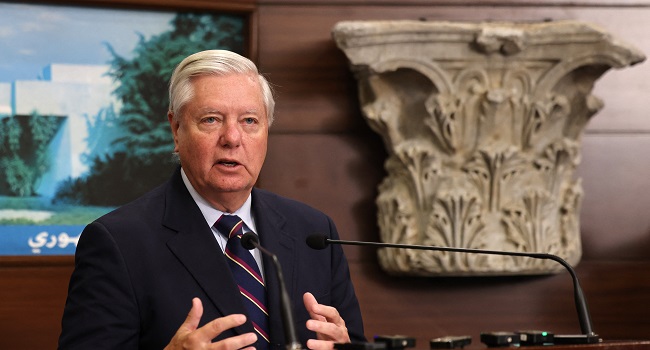
Prominent US Senator Lindsey Graham, a key ally of President Donald Trump, died on Saturday aged 71 following a “brief and sudden illness,” his office said.
“On the evening of Saturday, July 11, U.S. Senator Lindsey Graham passed away from a brief and sudden illness,” the Republican senator from South Carolina’s office said in a statement on his official X account.
“Senator Graham’s family appreciates prayers at this time and asks for privacy during this incredibly difficult period.”
Graham was first elected to the US House of Representatives in 1994, before being elected to the Senate in 2002.
He was later re-elected to the Senate in 2008, 2014 and 2020 and most recently served as chairman of the Senate Budget Committee.
South Carolina Governor Henry McMaster described Graham as “irreplaceable” in a post on X.
“The fiercest of fighters for South Carolina and America — and a loyal and steadfast friend,” McMaster said.
Graham was also a strong supporter of Israel and a hawkish backer of the Iran war.
Israeli President Isaac Herzog said the news of Graham’s death left him “shocked and heartbroken.”
“Senator Graham was a beacon of moral clarity and a true leader of the U.S.-Israel partnership,” he said in a post on X.
“We will never forget how he stood by the people of Israel in our most difficult moments, and we will remain eternally grateful for his sense of justice, truth, and loyalty,” Herzog said.
“The people of Israel mourn his loss, and I will miss my great friend very dearly.” (Channels)
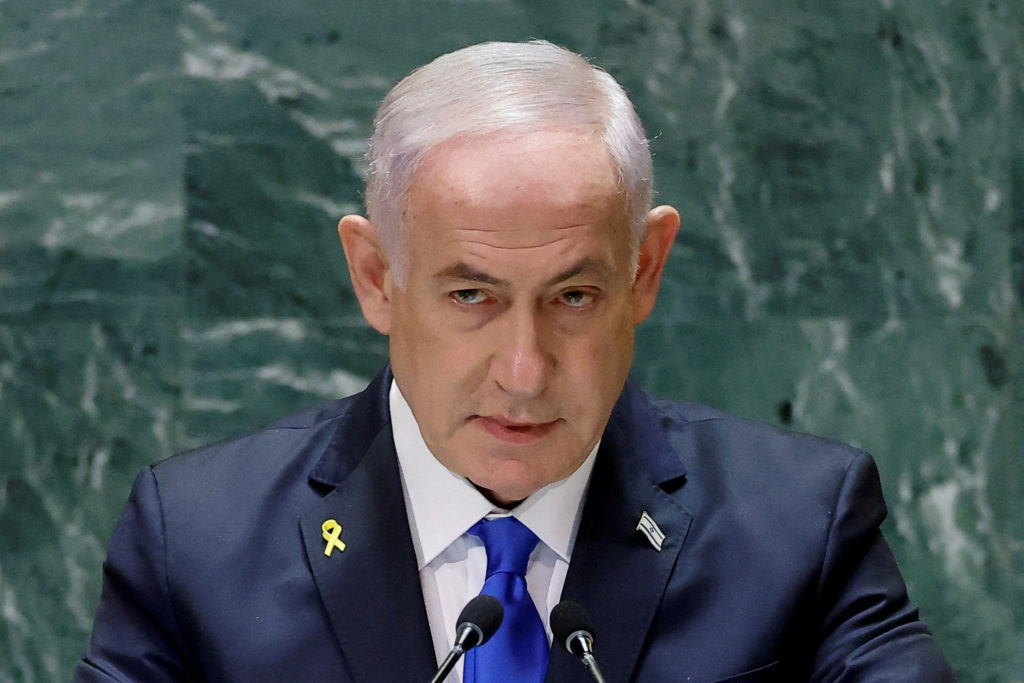
Israel’s prime minister has ordered attacks on the southern suburbs of Lebanon’s capital, Beirut, as its conflict with the Iran-backed armed group Hezbollah escalates.
Benjamin Netanyahu said “terror targets” in the Hezbollah stronghold of Dahieh would be struck in response to its rocket and drone attacks on Israeli civilians and other violations of a ceasefire announced in April that has failed to end the fighting.
Soon afterwards, there were traffic jams on roads out of the suburbs as thousands tried to flee to safety.
The conflict also poses a major obstacle to US efforts to forge a deal to end its war with Iran, with Tehran insisting that any ceasefire must include Lebanon.
The US has tried to separate events in Lebanon from the negotiations, but a US official said on Sunday that Secretary of State Marco Rubio had proposed a plan for “gradual de-escalation” there to Netanyahu and Lebanese President Joseph Aoun.
A senior Lebanese government official said it was relying on US mediation efforts to pressure Israel to end its own violations and prevent further civilian casualties.
In a joint statement released on Monday morning, the Israeli prime minister and Defence Minister Israel Katz said they had ordered strikes on Dahieh “following the Hezbollah terrorist organisation’s repeated and ongoing violations of the ceasefire in Lebanon and its attacks against our civilians and cities”.
“The Dahieh in Beirut is no different from the communities in northern Israel – if there is no calm in the north, there will be no calm in Beirut,” Katz warned.
Later, the Israeli military ordered Dahieh residents to evacuate for their own safety, without giving further details.
Families, crammed into cars stuffed with suitcases, blankets and whatever belongings they could carry, streamed out of the suburbs in response to Netanyahu and Katz’s statement, joining thousands fleeing towards the mountains as fears of further violence mounted.
Two parents and their two children were squeezed on to a single scooter. Other vehicles carried several generations packed together, with babies sitting on their parents’ laps, clutching small toys as they crawled through the gridlock.
Few drivers wanted to stop and talk, anxious not to hold up the traffic and focused on reaching safety.
But almost everyone who slowed down enough to speak said they were prepared to stand by Hezbollah, while also doing whatever they could to protect their loved ones from the threat of further Israeli attacks.
The Israeli military has struck Beirut twice since the ceasefire between Israel and Lebanon came into force on 16 April, most recently on Thursday. (BBC)
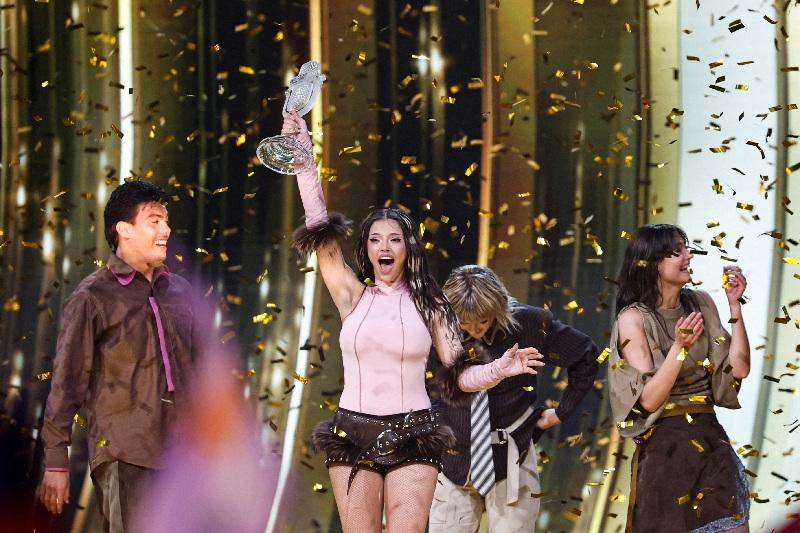
Bulgaria won the Eurovision Song Contest for the first time on Saturday in a final overshadowed by five countries’ boycott over Gaza, claiming a dramatic victory despite another big public vote for Israel that again secured it second place.
The garish and usually good-natured competition involving pop acts from countries across Europe and beyond, now in its 70th year, was plunged into crisis by a dispute over Israel’s military offensive in Gaza, a response to the Hamas-led attack on October 7, 2023.
The public broadcasters of heavyweights Spain, the Netherlands and Ireland, as well as Iceland and Slovenia, chose not to take part in protest at Israel’s participation.
Israel has alleged a global smear campaign against it. Its performance at the final was not, however, marred by any obvious protests, unlike Tuesday’s semifinal.
“This is unbelievable. I don’t even know what’s going on right now,” Bulgaria’s entrant Dara told a press conference after winning with her thumping, crowd-pleasing dance track “Bangaranga” that avoided politics altogether.
The song touches on themes of empowerment and surrendering to the night. It also left many puzzled as to its meaning.
“Bangaranga is a feeling that everybody gets in themselves. It’s the moment that you choose to be in love and not fear,” Dara said when asked to explain the song in the “green room” where artists await the results.
“This is a special energy … Once you feel (at) one with nature and your universe, you feel the harmony that you can be whatever you want to be and that everything is possible,” she said. (JapanToday)
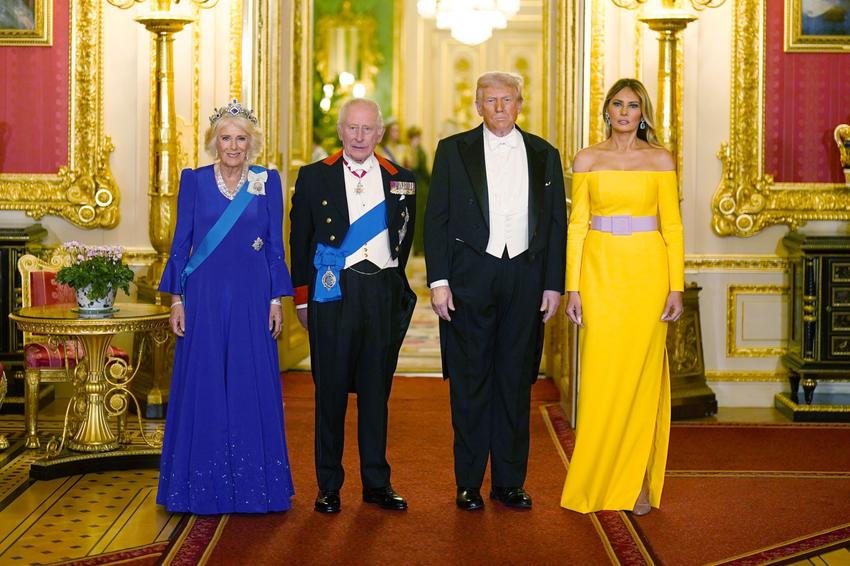
Britain’s King Charles III has used a speech in front of the United States Congress to pledge NATO unity and call for support for Ukraine amid Russia’s ongoing invasion.
The address on Tuesday came during the royal’s four-day visit to the US, with the US-Israel war with Iran, US President Donald Trump’s criticism of NATO, and trade tensions between the longtime allies looming large.
But Charles avoided any reference to specific frictions during his speech at the US Capitol, instead striking a light tone in his joke-heavy opening.
He praised what he called the shared history and values of the two countries, quipping at one point that Washington, DC was “a tale of two Georges”, the first US President George Washington and his ancestor, the UK’s King George.
He assured lawmakers, to laughs, he was not in the US “as part of some cunning rearguard action” in a delayed continuation of the Revolutionary War.
“I am here on this great occasion in the life of our nations to express the highest regard and friendship of the British people to the people of the United States,” the sovereign said to repeated standing ovations.
But amid broad themes of unity, more pointed messages lurked.
Charles did not directly address the US-Israel war with Iran or Trump’s outspoken criticism of NATO allies who have rejected joining Washington’s war efforts.
Instead, he praised support for NATO and the alliance’s invocation of its Article 5 collective defence treaty in the wake of the September 11, 2001 attacks.
“We answered the call together, as our people have done so for more than a century, shoulder to shoulder through two world wars, the Cold War, Afghanistan and moments that have defined our shared security,” he said.
He then turned to funding for Ukraine, an increasingly pointed issue in the Republican-controlled US Congress.
“Today, Mr Speaker, that same unyielding resolve is needed for the defence of Ukraine and her most courageous people,” he said, referring to House Speaker Mike Johnson.
In one instance, Charles hailed the “$430 billion in annual trade that continues to grow, the $1.7 trillion in mutual investment that fuels that innovation”.
Last week, Trump threatened to impose a “big tariff” on the UK if it did not drop a digital services tax on US tech companies.
At another point, Charles pointed to global environmental concerns.
“We ignore, at our peril, the fact that these natural systems, in other words, nature’s own economy, provide the foundation for our prosperity and our national security,” he said.
Trump has called climate change a “con job” and withdrew from the landmark Paris Agreement climate accords during his first and second terms. His administration has since pursued deregulation of fossil fuels and pivoted away from green energy, an approach embraced by many members of the president’s Republican party.
Other messages appeared to gently reference political trends in the US, where critics have accused Trump of using the Department of Justice for political retribution and of overturning long-standing norms of presidential authority.
Charles described the “common ideals” of the US and UK: “The rule of law, the certainty of stable and accessible rules, an independent judiciary, resolving disputes and delivering impartial justice”.
He also drew a throughline between the Magna Carta, the 13th-century document that established that the British king was subject to law, and constitutional and legal precedent in the US, calling it “the foundation of the principle that executive power is subject to checks and balances”.
The address came shortly before Trump was set to host Charles and his wife, Queen Camilla, for an official state dinner.
The pair were then set to visit New York and Virginia, before an official farewell ceremony at the White House on Thursday. (AlJazeera)
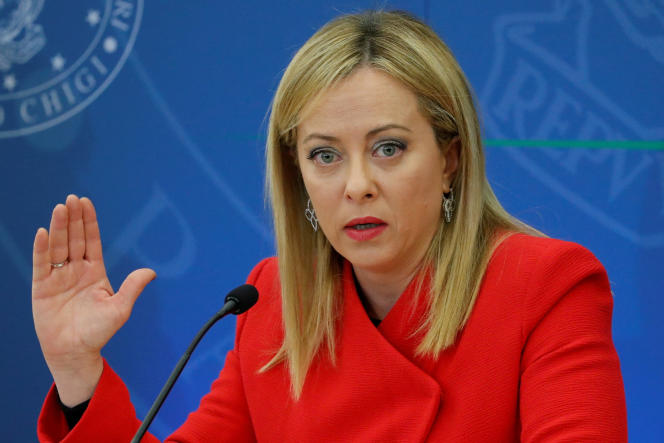
Italian Prime Minister Giorgia Meloni lacks courage and has let Washington down, U.S. President Donald Trump told an Italian newspaper on Tuesday, delivering a blunt public rebuke to one of his closest European allies.
Meloni had been a vociferous supporter of Trump, but she distanced herself from him after he went to war with Iran in February, and on Monday she openly criticized him for lashing out at Pope Leo, saying his verbal assault was “unacceptable”.
Trump responded in an interview with Corriere della Sera, saying Meloni was “very different from what I thought” and denouncing her for refusing to help re-open the Strait of Hormuz, which has been blocked by Iran.
“I’m shocked by her. I thought she had courage. I was wrong,” he was quoted as saying in the Italian-language article.
The White House declined to comment on the reported quotes. Meloni’s office also declined to comment, but politicians of all stripes rallied to her defence, including Foreign Minister Antonio Tajani, head of the coalition Forza Italia party.
“We are, and will remain, sincere supporters of Western unity and steadfast allies of the United States, but that unity is built on loyalty, respect and mutual frankness,” he said, applauding Meloni for denouncing Trump’s attack on the pope.
“On Pope Leo XIV, she said exactly what all of us Italian citizens think,” he added in a statement on X.
Trump’s criticism marked a dramatic change in tone toward Meloni, the only European leader to attend his inauguration in 2025 and whom he had hailed as “a great leader” just one month ago.
On Tuesday he accused her of failing to back U.S. efforts to tackle Iran’s nuclear program and guarantee energy flows through the Gulf, saying she wanted America “to do the job for her.”
Asked about her condemnation of his comments on Pope Leo, he said: “She is the one who is unacceptable, because she does not care whether Iran has a nuclear weapon and would blow Italy up in two minutes if it had the chance.”
The reprimand capped a tumultuous month for Meloni, who lost a crunch referendum on judicial reform in March and then saw her political ally Viktor Orban ousted from power in Hungary.
The U.S.-Israeli war in the Gulf threatens to upend the economy with surging energy costs and is hugely unpopular with Italians, putting Meloni on a collision course with Trump.
Seeking to distance herself from the conflict, she refused to let U.S. fighters use an air base in Sicily for combat operations in Iran last month and on Tuesday, she suspended a military cooperation pact with Israel.
Trump said the surge in energy prices should have encouraged Italy, which is heavily dependent on oil and gas imports, to help re-open the Strait of Hormuz.
“They pay the highest energy costs in the world and are not even ready to fight for the Strait of Hormuz… They depend on Donald Trump to keep it open,” Trump said. (JapanToday)
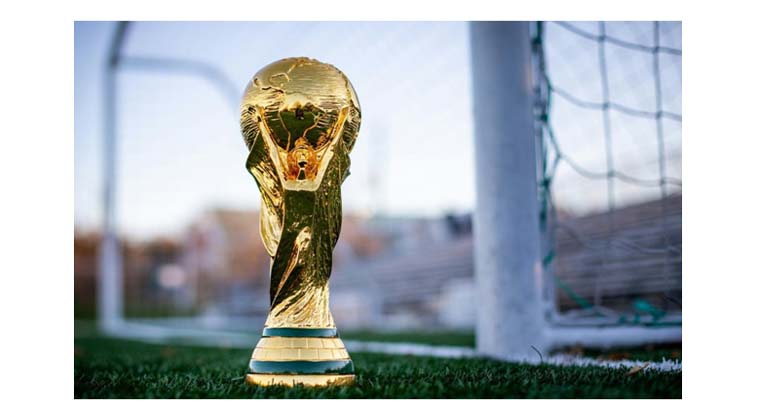
Iranian football had a good week on its troubled path to playing World Cup games in the United States in June.
A first face-to-face meeting with FIFA President Gianni Infantino since the US and Israel started a war against Iran on February 28 made genuine progress in football diplomacy at the end of a fraught month.
The Iranian football federation’s upbeat readout of the meeting in Turkiye made no mention of moving World Cup games to Mexico — a subject Infantino has repeatedly shut down for the past two weeks.
Infantino also offered tangible help for the squad to prepare for the World Cup in the next two months. Most Iran players are with clubs in the national league, which has shut down during the war.
Iran’s World Cup hosts in Arizona in the US said this week that they were pressing on with training-camp upgrades plus local and federal security plans – echoing the “stick to the schedule” mantra that FIFA has used.
Infantino stayed on in the Turkish coastal resort of Antalya to watch Iran rout Costa Rica 5-0 in a warm-up.
Clearly, the next two months are full of uncertainty for Iran’s team and for the nation itself amid mixed messages about US intentions for the war.
Still, talk of Iran boycotting football’s biggest event or seeking to move its games from Los Angeles and Seattle to Mexico has faded.
The Iranian delegation is due at its Tucson, Arizona training camp no later than June 10 for the June 11-July 19 tournament.
The war immediately cast doubt on Iran’s ability and willingness to fulfil a World Cup entry that it secured in March 2025 as one of the best teams in Asia.
In the first half of March, government officials variously suggested that the team could not play at the World Cup, that it could not travel to the US, and that FIFA should move Iran’s games to cohost Mexico.
A spokesman for the Iran Football Association did not respond on Thursday to a request for comment. Iran has not withdrawn its entry with FIFA.
Mexico’s President Claudia Sheinbaum appeared to suggest hosting Iran games was possible, without advocating for an unprecedented late change to the World Cup schedule.
US President Donald Trump added to the confusion with mixed messaging. He said, “I really don’t care” if Iran comes to the World Cup, then said that players were not safe, seeming to mean they were at risk from regime reprisals at home. He then went on to promise that the players would be treated like stars.
FIFA has been the most consistent commentator, and Infantino the only top soccer official openly talking about the delicate diplomacy: That Iran will come to the US, that the schedule will not change, and that no formal negotiations about Mexico had or would take place.
Iran, therefore, is on track to come to Arizona and start preparing for a first game on June 15 against New Zealand at the Los Angeles Rams’ SoFi Stadium in Inglewood. (AlJazeera)
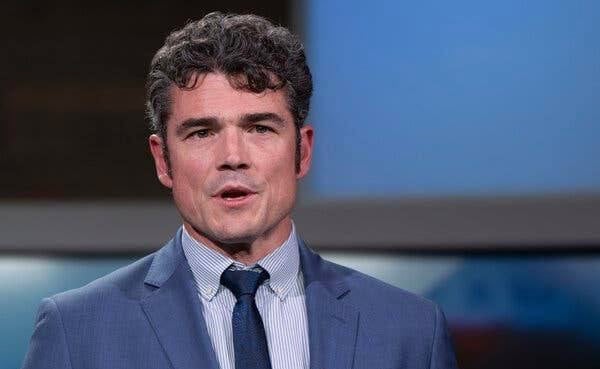
Joseph Kent, former director of director of the US National Counterterrorism Center (NCTC), is reportedly under probe by the Federal Bureau of Investigation (FBI) over allegations of classified information leaks.
The NCTC serves as the primary US government organisation for integrating and analysing terrorism-related intelligence from across federal agencies.
Kent resigned from his position on Tuesday over America’s involvement in the ongoing Iran conflict, saying he could not support the war against Tehran in good conscience.
“Iran posed no imminent threat to our nation, and it is clear that we started this war due to pressure from Israel and its powerful American lobby,” he said in a statement.
A report by Semafor said sources within FBI revealed that Kent is facing probe over allegations that he improperly shared classified information.
One of the sources said the probe predates Kent’s departure having been in progress for months.
According to the New York Times, the probe came after a coordinated Trump administration effort to discredit Kent as untrustworthy and disloyal.
On February 28, Israel launched what they called pre-emptive missile strikes on Iran. Hours after the announcement, President Donald Trump said the strikes were in collaboration with the United States.
Iran has continue to exchange strikes and counterstrikes with the US-Israel fighters. (TheCable)
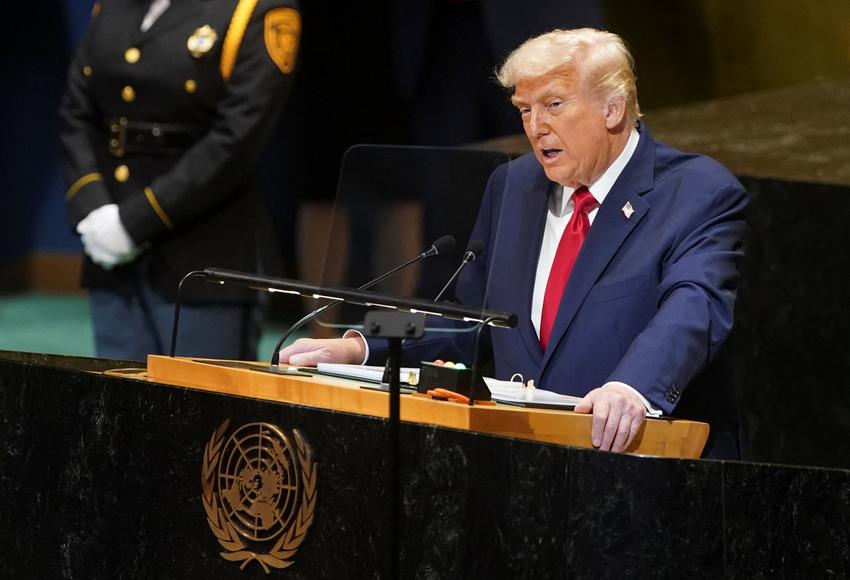
President Donald Trump said he did not think it would be “appropriate” for the Iranian soccer team to attend this year’s World Cup, co-hosted by the United States, and cited safety concerns as a reason on Thursday while the countries remained embroiled in a war.
“The Iran National Soccer Team is welcome to The World Cup,” Trump wrote on his social media site, “but I really don’t believe it is appropriate that they be there, for their own life and safety.”
Iranian leaders said earlier this week that it’s “not possible” for the country to participate in the World Cup.
Trump’s message appears to depart somewhat from what the Republican president relayed Tuesday at the White House to FIFA President Gianni Infantino, who later publicly said that Trump assured him the Iranian players and coaches would be welcome.
A White House official, who insisted on anonymity to discuss private conversations, had confirmed Trump’s message to Infantino about Iran’s participation.
On Thursday, the White House did not immediately clarify what Trump meant by “their own life and safety,” such as whether he anticipated threats against them while in the United States after U.S. and Israeli strikes on Iran that began Feb 28.
Iran, one of 48 teams in the tournament, is scheduled to play in Inglewood, California, against New Zealand on June 15 and Belgium on June 21 before finishing group play in Seattle against Egypt on June 26. The U.S. is hosting the tournament with Canada and Mexico from June 11 to July 19.
Iran’s soccer federation has planned to take the team in June to a tournament base camp in Arizona, at the Kino Sports Complex in Tucson.
Since June, Iran has been subject to a travel ban into the U.S. as part of the Trump administration’s immigration crackdown. But athletes and coaches from the target nations are exempt, which means the Iranian team would be allowed to enter the U.S.
But there are also likely fears from Iranian soccer players about playing in a tournament abroad where they could be feted by an anti-regime diaspora while their families face threats back home.
The Iranian women’s soccer team, which arrived in Australia to play at its Asian Cup tournament before the U.S. and Israeli bombing attacks on Iran started, did not sing the Iranian national anthem before its first game. That was widely interpreted as a gesture of protest or an act of mourning. Several members of the team stayed in Australia on humanitarian visas afterward.
At the 2022 men’s World Cup, played in Qatar, the Iranian team did not sing the anthem before a game against England and did not celebrate the two goals scored in a 6-2 loss. At that time, Iran was in turmoil several weeks after the death in police custody of 22-year-old Mahsa Amini, who had been detained for allegedly violating a strict Islamic dress code.
FIFA’s own evaluation was “low risk” for World Cup safety and security plans proposed by the U.S., Canada and Mexico soccer federations, which are guaranteed by their governments. Trump has often taken credit for “winning” the World Cup hosting rights in 2018, when the three neighbors easily beat Morocco in a vote by FIFA member federations.
“All parties have experience of hosting major sports events on a regular basis and established arrangements are in place for managing security and safety at stadiums and for high-profile individuals,” FIFA’s in-house inspection team wrote eight years ago.
Iranian athletes who previously defied the Islamic regime have left the country to continue their careers.
Iran’s first female athlete to win an Olympic medal, Kimia Alizadeh, a bronze medalist at the 2016 Rio de Janeiro Games in taekwondo, criticized wearing the mandatory hijab headscarf. She competed for the Olympic refugee team at Tokyo in 2021 and for Bulgaria at the 2024 Paris Olympics.
Judoka Saeid Mollaei went into hiding in Germany after a dispute with Iranian team officials at the 2019 world championships. Mollaei, the defending champion, said he was ordered to lose a bout to avoid a potential gold medal match against an Israeli opponent. He got Mongolian citizenship and took silver at the 2020 Tokyo Olympics. (JapanToday)
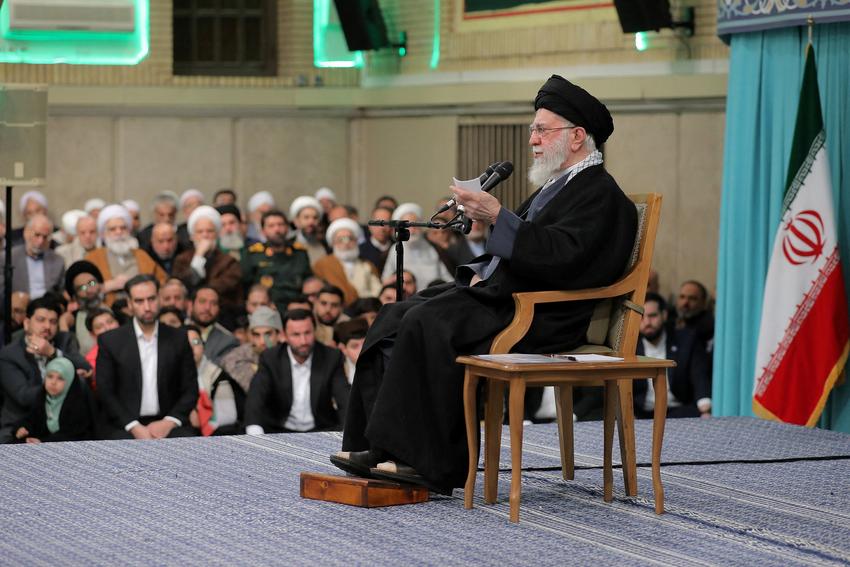
Iran on Monday named Mojtaba Khamenei to succeed his father Ali Khamenei as Supreme Leader, signaling that hardliners remain firmly in charge in Tehran a week into its conflict with the United States and Israel.
Mojtaba, a mid-ranking cleric with influence inside Iran’s security forces and vast business networks under his father, had been seen as a frontrunner in the lead up to the vote by the assembly, a body of 88 clerics charged with choosing the new leader after Ali Khamenei.
“By a decisive vote, the Assembly of Experts, appointed Ayatollah Seyyed Mojtaba Hosseini Khamenei as the third Leader of the sacred system of the Islamic Republic of Iran,” the assembly said in a statement issued just after midnight Tehran time.
The position gives Mojtaba the final say in all matters of state in the Islamic Republic.
Mojtaba’s appointment will likely draw the ire of U.S. President Donald Trump, who said on Sunday that Washington should have a say in the selection. “If he doesn’t get approval from us, he’s not going to last long,” he told ABC News. Israel, ahead of the announcement, threatened to target whoever was chosen.
Mojtaba’s father, Supreme Leader Ali Khamenei, was killed in one of the first strikes launched against Iran more than a week ago.
The U.S. military on Sunday reported a seventh American has died from wounds sustained during Iran’s initial counter-attack a week ago, a day after Trump presided over the return to the United States of the remains of the six others who died.
The U.S.-Israeli attacks have killed at least 1,332 Iranian civilians and wounded thousands, according to Iran’s U.N. ambassador.
As Trump pressed for an “unconditional surrender,” Mohammad Bagher Qalibaf, Iran’s parliament speaker, said Tehran was not seeking a ceasefire to the war and would punish aggressors.
Israel continued to target senior Iranian figures, including Abolqasem Babaian, the recently appointed head of the military office of the supreme leader, saying he was killed in a Saturday strike. (JapanToday)
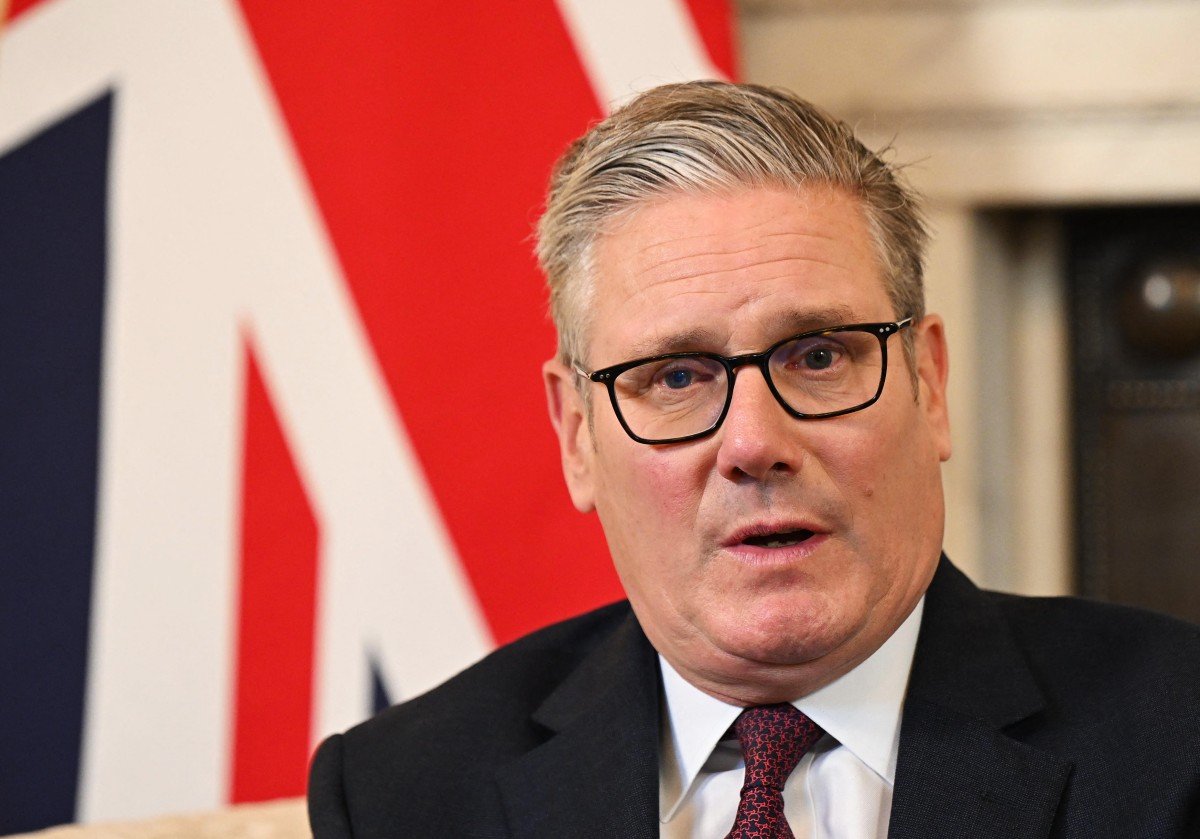
Sir Keir Starmer has defended the government’s approach to the conflict in Iran, saying protecting British nationals is his “number one priority”.
It comes after President Trump criticised the prime minister for refusing to allow the use of UK bases in the initial US-Israel strikes on Saturday, saying he is “no Winston Churchill”.
During Prime Minister’s Questions Conservative leader Kemi Badenoch accused Sir Keir of “asking our allies to do what we should be doing ourselves” by not taking “offensive action” after British bases in Bahrain and Cyprus were attacked.
But the PM said he was not prepared for the UK to join a war without “a lawful basis and a viable, thought-through plan”.
On Sunday the UK agreed to a US request to use British military bases but only for defensive strikes on Iranian missile sites.
However, Trump has responded angrily to Sir Keir’s refusal to be involved in the initial strikes, describing the decision as “shocking” and saying the UK-US relationship was “not what it was”.
Dismissing suggestions the relationship between the two countries had been weakened, Sir Keir said US planes operating out of British bases was “the special relationship in action” not “hanging on to President Trump’s latest words”.
Sir Keir said: “We’re taking action to reduce the threat with planes in the sky in the region intercepting incoming strikes, deploying more capability to Cyprus, and allowing US planes to use UK bases to take out Iran’s capability to strike.
“What I was not prepared to do on Saturday was for the UK to join a war unless I was satisfied there was a lawful basis and a viable, thought-through plan. That remains my position.”
The PM said the government had also been pre-deploying capabilities in the region for a number of weeks, including radar systems, ground-based air defence, counter-drone systems and F35 jets.
He added that wildcat helicopters with anti-drone capabilities would be in Cyprus this week, with a Royal Navy warship, HMS Dragon, also deployed to the region.
However, Badenoch accused the PM of “catching arrows rather than stopping the archer” in his approach.
“I would say to Labour MPs, we are in this war whether they like it or not. What is the prime minister waiting for?” she added.
She pointed out HMS Dragon was still in Portsmouth and the government “should be doing more”.
The Conservative leader also criticised the government for not investing more in defence.
In response, Sir Keir accused the Conservatives of cutting the defence budget, missing Army recruitment targets and leaving forces “hollowed out” when they were in government.
Following PMQs, western officials said HMS Dragon was expected to sail from Portsmouth next week, with the warship currently being loaded with ammunition.
Two Royal Navy Wildcat helicopters, armed with Martlet missiles capable of shooting down drones, are expected to arrive in Cyprus separately and sooner.
A western official said that so far US bombers have not used the British bases of Diego Garcia or RAF Fairford – but said the UK was ready to accept them. The official said he expected them to arrive within the next few days.
Earlier, former Conservative Foreign Secretary Jeremy Hunt said he thought the prime minister had “made a big misjudgement” by not allowing the US to use British military bases for offensive strikes on Iran.
He told BBC Radio 4’s Today programme that international law was “not settled on this issue” and depended on whether there was an imminent risk of attack from Iran.
Hunt said the Americans had a significant role in defending Europe and in this situation, “to weaken our alliance with the United States was a big mistake”.
“President Trump is not interested in that rules-based order,” Hunt said.
“He’s said so absolutely explicitly. And we have to recognise the brute strength of the American military is something we depend on now in Europe and will depend on for at least a decade.”
Gen Sir Richard Shirreff, a retired British Army officer, said the UK “has got to focus on its interests” because “America has made it clear it’s not going to underwrite European security”.
Sir Richard, Nato’s former deputy supreme allied commander Europe, said it was in Britain’s interest to protect its military bases abroad.
“There is absolutely a case for getting involved,” Sir Richard said. “But I would not get involved in any way, shape or form in an operation where the end-stage is not clear.
“There is clearly no strategy and yet again we have an American president who has launched a war of choice with no clear understanding where this thing is going to end.”

 English