
Posted on Leave a comment

BBC upholds complaints over racial slur in Baftas broadcast

The broadcast of a racial slur that was shouted during the Bafta Film Awards breached the BBC’s editorial standards, the corporation’s executive complaints unit (ECU) has ruled.

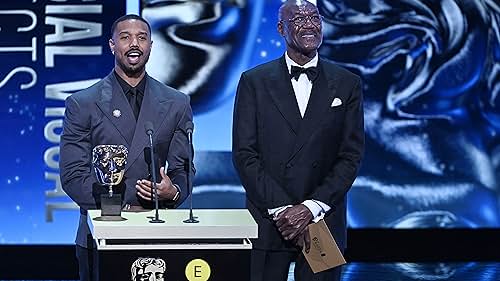
A Tourette syndrome campaigner shouted an involuntary racial slur while actors Michael B Jordan and Delroy Lindo were presenting one of the categories at the event in February.

The shout was not edited out of the subsequent TV broadcast, which aired on BBC One on a two-hour delay, and the ceremony remained available to stream on iPlayer until the morning after.

On Wednesday, the BBC’s chief content officer Kate Phillips said the ECU “found this should not have made it to air and it was a clear breach of our editorial standards”. However, she noted, it also “found the breach was not intentional”.

The ECU received “a large number of complaints” about the BBC’s Baftas coverage, and upheld those relating to editorial standards on harm and offence.

Last month, outgoing director general Tim Davie said the BBC “profoundly regrets” what happened, adding that the team editing the ceremony had not heard the word and did not intentionally leave it in.

The ECU’s findings said: “The ECU found that the inclusion of the n-word in the broadcast (which was also streamed live on iPlayer) was highly offensive, had no editorial justification and represented a breach of the BBC’s editorial standards, but that the breach was unintentional.”

Phillips explained that “the production team did not hear the n-word at the time it was said and therefore no decision was taken to leave the word within the broadcast”.

She added: “The ECU accepted this was a genuine mistake, especially as the team did correctly identify and edit out a subsequent use of the same word, in line with the protocols that were agreed in advance of the event regarding offensive and unacceptable language.”

The ECU said leaving the coverage on iPlayer until the Monday morning was also a “serious mistake” and breached guidelines.

“The fact that the unedited recording remained available for so long aggravated the offence caused by the inadvertent inclusion of the n-word in the broadcast,” its report said.

Phillips said: “There was a lack of clarity among the team present at the event as to whether the word was audible on the recording. This resulted in there being a delay before the decision was taken to remove the recording from iPlayer.

“The ECU has been clear that this was a serious mistake and commented that the fact the unedited version stayed up overnight made the severe impact of the inadvertent inclusion of the n-word worse.”

Phillips said the BBC “must learn from our mistakes and ensure our processes are as robust as they can be”, and set out measures to improve pre-event planning, production at live events, and the iPlayer takedown processes.

She added that she had written to Lindo, Jordan and Sinners co-star Wunmi Mosaku, as well as Tourette’s activist John Davidson, to “apologise directly”.

Best supporting actress winner Mosaku told Entertainment Weekly she had “no hard feeling” towards Davidson, but that the BBC’s failure to edit out slurs had “tainted” the event and later kept her awake at night and brought tears to her eyes.

Davidson said the BBC should have “worked harder to prevent anything that I said” from being aired, and questioned why he had been seated near a microphone.

He attended the ceremony because a film based on his life story, I Swear, was among the nominees, and went on to win three awards.

Director Kirk Jones said Davidson was “let down” by how the events unfolded.

Culture secretary Lisa Nandy called the broadcast “completely unacceptable and harmful”, while Conservative Party leader Kemi Badenoch said the BBC had made “a horrible mistake”.

Bafta ceremony host Alan Cumming apologised after the “trauma-triggering” show.

Elsewhere, the ECU dismissed “many complaints” about the BBC editing the words “Free Palestine” out of an acceptance speech.

Director Akinola Davies Jr made the remark as he ended his speech to accept the prize for best debut for My Father’s Shadow.

Davies Jr and his brother Wale, the film’s writer, spoke on stage for two-and-a-half minutes, but their speeches were edited to about one minute for broadcast, which the BBC said was due to time restrictions.

The ECU supported that explanation, concluding: “The production team’s decision did not hinge on considerations of impartiality. The principal consideration was that approximately three hours of recorded material had to be edited to fit a two-hour transmission slot.” (BBC)
Posted on Leave a comment

Actor awards 2026: Michael B Jordan, Jessie Buckley and Catherine O’Hara among big winners

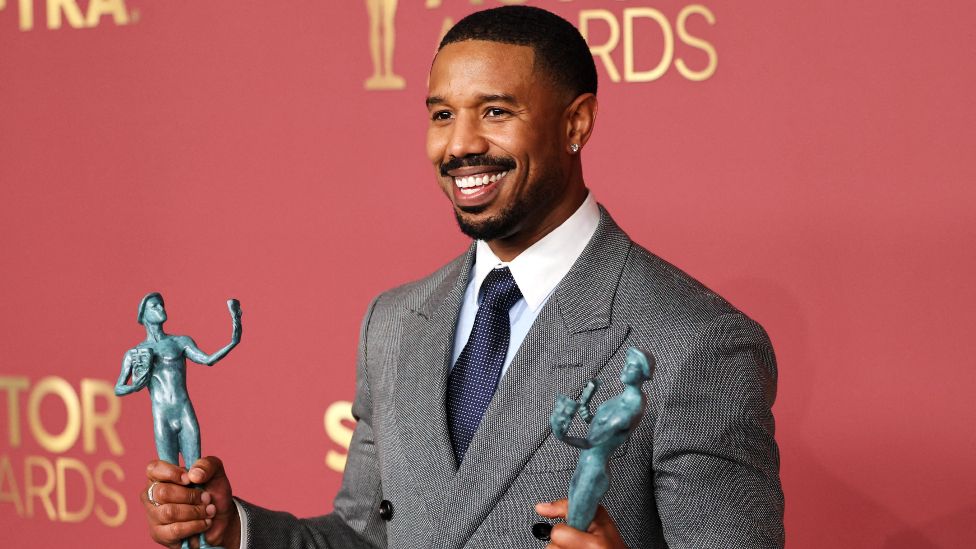
Michael B Jordan, Jessie Buckley and the late Catherine O’Hara were among the big winners at this year’s newly titled Actor awards.

Previously known as the Screen Actors Guild awards, the Actors are voted on by a membership of more than 160,000 actors. The name change was to provide “clearer recognition in terms of what the show is about”.

Jordan beat out the hotly predicted favourite Timothée Chalamet for the best lead male actor award, for his dual role in acclaimed vampire thriller Sinners. Jordan paid tribute to director and longtime collaborator Ryan Coogler, and the “love and support” from the many actors in the room who watched him grow up in the spotlight. This weekend also saw Jordan pick up the NAACP image award for entertainer and actor of the year.

The big screen ensemble award went to the cast of Sinners, also including Delroy Lindo and Wunmi Mosaku. “This project is anointed and from that standpoint, we’re all anointed to be part of this incredible journey,” Lindo said on behalf of the cast.

Buckley followed her wins at the Baftas and Golden Globes with another best lead female actor award for her performance in Chloé Zhao’s semi-fictionalised period drama Hamnet, beating Emma Stone and Rose Byrne. “I have been categorically changed by so many people in this room and beyond,” she said on stage.

Sean Penn was named best supporting male actor for his performance in One Battle After Another after also winning the Bafta last weekend. The actor was not at the ceremony to accept his award.

Weapons villain Amy Madigan enjoyed a surprise victory, beating favourite Teyana Taylor to take home the award for supporting female actor. “It’s such an honour to be here, I’ve been doing this for a long ass time,” she said, adding: “As you can tell, I’m nervous and overwhelmed and just so happy.”

After major wins at the Emmys and Golden Globes, Apple’s freshman industry series The Studio also dominated tonight’s comedy trophies. It picked up three awards, including a win for comedy ensemble against competition from previous winners The Bear and Only Murders in the Building.

The Studio’s co-creator Seth Rogen was also named best male actor for his role in the show, beating co-star Ike Barinholtz, while the late Catherine O’Hara, who died in January this year, was given a rare posthumous award for her performance.

Rogen collected on her behalf to a standing ovation from the audience, calling it a “very sad honour”.

“I know she would have been honoured to receive this award from her fellow performers,” he said, praising her “ability to be generous and kind and gracious while never ever minimising her own talents and her own ability to contribute to the work she was doing”.

The drama ensemble award was given to the cast of breakout medical drama The Pitt, beating The White Lotus and Severence. “I’ve never been more proud of a group of people in my life,” star Noah Wyle said. “We’re so grateful for this, I can’t even tell you.”

Wyle, who had previously won with the ensemble of ER four times in the 1990s, was also named best male actor in a drama series and used his speech to praise the work of labour unions.

Netflix’s smash hit drama Adolescence continued its impressive awards run, with a win for Owen Cooper as best male actor in a limited series. At 16, he’s become the youngest ever winner in this category, after Emmy and Golden Globe wins. The actor, who recently appeared in Wuthering Heights, wasn’t in attendance to accept.

Michelle Williams beat Cooper’s co-star Erin Doherty to win best female actor in a limited series for her role in acclaimed comedy drama Dying for Sex, her second Actor award after winning for Fosse/Verdon in 2020. Doherty had already won an Emmy and a Golden Globe for her performance.

The Diplomat’s Keri Russell was a surprise first-time winner of the female actor in a drama series award, beating Pluribus’s Rhea Seehorn and The White Lotus actors Parker Posey and Aimee Lou Wood.

Harrison Ford was the recipient of this year’s life achievement award, presented to him by Woody Harrelson who called him “a true renaissance man” in his introduction.

“I feel incredibly grateful for this kind attention but to be clear, I’m also quite humbled,” Ford said onstage, joking that it was a prize for “being alive”. He later added, in an emotive speech, that he sees himself as “a lucky guy – lucky to have found my people, lucky to have work that challenges me, lucky to still be doing it and I don’t take that for granted.”

The year’s stunt ensemble awards were won by Mission: Impossible – The Final Reckoning and The Last of Us.

The ceremony, which aired live on Netflix, was hosted by Nobody Wants This actor Kristen Bell, who kicked the night off by saying: “I think the world could use some levity right now so we’re gonna keep things fun tonight.”

The night was light on political speeches but on the red carpet, wearing an “ICE out” pin, Wunmi Mosaku called ICE “atrocious”. “I don’t believe in what this administration is inflicting on the people in this country,” she said.

Later in the evening, Sag-Aftra president and Lord of the Rings actor Sean Astin offered “a sincere prayer for peace” on behalf of the acting community.

Last year’s winners included Timothée Chalamet, Demi Moore, Kieran Culkin and Zoe Saldana for film and Anna Sawai, Jessica Gunning, Jean Smart and Colin Farrell for television. (Guardian)