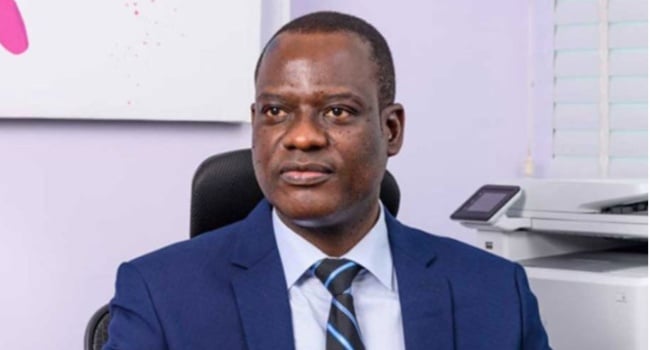
Taiwo Oyedele, minister of state for finance-designate, says at least 12 states have enacted the tax harmonisation law.
The tax harmonisation law is part of the broader tax reform agenda introduced by the administration of President Bola Tinubu.
On January 1, the president said harmonised tax laws will boost the federal government’s capacity to fund infrastructure projects.
According to NAN, Oyedele spoke on Wednesday in Abuja during the graduation ceremony of 5,900 young entrepreneurs trained by the MTN Foundation on entrepreneurship, business and innovation.
He said 13 other states have already presented the proposed law before their respective state houses of assembly for consideration, while others are at different stages of implementing the reforms.
The minister-designate added that the tax reforms initiated by President Bola Tinubu are designed to modernise Nigeria’s fiscal framework, support business growth, protect vulnerable groups and reset the country’s economic structure.
Oyedele said the states tax harmonisation law seeks to eliminate nuisance taxes and prevent harassment of citizens under any guise.
He added that the law will simplify the tax system, protect taxpayers’ rights and address unfair tax treatment.
“Transparency, fiscal discipline, responsibility and accountability remain critical pillars of an effective tax system,” he said.
On June 26, 2025, Tinubu signed the four tax reform bills into law.
The president said the reforms are not about raising taxes, but about creating a structural reset, driving harmonisation and strengthening the social contract. (TheCable)
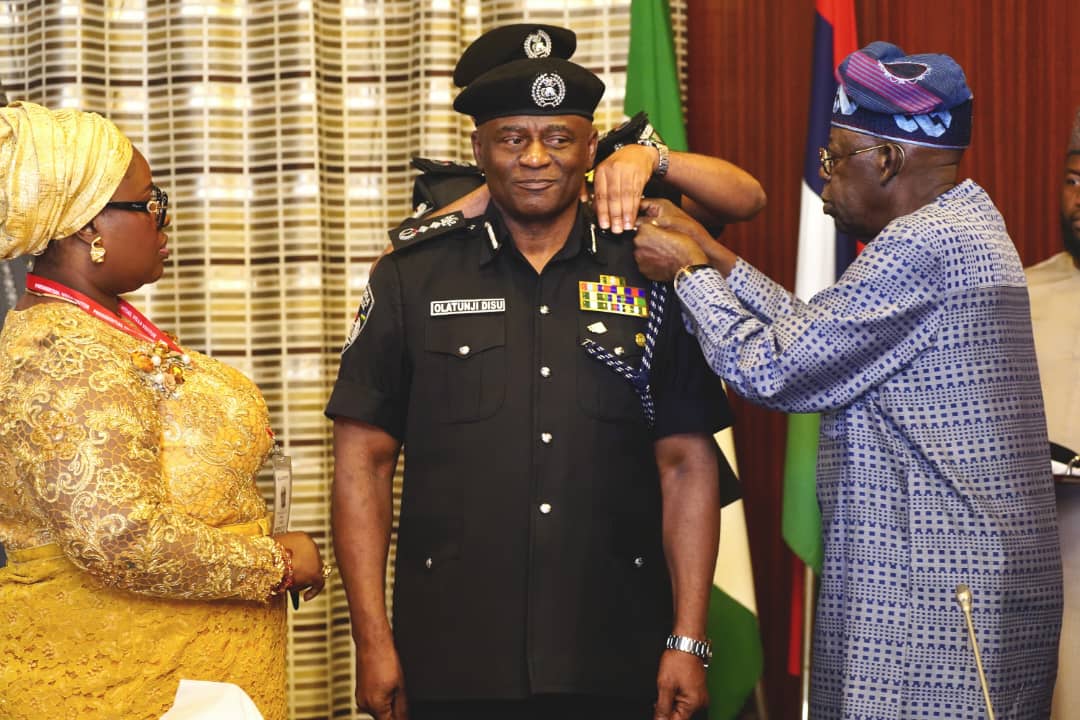
President Bola Tinubu has decorated Acting Inspector-General of Police, Mr Tunji Disu with his new rank at the State House, Abuja.
The decoration ceremony, which followed his swearing-in, took place at the first floor office of the President during an expanded session attended by top government and security officials including National Security Adviser (NSA), Nuhu Ribadu; Chief of Staff to the President, Hon Femi Gbajabiamila; Secretary to the Government of the Federation, Senator George Akume, and the immediate past IGP, Kayode Egbetokun.
Tinubu, who pinned the new insignia on Disu’s uniform commended the outgoing IGP Egbetokun for his service to the nation.
Disu’s appointment came just 48 days before his scheduled retirement on April 13, 2026, when he would have reached the mandatory retirement age of 60 years.
However, under the amended Police Act, which allows Inspector-General of Police to serve a four year tenure regardless of age, Disu may remain for the next couple of years.
Until his elevation, Disu served as Assistant Inspector-General of Police at the Force Criminal Investigation Department (FCID) Annex, Alagbon, Lagos.
He previously held strategic roles, including Commissioner of Police in Rivers State and the Federal Capital Territory (FCT), Abuja. (ThisDay)
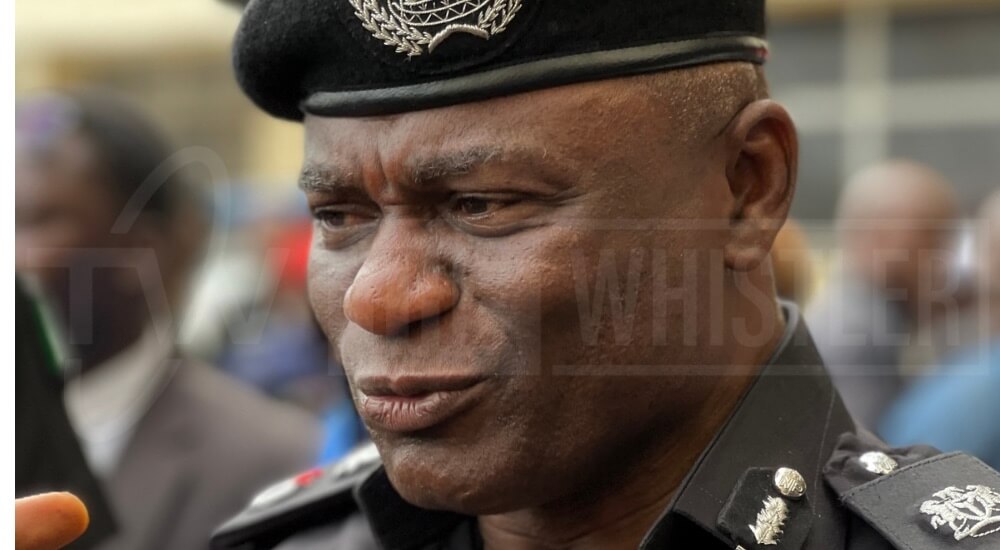
A source within the Police Service Commission has told The Guardian that Kayode Egbetokun has been removed as the 22nd Inspector-General of Police by President Bola Tinubu.
According to the source, Egbetokun is expected to be replaced by Tunji Disu, an Assistant Inspector-General of Police recently posted to oversee the Force Criminal Investigation Department (FCID) Annex, Alagbon, Lagos.
The source disclosed that Egbetokun was at the Presidential Villa on Monday, February 23, 2026, where he was reportedly directed to begin preparations for the handover of office.
Egbetokun’s tenure as Inspector-General was marked by a series of controversies, with his extended stay in office, despite statutory retirement provisions, forming the centrepiece of public criticism.
His tenure was extended beyond the mandatory retirement threshold of 60 years of age or 35 years in service, a move that drew sustained criticism from civil society groups, legal experts and commentators. Critics argued that the extension violated established police service rules and undermined institutional discipline.
Among the controversies that trailed his leadership were allegations surrounding the promotion of Bukola Kuti to the rank of Assistant Commissioner of Police. Critics alleged that her perceived closeness to the Inspector-General conferred undue advantage, fuelling accusations of favouritism and nepotism within the Nigeria Police Force. These allegations were denied by police authorities.
Further controversy arose following claims that ₦100 million from Anambra State’s security vote was traced to the bank account of Victor, Egbetokun’s son. The allegation sparked widespread public concern over the possible diversion of state security funds for personal benefit.
Rather than permitting an independent investigation into the claims, critics alleged that police authorities deployed institutional resources to pursue legal action against individuals and media platforms that reported the matter, deepening suspicions of corruption and abuse of office. Police authorities, however, maintained that the reports were defamatory.
During this period, Egbetokun’s office was repeatedly in the news over legal actions against journalists and activists. He initiated multiple charges against activist Omoyele Sowore and SaharaReporters after Sowore publicly described him as an “illegal IGP.”
The dispute escalated into protracted legal battles, with the Federal High Court issuing injunctions restricting further publications relating to Egbetokun and members of his family. Critics interpreted these court actions as attempts to stifle dissent and weaken press freedom.
Following additional reports on alleged promotions and financial improprieties, further court orders were issued restraining media organisations from publishing reports concerning Egbetokun, his son Victor, and Bukola Kuti.
Observers argued that, rather than addressing the allegations through transparent and independent investigations, the police leadership appeared more focused on legal countermeasures against critics—reinforcing public perceptions of an embattled Inspector-General relying on state authority to defend personal and professional interests. (Guardian)
The Lagos State chapter of the All Progressives Congress (APC) has described the outcome of the recent by-elections in Rivers and Kano States, as well as the Federal Capital Territory (FCT), as a clear referendum on the presidency of Bola Tinubu.
In a statement on Sunday by its spokesman, Mogaji Seye Oladejo, the party expressed appreciation to the people of the affected constituencies and Nigerians at large for what it termed overwhelming support for the ruling party.
According to the Lagos APC, the resounding victories recorded by its candidates reaffirm the electorate’s confidence in President Tinubu’s leadership and the administration’s Renewed Hope Agenda.
The party maintained that the results demonstrate public endorsement of ongoing economic reforms, infrastructural expansion, and institutional strengthening initiatives at both federal and state levels.
“The outcome of the by-elections stands as a clear and unmistakable referendum on the leadership of President Bola Ahmed Tinubu and the progressive ideals guiding governance in our nation,” the statement read.
The party argued that despite what it described as attempts by opposition elements to misrepresent the direction of the country, voters delivered a decisive verdict at the polls. It added that the results reflected Nigerians’ recognition of what it called bold leadership and courageous reforms, as well as an understanding that nation-building requires patience and continuity.
The Lagos APC further stated that the elections underscored what it described as the limited electoral impact of opposition rhetoric and social media activism, noting that digital prominence did not translate into votes at the ballot box.
It described the victories as a major boost for the ruling party ahead of the 2027 general elections, expressing confidence that the momentum generated by the by-elections signals broader national support for the APC.
The party also commended the Independent National Electoral Commission (INEC) for conducting the elections and praised security agencies for maintaining peace and order throughout the process, thereby enabling citizens to exercise their civic responsibilities in a secure environment.
Oladejo lauded party faithful, campaign teams, and volunteers for their dedication and grassroots engagement, which he said contributed significantly to the outcome.
He reiterated the Lagos APC’s unwavering support for President Tinubu and called on all Nigerians, including members of the opposition, to collaborate in building a stronger, more prosperous, and united nation. (Guardian)
The Academic Staff Union of Polytechnics, Federal Polytechnic, Ado-Ekiti Chapter, has lauded the Federal Government for the expansion of Ado-Ijan-Ikare Road in Ado-Ekiti, Ekiti State, which is the road leading to the institution.
The lecturers, in a statement by the ASUP-FPA Chairman, Caleb Adeosun, and the Publicity Secretary, Oyewale Oyelola, made available in Ado Ekiti on Thursday, also appreciated the efforts of the senators, Opeyemi Bamidele (Ekiti Central), Yemi Adaramodu (South) and Cyril Fasuyi (North), “for facilitating the expansion of the major access road to the polytechnic, which havre been in a deplorable state for many years”.
“ASUP-FPA appreciates the efforts of the three senators representing Ekiti State at the National Assembly who amplified our concerns over the deplorable state of the polytechnic road.
“Particularly, we appreciate the Senate Leader, Senator Opeyemi Bamidele, who invited union leaders to a meeting at his constituency office in March 2024 and gave the polytechnic community assurance after we staged a protest over the deplorable state of Ado–Ijan-Ikare Road,” the lecturers stated.
They, however, urged the senators “to continue to perform their oversight functions and ensure the delivery of quality work by the contractor handling the project”.
The union, while appreciating the senators representing the state for the ongoing expansion work, said, “We know their efforts led to the development and steady progress on the road.
“Our union does not only agitate or criticise. As a progressive-minded union, we also applaud the government when we deem it fit”, the lecturers stated.
The union also praised Ekiti State Governor, Biodun Oyebanji, for the construction of the Ring Road linking the Ado Ekiti – Ijan Road to Afao – Iworoko – Ado Ekiti Road.
They said, “The Ring Road is a great relief to staff members of the polytechnic because it has reduced traffic on the institution’s road and travel time.
“The union also appreciated the Founder of Afe Babalola University, Aare Afe Babalola, for “consistently using his resources to carry out palliative rehabilitation on the Ado – Ijan – Ikare Road over the years”.
Recall that recently, contractors began rehabilitation work on the Ado – Ijan axis of the Ado – Ijan – Ikare Road, a federal road linking Ekiti State with states including Ondo and Kogi, which has been in deplorable condition over the years.
Establishments including Federal Polytechnic, Ado Ekiti, ABUAD, Ekiti Knowledge Zone and Ekiti Cargo International Airport are situated along the Ado – Ijan axis of the federal road. (Punch)
Minister of the Federal Capital Territory, Nyesom Wike, has hailed President Bola Tinubu for the prompt signing of the Electoral Act (Amendment) Bill 2026 into law.
Wike, in a statement signed by his Senior Special Assistant on Public Communications and Social Media, Mr Lere Olayinka, in Abuja on Wednesday, described the development as “apt.”
The News Agency of Nigeria reports that Tinubu on Wednesday signed the Act into law, which was passed by the National Assembly on Tuesday.
The amendment comes amid intense public debate over the electronic transmission of election results in real time.
The harmonised report of the bill, including the contentious Section 60(3), was passed by both chambers of the National Assembly.
Wike described Tinubu’s assent as a demonstration of his commitment to deepening the democratic process by making elections more credible.
According to him, the development has ended unnecessary protests over the Electoral Act.
“Democracy has always been a work in progress due to the evolving democratic process. However, we will keep getting better by always looking into the Electoral Act with a view to strengthening our democratic process.
“I, therefore, congratulate Mr President and the National Assembly members for playing their roles in this dispensation to make democracy stronger.
“Particularly, I commend the President for not keeping Nigerians waiting for more than 24 hours before signing the Electoral Act Amendment Bill into law,” he said. (Punch)
President Bola Tinubu on Wednesday signed the Electoral Act 2026 (Amendment) Bill into law, setting the legal framework for the conduct of the 2027 general elections just days after the Independent National Electoral Commission (INEC) unveiled the official election timetable.
The brief signing ceremony was held at the State House, Abuja, at about 5:00 p.m., with principal officers of the National Assembly and senior government officials in attendance.
The amendment bill was passed by both chambers of the National Assembly on Tuesday following weeks of legislative consideration and public engagement on key electoral reforms.
The new law is expected to introduce adjustments aimed at strengthening transparency, improving logistics and addressing operational gaps observed in previous election cycles.
The assent comes against the backdrop of heightened national debate over the electronic transmission of election results, which has remained one of the most contentious aspects of Nigeria’s electoral process.
Civil society organisations, opposition parties and pro-democracy groups have in recent weeks intensified advocacy for mandatory real-time electronic transmission of results from polling units directly to INEC’s central database.
Only last week, protesters gathered at the National Assembly complex in Abuja, urging lawmakers to enshrine live result transmission in the amended law.
The demonstrators argued that instantaneous electronic uploads would significantly curb manipulation during collation, enhance transparency and rebuild public trust in election outcomes.
However, the push has faced resistance from the ruling All Progressives Congress (APC) and some electoral stakeholders who caution that Nigeria’s uneven telecommunications coverage could undermine full digital implementation.
They have instead canvassed a phased or hybrid system that would permit manual collation in areas where network infrastructure is unreliable or non-existent, while electronic transmission operates where technically feasible.
Observers say the signing of the amendment signals the administration’s intention to conclude electoral reforms well ahead of the 2027 polls, giving INEC sufficient time to align regulations, deploy technology and conduct voter education.
Political analysts also note that early legal clarity may reduce pre-election disputes and provide a clearer operational roadmap for political parties and candidates.
Further details of the specific provisions contained in the amended Act are expected to be released by the Presidency and the National Assembly in the coming days. (Guardian)
The challenge of leadership dominated deliberations on Thursday as regional leaders and diplomats examined issues confronting the African continent at the Murtala Muhammed International Lecture and Leadership Conference.
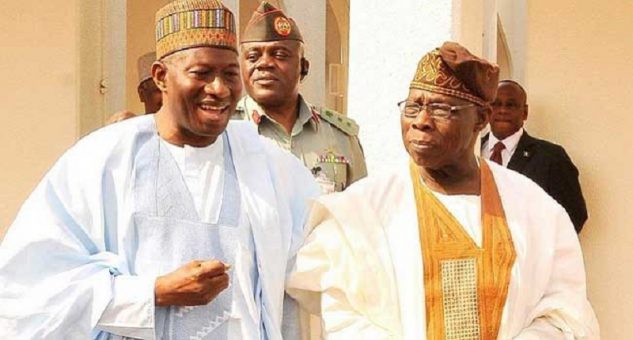
The lecture, themed “Has Africa Come of Age?”, drew an array of distinguished personalities, including former Presidents Olusegun Obasanjo and Goodluck Jonathan; former Vice President Yemi Osinbajo; former Ghanaian President John Kufuor; former Malawian President Joyce Banda; and former Sierra Leonean President Ernest Bai Koroma.
Obasanjo observed that one of the enduring legacies of the late General Murtala Muhammed was the emergence of capable successors who sustained his vision and development agenda. He acknowledged that successive administrations, including his own, had not effectively replicated that standard.
According to him, the late leader ensured continuity by leaving behind individuals equipped to advance his ideas and reforms.
“We cannot make progress if we take two steps forward, one step sideways, and three steps back, which is what we have been doing,” Obasanjo said. “The failure of all leaders after Murtala, including myself, is that we have not been able to create successors who could go on after us.”
“I handed over to civilians, and their ideas were completely different from the ideas we handed over to them. I will give you just one example. By the time we left in July 1979, we wanted to be self-sufficient in rice production. We asked that a report be prepared on what was in the fields. The report showed that we would be self-sufficient in rice production that year.
“Based on that, we banned the importation of rice before we left the government. In October 1979, when the civilian administration came in, one of the first things they did was to lift the ban on rice importation so they could allocate import licences to their supporters and political associates.
“One of the barons, who obtained a rice import licence from America, ordered rice and then asked the suppliers to add $5 million to the cost. They did. He then went back to New York and demanded $2.5 million out of the $5 million. They refused and gave him only $1 million. He wanted $2.5 million but had taken no risk. So, they gave him $1 million.
“Since the lifting of the rice import ban in 1979, we have not recovered from it. That is why we are still importing rice today. These are the kinds of things that go wrong.”
The former president said what is needed right now is reform and building the capacity to produce for both local consumption and export.
“When I became elected president, cocoa production in Nigeria was 150,000 metric tons. We introduced a new system to boost production, and within four to five years, we were producing 450,000 metric tons; we tripled output.
“Today, I understand we are producing no more than 300,000 metric tons. That is not how Africa will come of age. We must grow at nine to 10 per cent Gross Domestic Product (GDP) annually to come of age”, he said.
On his part, Former President Goodluck Jonathan said, “While Murtala symbolised decisive leadership, our democratic future depends on strong institutions. These include credible electoral management bodies, independence of the judiciary, well-trained security officers, and accountable governance systems. Democracy requires vision rather than decree, persuasion instead of command, and it depends on institutions, not individuals.”
Jonathan, however, pointed out that Africa’s current challenge is the absence of a lasting democratic culture built on credible and transparent elections.
He said, “Such a culture must respect term limits, protect the independence of the judiciary, press freedom, and credible elections.”
Jonathan also added, “More importantly, it is essential to emphasize the transformative power of vision in leadership. General Murtala assumed office as Head of State at the very young age of 38. Despite a tenure of only 200 days, his achievements were profound because he was driven by a clear, unyielding vision for a greater and more prosperous Nigeria.
“The President we are celebrating today was Head of State at the age of 38. If we are looking for people who can run nations in Africa, we should look at the age within 30 and 40 years. That is the way you can be very vibrant, physically strong, and mentally sound. If they need to stay awake for 24 hours, they can, but if you subject an older person to that kind of stress, the person will spend 50 per cent of the time in the hospital.”
Jonathan urged African countries to lower age barriers and strengthen institutions that allow youth participation in governance.
Describing Africa as a predominantly young continent.
Jonathan said growing frustration among youths should not be mistaken for a rejection of democracy.
He said it reflects a demand that democracy must deliver opportunities, dignity, and justice, adding that where justice is absent, “there are fractures within democracy.
He anchored his argument on the legacy of the late Head of State, General Murtala Muhammed, who assumed office at the age of 38 and governed with what he described as clarity of purpose and selfless national vision.
According to Jonathan, Murtala’s brief but impactful leadership showed that age is not a barrier to effective governance when leaders are driven by patriotism and discipline.
“General Murtala Muhammed assumed office as Head of State at a very young age. Despite a tenure of only 200 days, his achievements were profound because he was driven by a clear, unyielding vision for a greater Nigeria,” he said.
He lamented the future of democracy in Africa, saying the continent cannot sustain democracy while excluding its most vibrant population.
He therefore called for a deliberate inclusion of the young people in decision-making and leadership positions, reinforcing support for the Not Too Young to Run movement.
He argued that leadership in the modern era requires physical strength, mental alertness, and stamina often found among younger leaders.
“If we are looking for people who can run nations in Africa, we should look at the age within our day and age. That is how you can be vibrant, physically strong, and mentally sound,” Jonathan said.
If Africa has come of age, Jonathan wondered why leaders spend 50 per cent of their time outside the country, stressing that in countries such as America, some governors do not leave the country throughout their tenure in office.
But the Secretary to the Government of the Federation (SGF), Senator George Akume, said leadership was not about physical age but about ideas.
Akume, who represented President Bola Tinubu at the occasion, commended the ideals of late Gen. Murtala Muhammed, saying, “He was not just a Nigerian but he loved the country and did so much to restore its glory. Nigerians will continue to remember him for his fight against corruption. He believed in Africa and fought for its liberation. He devoted lots of resources and there were results”
He also commended the late Murtala for putting in place a programme to return the country to democracy before his assassination.
He also pleaded with Nigerians not to despair, noting that the government is working towards implementing its set goals.
In her welcome address, the Chief Executive Officer, MMF and daughter of Mohammed, Dr. Aisha Mohammed-Oyebode, said, “It was about who controls your resources, who shapes your policies, and whose interests define your future. Today, as we look across our continent, that question still challenges us.
“We are politically independent, yet we are still negotiating economic dependence. We are rich in talent and resources, yet still confronting inequality and fragility. We are young, dynamic, and globally connected, yet we are often uncertain about the leadership structures that are meant to serve our people”, she said.
The Keynote Speaker and former Vice President, Professor Yemi Osinbajo, eulogized Muhammad for capturing the imagination of the nation through the sheer clarity of his reforms, adding that he purged the civil service to confront corruption and inertia, probed military governors, and seized illicitly acquired properties.
“Yet it was his declaration that Africa had come of age that immortalized him, the speech that he made 34 days before he was assassinated”, he said.
“He was speaking of the awakening of responsibility, identity, and self-determination, and his context was the generational obligation of African leadership of his era to fight the viciousness of neocolonialism as those before them had fought colonialism. He was summoning the high values of integrity, dignity, and individual autonomy, by virtue of which African people, like others, had a right and an obligation to determine their own destinies and who they chose to undertake that journey with”, Osinbajo said.
Also speaking on whether Africa has come of age, former President of Ghana, John Kufuor, said the real question should be whether Africa today stands in the world with a settled sense of identity, responsibility, and purpose, not only as a political space but as a moral presence within humanity. (Nation)
President Bola Tinubu has, for the umpteenth time, vowed that Nigeria will never surrender its people to extremism and terrorism masquerading as faith.
The President’s vow came on the heels of the recent attack in Kaiama Local Government Area of Kwara State by gunmen that led to the death of about 100 people.
President Tinubu condemned in the strongest terms “the cowardly and beastly attack”, describing the gunmen as “heartless for choosing soft targets in their campaign of terror.”
He said the actions of the gunmen offended humanity and Nigeria’s shared values as a nation.
The President, in a statement he personally signed on Thursday night after meeting with Kwara State Governor AbdulRahman AbdulRazaq at the Presidential Villa, Abuja, said that perpetrators of the dastardly act will not go scot-free.
The statement read: “Today, I met with the Executive Governor of Kwara State, Abdulrahman Abdulrazaq @RealAARahman, to be debriefed on the incident in Kaiama LGA.
“I condemn in the strongest terms this cowardly and beastly attack. The gunmen are heartless for choosing soft targets in their doomed campaign of terror. Their actions offend our humanity, our faith, and our shared values as a nation.
“Yesterday, I directed the immediate deployment of an army battalion to Kaiama Local Government Area of Kwara State following the horrific attack on innocent villagers in Worro.
“This new military command will spearhead Operation Savannah Shield to checkmate these barbaric terrorists and protect defenceless communities.
“It is particularly disturbing that the victims were killed because they rejected an attempt at forced indoctrination. As I said, it is commendable that the community members, even though Muslims, refused to be conscripted into a weird belief that promoted violence over peace and dialogue. Nigeria will never surrender its people to extremism and terrorism masquerading as faith.
“I have further directed close collaboration between federal and state agencies to provide immediate support and relief to the affected community and to ensure that those responsible for this atrocity are pursued and brought to justice, just like other terrorists before them. They will not go scot-free.
“I pray for the repose of the souls of the departed and extend my deepest condolences to the families who have lost loved ones. I also sympathise with the people and government of Kwara State.
“The Federal Government stands with you. We will protect our communities, defend our values, and defeat those who seek to divide us through terror.” (Vanguard)
President Bola Tinubu has returned to Nigeria from his state visit to the Republic of Türkiye.
Tinubu arrived at about 8:55 p.m.
He was received by senior government officials.
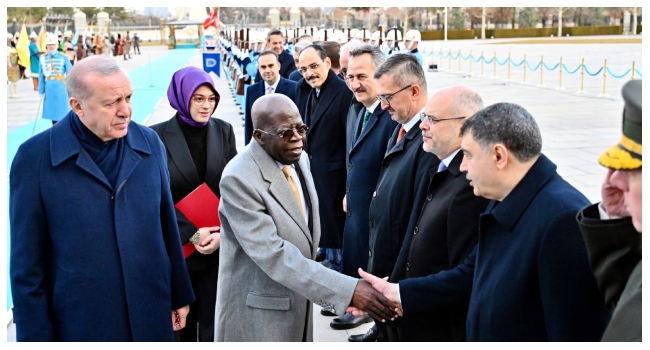
The President had departed Abuja for Türkiye on January 26, 2026, as part of efforts to strengthen bilateral relations between the two countries.
It follows an earlier official visit to Nigeria by Turkish President Recep Tayyip Erdoğan between October 19 and 20, 2021, which reinforced diplomatic ties between Abuja and Ankara.
During the days-long trip, Tinubu and his Turkish counterpart signed nine Memoranda of Understanding (MoUs).
At the centre of this was the move to ramp up bilateral trade from $2 billion to $5 billion.
“We also discussed opportunities to support our investments in Nigeria. We believe that the joint Economy and Trade Committee, which we agreed to establish today, will be instrumental in this regard,” Tinubu had said in a joint briefing with Erdogan.
Other deals sealed during the trip ranged from energy cooperation, media, higher education, and Halal Quality Infrastructure, aimed at giving Nigerian agricultural products a competitive edge.
Erdogan said his country would support Nigeria’s fight against terrorism, expressing readiness to deepen cooperation in military training and intelligence.
Speaking at a joint press conference, the Turkish president said that under Tinubu’s leadership, Nigeria is taking firm steps against terrorism, and Türkiye stands by the Nigerian people in this struggle.
“We are ready to share Türkiye’s significant experience in counterterrorism,” presidential spokesman, Bayo Onanuga, quoted the Turkish leader as saying.
The Turkish president also said terrorist groups, particularly in Africa’s Sahel region, pose a threat to the continent’s stability.
Nigerian officials held meetings with Türkiye’s leading defense industry firms during the visit and expressed confidence that the outcomes of those talks would be positive.
While Nigeria exports crude oil and agricultural products to Turkiye, the European country exports planes, iron and steel, chemical products, and helicopters to the West African country. (Channels)

 English